The audit starts at the fire door nobody uses. It is propped open with a wooden wedge. That is one check failed before you have walked ten paces, and it is exactly what a health and safety audit exists to catch.
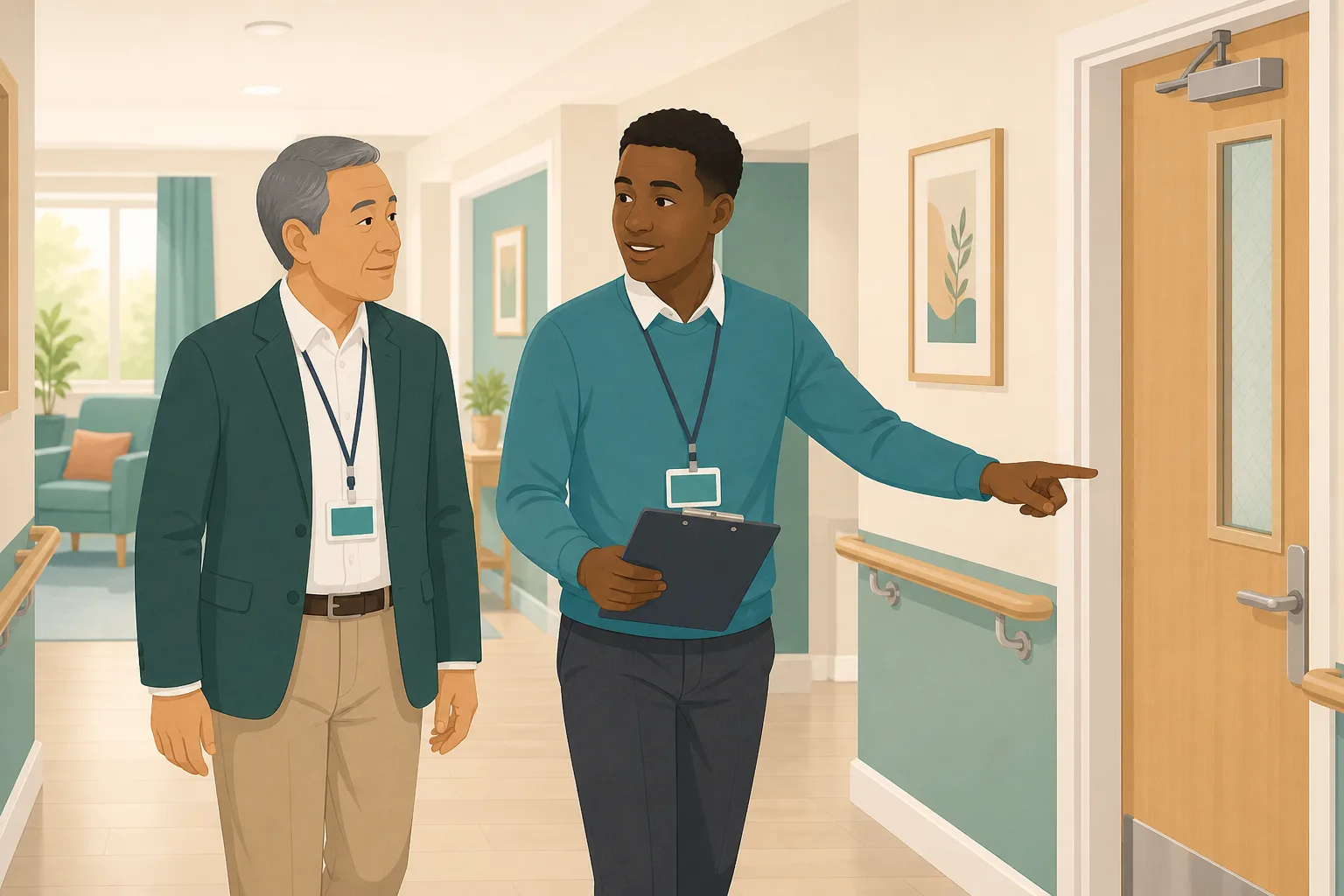
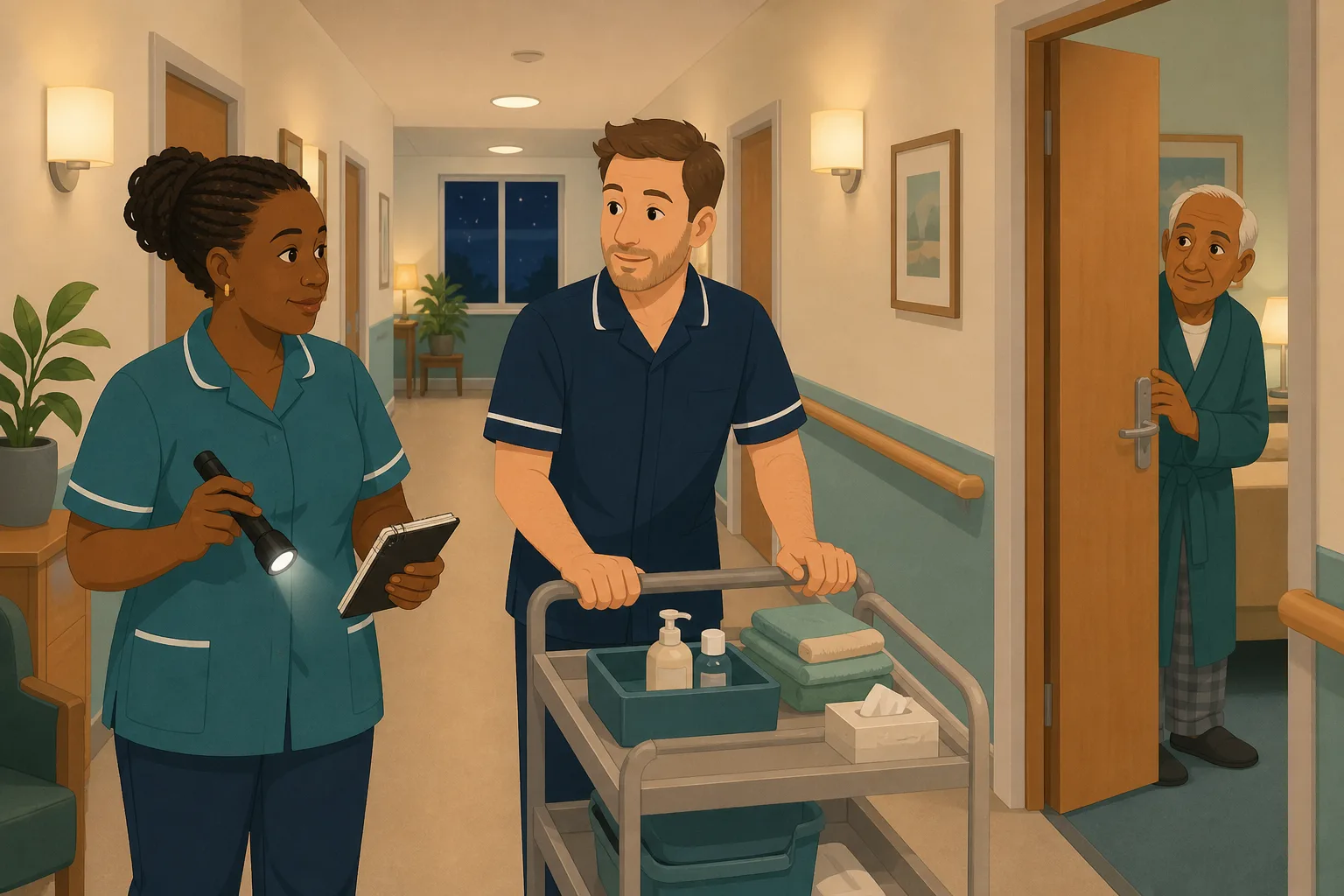
Figure: Most findings come from watching ordinary work, not from reading a folder.
Before you leave the office, open the audit
Read the section list once before you move. Our free template holds 49 checks across 9 sections (which you can edit to make your own if required), and the order follows the building rather than the law.
Take a phone or a tablet. You will want photographs, and you will want to write the finding while you are standing in front of it.
Do not book the walk. A corridor tidied for you tells you nothing useful about care home health and safety on an ordinary day.
Stop one: the corridors, the floors and the windows
Seven checks sit here. Walkways clear of clutter, flooring secure and non slip, corridors lit with bulbs replaced, handrails secure and continuous.
Then the two that catch people out. Are all windows fitted with restrictors? Are doors to the kitchen, laundry and maintenance areas locked?
The last check in this section asks whether signage is dementia friendly, with clear orientation cues and contrasting colours. That one is about safety as much as kindness.
Every audit in the library is free to run, with scoring, actions and a report. No card needed.
Create a free accountStop two: fire doors, drills and the alarm log
Six checks. Exits unobstructed and signed, the alarm tested weekly and written down, emergency lighting tested monthly, extinguishers in place and in date.
Two of the six are about people rather than kit. Do staff know the personal emergency evacuation plans for residents with mobility or cognitive needs? Have drills been run to schedule and recorded?
The wedge in the fire door belongs here. Photograph it (all available in CareStream), mark the check as failed, and move on.
Stop three: sharps, first aid and bed rails
Clinical waste stored safely and collected to schedule. Sharps bins labelled and not overfilled. First aid kits complete and in date.
Then two that need a record, not a glance. Is pressure relieving equipment working and maintained? Are bed rails risk assessed as well as fitted? (We have a separate audit available for bed rails if required)
The last check asks about dementia specific risks: exit seeking, night time risks, and what the care plan says about them.
Stop four: the kitchen, the laundry and the sluice
Five checks in the kitchen. Is it clean and free from pests? Are fridge and freezer temperatures written down daily and in range? Labelling, date rotation, allergens and modified diets make up the rest.
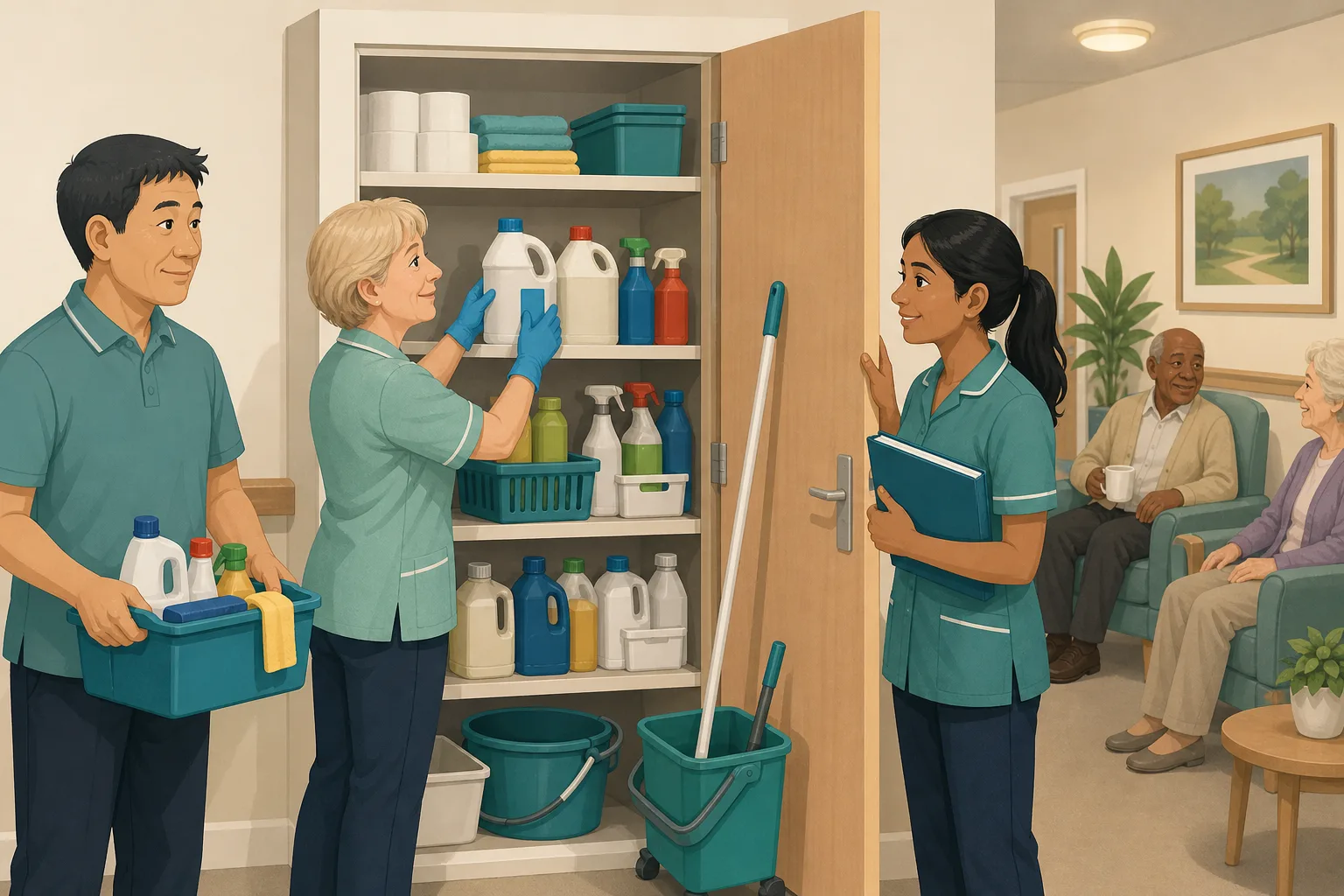
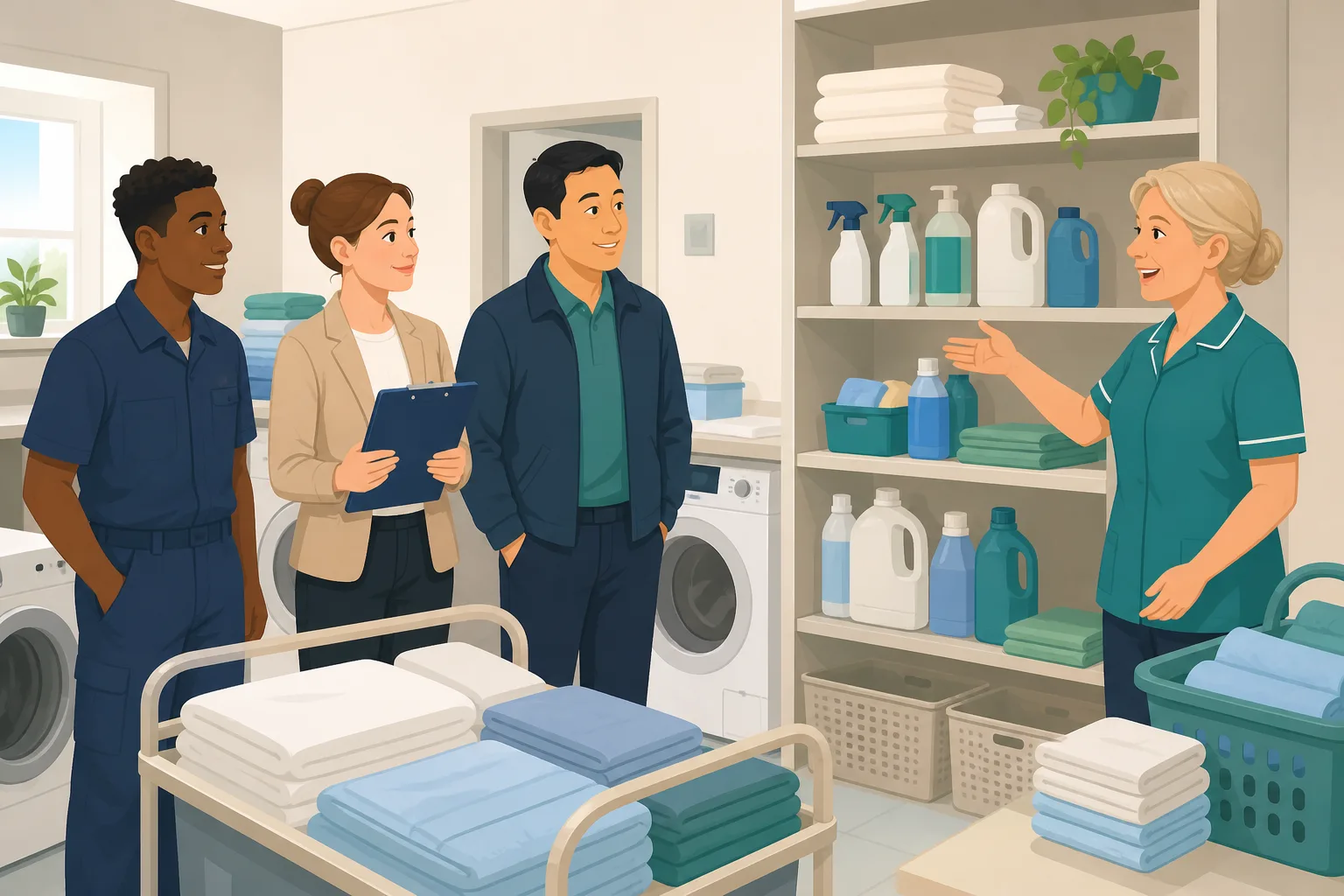
Infection prevention has six of its own. Look for PPE stocks and clean hand washing points. Check that cleaning schedules are signed, and that dirty and clean laundry are kept apart.
One check here is not about a cupboard. Watch a member of staff wash their hands. Mark what you saw, not what the schedule claims.
Stop five: hoists, slings and the water temperatures
Five equipment checks. Hoists and slings need current certificates. Wheelchairs and walking aids must be safe, the nurse call system must work, and maintenance issues must be logged and dealt with.
One check covers water temperatures and safe legionella ranges. Hot water that is never hot enough is a risk you cannot see from the corridor.
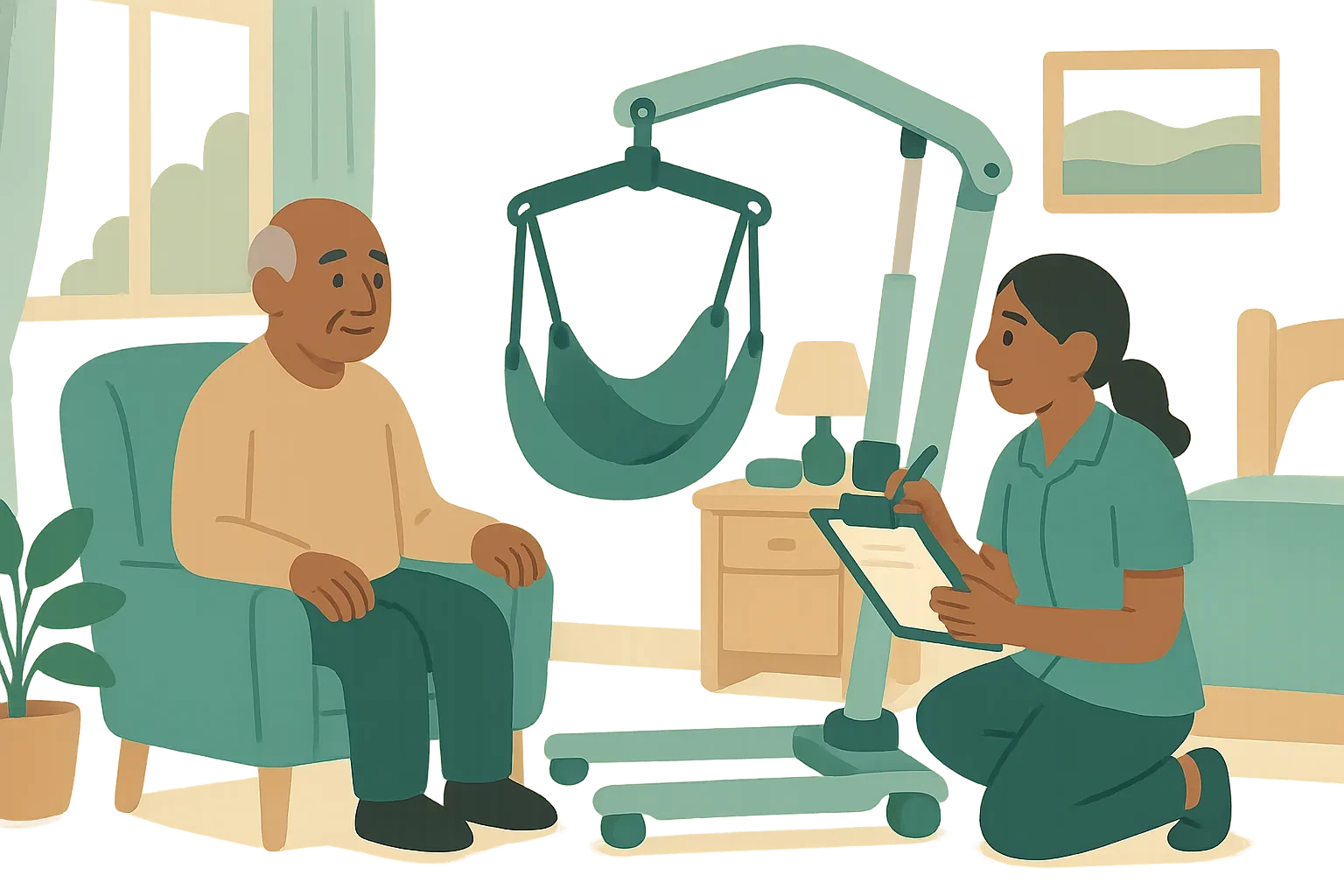
Figure: The sling, not just the hoist, needs a current examination record.
Kit that lifts people must be thoroughly examined at least every six months. The interval is set by the rules on thorough examination of lifting equipment. Care staff know those rules as LOLER, and they cover slings too.
Stop six: the front door and the staff you meet
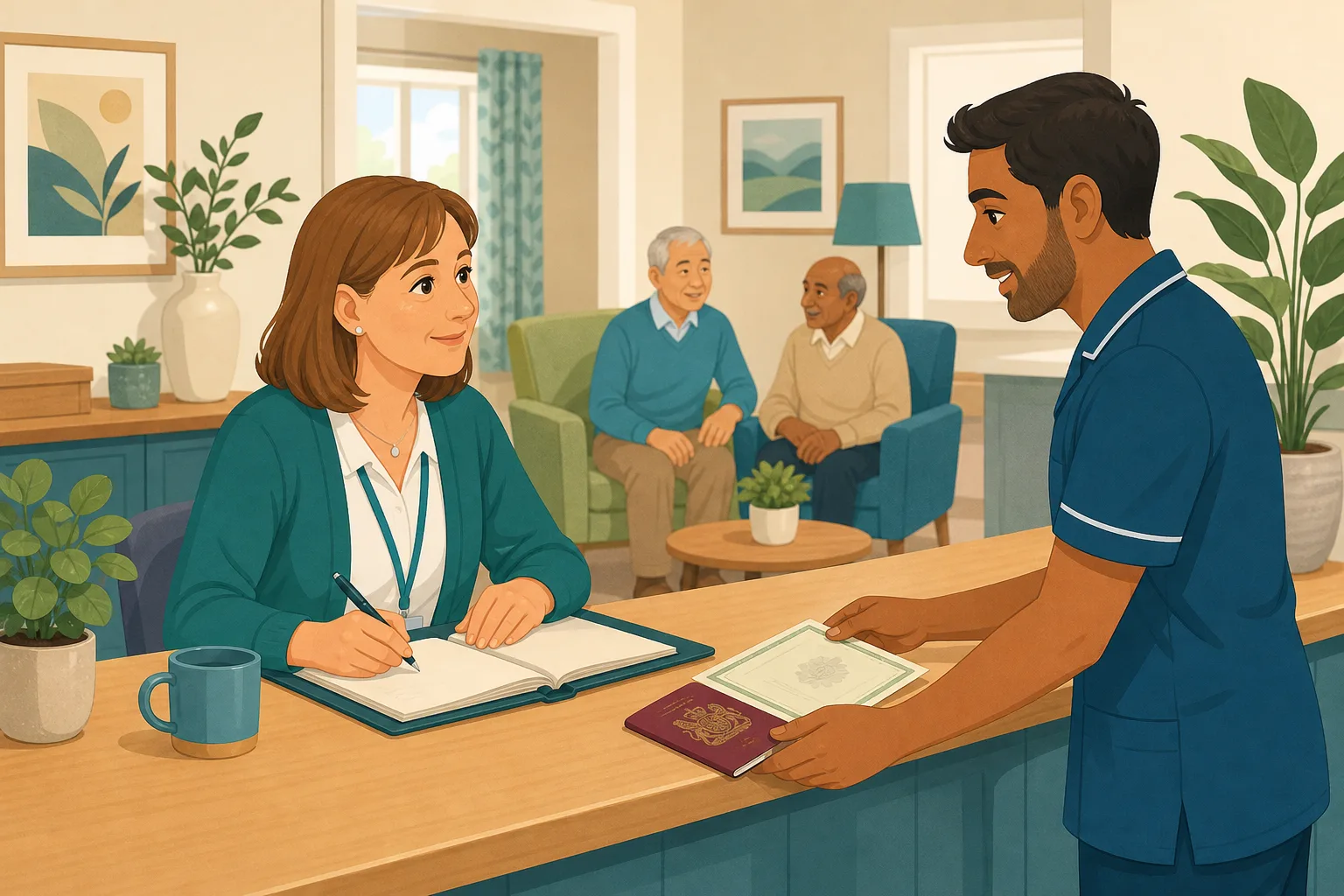
Security has five checks: the door entry system, the visitor book, any cameras, chemicals out of reach, and whether safeguarding concerns are monitored and reported.
Staff safety has four. Manual handling training current, awareness of dementia related risk, accident and incident logs up to date and reviewed, and whether staff know how to raise a concern.
Ask the fourth one out loud. If two people give you two different answers, you have a finding that no cupboard inspection would have shown.
What the law behind each section actually says
No rule tells you to run an audit. Several tell you to know your risks and control them, which is the same work under a different name.
Employers must provide safe plant and safe systems of work. They must also give the information, instruction, training and supervision staff need. Both duties sit in the general duties of employers in section 2 of the health and safety act.
The duty to write the risks down comes next. Every employer must make a suitable and sufficient assessment of risks to staff and to others, under the risk assessment duty on every employer.
Pick an audit, assign it, score it on a phone and close the actions. Create a free account to start.
Create a free accountFire sits in its own order. The responsible person must make a suitable and sufficient assessment and review it when things change, as the fire risk assessment duty sets out.
Chemicals have their own test. Work that may expose staff to a hazardous substance cannot start until the risk has been assessed, which is the assessment duty before work with hazardous substances.
Your duty to the Care Quality Commission is shorter. Premises and equipment must be clean, secure, suitable, properly used and properly maintained. You can read the full text of Regulation 15 on premises and equipment.
One reporting rule is worth pinning up. A resident hurt in a work-related accident and taken from the scene to hospital for treatment is reportable. That is the reporting duty for injuries to people who are not at work, known in care homes as RIDDOR.
Scoring the walk and writing the actions
Each section scores on its own. A whole building at eighty per cent can still have a fire section at half marks, and that is the number worth reading.
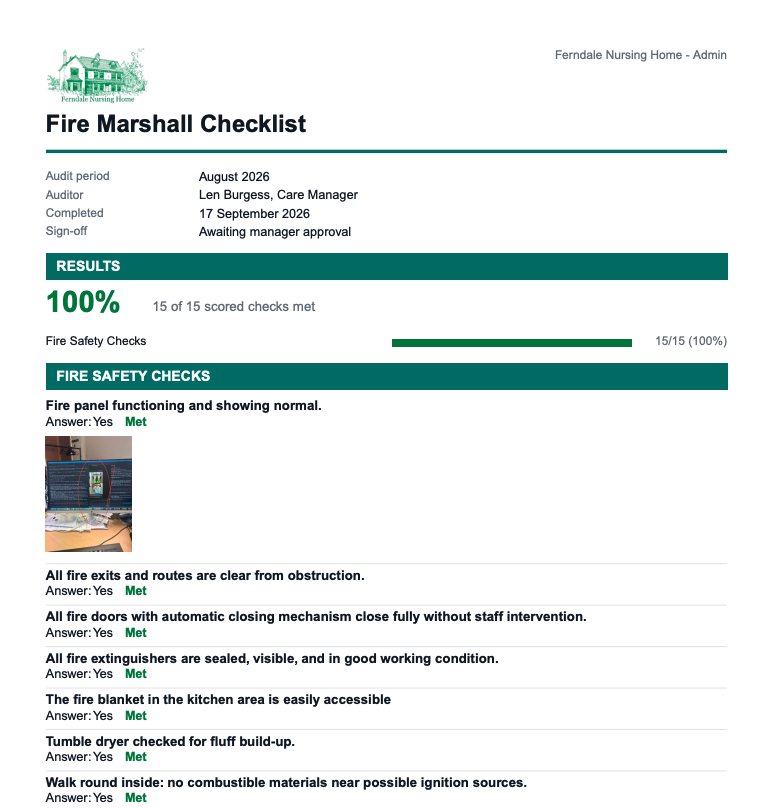
Figure: The finished report carries the score, the photographs and a line for manager approval.
Give every failed check four things: what will change, who owns it, a due date, and how you will know it was done. Anything that puts a person at risk is fixed the same day.
Type health and safety audit care home into a search box, and you mostly get blank forms to print. A form is not a record. The record is what an inspector reads.
How often to run it, and who should hold the pen
We set the template to monthly, whole service. We know of no regulation that fixes the interval, so your health and safety policy care home document should state the rhythm and the owner.
Monthly suits a care home with a kitchen, hoists and a fire panel. A small supported living service might reasonably run it quarterly, with the fire section monthly.
Whoever runs it should not be marking their own homework every time. Let a deputy take a turn, and have the manager approve the result.
Benefits of CareStream for your health and safety audit
The health and safety audit is one of the free audits on a free CareStream account, with no card needed.
- Every check carries a findings box, an actions box and a place for a photograph.
- Section scores and the full report are produced for you, with a line for manager sign off.
- The next run shows last time's actions, so repeat failures stop hiding.
- Staff can take the general health and safety awareness course free, so a training gap can be closed the same week.
Read every check in the free health and safety audit before you sign up, or build your own audit if your service needs different questions.
What to do after your first walk round
Do not try to fix everything. Pick the three findings that could hurt someone this week and close those.
Then write the rhythm into your health and safety policy so the walk survives a change of manager. A health and safety audit checklist is only as good as the diary entry behind it.
Book the next walk before you sit down. Assign the general health and safety awareness course to anyone whose answer surprised you.
A health and safety inspection checklist that nobody repeats is a photograph of one morning. A health and safety audit template on its own proves nothing. The habit is the evidence, and in CareStream the habit leaves a dated trail behind it.
Sources
- Section 2 of the Health and Safety at Work etc. Act 1974, general duties of employers (legislation.gov.uk) · legislation.gov.uk
- Regulation 3, risk assessment, Management of Health and Safety at Work Regulations 1999 (legislation.gov.uk) · legislation.gov.uk
- Regulation 15, premises and equipment (legislation.gov.uk) · legislation.gov.uk
- Regulation 9, thorough examination and inspection, Lifting Operations and Lifting Equipment Regulations 1998 (legislation.gov.uk) · legislation.gov.uk
- Regulation 5, non-fatal injuries to non-workers, RIDDOR (legislation.gov.uk) · legislation.gov.uk
- Article 9, risk assessment, Regulatory Reform (Fire Safety) Order 2005 (legislation.gov.uk) · legislation.gov.uk
- Regulation 6, assessment of risk, Control of Substances Hazardous to Health Regulations 2002 (legislation.gov.uk) · legislation.gov.uk
Frequently asked