Training collection
Dementia Training for Care Staff
Dementia training gives your staff the skills to support people whose memory, perception and communication have changed, and this collection brings that dementia training together in one place. We wrote every course here for regulated adult social care in the United Kingdom, so the examples come from a lounge at teatime, a bathroom at handover and a corridor at two in the morning, rather than from a generic classroom with a care module bolted on. Care assistants, senior carers, nurses, activities staff, ancillary staff and registered managers work through the modules on a phone, on shift or at home, in English or in their own language. Each course puts a member of staff into a situation and asks what they would do next, because that is what builds skill and what an inspector expects to see reflected in practice. Courses cost £25.99 each as a one-time purchase with no subscription, and every completion, expiry date and certificate lands in one record you can produce when somebody asks to see it. CareStream keeps that record current as staff join, leave and come up for renewal.
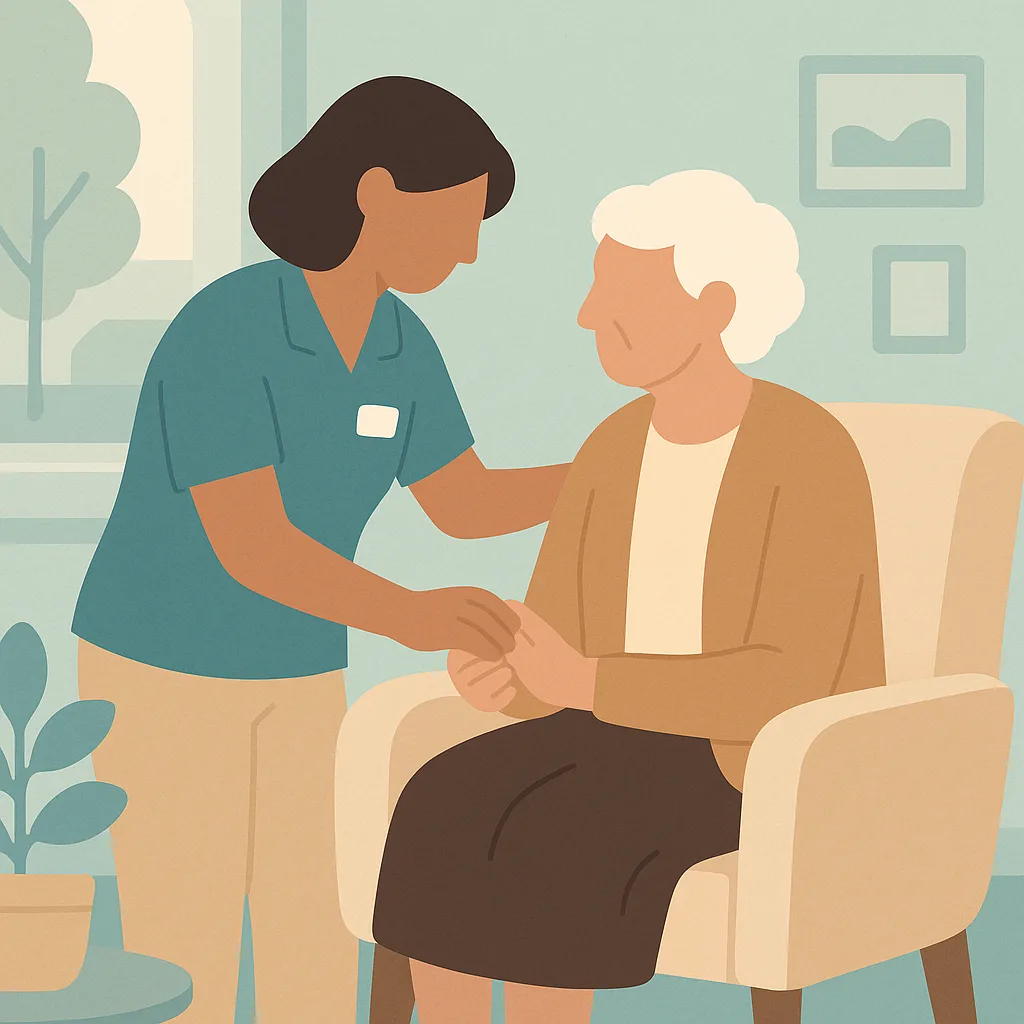
This training helps you understand dementia and how to provide person centred care to residents living with dementia at our home. You will learn to recognise signs of dementia, support residents with dignity and respect, and follow our policies to meet their individual needs.

This annual refresher covers essential dementia care principles for staff working in our nursing home. You will learn how to support people living with dementia through person centred approaches, meaningful activities, and safe, dignified care that respects individual preferences and maintains wellbeing.
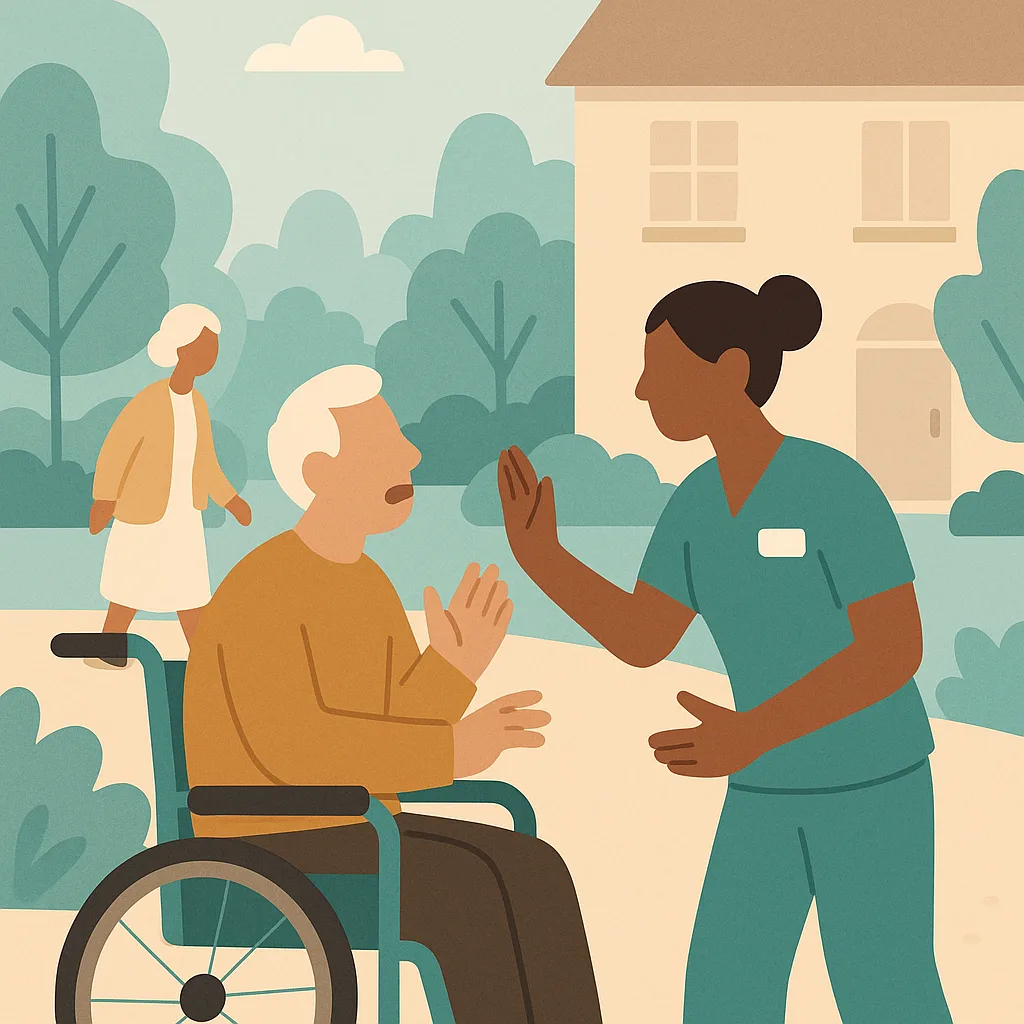
This training helps you understand and respond safely to challenging behaviour in our home. You will learn how to recognise triggers, use de-escalation techniques, and follow our policies to protect residents and staff. Managing behaviour well keeps everyone safe and maintains dignity.
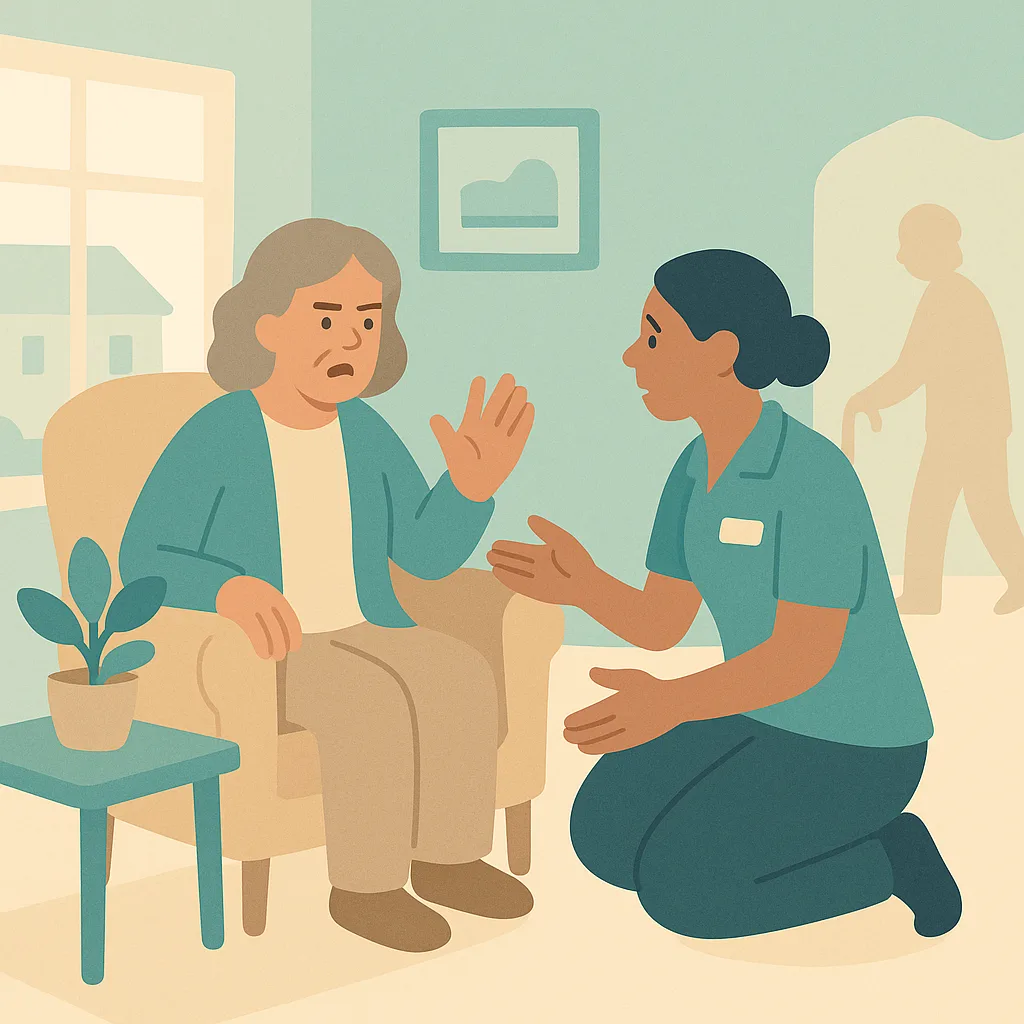
This module teaches you how to support residents who display behaviours that challenge, using positive approaches to prevent distress and de-escalate situations safely. You will learn how to recognise triggers, respond calmly, and follow your organisation's policies on managing antisocial behaviour while protecting everyone's dignity and safety.
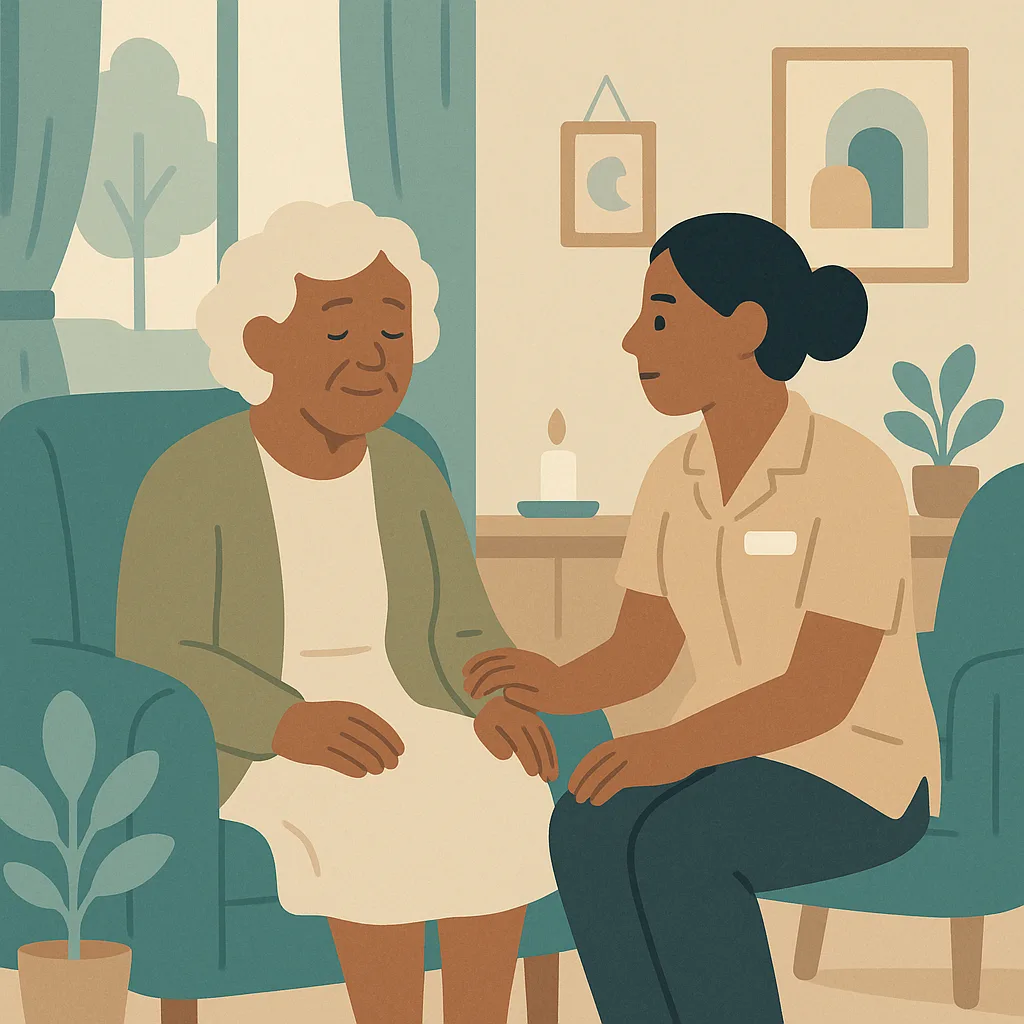
This module helps you provide person centred dementia care that respects and celebrates each person's cultural background, beliefs and traditions. You will learn how cultural identity remains important throughout dementia, and how to use our policies on activities and outings to support cultural and spiritual needs in meaningful ways.
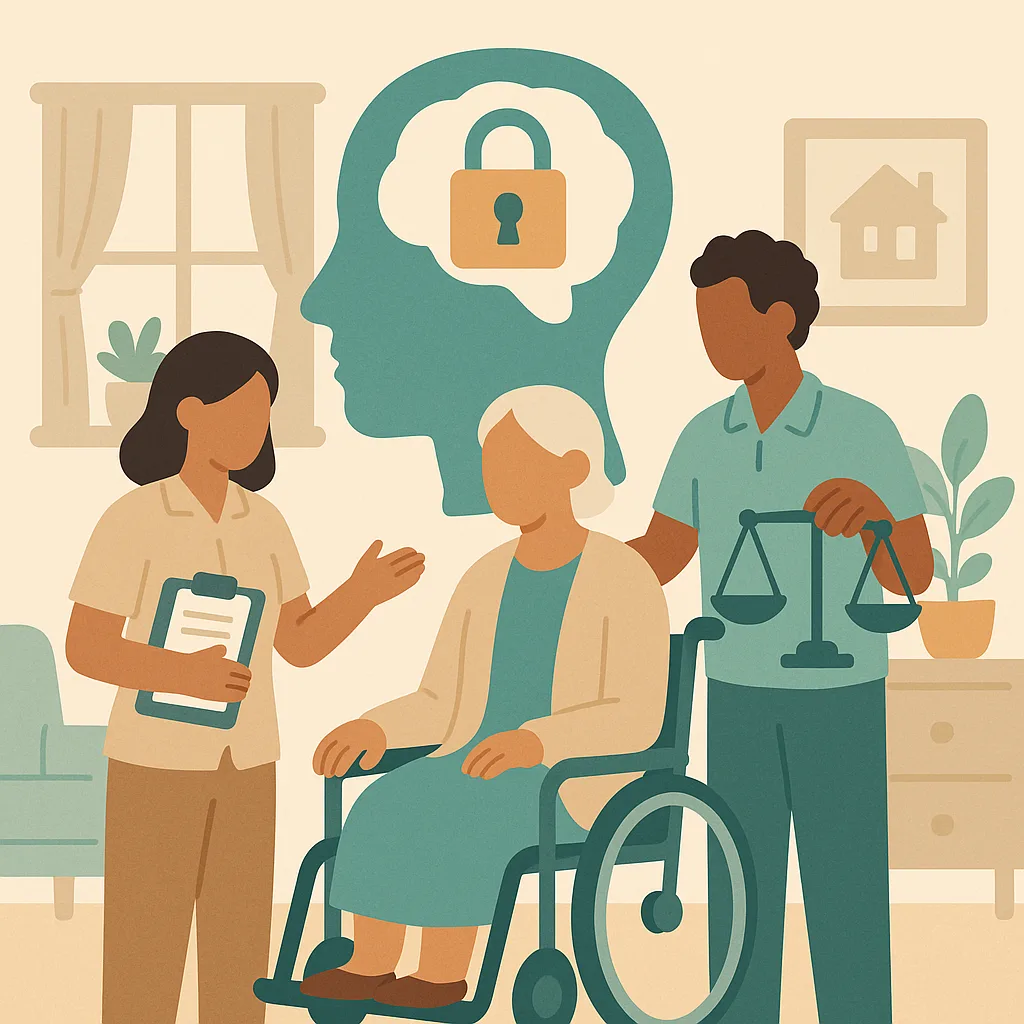
This training covers how we assess mental capacity, make decisions in someone's best interests when they cannot decide for themselves, and protect the rights of people who may be deprived of their liberty. Understanding these legal duties protects residents and ensures we provide lawful, person centred care.
Give your team dementia skills they will use on the next shift
A service that supports people living with dementia lives or dies by what staff do in the small moments: the resident who asks for her mother, the gentleman who will not accept personal care from a new carer, the woman who eats nothing at lunch but finishes a sandwich at four. Courses in this collection teach staff to read those moments, work out what the person is communicating, and respond in a way that keeps them safe and keeps their dignity intact. Staff learn on the device in their pocket, so night staff, weekend staff and part-timers get the same content as the people who happen to be in the building when a session runs.
What these courses cover and why the training is required
Dementia is not one condition. Alzheimer's disease, vascular dementia, dementia with Lewy bodies and frontotemporal dementia affect people differently, and staff who understand that respond very differently to what they see. Courses in this collection cover how the condition affects memory, orientation, language, sequencing and perception, how pain and infection present when somebody cannot describe them, how distress builds and how staff respond without restriction, how to support eating, drinking and continence, how to offer activity that means something to that person, and how families experience all of it. No single regulation names a dementia course by title. The requirement comes from the Health and Social Care Act 2008 (Regulated Activities) Regulations 2014, in particular Regulation 18 on staffing, which requires that staff receive the training, supervision and appraisal necessary to carry out their role. If your service supports people living with dementia, the role requires it, so the training is required. Regulation 9 on person-centred care and Regulation 12 on safe care and treatment sit behind it, and the Care Quality Commission assesses all of this in England through its Single Assessment Framework.
Who has to complete it, and in which services
Residential care homes, nursing homes, domiciliary care agencies, supported living services, extra care schemes, day services and hospices all support people living with dementia, and in each of them the people delivering hands-on care need training that matches the role. Care assistants and senior carers need working knowledge they can apply on every shift. Nurses need that plus the clinical picture, including delirium, pain assessment and medicines. Activities coordinators need to plan occupation that suits cognition on the day. Registered managers and deputy managers need enough depth to supervise, to assess competence and to lead practice. Ancillary staff matter more than most providers assume: housekeepers, kitchen staff, maintenance staff, drivers and receptionists have daily contact with residents and need awareness-level content. Bank and agency staff working regular shifts in your service need it too, and commissioners increasingly ask how you evidence that. The Dementia Training Standards Framework, published by Skills for Health, Health Education England and Skills for Care, is the benchmark most people use to decide who needs what: tier one awareness for everyone working in the setting, tier two for staff in regular contact with people living with dementia, tier three for those leading practice. That framework is a standard rather than a statute, and the distinction matters when you write your matrix.
How often it must be repeated, and what actually sets the frequency
There is no law that states how often this training must be renewed. This is worth saying plainly, because renewal periods circulate in this sector as though they were legal rules when they are not. Three separate things drive the frequency in your training matrix. The first is law, which requires training appropriate to the role but sets no interval for this subject. The second is your employer requirement, your local authority or integrated care board contract, or a commissioner specification, any of which can and often does set a period, commonly annual awareness with deeper content at longer intervals. The third is good practice, including the tiered approach in that framework. Alongside the calendar, some triggers should prompt training regardless of when it was last done: a new starter before they work unsupervised, a change in the people your service supports, a new admission with needs nobody has worked with before, an incident or a complaint that exposed a gap, or a supervision that raised a concern about practice. Write in your matrix what sets each frequency, and you can answer the question when it is asked.
Who these courses are perfect for
These courses suit the registered manager, deputy manager or senior carer who owns training on top of a real job at a service of roughly fifteen to eighty staff, with no learning and development function and no training budget worth the name. They suit a service that has a cohort of new starters to get through induction, or a wave of refreshers that all expire in the same month because somebody did them together three years ago. They suit a manager who has inherited a matrix nobody has updated, or who has been asked by a commissioner for evidence of dementia competence at short notice. They suit services with night staff and part-timers who are never in the building when a session runs, and services where a good number of staff read more comfortably in a language other than English. They suit providers bringing agency spend down by building their own people up. They do not suit anyone looking for per-seat annual contracts priced for two hundred staff when they employ twenty-six, and we have not priced them that way.
Buy one course at £25.99, or take the whole library and the training record with it
You can buy a single course to close one gap, or licence the platform and have the whole library, the matrix and the evidence together. Both routes are priced openly, and you can compare them before you commit. A single course is a one-time purchase with no contract, so nothing renews unless you choose it. A platform licence can be paid monthly or annually, and you can cancel anytime. Whichever you choose, staff complete the same courses, and completions, expiry dates and certificates land in the same record.
Why our dementia courses hold up better than most
Most dementia e-learning walks a learner through slides and produces a certificate. Ours puts them in a situation with a person, asks what they would do, and explains the consequence of each choice, because that is how adults retain anything. CareStream content is written for regulated care settings by people who know them, and reviewed by people before it reaches your staff. Courses are CPD accredited where accreditation carries weight, and we are clear that the Care Quality Commission does not approve, endorse or accredit any training provider, so nobody should claim otherwise. Modules can be read in the staff member's own language, which changes what a carer actually absorbs rather than simply what they click. Face-to-face sessions and practical sign-offs are recorded alongside the e-learning, so your record shows the full picture rather than half of it. That matters because a certificate evidences completion, not competence, and an inspector asks about competence. Dementia training sits naturally alongside Mental Capacity Act 2005 and Deprivation of Liberty Safeguards training for care staff, because decisions about care, restriction and best interests arrive together in dementia care and staff need both to make sense of either.
What you get when you order today, and what happens at renewal
Access opens at secure checkout, so you can get started the same day and assign the course to the staff who need it. Each course is built to be completed in about an hour, and staff can stop and pick it up again on the next break rather than losing their progress. Completion is recorded with a date and a certificate, and the expiry date is set by the renewal period you have chosen for that subject in your matrix. When that date approaches, the record flags it and tells you who is due, so nothing quietly lapses while you are dealing with something else. A single course purchase does not renew on its own, which is the point of buying one. If you licence the wider CareStream platform, the same completions feed a training compliance matrix that tracks renewals and gaps by role, so one grid answers who has done what, when they did it, and what falls due next month.
New starters usually begin with the Care Certificate standards that new care staff complete during induction, which include awareness of dementia, then move on to the deeper courses in this collection once they are on the floor. That is the best value route for a service with constant churn, and it means a manager can hand over a complete record rather than a spreadsheet and an apology.
Dementia Training for Care Staff FAQs
What is dementia training and what does it cover?
This training teaches staff how dementia affects a person and how to support them well. It covers the main types, including Alzheimer's disease, vascular dementia, dementia with Lewy bodies and frontotemporal dementia, and how each can affect memory, language, orientation and perception. It covers communication, recognising pain and infection in somebody who cannot describe them, supporting eating and drinking, meaningful activity, responding to distress without restriction, working with families, and end-of-life care. Deeper courses add capacity, risk and leading practice.
Is dementia training a legal requirement for care staff?
There is no regulation that names dementia training as a subject every care worker must complete. The requirement is indirect, and it is still a requirement. Regulation 18 of the Health and Social Care Act 2008 (Regulated Activities) Regulations 2014 requires that staff receive the training necessary to carry out their role. If your service supports people living with dementia, that training is necessary for the role, so it must be provided and evidenced. Separately, your commissioner or your own training policy may specify content and frequency, and those obligations are real even though they are not statutory.
Do ancillary, bank and agency staff need dementia training?
Anyone with regular contact with people living with dementia benefits from awareness-level training, and most services include housekeeping, kitchen, maintenance, laundry and reception staff for that reason. Bank staff working your rota are your staff for this purpose and should be trained and recorded like everyone else. For agency staff, ask the agency for evidence of training and keep a copy in your own records, because an inspector looking at a shift will ask who was working and what they had been trained to do.
How often does dementia training need renewing?
No law sets an interval. What sets it in practice is your own training policy, a commissioner or contract requirement, or the tiered approach in the framework published by Skills for Care and Skills for Health. Many services refresh awareness annually and revisit deeper content less often. Whatever you choose, record what set the frequency, so that when somebody asks why the interval is three years rather than one, you have an answer that holds.
What training do new care staff need before they support someone living with dementia?
Before working unsupervised, a new starter should have induction training that includes dementia awareness, safeguarding, moving and handling, infection prevention and control training, and the basics of the service they are joining. The Care Certificate covers dementia awareness at that level. Beyond the induction content, a new starter supporting people with more advanced dementia needs the deeper courses reasonably quickly, alongside shadowing and a supervision that checks how they are getting on.
Browse the rest of the library
Most services need more than one. These are the collections people buy alongside this one.
Policies are one part of it.
CareStream is the compliance system underneath: your policies, your staff training, your audits and your evidence, kept current and ready for the day somebody asks to see them.
- Policies written and kept updated for you
- Staff training that records itself against the standard
- Gap analysis showing what you are missing before an inspector does
- Everything in one place, for one price