A senior hands you a medicines administration record chart and says one thing before the round starts: sign it when they have taken it, not before. That one rule sits behind most of what goes wrong with a MAR chart.
A MAR chart is the running record of each medicine a person is given, and each one they are not. Below you will find what is printed on it, one imagined round, and the recording errors to avoid.
What is already printed on the chart
Before you make a mark, check who the chart is for and what they take. CQC's page on medicines administration records in adult social care lists what a care home chart should hold.
The CPD certified Care Certificate and the annual courses are free on every plan. No card needed, and every staff login is included.
Create a free account- The person's full name and date of birth, and weight where appropriate.
- The name, form, strength and dose of each medicine, and how it is taken or used.
- How often, or at what time, each medicine is given.
- Any known allergies and reactions.
- When the medicine should be reviewed, and any special instructions such as taking it with food.
The chart should ideally be printed by the supplying pharmacist. NICE's Managing medicines in care homes (SC1) allows a new handwritten chart in exceptional cases only. A trained member of staff writes it, and a second trained person checks and signs it before first use.
If anything on the chart looks wrong or unclear, stop and ask. Do not guess. A guess written in ink becomes part of the person's record, and the next carer will trust it.
How to complete a MAR chart: one resident, one round
A new carer is on a supervised round. One resident has a morning tablet, a liquid medicine and a pain relief medicine prescribed to be given when required.
Moment one: the tablet that is taken
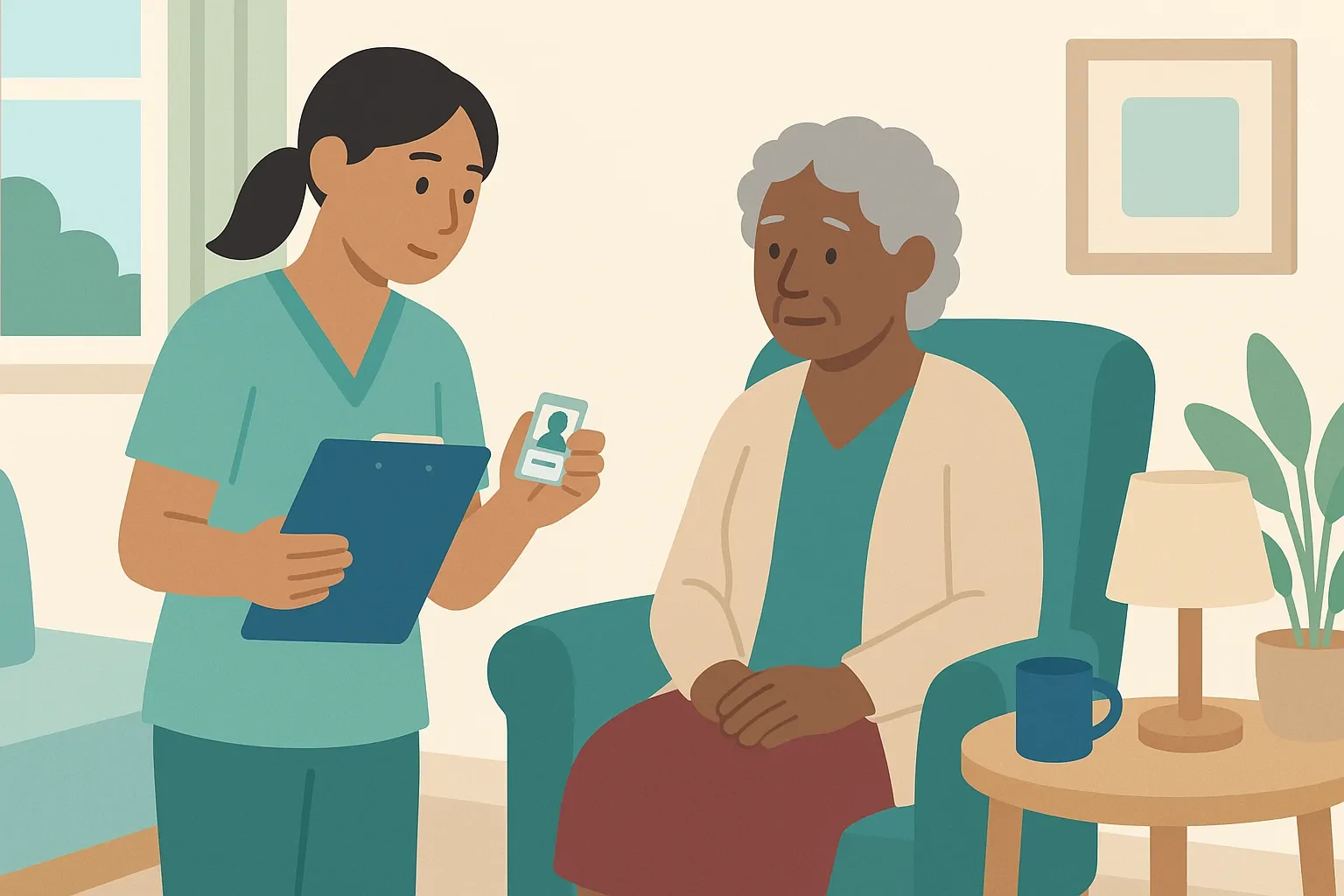
The carer checks the resident's name and date of birth on the chart against the person in front of them. Then they check the chart against the pharmacy label for the medicine, strength, dose, route and time. The observation checklist in the CareStream course asks for these same checks.
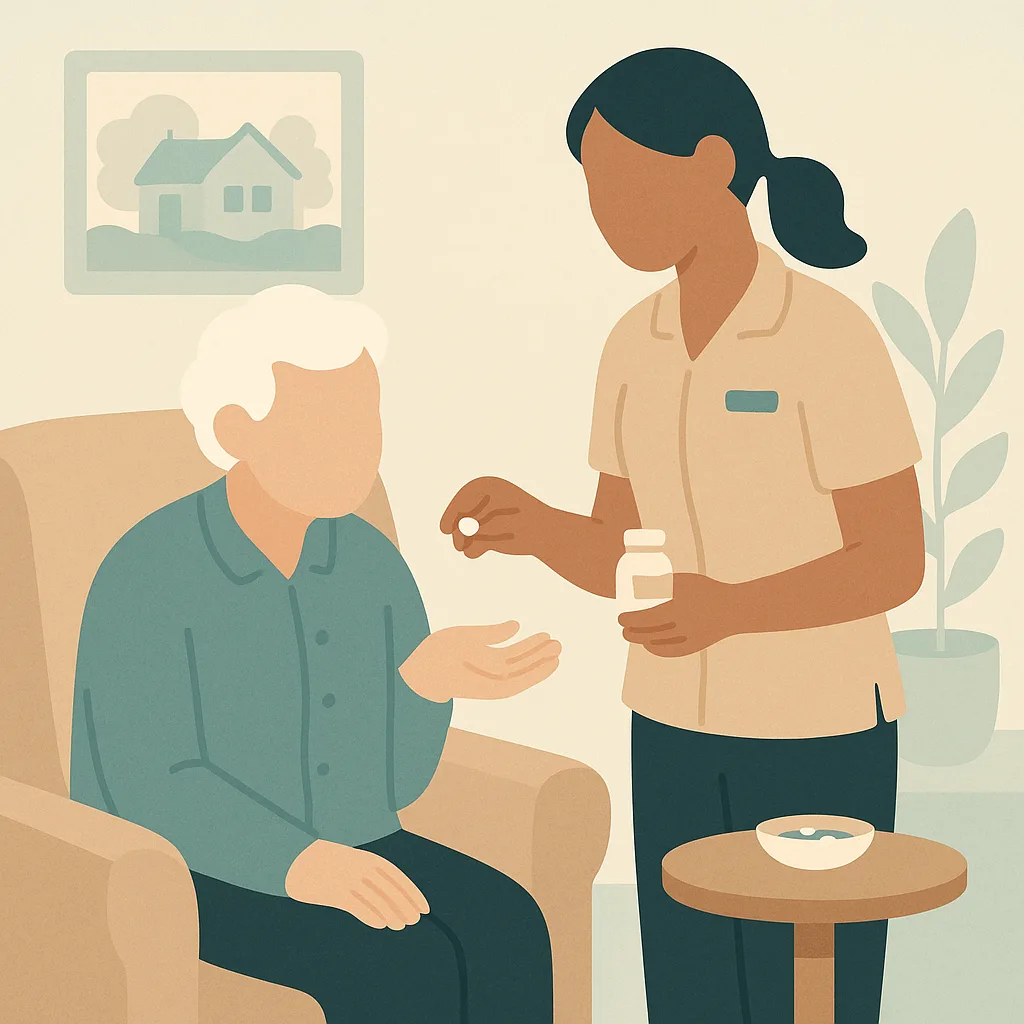
The resident takes the tablet and the carer watches. Only now does the carer sign the box, with the date and time.
SC1 says staff should record only when the resident has taken the medicine. It also says to finish with one resident before moving to the next.
Moment two: the refusal
The resident pushes the liquid away and says no. CQC is clear that a person with capacity may refuse, even if staff or family disagree.
The carer does not sign the box as given. They use the refused code on the MAR chart that their service has set, add the reason if the resident gives one, and tell the senior on duty. SC1 says ongoing refusal should reach the prescriber, and that is not the carer's call.
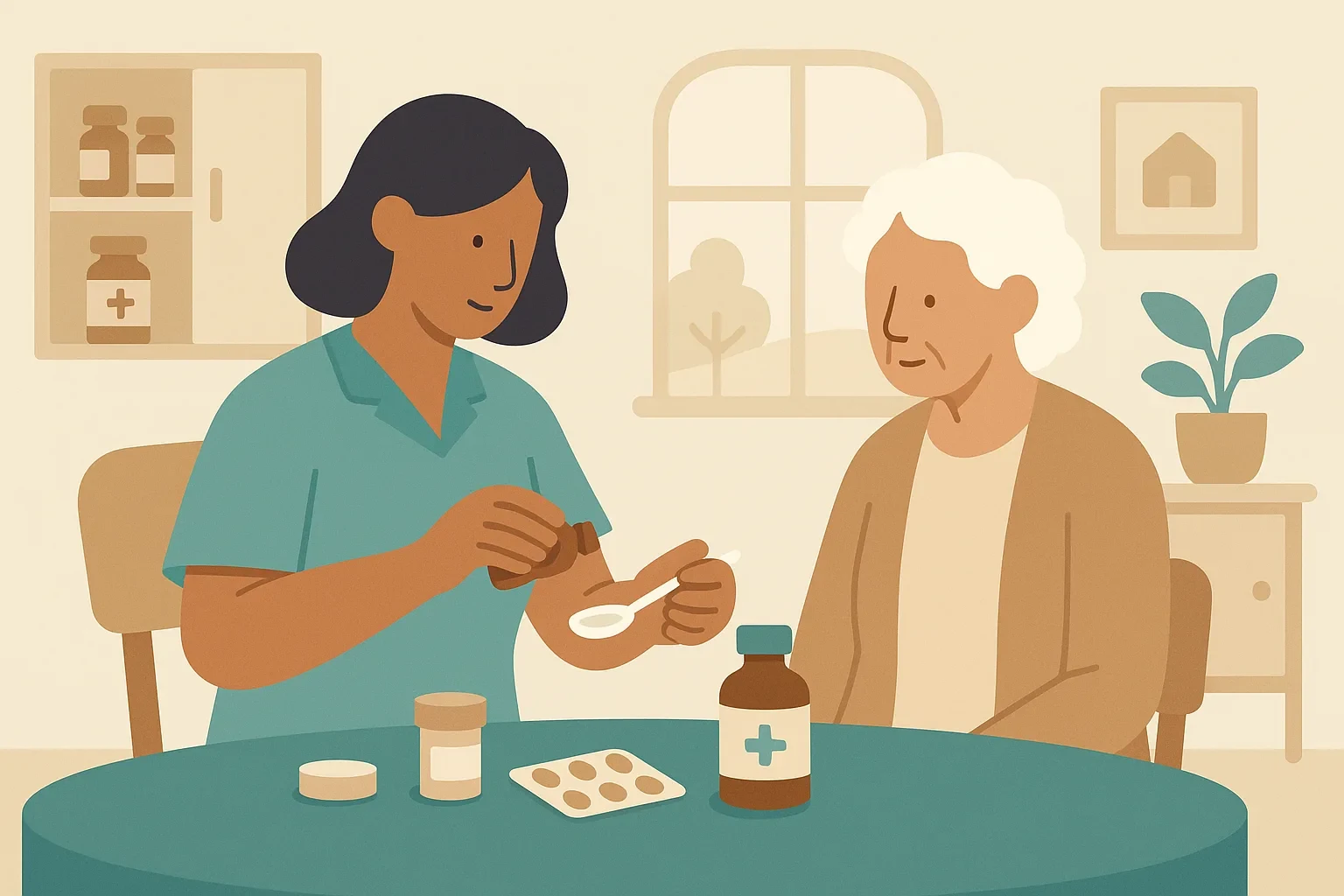
Figure: liquid medicines are where refusals and part doses happen, so the record has to say what really happened.
Moment three: the when required medicine
Later the resident says their hip aches. The chart lists a pain relief medicine to be given when required, often called PRN medication. The carer does not choose the dose or the gap between doses. The chart and the care plan do.
NICE's Managing medicines for adults receiving social care in the community (NG67) says a care plan should state what the medicine is for and the dose. It should also give the minimum time between doses and the most that can be given in 24 hours. The carer checks the last recorded dose before offering anything.
If the resident takes it, the carer records the dose given and, where possible, the amount left. Our course also asks for the reason and what happened afterwards. A when required medicine that was not given gets no signature.
Moment four: the wrong mark
Back at the chart, the carer sees they signed the wrong time slot. They do not scribble it out or reach for correction fluid.
They draw one line through the entry and write the correction beside it. Then they add a signature, the date and the time, and the original stays readable.
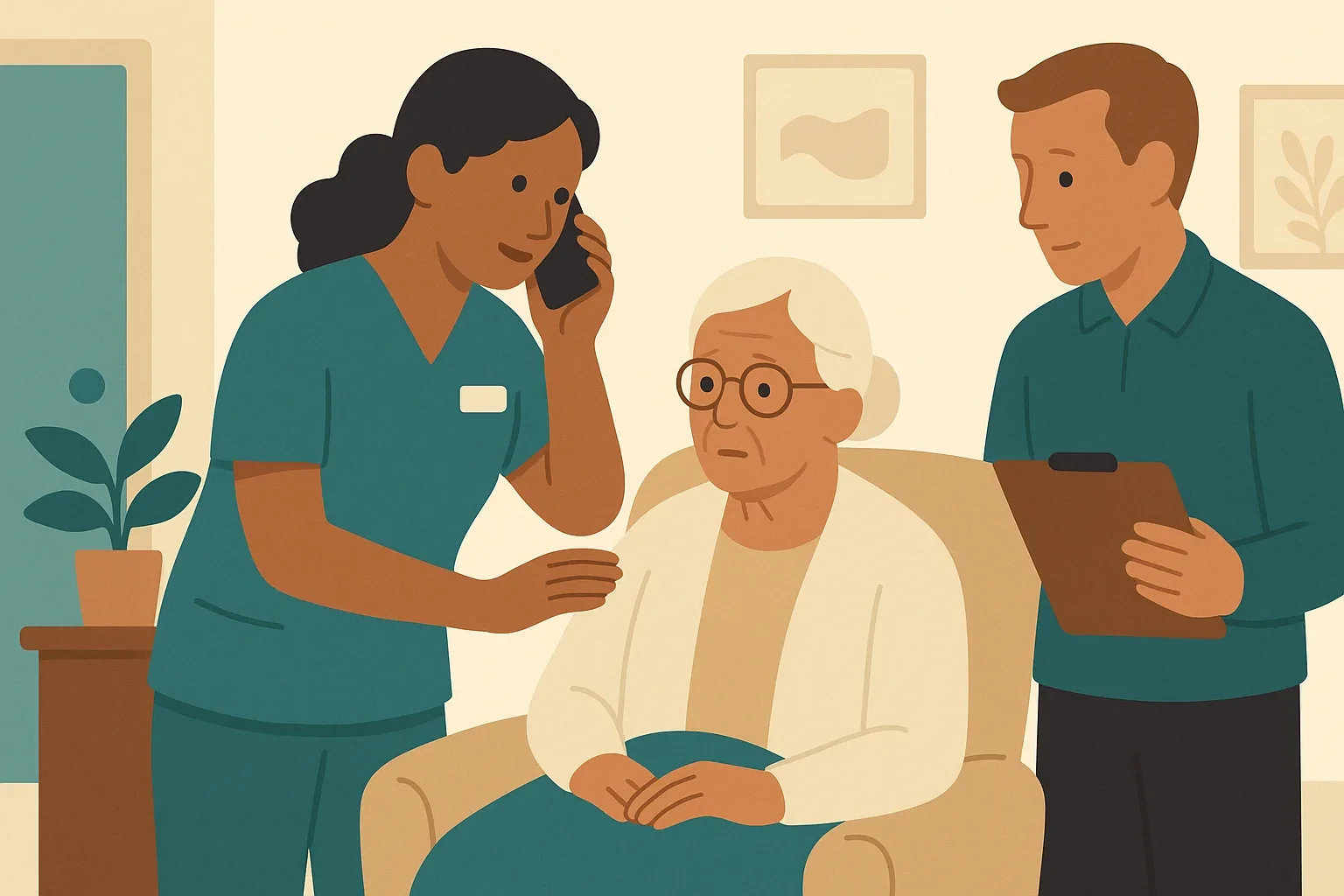
If the slip means a medicine really was given at the wrong time, the carer also tells the senior on duty. That is a medicines error, and the service's policy applies.
Free courses, an 80% pass mark assessment, certificates and a training matrix. Create a free account and start with the Care Certificate.
Create a free accountMedication errors care home teams must report and learn from often begin as a small recording slip. NICE expects every service to have a process for reporting and learning from them.
Six MAR chart errors and what to do instead
Each of these comes from the national guidance. Read them as a checklist for your first weeks.
- Signing in advance. Sign after the person has taken the medicine, as soon as possible.
- Leaving a gap. SC1 says to record when and why a medicine was not given. A blank cannot tell a reader whether the dose was given.
- Using correction fluid or scribbling out. Use the single line, the correction, a signature, the date and the time.
- Jargon, abbreviations and unreadable writing. CQC says the record should be legible and clear, with no jargon or abbreviations.
- Recording a when required medicine without the dose and the stock left, or before it was given.
- Handwriting a change when you are not trained to. CQC says handwritten changes are for people who are competent to make them.
Do the recording codes matter?
Yes, but the letters are not set nationally. We found no list of official codes in the NICE or CQC pages we read. CQC says that for home care there is no standard format for a medicines record.
So your service chooses its own key for refused, not available, taken by the person themselves and similar outcomes. Find the refused code, and every other one, on your chart or in your medicines policy. Use only those codes, and use them the same way every time. Never invent your own.
Moving to a new service? Learn its key before your first signature. The same letter can mean something different somewhere else.
Where the law sits
The Health and Social Care Act 2008 (Regulated Activities) Regulations 2014 set legal duties. One is Regulation 12 on safe care and treatment. It covers the safe management of medicines.
The Care Quality Commission (CQC) links medicines records to Regulation 17 as well. That is the duty of good governance. Your charts show how medicines are managed.
Benefits of CareStream for learning MAR chart recording
CareStream's medication training collection holds the free Medication Administration and Competency course. It runs for 60 minutes in 8 short lessons, each with a care scenario. The assessment has 32 questions with an 80 percent pass mark.
The course is the knowledge half. Your manager or assessor then watches you do a real round against a 12 point checklist. The employer signs it off before you receive a medication administration certificate. The full course page shows the lessons first.
Managers can check finished charts with the MAR chart audit for home care. Written rules sit in a medicines management policy. More are in the medicines policies collection.
Your check before every signature
- Is this the right person, and does the chart match the label?
- Has the medicine been taken, with you watching?
- Is the mark in the right box, in your service's own codes?
- Is there a dose, an amount left and a reason for a when required medicine?
- If anything went wrong, have you told the senior on duty?
Answer the first three before you pick up the pen, and the rest of the chart tends to look after itself.
Sources
- CQC: Medicines administration records in adult social care · cqc.org.uk
- NICE SC1: Managing medicines in care homes, recommendations · nice.org.uk
- NICE NG67: Managing medicines for adults receiving social care in the community, recommendations · nice.org.uk
- legislation.gov.uk: Regulation 12 (Safe care and treatment), Health and Social Care Act 2008 (Regulated Activities) Regulations 2014 · legislation.gov.uk
Frequently asked