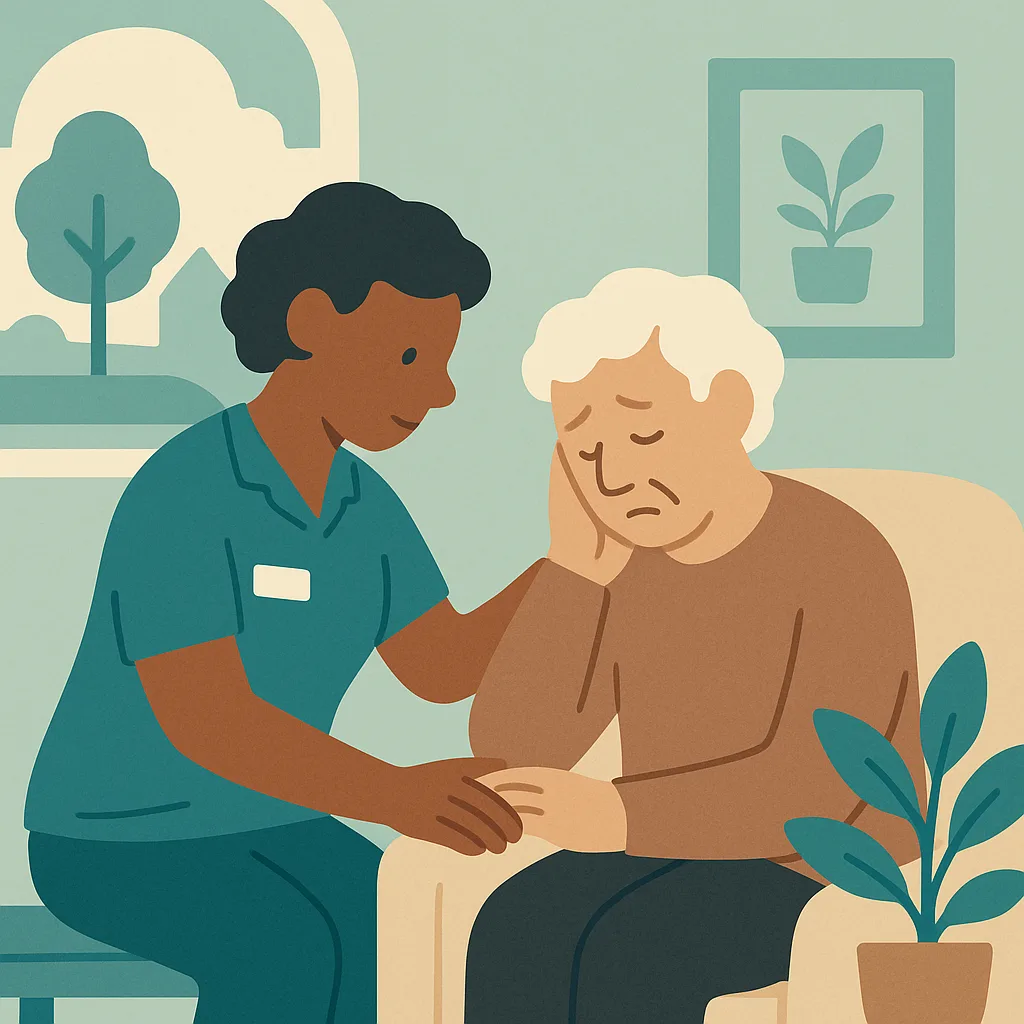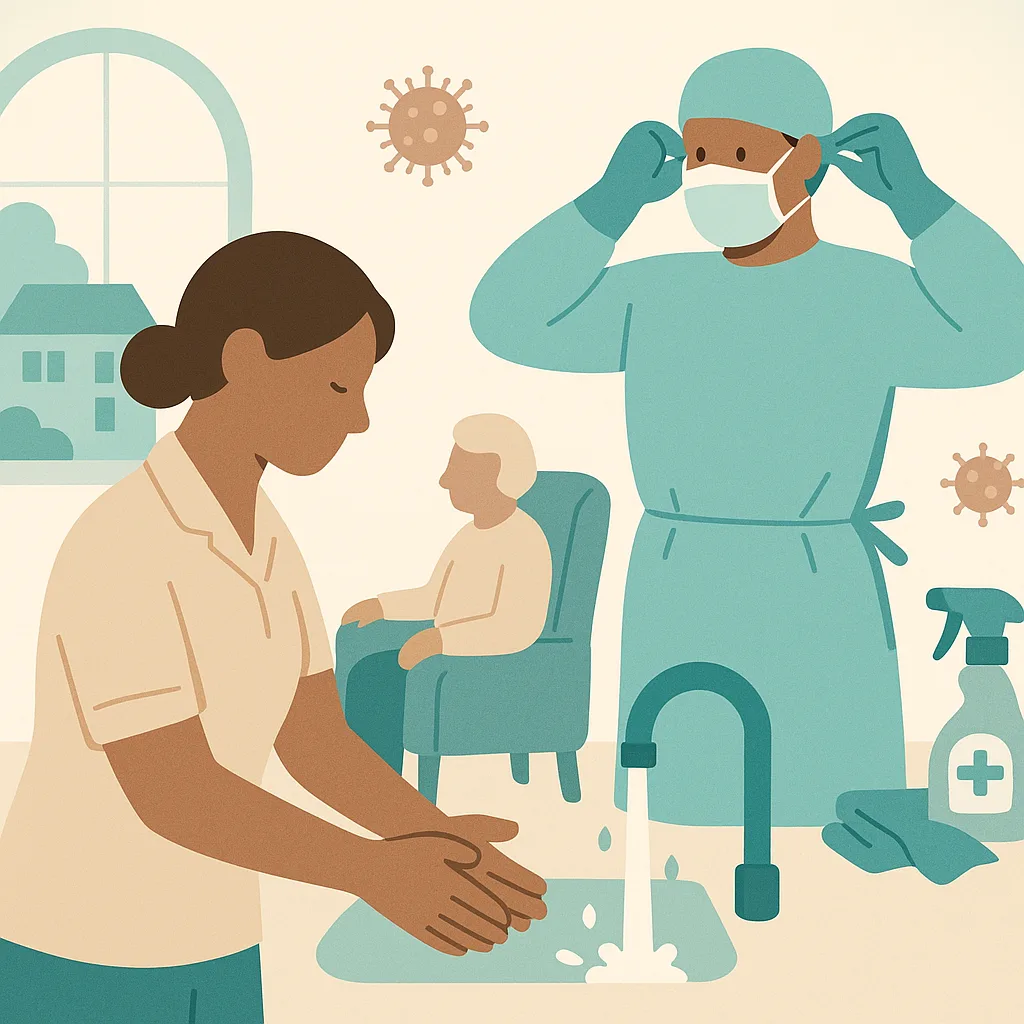
Infection control training gives care workers the knowledge to stop infections spreading between the people they support, their colleagues and themselves. It covers how infections travel, standard precautions such as hand hygiene and PPE, recognising and reporting illness, managing outbreaks, cleaning, laundry, waste and sharps. In adult social care, where many people are older, frail or living with long-term conditions, a single lapse can affect a whole home. That is why infection control is treated as essential training for every role and refreshed every year.
This guide explains what good training looks like, the law and national guidance behind it, what the CQC checks and how often your staff should complete it.
Why is infection control training so important in social care?
People living in care homes share communal spaces, bathrooms and equipment, and staff move between rooms many times a shift. In home care, workers visit several homes a day, carrying anything on their hands, uniform or equipment from one to the next. Both settings give infections plenty of chances to spread.
Many of the people your staff support are also more likely to become seriously unwell if they catch an infection. Common problems in care include:
Norovirus and other causes of diarrhoea and vomiting.
Seasonal flu, COVID-19 and other respiratory infections.
Urinary tract infections, often linked to catheter care and hydration.
Clostridioides difficile, especially after courses of antibiotics.
Skin infections, scabies and infected wounds or pressure ulcers.
Good practice is mostly simple, consistent habits. Training is how you make sure every member of staff, including new starters and night workers, does the same things the same way.
What do the law and national guidance require?
Regulation 12 of the Health and Social Care Act 2008 (Regulated Activities) Regulations 2014, safe care and treatment, requires registered providers to assess the risk of, and prevent, detect and control the spread of infections. Regulation 18 requires staff to have the training they need for their role.
The Department of Health and Social Care publishes the Code of Practice on the prevention and control of infections under the Health and Social Care Act 2008. Registered providers must have regard to it, and the CQC uses it when judging how well a service manages infection risk. It expects providers to have the right policies, a named lead, suitable cleaning arrangements and staff who understand their responsibilities.
For day-to-day practice, NHS England's National Infection Prevention and Control Manual (NIPCM) sets out the standard infection control precautions and transmission-based precautions that apply across health and care in England. The Health and Safety at Work etc. Act 1974 and the COSHH Regulations 2002 also apply, because some infections are a risk to staff as well as residents.
What should infection prevention and control training cover?
Infection prevention and control training for care should start with how infection works, then move quickly to what staff actually do on shift.
The chain of infection
Infection needs a chain of links: an infectious agent, a place where it lives, a way out, a route of transmission, a way in and a person who is susceptible. Breaking any one link stops the spread. Once staff understand this, the reasons behind every other precaution make sense, from washing hands to bagging soiled laundry correctly.
CareStream turns your policies into role-based training with tracking and certificates. See the plans and get started.
See training plansStandard precautions
Standard infection control precautions are used by all staff, with everyone, all the time, whether or not an infection is known about. They include hand hygiene, respiratory and cough hygiene, PPE, safe care of equipment, a clean environment, safe management of linen, blood and body fluid spills, waste and sharps, and assessing where to place someone who may be infectious.
Hand hygiene
Hand hygiene is the single most important precaution. Staff should know when to clean their hands, the right technique, and when to use soap and water instead of alcohol hand rub. Alcohol rub does not work well against Clostridioides difficile spores or norovirus, so during diarrhoea and vomiting, soap and water is needed. Keeping nails short and free of nail varnish and false nails, removing wrist jewellery and keeping forearms bare all help hands to be cleaned properly.
Personal protective equipment
PPE only protects when it is the right item, put on and taken off in the right order, and changed between tasks and between people. Gloves are not a substitute for hand hygiene, and wearing the same pair from room to room spreads infection rather than stopping it.
How should staff recognise and report infection?
Care workers are often the first to notice that someone is unwell. A new cough, a raised temperature, confusion that is out of character, loose stools, reduced appetite or a change in urine can all be early signs of infection in older people. Training should encourage staff to report changes promptly, record them clearly and follow your escalation process, so that a GP or community nurse can be involved early.
When two or more people in a setting develop similar symptoms around the same time, it may be an outbreak. Your local UK Health Security Agency health protection team can advise on what to do. Staff need to know your outbreak plan, including transmission-based precautions such as isolating people in their rooms where appropriate, extra cleaning, and the rules for visitors and for staff who become ill. Staff with diarrhoea or vomiting should stay away from work until they have been free of symptoms for 48 hours.
What about cleaning, laundry, waste and sharps?
These are the areas where good intentions most often slip, so training should be specific.
Cleaning: shared equipment such as commodes, hoists, slings and blood pressure cuffs must be cleaned between people, using the products set out in your policy.
Laundry: soiled or infected linen should be handled as little as possible, bagged at the point of use and washed at the correct temperature, never sorted or shaken out.
Spills: blood and body fluid spills should be dealt with promptly using the right PPE and products, following your spill procedure.
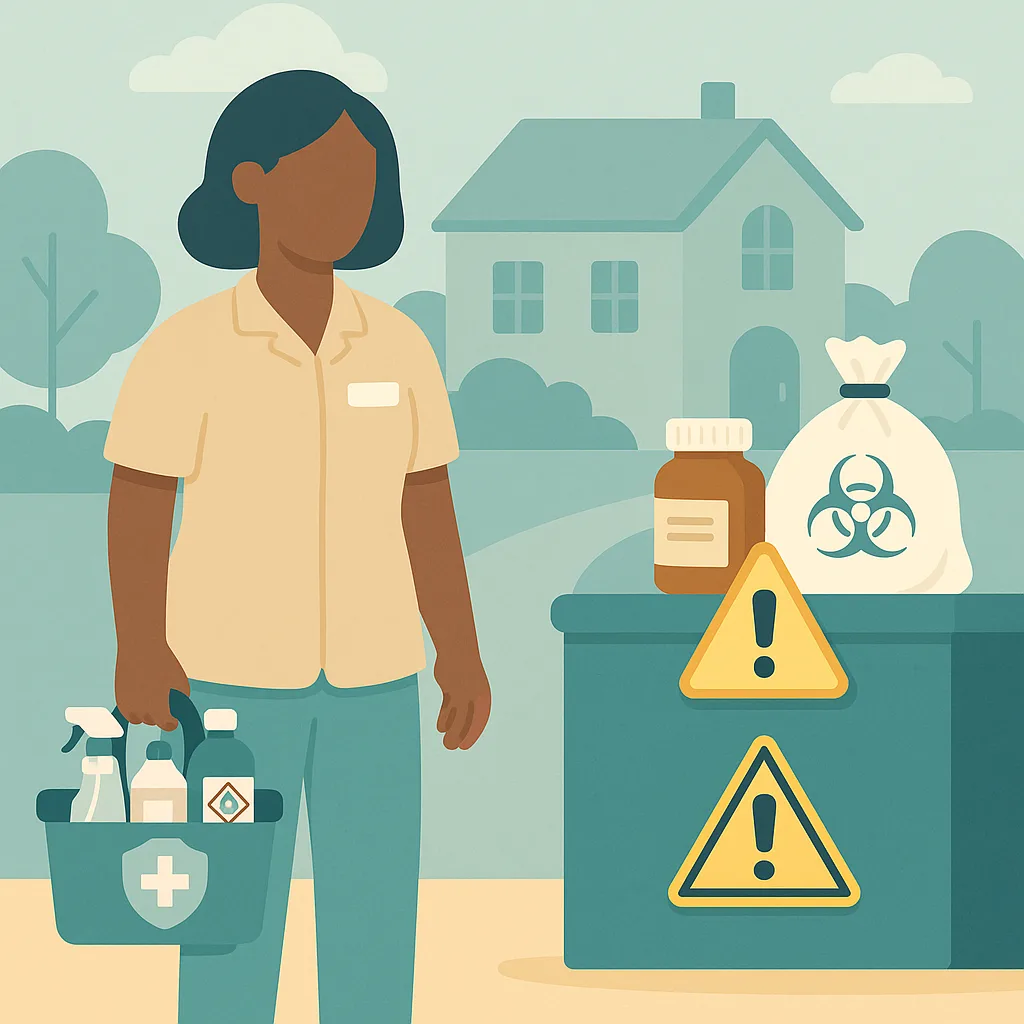
Waste: staff should use the correct waste stream for clinical, offensive and domestic waste, as set out in your local arrangements.
Sharps: used sharps go straight into an approved sharps bin at the point of use, never re-sheathed, and bins are closed when they reach the fill line.
If a worker has a needlestick injury or is splashed with blood or body fluids, they should encourage the wound to bleed, wash it with soap and running water, cover it, report it straight away and get urgent medical advice. Speed matters, so this should be part of every refresher.
What does the CQC look for in infection prevention and control?
Inspectors look at IPC both on paper and in practice. They may:
Watch whether staff clean their hands at the right moments and use PPE correctly.
Check the cleanliness of rooms, bathrooms, kitchens and shared equipment.
Look at your IPC audits, cleaning schedules and how actions from them are followed up.
Ask how the service handled any recent outbreak and what was learned.
Assign, track and evidence staff training in minutes. Explore the plans and roll it out this week.
See training plansReview training records to confirm that every member of staff has up-to-date IPC training.
An infection prevention and control certificate for each worker, with a date and a score, gives you clear evidence for the training part of that picture. What inspectors see staff doing on the floor shows whether the training has worked, which is why observation, supervision and audits should sit alongside it.
How often do care staff need infection control training?
The Skills for Care statutory and mandatory training guide includes infection prevention and control as core training for adult social care, and it is one of the Care Certificate standards for new workers. Most providers refresh it annually for every member of staff, including domestic, kitchen and laundry teams, because their work is central to keeping infection under control. You may also want extra sessions ahead of winter, after an outbreak or when guidance changes.
Does an infection control online course work for care workers?
An infection control online course is a practical way to provide knowledge training to a team spread across shifts and locations, and to keep it consistent. It works best when it is written for social care rather than hospitals, uses realistic scenarios and tests understanding with a proper assessment. Pair it with practical checks, such as hand hygiene audits and observing PPE use, so you can see the knowledge being used.
The CareStream Infection Prevention and Control CPD Certified course
Our Infection Prevention and Control course is a CPD Certified Course, certified by The CPD Certification Service and worth 1 CPD hour. It is built on the Skills for Care statutory and mandatory training guide and NHS England's National Infection Prevention and Control Manual, for residential, nursing, home care, supported living and day services. The eight lessons are:
CareStream is a registered CPD Provider (No. 50224). You can check our membership and see every CPD-certified course we offer on our page on The CPD Certification Service website.
The chain of infection
Standard precautions and your role
Hand hygiene
Personal protective equipment
Recognising and reporting infection
Outbreaks and transmission-based precautions
Cleaning, care equipment, laundry and spills
Waste, sharps and exposure incidents
Learners work through scenarios and interactive activities, then complete a 32-question knowledge assessment with an 80% pass mark. The course takes about an hour, online on any phone or computer, at the learner's own pace, and is available in over 60 languages. A wrong answer triggers a short follow-up lesson so the gap is closed straight away.
Each learner who passes receives a named, dated certificate with the CPD mark. It evidences completion of CPD Certified training and passing our knowledge assessment; it is not a qualification and does not replace observing practice. Managers allocate licences and track completions and scores from a dashboard. The course is an annual refresher, with team prices from 10 licences and a 14-day refund on any licence not yet started.
Keeping infection out of your service
Infection prevention in care comes down to everyone doing the basics well, every time. Regular infection control training, refreshed each year and backed by audits, good supplies and a clear outbreak plan, helps your staff protect the people they care for, their colleagues and themselves.
Sources
- NHS England: National Infection Prevention and Control Manual for England · england.nhs.uk
- GOV.UK: Health and Social Care Act 2008 code of practice on the prevention and control of infections · gov.uk
- GOV.UK: infection prevention and control resource for adult social care · gov.uk
- CQC: Regulation 12, safe care and treatment · cqc.org.uk
- CQC: Regulation 18, staffing · cqc.org.uk
- Skills for Care: statutory and mandatory training guide · skillsforcare.org.uk
Frequently asked
Is infection control training mandatory for care workers?
Regulation 12 requires registered providers to prevent, detect and control the spread of infections, Regulation 18 requires staff to be trained for their role, and Skills for Care lists infection prevention and control as core training. It is also one of the Care Certificate standards for new workers.
How often should care staff complete infection prevention and control training?
Most providers refresh it every year for all staff, including domestic, kitchen and laundry teams. Extra sessions before winter, after an outbreak or when guidance changes are also sensible.
Can infection control training be done online?
An infection control online course works well for the knowledge part and keeps training consistent across shifts. Pair it with hand hygiene audits and observing PPE use so you can see the learning in practice.
What are standard infection control precautions?
They are the precautions all staff use with everyone, all the time, including hand hygiene, respiratory hygiene, PPE, safe care of equipment, a clean environment, and safe management of linen, spills, waste and sharps. They are set out in NHS England's National Infection Prevention and Control Manual.
Does an infection prevention and control certificate last forever?
No. A certificate shows training was completed on a given date. Because practice and guidance change and habits slip, care providers usually expect staff to renew their infection prevention and control training every 12 months.
Written by
 Len BurgessSenior Care Advisor
Len Burgess has worked in the care sector for over 8 years, with hands-on experience across residential, nursing and community settings. Having supported teams through CQC inspections and the day-to-day reality of keeping a service compliant, he writes about regulation, quality and best practice in a way that's grounded in what actually happens on the floor, not just what the guidance says.