Palliative care is not a polite word for dying. A resident can receive it for years, and walk to the lounge for lunch while they do.
Yet a handover note that says "now palliative" is often read as "days left". In the palliative care vs end of life care debate, one word has two meanings, and families hear the worse one. Here are four beliefs we hear on the floor, checked against what the NHS, NICE and Marie Curie say.
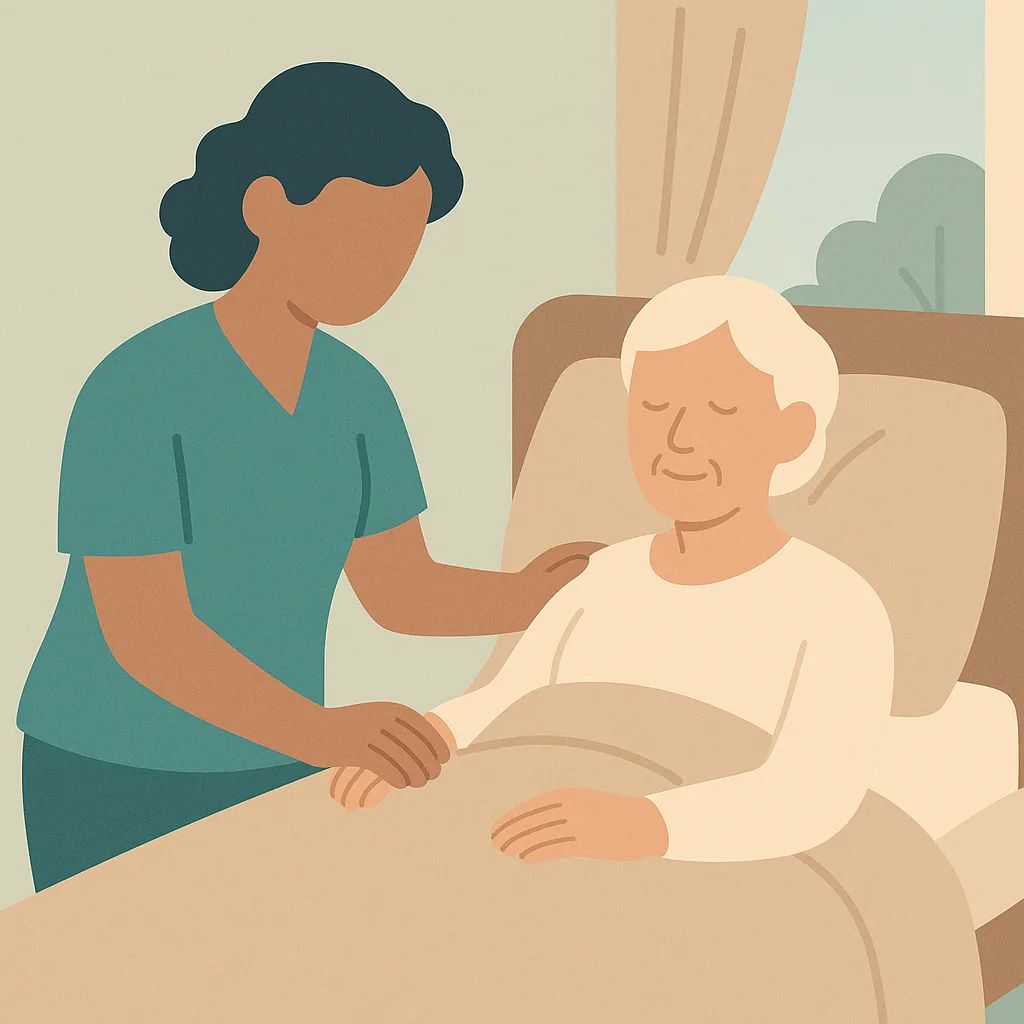
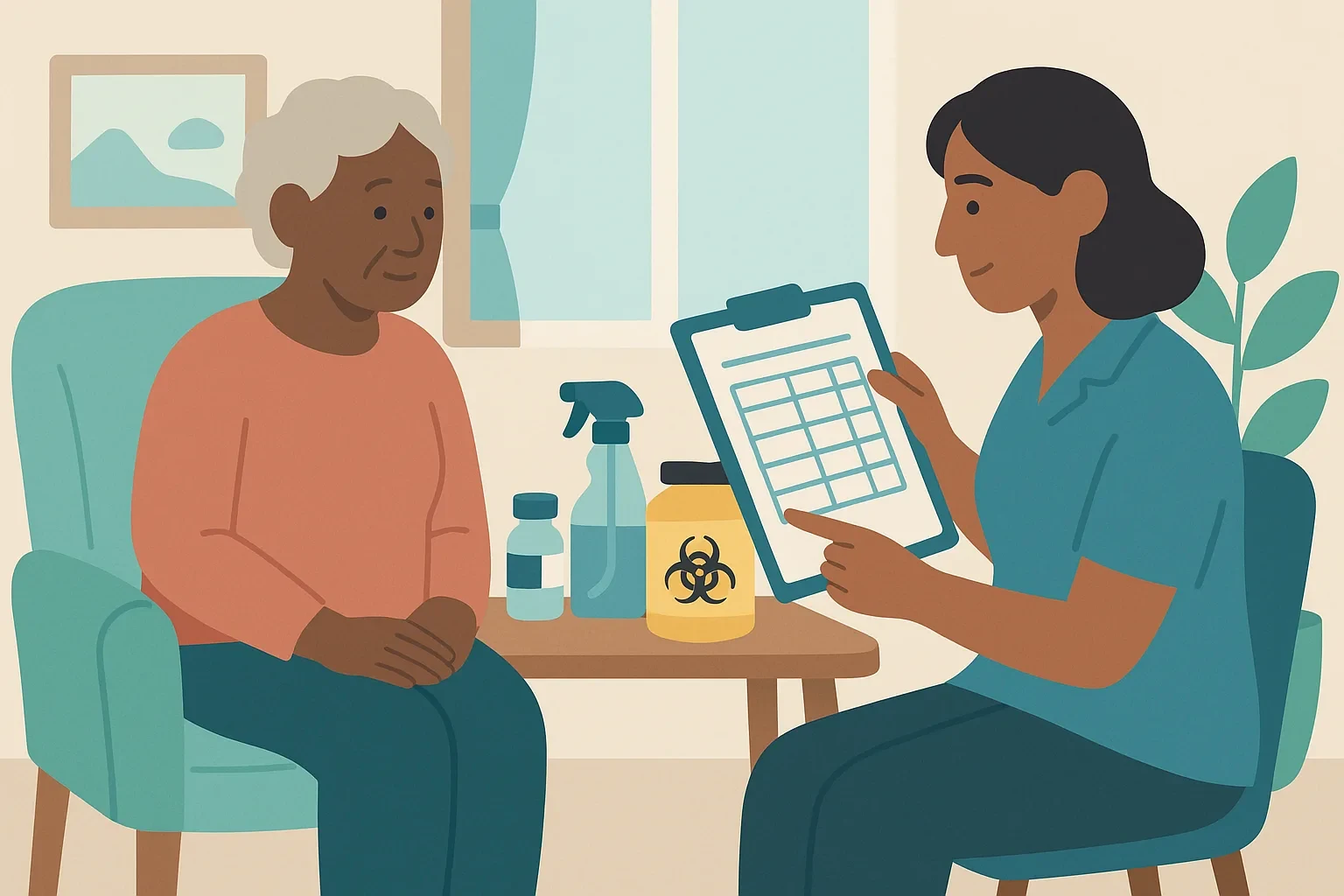
Figure: the End of Life and Palliative Care course illustration. The care shown here is comfort, not cure.
Belief one: they are two names for the same thing
They are not. The NHS describes end of life care as a form of palliative care that a person receives when they are close to the end of life. The two overlap, but one sits inside the other.
The CPD certified Care Certificate and the annual courses are free on every plan. No card needed, and every staff login is included.
Create a free accountMarie Curie answers the question directly in its page on palliative care. Palliative care can include end of life care, it says, but it is much broader and can last for longer.
A simple picture helps new staff. Palliative care is the large circle. End of life care is the inner circle, near the middle, close to the end.
Belief two: palliative care starts when treatment stops
This is the one that does the most harm. The NHS says palliative care is available when a person first learns they have a life-limiting (terminal) illness. Someone may receive it while still having other therapies to treat their condition.
Marie Curie agrees. Chemotherapy and radiotherapy can run alongside palliative care, it says. Some people call it supportive care.
So a resident with advanced dementia or heart failure may have palliative care in place long before anyone talks about the last weeks. What changes over time is the focus. It moves toward comfort, symptoms and what matters to the person.
Belief three: end of life care means the last few days
Sometimes it does. Often it does not. The NHS says end of life care may last a few days or months, or sometimes more than a year.
The NHS counts people as approaching the end of life when they are likely to die within 12 months. It adds that this is not always possible to predict. That covers people whose death is expected soon. It also covers people with an advanced incurable illness such as cancer, dementia or motor neurone disease.
It covers frail people with other conditions too, and people who could die if their condition suddenly worsens. Our staff often picture only the last room on the corridor. The definition is much wider than that.
Marie Curie words it the same way: end of life care usually starts to be offered to people thought to be in their final twelve months.
Belief four: the official guidance draws a hard line between the two
It does not, and this is where we ask staff to be careful. In NICE guideline NG142, end of life care includes both supportive and palliative care. NICE sets this out in the context section of NG142, and notes that the terms vary between services.
NICE adds that NHS England defines end of life care as care in the final twelve months. For some conditions, it says, care may run for months or years.
Free courses, an 80% pass mark assessment, certificates and a training matrix. Create a free account and start with the Care Certificate.
Create a free accountSo no single sentence settles every case, and the difference between palliative and end of life care depends partly on the source. Sources frame the overlap a little differently. We suggest your service picks one plain wording and uses it in care plans, handovers and conversations with families.
A scene from the floor
Here is an example, not a real case. A night carer reads "palliative" on a handover sheet for a resident with advanced heart failure. She assumes the end is close and rings the family at two in the morning.
The family arrive frightened. The resident, in fact, has had palliative care for two years. She is comfortable, eating well, and asleep.
Nobody did anything careless. The word did the damage. A line such as "palliative care for symptom control, not thought to be in the last weeks" would have kept the phone quiet.
What a care home team can do with this
Words in a care plan shape what people expect. Four small habits help.
- Say what you mean. Write "receiving palliative care for symptom control" or "in the last weeks of life", not "palliative" alone.
- Record the person's wishes early. NICE says people approaching the end of their life should be offered advance care planning.
- Keep the plan where staff can find it. NICE says each person should have a copy of their advance care plan available in their place of residence or with them if admitted to a care home, hospice or hospital.
- Know who leads. The NHS says that in a care home the GP has overall responsibility for the person's care.
The last point matters at night. A senior carer who knows the plan, and whom to call, protects the person's comfort and their family's trust.
Benefits of CareStream for palliative care vs end of life care training
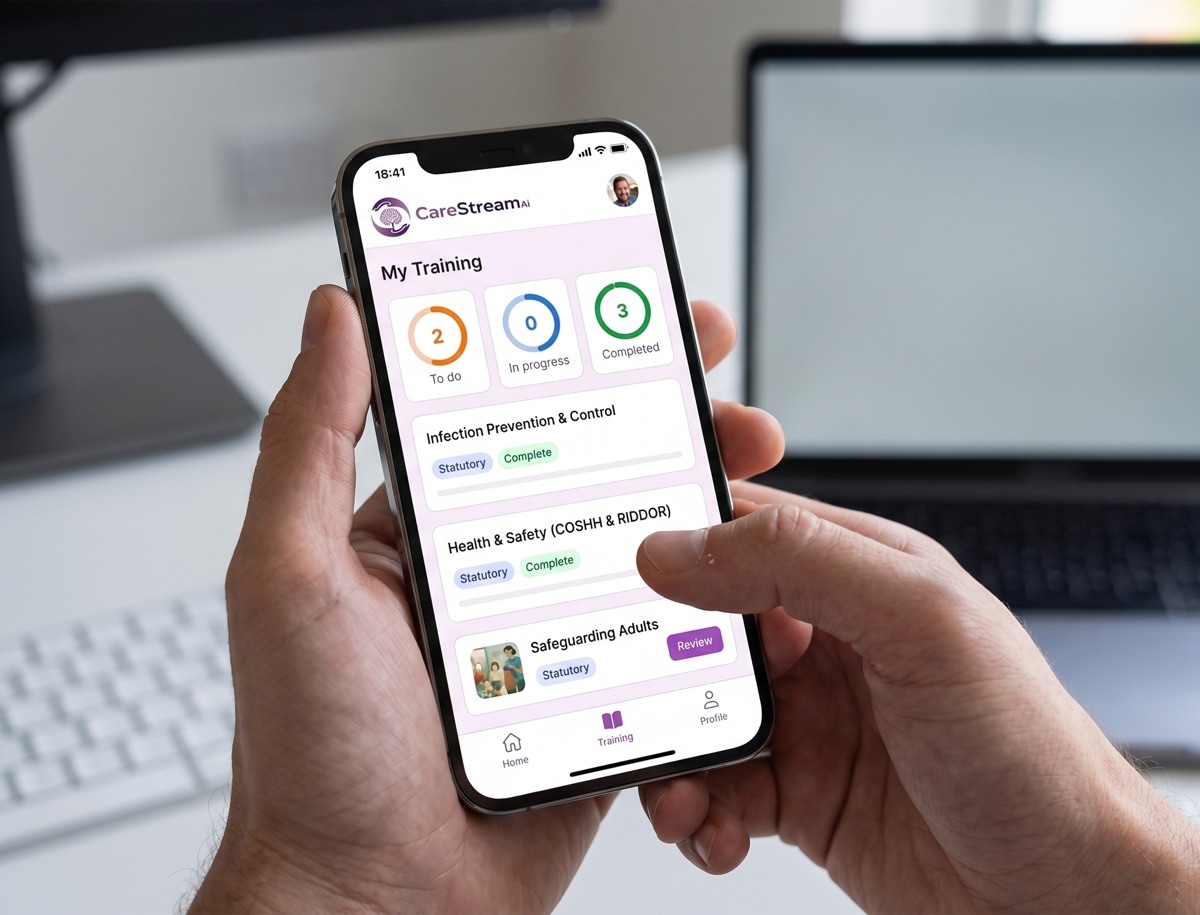
CareStream offers a free End of Life and Palliative Care course, one of the 10 CPD certified courses on the free plan. It takes about 60 minutes, and the certificate is included. It is in English on the free plan.
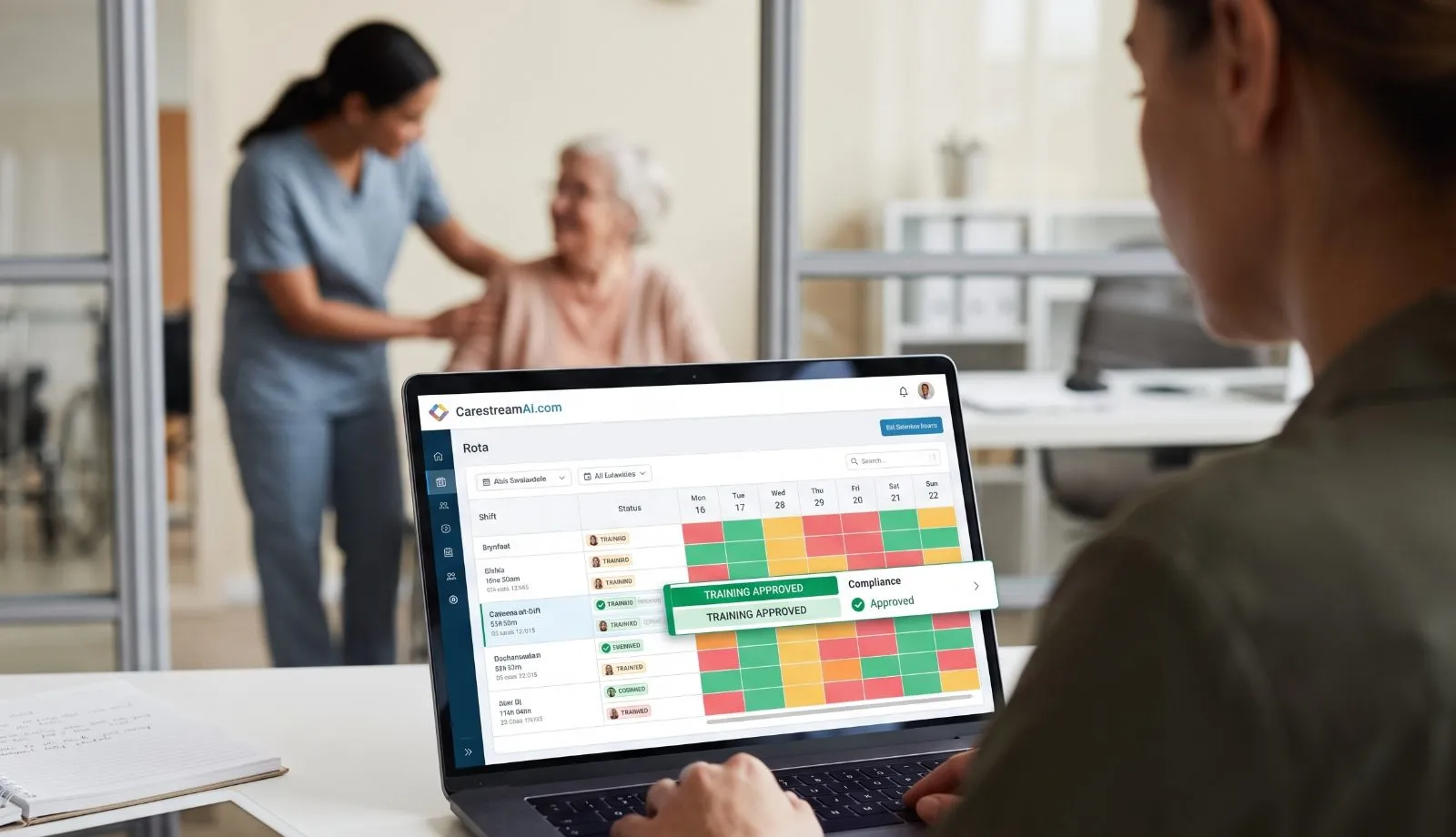
Anyone searching for palliative care courses for a whole team can start here at no cost on the free plan. The CareStream training matrix shows who has finished it, so a manager sees gaps before a shift is short of confident staff. The free End of Life and Palliative Care course is a good first step for the team.
Agree the wording, then check every shift uses it
A course does not make a service safe on its own. The care is in the conversations, the plan and the night staff who read it.
Our wider post on what care staff should learn in end of life care training covers the course content, so we do not repeat it here. If your service wants written procedures to match, there is also a policy for end of life and palliative care.
Start with one page: your service's plain wording for palliative care and for end of life care. Put it in the care plan template. Then ask each shift lead to read it aloud at the next handover.
Sources
Frequently asked