Policy collection
Safeguarding Policies for CQC Registered Care Services
Safeguarding policies are the first documents an inspector asks to see, and the ones most likely to be read line by line rather than skimmed. This collection brings together the safeguarding policies that a regulated provider in England is expected to hold, written for your service rather than for a generic one. Every document names your registered company, your trading name and address, your CQC provider and location IDs, your registered manager, your nominated individual and the safeguarding lead the policy itself has to identify. We check each one against the regulations that apply to your setting, a person reads it before it is sent, and it arrives within two working days on your own letterhead with a sign-off block ready for signature. You can order a single document from £39, a themed pack from £295, or the twenty statutory documents for £495. There is no subscription, no contract and no quote needed. CareStream exists so that the folder you hand over holds something you wrote, for your service, and can stand behind.

Recognising, responding to and reporting abuse and neglect, aligned to the Care Act 2014 and your local authority procedures.

Raising concerns safely, PIDA protections, and your speak-up arrangements.
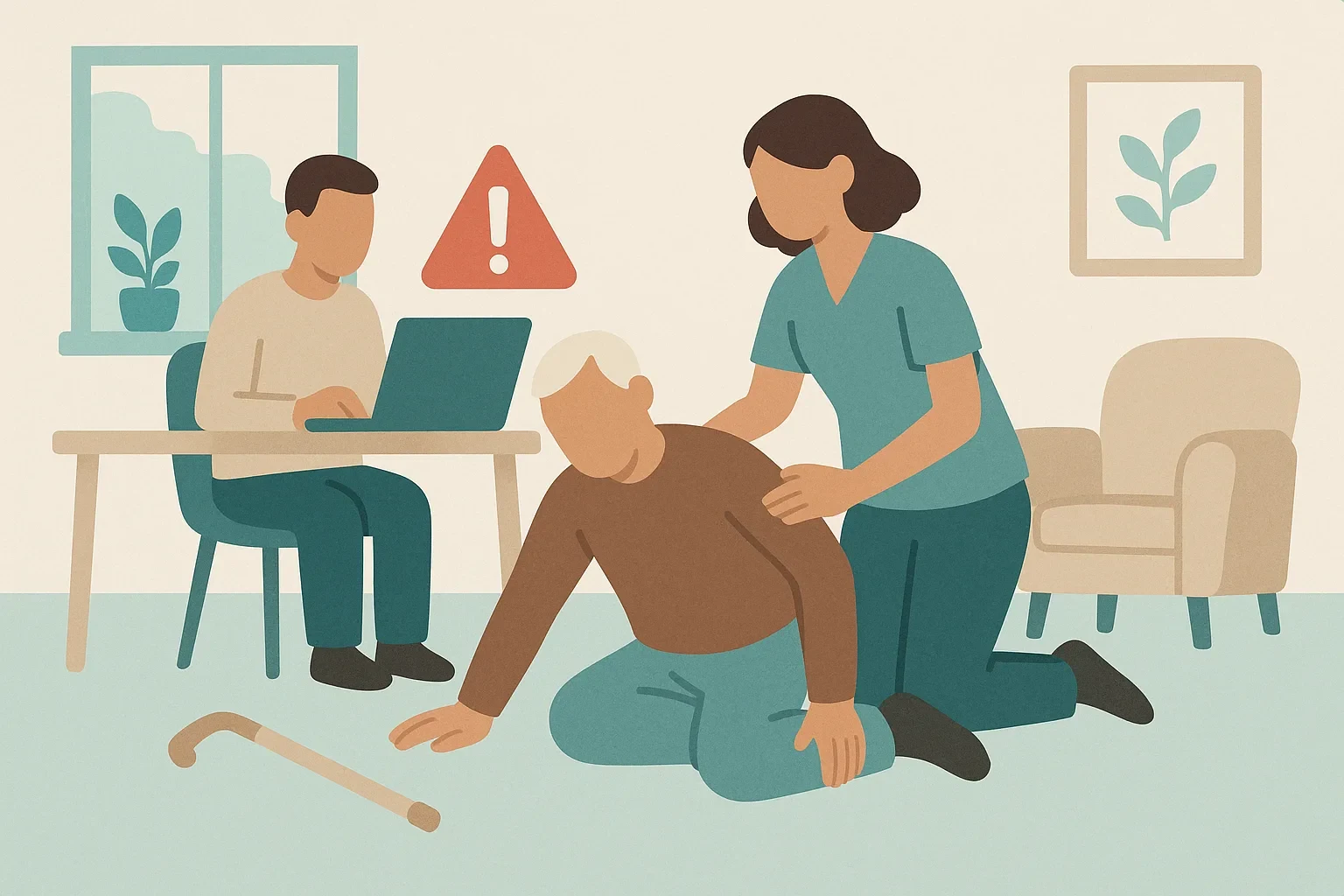
Recording, investigating and learning from incidents, RIDDOR and CQC notifications.

The Prevent duty: recognising radicalisation risk and how referrals are made.

Fit and proper persons, DBS checks, references and ongoing suitability under Regulation 19.

Being open and honest when things go wrong, under Regulation 20.
A safeguarding policy you can hand to an inspector without flinching
The Care Quality Commission does not rate a policy on its own. What an inspection looks at is whether the written document and the practice in your service describe the same thing. A safeguarding policy that names your service, identifies the people accountable by name and role, reflects the law as it currently stands and can be evidenced in staff understanding is a policy that holds up under questioning. One that still says insert name of home here, or refers to a local authority safeguarding team that reorganised four years ago, does the opposite. It invites a closer look at everything else.
That is the difference this collection is built around. These are not templates you finish yourself at half past ten at night; CareStream doesn't work with templates. They are written documents, made for one named service, and checked by a person before they leave us.
What an inspector actually reads when they ask for your safeguarding policy
An inspector opens a safeguarding policy looking for a short list of specific things. First, whether the document belongs to your service: the legal entity, the location, the registered manager and the named safeguarding lead and deputy, with a version number and a review date that has not passed. Second, whether it states the legal framework correctly, naming the Care Act 2014, the Health and Social Care Act 2008 (Regulated Activities) Regulations 2014 and the duty under Regulation 13 to safeguard people from abuse and improper treatment. Third, whether it explains what a member of staff does in the first hour after a disclosure, who they tell, what they write down, what they must not do, and how the concern reaches the local authority under section 42 of the Care Act 2014. Fourth, whether it says plainly when the Care Quality Commission must be notified under the registration regulations, when the police are called, and when a referral to the Disclosure and Barring Service is required. Fifth, whether your staff can describe all of that without reading it off the page.
Written for your service, hand-checked and sent within two working days
Personalisation here means more than a find and replace on the front cover. We merge your registered details and your named role holders into the body of the document, so the escalation route reads as your escalation route rather than a general description of how safeguarding works somewhere. The reporting section carries the contact details a member of staff would actually use at two in the morning. Where your setting changes, the answer changes with it: a domiciliary care agency needs a lone working and missed visit route into safeguarding that a residential home does not, and a supported living service needs different language around capacity, tenancy and restrictive practice. Each document is then read by a person against the regulations that apply to your registered activities before it is released, which is why we say two working days rather than on demand. The file you download is print-ready, sits on your letterhead, and carries a sign-off block for the registered manager and nominated individual. When the law changes, the document is updated when the law changes rather than at the end of an annual cycle.
What this collection contains and which regulation each document answers to
Safeguarding is not one policy. It is a group of documents that have to agree with each other, because staff follow whichever one they find first and inspectors notice when two documents give different instructions. This collection holds the safeguarding policies that sit together in a regulated service, and each one below explains what the document contains and why a service would need it.
The safeguarding adults policy and the law it sits underneath
A safeguarding adults policy is the document that sets out how your service prevents, recognises, reports and responds to abuse and neglect of the adults it supports. It answers directly to Regulation 13 of the Health and Social Care Act 2008 (Regulated Activities) Regulations 2014, which requires providers to protect people from abuse and improper treatment, and to the Care Act 2014, which creates the local authority duty to make safeguarding enquiries under section 42 and establishes Safeguarding Adults Boards and Safeguarding Adults Reviews. A properly written version names the ten categories of abuse and neglect set out in the Care and Support Statutory Guidance, including physical, sexual, psychological, financial or material, discriminatory and organisational abuse, domestic abuse, modern slavery, neglect and acts of omission, and self-neglect. It applies the six principles of adult safeguarding: empowerment, prevention, proportionality, protection, partnership and accountability. It explains Making Safeguarding Personal in practice rather than as a phrase. It states when a statutory notification goes to the regulator, and it names your local authority safeguarding route.
Safeguarding children, whistleblowing and the documents usually held alongside
Most adult services still need a safeguarding children policy, because staff visit family homes, residents have grandchildren, and a concern about a child can reach you through an adult you support. That document sits under the Children Act 1989, the Children Act 2004 and the statutory guidance Working Together to Safeguard Children, and it names your Local Authority Designated Officer route for allegations against staff. Alongside it, a whistleblowing policy gives staff a protected way to raise concerns under the Public Interest Disclosure Act 1998 when the normal line management route is the problem. A Mental Capacity Act policy covering the Deprivation of Liberty Safeguards explains how capacity is assessed, how best interests decisions are recorded, and how a restriction becomes a deprivation of liberty requiring authorisation. Services often buy these three together with the adults policy as a bundle, because an inspector reading one will usually ask for the others. You can also compare them against the full list of policies required by CQC for a care home before deciding what your folder is missing.
Who these policy products are perfect for
These documents are made for the person who runs the service rather than for a compliance department, because most of our customers do not have one. They suit registered managers, owners and nominated individuals responsible for one or two locations, with no in-house HR, no procurement process and no appetite for a nine hundred pound pack when one document is what was asked for. They apply across residential care homes, nursing homes, domiciliary care agencies, supported living services, extra care, Shared Lives schemes, hospices and the wider regulated sector. People buy them at a particular moment rather than on a schedule: an inspection booked or just finished or is anticipated, a report that named a policy as missing or thin, a registration application or a new regulated activity, a local authority or integrated care board contract asking for evidence, an incident or complaint that exposed a gap, or a new manager who has inherited a folder nobody has opened in three years. If you have been asked what policies do I need for CQC registration, or which policies does a domiciliary care agency have to have, this collection is the plain answer.
Why our policies are better than the alternatives, and better value
Compare what else is available, and the differences are easy to see. A free download still says insert name here, cites regulations that moved, and contradicts the three other documents in your folder. A subscription pack charges you every year for twenty documents when you needed one, and locks the whole set behind a renewal date. A consultant charges a day rate and sends a file. What CareStream sends is a document written for one named service, checked against the regulations that apply to your registered activities, hand-checked and human-reviewed before release, delivered in two working days, print-ready on your letterhead with a sign-off block. A single safeguarding policy is a one-time purchase with no subscription and nothing to cancel, though a subscription, if you later choose one for the wider platform, can be cancelled anytime. Holding the document is only half of it, so services often pair a policy with safeguarding adults and children training that evidences staff have read and understood it, which is the part inspectors test.
Price, ordering and what happens next
Every price is on the page, because asking a registered manager to request a quote for a single policy wastes everyone's afternoon. A single document costs between £39 and £79 depending on length and setting. A themed safeguarding pack starts at £295 and is the best value if you need the adults policy, the children policy, whistleblowing and the Mental Capacity Act document together. The twenty statutory documents are £495. Payment is by secure checkout; it is a one-time purchase, and there is no contract. To get started, choose the document you were asked for, tell us your service details at checkout, and order today. We write it, a person checks it, and it reaches you within two working days. If it does not describe your service accurately, tell us, and we will correct it or refund it under our return policy. A single purchase also connects you to the wider CareStream set of care policies and procedures written for CQC-registered services, so the document you buy today sits in the same structure as anything you add later.
Safeguarding Policies for CQC Registered Care Services FAQs
What are examples of safeguarding policies?
In a regulated care service, the usual set is a safeguarding adults policy, a safeguarding children policy, a whistleblowing policy, a Mental Capacity Act and Deprivation of Liberty Safeguards policy, a safer recruitment policy, a policy on supporting residents with their money and personal allowances, a restrictive practice or positive behaviour support policy, a missing person policy, and a duty of candour policy. Larger or specialist services add a Prevent and counter terrorism awareness policy and a modern slavery policy. They are separate documents because they answer to different laws, but they have to agree with each other on who reports what, to whom, and in what order.
What are 5 examples of safeguarding?
Five examples drawn from the categories of abuse and neglect in the Care and Support Statutory Guidance are physical abuse, such as rough handling during a transfer; neglect and acts of omission, such as a person left without fluids or without prescribed medication; financial or material abuse, such as money taken from a resident's personal allowance; psychological abuse, such as intimidation or isolation from family; and sexual abuse. Each of these should appear in your safeguarding adults policy with an example a member of staff would recognise from their own shift, rather than as a list of terms.
What are the 5 main areas of safeguarding?
There is no statutory list of five. The phrase usually refers to one of the training mnemonics used in the sector. What does exist in law and guidance is the set of ten categories of abuse and neglect named in the Care and Support Statutory Guidance under the Care Act 2014: physical, domestic, sexual, psychological, financial or material, modern slavery, discriminatory, organisational, neglect and acts of omission, and self-neglect. If an inspector asks your staff about safeguarding, the ten categories and the six principles are safer ground, and both should be written into your policy.
What are the 6 C's of safeguarding?
The six Cs are care, compassion, competence, communication, courage and commitment. They came from the nursing and care values framework rather than from safeguarding law, and they are often taught alongside safeguarding because courage and communication are what a member of staff needs when raising a concern about a colleague. They are useful in induction and supervision. They are not a legal test, and a policy built only on values language without a reporting route will not satisfy an inspector looking at Regulation 13.
What are the 5 R's of safeguarding?
The five Rs are recognise, respond, report, record and refer. They are a training aid that helps staff remember the order of actions after a disclosure or an observation: recognise that something may be abuse or neglect, respond calmly without promising confidentiality or investigating, report to the designated safeguarding lead without delay, record what was seen or said in the person's own words with the date and time, and refer to the local authority where the threshold is met. A good safeguarding policy sets out each of those five steps with your named people and your local contact details attached.
Browse the rest of the library
Most services need more than one. These are the collections people buy alongside this one.
Policies are one part of it.
CareStream is the compliance system underneath: your policies, your staff training, your audits and your evidence, kept current and ready for the day somebody asks to see them.
- Policies written and kept updated for you
- Staff training that records itself against the standard
- Gap analysis showing what you are missing before an inspector does
- Everything in one place, for one price