Say it the way CQC says it, so your evidence lands
Your policies describe good practice in your own words. An inspector is looking for theirs. Wording alignment reviews what you already have against the assessment framework language and proposes the edits, which you approve.
14 day free trial · Set up in a day · UK data residency
Good practice that does not use the framework language is harder to credit
You are not changing what you do. You are making it recognisable to the person assessing it.
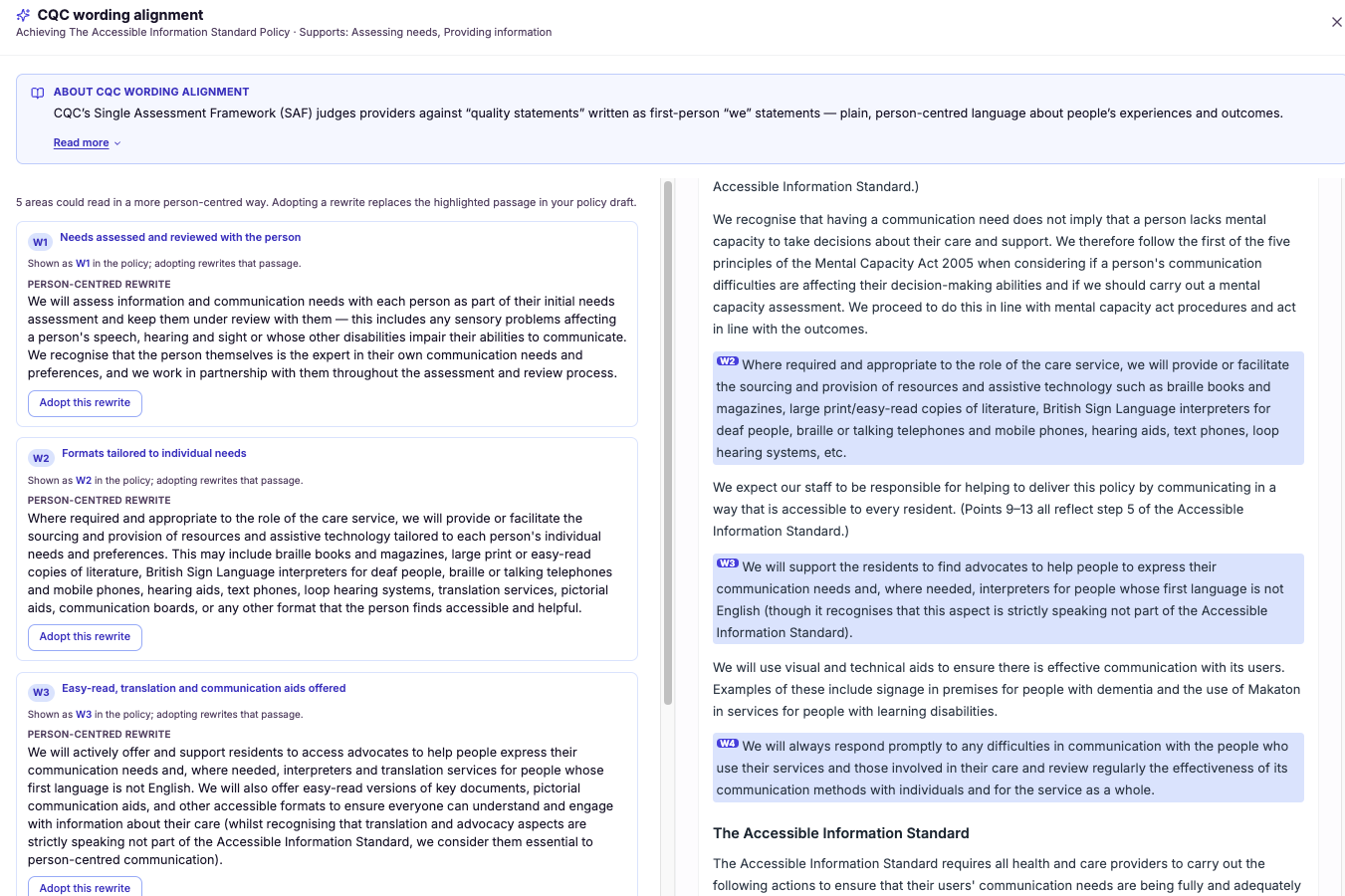
Mapped to quality statements
Each policy is checked against the quality statements it should evidence, so the mapping is visible rather than implied.
Edits proposed, not imposed
Every suggestion shows the current wording and the proposed wording. You accept, edit or reject each one.
It still sounds like you
The aim is policies an inspector recognises, not policies that read as though they were written for an inspector.
What CareStream actually does here
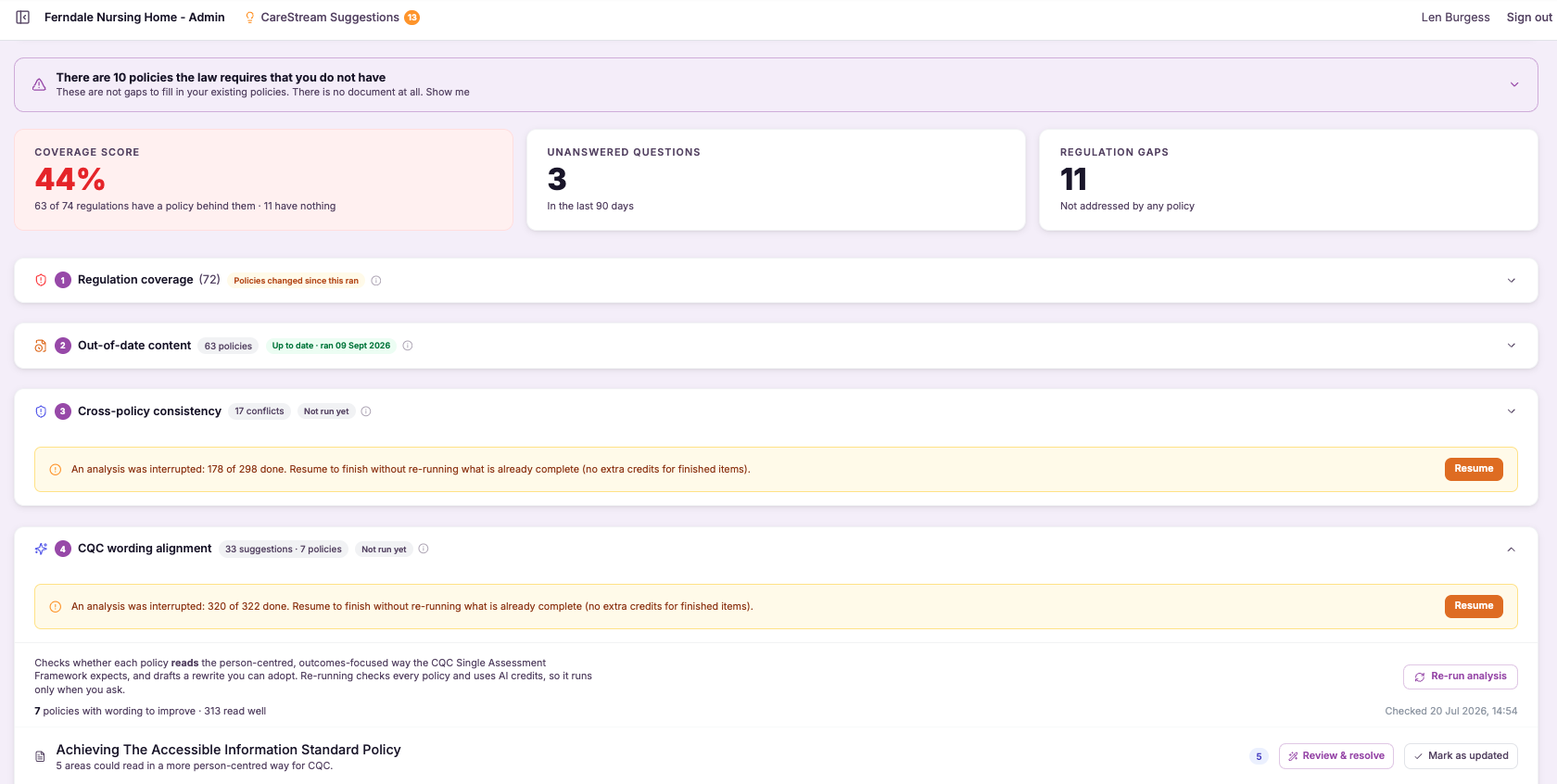
Reviewed against the framework, not a template
- Checked against the quality statements each policy should evidence
- Terms that carry specific regulatory meaning flagged where used loosely
- Suggestions show current and proposed wording side by side
Applied to what you already have
- No rewrite. Alignment is added to your existing policies
- Accept, edit or reject each suggestion individually
- A phrase can be replaced across the whole library in one pass
Evidence an inspector can follow
- The mapping from policy to quality statement is visible
- Staff read the aligned version, recorded against that version
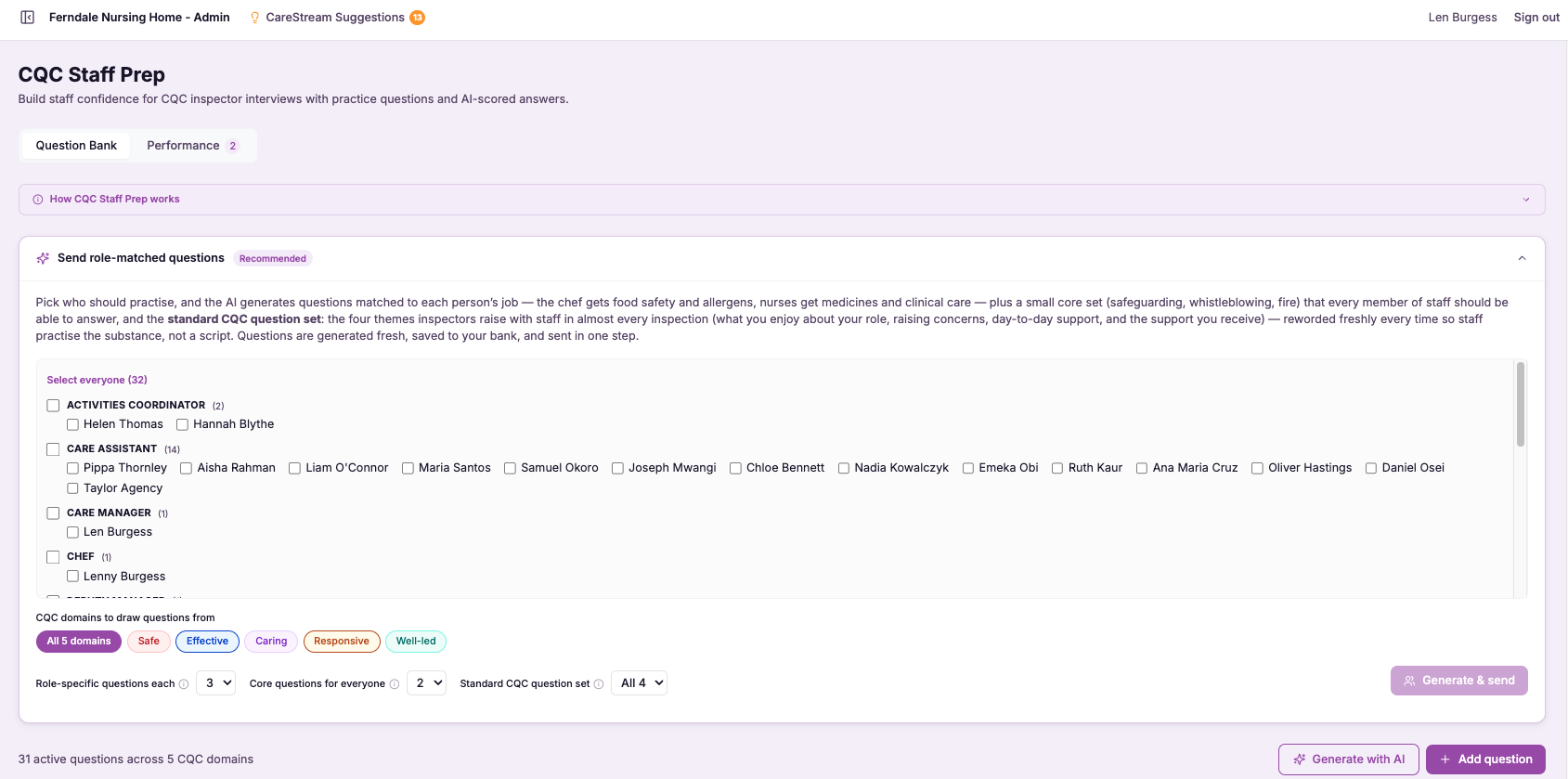
- CQC prep questions draw on the same language
Guides on this subject

CQC Terminology for Care Providers: The Words That Carry Weight in an Inspection
Most providers use CQC vocabulary loosely in everyday conversation. A manager says "we need to notify CQC" when they mean they should mention...
Read article
Policies Aligned to CQC Quality Statements: A Writer's Guide
Most policies fail this test. They live in a folder, written in dense English, structured for nobody in particular and on a shelf in the manager's...
Read article
CQC quality statements explained: the single assessment framework and what changes in 2026
The CQC has changed its assessment framework twice in three years, and many providers are still trying to work out what inspectors actually look at....
Read articleCQC Wording Alignment, answered
The review
Does it rewrite our policies?
No. It proposes wording and you decide. Nothing changes without an approval.
Will our policies end up sounding generic?
They should not. The suggestions target terms that carry regulatory meaning, not your house style.
How long does a review take?
The review runs in minutes. Working through the suggestions is the real time, and it can be done in stages.
The framework
Is this based on the current framework?
It is based on the quality statements in the single assessment framework, which replaced the key lines of enquiry.
Do we need to restructure our policies around quality statements?
No, and we would not recommend it. The mapping can be made visible without reorganising the document.
What about terms specific to our service?
They are left alone unless they clash with a term that has a defined regulatory meaning.
Afterwards
Do staff need to reread every policy?
Only where the change is substantive. Minor wording corrections do not reset acknowledgements.
Can we see what changed?
Yes, every accepted suggestion is recorded with the previous wording.
Does this help with inspection preparation?
It should, because the prep questions and your policies then use the same language, which is what makes a staff answer sound grounded.
A guide to aligning policy language with the CQC assessment framework
This is not about writing policies for inspectors. It is about the gap between doing something well and describing it in a way the person assessing you can credit. That gap is real, it is easy to close, and closing it changes nothing about your practice.
What changed, and what did not
The single assessment framework replaced the key lines of enquiry with quality statements, written as we statements describing what a service should be able to say about itself. The five key questions survived. What changed is the unit of evidence.
For providers the practical consequence is narrow: the same evidence is now organised against different headings. A policy that evidenced a KLOE evidences a quality statement, provided somebody can see which one.
Making the mapping visible
The most common failure is a good policy that does not obviously evidence anything. The fix is usually a sentence, not a rewrite: state near the top what the policy is there to assure, in the framework's own terms, then carry on in your own voice.
The second most common failure is a term used loosely. Duty of candour, safe systems and person centred care all carry defined meaning. Using them as general descriptions is worse than not using them, because it suggests a specific claim you have not evidenced.
Where CareStream fits
Wording alignment reviews your existing library against the framework, flags terms used loosely, and proposes edits with the current and proposed wording side by side. You accept, edit or reject each one, and a phrase can be corrected across every policy at once.
The same language then feeds the CQC prep questions your staff practise on, which is what stops a well written policy and a hesitant staff answer sitting side by side in the same inspection.
General guidance, not legal advice. Regulatory requirements change and vary by service type. Check the current CQC guidance and your own registration conditions before relying on any of the above.
General guidance, not legal advice. Regulatory requirements change and vary by service type. Check the current CQC guidance and your own registration conditions before relying on any of the above.
Read next
Written on CQC Wording Alignment
CQC Terminology for Care Providers: The Words That Carry Weight in an InspectionMost providers use CQC vocabulary loosely in everyday conversation. A manager says "we need to notify CQC" when they mean they should mention...Policies Aligned to CQC Quality Statements: A Writer's GuideMost policies fail this test. They live in a folder, written in dense English, structured for nobody in particular and on a shelf in the manager's...CQC quality statements explained: the single assessment framework and what changes in 2026The CQC has changed its assessment framework twice in three years, and many providers are still trying to work out what inspectors actually look at....