Training collection
Medication Training for Care Staff
Medication Training gives your staff the knowledge to handle medicines safely and gives you a record that shows they can. This Medication Training collection brings together the medicines courses a regulated service actually needs, from core administration and competency through to insulin, buccal midazolam, syringe drivers and supporting people with their medicines in their own homes. Every CareStream course is written for care settings rather than for healthcare in general, so the scenarios are the ones your team meets on a real shift: a resident who refuses a tablet, a missing signature on a medicines administration record, a time-critical Parkinson's dose that cannot wait, a covert administration request from a family member. Staff complete the learning on their phone, on shift or at home, and can read it in their own language. Completion, expiry dates and practical sign offs sit in one grid, so when someone asks to see your medicines training records you can produce them in minutes rather than rebuilding a spreadsheet. Buy a single course at £25.99 or take a platform licence for the whole library.
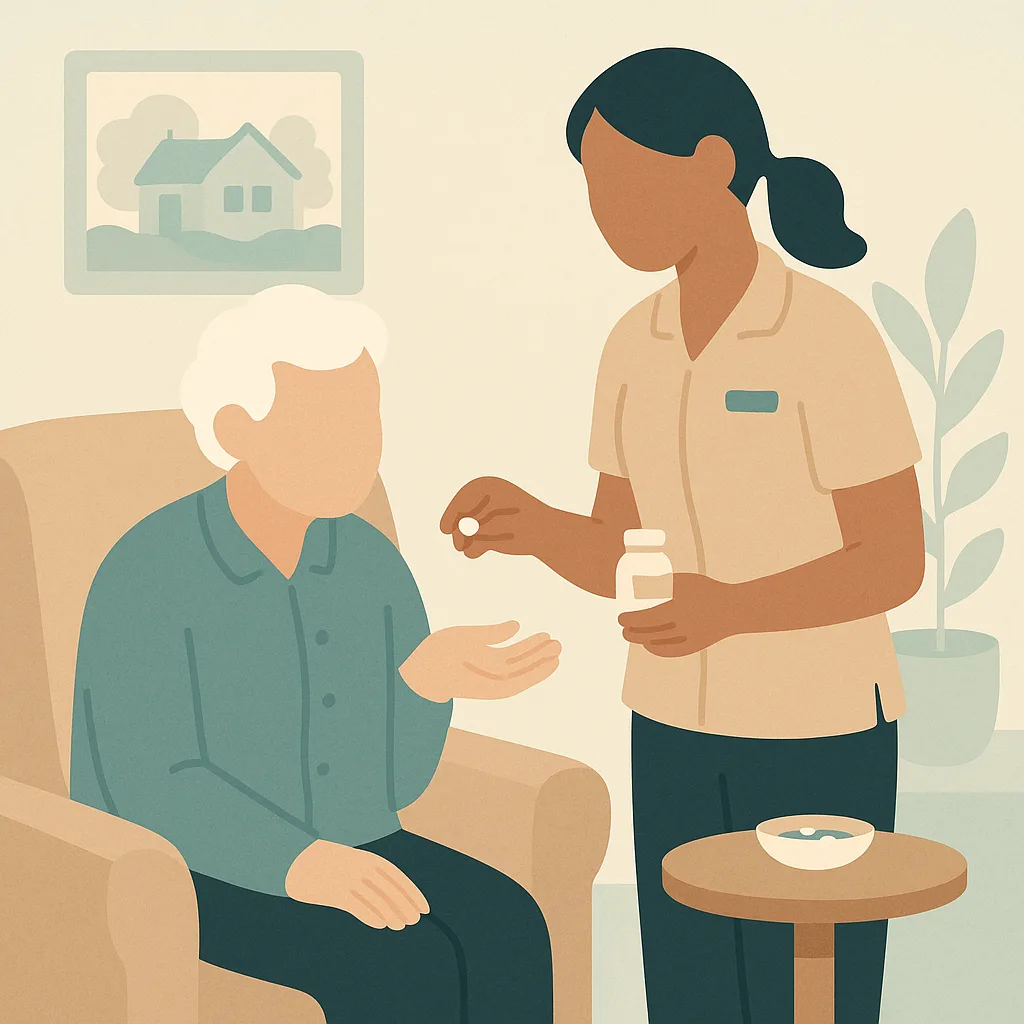
This module covers the essential knowledge you need to safely administer medication, including your workplace policies on covert medication. It is the knowledge part of your annual competency assessment. You will still need to complete a practical observation with your manager to demonstrate safe medication administration in real care situations.
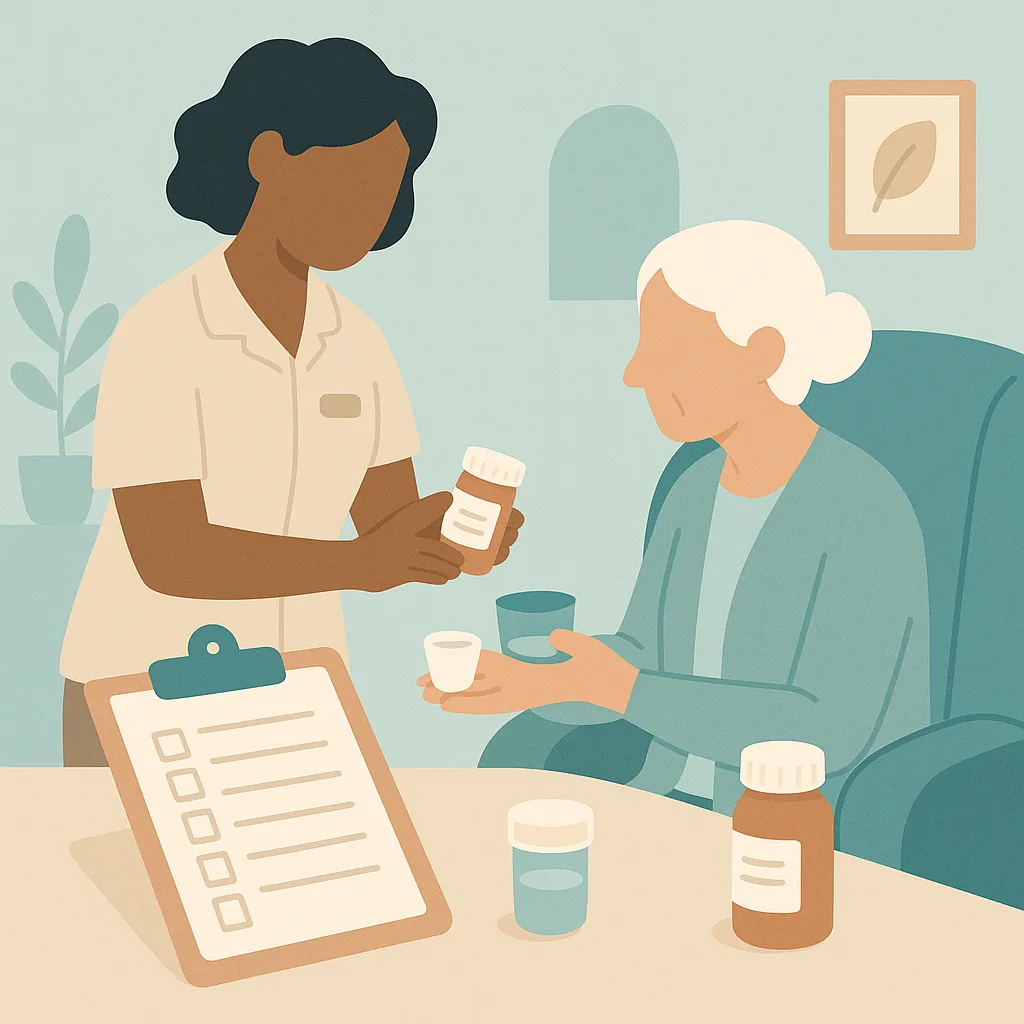
This training ensures our whole practice team operates safe repeat prescribing systems and supports medicines safety. You will learn the repeat prescribing process from request to issue, your role in keeping patients safe, and how we prevent medication errors. This is essential because repeat prescriptions make up most of our prescribing work and medication is a leading cause of avoidable harm.
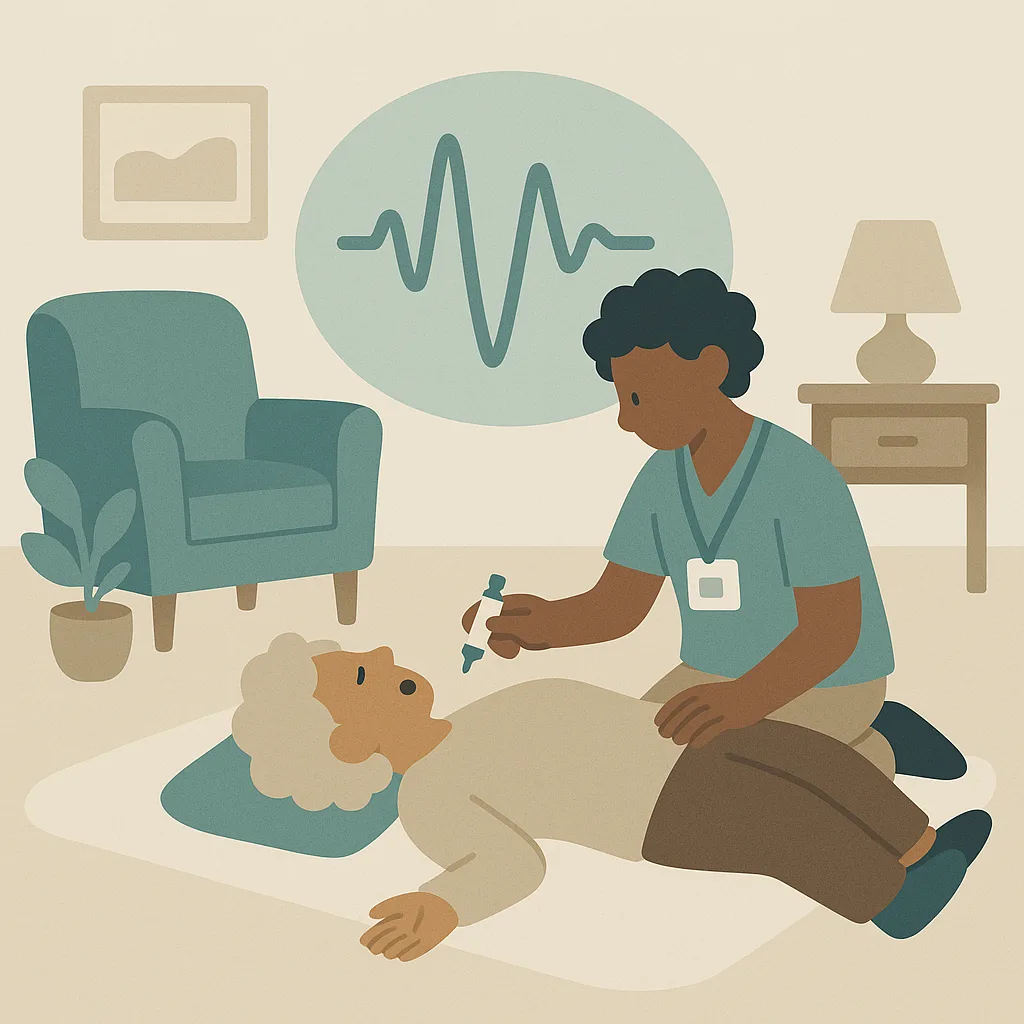
This annual refresher covers how we support residents with epilepsy at the Home, including recognising seizures, keeping people safe during episodes, and the knowledge requirements for buccal midazolam administration. This training covers the knowledge component only. Practical competency assessment must be completed separately before you can administer buccal midazolam in real situations.

This annual refresher covers the safe administration of subcutaneous and intramuscular injections, including insulin, in the nursing home setting. You will review injection sites, techniques, safety procedures and documentation requirements. This module provides the knowledge component only; practical competency must be assessed separately through direct observation.
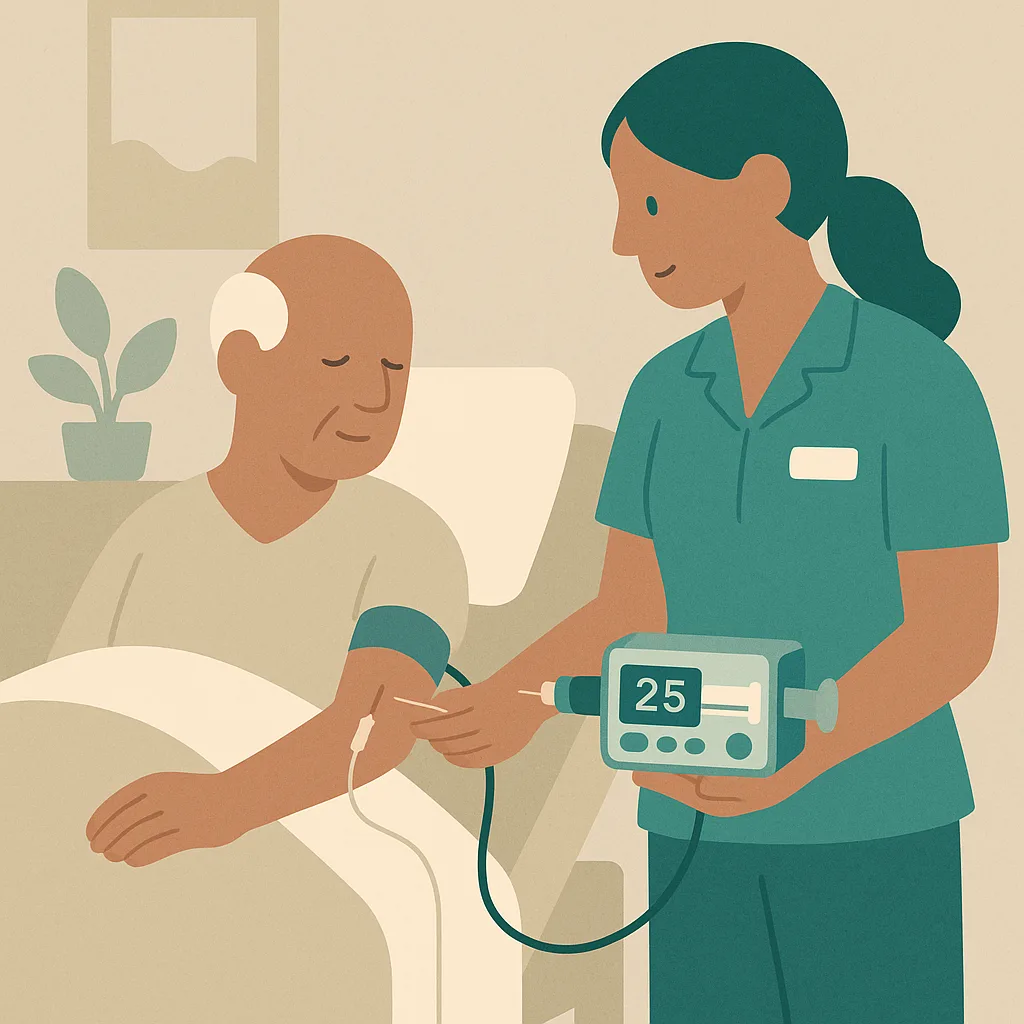
This training ensures you understand how syringe drivers and subcutaneous medication work to keep patients comfortable when they cannot take medicines by mouth. You will learn what these devices do, how they are monitored safely, and your role in observing and reporting. This is essential knowledge for all hospice staff, though only trained registered nurses set up and manage the devices themselves.
This training ensures every member of our hospital team understands that valid consent is a process, not just a signature. You will learn how consent must be informed, voluntary and given by someone with capacity, how our two stage consent process works from outpatient clinic to theatre, and how the lessons of the Paterson Inquiry shape our safeguards against over treatment in private care.
Safer medicines handling, and evidence you can put in front of an inspector
What the courses in this collection cover
This collection covers the full span of medicines handling in social care, not just the administration round. The core course takes staff through ordering, receipt, storage, stock control, administration, recording, disposal and the handling of medicines errors and near misses. It explains the commonly taught rights of administration, usually given as five, six or seven checks, which are a teaching aid rather than a legal standard, and it puts them into practice against a medicines administration record chart that has been filled in badly on purpose. Beyond the core, the collection includes specialist courses for particular routes and particular groups of people: subcutaneous, intramuscular and insulin injections, epilepsy and buccal midazolam administration, syringe drivers and anticipatory end of life medicines, and medication support in the community for staff working alone in someone's home. There is also controlled drugs handling under the Misuse of Drugs Regulations 2001, covert administration, homely remedies and as-required medicines with proper PRN protocols.
Which regulations and standards this training answers to
In England, care services are regulated by the Care Quality Commission under the Health and Social Care Act 2008 (Regulated Activities) Regulations 2014. Two regulations matter most here. Regulation 12 on safe care and treatment requires the proper and safe management of medicines, and Regulation 18 on staffing requires that staff receive the training, supervision and appraisal necessary to carry out their role. Neither regulation names a particular course or a particular refresher interval, which is the point people most often get wrong. The law sets an outcome, competence, and leaves the provider to decide how to reach it and how to show it. The Care Quality Commission assesses this through the Single Assessment Framework, and does not approve, endorse or accredit any training provider, so treat any claim of approved status with caution. Alongside the regulations sit National Institute for Health and Care Excellence guideline SC1 on managing medicines in care homes and guideline NG67 on managing medicines for adults receiving social care in the community, plus the Royal Pharmaceutical Society guidance on the safe and secure handling of medicines.
Who has to complete this training, and in which services
Any service where staff order, store, prompt, assist with or administer medicines needs this training, and that covers residential care homes, nursing homes, domiciliary care agencies, supported living services, extra care housing, hospices, shared lives schemes and the wider regulated sector. Within them, care assistants and support workers who administer or assist with medicines need it before they touch a medicines trolley or a person's dosette box. Senior carers who lead a medicines round and check other people's practice need it, and usually need the competency assessor element too. Registered nurses hold their own professional accountability through the Nursing and Midwifery Council, but still need service specific induction on your systems, your medicines administration record charts and your policies. Registered and deputy managers need it to audit medicines and to investigate errors properly. Bank and agency staff are the group most often missed, and an inspector asking for records will ask about them by name, so include them from the start rather than retrofitting.
How often it must be repeated, and what actually defines the frequency
There is no law that says medicines training must be refreshed every twelve months. What exists is guidance and expectation. National Institute for Health and Care Excellence guideline SC1 recommends that care home staff have an annual review or refresher of their knowledge, skills and competencies relating to medicines, which is guidance rather than legislation, and most local authority and integrated care board contracts translate that into an annual requirement in writing. Your own medicines policy may set a frequency too, and once it does, your policy is the standard you will be held to. So the honest answer is that annual refreshing is widely expected and contractually common rather than legally fixed. Competence checks are different again, and are usually triggered by events: a new starter, a return from long absence, a medicines error, a new route or device, or a change in the people being supported. Setting renewal dates in a training record means the date finds you rather than the other way round.
Buy one course or the whole library: price, what is included and best value
Who these courses are perfect for
These courses suit the registered manager, deputy or senior carer who has been handed training on top of a full job at a service of roughly fifteen to eighty staff, with no learning and development team behind them. They suit a service that needs six people covered, not two hundred, and that has been quoted a per seat annual contract priced for a large group. They work for a cohort of new starters arriving together, for a month where half your annual refreshers expire at once, and for the week after a medicines error where the honest answer to why it happened is that competence was assumed rather than checked. They suit services with night staff and part time staff who are never in the building when a face to face session runs, and services where a good portion of the team reads more comfortably in a language other than English. They also suit a new manager who has inherited a training matrix nobody has updated in two years and needs to know what is genuinely missing.
Why our medicines courses stand up better than generic e-learning
Most medicines e-learning is built for a hospital or an office and has a care module bolted on the side, which is why staff finish it knowing the theory and still hesitate at the trolley. CareStream courses are written for care settings by people who know the setting, then read and hand checked by a person before release. The scenarios use medicines administration record charts, homely remedies lists and refusal situations that look like yours. Staff are put in a position and asked what they would do, rather than clicking through slides to a certificate. Courses are accredited where accreditation matters to a commissioner or a contract. Modules can be read in the staff member's own language, which changes comprehension rather than just access, and content is updated when the law changes rather than when a renewal date comes round. Face-to-face sessions and practical medicines competency sign-offs are recorded alongside the e-learning, so the record shows the whole picture instead of half of it.
What an inspector actually looks for, and how completion is evidenced
An inspector is not counting certificates. They are asking whether the training suits the role and the people you support, whether it is current, whether records show clearly who completed what and when, and above all whether the service can show competence in practice. A certificate evidences completion. It does not evidence competence, and being straight about that difference is what separates a service that passes this line of questioning from one that does not. That is why every medicines course here pairs with a practical competency assessment: an observed medicines round, signed and dated by a named assessor, stored against the staff member rather than in a folder in the office. The record shows the e-learning, the observation, the date, the assessor and the renewal date in one place. If an inspector asks for your medicines training records for night staff, or for one named agency worker who administered on a particular date, you can produce that rather than promising to send it on.
How this training connects to the rest of your matrix
Medication training rarely sits alone. New starters usually complete it alongside the induction covered by the Care Certificate standards every new care worker works through, because the Care Certificate touches medicines only at an awareness level within Standard 13 on health and safety and is not a substitute for medicines-specific training. Covert administration and refusal cannot be handled properly without training in the Mental Capacity Act 2005 and Deprivation of Liberty Safeguards, since a covert decision is a best interests decision involving the prescriber and pharmacist, not a staff judgement call. Medicines training also supports your medicines policy in practice, because a policy nobody has been trained on is a document rather than a control. Once a course is completed, the result lands in a training compliance matrix that tracks renewals and gaps across every subject and role, so medicines sits next to safeguarding, moving and handling and infection prevention and control training in one view instead of four spreadsheets.
Single courses are £25.99 each as a one time purchase, with no subscription and no contract, which is the sensible route when you have one gap to close. A platform licence gives you the whole library, the matrix, the face to face records and the evidence pack together, and the price is published in full on the CareStream pricing page with no quote needed. Either way you can compare what is included before you order, and staff can get started the same day they are added.
Medication Training for Care Staff FAQs
What are the most common medicines errors in care settings?
Missed or unsigned doses; giving a medicine to the wrong person, the wrong dose or the wrong strength after a prescription change; late administration of time-critical medicines such as those for Parkinson's disease; poor recording on a medicines administration record chart; unclear handling of as-required medicines without a written protocol; and errors around crushing or covert administration. The course works through each of these as a scenario rather than a list.
What is a high risk or time critical medicine?
High-risk medicines are those where a small error can cause serious harm, including anticoagulants, insulin, opioids, methotrexate and lithium. Time-critical medicines are those where a late dose causes harm even if the dose is correct, most commonly Parkinson's disease medicines, insulin and some epilepsy medicines. Both groups are covered in the core course, with deeper coverage in the insulin and injections course.
Do care staff need a formal qualification to give medicines?
No qualification is required by law in England for a care worker to administer medicines. What is required is that the employer makes sure the person is competent and can evidence it. In practice, that means training plus a practical competency assessment signed off by a named assessor, repeated when circumstances change. Registered nurses work within their own professional standards in addition to their service induction.
How often does Medication training need renewing?
Annually is the common expectation, and it comes from the National Institute for Health and Care Excellence guideline SC1, which recommends an annual review of knowledge, skills and competencies relating to medicines, and from contracts that repeat it. It is guidance and contract rather than statute. Competency reassessment should also be triggered by a medicines error, a return from long absence, a new device or route, or a change in the people supported.
What is the difference between training and a competency assessment?
Training gives someone the knowledge. A competency assessment checks that they can apply it safely in your service, with your medicines administration record charts and your people. A certificate proves completion, not competence, so a service relying only on certificates has a gap that becomes obvious under questioning. Every medicines course here pairs with a practical sign-off, recorded against the staff member, with the assessor named.
Browse the rest of the library
Most services need more than one. These are the collections people buy alongside this one.
Policies are one part of it.
CareStream is the compliance system underneath: your policies, your staff training, your audits and your evidence, kept current and ready for the day somebody asks to see them.
- Policies written and kept updated for you
- Staff training that records itself against the standard
- Gap analysis showing what you are missing before an inspector does
- Everything in one place, for one price