Training collection
Health and Safety Training for Care Staff: Six Courses, Two Free
Six courses sit behind the phrase health and safety training, and two of them cost nothing. The health and safety training here covers what a care service controls day to day: hazardous substances, water systems, screens, falls and the accidents that must be reported.
Two are free on every account, with a certificate for each person who passes. The other four are short modules you buy per member of staff. Each one is built around a care scenario rather than an office example, so the quick checks ask about a sluice room or a bathroom floor.
The grid below shows all six. Under it you will find what each course contains, how long it takes and which duty it answers. Buy the modules your roles need, or start with the free pair and add to them when a risk assessment says so.
None of this makes a service safe on its own. It gives your team the knowledge, and gives you a record of who holds it.
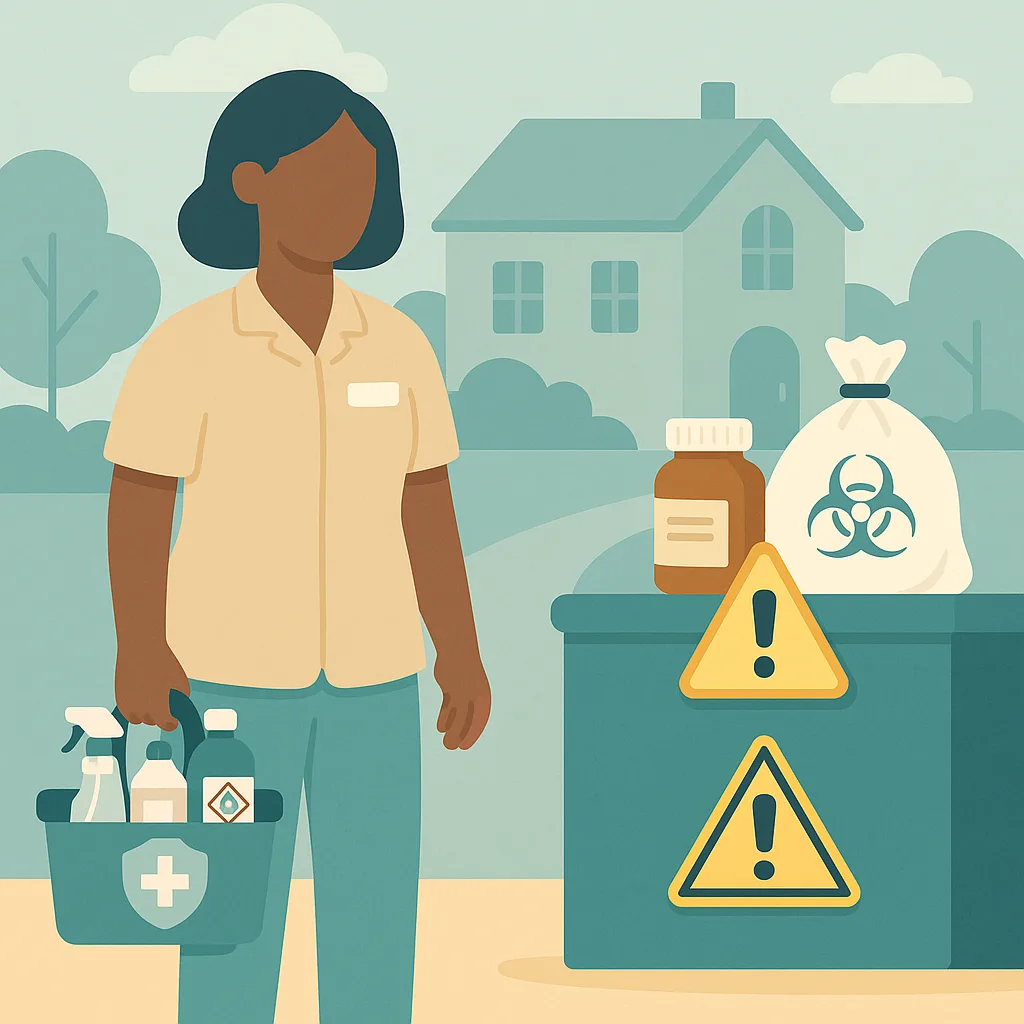
This training covers how to safely handle, store and dispose of hazardous substances in our home, including cleaning chemicals, medications and clinical waste. You will learn our procedures to protect yourself, residents and colleagues from harm. Understanding COSHH is essential for maintaining a safe environment every day.

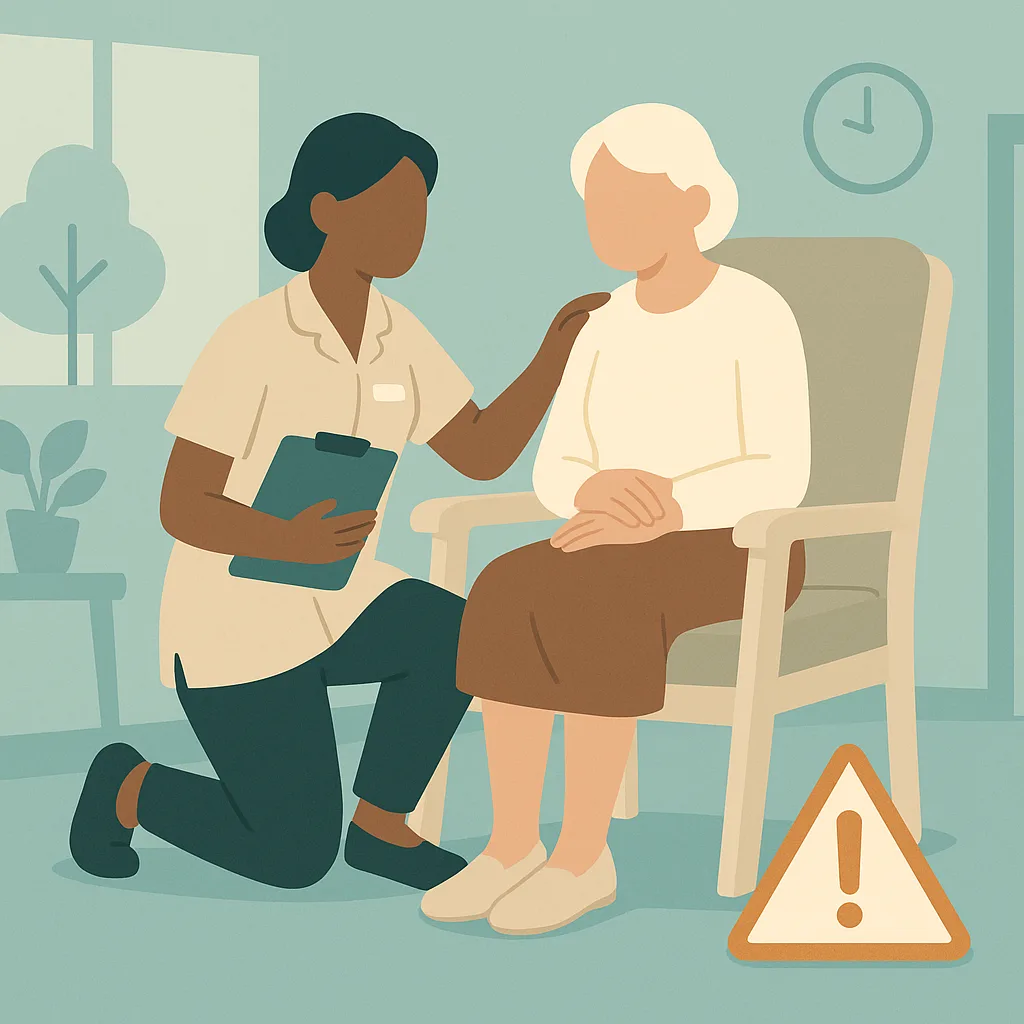
This module teaches you when and how to report accidents and incidents under RIDDOR (Reporting of Injuries, Diseases and Dangerous Occurrences Regulations 2013). You will learn which events must be reported to the Health and Safety Executive, how to recognise reportable incidents in your daily work, and the correct procedures to follow at our home.
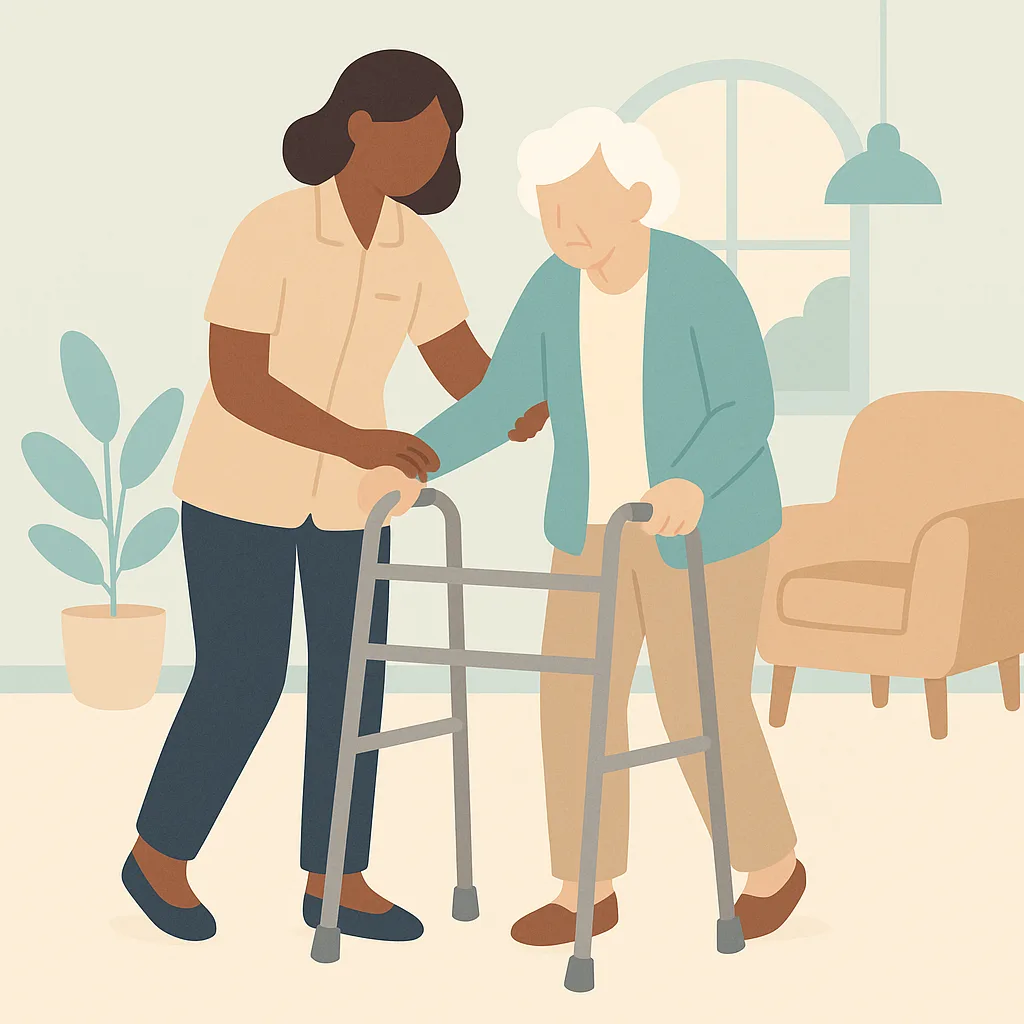
This training helps you prevent slips, trips and falls for residents and yourself. Falls are a major risk in care homes and can cause serious injury. You will learn how to spot risks, support residents safely, and follow our home's procedures to keep everyone safe.
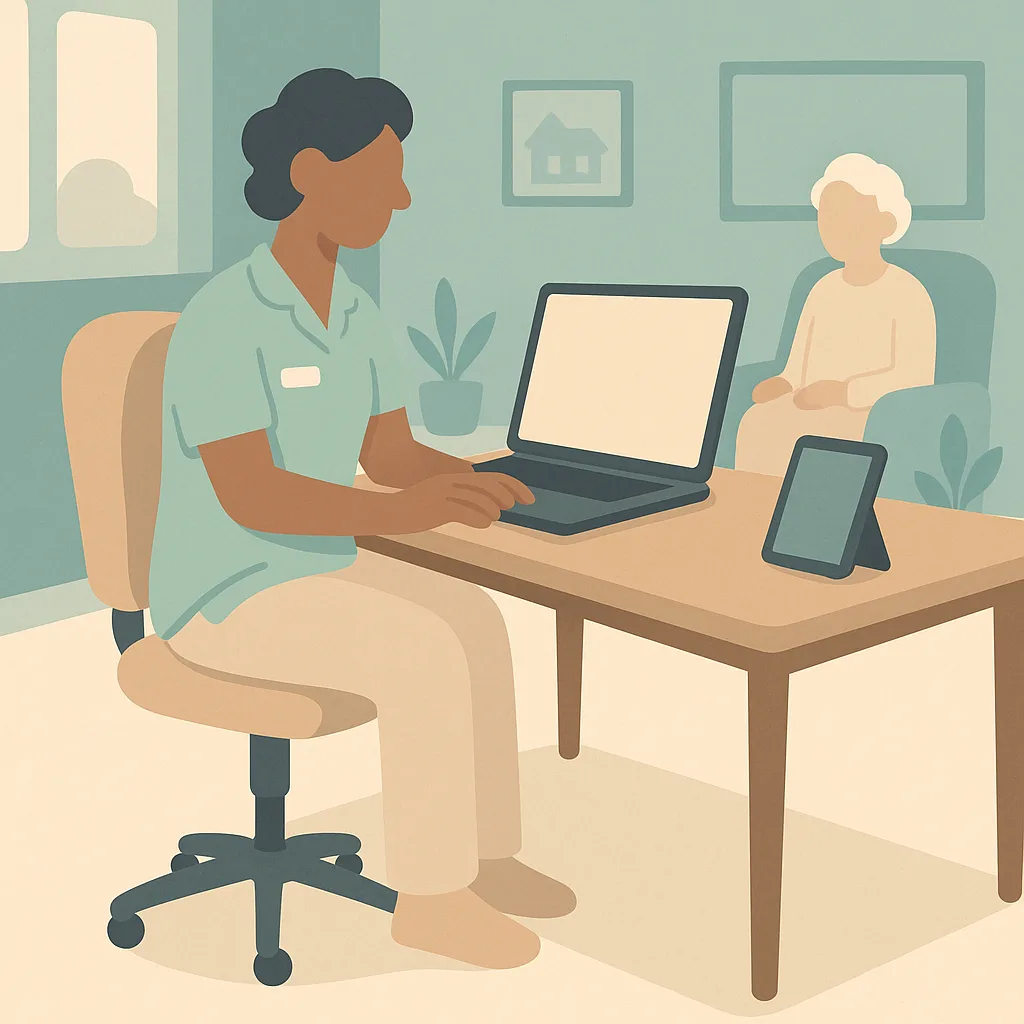
This training covers how to use computers, tablets, and screens safely in your daily work at the home. You will learn how to set up your workstation correctly, recognise signs of strain or discomfort, and know what support is available. Proper DSE use protects your health and helps you work comfortably and effectively.
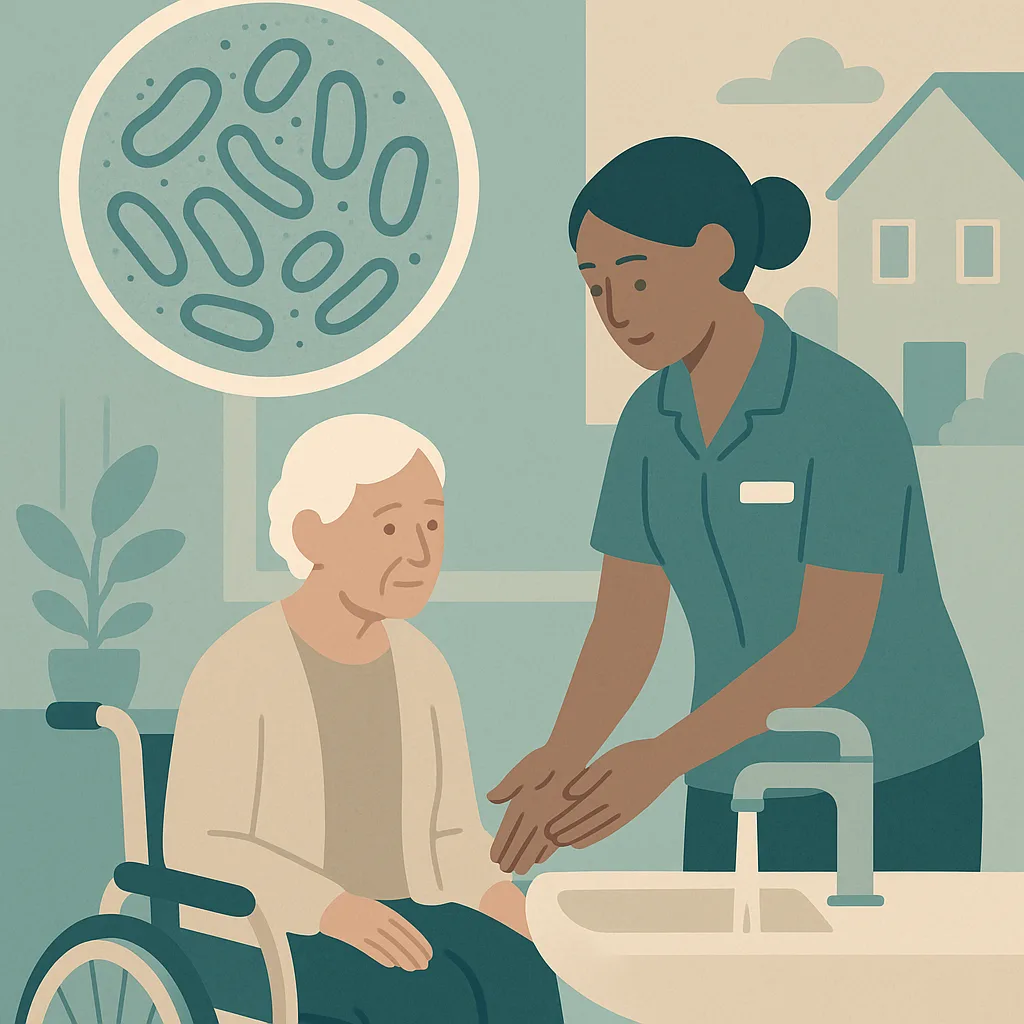
This training helps you understand the risks of Legionella bacteria in water systems and how to keep residents and yourself safe. You will learn how to spot warning signs, follow our home's water safety procedures, and take the right action if you have concerns. Protecting water safety is part of maintaining safe premises under our health and safety responsibilities.
What the six courses cover, and the duty behind each
Six subjects, two prices and one record. The split matters when you are deciding what to spend, so here is what sits in each group.
Two courses are free for every member of staff
General Health and Safety Awareness and COSHH are free for every member of staff on a free account. Both are CPD certified. Each runs to 8 short lessons, each with a care scenario, an activity and a quick check that explains the answer.
A knowledge check at the start measures what someone already knows. A 32 question assessment closes the course, with a pass mark of 80 percent.
COSHH deals with what a service keeps in its cupboards. Thickeners, cleaning chemicals, denture tablets, clinical waste.
The health and safety awareness course is the broader one. It covers spotting a hazard, what to do after a fall, and how to raise a problem.
Courses run in English on the free plan. Certificates are included, and access does not expire.
Four short modules for screens, water, falls and reporting
The other four are bought per member of staff at £25.99 a licence. They are Display Screen Equipment, Legionella and Water Safety Awareness, Slips, Trips and Falls, and RIDDOR accident and incident reporting.
Each module is 6 lessons and takes about 35 minutes. It ends with a 20 question assessment at the same 80 percent pass mark.
One detail is worth knowing. When a learner gets something wrong, the module sends a follow-up lesson on that exact point rather than simply logging the score. A licence lasts twelve months, and you can buy one licence for one person without taking a subscription.
Pick by role. Water safety and slips suit everyone on the floor. Display screen equipment usually suits the office and the manager.
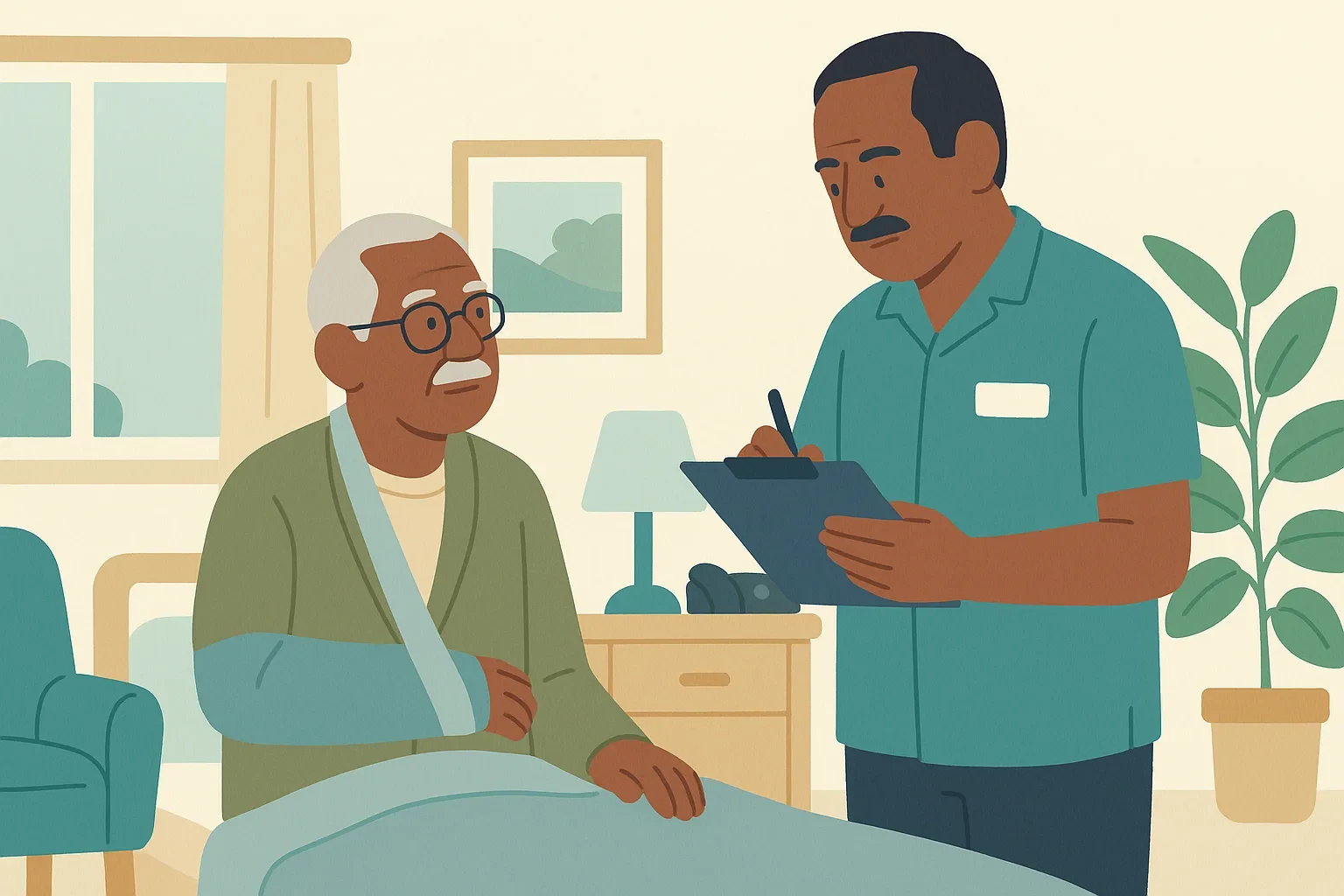
Figure: the reporting module starts where most incidents start, at the bedside with a form to fill in.
What the law asks an employer to provide
Start with the general duty. Section 2 of the Health and Safety at Work etc. Act 1974 sets it out. An employer must give staff the information, instruction, training and supervision they need to stay safe.
The test is what is reasonably practicable, not what is perfect.
Two rules say when. Regulation 13 on capabilities and training asks for training when a person is taken on. It asks again when that person meets a new or bigger risk.
Repeat it from time to time where that is right. It has to happen in work hours, not on a day off.
Regulation 12 on information, instruction and training covers anyone who might be exposed to a hazardous substance. That is most of the team.
Screens have their own rule. Regulation 6 on the provision of training applies to users, and the training comes before someone becomes one.
Reporting is a duty too. Regulation 4 on non-fatal injuries to workers names what has to be reported.
A broken bone counts, unless it is a finger, thumb or toe. So does being kept off routine work for more than seven days in a row.
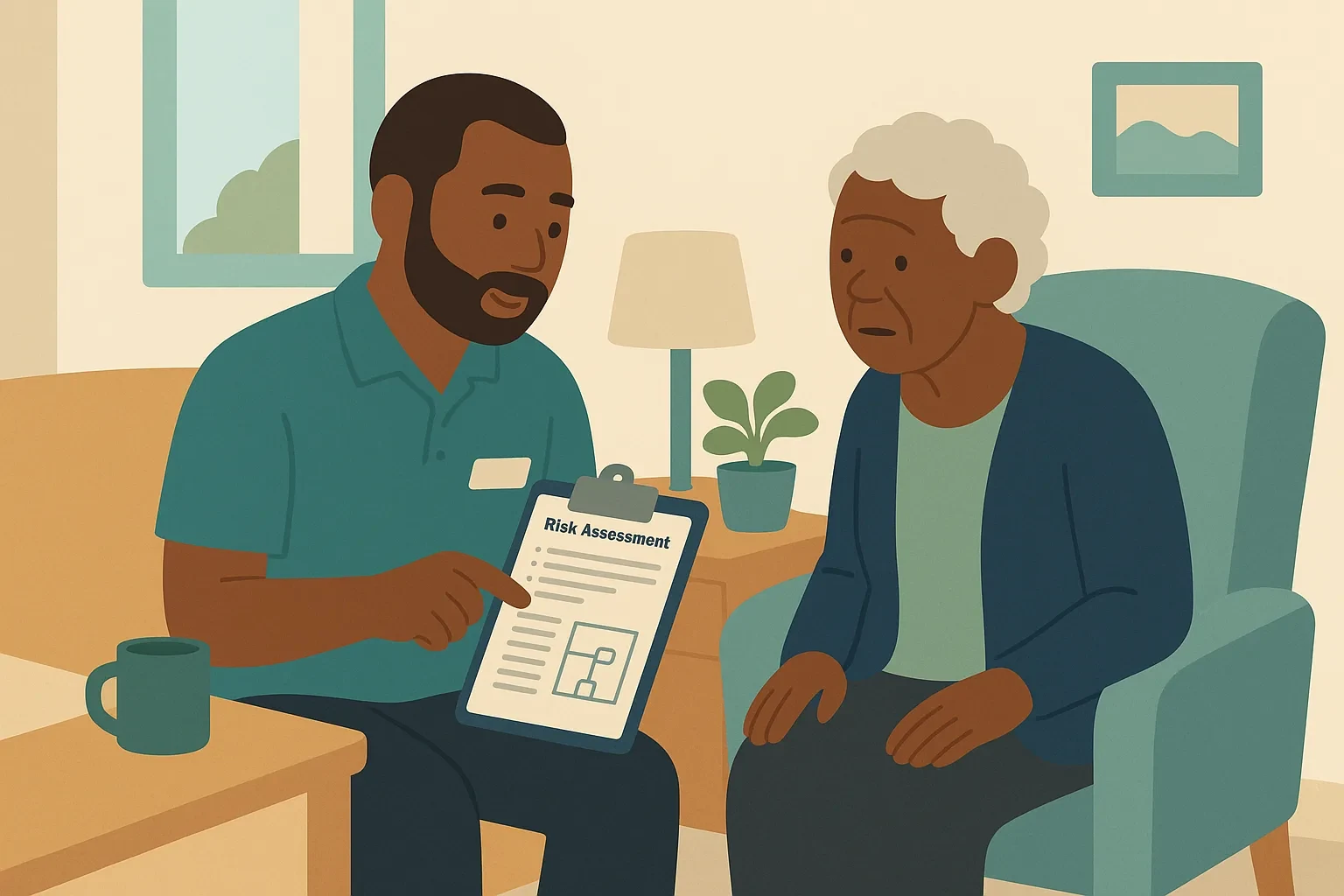
Figure: water safety and slips both begin with a risk assessment, which is what the modules teach staff to read.
Who needs this, and how it compares with the usual routes
The subjects are the same everywhere. What differs is the mix, the record and who has to chase it.
Who this collection is perfect for
A registered manager, owner or training lead at a small or medium service. No compliance department. No budget for per learner fees.
The same employer duties run across the sector:
- residential care homes and nursing homes
- domiciliary care agencies
- supported living services
- hospices
Training leads often write it on the matrix as h&s training for care staff. Then they spend a month chasing the last four people. The two free courses take the cost out of the biggest group, which is everyone.
A domiciliary agency will lean on different modules to a nursing home. An agency thinks about travel and working alone. A care home thinks about water systems, sluice rooms and wet floors.
New starters are the other clear case. Training on recruitment is the point where a service most often finds its record has a hole in it.
How this compares with the usual alternatives
There are three usual routes. A per learner e-learning library, a day of face to face training for a group, or a subscription that bundles courses with other software.
Each has a real advantage. Face to face is better for practical skills. A library is broad, and a subscription puts one invoice on the desk.
Two things are different here. The courses that most staff need every year cost nothing, so price stops driving who gets trained. The record sits in the same place as the rest of your evidence, so there is no export step before an inspection.
CareStream does not claim to make a service meet any standard, and we do not promise an inspection outcome. What you get is a course, an assessment, a certificate and a date.
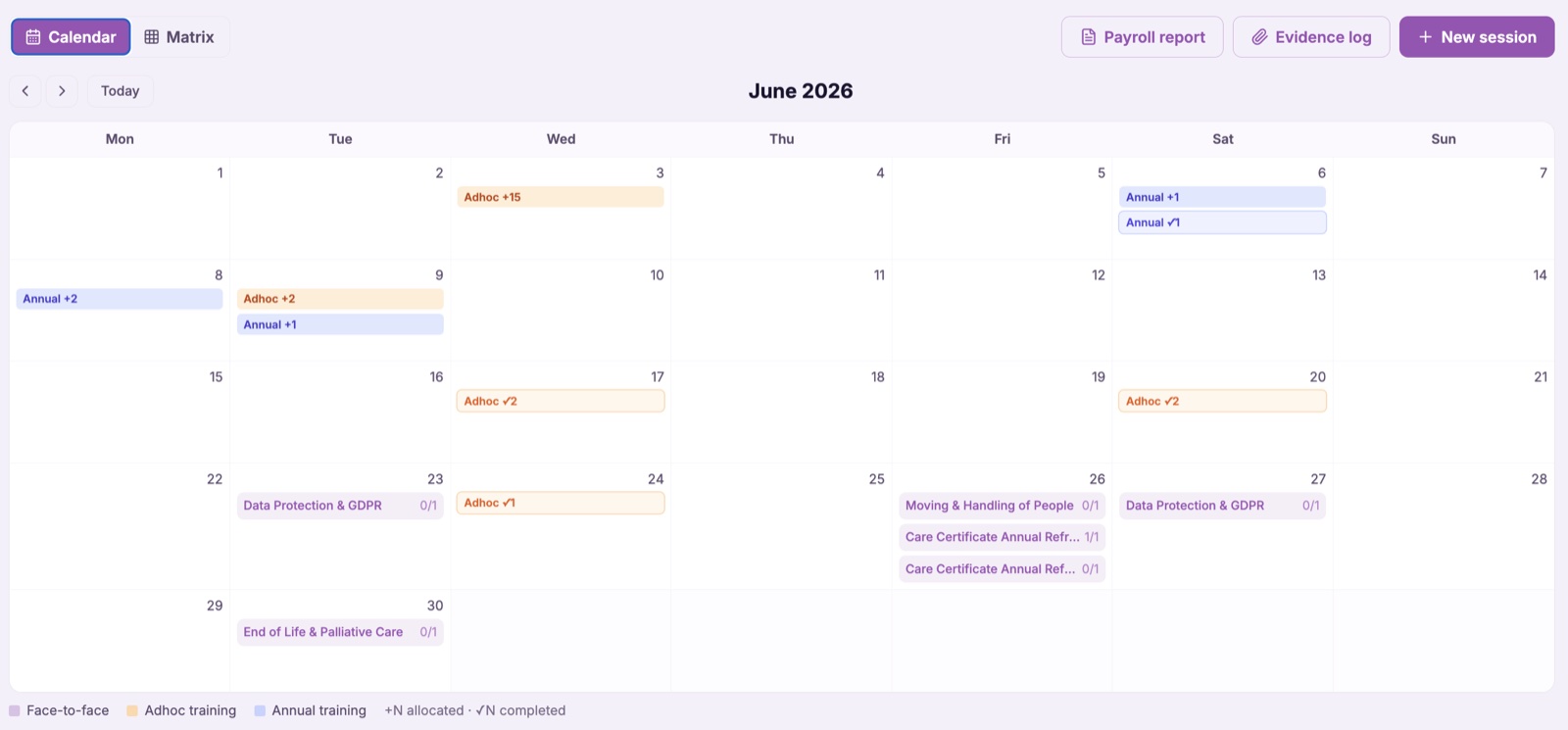
Figure: the calendar view, with allocated and completed counts against each session.
Benefits of CareStream health and safety training for your service
- Two of the six courses are free for every member of staff, with no card needed and no expiry.
- The four paid modules are bought per person, so you spend only where a role needs it.
- Every pass produces a named, dated certificate you can keep as evidence.
- One matrix holds online and face to face records, with renewal dates against each name.
The training matrix that tracks renewals and gaps is what turns a pile of certificates into something you can read in a minute.
Get started free, then add the modules your roles need
Create a free account, add your staff and set the two free courses going. No card is needed, and there is no limit on how many logins you add.
Then look at your risk assessments and buy only the modules they point to. A home with a complex water system has a different list to an agency whose staff drive between calls.
Want the paid features too, such as translation into other languages? What each plan includes and what it costs is set out in full.
A CareStream account costs nothing to open and nothing to keep.
Health and Safety Training for Care Staff: Six Courses, Two Free FAQs
Is health and safety training a legal requirement for care staff?
Training is part of how an employer meets its duties. Section 2 of the Health and Safety at Work etc. Act 1974 requires an employer to provide the information, instruction, training and supervision needed to keep employees safe, so far as is reasonably practicable. Regulation 13 of the Management of Health and Safety at Work Regulations 1999 adds that employees must get adequate training when they are recruited, and again when risks change. For a registered service, Regulation 18 of the Health and Social Care Act 2008 (Regulated Activities) Regulations 2014 requires staff to receive the training they need for their role.
Which of the six courses are free?
Two of them. General Health and Safety Awareness and COSHH are CPD certified courses on the free plan, free for every member of staff, with no card needed. The other four are short modules bought per member of staff at £25.99.
How long does each course take?
The two free courses run to 8 short lessons and a 32 question assessment. The four modules take about 35 minutes each: 6 lessons and a 20 question assessment. Staff can stop and pick up where they left off.
What is the pass mark?
80 percent on every course. Anyone who does not reach it can take the assessment again. On the four paid modules a follow up lesson covers whatever a learner got wrong, so the gap is closed rather than noted.
Do staff get a certificate?
Yes. Every completion produces a named, dated certificate that you can keep as evidence of training. CareStream does not award a qualification, and a certificate is not a statement that your service meets any standard. It records that one person finished one course and passed the assessment.
How often should care staff repeat health and safety training?
There is no single legal interval. Regulation 13 of the Management of Health and Safety at Work Regulations 1999 says training must be repeated periodically where appropriate, and adapted when risks change. Most services refresh these subjects every year, and renewal reminders are handled for you.
Which services does this suit?
Residential care homes, nursing homes, domiciliary care agencies, supported living services and hospices. The duties under the Health and Safety at Work etc. Act 1974 apply to any employer. The mix of modules differs: a domiciliary agency leans on lone working and travel, a care home on water systems and premises.
What does RIDDOR training cover?
When an accident has to be reported and by whom. Regulation 4 of the Reporting of Injuries, Diseases and Dangerous Occurrences Regulations 2013 covers specified injuries such as fractures, and injuries that stop someone doing their routine work for more than seven consecutive days. The module explains who the responsible person is and what they must send.
Do we need display screen equipment training in a care home?
Only for staff who count as users, which usually means the office, the manager and anyone working at a screen for long periods. Regulation 6 of the Health and Safety (Display Screen Equipment) Regulations 1992 requires training in the use of the workstation, and again when a workstation is substantially modified.
Can staff take the courses in another language?
Courses run in English on the free plan. Translation into 60+ languages starts on the Starter plan at £85 a month. Your records stay in English, so a learner can read in the language they are most confident in while the evidence you keep stays consistent.
Is a card needed to use the free courses?
No. A free account needs no card and does not expire, and you can add as many staff logins as you need. A card is asked for only when you start the 14 day trial of a paid plan, or when you buy one of the four modules.
How much are the four paid modules?
£25.99 for one licence for one member of staff, with lower rates for larger numbers. A licence lasts twelve months from purchase. You can buy a single module for one person without taking a subscription.
What happens to our records if we stop paying?
Completions and certificates already earned stay in the account. The free plan keeps the two free courses, the training matrix for them and every certificate your staff have gained. Paid plan features such as translation and the paid modules stop when the plan does.
How do we show an inspector what has been done?
The training matrix lists every member of staff against every course, with the date each one passed and what is due. You can show it on screen or export it. It records what happened, and the judgement about whether your training is sufficient remains the inspector's.
We already run face to face sessions. Does this replace them?
No, and some subjects should stay in a room, such as practical moving and handling. The matrix records face to face sessions beside the online ones, so you hold one record for both rather than a spreadsheet beside a folder.
Browse the rest of the library
Most services need more than one. These are the collections people buy alongside this one.
Policies are one part of it.
CareStream is the compliance system underneath: your policies, your staff training, your audits and your evidence, kept current and ready for the day somebody asks to see them.
- Policies written and kept updated for you
- Staff training that records itself against the standard
- Gap analysis showing what you are missing before an inspector does
- Everything in one place, for one price




