Training collection
End of Life Care Training for Care Services: Six Courses, One Free
Two of the six courses in this end of life care training set only issue a certificate once a manager has watched the person at work. That is deliberate: a quiz cannot show that someone can safely help with just in case medicines. Our end of life care training begins with one free CPD certified course.
The courses run from the first one every care worker can take to those for senior carers and nurses. They cover the last days of life, symptoms and comfort, anticipatory medicines, care after death, families and candour. Each ends in an assessment, a dated certificate and a line in your training record, so you can show what each person has done.
The set is for registered managers, owners and training leads running care homes, nursing homes, home care, supported living or hospices. The courses build knowledge. They do not replace clinical advice or your own policies.
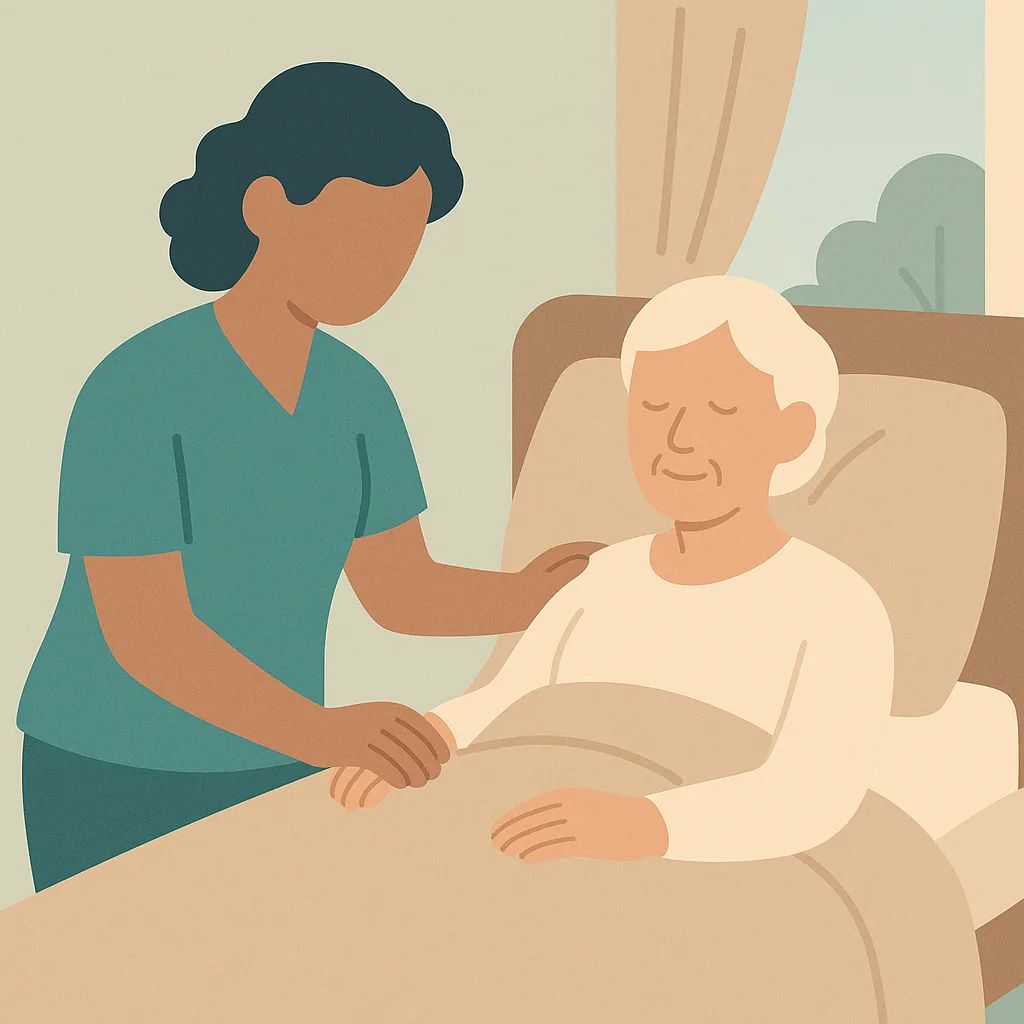
This training covers how to support people at the end of their lives with dignity, comfort and respect. You will learn about recognising when someone may be approaching the end of life, how to provide compassionate care, and how to work with families and healthcare professionals during this important time.

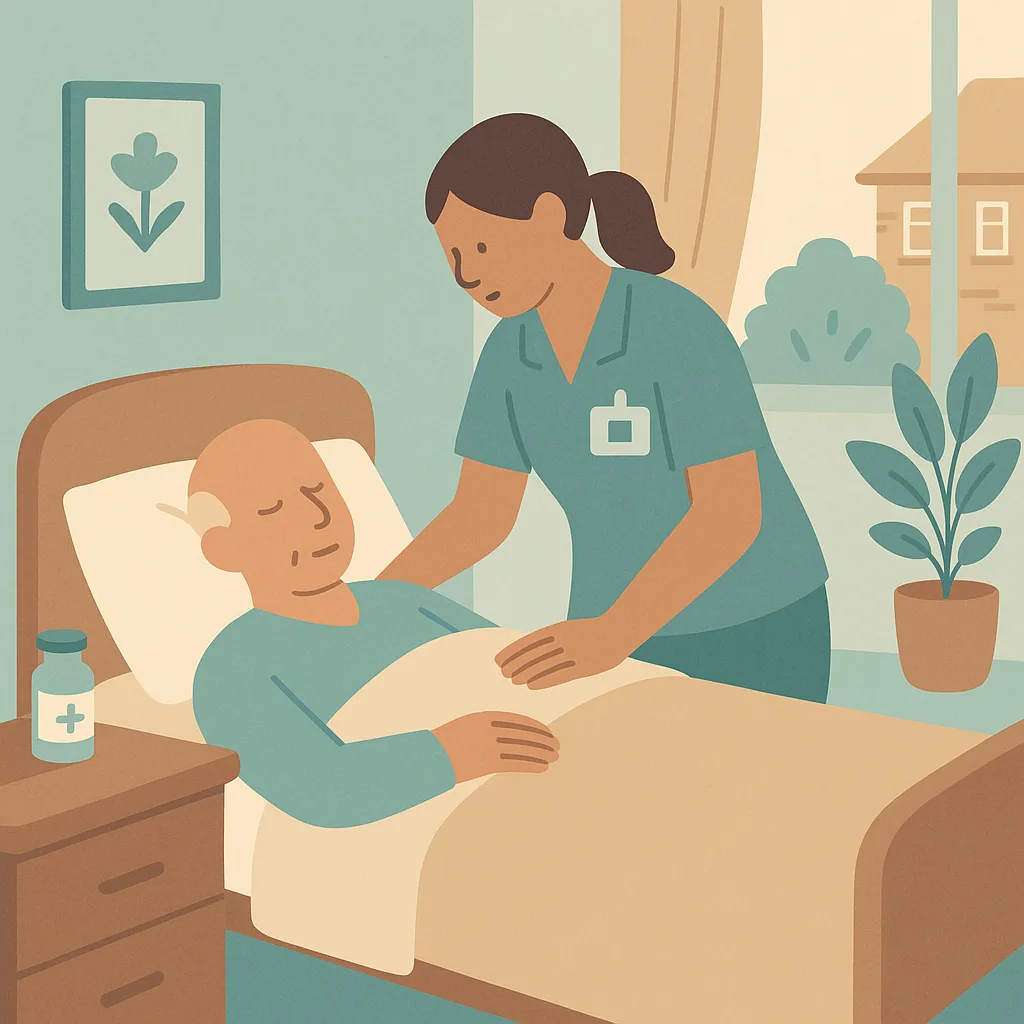
This training helps you recognise, assess and report symptoms in people with advanced illness so they stay as comfortable and dignified as possible. You will learn about common symptoms like pain, breathlessness and nausea, the medicines used to ease them, and the vital comfort measures you provide every day. This is about the heart of what we do: keeping people well for whatever time they have.
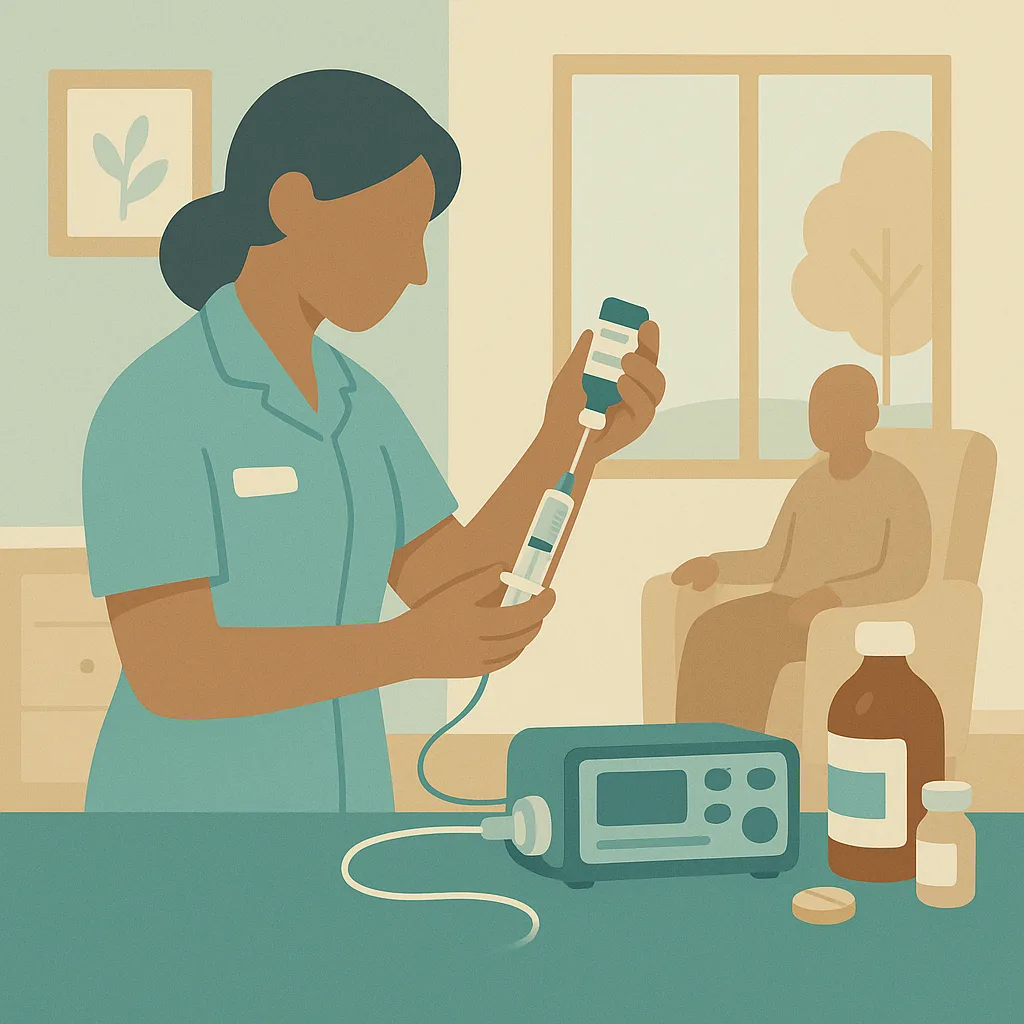
This training covers the knowledge you need about anticipatory medicines (also called just in case medicines) and syringe drivers used in end of life care. You will learn what these medicines are, how they are stored and managed in our nursing home, and your role in supporting their safe use. This is the knowledge component only; practical competency in administering these medicines requires separate observed assessment.
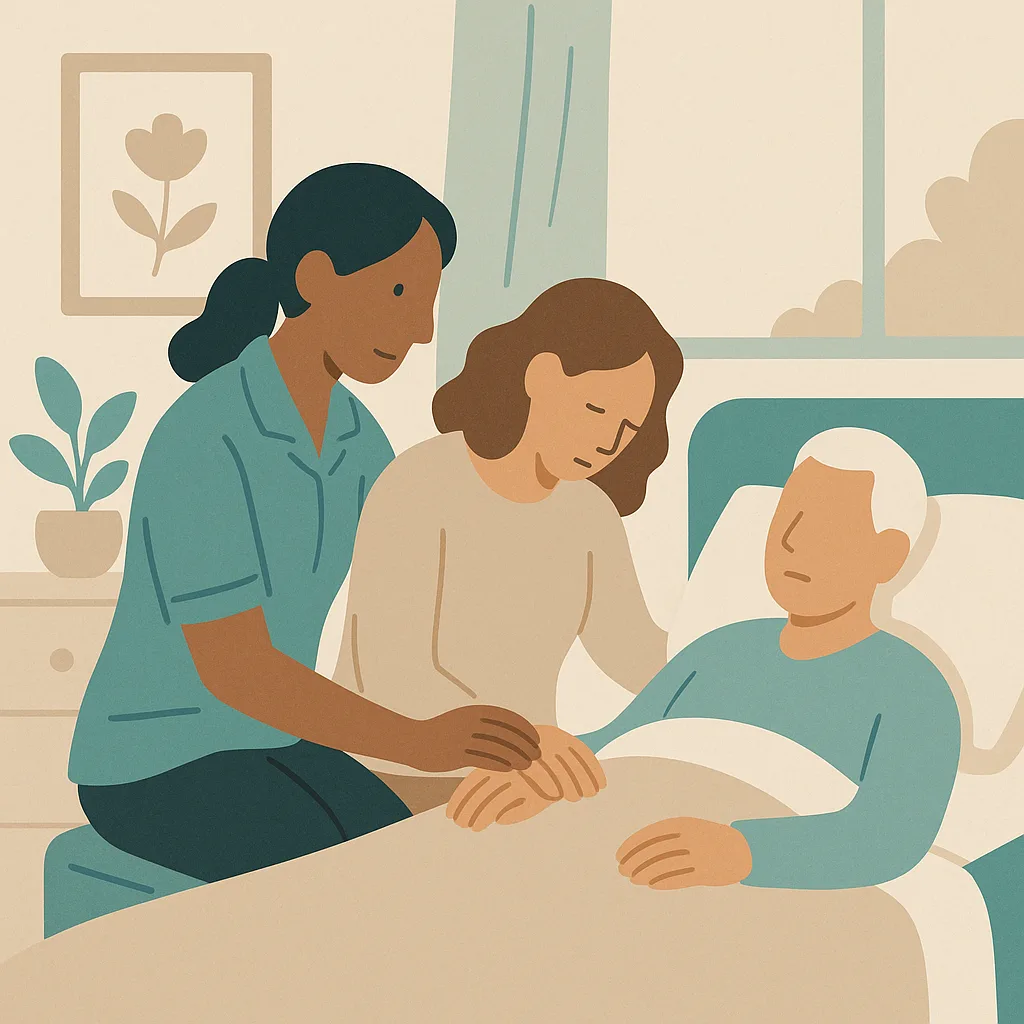
This training equips you to support families, carers and loved ones before, during and after the death of someone in our care. In hospice care, the family is part of the unit of care, and our support continues through bereavement. You will learn how to provide compassionate support at every stage, recognise different grief responses, and know when specialist help is needed.
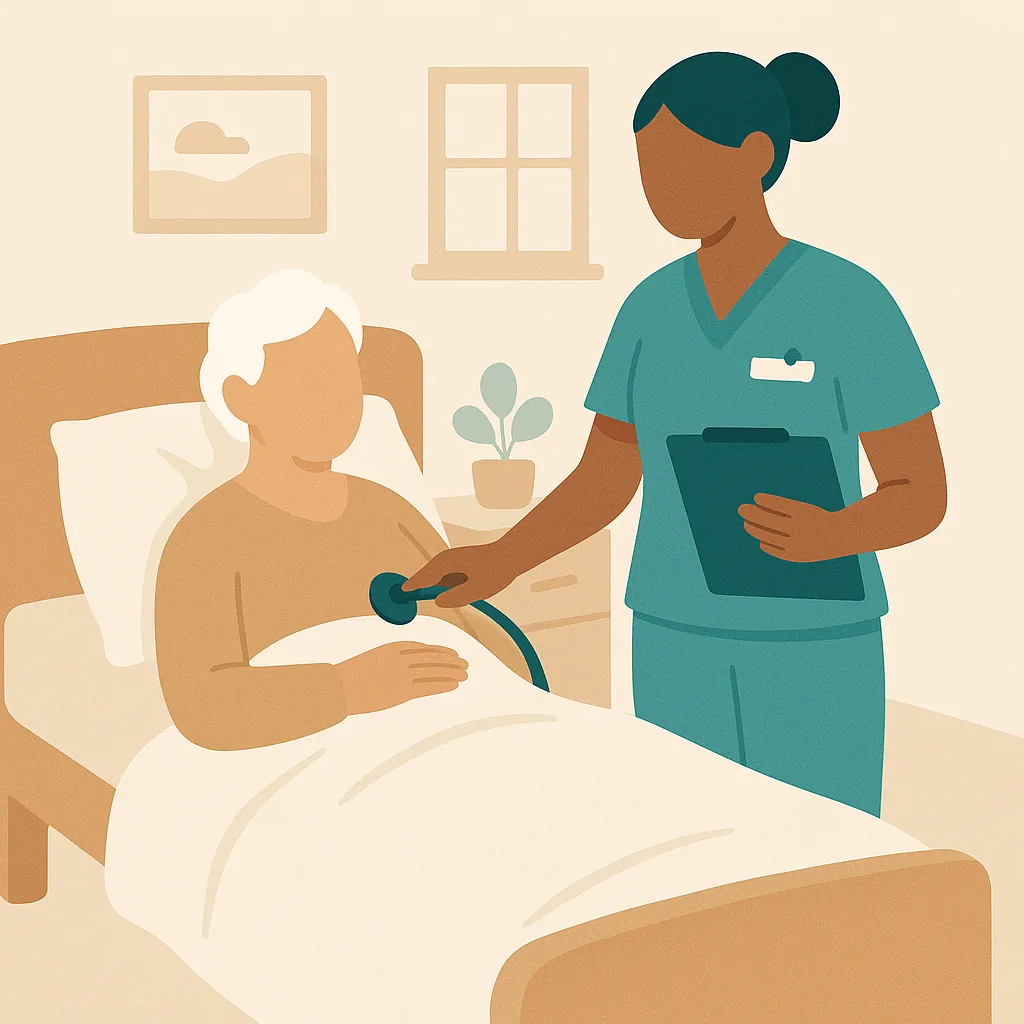
This training covers the knowledge you need to understand verification of expected death in our hospice. You will learn the difference between verification and certification, when a registered nurse can verify an expected death, the clinical checks involved, and when you must not verify and must escalate instead. This module covers the knowledge component only; practical competency must be assessed separately in real situations.
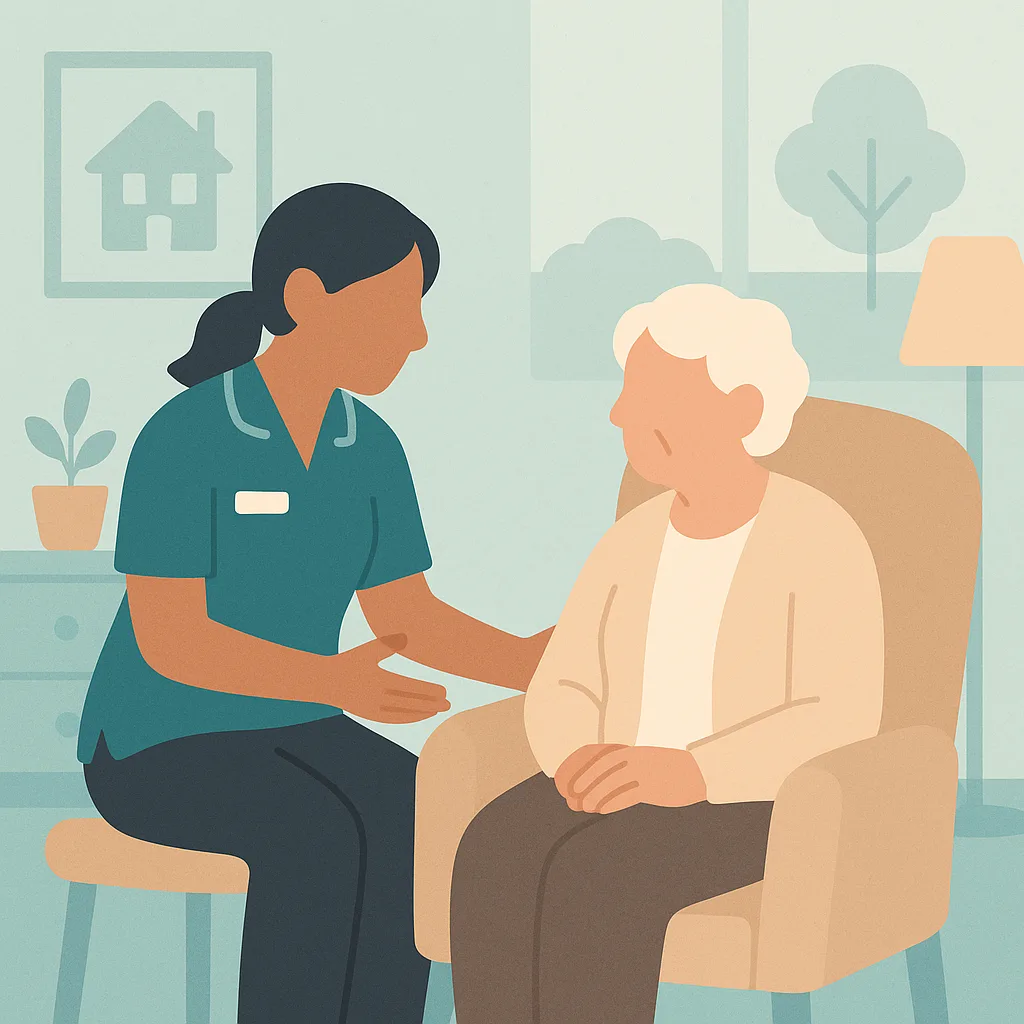
This training explains your legal and professional duty to be open and honest with residents and their families when mistakes happen in care. You will learn when the formal Duty of Candour applies, what actions you must take, and how to support residents through difficult conversations. Being transparent builds trust and helps us learn from incidents.
What the six courses give a team supporting people at the end of life
Free for every member of staff: the End of Life / Palliative Care course
The first course in the grid is free on every account. It is a CPD certified end of life care course for the whole team, with 8 lessons:
- Person centred end of life care.
- Communicating about dying.
- Advance care planning and the law.
- Recognising the last days of life.
- Symptoms and comfort.
- Emotional, spiritual and cultural support.
- Families, carers and working together.
- Care after death and caring for yourself.
It takes about 60 minutes and ends in a 32 question assessment with an 80% pass mark. A wrong answer sends the learner a short follow-up lesson and a fresh question, and CareStream records every attempt.
The certificate is named and dated, and it is issued as soon as the learner passes. It renews each year, carries the CPD Certified mark and is worth one CPD hour. It is not a government recognised qualification, and the employer stays responsible for deciding who is competent to do what.
Symptoms, medicines and verification: where an observed check applies
Three courses sit close to clinical tasks. Symptom Management in Palliative Care covers total pain, common symptoms, the medicines used, comfort measures that need no medicine, and the dying phase.
Our syringe driver training covers:
- What anticipatory medicines are.
- Who prescribes and authorises them.
- Storage and security.
- What a syringe driver is.
- Monitoring and safety checks.
- Recording and communication.
Verification of Expected Death covers when verification applies, the checks, when not to verify, and recording.
Each of the three has 6 lessons and a 20 question assessment. For the syringe driver and verification courses, the certificate is issued once the employer has signed off an observed competency assessment. A printable observation checklist is included.
The verification course teaches verification only. It says certifying a death belongs to a doctor. Who may verify a death in your service is for your policy to say, so settle that first.
Families, bereavement and the duty to be open
Bereavement and Family Support treats the whole family as the unit of care. Its lessons cover grief and loss, the dying phase, care after death, the bereavement pathway, and support for staff.
Duty of Candour covers when the formal duty applies, the actions a service must take and how to talk with residents and families. The duty itself sits in the full text of Regulation 20 on the duty of candour.
It says a provider must act in an open and transparent way after a notifiable safety incident. That includes telling the person, giving an account of the facts and offering an apology.
Both courses suit anyone who talks with families, which in a small service is everyone from the cook to the registered manager.
Who it suits, and how it compares with other ways to train
Who this is perfect for
This set suits services that support people in their final weeks and months. That means residential care homes, nursing homes, home care agencies, supported living and hospices.
The free course suits every care worker. The symptom and medicines courses suit senior carers and nurses who handle those tasks under your policy. The bereavement and candour courses suit anyone who speaks with families.
Registered managers and training leads often start with the free course for the whole team. They then add the others for the roles that need them. Anyone who needs end of life training before covering a night shift or a hospice bed can complete the free course first.
What the employer still has to do
Regulation 18 (Staffing) says staff must receive the support and training their work needs. A course is one part of that duty, alongside supervision and appraisal.
NICE guideline NG142 on end of life care for adults says managers should make sure staff have the training and skills for holistic needs assessments. It also says services should have policies so that advance care planning is offered. It does not cover clinical care in the last hours or days.
Where a person lacks capacity, the section on best interests in the Mental Capacity Act 2005 tells the decision maker to weigh the person's past and present wishes. It also says to consult carers and others close to them.
Our courses support those steps with knowledge and records. The decisions, and the practical sign off, remain yours.
How it compares with the usual alternatives
Skills for Care's end of life care resources for adult social care point to free national e-learning with around 150 modules. They also list a core skills framework and an end of life version of the Care Certificate standards. They are worth using beside our courses.
Other palliative care courses charge per learner, and some are classroom sessions that need a day away from the floor. What we add is the paper trail. CareStream keeps scores, certificates, renewal dates and signed observations in one training record, and the first course is free.
If a clinician asks for practical, hands on teaching, a face to face session is still the right route. You can log it beside the online courses.
Get started free, then add courses as roles need them
What it costs and what paid plans add
The End of Life / Palliative Care course costs nothing for every member of staff, with no card needed. Each of the other five is listed at £25.99 plus VAT per staff member as a one off licence. The price for a team is shown before you pay.
The free plan is in English. Learners can use 60+ languages from the Starter plan at £85 a month, which starts with a 14 day free trial that needs a card. Compare the plans before you decide.
You can upgrade at any time and keep everything you have set up.
Records, renewals and the training calendar
Every result flows into the training matrix. A manager can see who has finished, who has not started and who is due, and can send a reminder to anyone who has not begun. Our page on a training compliance matrix with renewals and gaps shows how it works.
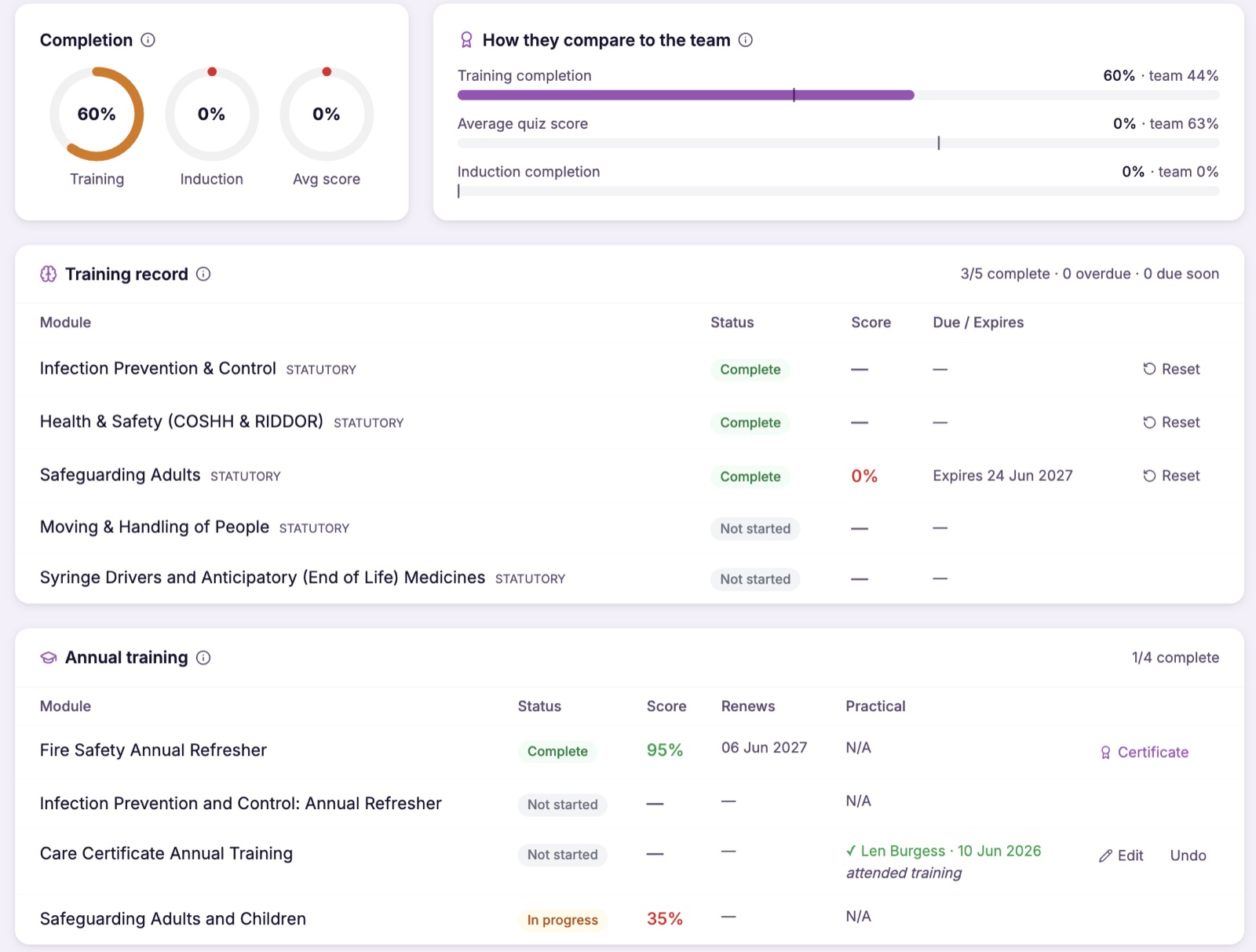
Figure: a staff record showing status, score, renewal date and the practical sign off, shown here with sample data.
Face to face sessions can sit on the same calendar. If you also audit your own practice, the end of life care pathway audit sits beside the courses, so training and checking stay together.
For a plain explanation of how the two terms differ, see how palliative care and end of life care differ in meaning.
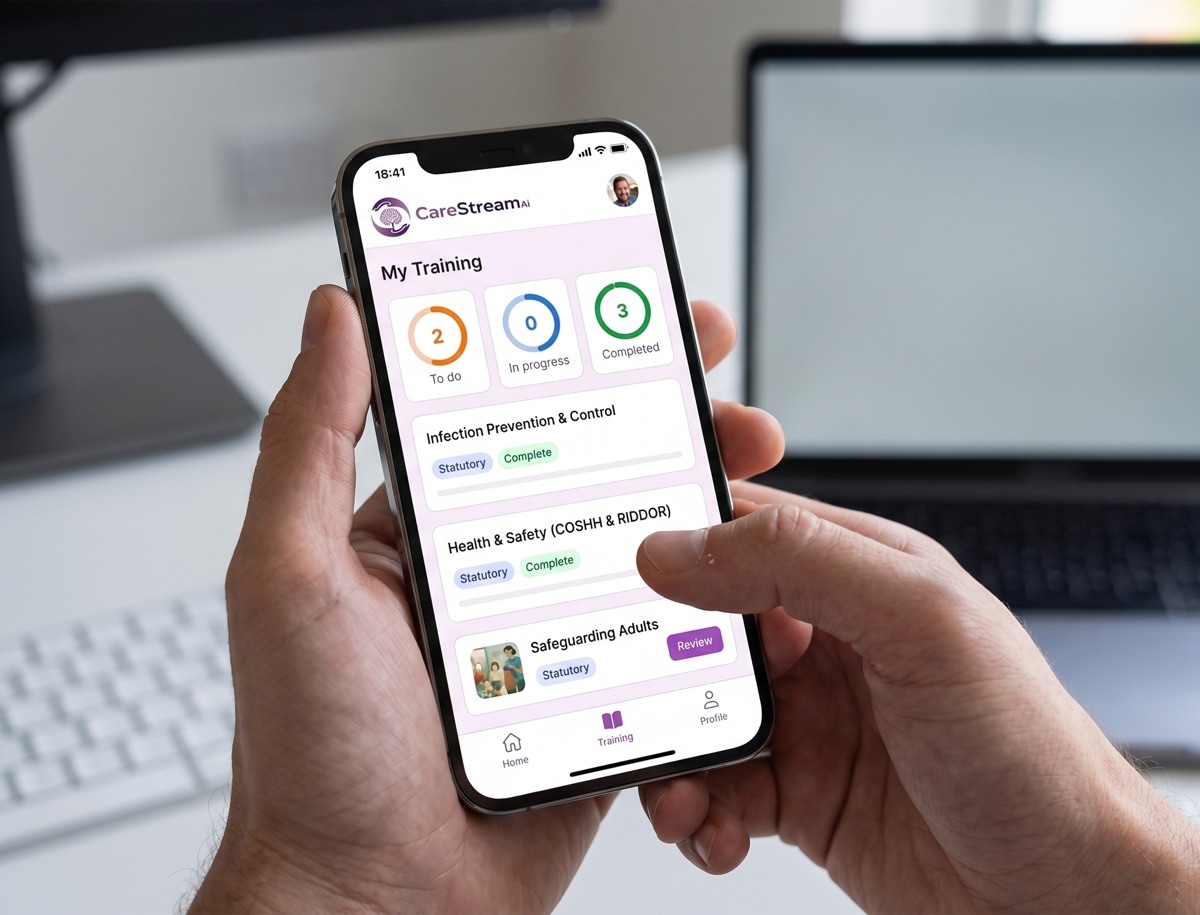
Figure: staff open their courses on a phone, tablet or computer, whenever the rota allows.
Benefits of CareStream's end of life care training for your service
Here is what a manager and a team get from the set:
- One free CPD certified course for every member of staff, with no card.
- Five more courses for symptoms, medicines, verification, bereavement and candour, bought only for the roles that need them.
- Observed sign off built in where a practical check matters.
- Named, dated certificates that renew each year.
- One training matrix, so no one chases a spreadsheet.
- Palliative care training that stays in the team's own language from the Starter plan.
End of Life Care Training for Care Services: Six Courses, One Free FAQs
What is end of life care training?
It teaches care staff how to support a person who is approaching the end of life and the people close to them. Topics include communication, advance care planning, recognising the last days of life, comfort, support for families and care after death. The courses on this page cover each of those topics.
Who needs end of life care training?
Anyone who may support a person at the end of life, which in a residential care home, nursing home, home care agency, supported living service or hospice can mean most of the team. Skills for Care says managers need enough trained staff to meet the needs and wishes of the people they support. The employer decides who completes which course.
Is end of life care training mandatory?
We know of no law that names an end of life course. Regulation 18 (Staffing) of the Health and Social Care Act 2008 (Regulated Activities) Regulations 2014 requires staff to receive the support and training their work needs, and in our view that includes end of life care where a service supports people at that stage.
Is there a free end of life care course for care staff?
Yes. A free CareStream account includes the CPD certified End of Life / Palliative Care course for every member of staff, in English, with a certificate and no card needed. Skills for Care also points to free e-learning from the national End of Life Care for All programme.
How long does the free course take?
About 60 minutes. It has 8 short lessons followed by a 32 question assessment with an 80% pass mark. Learners can stop and pick up where they left off, on a phone, tablet or computer.
What do the five paid courses cover?
Symptom Management in Palliative Care, Syringe Drivers and Anticipatory (End of Life) Medicines, Bereavement and Family Support, Verification of Expected Death and Duty of Candour. Each has 6 lessons, a 20 question assessment with an 80% pass mark and takes about 35 minutes.
What does a paid course cost?
Each paid course is listed at £25.99 plus VAT per staff member as a one off licence. The price for a team is shown before you pay.
Do staff need a practical check as well as the online course?
For the syringe driver and verification of expected death courses, yes. The certificate is issued only once the employer has signed off an observed competency assessment, and an observation checklist is included. For the other courses the certificate follows the assessment.
Does the course teach staff to verify or certify a death?
The Verification of Expected Death course teaches verification only, and it separates that from certification of the cause of death, which the course says belongs to a doctor. Who may verify a death in your service is set by your own policy, so check it before you assign the course.
Is this clinical advice?
No. The courses build knowledge and are not a substitute for a clinician's advice about a person's care. Decisions about medicines, symptoms and treatment stay with the prescriber, the nurse in charge and your own policies.
Are the certificates CPD certified?
The End of Life / Palliative Care course is CPD certified by The CPD Certification Service and is worth one CPD hour. The five paid courses are not part of our CPD certified set. No certificate is a government recognised qualification, and each employer decides what it accepts.
How often should staff repeat the training?
Each certificate shows a renewal date a year after completion, and the courses are built to be repeated every year. We suggest a yearly refresher, and sooner if your service has had a death that raised questions about practice.
Can staff take the courses in their own language?
The free plan is in English. Learners can use 60+ languages from the Starter plan, which is £85 a month and starts with a 14 day free trial that needs a card. Records and certificates stay in English.
What happens if we upgrade or stop using it?
If you upgrade, your staff and their records stay as they are and the free CPD courses stay free. The paid courses are one off licences, so nothing renews unless you choose to add more.
Will completing these courses show the Care Quality Commission that staff are prepared?
They give you records: assessment results, dated certificates and, where it applies, a signed observation. These are evidence a manager can show. We would not say records decide a rating, because inspectors also look at how people are cared for and what the people we support and their families say.
Browse the rest of the library
Most services need more than one. These are the collections people buy alongside this one.
Policies are one part of it.
CareStream is the compliance system underneath: your policies, your staff training, your audits and your evidence, kept current and ready for the day somebody asks to see them.
- Policies written and kept updated for you
- Staff training that records itself against the standard
- Gap analysis showing what you are missing before an inspector does
- Everything in one place, for one price




