Training collection
Infection Control Training for Care Staff: Free Course, Certificates and Records
Two residents on one corridor are unwell before breakfast, and the senior asks who has completed infection control training. Nobody can say. The answer sits in a folder, or in someone's memory.
A free CareStream account gives every member of staff CPD certified infection control training. Each learner gets a certificate, and the manager gets a record. The course takes 60 minutes, ends in a 32 question assessment and renews each year.
This collection explains what the course teaches and where it sits among five other free courses. It also sets out what the law expects.
It is written for registered managers, owners and training leads. They work in residential care homes, nursing homes, home care, supported living and day services. They must show the Care Quality Commission that staff are trained, without paying a fee for every learner. A complete record matters more than a certificate in a drawer.
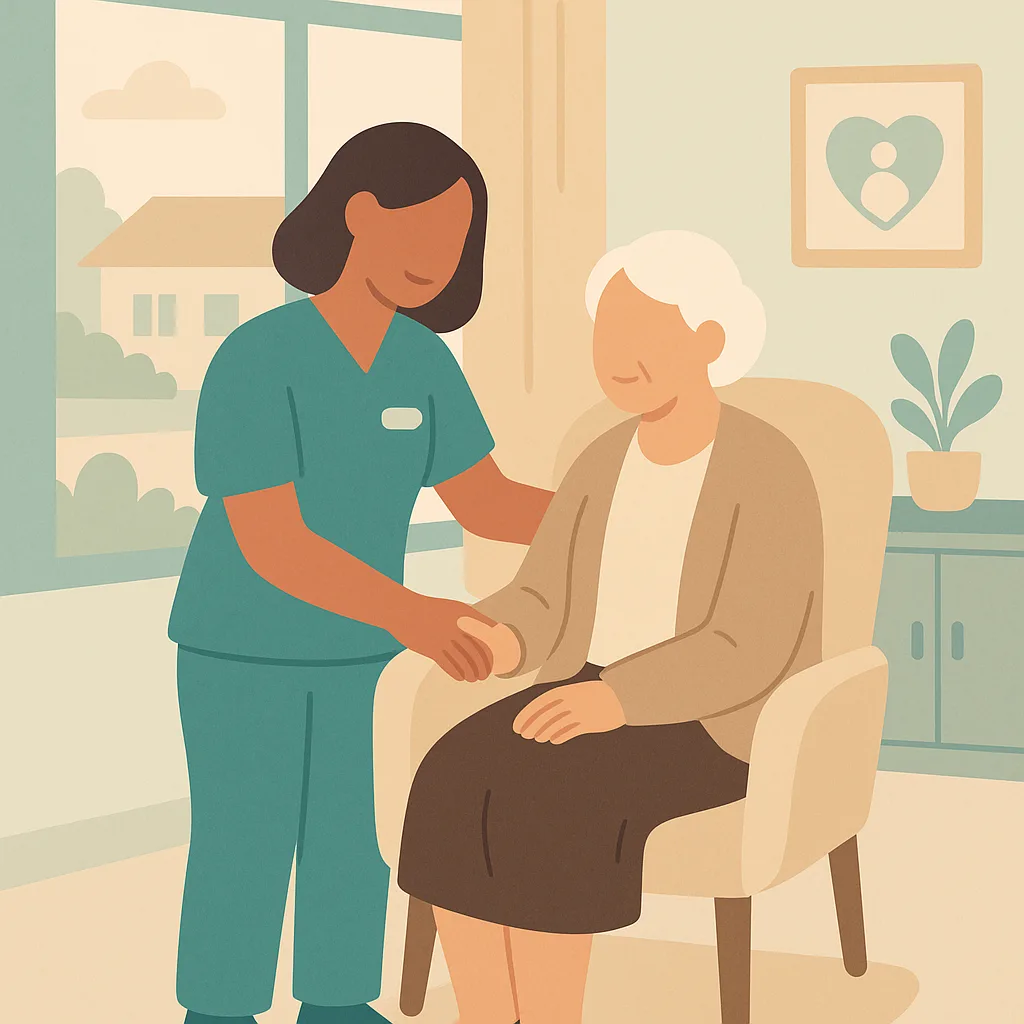
This annual refresher covers the core standards of the Care Certificate that underpin all care work in our service. You will revisit essential principles including person-centred care, dignity and respect, communication, safeguarding, health and safety, and infection control. This training ensures you continue to meet the fundamental standards expected of all care workers in the UK.

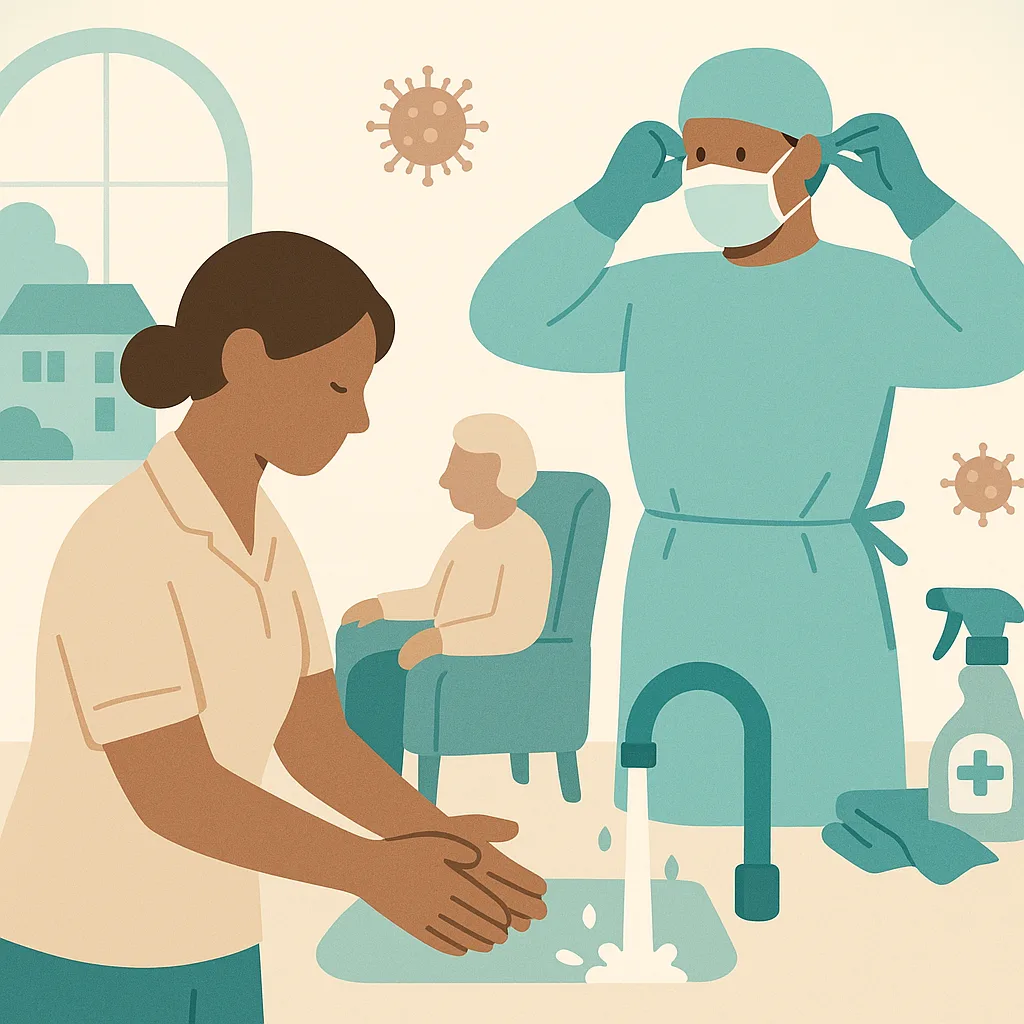
This training covers how to prevent and control infections in care settings to keep residents, staff and visitors safe. You will learn about hand hygiene, personal protective equipment (PPE), cleaning procedures, and how to respond when infections occur. These practices protect everyone and meet legal duties under the Health and Social Care Act.
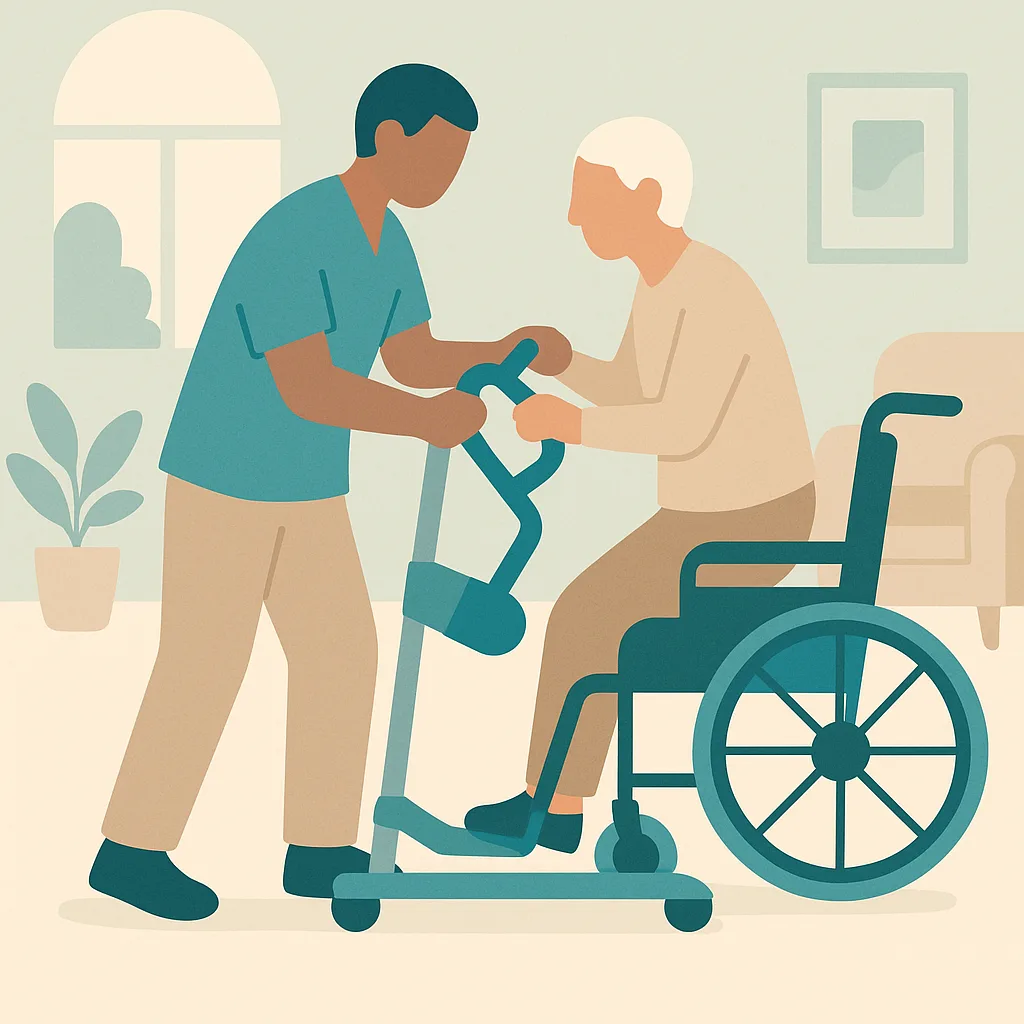
This annual refresher covers the essential knowledge you need to move and handle people safely in our home. It reviews why safe moving and handling matters, the principles we follow, how to assess and plan moves, and how to protect both the people we support and yourself from injury. Remember: this module covers knowledge only. You must also complete practical competency assessments with your supervisor.
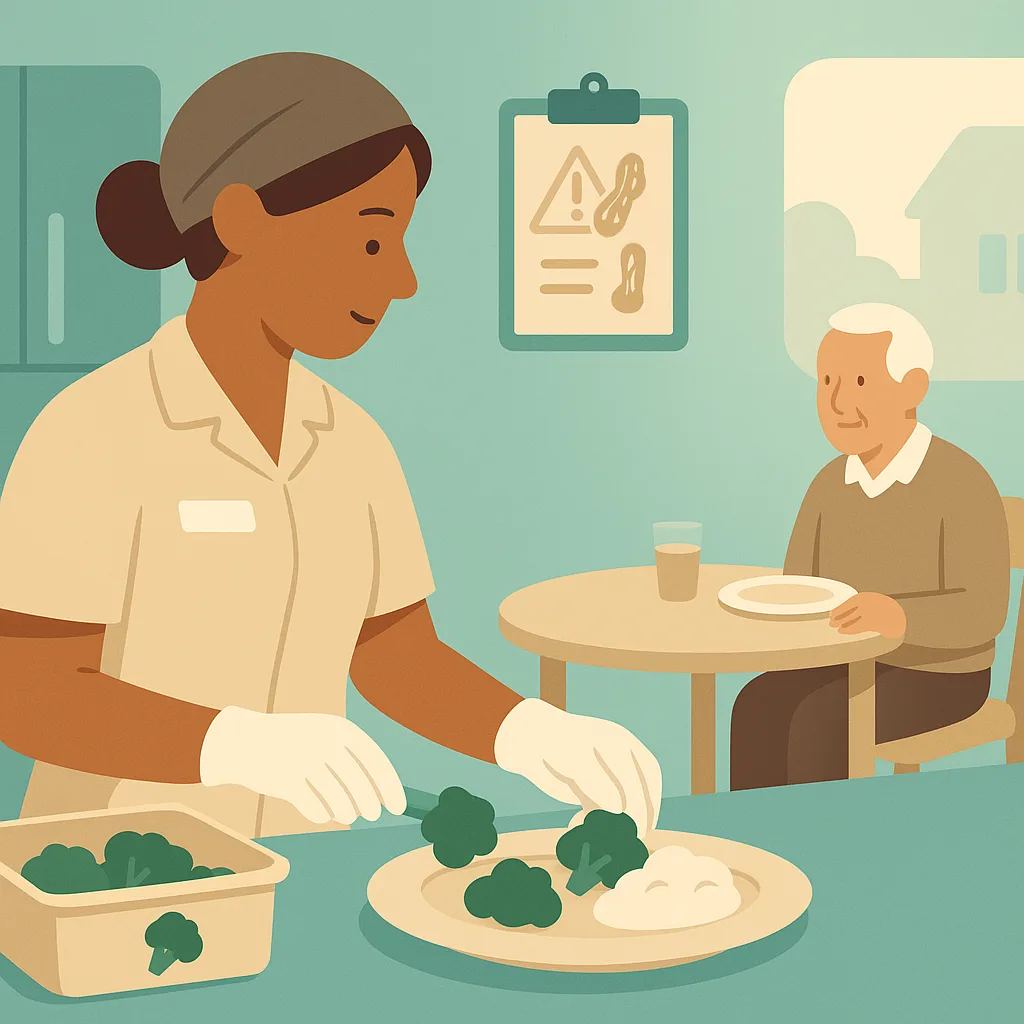
This training covers how to keep food safe and prevent illness in a care setting. You will learn about storing, preparing and serving food safely, preventing contamination, and protecting residents with food allergies. These practices protect everyone's health and meet legal requirements.
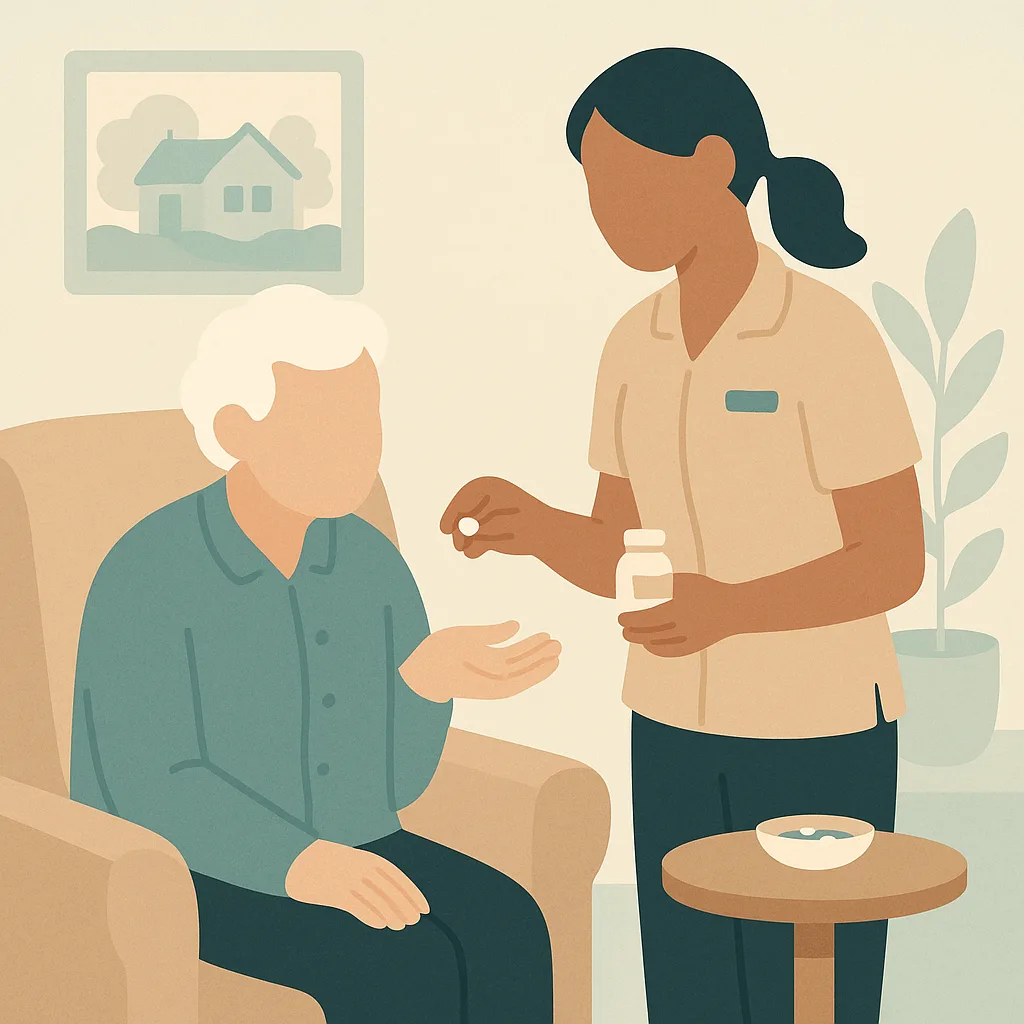
This module covers the essential knowledge you need to safely administer medication, including your workplace policies on covert medication. It is the knowledge part of your annual competency assessment. You will still need to complete a practical observation with your manager to demonstrate safe medication administration in real care situations.
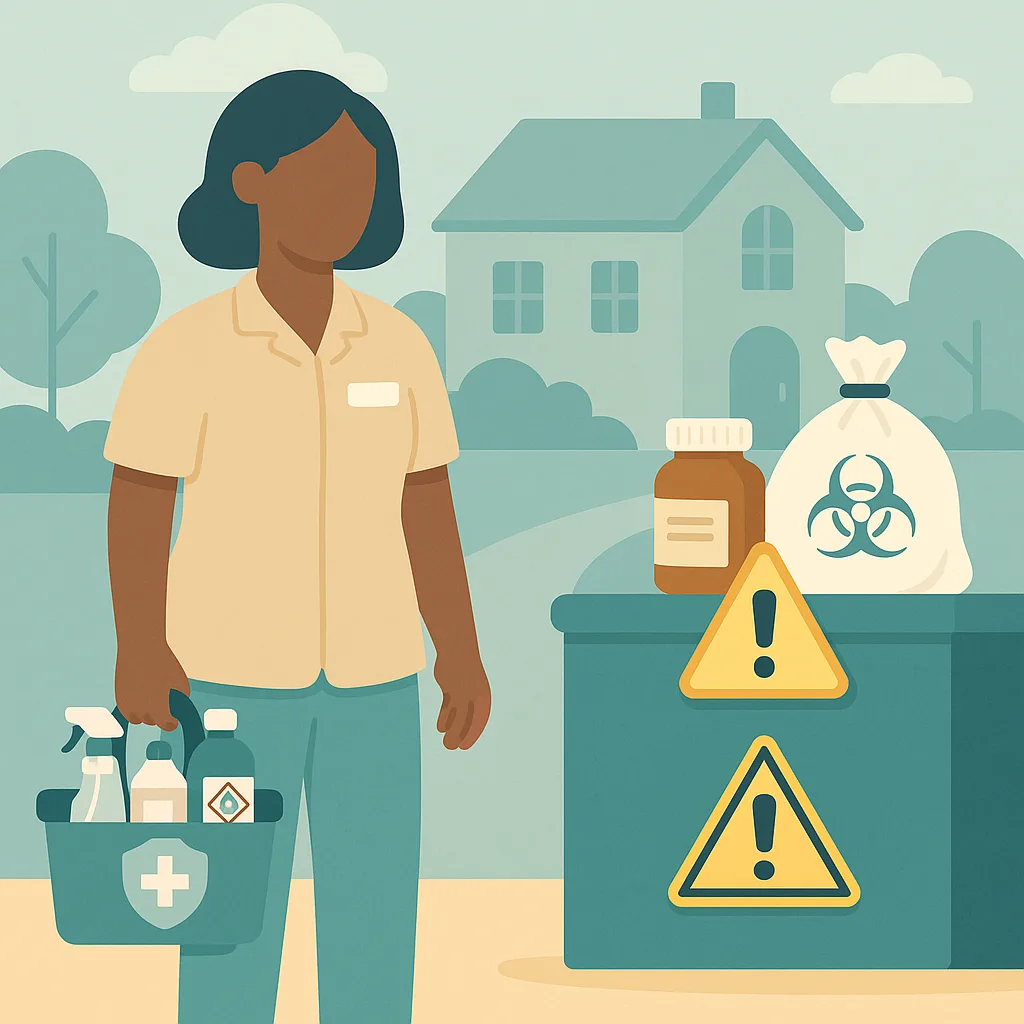
This training covers how to safely handle, store and dispose of hazardous substances in our home, including cleaning chemicals, medications and clinical waste. You will learn our procedures to protect yourself, residents and colleagues from harm. Understanding COSHH is essential for maintaining a safe environment every day.
What you get free: one course, one assessment, one record
A free CareStream account holds every course in this collection, the certificates and a training matrix. Add as many staff logins as you need. No card is asked for.
The six courses in this collection
All six are CPD certified and free for every member of staff. Each ends in an assessment and a certificate.
- Care Certificate: 90 minutes of knowledge learning across the 16 standards, one of which covers infection prevention and control.
- Infection Prevention and Control: the course this page is about.
- Moving and Handling of People: safe moving, equipment and risk, with a practical checklist.
- Food Hygiene: storage, cross contamination and allergens for staff who handle food.
- Medication Administration and Competency: safe administration, records and errors, with a practical checklist.
- COSHH: the safe use and storage of hazardous substances.
In our view three of these pair naturally with infection control. Cleaning products are hazardous substances, a kitchen is the chain of infection in another room, and hoists and slings are shared equipment that needs cleaning between people.
What the infection prevention and control training covers
The course starts with a five question knowledge check. Then come eight lessons, each with a care scenario, an activity and a quick check with an explanation. They run in this sequence:
- The chain of infection and how infection spreads.
- Standard precautions, your role and the role of others.
- Hand hygiene, including when soap and water must be used.
- Types of protective equipment and putting it on and taking it off in the right sequence.
- Recognising and reporting infection, and respiratory hygiene.
- Outbreaks and transmission based precautions.
- Cleaning, care equipment, laundry and spills.
- Clinical waste, sharps and exposure incidents.
Hand hygiene training is not a separate course here, because it is lesson three. PPE training, meaning personal protective equipment, is lesson four.
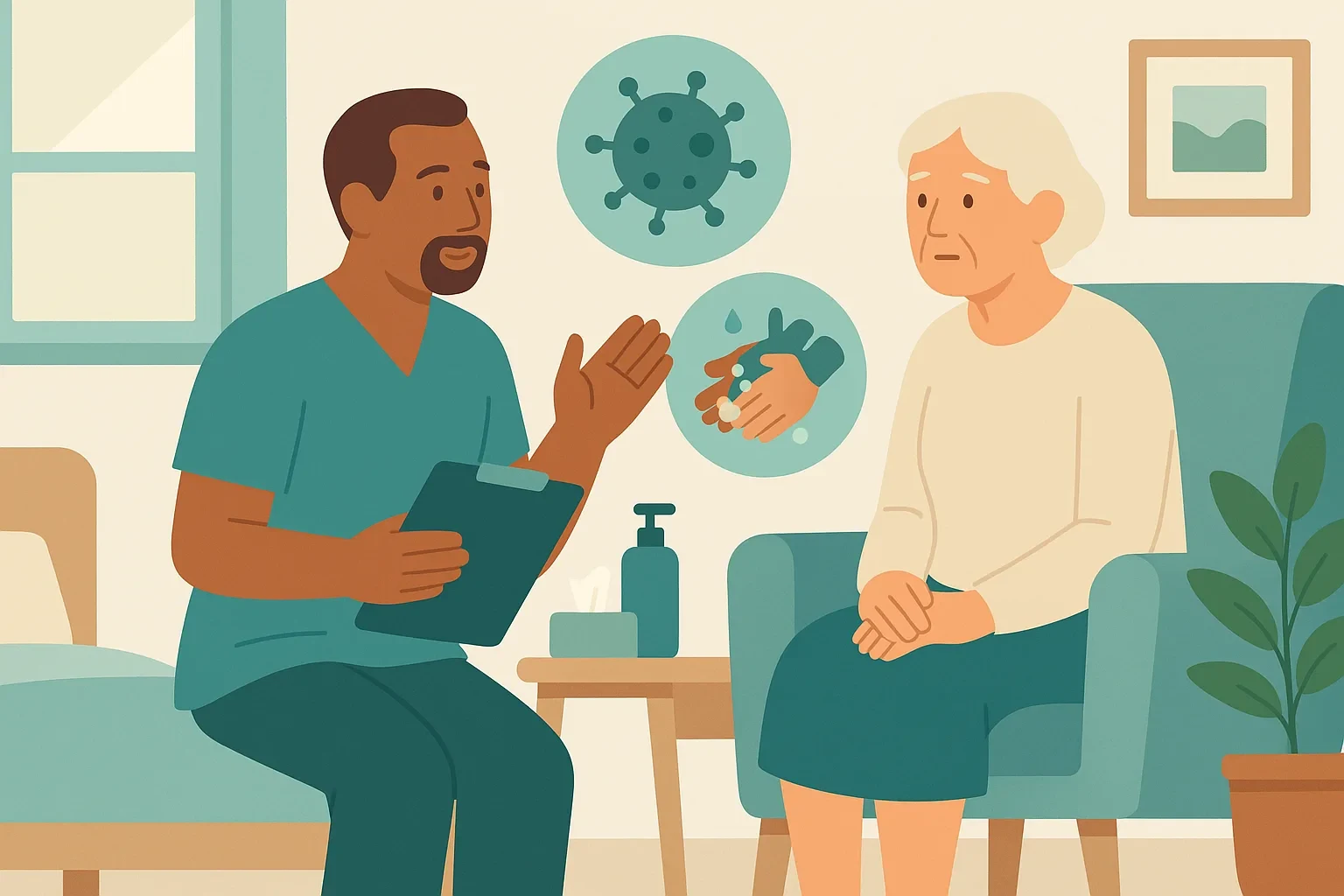
Figure: the course is built around everyday scenes, such as explaining hand washing to the person you support.
What the certificate shows and what the manager can see
Each learner who passes gets a named certificate. It shows the course, the score, the completion date, a renewal date and one CPD hour. The learner keeps it.
The certificate says it is not a government recognised qualification. It also says it does not certify competence for a role. The employer stays responsible for checking that training meets the rules.
The manager sees the same record on the dashboard and can download any certificate as a PDF. A completion email shows the score and the learner's learning gain, which compares the knowledge check with the final result.
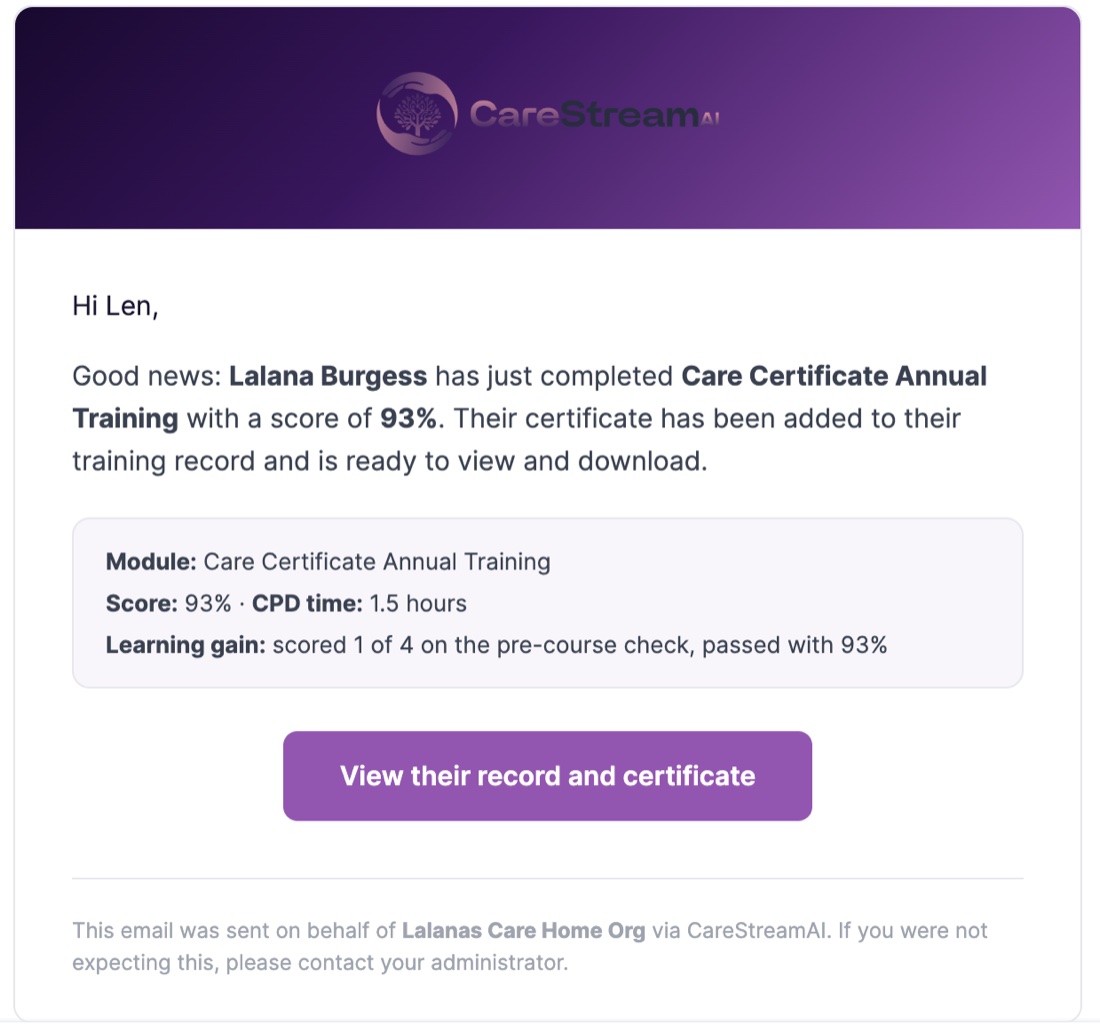
Figure: the email a manager receives when a learner finishes a course.
When the law expects staff to be trained, and who it suits
The law does not name a course. It sets duties, and training is one way a service shows it meets them.
What the regulations and the national code say
Regulation 12, the duty of safe care and treatment, says providers must assess the risk of infections. They must also prevent, detect and control their spread. Staff who give care must have the skills to do it safely.
Regulation 18 on staffing says staff must get the training they need for their duties. Both regulations are fundamental standards. They are part of the Health and Social Care Act 2008 (Regulated Activities) Regulations 2014.
The code of practice on infection prevention and control adds detail. It says all staff should receive suitable and sufficient information, training and supervision relevant to their roles. The code is not mandatory, but the Care Quality Commission must take it into account.
How often staff should refresh
The Skills for Care training guide for employers sets a minimum refresher of three years for this topic. It says to refresh sooner when a new risk or activity starts.
It also says the training should suit where the person lives and the care environment, such as their own home or a care home. That matters for a home care agency as much as for a nursing home.
We suggest a yearly refresher, because new starters, outbreaks and changes of equipment all arrive in between. Your certificate shows the renewal date, so the matrix can flag who is due. That is our view and not a rule.
Training is one part of the evidence
Training shows that staff were taught. It does not show what happens on the floor. An inspector will also look for a policy staff can follow, and a check that the practice is real.
A trained team with no audit has nothing to show for last month. An audit with no training has no reason to improve. Each supports the other, so keep the three records side by side: course, audit and policy.
Our walkthrough of the quarterly infection control audit shows the check. The audit has eight sections. For the written side, read eight questions an inspector can ask about an infection prevention and control policy.
Who this is perfect for
The course suits every adult social care worker who provides or supports care, cleans, or handles laundry or waste. It also suits managers who must evidence the training.
- New starters, as part of induction, alongside the Care Certificate.
- Experienced staff who need a yearly refresher.
- Domestic, laundry and kitchen staff who work in the same building.
- Registered managers and nominated individuals who must show who is trained.
The UKHSA and DHSC resource for adult social care covers care homes, supported living, day services and domiciliary care. Our course follows that scope. It is knowledge only, so watch practice at work too. It does not replace specialist training for clinical procedures.
Benefits of CareStream's free course for your team
Managers tell us the hard part is not the course. It is knowing, on any day, who has done it. Here is what the free account does about that.
- One login for every member of staff, with no fee per learner.
- A certificate for each learner that shows a renewal date.
- A training matrix that shows who has finished infection control training and who is due.
- Reminders you can send to anyone who has not started.
Compare the routes, then get started free
Most services arrange this kind of learning in one of three ways, and each has a place.
How this compares with the usual alternatives
A face to face trainer can watch hands being washed and correct them there. Online courses sold per learner suit a single new starter. Local sessions from health or local authority teams may suit a group.
Check each provider's own site for its current cost and terms, because they change. Where we differ is the cost and the record. There is no fee for any member of staff, and every certificate lands in one matrix.
The trade off is plain. An online infection control course covers knowledge, and an observer must still check practice. Our course is CPD certified, and the certificate says what it is and what it is not.
Get started free and what paid plans add
A free account takes a few minutes to set up. It costs nothing, needs no card and lasts for ever. Create it, add your team and assign the course.
Paid plans add translation into 60+ languages, AI recommendations at the end of audits and policy checks beyond the first 5. The three plans, Starter, Professional and Enterprise, cost £85, £230 and £385 a month. A card is asked for only when you start the 14 day free trial of a paid plan.
If you upgrade, your records stay as they are. See the full infection prevention and control course page for a sample lesson, and the training matrix with renewals and gaps for the manager's view. We award no qualification, and the employer decides who needs what.
Infection Control Training for Care Staff: Free Course, Certificates and Records FAQs
What is infection control training?
It teaches care staff how infections spread and what they do each shift to stop that: hand hygiene, protective equipment, cleaning, laundry, waste and reporting. In adult social care the usual name is infection prevention and control. Our course covers all of it in eight lessons.
Is infection control training mandatory for care staff?
No single law names a course. Regulation 18 (Staffing) requires staff to receive the training they need for their duties, and Regulation 12 (Safe care and treatment) requires providers to prevent, detect and control the spread of infections. Skills for Care lists infection prevention and control among the training it expects employers to provide.
Who needs infection control training?
Every worker who provides or supports care, cleans, or handles laundry or waste, in residential care, nursing, home care, supported living or day services. Managers need it too, because they lead the practice. The course needs no prior qualification.
How long does the infection control course take?
About 60 minutes. That is a short pre-course knowledge check, eight lessons, the final assessment and a short reflection. Learners can stop and return, and they work on any phone or computer.
How many questions are in the assessment?
The final assessment has 32 questions and the pass mark is 80%. Learners also answer a five question knowledge check before the first lesson, so the manager can see what they learned.
Is the CareStream infection control course free?
Yes. Every member of staff can take it free on the free plan, with no card needed, and it stays free on paid plans. The free plan is in English. Translation into 60+ languages starts on the Starter plan.
Is the course CPD certified?
Yes. It is CPD certified by The CPD Certification Service and each certificate shows one CPD hour. CPD certification confirms the learning meets a continuing professional development standard. It is not a government recognised qualification.
What does the certificate show?
The learner's name, the course, the score, the completion date and a renewal date. Learners keep the certificate, and the manager can download it as a PDF from the training record.
How often should infection control training be refreshed?
The Skills for Care guide gives a minimum refresher period of three years for infection prevention and control, and says to refresh sooner when a new risk or activity is introduced. We design the course as an annual refresher, and the certificate shows a renewal date.
Does online training cover hand hygiene and PPE?
It covers the knowledge: when to clean hands, which product to use, and how to put on and take off protective equipment in order. A trained observer still has to watch the skill at work, which is why we suggest the hand hygiene observation audit alongside the course.
What happens if there is an outbreak?
Two lessons cover recognising and reporting infection and the management of outbreaks, including transmission based precautions. Staff learn what to look for and who to tell. Your own outbreak plan and your local health protection team still lead the response.
Does this replace specialist clinical training?
No. It refreshes everyday infection prevention and control for all care staff. It does not replace specialist training for procedures such as catheter or wound care, which your service should provide separately.
Can I see who has finished?
Yes. The training matrix on the free plan shows each member of staff against each course, with who has finished and who is due. You can also send a reminder to anyone who has not started.
What do paid plans add?
Translation of courses into 60+ languages from the Starter plan at £85 a month, AI recommendations at the end of audits, and policy checks beyond the first 5 policies. Each paid plan has a 14 day free trial, and a card is needed to start it.
What if I upgrade or stop using it?
If you upgrade, your staff, certificates and records stay exactly as they are. The courses stay free on every plan, so upgrading adds features and not a course fee. Certificates belong to the learner and access does not expire.
Browse the rest of the library
Most services need more than one. These are the collections people buy alongside this one.
Policies are one part of it.
CareStream is the compliance system underneath: your policies, your staff training, your audits and your evidence, kept current and ready for the day somebody asks to see them.
- Policies written and kept updated for you
- Staff training that records itself against the standard
- Gap analysis showing what you are missing before an inspector does
- Everything in one place, for one price




