
Policy collection
Care Home Fire Safety: Six Written Policies, Checked Free First
Care home fire safety starts with one question: if the alarm sounds at night, who moves which resident, and by what route? A fire risk assessment answers it on paper. Care home fire safety policies turn that answer into instructions night staff can follow without the manager in the building.
Six policies carry the load: fire safety, evacuation, premises and maintenance, health and safety, risk management and business continuity. Each links to the law behind it and to the people who must act on it. You will see what each one covers, who holds it and what it costs.
Not sure what you already hold? Upload up to five policies you already hold and our free check measures them against the regulations. Buy a written one only for a true gap. This page is for registered managers, owners and nominated individuals of residential and nursing homes, and for the deputies and training leads who support them.
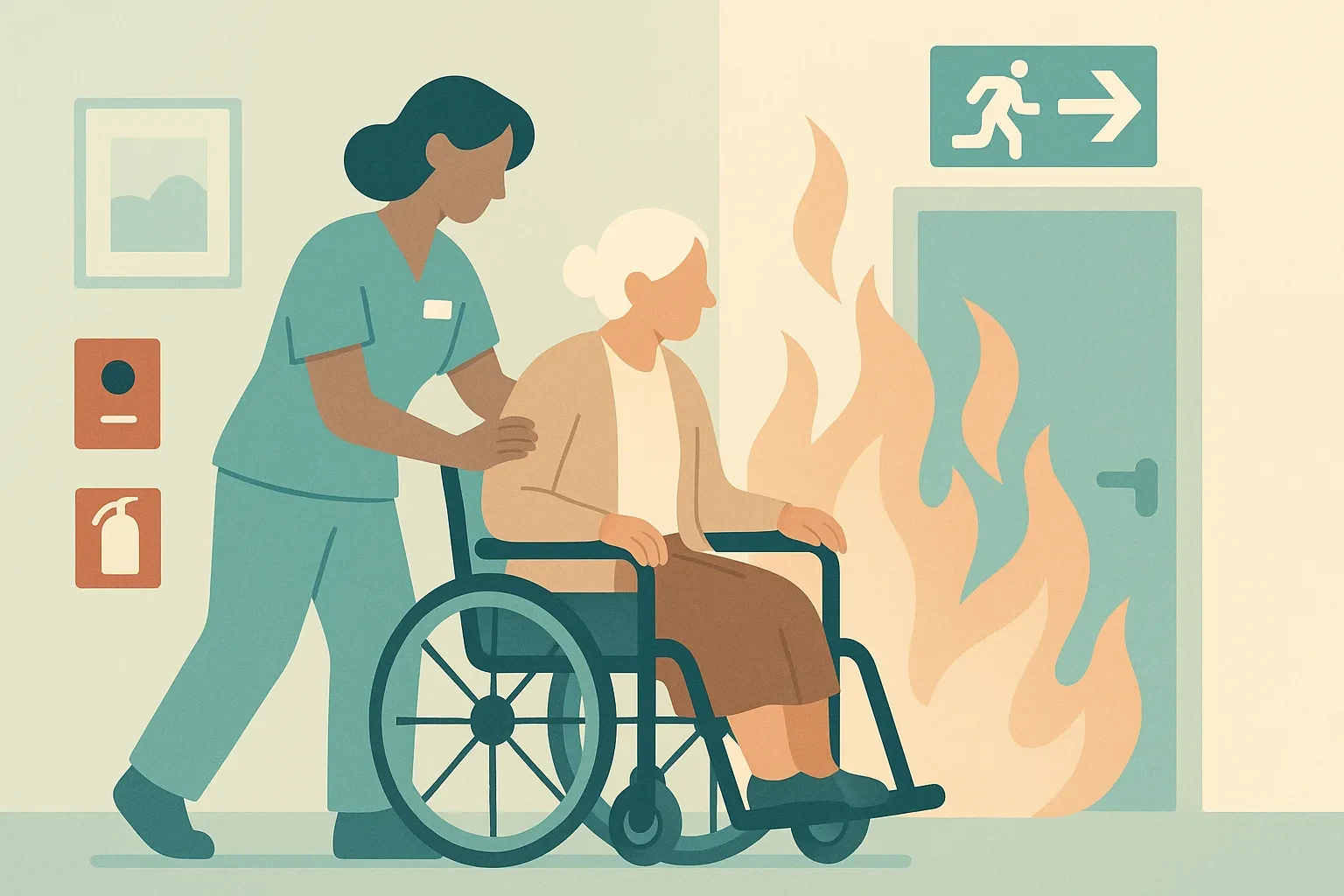
Prevention, detection, evacuation (including PEEPs) and staff responsibilities under the Fire Safety Order 2005.
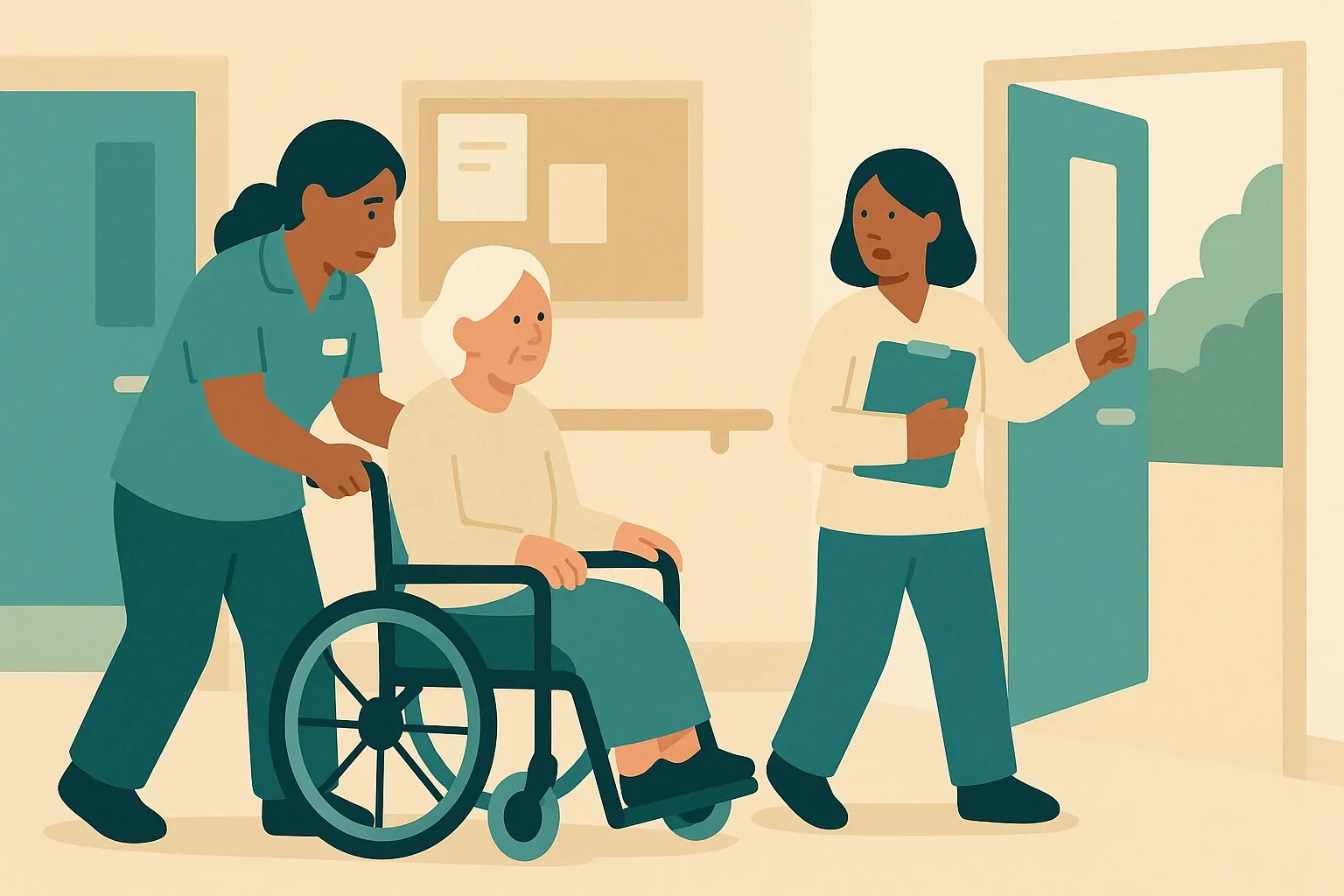
Whole-building and progressive-horizontal evacuation, PEEPs and assembly.
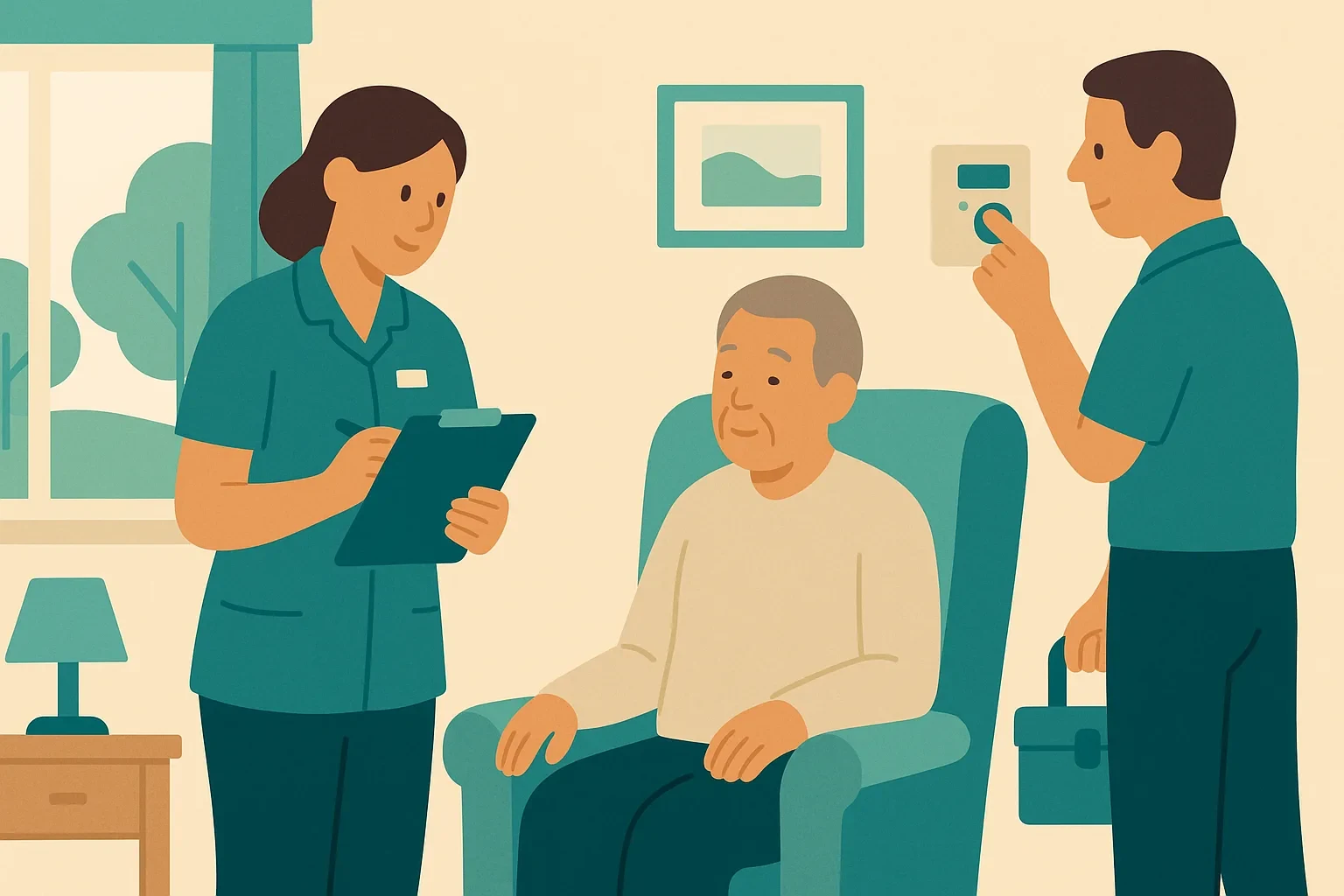
Keeping the premises safe, suitable and maintained under Regulation 15.

Your general statement, organisation and arrangements under the Health and Safety at Work etc. Act 1974.
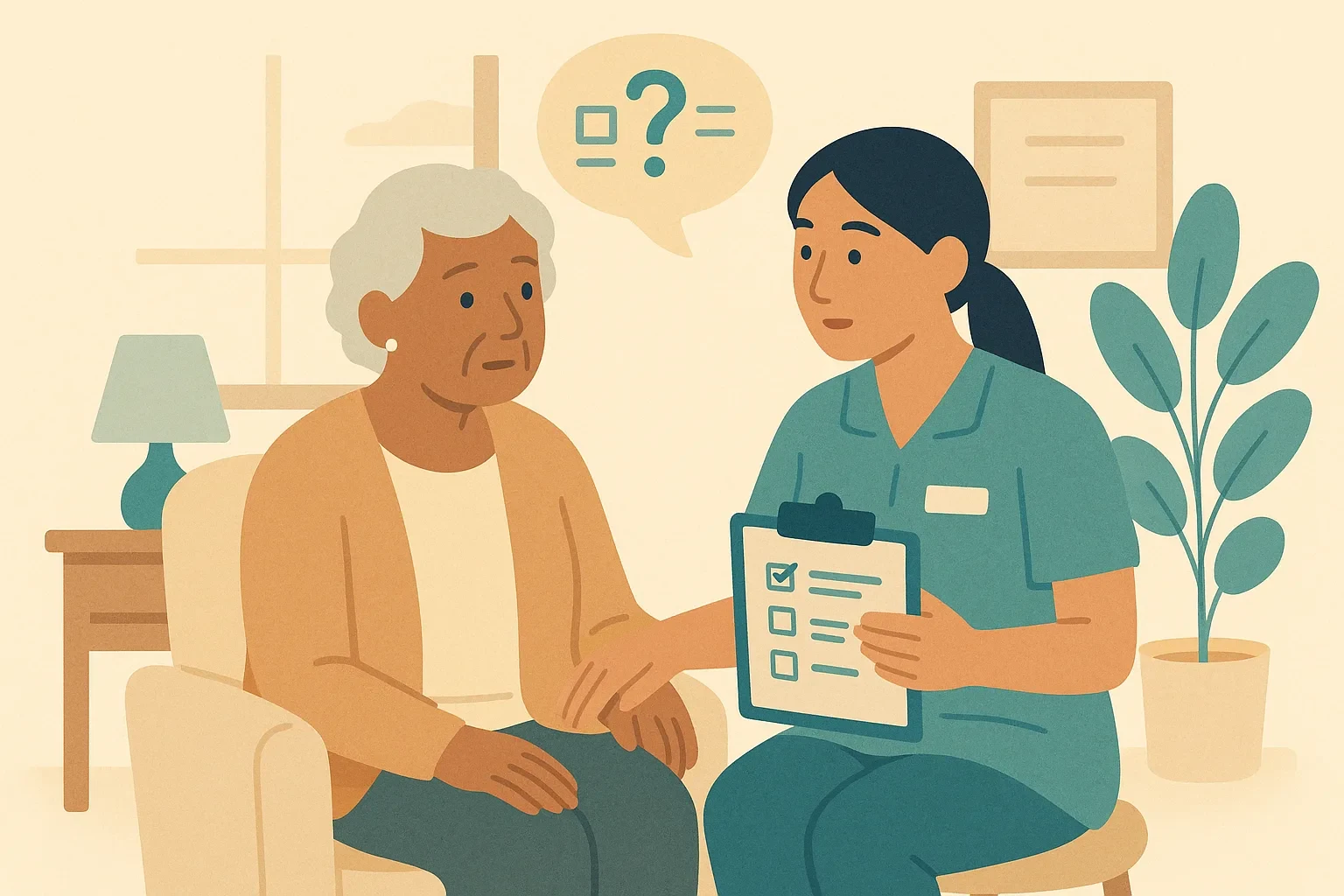
Identifying, assessing, recording and reviewing risk across care and operations.
Keeping people safe through outages, staffing crises and emergencies, with your escalation contacts.
Fire policies a residential service has to be able to show
Fire safety in care homes differs from an office, because residents cannot all act for themselves. The paperwork has to say who does what before the alarm goes, not after.
What the fire order asks of the responsible person
The Regulatory Reform (Fire Safety) Order 2005 puts the duties on a "responsible person". For a workplace, that is the employer, where the workplace is to any extent under their control. In a care home that is normally the provider.
Article 9 requires a suitable and sufficient assessment of the risks to people in the premises. It must be reviewed regularly so that it stays up to date.
The fire risk assessment care home managers hold must be current, and the Order also needs emergency procedures, with safety drills. The responsible person must name enough competent people to carry out the evacuation. Article 15 of the Order sets out both duties.
Figure: the fire order puts its duties on the responsible person, and a written policy shows how they are met.
What the Home Office guide for residential care adds
The Home Office publishes a guide to fire risk assessment in residential care premises. It is for premises with staff on site at all times, where most residents need help to stay safe in a fire.
It breaks the work into five steps, from finding hazards to review. It explains three evacuation strategies and says a service should not depend on the fire and rescue service to evacuate people.
It also covers staff training, drills and when to revisit the assessment. Our fire evacuation policy follows its three strategies. A policy that ignores it leaves the manager to work all this out alone. Used well, the policy turns the guide into short rules that every shift can read in a few minutes.
Where the Care Quality Commission comes in
The Health and Social Care Act 2008 (Regulated Activities) Regulations 2014 sit beside the fire order. Regulation 12 asks for safe care and treatment. That includes premises that are safe to use for their purpose.
Regulation 15 deals with premises and equipment. They must be clean, secure, suitable for their use, properly used and properly maintained.
The Care Quality Commission (CQC) guidance on regulation 12 adds that providers must be able to respond to major incidents and emergencies. That is why a continuity plan belongs in the same set as a fire policy. Our guide to a business continuity plan for a care home shows one in use.
The six policies, and what each one covers
These are the six policies grouped in this collection. Each is written from your answers, so the policy states your real arrangements rather than a generic version.
Fire safety and evacuation, the two core policies
The Fire Safety Policy covers prevention, detection, evacuation and staff responsibilities under the fire order. Its price is £69. We ask who your named responsible person is, when the fire risk assessment was last reviewed and how many staff are on duty overnight.
The Evacuation Policy covers whole building evacuation, moving people sideways to a safe area, a plan for each resident and where everyone meets. It costs £49. We ask which evacuation aids you hold, such as ski sheets or evacuation chairs. The policy then never describes equipment you do not own.
Read the Fire Safety Policy and the Evacuation Policy pages before you buy.
Premises and maintenance, health and safety, risk management
The Premises and Maintenance Policy keeps the building safe, suitable and maintained under regulation 15. It costs £59. It says who tests alarms, doors and lighting, and how a fault is logged and fixed.
The Health and Safety Policy is your general statement of who does what for safety at work, under the Health and Safety at Work etc. Act 1974. It costs £79.
The Risk Management Policy covers how risk is found, assessed, recorded and reviewed across care and operations. It costs £59. Together these three give fire its context: who inspects what, who owns each risk and how a hazard reaches the manager.
Business continuity, for the day the building cannot be used
The Business Continuity Policy covers keeping people safe through outages, staffing crises and emergencies, with your escalation contacts. It costs £59.
A blaze that closes a wing is a continuity event as well as an evacuation. The policy says who takes charge, who is told and where people go if they cannot return to their rooms.
A member of our team reads each policy before it goes out under your name. Delivery takes two working days from your answers. Year one of updates is part of the price, and each later year is £12 per policy.

Figure: premises checks sit beside the fire policy, because alarms and doors only protect people if someone maintains them.
Personal emergency evacuation plans and drills, in practice
A policy states the rule. A personal emergency evacuation plan applies it to one person, and a drill shows whether staff can do it.
What a personal emergency evacuation plan is for
A personal emergency evacuation plan sets out how one named resident will be helped to safety. The Home Office guide says such plans may need to be considered, and that a plan may be built into the person's care plan.
It also says your emergency plan should record where disabled people are in the building.
In our view each resident's plan should name how many staff are needed, the aid used and the route. Searching for a personal emergency evacuation plan care home managers can use? Keep it to one page per resident, where night staff can find it fast.
Review it when a person's mobility, medicines or room change. Our Evacuation Policy sets out the structure for a plan like this.
Drills, training and the night shift
The guide says to hold a drill at least once a year, or as your fire risk assessment says. Do it more often where staff turnover is high. It says new, agency and temporary staff should be trained before they start their duties.
Your care home evacuation plan faces its hardest test at night, when fewer staff must move the same number of people. The policy has to work on the night rota. We suggest at least one drill a year runs on the night rota.
Two free audits help you record this: the fire drill record form and the fire marshall checklist. Every failed item becomes an action with an owner.

Figure: the risk conversation with each resident is where an evacuation plan begins.
Who this suits and how it compares with other options
Who this is perfect for
It suits the registered manager of a residential or nursing home who has inherited a fire policy and cannot say when it was last reviewed. It also suits a new provider writing a first set.
A provider who hired a fire risk assessor can use it too. The assessor produces the assessment. These policies set out what staff do day to day because of it.
A domiciliary care agency does not run the building. The Home Office guide leaves out nursing care given in single private homes. The oxygen, smoking and fire risk policy for the person's home is the better fit. Supported living and hospices should check which policies match their premises.
What we do not claim
No policy here makes a service safe from fire. We do not say any of them makes a home compliant with the fire order. The responsible person still has to carry out the assessment and the drills. Nobody else can do that for them.
The policy records your arrangements for an inspector and for new staff. The fire and rescue service and the Care Quality Commission judge what they see in the building, not what the policy says.
We also cannot see your building. A policy cannot tell you whether a fire door closes properly or whether the alarm reaches every bedroom. Those checks belong to your fire risk assessment and your maintenance routine.
How it compares with the usual alternatives
The usual routes are a ready made document, a consultant or a compliance publisher's licence. A ready made document is quick but generic, and a consultant brings judgement at a day rate. A licence brings volume.
CareStream begins with the policies you hold and writes a new one only where a gap shows. The price is on the page before you order, there is no monthly licence, and you can stop updates when you wish.
Each written policy uses the facts you give it: your named responsible person, your evacuation strategy and your night staffing. It never states an arrangement you did not describe. If you left a question blank, the policy says what action is needed instead.
Get started with a free check, then buy only the gaps
What the free account reads
Create a free account with no card and upload up to 5 policies for the life of the account. CareStream reads each one against the regulations that apply. Your fire safety, evacuation and premises policies make a sensible first three.
You get a verdict on every regulation that applies: covered, partly covered or a gap. Old wording is flagged, and so are clashes between two of your files. One might give a night evacuation route that another contradicts.
Every test is listed on the free policy gap check page. Example wording for every gap, and checking more than five policies, come with paid plans, which start with a 14 day trial and need a card.
Buying a written policy, or a set
When the check shows a gap, buy the single policy from the written care policies shop. Prices are shown in full, and you can have a refund if you tell us within fourteen days that the policy is not right for your service. If you hold no fire policy at all, start with that one.
Several of these policies also sit in packs. The Statutory Starter Pack holds twenty policies, including fire safety and business continuity, for £495. The Health and Safety Pack includes fire safety and premises and maintenance, and its price is on the shop page.
Add up your gaps before choosing. Two or three singles usually cost less than a pack.
Benefits of CareStream's free check and written policies for care home fire safety
- You upload up to 5 policies and see what is covered, partly covered or missing, with no card needed.
- You buy only the written fire, evacuation or premises policy that fills a real gap.
- Each policy states your named responsible person, evacuation strategy and night staffing, as you gave them.
- You can record drills and daily fire checks on free audits.
Start with the free check of up to five policies and read the results before you spend anything.
Care Home Fire Safety: Six Written Policies, Checked Free First FAQs
Who is responsible for fire safety in a care home?
Under the Regulatory Reform (Fire Safety) Order 2005 the responsible person for a workplace is the employer, where the workplace is to any extent under the employer's control. In a care home that is usually the provider. The Order also expects a sufficient number of competent people to be nominated to carry out the evacuation procedures.
Does a care home need a fire safety policy?
The Order does not use the word policy. It requires a suitable and sufficient fire risk assessment, emergency procedures and training. A written fire safety policy is how a service sets those arrangements out so every member of staff, including new and agency staff, can follow them.
What is a fire risk assessment in a care home?
It is the responsible person's written assessment of the risks from fire to everyone in the building and the precautions that control them. The Home Office guide for residential care premises sets it out in five steps: identify hazards and people at risk, evaluate and reduce the risk, record, plan and train, then review.
How often should a fire risk assessment be reviewed?
The Order says the assessment must be reviewed regularly so that it stays up to date. The Home Office guide lists reasons to review sooner, including building alterations, a failed fire detection system, changes in staff ratios and the arrival of people with a different disability.
What is a personal emergency evacuation plan in a care home?
It is a written plan for one person, setting out how that individual will be helped out or moved to safety if the alarm sounds. The Home Office guide says such plans may need to be considered for some residents and may be built into the person's care plan.
Which evacuation strategies can a care home use?
The Home Office guide names three typical ones: single stage evacuation for people who can leave without help, progressive horizontal evacuation for people who depend on staff, and delayed evacuation in exceptional cases. Which one fits depends on your building and the people living there.
What is progressive horizontal evacuation?
It means moving people from the area affected by fire, through a fire resisting barrier, to an adjoining protected area on the same level. They wait there in safety until the fire is dealt with or they can be moved on. It needs the building to have suitable compartment lines.
Can a care home rely on the fire and rescue service to evacuate residents?
No. The Home Office guide says you should not depend on the fire and rescue service to evacuate people, and that your escape strategy must depend only on what is within your own control. It also advises consulting your enforcing authority when planning the strategy.
How often should a care home hold fire drills?
The Order requires procedures including safety drills. The Home Office guide says a drill should be carried out at least annually, or as your fire risk assessment determines, and more often where staff turnover is high. Record each drill and what it showed.
Does fire safety training have to include agency and new staff?
The Home Office guide says training should be provided to new, agency and temporary staff before they start their duties, and repeated periodically where appropriate. Training should explain your emergency procedures and be tested by fire drills.
Does a domiciliary care agency need these policies?
The Home Office guide covers residential premises with staff present at all times and leaves out out-posted nursing care in single private dwellings. An agency does not run the building, so its fire duties differ. The oxygen, smoking and fire risk in the person's home policy is written for home and live in care.
Can I check the fire policies I already hold for free?
Yes. The free account reads up to 5 policies you already hold, with no card needed. Each applicable regulation is rated covered, partly covered or a gap, and out of date wording and contradictions between documents are flagged.
How much do the written fire and evacuation policies cost?
The Fire Safety Policy is £69, the Evacuation Policy is £49, and the Premises and Maintenance Policy, Risk Management Policy and Business Continuity Policy are £59 each. The Health and Safety Policy is £79. The first year of updates is included, then £12 a year per policy.
How long does a written policy take to arrive, and can I get a refund?
Delivery is within two working days of your answers. If a policy is not right for your service, you tell us within fourteen days and it is refunded in full, according to the written policy product page.
Will these policies make my home compliant with the fire order?
No. A policy sets out your arrangements, and the responsible person still has to carry out the fire risk assessment, drills and checks. Whether the precautions work in the building is judged by the fire and rescue service and the Care Quality Commission, not by a document.
More on care policies
Guides and collections that go with this page, and the full libraries.
Policies are one part of it.
CareStream is the compliance system underneath: your policies, your staff training, your audits and your evidence, kept current and ready for the day somebody asks to see them.
- Policies written and kept updated for you
- Staff training that records itself against the standard
- Gap analysis showing what you are missing before an inspector does
- Everything in one place, for one price




