Training collection
Moving and Handling Training for Care Staff
Moving and handling training gives your care staff the knowledge and practical skills to support people to move safely, and it gives you a record you can show. This collection brings together our moving and handling training for the whole regulated sector, from residential and nursing homes to domiciliary care, supported living and hospices. Every course here deals with moving people rather than boxes, so staff work through real situations: a resident who can weight bear on one side only, a hoist transfer that needs two people, a change in condition that makes yesterday's handling plan wrong today. Courses cost £25.99 each as a one-time purchase, and staff can read them in their own language on a phone, on shift or at home. Completion, expiry and practical sign-off sit together in one training record rather than in a spreadsheet you update by hand. If you have new starters to induct, a block of refreshers all expiring in the same month, or a handling injury that exposed a gap, this is the place to start. CareStream wrote every module for care settings, and a person reviews each one before it goes live.
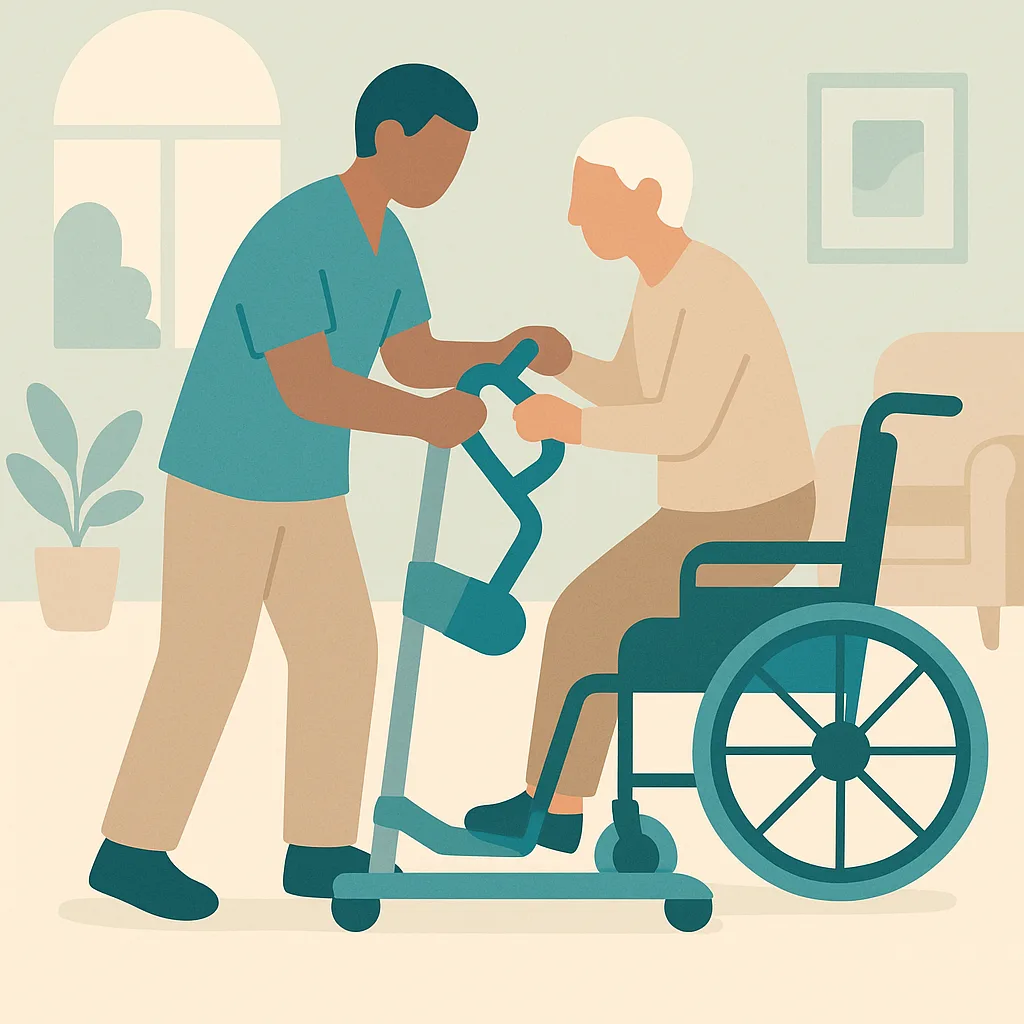
This annual refresher covers the essential knowledge you need to move and handle people safely in our home. It reviews why safe moving and handling matters, the principles we follow, how to assess and plan moves, and how to protect both the people we support and yourself from injury. Remember: this module covers knowledge only. You must also complete practical competency assessments with your supervisor.
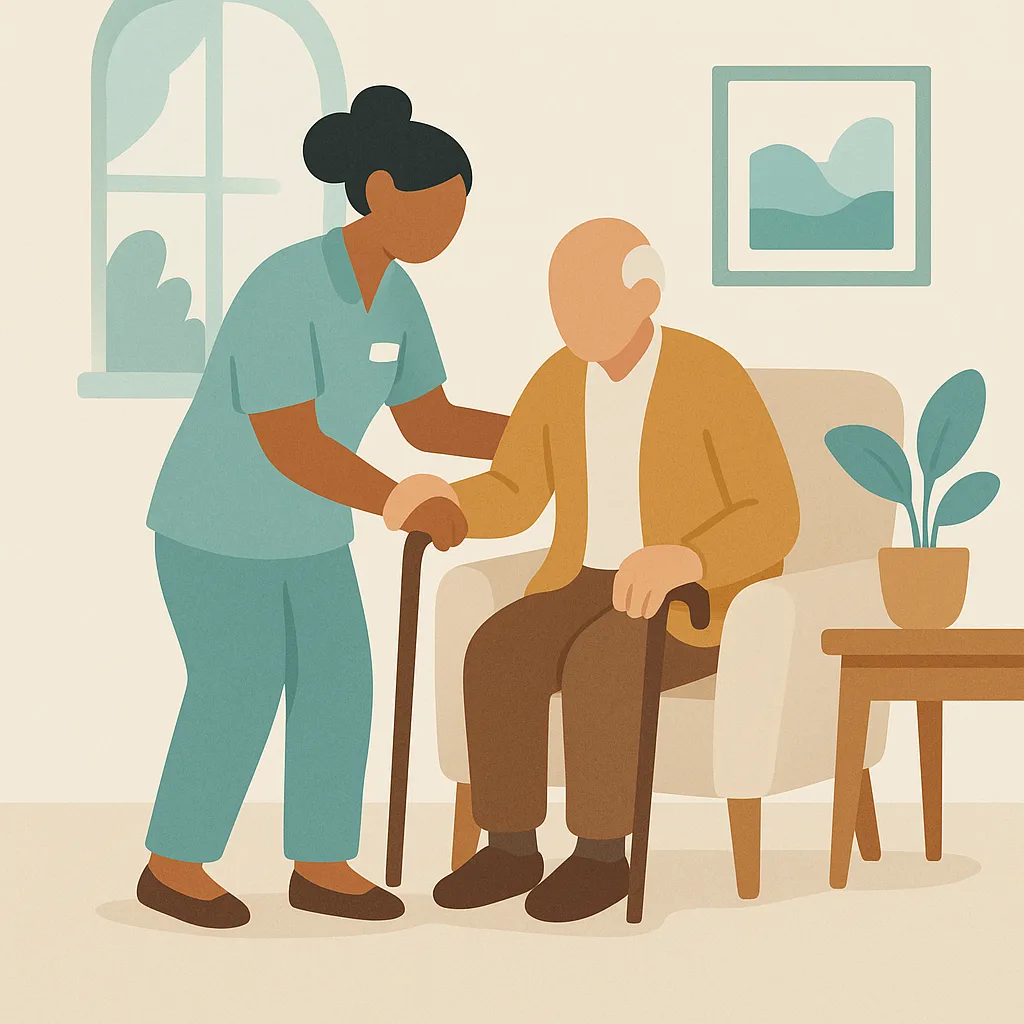
This training covers how we prevent falls and assess fall risks at our home. You will learn our procedures for identifying residents at risk, creating individual care plans to reduce falls, and responding when falls happen. Preventing falls protects residents from serious injury and helps them stay independent and confident.
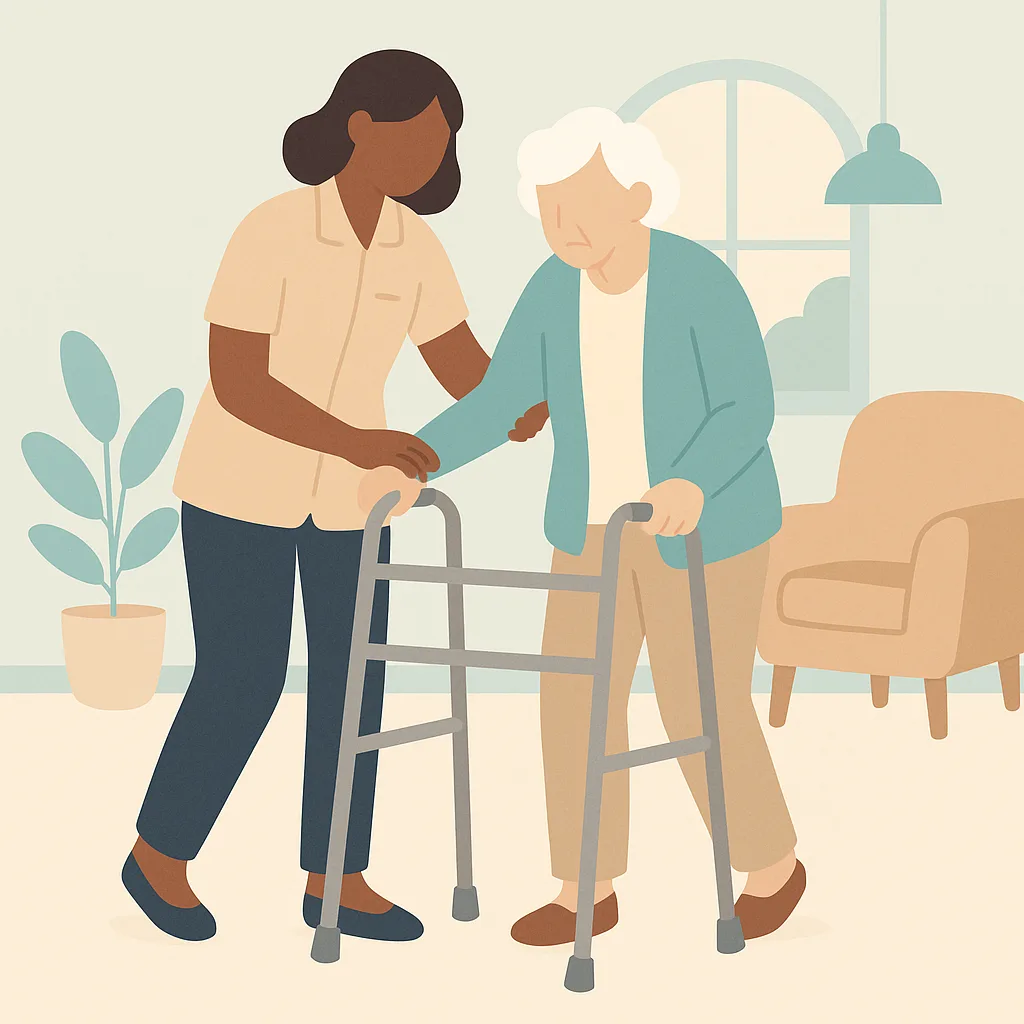
This training helps you prevent slips, trips and falls for residents and yourself. Falls are a major risk in care homes and can cause serious injury. You will learn how to spot risks, support residents safely, and follow our home's procedures to keep everyone safe.
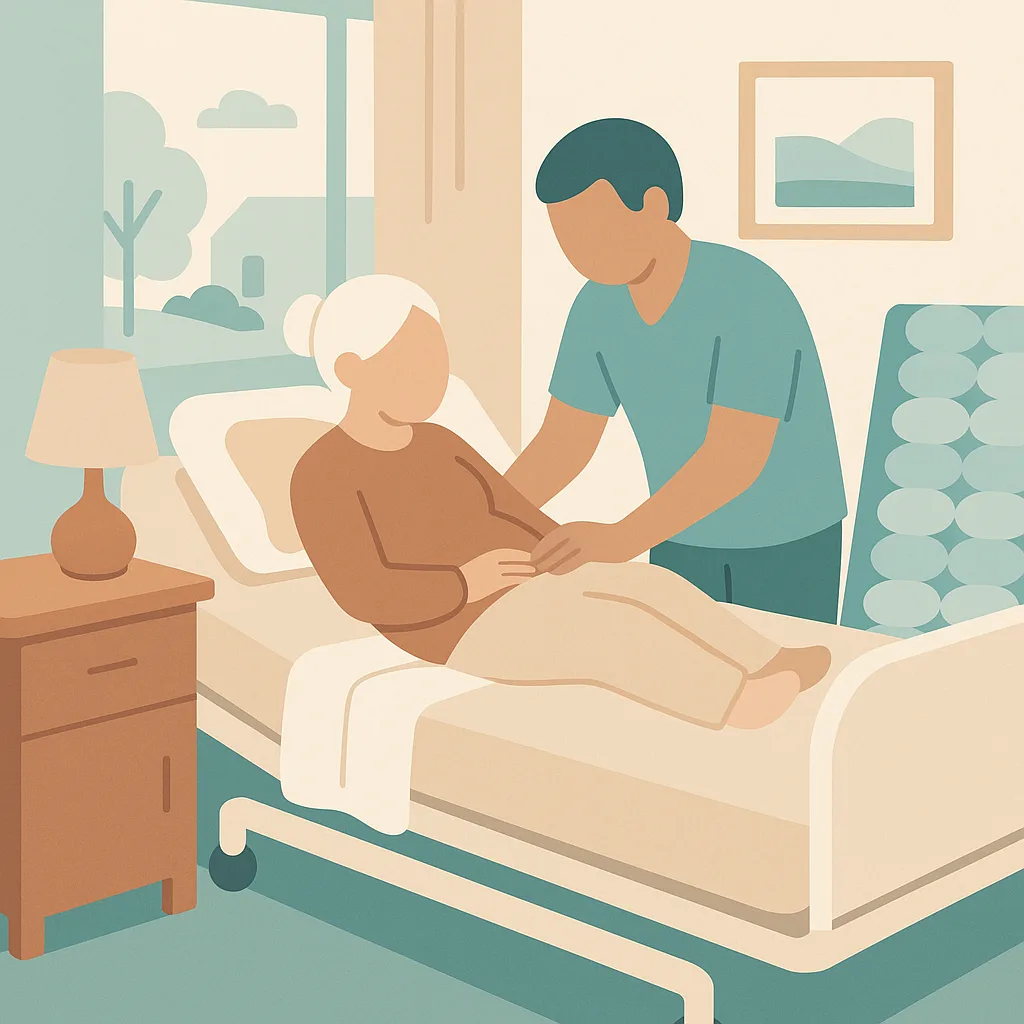
This training covers how we prevent and manage pressure sores at our home. You will learn our assessment procedures, the equipment we use, and how to care for residents with existing pressure ulcers. Preventing pressure damage is a key part of keeping residents safe and comfortable.
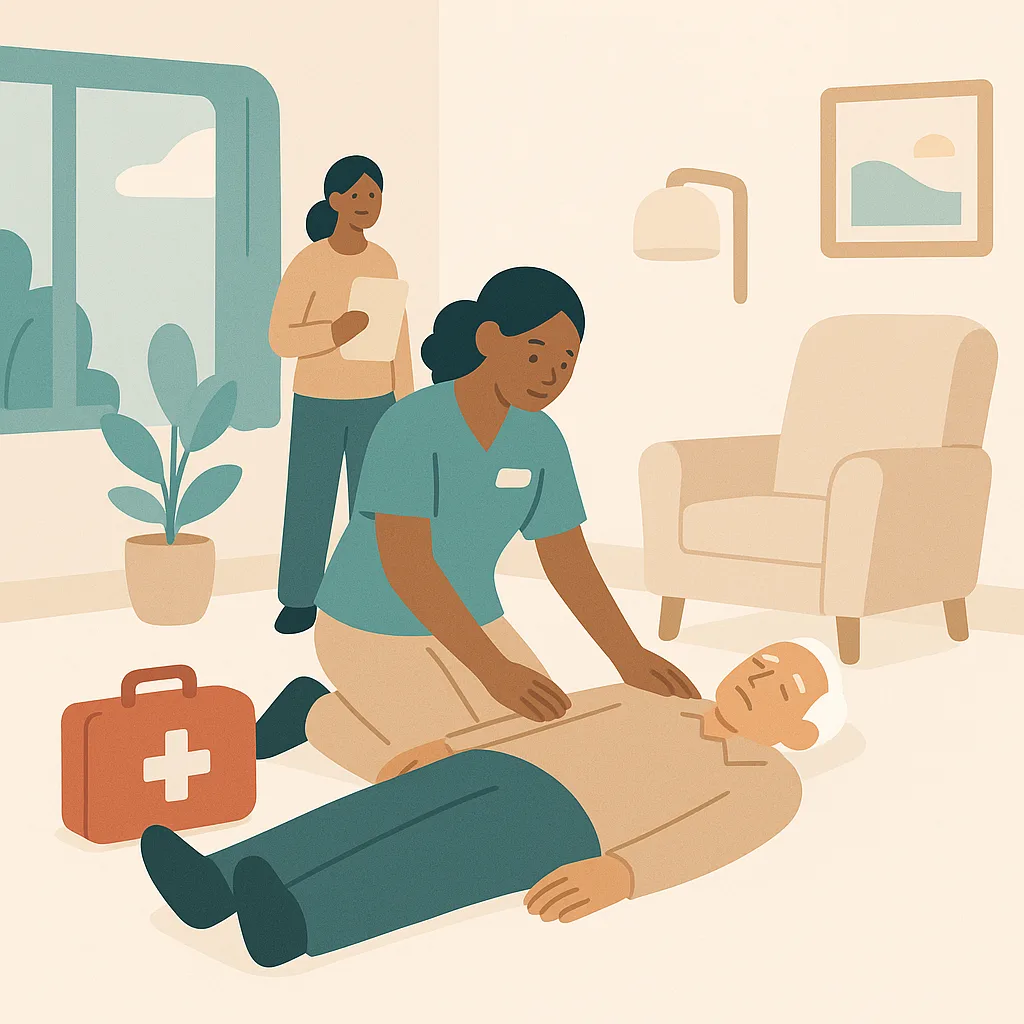
This module covers the essential knowledge you need to respond safely and effectively to medical emergencies in our care home. You will learn when and how to get help, how to assess a resident's condition, and the principles behind basic life support. Remember: this module covers knowledge only—you must also complete practical, observed competency assessments to demonstrate your skills in real situations.
Train your team to move people safely, and provide evidence when someone asks
Handling is the task your staff repeat more than any other, and it is the one most likely to injure them or the person they support. The courses in this collection teach the technique, the assessment behind it and the reasons a plan changes; then they record what was done and when.
What moving and handling training covers, and what the law actually requires
The duty sits in the Health and Safety at Work etc. Act 1974 and in the Manual Handling Operations Regulations 1992, amended in 2002. Those regulations set out three steps in order: avoid hazardous handling where you reasonably can, assess what cannot be avoided, and reduce the risk as far as is reasonably practicable. The assessment framework that comes from them is TILE, meaning task, individual, load and environment, and in care most trainers add other factors, which cover the person's own wishes, their pain, their communication and the equipment in the room. The Management of Health and Safety at Work Regulations 1999 add a duty to give staff adequate health and safety training when they are recruited and when risks change. Our courses cover all of it: risk assessment, spinal mechanics, safer positioning, sitting to standing, repositioning in bed, slide sheets, stand aids, hoists and slings, falls response, and when to stop and get help rather than improvise.
Who has to complete this training, and how often
Any service where staff assist people to move needs this, which means residential care homes, nursing homes, domiciliary care agencies, supported living, extra care, hospices and the wider regulated sector. Within them it applies to care assistants, senior carers, nurses and registered managers, and to ancillary, bank and agency staff whose work brings them into a handling task, including housekeeping and maintenance staff who move furniture and equipment. There is no interval written into law for renewal, and it is worth being precise about that, because common industry habit is often presented as a legal rule. The law requires the training to be adequate and current for the risk. Annual refresher moving and handling training is the pattern most services follow and it is frequently written into local authority and integrated care board contracts, which makes it a contractual requirement rather than a statutory one. Renew sooner when equipment changes, when a person's needs change, after an incident, or when practice slips.
Who this training is perfect for
This collection suits the registered manager, deputy or senior carer who owns the training matrix on top of a full clinical or operational job, in a CQC registered service of roughly fifteen to eighty staff with no learning and development team behind them. It suits services with night staff and part-timers who are never in the building when a session runs, and staff who read more comfortably in a language other than English. It is bought at predictable moments: a cohort of new starters, a wave of refreshers expiring together, an assessment booked, a commissioner asking for a training matrix, an agency spend a service wants to reduce by upskilling its own people, or a handling injury that has to be reported under the Reporting of Injuries, Diseases and Dangerous Occurrences Regulations 2013 when it keeps someone off their normal duties for more than seven days. Buy one course to close one gap, or take a licence and cover the whole team.
Buy a single course at £25.99, or take the whole library with no subscription
You can compare what sits inside each course before you spend anything, and the price is on the page. There is no quote needed and no annual per-seat contract priced for two hundred staff when you employ twenty-six.
What you get for the price, and what a one-time purchase includes
A single course is £25.99, bought outright through secure checkout, with no subscription and nothing to cancel later. That gets you the full module, the knowledge check, the certificate and the completion record. A CareStream platform licence covers the whole library instead, along with the training matrix, the evidence pack and face-to-face session records, and it can be paid monthly or annually with the option to cancel anytime at the end of the term. Content is written for your service rather than for care in general, so a domiciliary agency sees handling in a person's own home with no ceiling track and no second pair of hands, while a nursing home sees profiling beds, hoists and two-person transfers. Every module is human reviewed before release and updated when the law changes. Certificates and the training matrix export print-ready for a file, a contract return or a manager's sign off.
Why our courses are better than generic health and safety e-learning
Most manual handling e-learning is built for offices and warehouses with a care module bolted on, and it shows the moment a slide talks about lifting a box. CareStream modules put the learner in a scenario and ask what they would do, then explain why. It also treats a certificate honestly: a certificate evidences completion, not competence, and no online course on its own proves a member of staff can safely operate a hoist. That is why practical observation and competency sign-off are recorded alongside the e-learning, so the record is complete rather than partial. Handling rarely sits alone either, which is why services usually pair it with training on preventing and responding to falls, and why new starters meet handling first inside the Care Certificate induction standards, where it forms part of Standard 13 on health and safety.
How completion, competence and renewals are recorded
The Care Quality Commission assesses services against the Health and Social Care Act 2008 (Regulated Activities) Regulations 2014. Regulation 18 on staffing requires that staff receive the training, supervision and appraisal necessary to carry out their role, and Regulation 12 on safe care and treatment requires that care is provided safely, which includes the safe use of equipment. Assessments currently run under the Single Assessment Framework, with a sector-specific framework for adult social care published in draft during 2026 and not yet in force. What an assessor looks for does not change much either way: that the training suits the role and the people being supported, that it is current, that the record shows who completed what and when, and that the service can show competence in practice rather than attendance alone. That is what the training matrix that tracks completion, expiry and gaps by role is there to hold. Neither the Care Quality Commission nor the Health and Safety Executive approves, endorses or accredits any training provider, so treat any claim of approval with care.
Moving and Handling Training for Care Staff FAQs
What are the 5 P's of moving and handling?
There is no official list of five P's in law or in Health and Safety Executive guidance. It is a memory aid used by some trainers, usually given as plan, position, pick, proceed and place. The framework that actually comes from the Manual Handling Operations Regulations 1992 is TILE: task, individual, load and environment. In care, most trainers extend it to include other factors such as the person's pain, their preference, their communication and the equipment available. Our course teaches TILE and the assessment behind it rather than a mnemonic on its own.
What are the 7 safe principles of moving and handling?
Different providers publish different lists of principles, and none of them is a statutory standard. The substance behind all of them is consistent: assess before you move, plan the move and agree who leads it, involve the person and explain what will happen, keep the load close and your base stable, avoid twisting and stooping, use the equipment named in the handling plan, and stop if anything changes. Our course teaches the principles through the situations they apply to, so staff can judge an unfamiliar move rather than recite a list.
What are the 6 safe manual handling techniques?
Lists of six techniques usually cover the moves care staff make most often: assisting someone from sitting to standing, repositioning in bed, turning with a slide sheet, transferring with a stand aid, a full hoist transfer with two staff, and supporting a controlled descent when someone begins to fall. None of these is safe by itself. Each is safe only when the handling plan says it suits that person that day, the equipment has been checked and the staff have been observed doing it. The course covers all six, and the competency record covers the observation.
Is moving and handling training a legal requirement?
Training itself is required. The Manual Handling Operations Regulations 1992 and the Management of Health and Safety at Work Regulations 1999 require employers to give staff adequate information and training on handling risks. Separately, Regulation 18 of the Health and Social Care Act 2008 (Regulated Activities) Regulations 2014 requires that staff receive the training necessary to carry out their role. What the law does not do is name a course, name a provider or set a renewal interval. Those are decisions your risk assessment, your employer's policy and your commissioner's contract make.
How often does moving and handling training need renewing?
There is no statutory renewal interval. Most services refresh annually, and many local authority and integrated care board contracts require annual refreshers, which makes it a contractual requirement for those services rather than a legal one. Renew earlier when new equipment arrives, when a person's mobility or condition changes significantly, after a handling incident or near miss, or when supervision shows practice has drifted. Record the reason for the renewal as well as the date, because that is what shows an assessor the frequency was chosen rather than assumed.
Browse the rest of the library
Most services need more than one. These are the collections people buy alongside this one.
Policies are one part of it.
CareStream is the compliance system underneath: your policies, your staff training, your audits and your evidence, kept current and ready for the day somebody asks to see them.
- Policies written and kept updated for you
- Staff training that records itself against the standard
- Gap analysis showing what you are missing before an inspector does
- Everything in one place, for one price