Policy collection
Health & Safety at Work Policy for CQC Registered Care Services

Your general statement, organisation and arrangements under the Health and Safety at Work etc. Act 1974.

Safe moving and handling of people and loads, training and equipment under LOLER and MHOR.

Control of substances hazardous to health: assessment, storage and safe use.

Risk assessing lone work, check-in and escalation, and what happens when a worker cannot be reached.
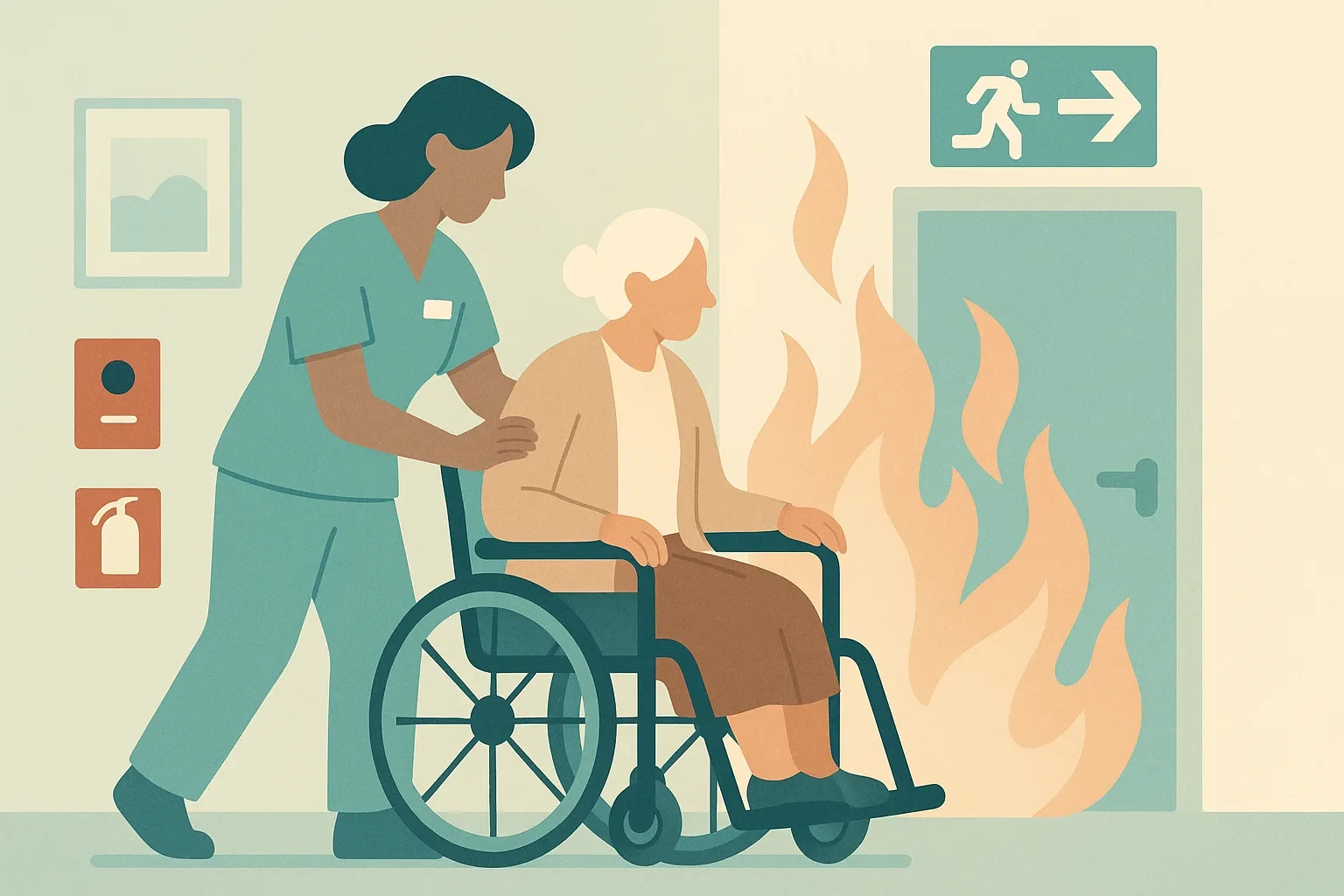
Prevention, detection, evacuation (including PEEPs) and staff responsibilities under the Fire Safety Order 2005.
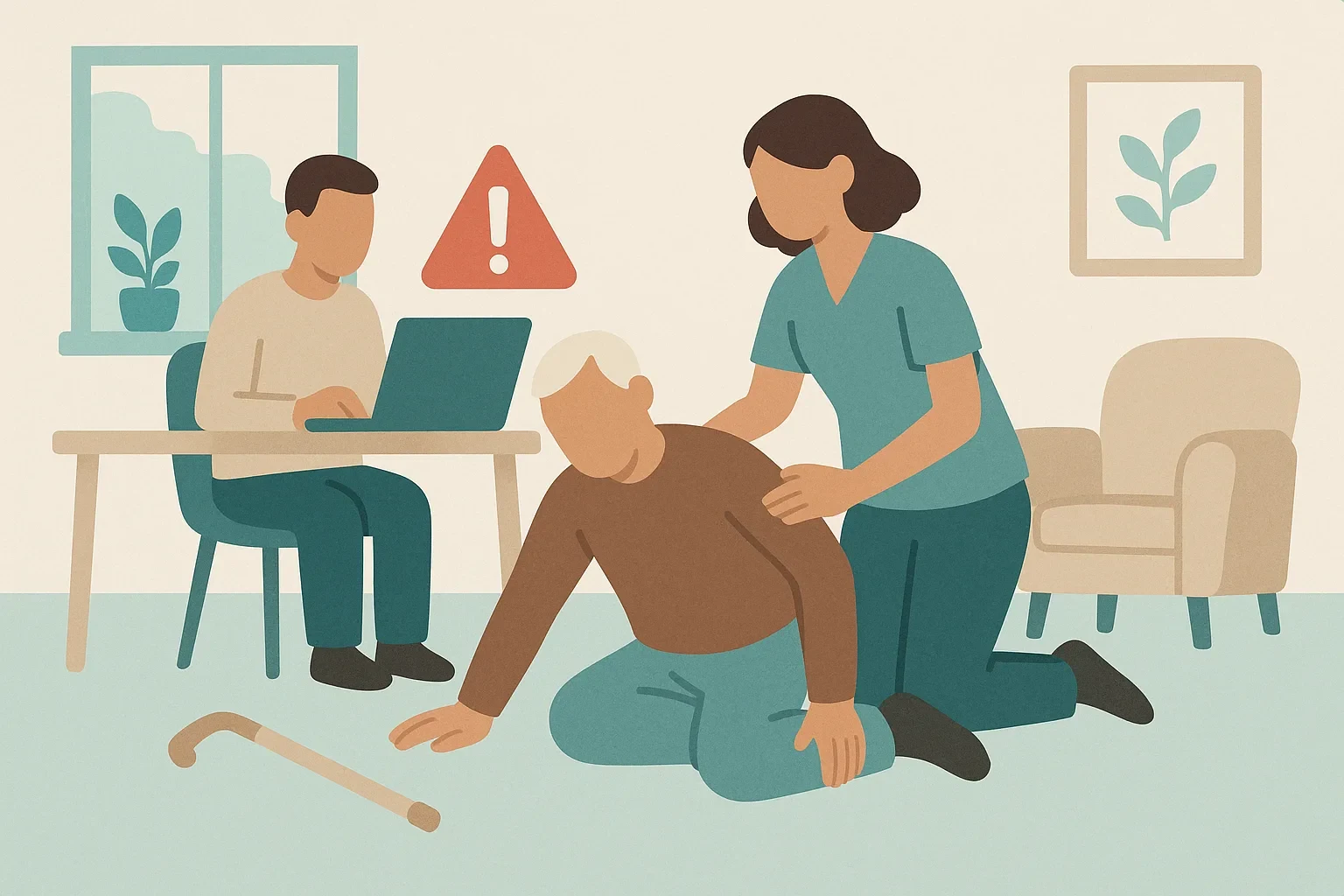
Recording, investigating and learning from incidents, RIDDOR and CQC notifications.
Hand an inspector a policy that already names your service
The moment a health & safety at work policy is read closely, the generic ones fall apart. An inspector, a local authority contracts officer or an integrated care board reviewer is not reading for prose. They are reading for four things: that the document names this service, that it identifies the people accountable by role and by name, that it reflects the law as it stands today, and that your staff can be shown to have read it and followed it. A document downloaded three years ago, still carrying another provider's address, answers none of those. The documents in this collection are written against the setting you actually run, so the arrangements described are the arrangements you have.
What a health & safety policy document has to contain
The wording people search for varies. Some type health & safety policy, some type health & safety policy of company, and some type health & safety policy for small businesses. They are all describing the same document, and it has three parts. The first is the statement of intent: a short declaration of your commitment to health and safety, signed and dated by the most senior person in the organisation, usually the owner, the nominated individual or a director. The second is the organisation section, which sets out who is responsible for what, naming the registered manager, the health and safety lead, the fire marshal, the first aiders and anyone holding a delegated duty. The third is the arrangements section, which explains in practical terms how risk is assessed and controlled in your service: risk assessments, moving and handling, hazardous substances, equipment checks, fire precautions, water safety, lone working, accident reporting and staff training. A policy that stops at the statement of intent is the most common gap we see.
The law your policy answers to, named in full
The Health and Safety at Work etc. Act 1974 is the parent legislation. Section 2(3) requires any employer with five or more employees to prepare and keep under review a written statement of general policy on health and safety, together with the organisation and arrangements for carrying it out, and to bring it to the notice of employees. The Management of Health and Safety at Work Regulations 1999 sit underneath it, and regulation 3 requires a suitable and sufficient assessment of the risks to employees and to anyone else affected by the work, with the significant findings recorded where you employ five or more people. For a regulated provider, there is a second layer. The Health and Social Care Act 2008 (Regulated Activities) Regulations 2014 require safe care and treatment under regulation 12, safe and suitable premises and equipment under regulation 15, and records that demonstrate all of it under regulation 17. The Care Quality Commission assesses this through the Single Assessment Framework, principally under the safe key question. Holding a written policy is a legal duty and a condition of running a regulated service. It does not produce a rating on its own, and nobody can promise you one.
Which care settings have to hold one, and when people come looking
If you employ anyone, this applies to you. Residential care homes and nursing homes hold a health and safety policy covering the building itself, including water systems, hoists, kitchens, laundries and fire arrangements. Domiciliary care agencies hold one that reaches into other people's homes, where the employer does not control the premises, which is why lone working, travelling between calls and dynamic risk assessment carry more weight in the arrangements. Supported living services, hospices, extra care housing, GP and dental practices and independent hospitals all hold one, written around their own hazards. The questions that bring people to this page are usually specific: what policies do I need for CQC registration, which policies does a domiciliary care agency have to have, does a small service really need a written policy, and what happens if an inspector asks for a policy we do not have. The answer to the last one is that the inspector records the gap and asks what else is missing. Our policies are written for domiciliary care agencies, and staff working alone in people's homes cover that setting specifically.
Who these policies are perfect for
These documents are made for the registered manager, owner or nominated individual of a small CQC-registered service, running one or two locations with no compliance department, no in-house HR team and nobody whose job it is to watch for changes in the law. You know your service, and you know your regulations. What you do not have is a spare afternoon to rewrite a policy, or the confidence that the version in the folder would survive being read line by line by someone looking for a reason to mark you down. People buy at moments of pressure: an inspection booked or just finished, a report naming a policy that was missing or thin, a registration application or a new regulated activity, a contract review asking for evidence, an incident or complaint that exposed a gap, or a new manager inheriting a folder nobody has opened in three years. If any of those describe your week, buy the single document you have been asked for rather than a pack you do not need. The wider set of care policies and procedures a registered service is expected to hold sits alongside this collection on the CareStream platform, and is there when you want to close the rest of the gaps.
Buy one policy or the full set, and check the price before you get started
Everything here is a one-time purchase. You will not be signed up to anything, asked to book a call, or sent a quote. The price is on the page, the document is available to order today through secure checkout, and it arrives within two working days.
Why our policies stand up better than a free template or a nine hundred pound pack
Free templates still say insert name here, and an inspector who finds one blank field starts looking for the others. Large policy packs sell you two hundred documents when you were asked for one, and most of them describe a service you do not run. Consultants charge a day rate and send a file. CareStream sits between the two. Your document is personalised before it is written, not after: the registered company name, trading name and address, the provider and location identifiers, the registered manager and nominated individual, and the named leads the document itself has to identify, all merged in. It is checked against the regulations that actually apply to your setting rather than a generic health and safety manual written for a warehouse. Every document is hand-checked and human-reviewed before it leaves us, which is why it takes two working days and not five minutes. Compare that against what you are holding now, and the difference is usually visible on page one.
What is included, what it costs and how to order today
A single policy costs £39 to £79 depending on length and complexity, a themed pack starts at £295, and the twenty statutory documents that a registered service is expected to hold cost £495, which is the best value if more than a handful of your documents are out of date. Each policy arrives as an editable file and a print-ready version formatted for your letterhead, with a version number, a review date and a sign-off block for the person who approves it. The set covers the health & safety at work policy statement itself, risk assessment arrangements, moving and handling, the Control of Substances Hazardous to Health Regulations 2002 arrangements, equipment and maintenance, fire safety, water safety, lone working, and accident and incident reporting under the Reporting of Injuries, Diseases and Dangerous Occurrences Regulations 2013. Buy the one you were asked for, or compare the pack price if the folder needs more work than one document.
Personalised, hand-checked and updated when the law changes
Health and safety law moves slowly, and then it moves. Guidance on water safety, on ventilation, on the reporting of specified injuries and on equipment inspection has all shifted in the last decade, and a policy that quotes superseded guidance tells an inspector that nobody has read it since it was bought. Your documents are updated when the law changes, and you are told what changed and why, so the update can go to staff with an explanation rather than as a silent file swap. That matters because the regulator does not only ask whether the policy exists. It asks whether staff understood it. A policy nobody can describe is evidence of a governance problem, not of good governance. Alongside the health and safety set, most services hold the employment documents that carry the same duties into recruitment, induction and supervision, and our HR policies covering recruitment, induction, supervision and staff conduct are written to sit consistently with them rather than contradict them. A single policy purchase also works on its own, with nothing further to join and nothing to cancel.
Health & Safety at Work Policy for CQC Registered Care Services FAQs
What are the three requirements of a health and safety policy?
A written policy has three parts. The statement of intent sets out your commitment and is signed and dated by the most senior person in the organisation. The organisation section names who is responsible for what, from the nominated individual down to the fire marshal and the first aiders. The arrangements section explains how risk is actually controlled day-to-day: risk assessments, moving and handling, hazardous substances, equipment, fire, water safety, lone working and accident reporting. A document with only the first part is not a complete policy.
Is it a legal requirement to have a health and safety policy in the UK?
Yes, if you employ five or more people. Section 2(3) of the Health and Safety at Work etc. Act 1974 requires a written statement of general policy, the organisation and arrangements for carrying it out, and that it is brought to the notice of employees. For fewer than five employees, the written policy is not required by that section, but the duty to manage health and safety still applies in full, and as a CQC-registered provider, you are expected to evidence how you do it under the Health and Social Care Act 2008 (Regulated Activities) Regulations 2014.
What happens if a company does not have a health and safety policy?
For a care provider, there are two consequences running in parallel. The Health and Safety Executive or your local authority environmental health team can serve an improvement notice and, in serious cases, prosecute. Separately, the Care Quality Commission records the gap against regulation 12 or regulation 17 and will look at what else is missing, because a missing policy rarely sits on its own. In practice, the more common outcome is not a prosecution but a report that names the absence, which then follows you into contract reviews and tender submissions.
Who is responsible for health and safety in the workplace?
The employer holds the legal duty, and it cannot be delegated away. In a care service that usually means the provider organisation, with the nominated individual and the registered manager accountable in practice. Day-to-day tasks can be assigned to named people, a health and safety lead, a maintenance lead, fire marshals, and your policy should name them. Employees also carry a personal duty under sections 7 and 8 of the Health and Safety at Work etc. Act 1974. Responsibility is shared, but accountability sits with the employer.
Does a health and safety policy need to be signed?
It should be. The statement of intent carries far more weight when it is signed and dated by the person who actually holds the duty, usually the owner, a director or the nominated individual, rather than by whoever printed it. Signing does two things: it shows the commitment is owned at the top, and it fixes a date so the review cycle is visible. Every policy we send includes a sign off block and a review date, so the person approving it has somewhere to put their name.
Browse the rest of the library
Most services need more than one. These are the collections people buy alongside this one.
Policies are one part of it.
CareStream is the compliance system underneath: your policies, your staff training, your audits and your evidence, kept current and ready for the day somebody asks to see them.
- Policies written and kept updated for you
- Staff training that records itself against the standard
- Gap analysis showing what you are missing before an inspector does
- Everything in one place, for one price