 COSHH Policy
A COSHH Policy written for your service
- Written for your organisation, not a template with your logo on it
- Read and approved by a person before it carries your name
- Verified against all 26 required elements of the legislation below
- Kept updated when the law changes, so it never quietly goes stale
No subscription needed. First year of updates included, £12 a year after that.
One-off, first year of updates included. Delivered within 2 working days of your details.
Trusted by UK care providers
Let's build your COSHH Policy
Answer 7 quick questions, about three minutes, and we'll write this policy for your service, in your name, with your people. You can skip anything and add it later.
Asked once, reused for every policy you buy
That's everything we need
0 of 7 answered. You can add the rest at any point before we write it.
- Registered company name
- Trading name (if different)
- Service address
- CQC provider ID
- CQC location ID
- Registered manager
- Nominated individual
Your answers are saved on this device and carried into your order.
Built from the law, checked against the law
The legislation, CQC standards and guidance we analyse to write it.
Your COSHH Policy is structured from these regulations, then verified against every required element of each one before a person signs it off. If the law changes, your policy is updated and you are told what changed and why.
Control of Substances Hazardous to Health Regulations 2002 (COSHH)
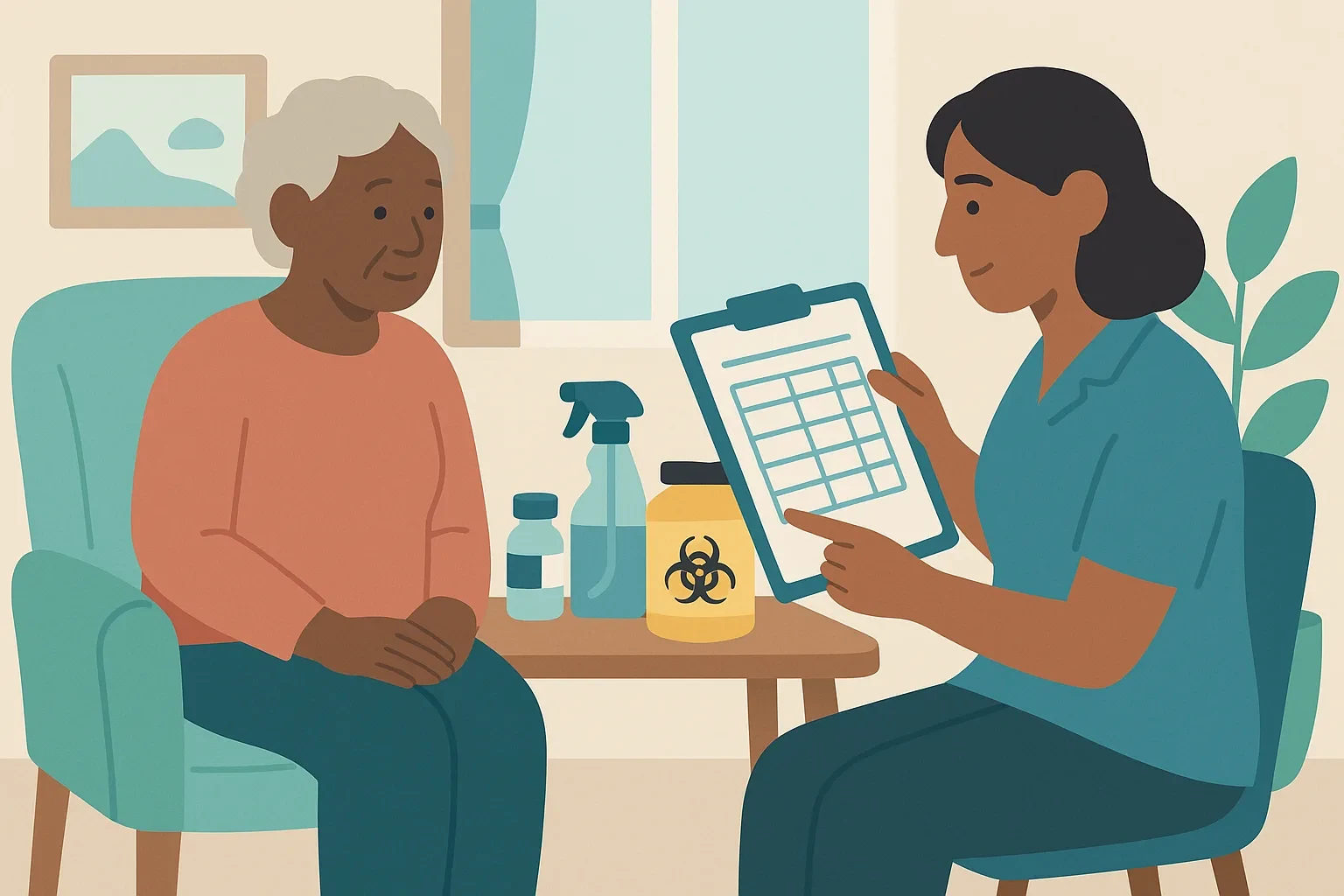
- Identification and inventory of all hazardous substances present in the care home (including cleaning chemicals, disinfectants, clinical waste, bodily fluids, medications, and biological agents such as bacteria and viruses)
- Risk assessments for each hazardous substance describing how it is actually used in the care home, not simply reproducing manufacturer data sheets
- Availability and location of up-to-date safety data sheets at the point of use where the substance is used, not only in office files
- Hierarchy of control measures prioritising elimination or substitution of hazardous substances (e.g. replacing concentrated products with pre-diluted bottles, cartridge dosing systems, or wipes) before relying on personal protective equipment
- Safe storage requirements including locked storage for hazardous areas (e.g. sluice rooms) and securing substances to prevent access by residents, particularly those with dementia
- Provision, correct use and training requirements for personal protective equipment (gloves, aprons) appropriate to each substance and task
Health and Safety at Work etc. Act 1974
- Assigns clear health and safety duties to the employer/care provider to provide a safe working environment, safe systems of work, suitable equipment, proper training, supervision and adequate welfare facilities for staff
- Assigns clear responsibilities to employees to take reasonable care for their own safety and that of others, follow training, use equipment correctly, and report hazards
- Establishes a duty to protect residents (persons affected by the undertaking) under the same legal framework as staff protection
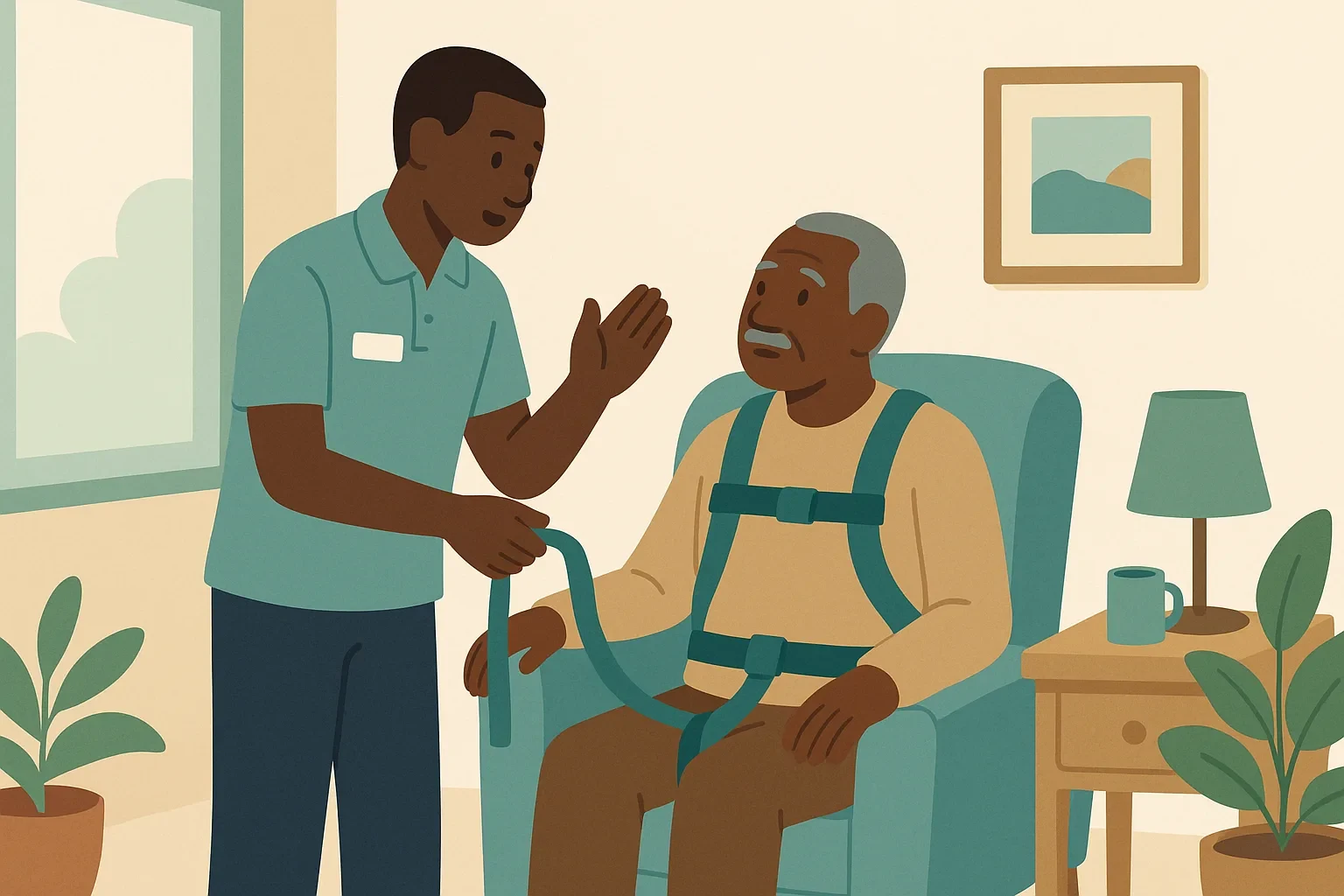
- Requires risk assessments to be conducted, documented and regularly reviewed before incidents occur, covering all care activities including moving and handling, bathing, use of equipment, infection control, and resident mobility
- Establishes that cost is not a valid defence for failing to implement safety measures unless the cost is grossly disproportionate to the risk being controlled
- Specifies that the registered manager, nominated individual, and individual staff members can be held personally liable where offences result from their personal neglect or failures
Written for your service
What we ask you, so none of it is assumed.
Most policy packs are one document sold to everyone with a find and replace on the home name. Your COSHH Policy is written from the legislation above and from your answers to the questions below. Where you have told us something, it says so. Where you have not, it sets out what must happen rather than claiming you already do it.
Your registered name, address, CQC numbers and who holds the key roles. About three minutes. Nothing else is asked before you buy.
Asked once in your own account and used across every policy you own, so a second policy never asks you the same thing twice.
Why it matters. A policy that claims you assess your premises annually, when you never have, is not a harmless overstatement. It is a signed statement handed to your inspector. We would rather write what you must do than guess what you already do.
How it is made
From your details to a policy you can stand behind.
The short questions above: who you are, your CQC registration, and the people this policy names.
One section per required element of the legislation, in your name, with your people.
Automated checks against every required element, then a person reads it before it ships.
When legislation changes, your policy is updated and you are told what changed and why.
Common questions
What you are actually buying.
What exactly do I receive?
A complete COSHH Policy written for your organisation, in your dashboard and as a print-ready PDF on your own letterhead. It names your service, your registration details and your leads, because you gave us them.
Is this a template?
No. Each policy is written for the organisation buying it, structured from the legislation itself, verified against 26 required regulatory elements, and read by a person before it carries your name.
How quickly will I get it?
Within 2 working days of you completing the short questions above. Most arrive sooner.
What happens when the law changes?
We monitor UK care legislation continuously. When something affecting this policy changes, your copy is updated and you are told what changed and why. The first year of updates is included, then £12 a year per policy.
Can I edit the policy myself?
No, and deliberately so: we stand behind every word we approve. If something needs changing, tell us and we amend and re-verify it, so it always remains a document we can both defend to an inspector.
What if I need more than one policy?
Most services do. The Statutory Starter Pack covers the twenty policies every CQC-registered service is expected to hold, and the Complete Policy Library covers all 66.
Why CareStream
Policies written the way an inspector expects to read them.
Before you buy
What the document actually looks like.
Every section it contains, and a page of the real thing. We show the structure and the personalisation rather than the wording, because the wording is what you are paying us to write for your service.
Contents of your COSHH Policy
- Purpose and scopewho it covers
- Legal and regulatory frameworkcited in full
- Definitions used in this policy
- Roles and responsibilitiesyour people, named
- Procedure, step by step
- Recording, reporting and escalation
- Training and competency
- Monitoring, audit and review
- Related policies and documents
- Version control and approvalsigned and dated
Section 4 · Roles and responsibilities
Who is accountable, by name
Overall accountability for this policy rests with your registered manager, supported by your nominated individual. Day to day responsibility sits with your named lead, who is the first point of contact for staff at your service address.
The remaining wording is written for the organisation buying it, so it is not shown here.
“The inspector asked for evidence and I had it on screen before she finished the sentence.”
Registered Manager · 48-bed nursing home, West SussexRelated policies
More policies your service may need.
More statutory and operational policies CareStream writes for your service, personalised, human-reviewed and kept updated, exactly like this one.

Health and Safety Policy
Your general statement, organisation and arrangements under the Health and Safety at Work etc. Act 1974.
Fire Safety Policy
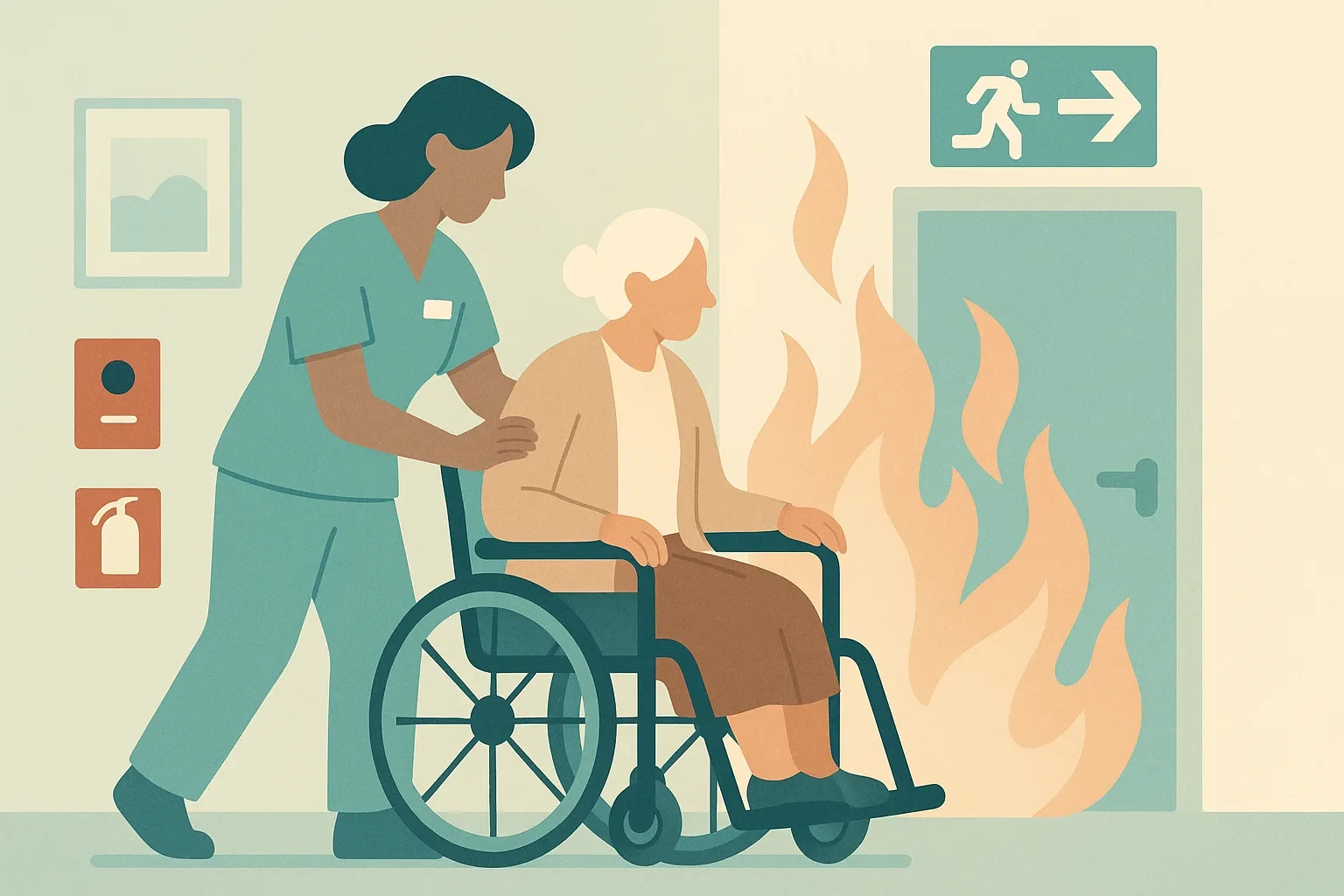
Prevention, detection, evacuation (including PEEPs) and staff responsibilities under the Fire Safety Order 2005.
Moving and Handling Policy
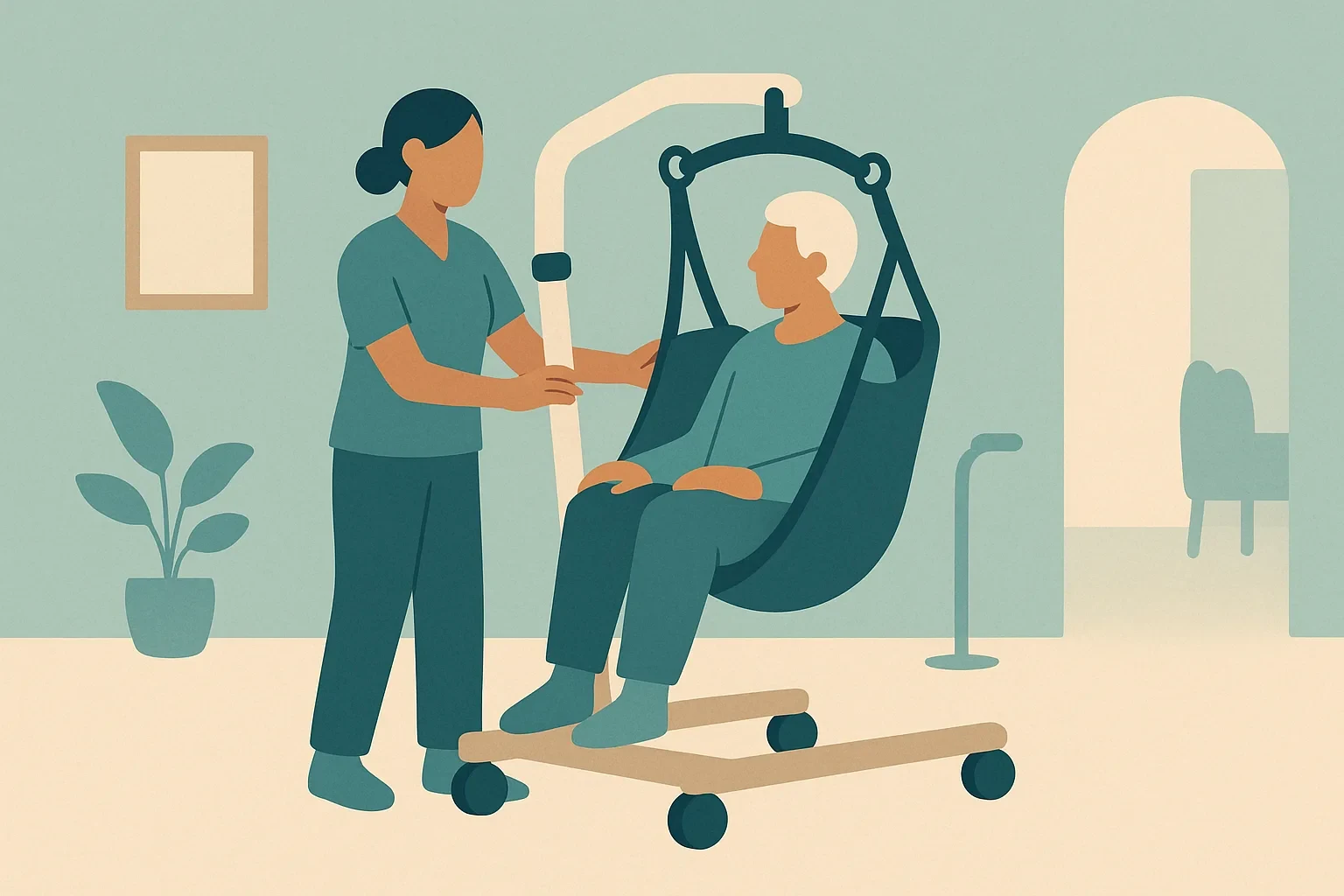
Safe moving and handling of people and loads, training and equipment under LOLER and MHOR.
Incident and Accident Reporting Policy
Recording, investigating and learning from incidents, RIDDOR and CQC notifications.
Gas Safety Policy
Annual gas safety checks, maintenance and emergency procedures.
Electrical Safety Policy
Fixed installation testing, PAT and safe use of electrical equipment.
Compared
The four ways care services get a policy.
We have compared what each approach does rather than naming competitors, because products change and the comparison should still be true next year.
| CareStream | A policy pack | A consultant | A free template | |
|---|---|---|---|---|
| Questions asked at the point of purchase, so it is personalised rather than blank | ||||
| Written for your service, naming your manager and your leads | ||||
| Structured from the regulations, every required element checked before it is sent | ||||
| A branded companion document setting out the law it was written against | ||||
| Read and approved by a person before it carries your name | ||||
| Prints on your own letterhead with a sign-off and version block | ||||
| Named role holders update everywhere when the person changes | ||||
| Kept current when the law changes, and you are told what changed | ||||
| Turnaround stated before you buy | ||||
| Your staff can ask it questions in their own language | ||||
| What it costs | £39 to £79 per policy, one-off | £250 to £995 for the pack | A day rate, typically £400 upwards | Nothing |
Prices are the published rates of the common alternatives as at September 2026, for comparison only.
Training
Owning the policy is half of it
An inspector asks whether your staff understood it, not whether you hold it. Ninety eight modules written and kept current by us, to the same regulations, from £25.99 per staff member with no subscription.