The lights drop out across the whole site, then come back dim, on the emergency circuit only. The heating has stopped and the lift will not move.
Someone on shift reaches for the business continuity plan care home owners are told to keep. Can they find it? Does it say what to do next?
Larch House is a residential home. A fault on the supply cable has cut the power on a cold night, and the supplier cannot say when it will be back.
We follow the next few hours stage by stage. That is the test for any care home business continuity plan: does it still make sense when the person holding it is tired, in the dark and busy?
Along the way we tie each stage to the rules. The regulations never use the phrase business continuity plan, so a written plan is the way a service shows the rest.
Stage one: someone decides this is an incident
The senior on shift walks the floors with a torch. Nobody is hurt. Residents are awake, a few are frightened, and two need the lift.
Have your policies read against the regulations to see what is missing or out of date. No card needed.
Create a free accountShe does one thing before any other. She says aloud that this is an incident and that she is in charge until a manager says otherwise.
Plans fail here more than anywhere. If it is unclear who may declare an incident, people wait for permission. We suggest the plan names the role, not the person. It should list what counts: no power, no water, no heating, a flood.
Stage two: the call list does its job
Next she calls. The plan gives her one page: the manager, the on call manager, the provider, the electricity network operator, the heating engineer and the nearest sister home.
That page earns its place or fails right now. A number that has been wrong since a manager left is a classic find in a desktop test.
We suggest holding the list on paper by the office phone, in a staff hub and on the on call mobile. Whichever one survives the failure gets used.
The legal root is Regulation 12, the duty to provide safe care and treatment. It asks providers to assess risks to people's health and safety and do all that is reasonably practicable to reduce them.
Stage three: keeping people warm, fed and safe
The on call manager is on the phone within minutes. The senior now works down a short list.
- Warmth: blankets, extra layers, residents moved together into the smallest warm room.
- Light: torches and battery lamps in a known place, with a check that they work.
- Food and drink: cold meals and flasks, with a note of who needs thickened fluids or a special diet.
- Medicines: the round carries on by torchlight, and anything needing a fridge is checked and recorded.
- Equipment: who relies on a powered mattress, oxygen concentrator or hoist, and what the backup is.
Most of that is our suggestion about what a sensible plan holds. The law behind it is plain. Regulation 15 on premises and equipment asks for premises that are clean, secure, suitable, properly used and properly maintained.
At Larch House the plan has a named person for each line, and a tick sheet. That is what makes the night calm.
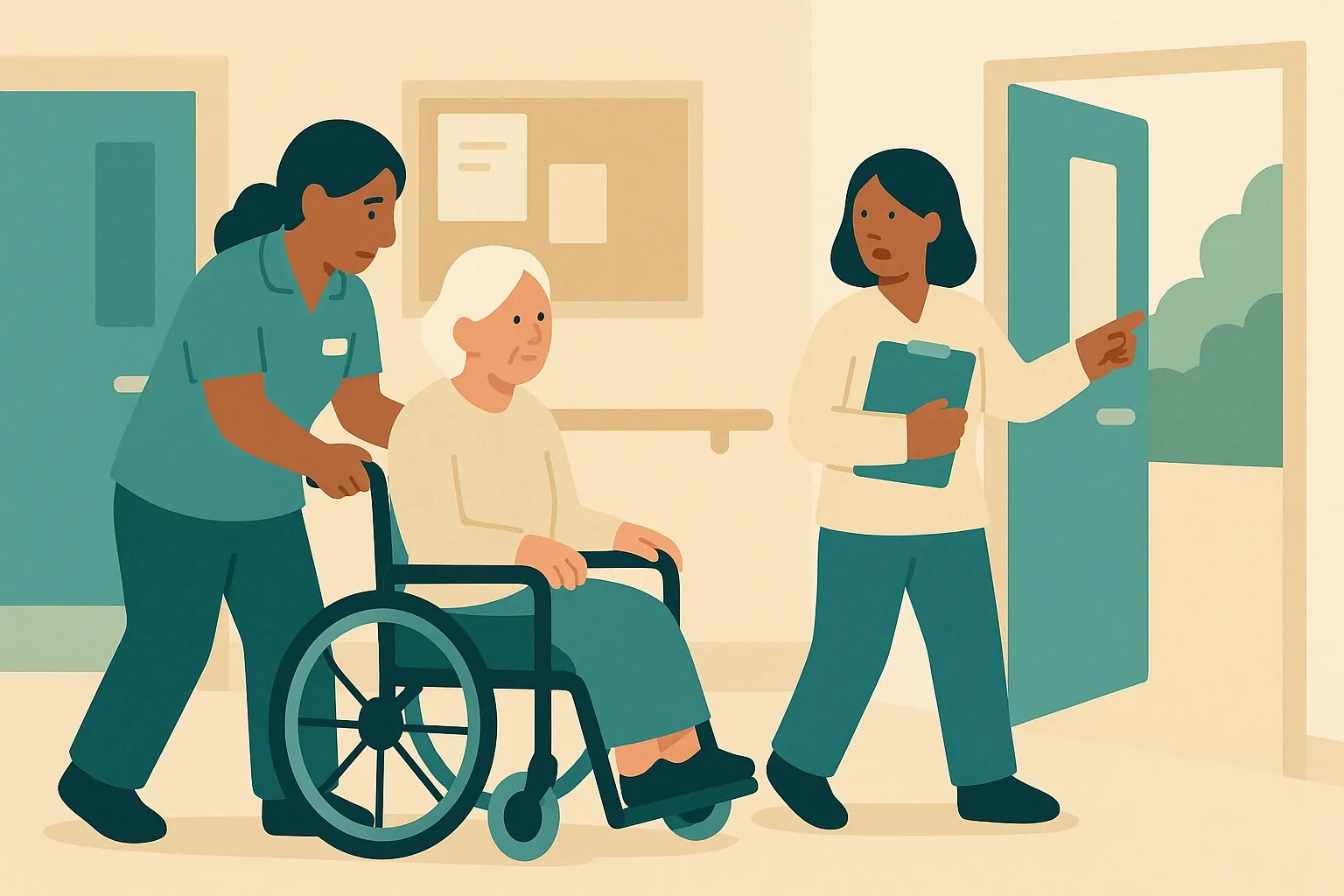
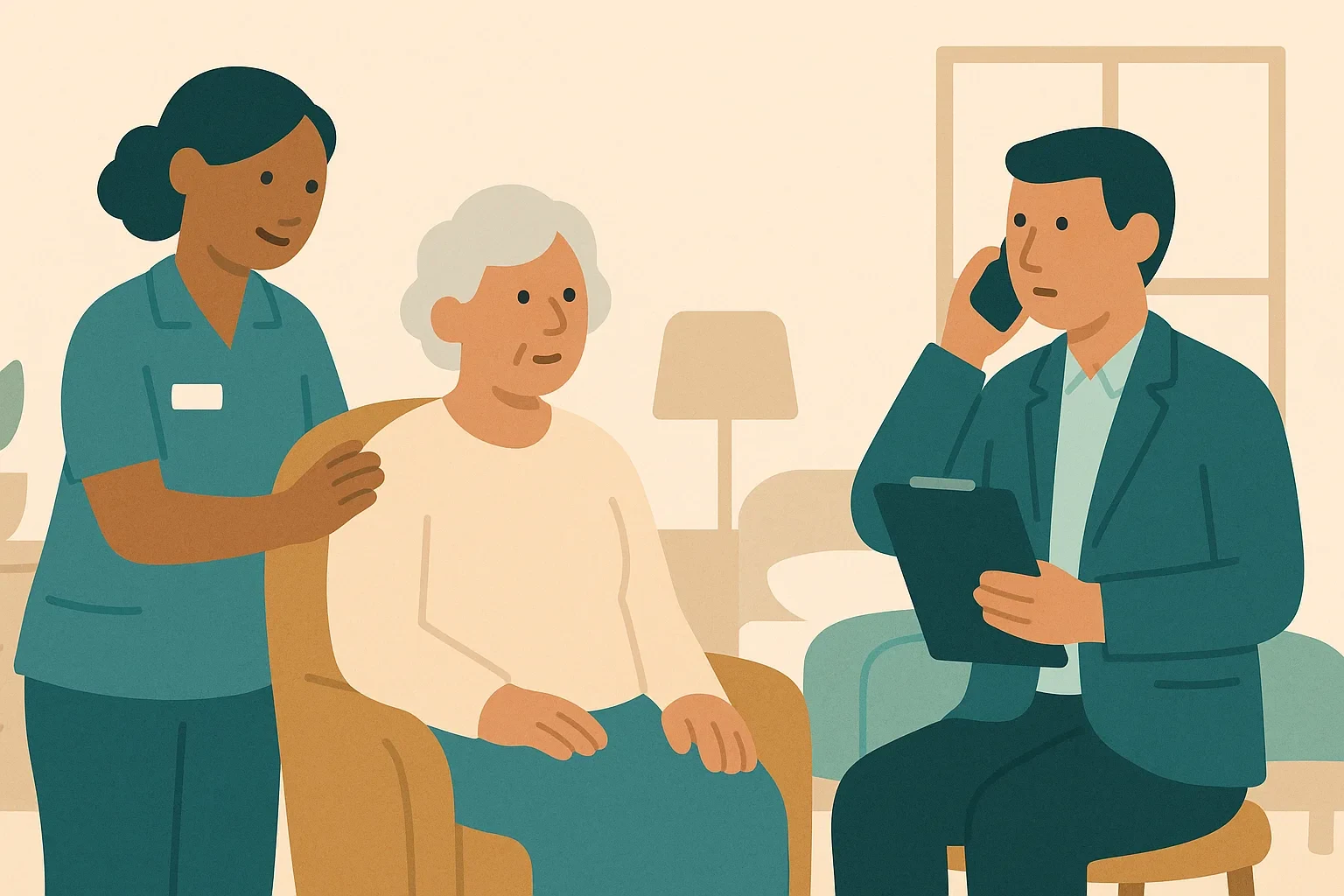
Figure: if the building cannot be used, one person leads, one person moves people and someone keeps the list of who has gone where.
Stage four: who has to be told, and when
By now the on call manager has spoken to the electricity company. Repair is estimated for the next morning. The question is who else hears about it.
The Care Quality Commission has its own rule. Regulation 18 of the 2009 registration regulations says the registered person must notify the Commission without delay.
That covers a loss of utilities: gas, water, power or sewerage cut off for more than 24 hours in a row. It also covers any event likely to threaten safe care.
The Larch House cut may end before the 24 hours is up. The plan still says who decides whether it threatens safe care, and that the decision is written down with the reason.
Beyond the Commission, we suggest the plan lists the local authority commissioners, families and the provider's own senior team. It should say who rings whom, in what order and by what time.
Stage five: stay, or move?
Hours pass and the repair slips. Now comes the hardest call in any plan: do people stay where they are, or move?
The decision belongs to a named manager, with the clinical lead if there is one. We suggest the plan says what tips the balance. Examples are a room that cannot be kept warm, or a person who depends on powered equipment.
The free policy check shows where a policy falls short of the regulations. Create a free account to begin.
Create a free accountThe Care Quality Commission guidance on Regulation 12 mentions plans with other providers for events such as fires and floods. In our view that means an agreement made in advance with a sister home. A first call on the night is too late.
If people do move, someone keeps a list of where each person went, what medicines and records travelled with them and who has been told.
Stage six: the record, and what changes afterwards
Power returns in the early hours. The senior writes up the night while it is fresh: when it began, what was done, who was called and when, and how each resident fared.
Regulation 17 on good governance asks for systems that assess, monitor and mitigate risks to people, and for records that go with them. The full text of Regulation 17 on good governance shows where this record fits.
The manager holds a short review within days. What worked, which number was wrong, and did the torches have batteries? Each answer changes the plan.
That review is the part inspectors can test. A plan updated after a real incident is a living document, not one that sat in a folder.
What belongs in a business continuity plan template
The night at Larch House shows the parts in order. A business continuity plan template for care homes, or a plan for any business continuity plan social care service, should hold these. The same list suits a business continuity plan for care homes of any size:
- Who declares an incident, and who takes charge.
- The call list, kept current.
- Warmth, light, food, drink, medicines and equipment.
- Who is told, including the Care Quality Commission.
- The stay or move decision, and the arrangement with another home.
- The record, review and sign off.
A generic template cannot name your people, your supplier or your sister home. Those gaps are what a test finds first.
The business continuity policy sets out who is responsible and how often the arrangements are tested. The plan holds the detail used on the day. A care home emergency plan for fire has its own fire safety policy beside it.
Benefits of CareStream for your business continuity plan care home
If you hold a business continuity plan care home inspectors may ask about, CareStream can test the paperwork around it.
- Upload your document to the free policy gap check and each regulation that applies comes back covered, partly covered or a gap.
- The check costs nothing and needs no card. It takes your first 5 policies.
- Policies are compared with each other, so a call list that disagrees with the fire procedure gets flagged.
- Where there is a gap, we write a business continuity policy for your service, check it by hand and deliver it within two working days.
Run the power cut on paper
Take your own plan and play the night through. Who declares the incident? Does the call list work? Which numbers are out of date?
Run it with two seniors on different shifts and record what they could not find. Fix those gaps first. CareStream describes its business continuity feature as plans every staff member can open at any time.
If you hold no plan, or the test shows gaps, our business continuity policy is written for your service. A plan on the shelf proves little until someone has tried it.
Sources
- Regulation 12, Safe care and treatment (legislation.gov.uk) · legislation.gov.uk
- Regulation 12 guidance for providers (Care Quality Commission) · cqc.org.uk
- Regulation 15, Premises and equipment (legislation.gov.uk) · legislation.gov.uk
- Regulation 17, Good governance (legislation.gov.uk) · legislation.gov.uk
- Care Quality Commission (Registration) Regulations 2009, regulation 18, Notification of other incidents (legislation.gov.uk) · legislation.gov.uk
Frequently asked