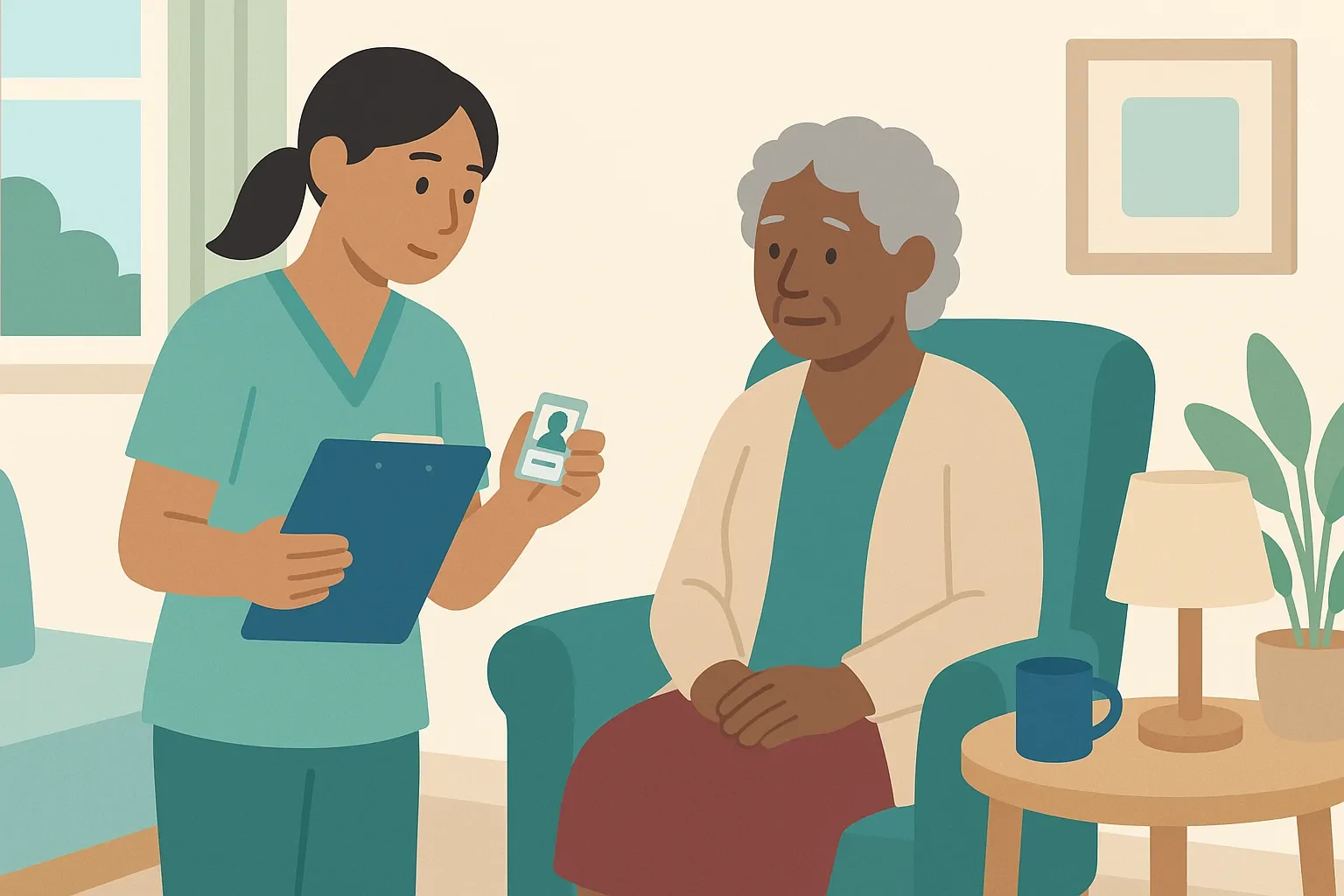
A care worker is helping a resident change his cardigan when she notices a mark on his arm that nobody has recorded. No manager is in the room and nobody has asked her to look. Whatever safeguarding policy care home managers hold has to make her pass it on at once, to a named person, without waiting for handover.
In our example the mark is a bruise on his upper arm, about the size of a plum. Nothing in his notes explains it. He cannot say how it got there, and the night manager went home an hour ago.
We follow the bruise to the review meeting. That is the test for any such policy. Does it make the right things happen, in the right order, when nobody is watching?
At each step we tie the policy to the law behind it. Three parts matter most:
- Regulation 13 of the Health and Social Care Act 2008 (Regulated Activities) Regulations 2014, the duty to protect people from abuse.
- The Care Act 2014 and its statutory guidance, which set the council's role.
- The duty to notify the Care Quality Commission.
Step 1: she realises this might matter
The first test is whether she knows she has a duty. The full text of Regulation 13 on safeguarding from abuse says people must be protected from abuse and improper treatment. Paragraph (6) defines abuse.
That definition includes sexual offences. It also includes physical or psychological harm, theft or misuse of money or property, and neglect.
The Care Act statutory guidance, at paragraph 14.17, lists wider types. These include domestic violence, modern slavery, discriminatory abuse, organisational abuse and self-neglect.
A bruise has many causes. The policy does not ask her to decide which. It asks her to notice, to treat his silence as a reason for care and to pass it on.
A policy that only defines abuse in legal terms leaves her guessing. One that lists signs helps.
Step 2: she protects Mr A and tells someone
Who to tell, in what order, at what hour? The policy must answer all three. We suggest naming a safeguarding lead and a deputy, with phone numbers on the staff room wall.
In a domiciliary agency the step must also work for a worker alone in someone's home. That means an out of hours route to a manager.
Have your policies read against the regulations to see what is missing or out of date. No card needed.
Create a free accountShe makes Mr A comfortable, finishes the task with care and rings the deputy. She does not wait for handover. She does not leave it for the next shift to raise. In our view every member of staff should pass on a concern.
The registered provider holds the legal duty to set up and run the systems Regulation 13 requires. We suggest the registered manager runs them. The policy turns that duty into a phone call.
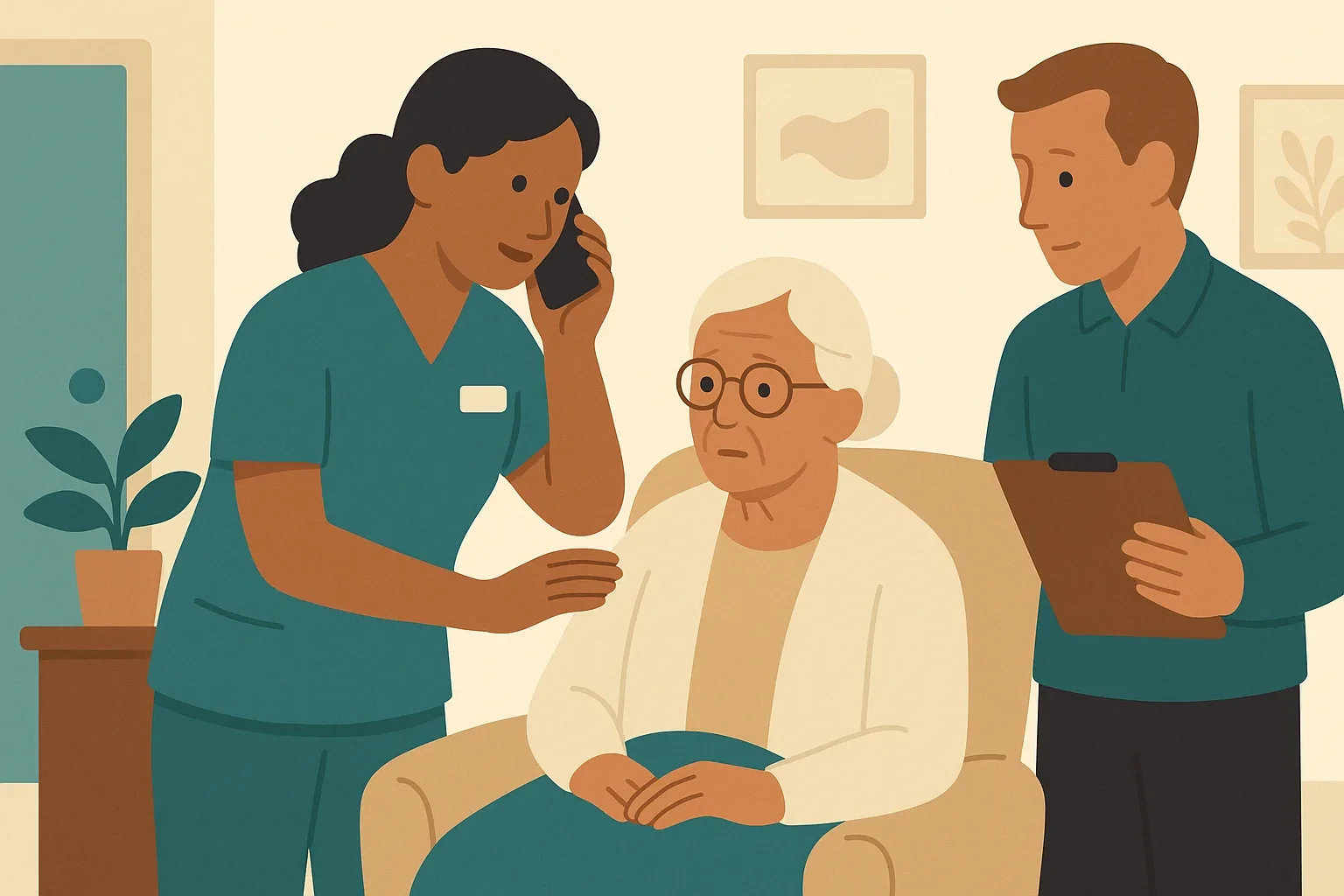
Figure: one person calls for help while another stays with the resident and records what is seen.
Step 3: what she saw is written down before memory fades
The policy says what to record:
- What was seen, and where.
- What Mr A said, in his own words.
- Who was told.
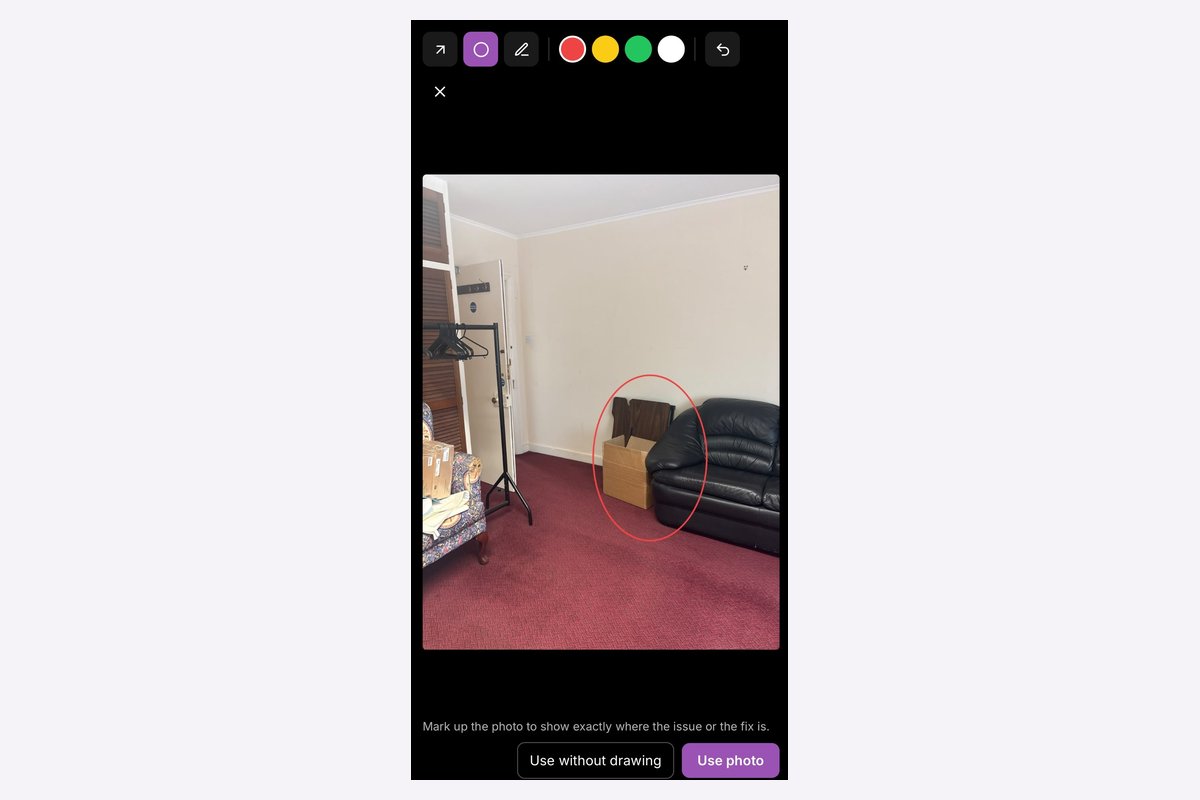
A body map and an entry in the notes help. Photographs are taken only as the policy allows, with thought for his dignity. Anything that could be evidence, such as a torn sleeve, is kept safe.

Figure: a record made at the time, with the person's own words, is the first piece of evidence.
Step 4: the manager decides on a referral, and the council leads
Section 42 of the Care Act 2014 covers an adult with care needs who cannot protect themselves. If the council suspects abuse or neglect, or the risk of it, it must make enquiries under section 42.
The council leads local authority safeguarding, and your service co-operates. Your policy should name your local authority's safeguarding team and give the referral route.
For Mr A, the manager reads the record and works out how the bruise might have happened. The manager then decides whether to refer. If a crime may have been committed, we suggest the police are told too.
He has a part to play. He is asked what he wants, with support if he needs it. If he lacks capacity, a best interests process must be followed. The Care Quality Commission's guidance for providers on Regulation 13 says so.
The statutory guidance, chapter 14, describes six principles:
- empowerment
- prevention
- proportionality
- protection
- partnership
- accountability
Use them as a test. Does each procedure in your policy follow from one of them?
Step 5: the Care Quality Commission hears about it separately
This safeguarding notification is not the council referral. It goes to the Care Quality Commission, and it goes separately.
The registered person must tell the Commission without delay. The rule on notifying other incidents covers any abuse. It also covers any claim of abuse. A claim is enough, so nobody waits for proof.
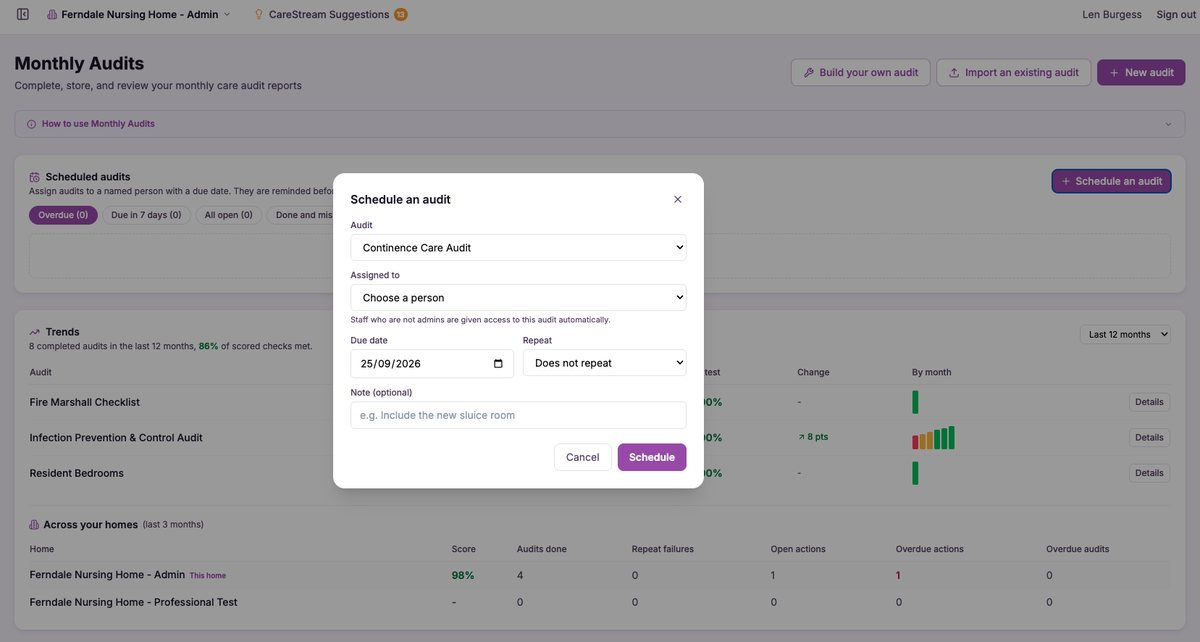
The policy must say who submits the notification and how it is logged. The registered manager is the obvious choice, and the weak point is the manager's day off. We suggest naming a deputy here as well.
Step 6: what if a colleague is involved?
The record shows a colleague helped Mr A to the bathroom the evening before. The policy must now cover allegations against staff. It should answer four questions:
- Who is told?
- How are people protected while the matter is looked at?
- How is the colleague treated fairly?
- When does the service refer to the Disclosure and Barring Service?
A regulated activity provider has a legal duty to refer in some cases. It applies when it removes someone from regulated activity, or would have, and the other conditions are met. The Disclosure and Barring Service guidance on making barring referrals sets them out. That applies even when the council has also been told.
Regulation 13 also deals with restraint, control and deprivation of liberty. Care must not include control or restraint that is not necessary or proportionate. It must not be degrading, and it must not significantly disregard a person's needs.
Nobody may be deprived of their liberty without lawful authority. In our view, concerns between residents, visitors and the use of locked doors belong in the same section of the policy.
Staff who fear raising a concern need a safe route. That is why the policy links to the whistleblowing policy.
Step 7: the outcome is recorded and Mr A is told
Regulation 13 requires systems that investigate any allegation or evidence of abuse. This must happen as soon as the service becomes aware of it.
One weakness we would look for in a safeguarding log is an investigation that simply stops, with no recorded outcome. Write down what the council said and what the service changed. Write down how Mr A, and his family where he wishes, were kept informed.
The free policy check shows where a policy falls short of the regulations. Create a free account to begin.
Create a free accountStep 8: the service learns, and an inspector tests it
The Care Quality Commission asks whether a service is safe. Safeguarding is one of the quality statements under that key question. We read Regulation 13 as the legal standard behind it.
In our view an inspector tests whether a policy works rather than reading it aloud. Expect three tests.
Can staff explain it? A care worker should say what abuse looks like, who she would tell and what happens next, in her own words. If answers differ between staff, the policy is not embedded.
Are concerns followed up? The log should show what was reported, when, who was told, what the council said and what changed.
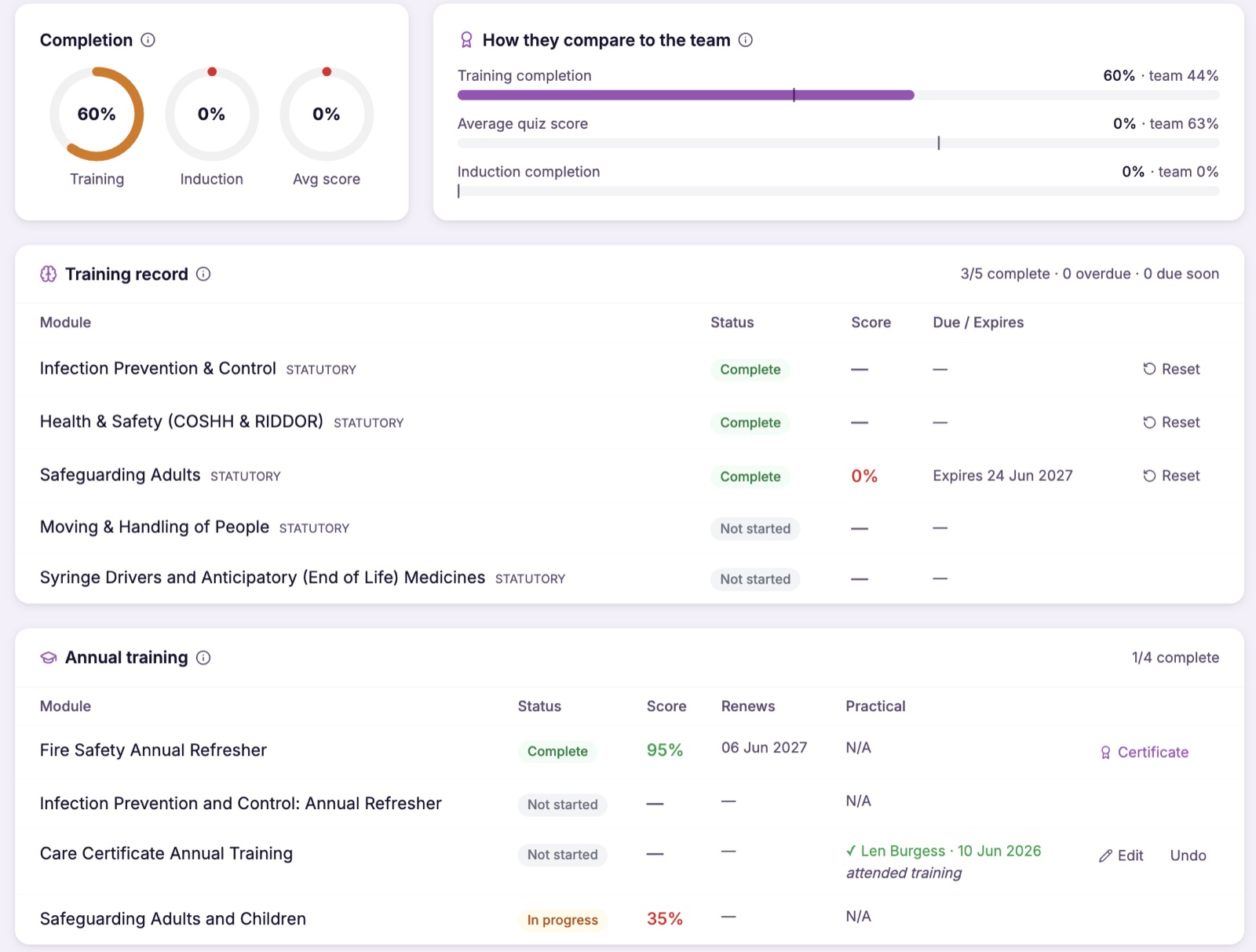
Is training current? Regulation 18 of the 2014 Regulations says staff must receive the support, training, supervision and appraisal their role needs. We suggest records show safeguarding at induction and a refresh on the cycle the policy states.
None of this promises an outcome. It shows where to look before somebody else does.
One last weakness is easy to miss. A policy nobody has been told about changes nothing on shift.
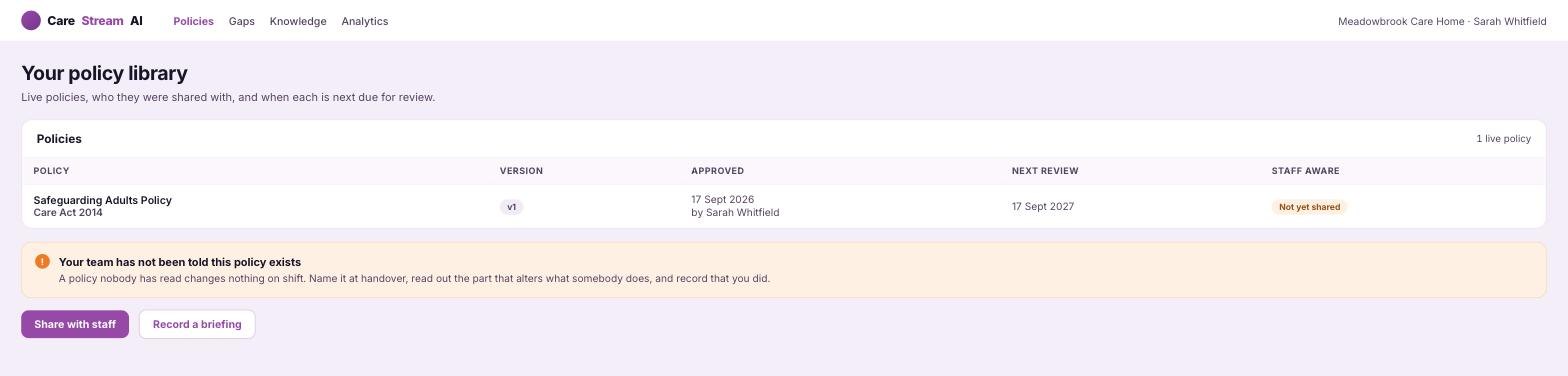
Figure: a sample screen of a policy approved in the library but marked as not yet shared with staff, the gap between holding a policy and using it.
The Care Certificate includes a standard on safeguarding adults. CareStream offers the Care Certificate as a CPD certified course, free for every member of staff on the free plan.
CareStream does not award it, and the employer assesses the practical skills. See the Care Certificate course for what it covers.
The safeguarding audit is one of the free audit templates. Our collection on safeguarding policies lists related policies a service usually holds beside it.
What a safeguarding policy must contain
The bruise shows the parts in order. An adult safeguarding policy for a care service should hold these:
- Definitions of abuse and neglect.
- How staff recognise and report concerns.
- The named safeguarding lead and deputy.
- The referral route to your local authority safeguarding team.
- The safeguarding notification to the Care Quality Commission.
- Allegations against staff.
- Restraint and deprivation of liberty.
- Recording, training and review.
The regulations do not give a list of headings. This is our view of what makes each step work, not a legal form.
Benefits of CareStream's free policy check for your safeguarding policy
If you hold a safeguarding policy care home inspectors may ask about, CareStream can test it before they do.
- The free policy gap check reads your policy and marks each applicable regulation as covered, partly covered or a gap.
- It compares the policy with your other policies and flags contradictions, so the referral route matches across documents.
- It is free, with no card needed, and it takes up to five policies.
- If it finds a gap, a written safeguarding adults policy is written for your service and delivered within two working days.
- Staff can take the Care Certificate, with its safeguarding adults standard, free.
Now play the bruise through your own policy
Put Regulation 13 beside your policy and run the scenario. Is a lead named, with a local authority contact? Does it describe notification as well as referral?
Does it say what happens to a colleague who is the subject of an allegation? Ask two staff on different shifts what they would do, then check that the log shows outcomes.
Your safeguarding policy is a good candidate for one of the five slots in the free CareStream policy check. Upload it with your other policies. The tool rates each applicable regulation as covered, partly covered or a gap. It also checks for contradictions between policies.
Our guide to policy gap analysis for care homes explains the method. The free policy gap check page shows what is tested.
If you hold no policy, or the check finds a gap, a written safeguarding adults policy is £79. It is written for your service, checked by hand and delivered within two working days. Holding it is not the same as meeting the regulation.
If you are searching for a safeguarding policy template, be careful with a generic one. A template cannot name your lead, your deputy or your council's referral route. Those are the first things the bruise scenario tests.
A safeguarding policy for care homes also needs the detail that fits your building, such as out of hours cover and locked doors.
Sources
- Regulation 13, Safeguarding service users from abuse and improper treatment (legislation.gov.uk) · legislation.gov.uk
- Care Act 2014, section 42, Enquiry by local authority (legislation.gov.uk) · legislation.gov.uk
- Care and support statutory guidance (GOV.UK) · gov.uk
- Care Quality Commission (Registration) Regulations 2009, regulation 18, Notification of other incidents (legislation.gov.uk) · legislation.gov.uk
- Regulation 13 guidance for providers (Care Quality Commission) · cqc.org.uk
- Regulation 18, Staffing (legislation.gov.uk) · legislation.gov.uk
- Making barring referrals to the DBS (GOV.UK) · gov.uk
- Notifications guidance for providers (Care Quality Commission) · cqc.org.uk
- Assessment framework, key questions (Care Quality Commission) · cqc.org.uk
- The 34 quality statements, including Safeguarding under Safe (Care Quality Commission) · cqc.org.uk
- Care Certificate workbook, Standard 10 Safeguarding adults (Health Education England) · hee.nhs.uk
Frequently asked