How often should care home audits be done? Pick one you already run and check three things: when it was last done, who signed it, and what happened to the findings.
If any answer takes more than a minute to find, you need a rhythm. The table below sets a care home audit schedule for every CareStream audit, and you can argue with it.
| Rhythm | Audits | Usual owner |
|---|---|---|
| Daily (4) | Daily Medication Audit, Fire Marshall Checklist, Fluid Intake and Hydration, Resident Bedrooms | Senior on shift, fire marshal, named lead |
| Weekly (1) | Weekly Medication Stock and Storage | Medicines lead |
| Monthly (18) | Medicines Management, Health and Safety, Premises and Maintenance, Water Safety and Legionella, Laundry, Kitchen Audit, Mealtime Experience, Resident Bedroom Audit, Care Plan Review and Update, Falls Prevention and Post Fall Review, Pressure Care and Skin Integrity, Call Bell Response, Night Shift Walkround, Staff Training and Compliance, Safeguarding Log Review, Accident and Incident Book Audit, Monthly Governance Review, Resident Feedback Round | Manager, deputy, area leads |
| Quarterly (5) | Fire Drill Record Form, Infection Control, Dementia Care Environment, HR Staff Files, Single Assessment Framework Review | Manager, with a different person each time where possible |
| Periodic (2) | Quality Assurance, GDPR Audit Checklist | Manager, on a date you set |
Owners are our suggestion. The intervals are the ones built into the templates. You can set a different repeat for each assignment.
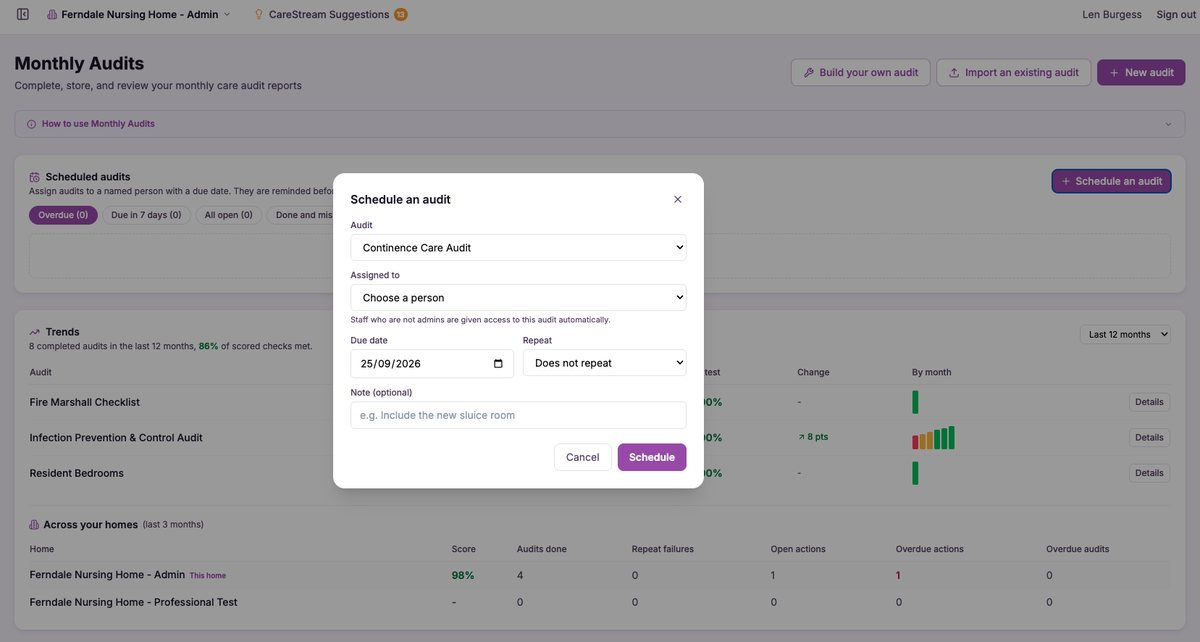
Figure: the Schedule an audit box, where the interval is set per audit and per person.
What the law says about a care home audit schedule
A schedule only has value if you can defend it. Start with what is and is not required.
Every audit in the library is free to run, with scoring, actions and a report. No card needed.
Create a free accountThe law names no audit and sets no interval. The duty sits in the full text of Regulation 17 on good governance.
Regulation 17 says the provider must have systems to assess, monitor and improve quality and safety. Those systems must also assess and reduce risks to the people it supports.
The one time limit is narrow. The provider must send the Care Quality Commission a written report within 28 days of a request.
The Commission's own guidance gives regular audits as an example of such a system and sets no number. Regular is your call, and quality audits for care homes are no different.
What matters is that you can explain the interval and show you kept to it.
Regulation 12 covers safe care and treatment. It requires safe handling of medicines and control of infection, as the wording of Regulation 12 on safe care and treatment shows.
That is why we suggest short, frequent checks on medicines. It is also why we suggest a firm rhythm for infection control.
Some checks carry requirements of their own. Examples are fire safety, water safety, gas and electrical testing and food safety. Check what applies to your service and build the schedule around it, never in place of it.
In our view, inspectors care less about how many audits you ran than about what they found and what changed afterwards. Our piece on the Single Assessment Framework for providers describes how evidence is weighed.
Three questions that move an audit up or down the table
Put these to each area of your care home quality audits and write the answers next to the interval.
- How bad is the harm if it fails? A missed medicine outranks a dusty window ledge.
- How fast can it fail? Fluid charts change every shift. A policy review changes once a year.
- How has it gone lately? A repeat failure earns shorter gaps. A year of clean results earns a longer one, with the reason on file.
Setting matters. A home with a kitchen and laundry audits things a domiciliary care agency never meets.
The agency should put more weight on medicines in people's homes, missed visits and staff files.
Six places where we would change the built in rhythm
Most templates fit as they come. These six are where we would push back, and each is a recommendation, not a rule.
| Audit | Built in | Our suggestion |
|---|---|---|
| Fluid Intake and Hydration | Daily | Daily for people at risk only |
| Resident Bedrooms | Daily | Daily, one room at a time across the week |
| Infection Control | Quarterly | Quarterly, and more often after an outbreak |
| Care Plan Review and Update | Monthly | A sample each month, one person at a time |
| Quality Assurance | Periodic | After each questionnaire round, at least yearly |
| GDPR Audit Checklist | Periodic | Yearly, and after any data breach |
GDPR means the UK General Data Protection Regulation.
The Kitchen Audit stays monthly. We suggest the cook also checks temperatures and cleaning sheets each day.
To see one run in full, read how to run a care home kitchen audit. The questions themselves are in the Kitchen Audit, one of the free audits for care services.
Why daily checks are short and quarterly ones are not
Audits in care homes fall into two kinds. Daily and weekly audits exist to catch a problem while it can still be put right.
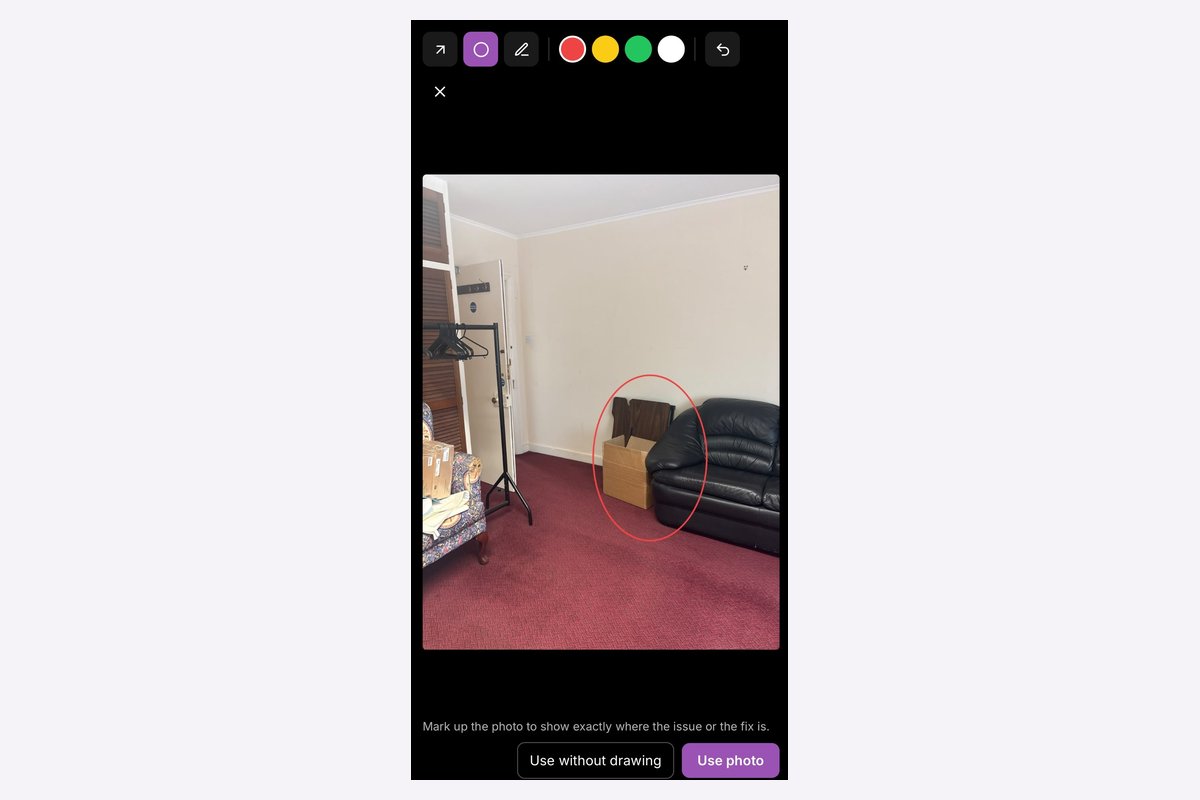
The Daily Medication Audit looks at administration records, controlled drugs, storage temperatures and errors. The Fire Marshall Checklist walks the panel, exits, doors, extinguishers and emergency lighting. Fluid Intake and Hydration tests charts and targets for people at risk. Resident Bedrooms covers each room in turn.
Pick an audit, assign it, score it on a phone and close the actions. Create a free account to start.
Create a free accountThey take minutes, and that is deliberate. A senior, the fire marshal or a named lead should hold them, not the manager. Quarterly and periodic audits are the reverse. They are wide, slow and about things that drift, such as HR files and the fire drill record.
Staggering eighteen monthly audits
Almost nobody can run eighteen monthly audits in one week. Monthly audits care home managers rush turn into tick boxes. Care home auditing works better when audits are spread across the month.
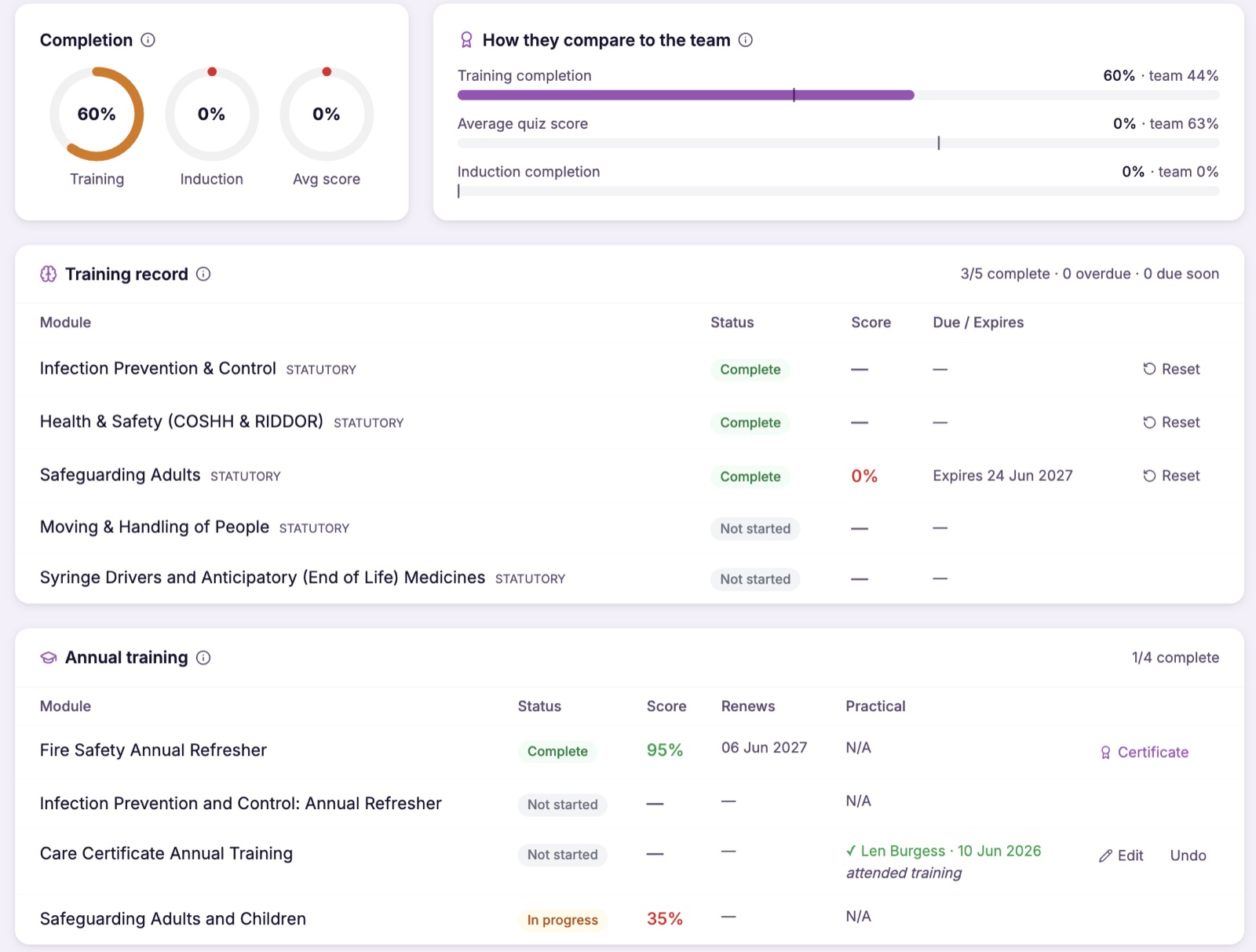
We would keep three in every month because they carry the most risk: Health and Safety, Medicines Management and the Monthly Governance Review. Rotate the rest so each appears at least once every three months. Change who runs it from time to time.
Write the rotation down. Never drop an audit silently. When you change an interval, record the reason.
Signs that an audit should come forward
Bring one forward, and note why, when any of these happens:
- A concern, complaint, incident or safeguarding referral in that area.
- A poor result last time, or the same finding twice.
- A change of staff, manager, supplier, system or equipment.
- An outbreak of infection, a serious fall or a medicines error.
- A report from the Care Quality Commission or the local authority that names the area.
Go back to the usual gap only when results hold steady for several cycles.
What an inspector can see when the schedule was kept
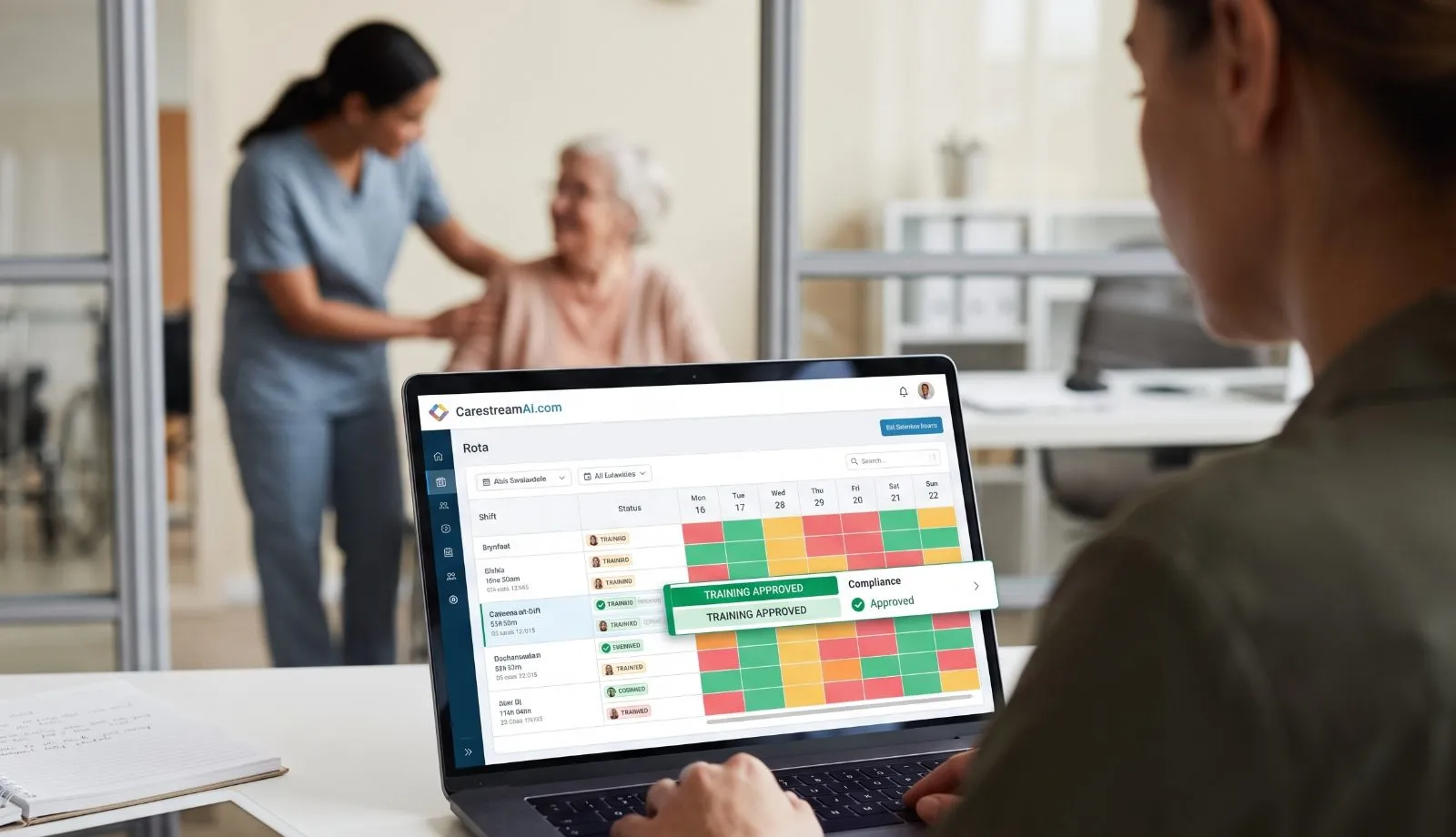
CareStream or paper, a schedule on its own proves little. Care home compliance audits earn their keep when dated, finished audits with closed actions sit behind them. We think the proof matters more than the interval you chose.
In CareStream each audit can be assigned to a named person with a due date and an optional repeat.
The assignee gets a due soon email and an overdue email. The audit goes to managers after a number of days the home chooses. A repeating audit still open when the next one falls due is marked missed, so a lapse cannot hide.
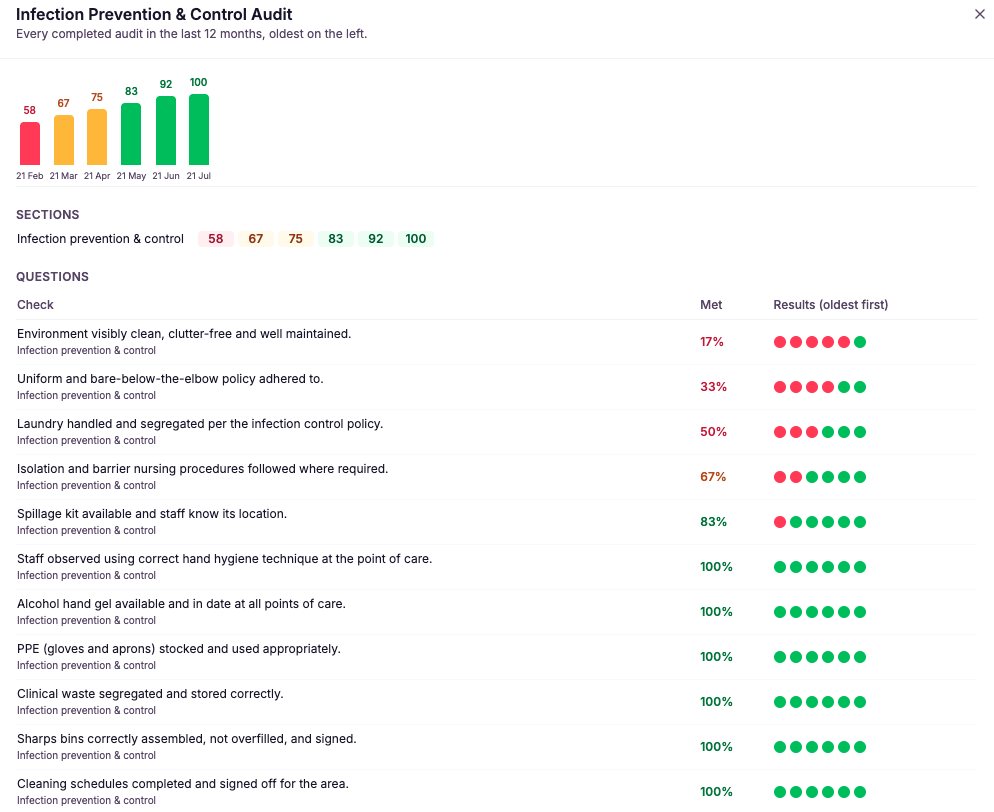
Figure: six monthly infection control scores, with the questions that failed most often listed underneath.
That trends view is what a monthly rhythm leaves behind. In our demonstration account, six dated results show a score rising from 58 to 100. They also show which questions held it back. One good month shows neither.
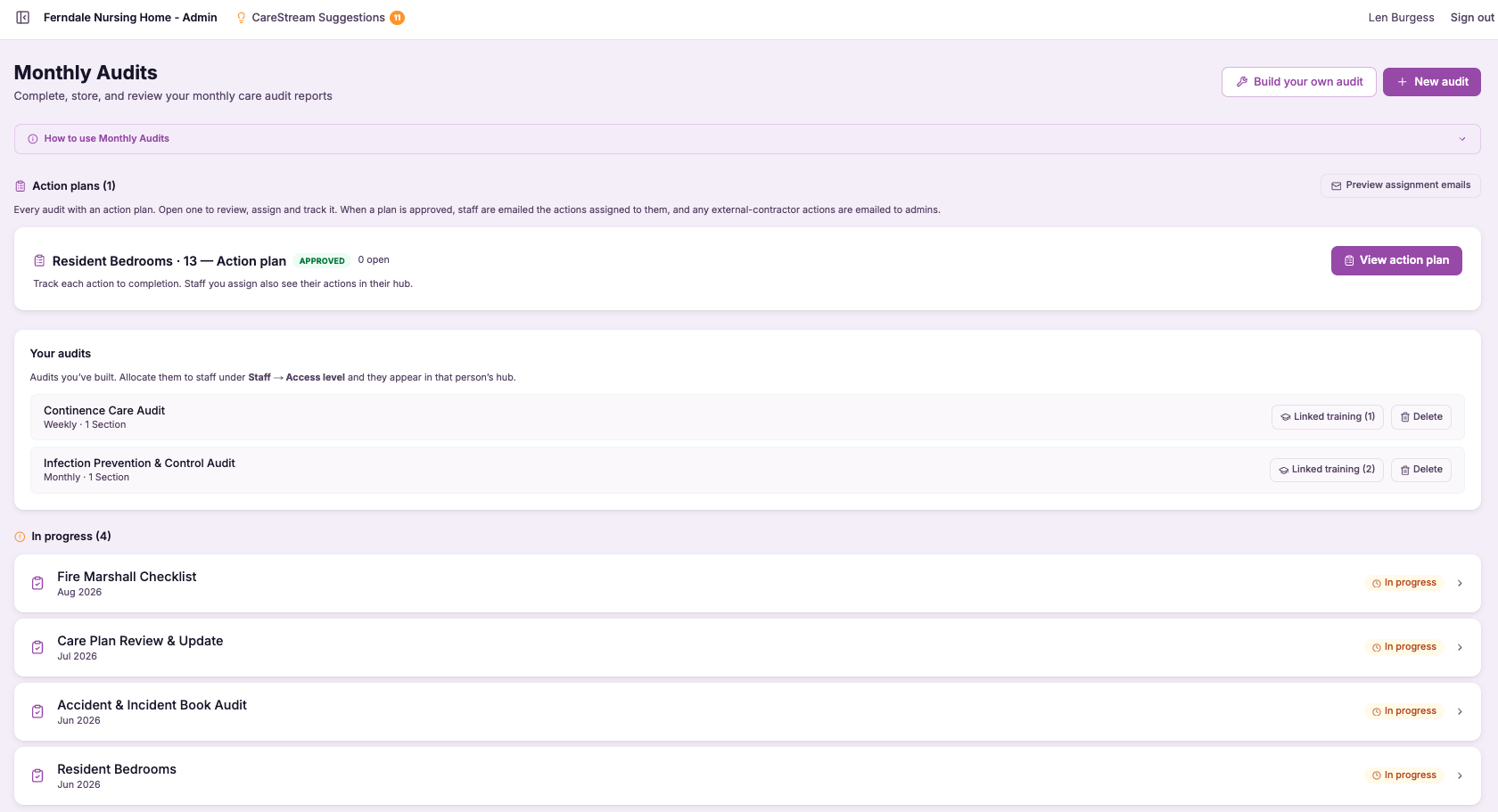
Figure: the Monthly Audits page, with an action plan awaiting closure above the audits in progress.
The whole set is on the care home audits page. Our guide to digital audits for care services covers how the records fit together.
Benefits of CareStream's free audit library for a care home audit schedule
The table above can be run from one place. The free audit library for care homes is free to use, with no card needed.
- Each audit keeps the repeat you choose, so the daily, weekly, monthly and quarterly rows in the table are set once per audit.
- The named owner gets a due soon email and an overdue email, so a missed medicines check shows up before the next one.
- Every audit is scored, and failed questions become tracked actions with a person and a date.
- Reports and signatures sit with each result, ready when an inspector asks what you found and what changed.
Where to start
Pick the three audits that carry most risk. Schedule each audit to repeat, whether you use paper, care home audit software or other care home audit tools. Name its owner and write one line on why you chose the interval. Then book the first date.
Sources
- Regulation 17: Good governance, legislation.gov.uk · legislation.gov.uk
- Regulation 17: Good governance, Care Quality Commission · cqc.org.uk
- Regulation 12: Safe care and treatment, legislation.gov.uk · legislation.gov.uk
Frequently asked