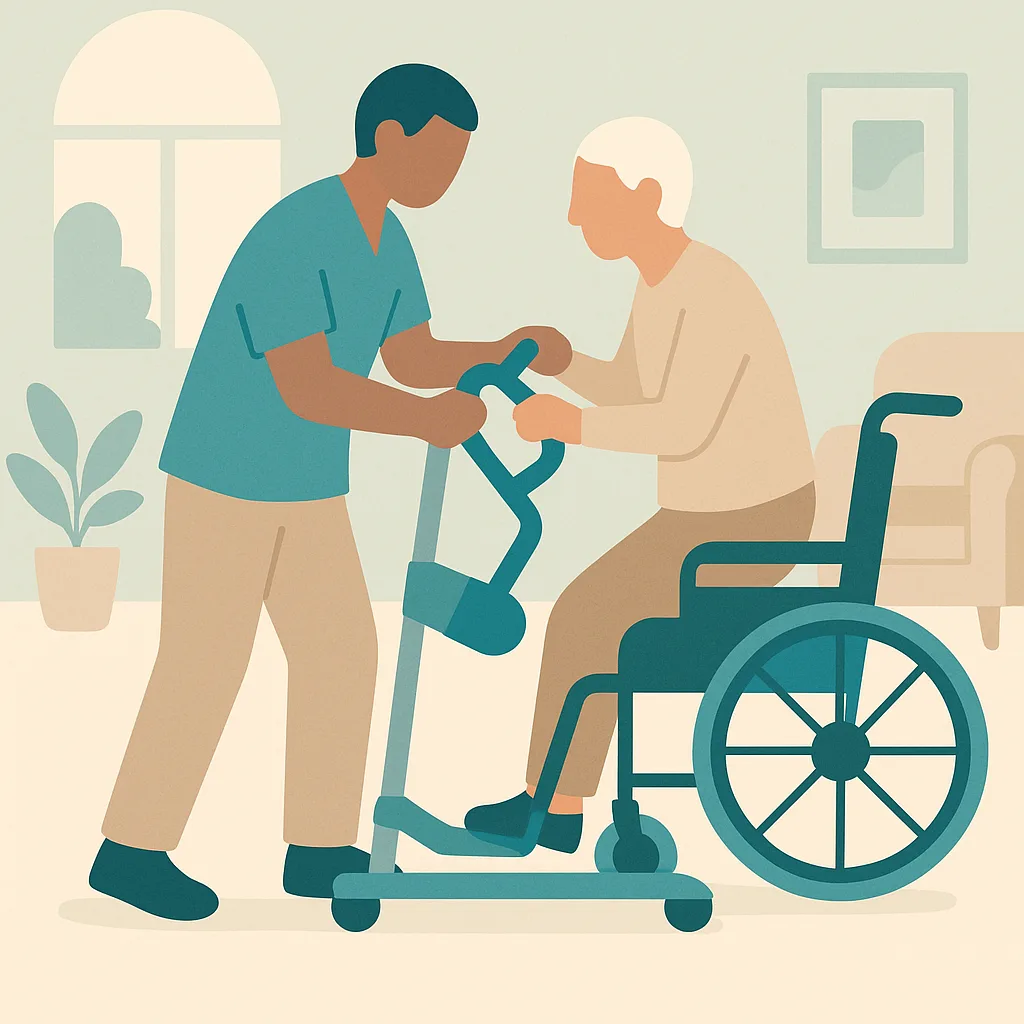
There are 16 care certificate standards, and each sets out what a new care worker must know and show. Below they run in order, with what each asks of a new starter.
The care certificate 16 standards are a revised set that added a sixteenth. That is why some pages still say fifteen.
The sections cover the sixteen in turn, the fifteen or sixteen question, the sign off and the questions managers raise next.
What a standard is, and what it is not
A standard is a heading with learning outcomes and assessment criteria underneath it. It describes the knowledge, skills and behaviours expected of someone new to care. Skills for Care, Skills for Health and NHS England publish the set together.
It is not a qualification. The Care Certificate questions and answers call it recommended and non-accredited. Skills for Care, Skills for Health and NHS England publish that document, and we call it the Q&A below.
The Level 2 Adult Social Care Certificate is a separate qualification, accredited and regulated by Ofqual.
The difference matters in a job advert or a policy. A worker who holds the Care Certificate was observed and signed off by their employer. That does not mean they hold a regulated award.
What are the 16 Care Certificate standards?
This care certificate standards list follows the order in the Skills for Care document. We have summarised each standard and not reproduced the official wording.
The full wording sits in the Care Certificate standards document from Skills for Care.
- Understand your role. You describe your responsibilities to the people you support and to the key people and advocates around them, and you can name routes for career development.
- Your personal development. You agree a development plan, learn from feedback and build skills, digital ones included.
- Duty of care. You can explain the duty, define the duty of candour and deal with comments and complaints.
- Equality, diversity, inclusion and human rights. You explain equality, bias and discrimination, and offer culturally appropriate care.
- Work in a person-centred way. You put person-centred values into practice and understand what mental capacity means for how care is provided.
- Communication. You use a range of methods, including assistive and digital tools safely, and you recognise that behaviour can be a form of communication.
- Privacy and dignity. You protect both in daily care and support independence and each person's links with their community.
- Fluids and nutrition. You support eating and drinking, and you identify and report changes or risks.
- Awareness of mental health and dementia. You recognise early signs and identify reasonable adjustments.
- Adult safeguarding. You give the legal definition of an adult at risk under the Care Act 2014, understand restrictive practices and technology risks, and know your own role in a concern.
- Safeguarding children. This standard was not changed in the update.
- Basic life support. You complete practical basic life support training that meets Resuscitation Council guidelines.
- Health and safety. You work safely and manage your own mental health and wellbeing, and you know where to find support.
- Handling information. You handle and access information safely and know how, and to whom, to report a data breach.
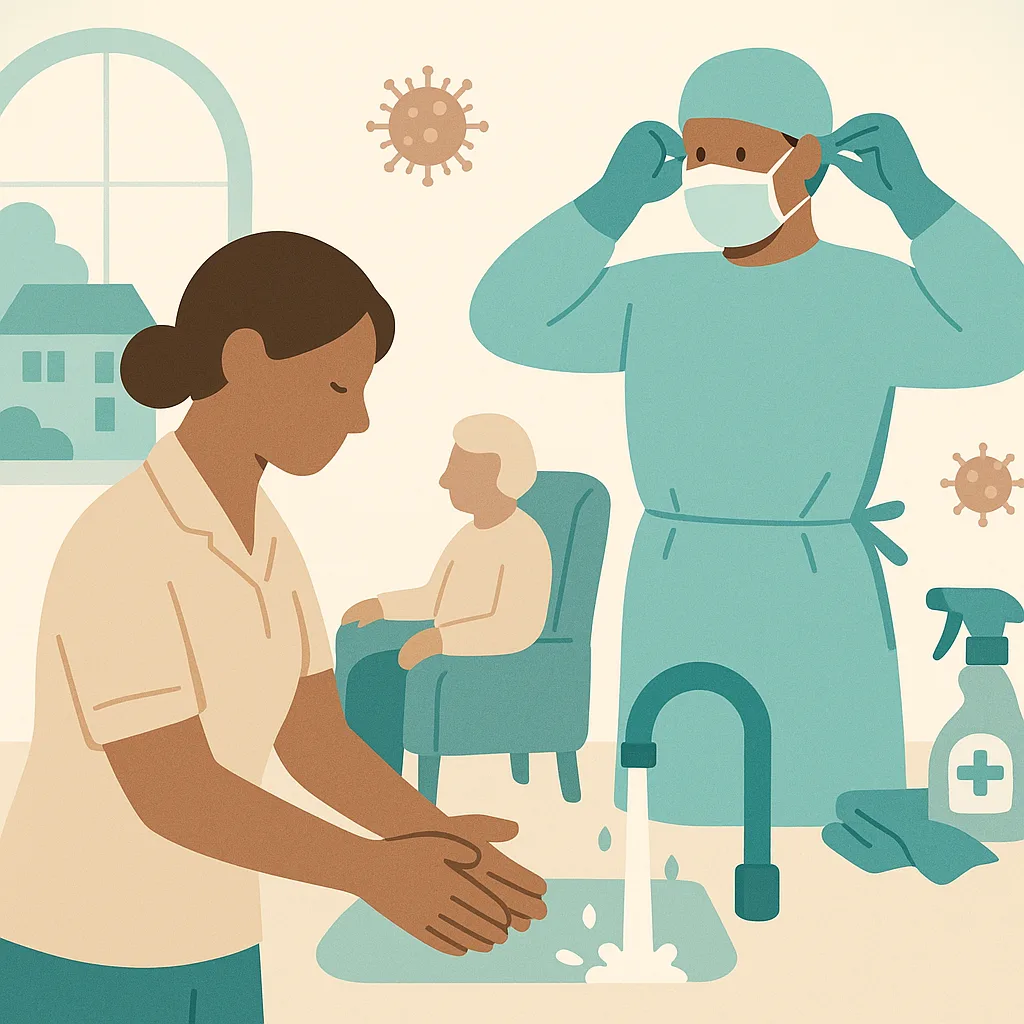
- Infection prevention and control. You understand the chain of infection, follow standard precautions, show effective hand hygiene and use protective equipment. You also know how to clean, decontaminate and dispose of waste and linen safely.
- Awareness of learning disability and autism. You show awareness of both, through training in how to interact appropriately with people with a learning disability and autistic people, at a level suited to your role.
The CPD certified Care Certificate and the annual courses are free on every plan. No card needed, and every staff login is included.
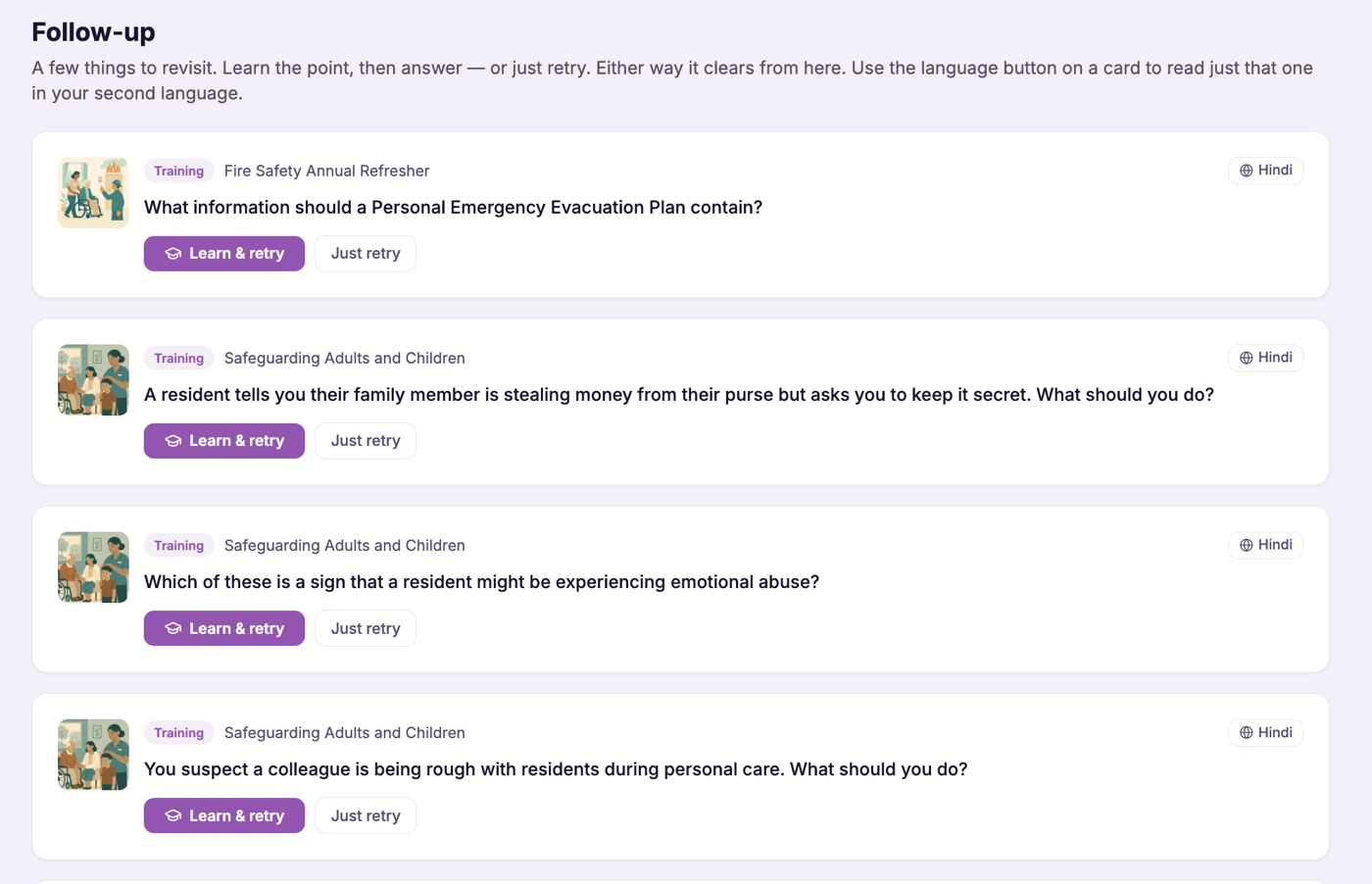
Create a free accountFigure: scenario questions of this kind test whether you can apply a standard, not only repeat it.
Care Certificate 15 standards or 16: which is right?
Sixteen is right now. The Skills for Care page says "There are now 16 standards." Before the update the framework had fifteen.
Pages that still describe the care certificate 15 standards predate the update. People search both numbers, which is why the confusion lasts.
What moved out of Standard 9
In the earlier list, Standard 9 was called Awareness of mental health, dementia and learning disabilities. It is now Awareness of mental health and dementia.
Learning disabilities and autism now sit in the new Standard 16, says the Skills for Care summary of updates.
The mental capacity content in old Standard 9 moved into Standard 5.
Beyond Standard 16: what else was revised
Several other standards changed too. The main revisions were these.
- Mental capacity became a learning outcome in Standard 5.
- Standard 4 was retitled, from Equality and diversity to Equality, diversity, inclusion and human rights.
- Standard 10 was retitled, from Safeguarding adults to Adult safeguarding, and adopted Care Act 2014 language.
- Standard 15 was fully revised and expanded.
- Smaller additions went into Standards 1, 2, 3, 6, 7, 8, 13 and 14, such as digital skills, the duty of candour and reporting a data breach.
Standards 11 and 12 were not changed.
Is there a Care Certificate workbook for the 16 standards?
Not an official one. The Q&A says the workbooks were not updated and will not be replaced. It also says using a workbook is not mandatory.
Employers and learning providers choose how a worker shows knowledge. Options include discussion, written answers, a small project or multiple choice questions.
Whoever owns a workbook must keep it up to date. If you still use a care certificate workbook, check it against the current standards.
Are Care Certificate modules the same as standards?
The word modules turns up in course listings, but the official documents call each one a standard. When a provider splits the learning into care certificate modules, check that every one of the 16 standards is covered.
Care Certificate Standard 16: learning disability and autism
Care Certificate Standard 16 is the newest. Its outcome is to demonstrate awareness of learning disability and autism.
The standard points to Regulation 18, the duty to have trained and supported staff. All staff in services regulated by the Care Quality Commission must get training in how to interact well with people with a learning disability and autistic people. The level should suit their role.
The Q&A says providers should treat this learning like other mandatory training. It names the Oliver McGowan Mandatory Training as the government's preferred training. A provider could use it to evidence Standard 16.
What matters most, the Q&A says, is that the learning fits the employer's own approach to that training.
How the sign off works
Reading and answering questions gives you the knowledge. It does not make you competent, and that is why the Care Certificate has a second half.
A worker must acquire knowledge and demonstrate competence in all 16 standards. The Q&A says eLearning alone cannot provide full achievement.
Who is the Care Certificate assessor?
The care certificate assessor watches you do the job. The Q&A says the assessor must see your performance during real work, unless simulation is specifically allowed.
Regulated providers are expected to assess a new support worker's competence first. That must happen before the worker delivers care out of line of sight of a more experienced colleague.
The employer awards the certificate once all 16 standards are complete. The employer must take responsibility for final sign off.
Free courses, an 80% pass mark assessment, certificates and a training matrix. Create a free account and start with the Care Certificate.
Create a free accountThe employer can outsource training and assessment. An external learning provider must not sign and issue the certificate.
On timing, NHS Employers states the Care Certificate must be completed within 12 weeks of the learner starting. We suggest a routine of four steps.
- Note the start date and the twelve week point, and name the assessor.
- Finish the knowledge learning early, so observation time goes on practice.
- Observe, record and sign off each standard against the assessor and employer guide.
- File the evidence with the staff record, with the date.
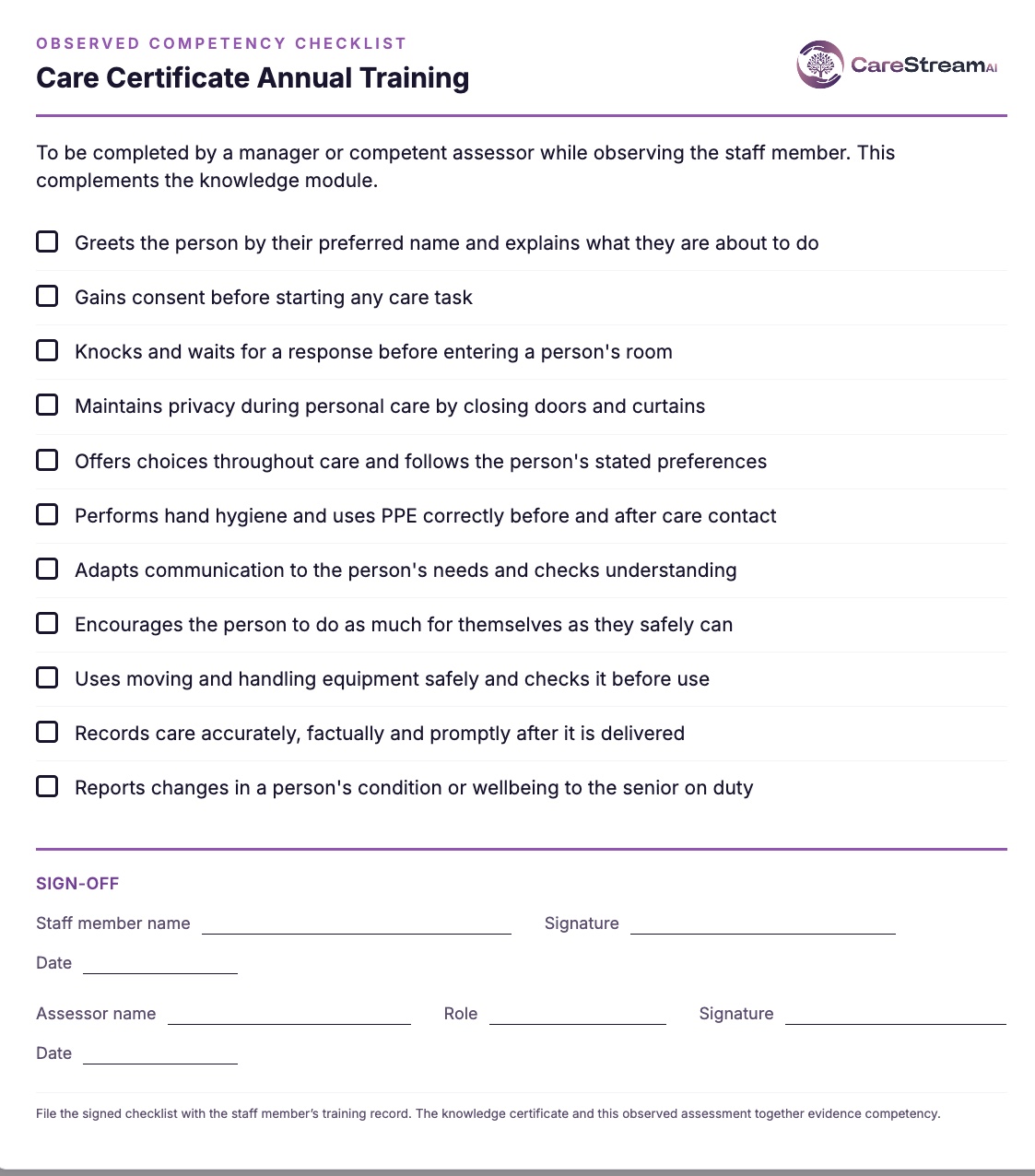
Figure: a checklist gives the assessor a structure for the visit.
Who needs it, and who does not
The standards are for workers joining a health or adult social care organisation with no past training or sector experience. That includes care assistants, care workers, homecare workers and care support workers.
Employers are free to decide whether other groups would benefit. Agency and bank workers fall under the same provider duty to assess the training needs of all new staff.
The Q&A says some roles do not need to complete it. These are receptionists, porters, cooks, kitchen staff, drivers, cleaners and finance clerks.
An experienced worker may join from elsewhere. The Q&A says the employer should check that their skills and knowledge are current, and can use the self-assessment tool to find gaps. In some cases the employer may require the full Care Certificate.
Do staff who finished the earlier version start again, and how often should it be refreshed?
Neither the Skills for Care summary of updates nor the Q&A asks staff to start again. The summary makes the owners of learning programmes responsible for keeping content up to date.
In our view a short refresher on the revised content, Standard 16 above all, suits most services.
On refreshing, we suggest each service sets its own cycle. Many refresh all sixteen standards each year, and some fold that into induction.
Our Care Certificate course is built for this. It is CPD certified, an annual refresher across all 16 standards, takes 90 minutes and shows a renewal date on the certificate.
Does holding it satisfy the Care Quality Commission?
The legal duty is Regulation 18, the duty to give staff the support and training they need. It sits in the Health and Social Care Act 2008 (Regulated Activities) Regulations 2014.
Staff in a regulated activity must get the support, training, supervision and appraisal they need. Read the full text of Regulation 18 on staffing for the exact wording.
The Q&A says employers can use the Care Certificate standards as a framework to help achieve this.
NHS Employers reports the Care Quality Commission as saying the Care Certificate sets standards for the induction of health care support workers. So it is a recognised way to show how you induct people.
It is not a box that satisfies the regulation alone. Holding a certificate decides neither a rating nor an inspection outcome. In our view the stronger evidence is staff who can show they apply what they learned.
Services recruiting from overseas can sequence the standards around shadow shifts using our four week induction playbook.
Benefits of CareStream's free Care Certificate course for your starters
Once you have mapped the 16 standards, the learning side is the easy part to hand off. The free CPD certified Care Certificate course covers care certificate standards from Standard 1 to Standard 16 and costs nothing on the free plan.
- Each starter completes an assessment and gets a certificate.
- The certificate shows a renewal date, so the annual refresher is easy to plan.
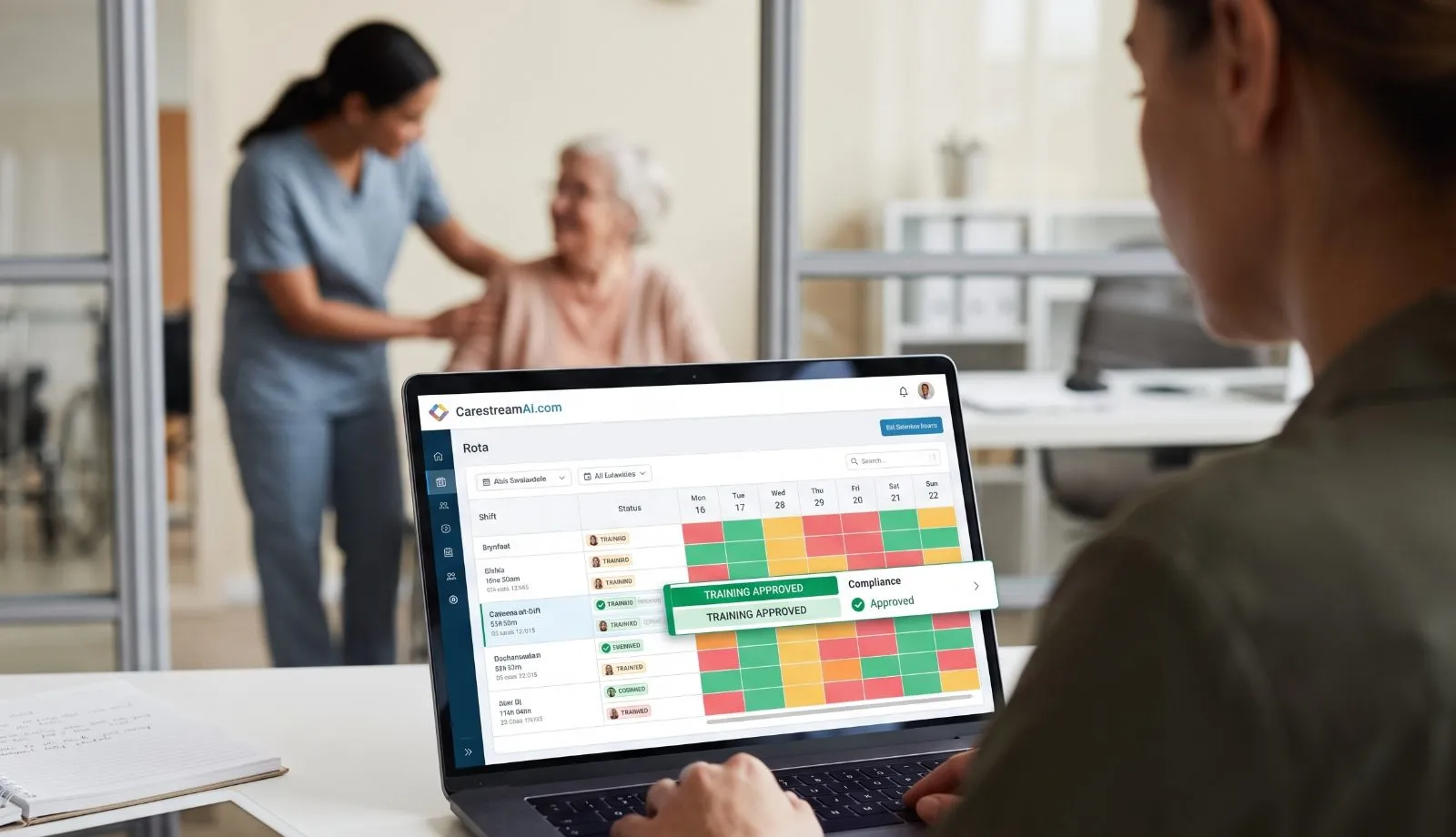
- The training matrix shows the manager who has finished and who has not.
- Your assessor still observes practice and signs off. CareStream does not award the Care Certificate.
What to do with your own induction pack
Open whichever Care Certificate material you use and look at its version. Swap out anything that lists fifteen. Give each starter a named assessor and a date, and keep the learning and the signed observation in one record.
NHS England offers a free Care Certificate standards programme on its elearning for healthcare platform. It is worth a look.
A free CareStream account adds the employer view. You get a training matrix for the CPD courses and a certificate for every member of staff, with no card.
The free Care Certificate for care services page lists what is included. The course page shows the lessons. Our complete guide to induction and the Care Certificate covers the wider process.
Sources
- Skills for Care: Care Certificate standards · skillsforcare.org.uk
- Skills for Care: Care Certificate standards document · skillsforcare.org.uk
- Skills for Care: Summary of updates to the standards · skillsforcare.org.uk
- NHS England, Skills for Care and Skills for Health: Questions and answers · skillsforcare.org.uk
- NHS Employers: Care Certificate · nhsemployers.org
- legislation.gov.uk: Regulation 18 (Staffing), Health and Social Care Act 2008 (Regulated Activities) Regulations 2014 · legislation.gov.uk
Frequently asked