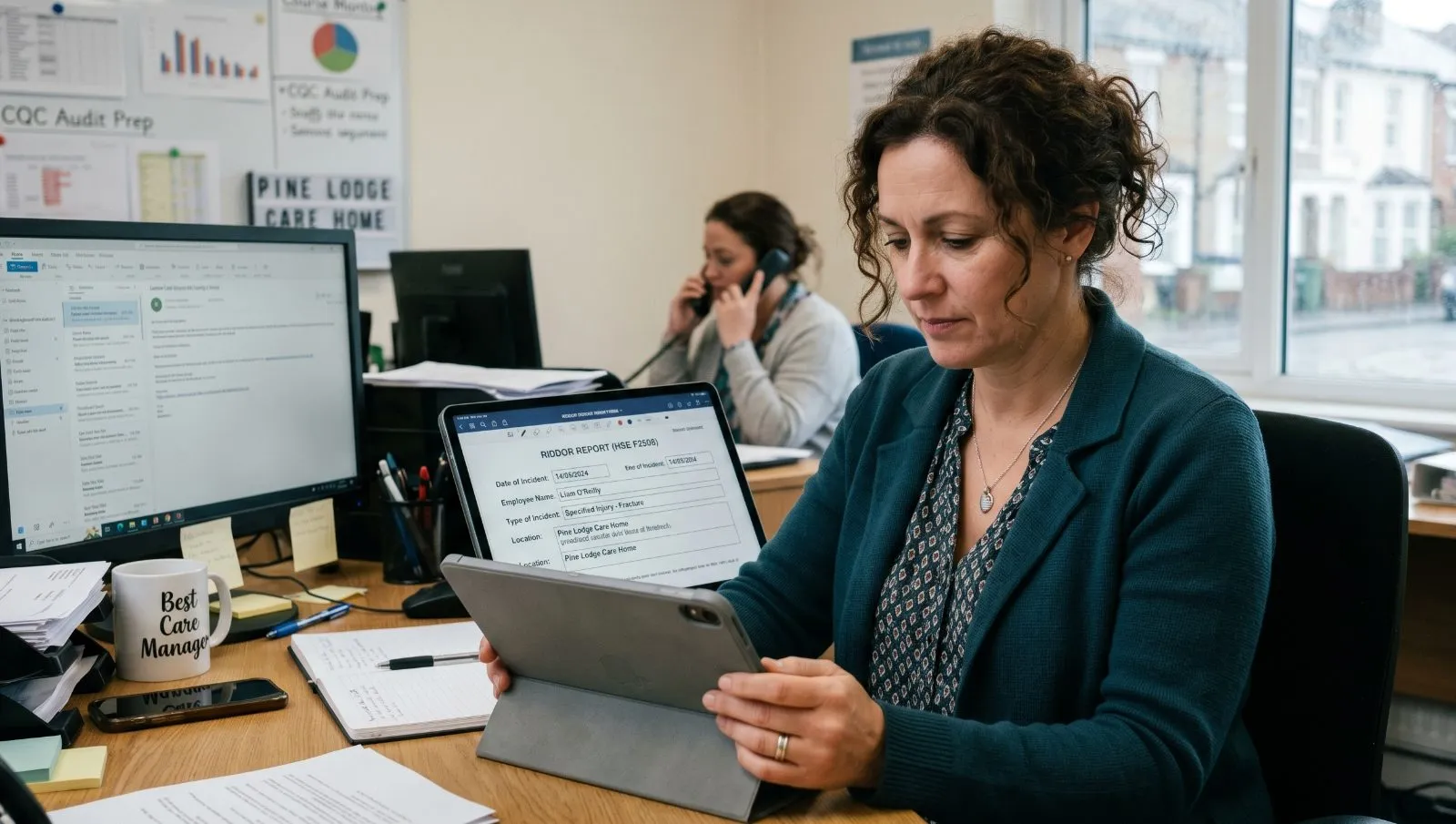
If you are entering the health or social care sector this year, or you manage a team that needs to demonstrate consistent competency, understanding the Care Certificate training is essential. This guide explains exactly what the Care Certificate is, why it matters for UK care workers and employers, and how to choose the most effective training method.
It includes a detailed look at how our modern AI-driven CareStreamAI are transforming the learning experience, from initial knowledge checks to intelligent follow-up when a learner gets something wrong.
What Is the Care Certificate?
The Care Certificate is a set of 16 standards that define the fundamental knowledge, skills, and behaviours expected of health and social care support workers. It was developed jointly by NHS England, Skills for Care, and Skills for Health, based on the recommendations of the Cavendish Review, which called for a consistent baseline of competence across the non-regulated workforce.
It is important to understand that the Care Certificate is not legally mandatory in the same way that a driving licence is required to drive. However, the Care Quality Commission (CQC) continues to expect its use across all regulated services. The CQC updated its position statement on the subject in late 2022, and as of 2026, it remains a key area of focus under the "safe and effective staffing" quality statement. Inspectors will routinely ask to see evidence of care certificate training during inspections.
The standards were updated in March 2025 to align with sector developments and the introduction of the new Level 2 Adult Social Care Certificate qualification. The most significant change was the addition of a new 16th standard: Awareness of Learning Disability and Autism. A major advantage of the Care Certificate is its portability. Once a worker has completed it, they do not need to retake the entire programme if they move to a different employer, provided their knowledge and competence can be verified.
The 16 Standards of Care Certificate Training
The 16 standards form the backbone of all legitimate care certificate training programmes, whether delivered via a free NHS portal or a commercial provider, like here with CareStream.
Each standard must be assessed through a combination of knowledge (typically e-learning or workbook exercises) and observed competence in a real-world care setting. Here is a summary of each standard as they stand in 2026.
- Standard 1: Understand Your Role. This covers job descriptions, codes of conduct, and working within agreed ways of working.
- Standard 2: Your Personal Development. This focuses on creating a personal development plan and understanding the importance of reflective practice.
- Standard 3: Duty of Care. This standard addresses balancing individual rights with the duty to keep people safe, including how to manage incidents and errors.
- Standard 4: Equality and Diversity. This ensures workers provide inclusive care that respects a person's background, identity, and beliefs.
- Standard 5: Work in a Person-Centred Way. This covers putting the individual at the centre of their care, understanding their history, preferences, and aspirations.
- Standard 6: Communication. This standard addresses verbal and non-verbal communication, confidentiality, and overcoming language barriers.
- Standard 7: Privacy and Dignity. This focuses on maintaining a person's self-respect, modesty, and independence in intimate care situations.
- Standard 8: Fluids and Nutrition. This ensures workers understand the principles of hydration, nutrition, and food safety, including identifying risks of malnutrition.
- Standard 9: Awareness of Mental Health, Dementia and Learning Disability. This standard covers the signs of these conditions and how to adapt communication and care.
- Standard 10: Safeguarding Adults. This details the types of abuse, how to spot the signs, and the correct procedure for reporting concerns.
- Standard 11: Safeguarding Children. This provides a basic awareness of child protection responsibilities for staff who may encounter children in their role.
- Standard 12: Basic Life Support. This covers CPR, the recovery position, and the use of an AED, assessed through practical demonstration.
- Standard 13: Health and Safety. This addresses risk assessments, COSHH, fire safety, and safe handling of hazardous materials.
- Standard 14: Handling Information. This covers GDPR, data protection principles, and the secure recording and sharing of sensitive information.
- Standard 15: Infection Prevention and Control. This includes hand hygiene, PPE use, and the chain of infection, a standard that remains critical in a post-pandemic world.
- Standard 16: Awareness of Learning Disability and Autism. Added in the 2025 update, this standard mandates training on making reasonable adjustments, understanding the spectrum of autism, and promoting positive outcomes for people with learning disabilities.
Why Care Certificate Training Matters for UK Employers
For employers, care certificate training is far more than a box-ticking exercise. It is a foundational investment in safety, quality, and workforce stability. The CQC’s continued focus on this area means that being unable to produce clear, auditable evidence of completion can directly affect inspection ratings.
Tell us about your service and we will show you how CareStream can cover your training and compliance.
Discuss your trainingA structured induction built around the Care Certificate reduces the time it takes for new starters to become competent and confident, which is critical in a sector facing persistent staffing shortages. It also supports progression onto the new Level 2 Adult Social Care Certificate qualification, giving staff a clear career pathway from day one. This clarity has a measurable impact on retention. When staff feel invested in and understand their role, they are less likely to leave within their first year. Finally, from a risk-management perspective, a workforce that has been rigorously trained against the 16 standards is demonstrably less likely to be involved in a safeguarding incident or a breach of regulatory compliance.
How CareStreamAI’s Care Certificate Training Works
AI-Generated, Standards-Aligned Modules
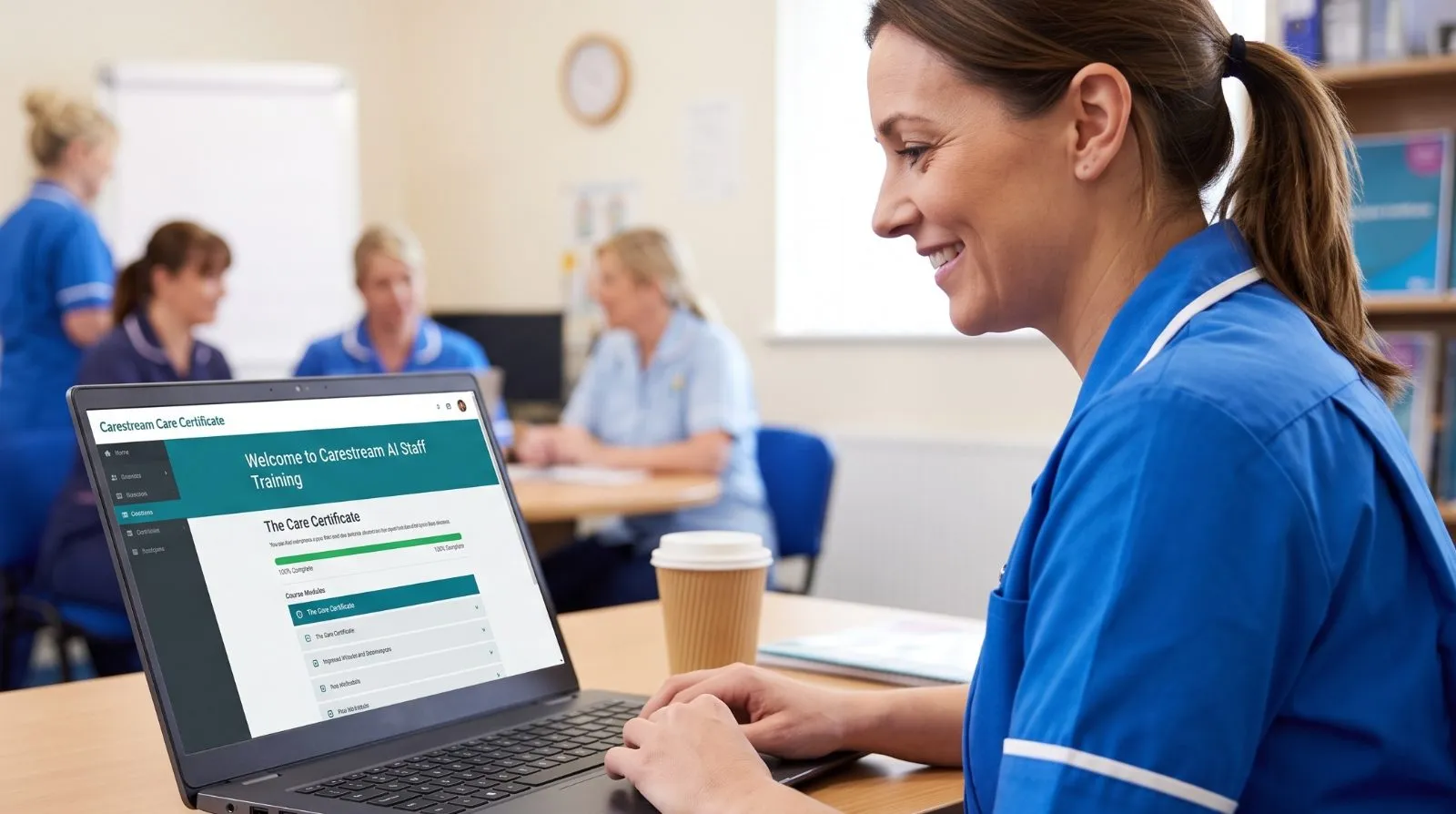
CareStreamAI's approach to Care Certificate training is fundamentally different from a static online course. Each learning module is dynamically generated to precisely map to the Care Certificate standards, drawing on the latest NHS England and Skills for Care guidance. The content is always current, reflecting the 2025 updates, including the new Standard 16, rather than a recycled slide deck that quietly falls out of step with regulation. And because the platform is adaptive, it doesn't repeat what a learner already knows. It identifies genuine knowledge gaps and prioritises the content each person needs most.
But generating the right training is only half the job. What sets the platform apart is what happens after a module is completed. CareStreamAI is built with structured follow-ups, so short reinforcement checks and refreshers are scheduled at the points where knowledge naturally fades.
Learning is consolidated rather than crammed and forgotten the moment the assessment ends. If a follow-up reveals that understanding has slipped, the system regenerates targeted content to close the gap, and managers get clear visibility of who is genuinely confident and who needs further support, ready to evidence for the CQC, Ofsted, and other UK bodies.
The same dynamic engine also generates each module in the learner's first language. This is not a bolt-on translation layer running finished English content through a machine. The training is authored natively in the chosen language, so meaning, tone, and regulatory nuance are preserved rather than mangled. When training is delivered in English, it uses correct UK English spelling, vocabulary, and UK regulatory references throughout. When it's delivered in another language, that same accuracy and care are carried across in full.
This distinction matters enormously in social care. A significant and growing proportion of the UK care workforce learned English as a second language, and a learner can often pass an English-language quiz while missing the underlying point.
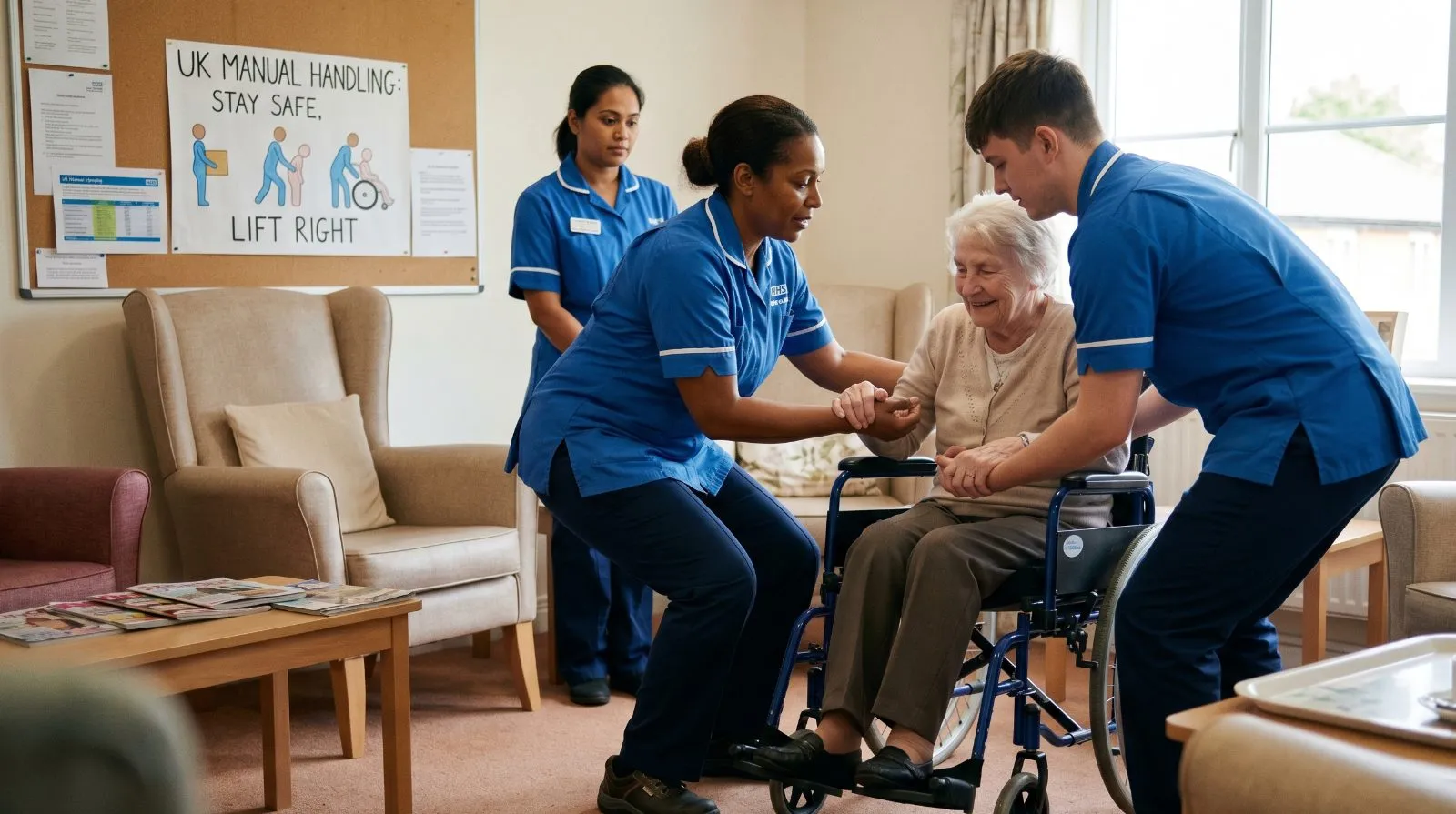
That is a serious risk when the subject is safeguarding, medication, or moving and handling. Delivering training in someone's first language removes that barrier. It improves comprehension and retention, it lets staff demonstrate competence that reflects their actual ability rather than their English, and it treats a multilingual workforce with the dignity and inclusion the standards themselves are built around. The result is safer care, more confident staff, and an evidence trail you can stand behind.
The CareStream Learning Experience
The training is delivered in bite-sized, mobile-friendly lessons designed for the reality of a care worker’s day. A support worker can complete a ten-minute module on their phone between tasks or during a break, without needing to sit at a desktop computer for hours. The experience is interactive, using real-world scenarios and case studies that require active decision-making, which is far more effective than passively reading PDFs or watching pre-recorded videos.
Progress is tracked automatically and visible on a dashboard for both the learner and their manager. There are no fixed start or end dates. A new starter can begin their induction on their first day, and an existing staff member can use the platform for refresher training around their shift pattern.
Group Training Doesn't Change
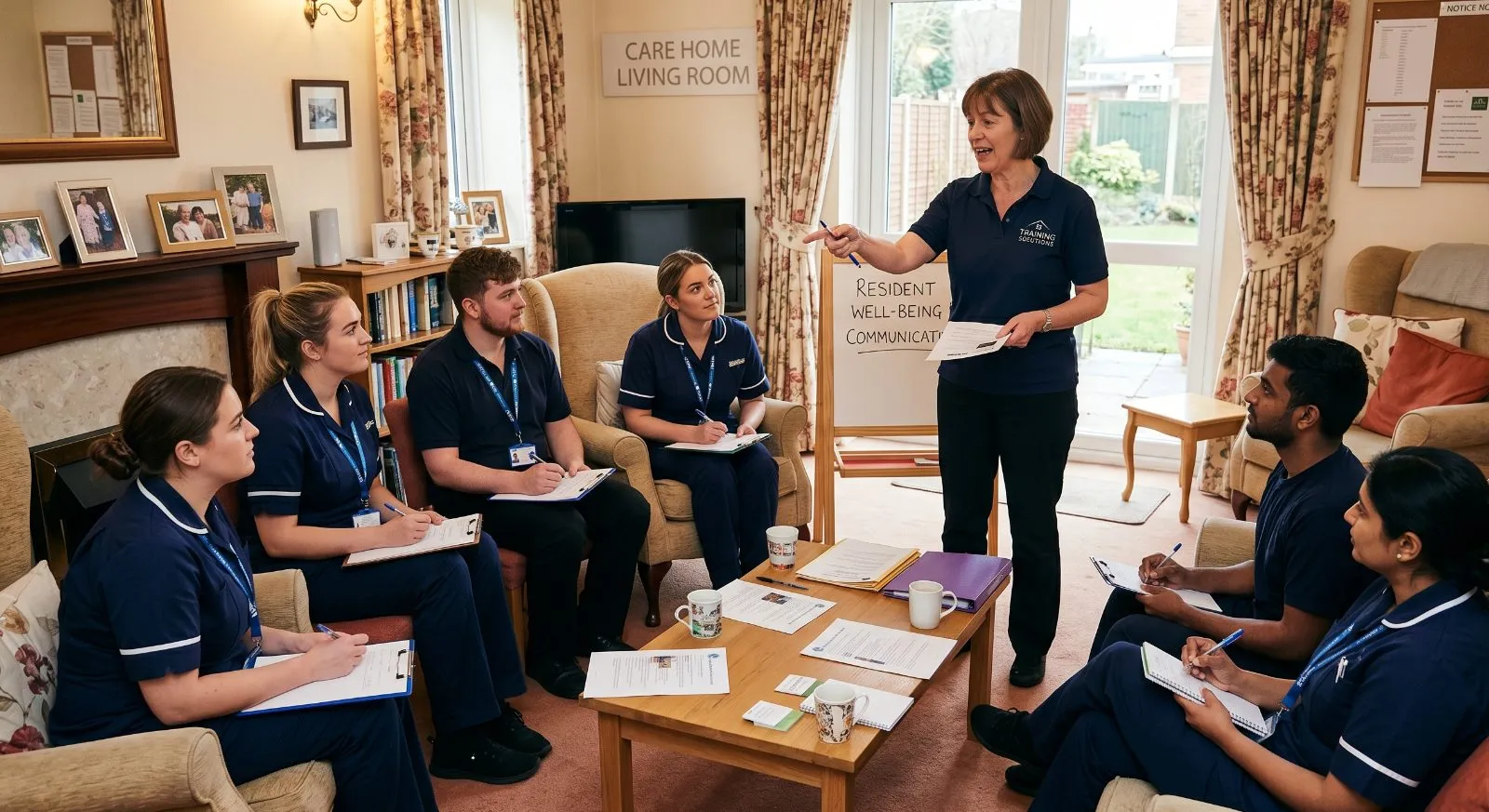
Group training in the home is, and should remain, the cornerstone of how staff learn. The conversations, the questions, the hands-on practice, and the shared experience of learning alongside colleagues are things no software can replace. CareStreamAI is not designed to substitute for those sessions. It is designed to make them stick. The training is sent to staff after the session has taken place, acting as reinforcement that carries the learning out of the room and into the weeks that follow, when it actually needs to be remembered.
Because the honest questions are uncomfortable ones. How many staff members who sit through a group session take notes? How much do they still recall an hour after it finishes, let alone a week later? And how many genuinely understood one hundred per cent of what was covered when it was delivered in English, particularly those for whom English is a second language? Decades of learning research point in the same way, with the steepest drop in retention happening within the first hours after teaching. The problem is rarely the quality of the trainer or the willingness of the staff. It is simply how memory works.
This is the gap CareStreamAI plugs. It is not about catching people out or testing them until they fail, It's about giving every staff member a second, third, and fourth opportunity to absorb the material properly, in their own time and in their own first language, until the knowledge is genuinely theirs. Reinforcement after the session turns a single training day into lasting competence, which means safer care for residents and more confident, better supported staff who feel invested in rather than examined.
Have a chat with our team about the training and modules that fit your setting.
Discuss your trainingWhat Happens When a Staff Member Answers Incorrectly
The true test of any training system is not how it handles a correct answer, but how it responds to a wrong one. In a traditional e-learning course, an incorrect answer often results in a red cross and a prompt to try again until the learner guesses correctly. CareStreamAI treats an incorrect answer as a critical learning opportunity and initiates a structured follow-up process.
When a staff member answers a question incorrectly, they receive immediate, contextual feedback. The system does not just say "incorrect." It provides a clear, plain-English explanation of the correct answer and, crucially, why that answer matters in a real care setting.
For example, a missed question on safeguarding is met with an explanation of the potential real-world consequences of failing to report a concern.
Behind the scenes, the system logs the specific standard and sub-topic that was missed. It then automatically schedules a follow-up micro-lesson on that exact topic, which is delivered to the learner within 12 to 24 hours. This spaced repetition helps move knowledge from short-term to long-term memory. If the same standard is failed multiple times, the platform escalates the issue by alerting the manager. This allows the manager to arrange a one-to-one coaching session or a practical competency observation, addressing the issue before it becomes a pattern. This creates a closed-loop learning cycle: test, feedback, reteach, and reassess.
How CareStreamAI Differs from Other Care Certificate Training Providers
Beyond Static E-Learning
The majority of commercial care certificate training providers, such as Caredemy or Careskills Academy, offer a library of pre-recorded video lessons or fixed PDF workbooks. While these can be effective for delivering information, they are a one-size-fits-all solution. CareStreamAI’s content adapts to each learner. No two staff members will necessarily see the same module sequence. The AI tailors the journey based on an individual’s prior knowledge, their role, and their performance in previous assessments.
Real-Time Compliance Reporting
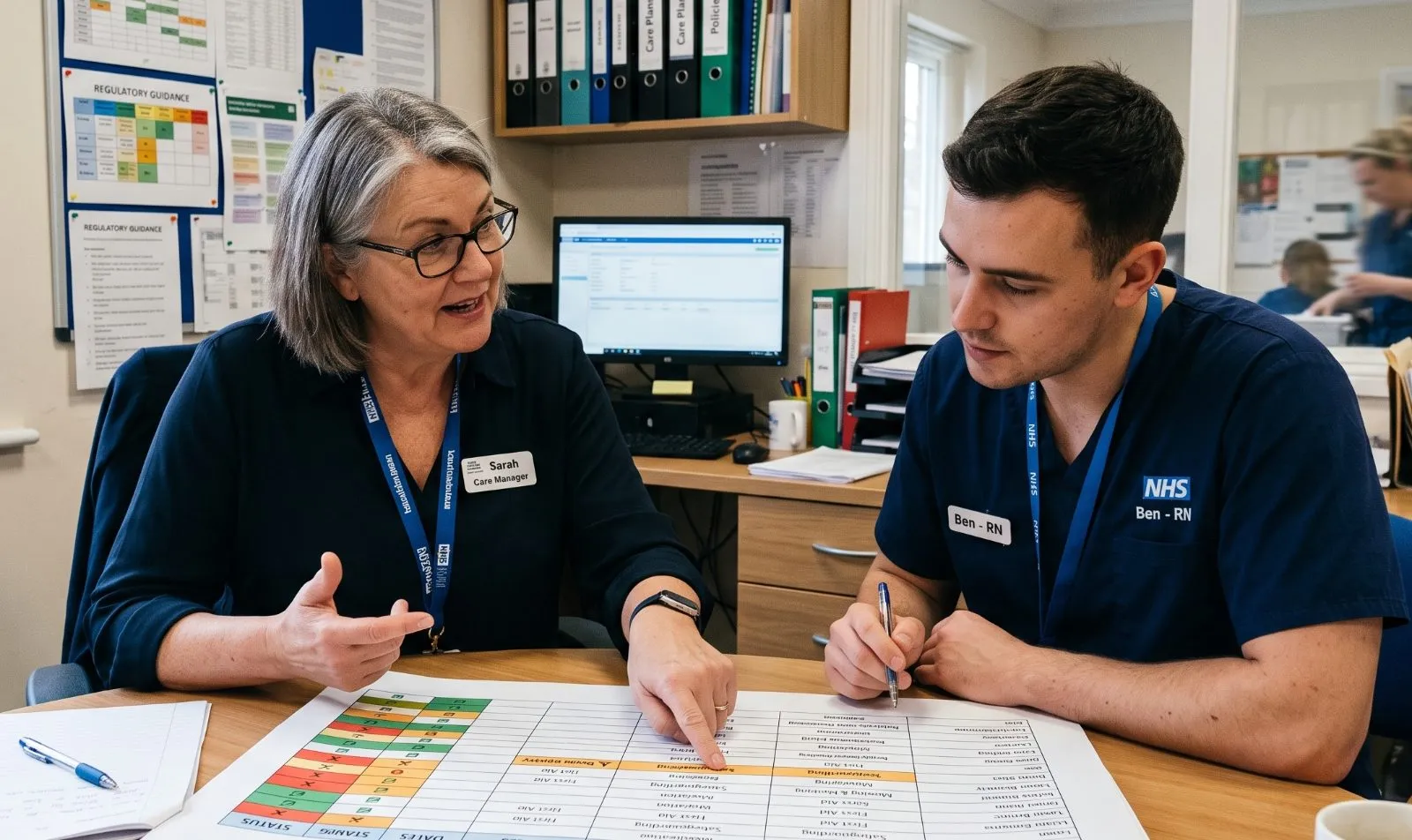
For managers, the administrative burden of tracking induction progress can be overwhelming. CareStreamAI provides live visibility into exactly where each staff member is on their journey. A manager can see, at a glance, which of the 16 standards have been passed, which have been failed, and which have not yet been attempted. Automated reminders and the escalation triggers for repeated failures significantly reduce the time a manager spends chasing staff for updates. This reporting also generates the auditable evidence a CQC inspector would expect to see.
Cost-Effective for Teams of Any Size
Many commercial providers use a per-learner pricing model, meaning the cost of training scales linearly with the size of your workforce. CareStreamAI offers flexible team pricing that is designed to be cost-effective as you grow. Furthermore, when the standards are updated by the governing bodies, as they were in March 2025, the modules on CareStreamAI are updated automatically at no extra cost. There are no hidden fees for staying current.
Built for the Modern Care Workforce
The platform is designed specifically for shift workers. It offers offline access for staff who work in areas with poor connectivity, a low-data mode, and a smartphone-first interface.
How to Choose the Right Care Certificate Training Provider
When selecting a provider for care certificate training, the first thing to check is that the content is fully aligned with the 2025 standards update, including the new Standard 16. If a provider’s course still lists only 15 standards, it is out of date. Next, evaluate the assessment model. A legitimate programme must include both knowledge checks and a mechanism for a competent observer to sign off on practical skills in the workplace.
Look for reporting features that will give you evidence for a CQC inspection. A certificate of completion on its own is not enough; you need to show the underlying data. NHS England issues a clear warning to be cautious of providers who charge a fee for content that is freely available on the elfh Hub.
A paid provider must add genuine value beyond the free materials, whether through adaptive learning technology, automated tracking, manager dashboards, or integrated competence assessment tools. Finally, confirm that the certificate awarded will be recognised as portable if a staff member moves to another care provider.
Conclusion: Preparing Your Workforce for 2026 and Beyond
The Care Certificate remains the cornerstone of safe, compassionate, and consistent care across the UK. As the sector continues to professionalise, the technology used to deliver this essential training is evolving. The shift is moving away from static, one-size-fits-all e-learning towards intelligent, adaptive platforms that personalise the journey for each staff member and provide managers with real-time oversight.
Employers who invest in high-quality, adaptive care certificate training are not just ticking a compliance box. They are building a more competent, confident, and stable workforce, which leads directly to better staff retention, stronger CQC ratings, and improved outcomes for the people they support.
To see how an AI-driven approach can streamline your induction process and simplify your compliance reporting, explore the CareStreamAI platform and its approach to staff training.
Sources
- Skills for Care: The Care Certificate · skillsforcare.org.uk
- CQC: Fundamental standards · cqc.org.uk
- Health and Social Care Act 2008 (Regulated Activities) Regulations 2014 · legislation.gov.uk
Frequently asked
Is the Care Certificate mandatory?
No, it is not a legal requirement in the same way as a professional registration. However, it is the expected standard for all health and social care support workers, and the CQC will ask to see evidence of it during inspections.
What is the difference between the Care Certificate and a diploma?
The Care Certificate is an induction-level foundation that sets the minimum standards for safe practice. A diploma, such as the Level 2 or 3 Diploma in Adult Care, is a longer, more in-depth, and formally accredited qualification that covers a much wider range of competencies.
Does CareStreamAI replace our group training sessions?
Is this just a way of testing staff or catching them out?
Why does it matter that the training is delivered in each carer's first language?
Written by
 Len BurgessSenior Care Advisor
Len Burgess has worked in the care sector for over 8 years, with hands-on experience across residential, nursing and community settings. Having supported teams through CQC inspections and the day-to-day reality of keeping a service compliant, he writes about regulation, quality and best practice in a way that's grounded in what actually happens on the floor, not just what the guidance says.