Ensuring your care team completes high-quality Safeguarding Adults and Children Training is a non-negotiable requirement for UK care providers. However, compliance becomes significantly more complex when your care staff speak different first languages.
This guide explains the legal landscape, the practical challenges of delivering consistent safeguarding education, and how CareStreamAI bridges the gap with language-first technology and automated follow-up training designed specifically for the modern, multilingual care workforce.
Why Safeguarding Adults and Children Training Is Non-Negotiable
The legal foundation for safeguarding training in the UK rests on several key pieces of legislation. The Care Act 2014 established the statutory framework for adult safeguarding, introducing Section 42 enquiries and placing a duty on local authorities to make enquiries where an adult with care and support needs may be at risk of abuse or neglect.
Alongside this, the Mental Capacity Act 2005 provides the legal framework for making decisions on behalf of those who lack capacity, while the Children Act 1989 and the updated "Working Together to Safeguard Children" statutory guidance from 2023 set out the expectations for child protection across all agencies.
Regulatory bodies have sharpened their focus considerably. The Care Quality Commission and Ofsted increasingly look for evidence of genuine understanding, not simply a completed certificate filed away in a training matrix. Inspectors now ask care staff to explain in their own words what they would do if they witnessed a safeguarding concern, how they would escalate it, and what the relevant legislation requires of them. A tick-box approach no longer satisfies the Key Lines of Enquiry.
The cost of failure extends far beyond regulatory sanctions. Safeguarding referrals across England have continued to rise, with local authorities reporting increased volumes of Section 42 enquiries year on year. When a care provider fails to protect a vulnerable adult or child, the reputational damage can be terminal. Families lose trust, commissioning bodies withdraw contracts, and the organisation's name becomes synonymous with failure. Robust training is the first line of defence.
The shift toward integrated care has also changed expectations. Many care staff now work across settings where they encounter both adults and children, particularly in domiciliary care, supported living, and community-based services. Separating adult and child safeguarding into two distinct training courses creates artificial divisions that do not reflect the reality of practice. A combined approach ensures staff can recognise and respond to concerns regardless of the age of the person at risk.
What Makes CareStreamAI's Safeguarding Adults and Children Training Different?
CareStreamAI's course is not another generic eLearning module designed to be clicked through as quickly as possible. It has been built from the ground up for the reality of a busy care home or nursing home, a domiciliary care round, or a supported living service where staff time is precious, and the stakes are high.
The content is mapped directly to the Core Skills Training Framework, the CQC Key Lines of Enquiry, and the latest UK legislation, including updates to the Domestic Abuse Act 2021, and importantly, the care settings policies. Every scenario, every quiz question, and every piece of guidance reflects the legal and regulatory environment that UK care providers actually operate within. This is not an off-the-shelf international course with British terminology bolted on; it is written for the UK market by people who understand the sector.
The defining difference, however, is how CareStreamAI removes the language barrier. Many care providers across the United Kingdom employ staff whose first language is not English. These staff members are often highly skilled, deeply compassionate, and essential to the workforce, yet they are routinely asked to complete mandatory training in a language they do not fully understand. The result is predictable: certificates are issued, but genuine comprehension is patchy at best.
CareStreamAI uses AI-driven translation and voice-over tools to deliver the same safeguarding content in the staff member's first language, whether that is Polish, Romanian, Tagalog, Gujarati, or any of the twenty-plus languages supported by the platform.
Consistency of message is the critical benefit here. When a Polish-speaking carer and an English-speaking carer sit down to complete their safeguarding training, they receive identical legal definitions, identical reporting procedures, and identical guidance on when to breach confidentiality. The dangerous translation errors that can occur when staff are left to interpret English-language training on their own are eliminated entirely. Everyone learns the same thing, tested to the same standard, regardless of the language they use to access the material.
How the Language Tools Work for Your Staff
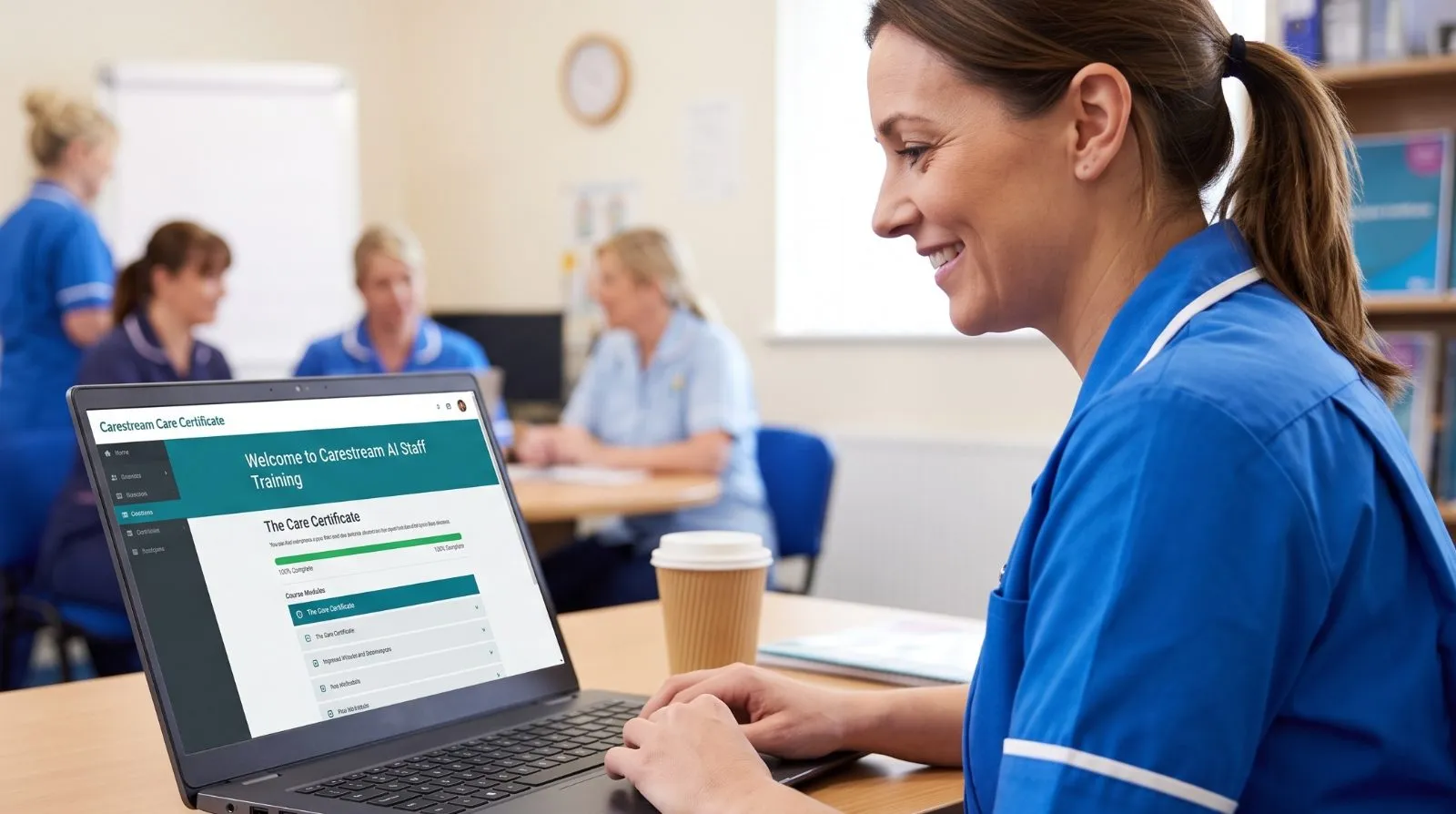
The CareStream training interface (staff Hub) translates written text into the staff member's chosen language in real time, while carefully preserving UK-specific terminology that has no direct equivalent elsewhere.
Terms like "Section 42 enquiry," "MASH team," "DOLS," and "LADO" remain intact and are explained through a built-in glossary that provides definitions in the staff member's first language. This ensures that when a carer needs to communicate a concern to an English-speaking manager or external agency, they know the correct terminology to use.
Audio support takes accessibility further. Staff can listen to the training content in their native language via AI-generated voice-over, which significantly reduces the cognitive load for those who may have strong spoken English but lower confidence with written English, or vice versa. Listening to complex safeguarding concepts explained in a familiar language allows staff to focus on understanding rather than on translation.
Assessment integrity is maintained throughout. Quizzes and knowledge checks are delivered in the staff member's chosen language, so you are testing comprehension of safeguarding principles rather than English reading ability. The system logs every completion in English for your compliance records, giving you a clear audit trail that satisfies CQC inspectors while respecting the linguistic needs of your workforce.
The Structure of the CareStreamAI Safeguarding Course
The course is structured into six modules, each building on the last to create a complete picture of safeguarding responsibilities in a UK care context.
Module one covers understanding abuse and neglect. Staff learn that abuse is any action, or failure to act, that harms a vulnerable person, and that it can affect adults and children alike. The module sets out the main types, including physical, emotional or psychological, sexual, financial, and discriminatory abuse, as well as neglect, and makes clear that abuse may be a single incident or a sustained pattern. Crucially, it emphasises that abuse can happen anywhere and can be carried out by anyone, including people the person knows and trusts.
Module two addresses recognising the signs of abuse. This module groups indicators into physical, behavioural, and emotional categories. Physical signs include unexplained injuries, bruises, burns, weight loss, and poor hygiene. Behavioural signs include becoming withdrawn, fearful, or anxious, or avoiding particular people and places. Financial signs include missing money, unexplained withdrawals, and sudden changes to a will. Throughout, staff are encouraged to trust their instincts when something does not feel right.
Module three focuses on reporting safeguarding concerns. This is where the training moves from recognition to action. Staff learn that any concern about actual or potential harm must be reported to their manager immediately, without waiting or assuming someone else will act. The module covers how to record concerns accurately, noting exactly what was seen, heard, or disclosed, with dates and times, and using the person's own words where they have made a disclosure. It also makes clear that the duty to report applies even when staff are not certain abuse is taking place, and that the manager decides on the next steps, which may include contacting the local safeguarding team.
Module four introduces responding to challenging behaviour. Built around positive behaviour support principles, this module teaches staff to look for the reasons behind behaviour that challenges, including underlying stress or distress, and to work with the person towards the outcomes they want rather than resorting to punishment. It explains the role of each resident's personal plan in guiding a consistent response, and addresses the limited circumstances in which restraint may be necessary, used only as a last resort, kept to the minimum required, and for the shortest possible time.
Module five covers safeguarding children who visit. Because children come into care settings as family members or through community activities, staff carry a duty to safeguard them too. The module helps staff stay alert to indicators of abuse or neglect in children, such as unexplained injuries, appearing frightened or withdrawn, age-inappropriate sexualised behaviour, poor hygiene, being underweight, or wearing dirty clothes, and explains that any concern should be reported immediately to a manager, who will contact the local children's safeguarding team.
Module six covers the Prevent duty and radicalisation. Staff learn about their responsibility to protect vulnerable people from being drawn into terrorism, and what radicalisation means in practice, namely the process by which someone is influenced to support or take part in terrorist activity. The module highlights that vulnerable residents can be targeted by extremist groups and sets out the warning signs to watch for, including sudden changes in behaviour or views, expressions of support for extremist ideologies, accessing extremist material online, or talk of travelling to conflict zones. As with all concerns, staff are directed to report immediately to their manager, who will follow safeguarding procedures and may contact the police Prevent team.
How Our Follow-Up Training Model Works
Initial certification is only the beginning. The follow-up training uses scenario-based learning rather than passive re-reading. Rather than repeating an entire module, our system looks at the questions a staff member answered incorrectly in the original training and builds a focused follow-up lesson around that specific question or set of questions. This means staff can hone in on precisely what they found complicated, instead of revisiting material they have already mastered.
Each follow-up presents new case studies and "what would you do?" scenarios that test retained knowledge and the ability to apply it to unfamiliar situations, keeping the material fresh and challenging staff to think critically rather than simply recognise familiar text.
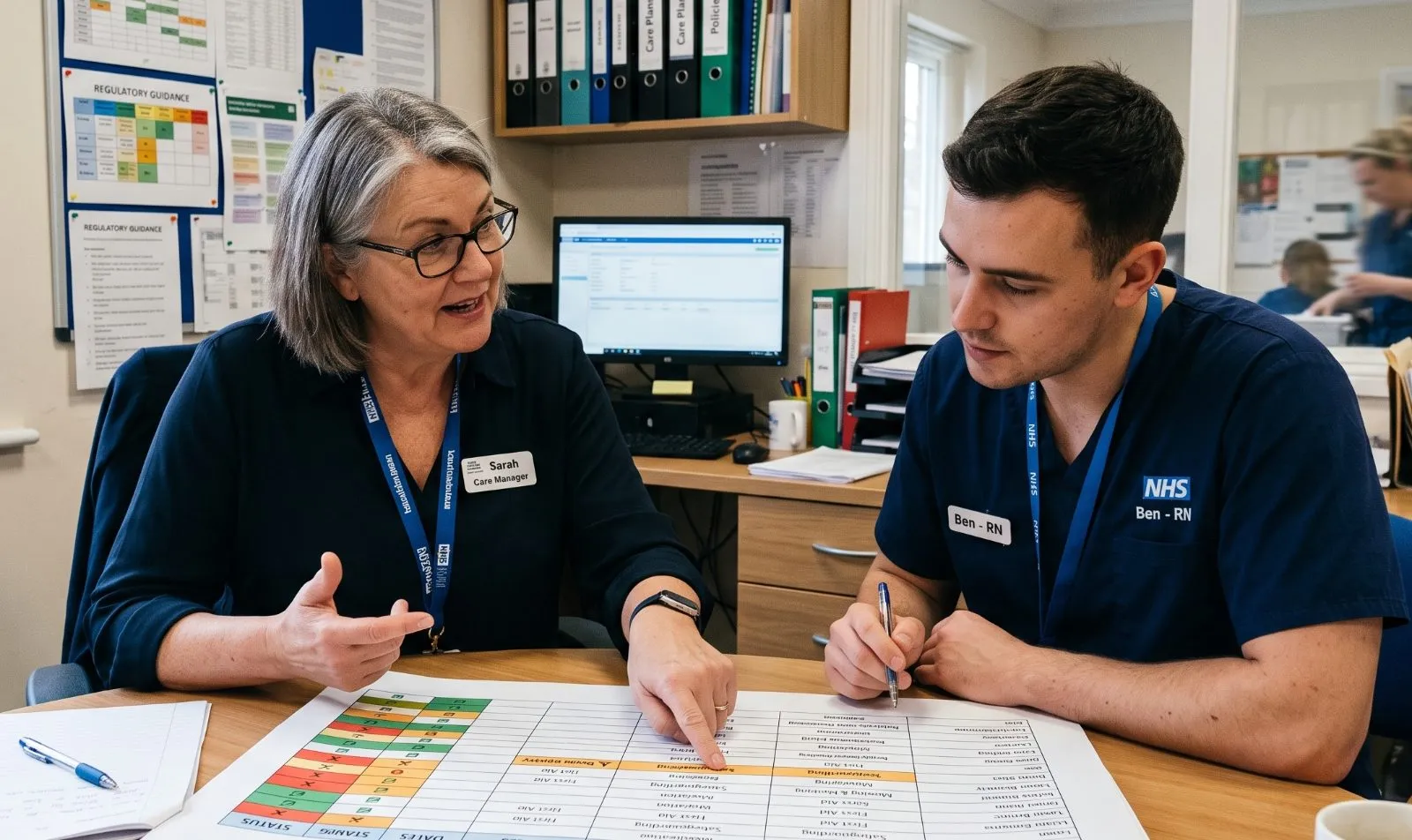
The manager dashboard provides complete visibility. You can see exactly who has completed the initial training, who is due for a refresher, and, critically, who struggled with a specific module. If several staff members performed poorly on the reporting procedures section, for example, you know exactly where to focus additional support or team discussions. The follow-up schedule integrates with your existing HR or training management system, automating reminders so that nothing slips through the cracks.
Comparing CareStreamAI to Other UK Providers
The UK safeguarding training market offers several options, but each comes with limitations that become apparent when measured against the needs of a multilingual care workforce.
The Child Protection Company offers a combined safeguarding course at £35 plus VAT per person, with bulk discounts available. It is a solid, well-established option, but it provides no multilingual support whatsoever. Staff who struggle with English must complete the course in English or not at all. CareStreamAI's pricing competes effectively at scale for large care groups, and the language tools mean that every pound spent on training actually translates into genuine understanding.
Conclusion: Future-Proof Your Care Team with CareStreamAI
Safeguarding Adults and Children Training is not a box to be ticked. It is the foundation of safe, compassionate care, and it must work for every member of your team, regardless of the language they speak at home. CareStreamAI UK-law-compliant training that removes the language barrier entirely, ensuring that your Polish-speaking, Romanian-speaking, or Gujarati-speaking staff learn exactly the same content as their English-speaking colleagues, tested to the same standard, with the same legal precision.
The automated follow-up model means that knowledge stays fresh and legislative changes are incorporated without you having to track anything manually. The manager dashboard gives you the evidence you need for CQC inspections in a format that is clear, exportable, and always current. For care providers who want to move beyond tick-box compliance and build a genuinely competent, confident workforce, the path forward is clear.
Book a demo of the CareStreamAI platform to see the language tools in action and discover how safeguarding training can finally work for every member of your team.
Sources
- Care Act 2014 · legislation.gov.uk
- SCIE: Safeguarding adults · scie.org.uk
- GOV.UK: Working together to safeguard children · gov.uk
Frequently asked
How many modules does the safeguarding course include, and what do they cover?
The course is made up of six modules: understanding abuse and neglect, recognising the signs of abuse, reporting safeguarding concerns, responding to challenging behaviour, safeguarding children who visit, and the Prevent duty and radicalisation. Each module builds on the last to give staff a complete picture of their safeguarding responsibilities in a UK care context.
Does the course cover safeguarding children as well as adults?
Yes. While much of the training focuses on adults in care, the course recognises that children come into care settings as family members or through community activities. Module five is dedicated to safeguarding children who visit, helping staff stay alert to the signs of abuse or neglect in children and understand exactly how and when to report a concern.
How does the follow-up training work?
Our follow-up training is targeted rather than repetitive. Instead of asking staff to re-read an entire module, the system looks at the questions a person answered incorrectly in the original training and builds a focused follow-up lesson around that specific question or set of questions. This means staff spend their time on precisely what they found difficult, rather than revisiting material they have already mastered. Each follow-up uses fresh case studies and "what would you do?" scenarios to test understanding in unfamiliar situations.
How will I know which staff need additional support?
The manager dashboard gives you complete visibility. You can see who has completed the initial training, who is due for a refresher, and, critically, who struggled with a particular module. If several staff members performed poorly on the reporting procedures section, for example, you know exactly where to focus extra support or team discussions.
Can my staff take the course on a mobile phone?
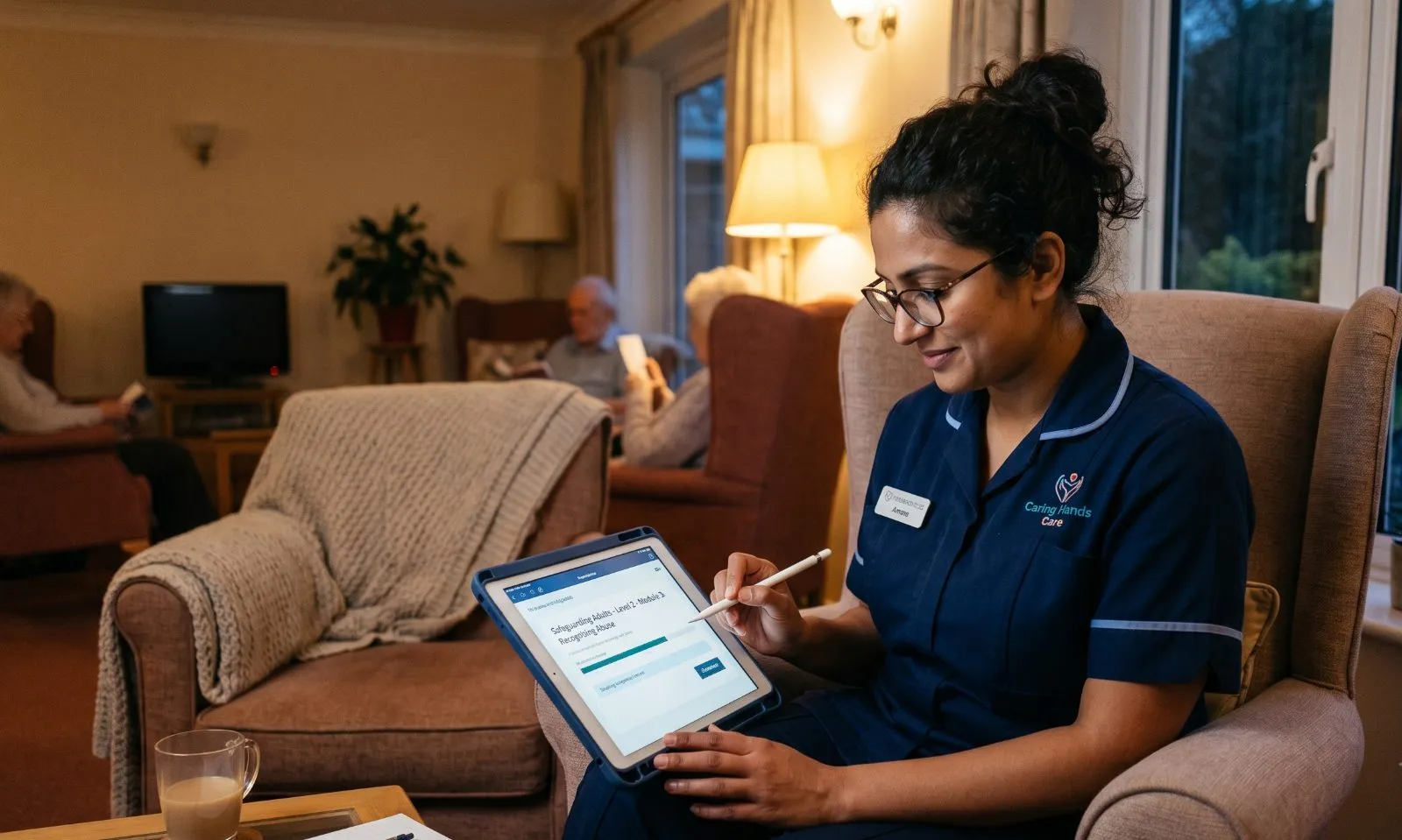
Yes. CareStreamAI is fully responsive and works on any device with an internet connection. This is particularly important for domiciliary care staff and support workers who may not have regular access to a desktop computer but carry a smartphone throughout their working day.
Written by
 Len BurgessSenior Care Advisor
Len Burgess has worked in the care sector for over 8 years, with hands-on experience across residential, nursing and community settings. Having supported teams through CQC inspections and the day-to-day reality of keeping a service compliant, he writes about regulation, quality and best practice in a way that's grounded in what actually happens on the floor, not just what the guidance says.