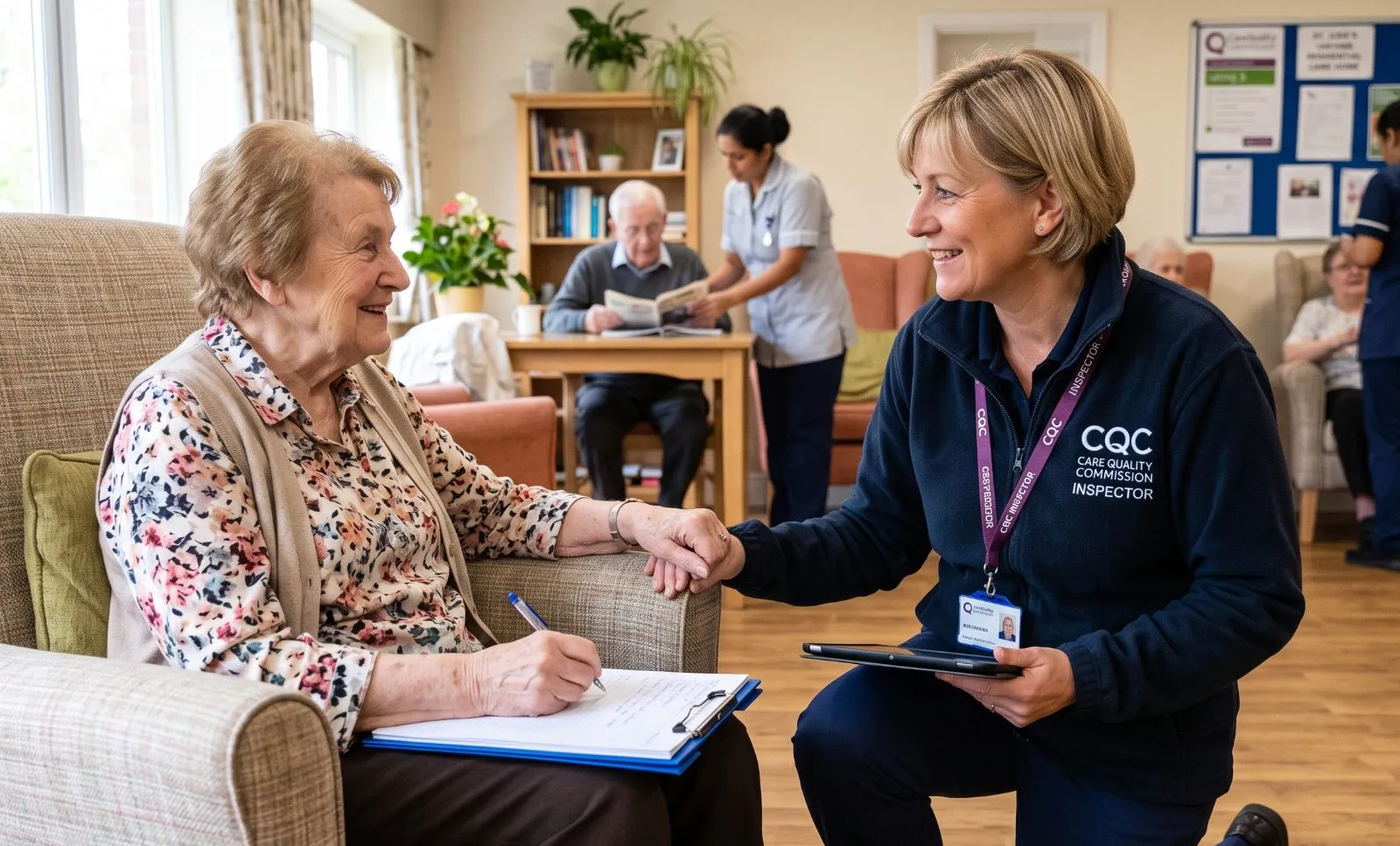
Your filing cabinet is full. Your training matrix is colour-coded. Your supervision records are signed and dated. And somewhere in the gap between what you can produce and what an inspector can ask for, your evidence base has a hole you will not see until someone points at it.
This is the CQC evidence categories explained for managers who need to prepare, not theorise. The Single Assessment Framework groups evidence into six categories, and most services are lopsided in ways that are entirely predictable once you know what to look for.
By the end of this post, you will know exactly what to hand over, point at, or pull up on a screen for each category, where your service is probably thin, what to do about it before the inspector asks, and which parts of the job a system like CareStream can carry for you instead of adding to your Sunday evening.
The Six Evidence Categories at a Glance
The six categories are People's experience, Feedback from staff and leaders, Feedback from partners, Observation, Processes, and Outcomes. If you were used to the old KLOEs and their roughly 300 prompts, that world is gone. It has been replaced by 34 quality statements mapped across the five key questions: Safe, Effective, Caring, Responsive, and Well-led.
The practical reality is that the average assessment uses 9.2 quality statements. In adult social care, you are likely to see 10 to 12. Inspectors are sampling your evidence, not reading everything you have. That means the thin categories will show up faster than you think.
Here is the distinction that frames everything that follows. Four categories are folderable. You can build a file for them in advance, and you should. Two categories are not. Observations and People's experiences are largely generated on the day or gathered directly by CQC. Preparation for those looks different, and wasting time trying to document the undocumentable is a trap that pulls effort away from the gaps you can actually close.
The Four Folderable Categories
Processes, Outcomes, Feedback from staff and leaders, and Feedback from partners are the categories you can build a file for in advance. These are where preparation effort should go, and where the gaps will show up fastest.
The Two Live Categories
Observations and People's experiences are gathered directly by inspectors through what they see and whom they ask. Your job is not to build a file for these, your job is to make sure what an inspector sees and what people say matches what your records claim.
Processes: The Category You Are Probably Over-Producing
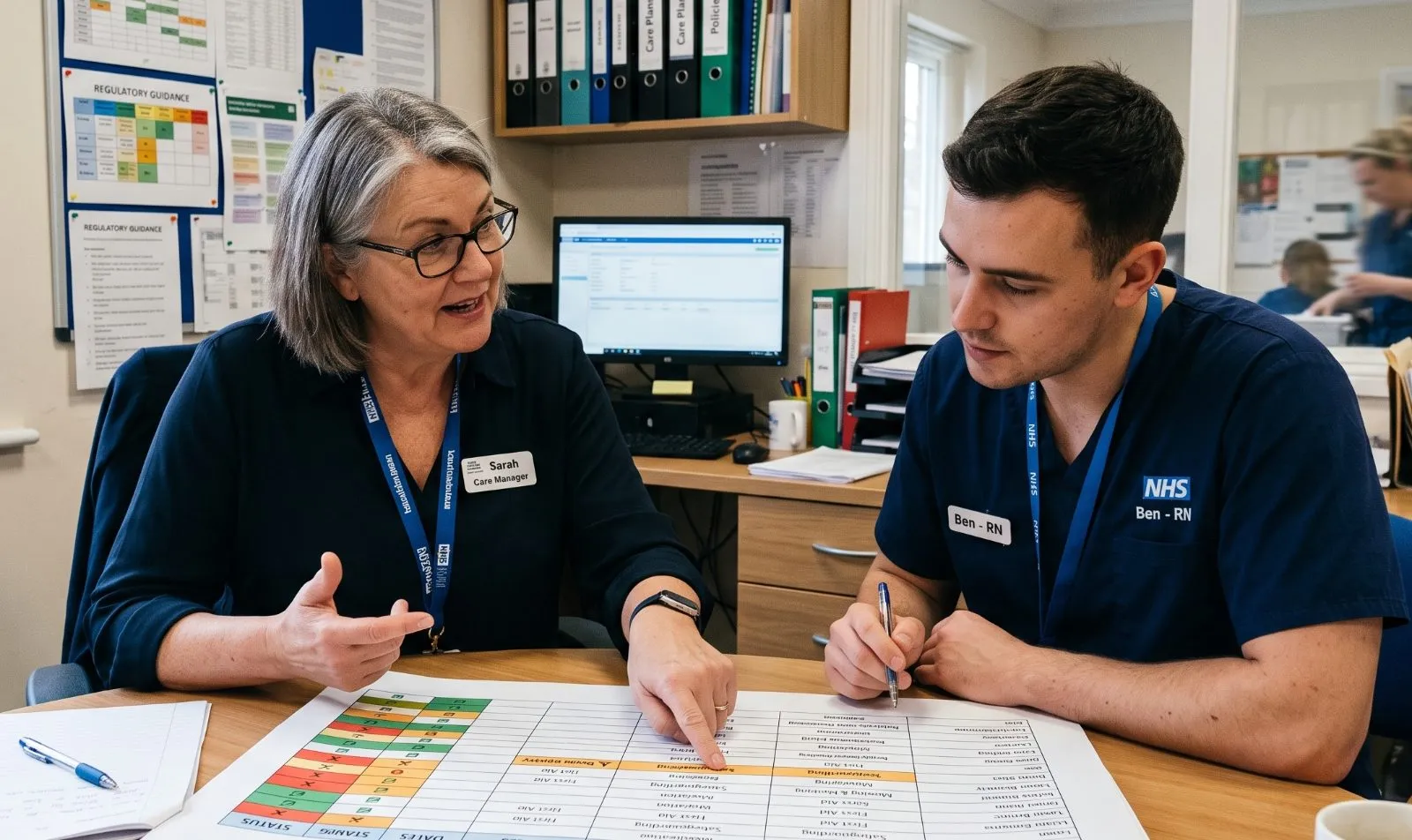
Process evidence is the paperwork that generates itself through normal operations. Policies, audits, supervision records, training matrices, risk assessments, minutes of meetings. If your service has been running for more than a year, you almost certainly have this category in surplus.
The risk is not having too little. The risk is having too much, poorly organised, and mistaking volume for quality. An inspector will not read your entire policy library. They will ask for the policy that applies to the situation they are looking at, the training record for the staff member they are speaking to, and the audit trail that shows you checked what you say you checked.
What this means in practice is that process evidence needs to be retrievable, not just existent. If you cannot pull up a specific supervision record or a dated risk assessment review within the time it takes an inspector to lose patience, the volume counts for nothing.
There is a second problem hiding underneath the first, and it is the one that costs ratings. A policy folder proves the policy exists. It does not prove anyone read it. Inspectors increasingly want evidence that staff actively use and understand your procedures, and "the folder is on the shelf in the office" has never been a persuasive answer to that.
Where CareStream fits
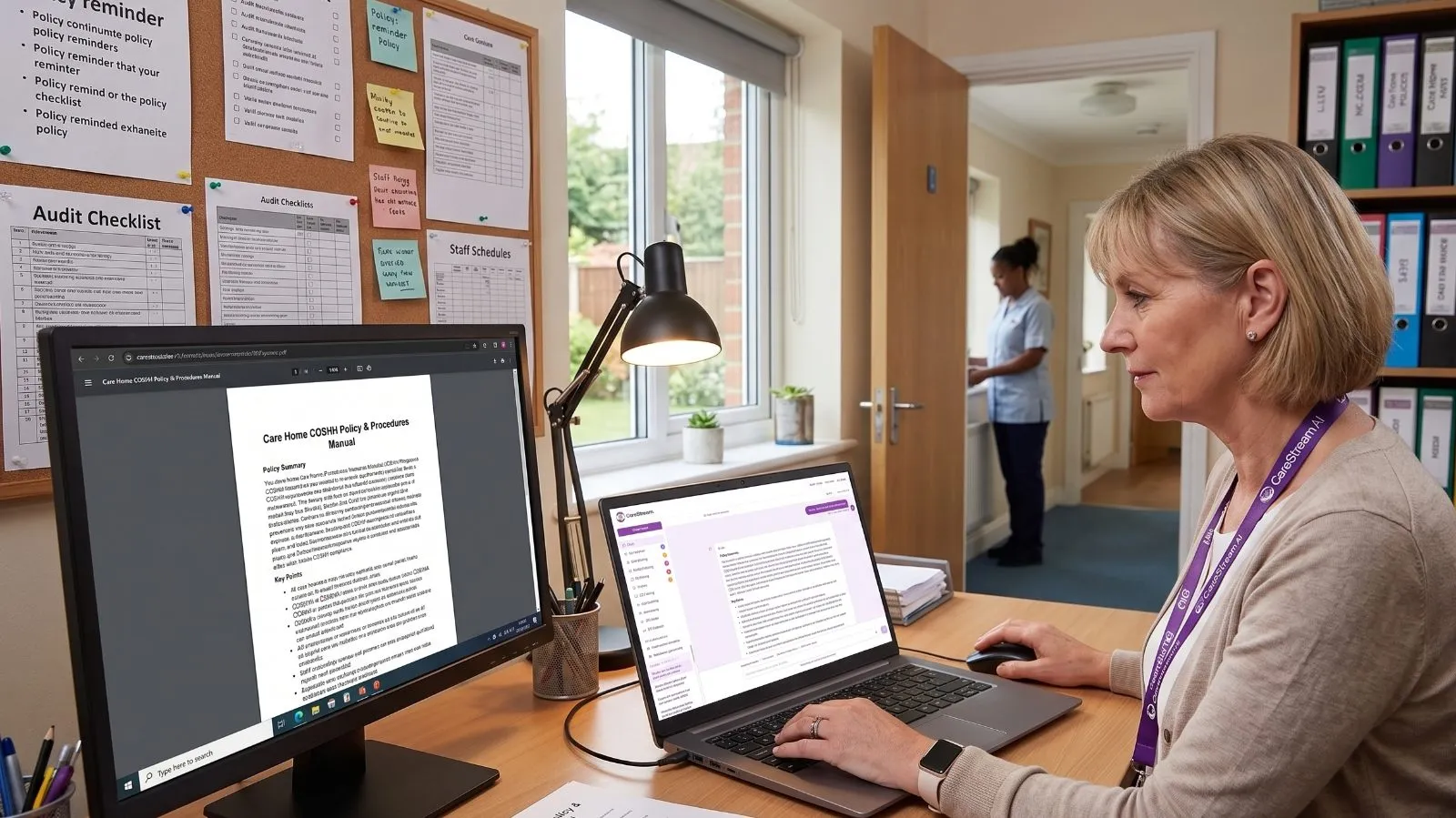
This is the category CareStream was built for. You upload your policy library once, and every time a staff member asks a question, in the hub, by email, or by voice, they get an answer drawn only from your approved documents, with the policy name, version and section cited.
Every one of those queries is logged: which policy, which role, which language, which date. That log is the thing most services cannot produce. It turns "we have a falls policy" into "our falls policy was accessed 38 times last month by 14 members of care staff across four languages, including after we updated it in March."
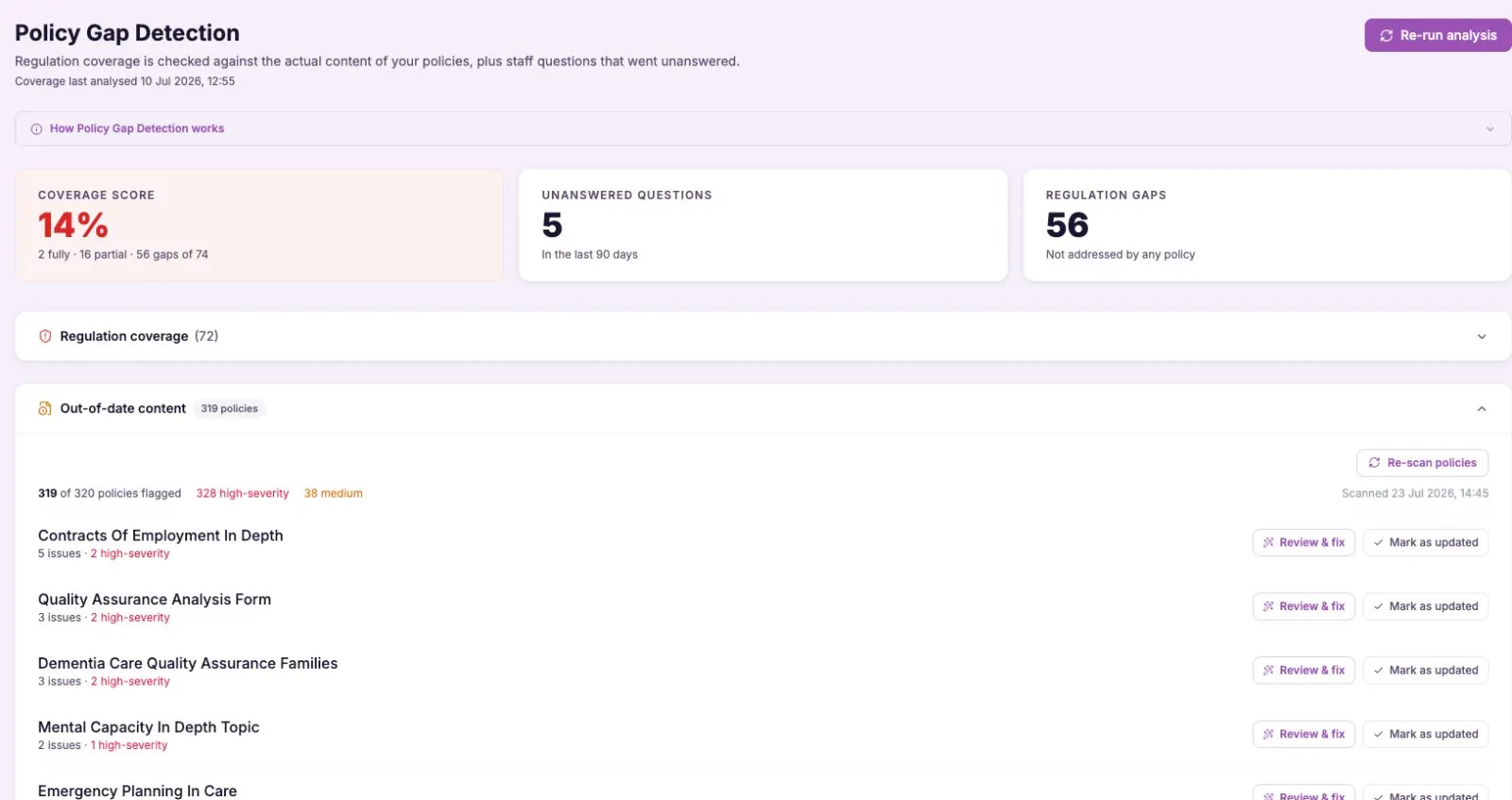
Policy version history sits alongside it, so you can show that when guidance changed, staff actually came back and looked at the new version. And because CareStream reads the content of your policies rather than the titles, it also tells you which regulations your policies substantively cover, which they only partly cover, and where you have an outright gap, with the gaps listed first. Finding out that Duty of Candour is not addressed anywhere in your library is much less painful in March than on inspection day.
The practical move is to organise process evidence by evidence category, not by quality statement. The categories are surviving CQC's shift to sector-specific frameworks. The quality statement mapping is not. Build your folder structure around the six categories, and you will not have to rebuild it when the framework evolves again.
Outcomes: Where Most Services Fail
Here is the uncomfortable truth. Most services record activity and call it an outcome. "Care plan reviewed monthly" is a process. "Three fewer falls this quarter, and she is walking to the shop again" is an outcome. The first tells an inspector what you did. The second tells them what changed for the person.
This gap exists because outcomes are harder to capture. They require asking what changed, not what you did. They require measurement over time, for individuals and for groups. And they require language that describes the person's life, not your workflow.
Book a short demo and see how CareStream keeps your policies, training and CQC evidence in one place.
Book a demoWhat inspectors want to see is evidence that care made a difference. Falls data across a quarter, weight stabilisation records, medication error rates, mobility progress notes written in the person's own words where possible. The data probably exists somewhere in your records. What is missing in most services is the translation of that data into outcome language that can be shown.
Where CareStream fits, and where it does not.
Be clear about this one: no software writes your resident outcomes for you. Whether Mrs Ahmed is walking to the shop again is something your team observes and records, and it belongs in her notes in her words, not in a dashboard.
What CareStream does contribute is the layer above that. Structured audits are scored section by section and produce an action plan, so you can show an audit in March, the actions that followed, and the re-score in June. That is change over time, evidenced.
Training effectiveness analytics show the same shape for staff competence: what the team did not know, what training followed, and what the knowledge gap log looks like now compared with three months ago. Those are organisational outcomes, and they sit comfortably in this category alongside your clinical data.
The practical move is to start capturing person-level outcomes now, in the form of a simple quarterly summary for each person that answers the question "what changed?" It does not need to be elaborate. It needs to exist in a form you can hand to an inspector who asks "how do you know the care you provide is making a difference?"
Feedback from Staff and Leaders: The Category You Have But Do Not Use
You probably have staff surveys. You definitely have supervision notes. You have team meeting minutes, exit interviews, and your own reflections as a registered manager. What you almost certainly do not have is any of it collated into something an inspector can see at a glance.
This category is not about proving you asked staff for their views. It is about proving you listened and acted on what they said. An inspector wants to see the loop closed: the concern raised, the action taken, the change that resulted.
Where CareStream fits
Every question your staff ask is a piece of feedback, and most of them are currently evaporating into corridors and WhatsApp groups. When a staff member asks something CareStream cannot answer from your documents, that unanswered query lands in the knowledge gap log. Over a month, that log tells you exactly what your team is unsure about, which is a far more honest signal than an annual survey where everyone ticks "satisfied."
That gives you the closed loop in its natural form: eleven queries about the same section of the medication policy, a rewritten section, a training module built from the updated policy, and a query pattern afterwards that looks different. Staff engagement data by role shows the same thing from another angle, evidencing that policies are being accessed at the point of care by care staff, not just by management in the office.
Language analytics belong here too. If a third of your queries arrive in Romanian, Tagalog or Polish, you have direct evidence that guidance is genuinely reaching a workforce that policy folders written only in English were never reaching, which does double duty against the equality and diversity considerations inspectors ask about.
The practical move is a simple feedback log that records what staff said, what you did about it, and what changed as a result. If you are using CareStream, the query and gap data does most of that work automatically and you add the supervision and meeting threads on top.
Feedback from Partners: The Category Nobody Has Ever Asked For
This is the category that fails because nobody has ever asked for the feedback in the first place. The GP who visits your residents, the district nurse who coordinates wound care, the social worker who attends reviews, the commissioner who monitors your contract, the advocate who speaks for a person without family. All of them have views on how your service works with them. None of those views is written down anywhere you can produce.
What inspectors want to see is evidence of partnership working, communication, and joint problem-solving from people outside your organisation. They want to know you are not operating in isolation, that you coordinate with other professionals, and that those professionals would describe the relationship as constructive.
Where CareStream fits.
Honestly, barely at all, and it would be a poor use of your time to look for a software answer here. This category is built from relationships, and relationships are built by asking. The one indirect contribution worth noting is that when your staff give external professionals consistent, policy-accurate information regardless of who is on shift or what language they speak first, partners tend to describe the relationship in better terms. That is a nice side effect, not evidence.
The practical move is to start asking, formally and informally. A short email to the GP practice after a joint visit, a quarterly conversation with the social worker, a note of the commissioner's comments at a review meeting. A log of partner communications, with dates and outcomes, is enough to show an inspector you are not working in isolation.
A warning: do not fabricate or dress up a single email as a partnership. Inspectors read this evidence critically, and a thin file honestly presented is better than a dishonest one that collapses under questioning.
Observation: The Category You Cannot Build a File For
Observation is what inspectors see when they walk around, watch interactions, and observe the environment. It can happen without notice, especially if concerns have been raised. You cannot prepare a file for it because the evidence is generated in real time by the inspector's own eyes and ears.
What preparation actually looks like is making sure the environment matches your claims, that staff interact with residents in the way your policies describe, and that the physical reality of the service does not contradict your paperwork. If your records say call bells are answered within three minutes, and the inspector watches one ring for twelve, the gap is unarguable.
A quick demo shows exactly how CareStream would work for your service. Book a time that suits you.
Book a demoWhere CareStream fits.
Not as a file, but as the reason the observation goes better. Observation exposes the distance between what your policy says and what your staff actually do, and that distance is usually a knowledge problem rather than a willingness problem. A carer who can ask "what do I do after a resident falls?" in her own language and get your Falls Policy, section 4.1, back in under thirty seconds behaves differently on the floor than one who is guessing at 3am with no manager on site. That is not paperwork. That is the thing the inspector watches.
The practical move is to run your own observations before the inspector does. Walk the building as a stranger would, watch a shift as an outsider would, and ask yourself what you would conclude. If your records say one thing and the lived reality shows another, the inspector will trust what they saw, not what you wrote.
People's Experience: The Category CQC Gathers Directly
People's experience is what the people using your service say about it, gathered through interviews, surveys, and conversations during the inspection. You cannot script this. What people say is what people say, and the inspector will hear it.
What preparation actually looks like is making sure people are informed, comfortable, and able to speak freely, and that their lived experience matches what your records claim. Ask people yourself, before the inspector does. Use the "I statements" from the framework as your question list. "I feel safe." "I am involved in my care." "I am treated with dignity and respect." If you cannot answer those with confidence on behalf of the people you support, you have work to do.
Where CareStream fits.
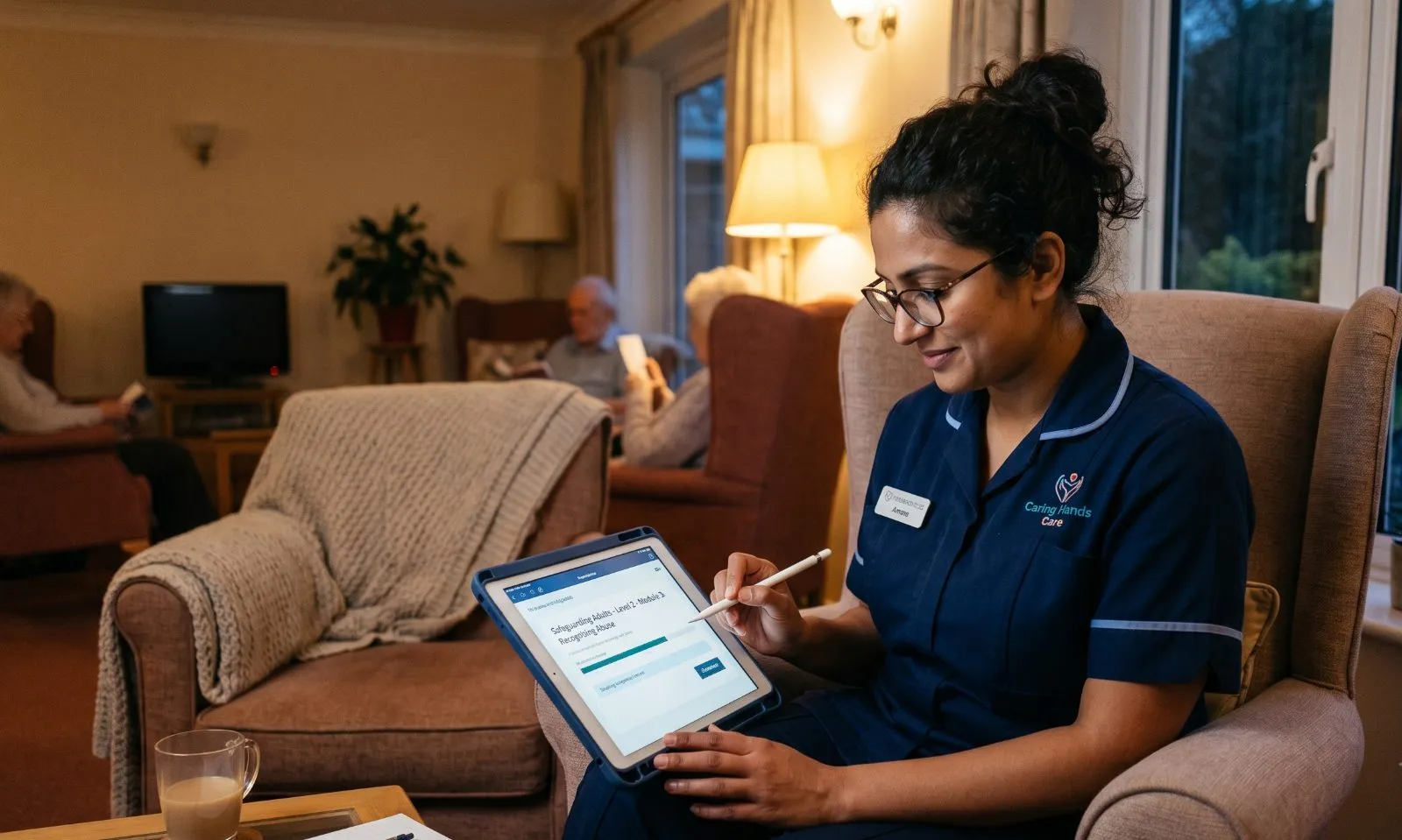
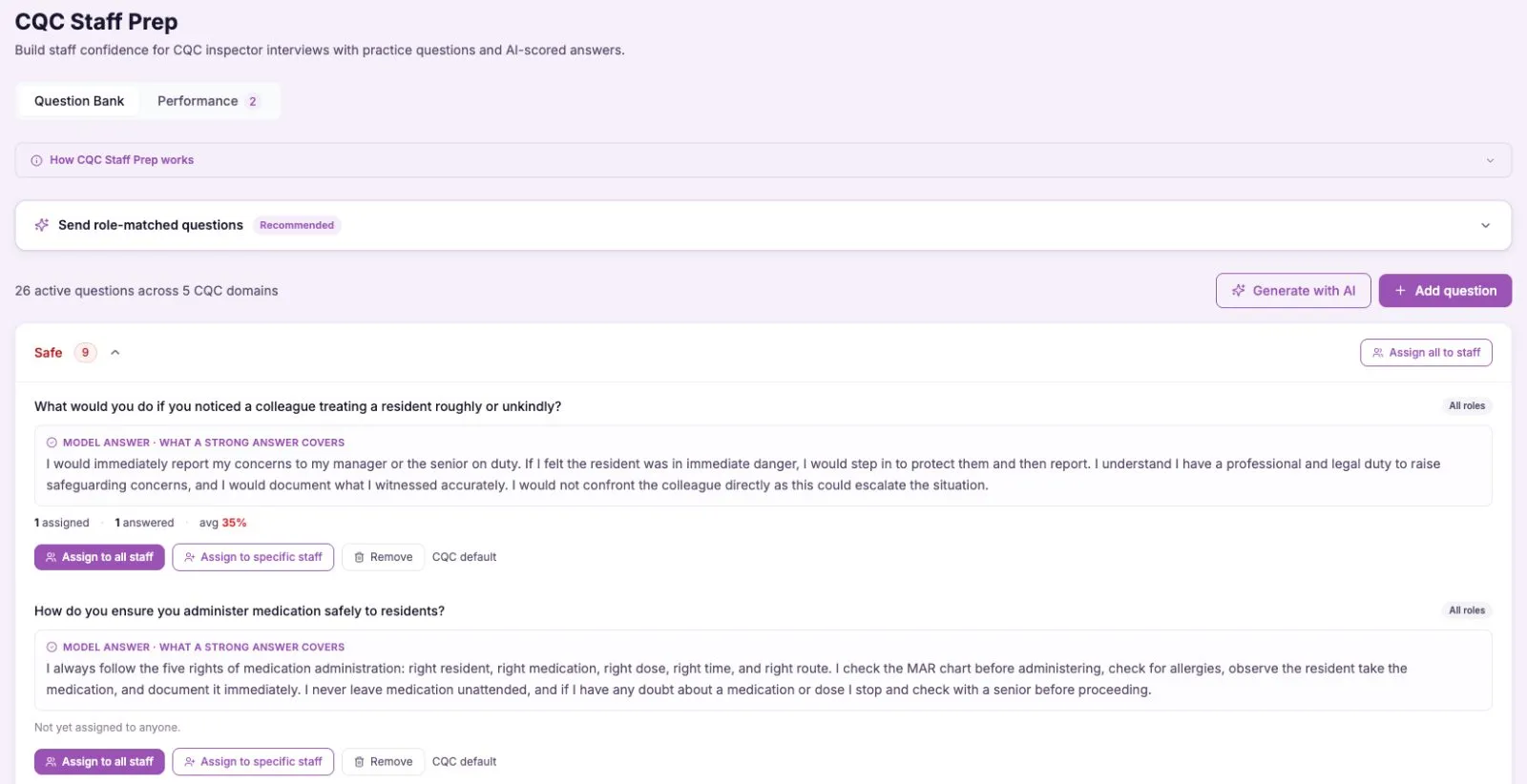
Not in gathering what residents say, which is your job and should stay your job. Where it does help is with the parallel conversation inspectors have with your staff, on the floor, without you in the room. CareStream's CQC Staff Questions puts inspector-style, open-ended questions across the five key questions to your team (based on their position within the care setting), has them answer in their own words, scores the answers, and lets them review and retry. It is not a script. It is a rehearsal, and it tells you which members of your team will freeze when someone with a lanyard asks them how they would raise a safeguarding concern.
This category connects to the 'Making It Real' framework, co-produced with Think Local Act Personal and aligned with the Care Act 2014. The questions inspectors ask come from a person-centred tradition, not a compliance checklist. That is worth remembering when you are tempted to prepare for this category by writing scripts.
The Lopsided Evidence Base: Why Most Services Are Thin Where It Matters
The pattern is consistent across services of every size and type. Processes are over-produced because they generate paperwork naturally. Outcomes and Feedback from partners sit nearly empty because they require deliberate effort that nobody has time for.
Outcomes fail because activity is recorded as an outcome, and the translation never happens. Feedback from partners fails because nobody has ever asked. When an inspector samples across categories, these are the thin ones where the questions get harder, and the ratings get lower.
There is also a quieter failure inside the fat category. Services with an enormous Processes file often cannot demonstrate that anyone reads any of it, which is the difference between having policies and having a policy culture. An inspector who cannot see use will treat the folder as decoration.
This is fixable. It requires knowing where the gaps are and closing them deliberately, and it requires the evidence of everyday use to accumulate on its own rather than being reconstructed in a panic three days before an assessment.
Building the Folder Before It Is Requested
The folder gets built before it is requested, not during the assessment window. By the time an inspector asks to see evidence of partnership working or outcomes data, the window for gathering it has closed.
Organise your evidence by evidence category, not by quality statement. The categories are surviving CQC's shift to sector-specific frameworks. The quality statement mapping is not. A folder structure built around the six categories will still be usable when the framework evolves again, and it will be faster to navigate when an inspector asks for something specific.
Before you can build the folder, you need to know which categories you are thin on. That is what the CQC Readiness Report is for. It is generated in one click as a downloadable PDF and covers policy access by staff and role, policies that received no queries at all in the period, version history and whether staff came back after an update, regulatory framework activity, multilingual access, and the knowledge gap log. It is factual audit data, not a rating prediction, and that is exactly what makes it usable: you can hand it over without overclaiming anything.
Between that report, your care audits and action plans, and your own outcomes and partner logs, the four folderable categories stop being a project and start being a by-product of running the service.
Most services are lopsided, and the thin categories are the ones that require deliberate effort. The fix is not complicated. Build the folder before it is requested, organise it by evidence category, close the gaps in Outcomes and Feedback from partners, and let the everyday evidence of policy use accumulate on its own instead of reconstructing it under pressure.
The inspector is coming. The only question is whether you show them a complete picture or let them find the gaps for you.
Book a free demo or start a 14-day free trial. Setup takes under an hour, and your evidence starts building from the first question your team asks.
Sources
- Care Quality Commission, Evidence categories · cqc.org.uk
- Care Quality Commission, Evidence categories for sector groups · cqc.org.uk
- Care Quality Commission, Homecare and shared lives services: evidence categories · cqc.org.uk
- Care Quality Commission, Assessment framework · cqc.org.uk
- Care Quality Commission, Assessing quality and performance · cqc.org.uk
- Care Quality Commission, How we reach a rating · cqc.org.uk
- Care Quality Commission, Update to our current scoring approach (evidence category scoring stopped 2 December 2024) · cqc.org.uk
- Care Quality Commission, Improving how we assess and rate providers: Part 2, How we make judgements and award ratings · cqc.org.uk
- Dr Penny Dash, Review of CQC's Single Assessment Framework and its implementation, section 6 (source of the 9.2 average and the 10–12 range in adult social care) · cqc.org.uk
- Dr Penny Dash, Review of CQC's Single Assessment Framework, Appendix 1: The 34 quality statements · cqc.org.uk
Frequently asked
How many quality statements are typically assessed in one inspection?
Can I prepare for Observation and People's experience?
What is the difference between an outcome and a process?
Do I need to ask partners for feedback formally?
How should I organise my evidence?
Written by
 Len BurgessSenior Care Advisor
Len Burgess has worked in the care sector for over 8 years, with hands-on experience across residential, nursing and community settings. Having supported teams through CQC inspections and the day-to-day reality of keeping a service compliant, he writes about regulation, quality and best practice in a way that's grounded in what actually happens on the floor, not just what the guidance says.