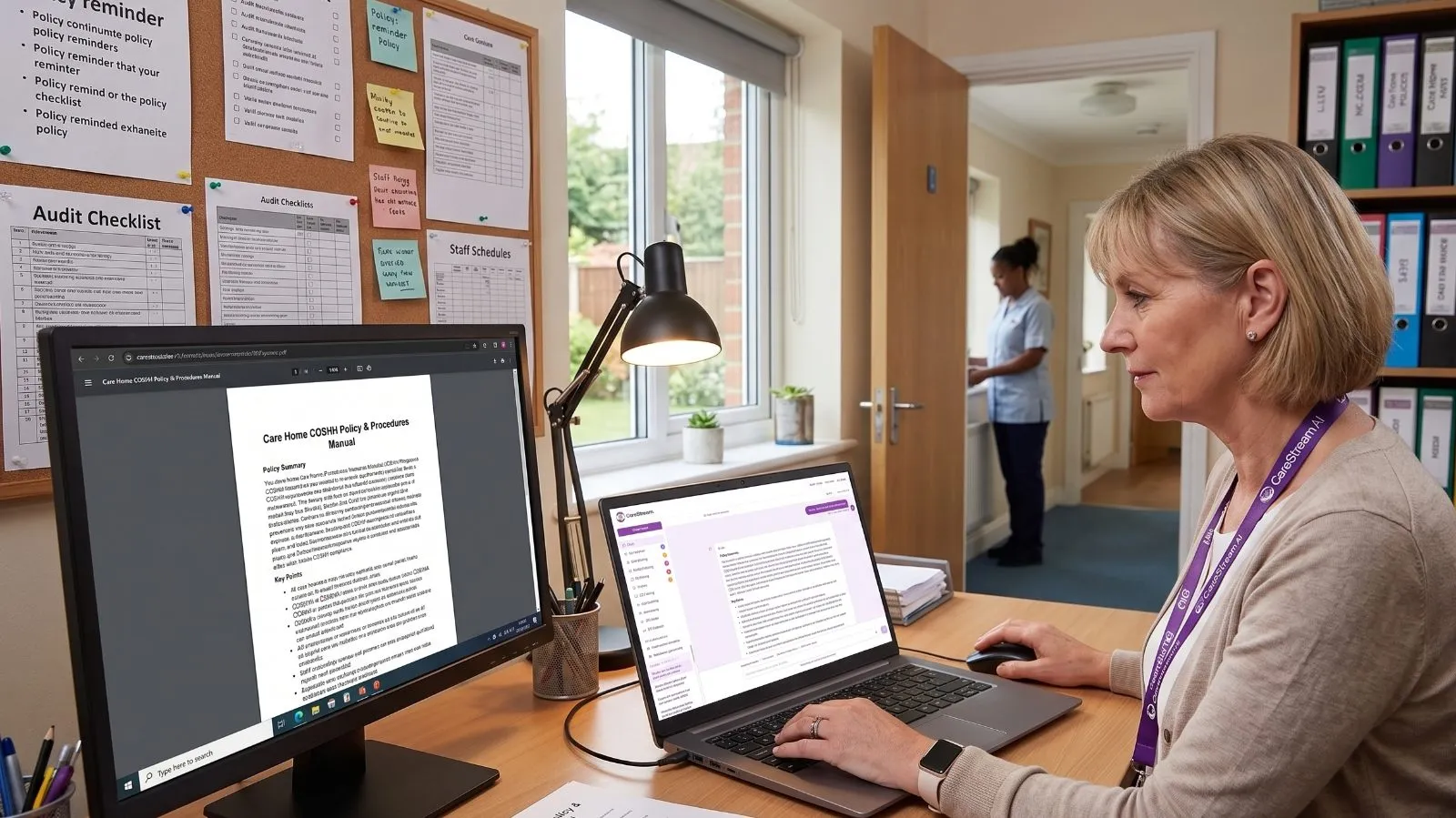
Managing care home policies is about more than just owning a binder of documents or purchasing a downloadable pack from a commercial provider, and having worked in numerous Residential Care Homes, I know how frustrating these binders are and that most staff don't read any of them.
While the market remains well served by vendors offering extensive libraries of pre-written material, the real challenge has shifted. Regulators, particularly the Care Quality Commission, are no longer satisfied with proof of purchase.
They want to see evidence that every staff member, from the registered manager to the newest agency carer on a night shift, can access the right policy at the right moment and apply it correctly, and this is where CareStreamAI comes into its own.
This guide moves beyond the transactional approach of buying a policy pack. It explains what policies are legally required in a UK care home, how to ensure they meet the fundamental standards, and how to solve the biggest operational gap: ensuring staff actually read, understand, and use those policies in their daily work, regardless of language barriers.
So keep reading to get all the details about Care Home policies and how CareStream can help your team get immediate access to them from anywhere.
Why Traditional Care Home Policy Packs Are No Longer Enough
The commercial market for care home policies has long been dominated by providers selling static documents. These packs often arrive as branded PDFs or printed folders, promising full compliance with the Health and Social Care Act 2008 and the Care Act 2014.
For a new care home operator or a manager facing an inspection, buying a ready-made set of over 100 policies can feel like a weight lifted. Yet this approach carries a hidden risk that becomes apparent only when the documents are tested in practice.
The compliance trap is the first problem. A policy pack sold as CQC-compliant in 2025 may already be outdated by the time 2026 brings new statutory guidance or amendments to key legislation.
Changes to the Mental Capacity Act Code of Practice, updated UK GDPR guidance from the Information Commissioner's Office, or revised infection control protocols from the UK Health Security Agency can render a static document non-compliant within months. Compliance is a continuous process, not a one-off purchase.
Care Home Policies = Binder on a Shelf
Then there is the binder-on-a-shelf problem. In many care homes, the master set of policies lives in the manager's office, often in a locked cabinet. A care assistant working a night shift who needs to check the correct ratio for administering a controlled drug, or a kitchen staff member who spots a fire risk, cannot physically access that binder.
When the CQC inspector arrives and asks a care worker to explain the home's safeguarding policy, the answer should not be a nervous glance towards the office door. The policy needs to be available at the point of care, not stored in a central location that is inaccessible to most of the workforce.
The UK care sector employs a diverse workforce, with a significant proportion of staff speaking English as a second or third language. A policy written in dense, legalistic English is not truly accessible to a carer whose first language is Polish, Romanian, Tagalog, or Gujarati.
Even for native speakers, the complexity of regulatory language can obscure meaning. If a staff member cannot fully comprehend a policy under pressure, that policy has failed its primary purpose, regardless of how well it is written or how accessible the 'binder in the manager's office' is.
Finally, the audit reality has changed. CQC inspectors are increasingly focused on application, not just possession. They want to hear staff explain policies in their own words and demonstrate how they apply them.
A home that can show inspectors a system in which policies are queried and accessed instantly, with a clear audit trail, demonstrates strong governance. A home that points to a dusty folder is demonstrating a gap between documentation and practice.
The 10 Essential Care Home Policies You Must Have in 2026
Every care home in England must maintain a core set of policies that align with the Health and Social Care Act 2008 (Regulated Activities) Regulations 2014, known as the fundamental standards. The following ten are non-negotiable, whether you run a residential care home, a nursing home, or a specialist dementia service.
1. Safeguarding and Whistleblowing
Sets out how staff recognise and report abuse under the Care Act 2014, and how they raise concerns internally or externally, including to the CQC, without fear of reprisal.
2. Medication Management
Covers the full lifecycle of medication from ordering to disposal, including controlled drugs, self-administration and the specific clinical scope of your registration.
3. Health and Safety, including Fire Safety
Meets the Health and Safety at Work Act 1974 and the Regulatory Reform (Fire Safety) Order 2005, covering risk assessments, equipment maintenance and evacuation procedures that staff can actually reach at 3am.
4. Infection Prevention and Control
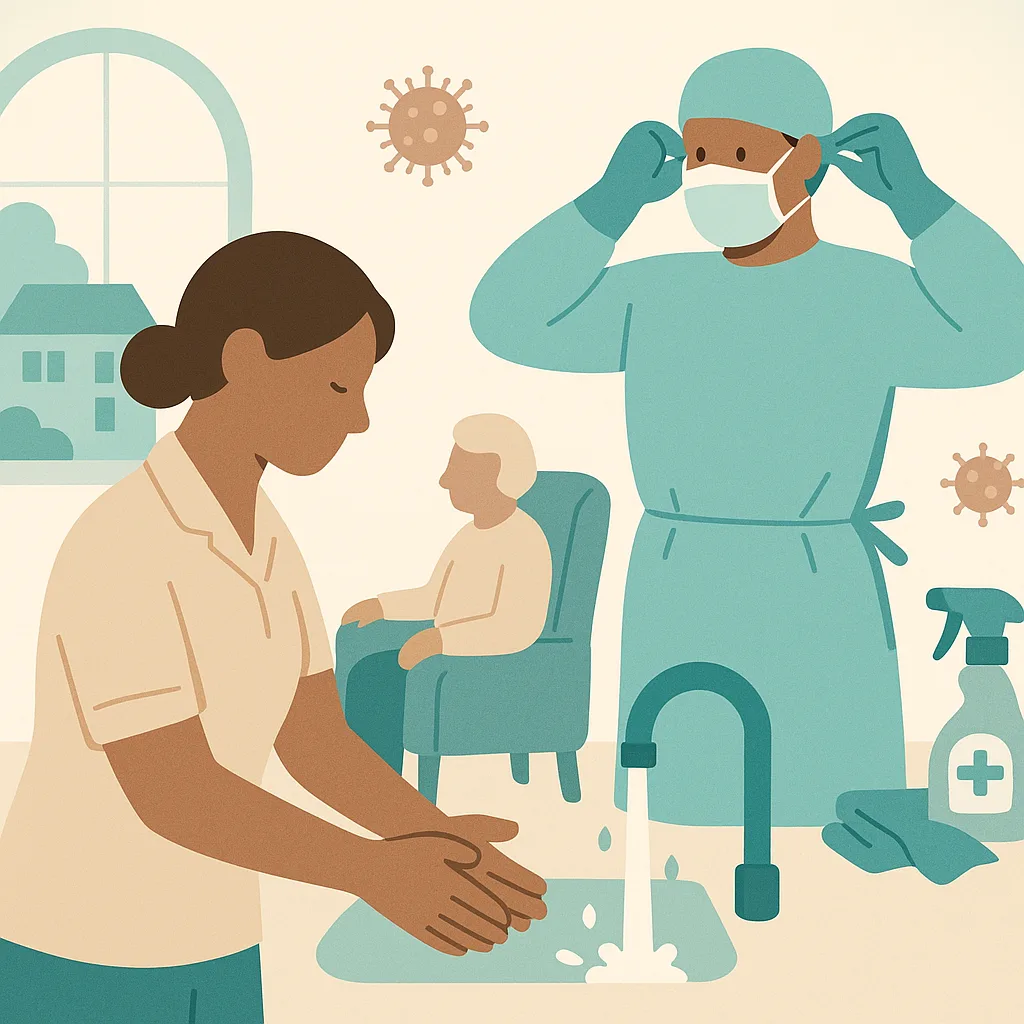
Reflects current UKHSA guidance on outbreak management, isolation, PPE and cleaning, with clear triggers for notifying public health authorities.
5. Mental Capacity Act and Deprivation of Liberty Safeguards
Gives staff the two-stage capacity assessment, the best interests process, and the signs that a deprivation of liberty may be occurring.
6. Data Protection and UK GDPR
Governs resident confidentiality, record-keeping, CCTV, subject access requests, and how any member of staff reports a personal data breach immediately.
7. Equality, Diversity and Inclusion
Delivers the Equality Act 2010 in practice: reasonable adjustments and respect for religious and cultural needs in care, diet and end-of-life arrangements.
8. Complaints and Feedback
Satisfies CQC Regulation 16 with a plain-English, prominently displayed process setting out timescales and the escalation route to the Local Government and Social Care Ombudsman.
9. Recruitment and DBS Checks
Covers right-to-work checks, DBS clearance, reference verification and ongoing fitness to practise — followed without shortcuts, even when staffing is tight.
10. End of Life Care
Aligns with NICE guidelines on advance care planning, symptom management, palliative referral, and the spiritual and cultural dimensions of dying.
Enabling staff to have access to these at the touch of a button, on their phones or tablets, enabling them to liaise with each of these policies and ask them any questions is the CareStream way.
How to Implement Your Care Home Policies Effectively
Acquiring a comprehensive set of care home policies is only the first step. The gap between owning a document and embedding it into daily practice is where many providers fall short, and where CQC inspectors focus their attention.
The training gap is persistent and well documented. Research on adult learning consistently shows that information retention from a single training session drops below 20 per cent after 30 days without reinforcement.
A one-off induction where new staff sign to say they have read the policies is not training; it is a paperwork exercise. Effective implementation requires continuous reinforcement, with staff regularly encountering policy content in the context of their actual work.
Real-time access is the single most important factor in whether a policy gets used or ignored. When a care worker faces a situation that requires a policy decision, whether it is a fall, a medication query, or a suspected safeguarding incident, they need the answer immediately. They cannot leave the resident to walk to the office, log into a desktop computer, navigate a shared drive, and search a PDF. The policy must be available at the point of care, on a device that is already in their hand or pocket.
Language accessibility is a regulatory and safety issue, not just an HR consideration. A modern care home must recognise that providing policies only in English creates a two-tier workforce where some staff operate with full understanding and others rely on partial comprehension or second-hand explanations.
Translating policies into the languages spoken by the workforce is not a luxury; it is a reasonable step to ensure safe care delivery. The challenge is that static translations are expensive to produce and quickly become outdated when the source policy changes.
Audit-proofing your system means preparing for the moment when a CQC inspector stops a care assistant in the corridor and asks a direct question about a specific policy. If the answer is hesitation, confusion, or a vague reference to the office, the inspector will note a governance concern. A digital system (CareStream) that allows any staff member to query policies instantly and receive the correct, current version demonstrates that the home takes its responsibilities seriously. The audit trail showing who accessed which policy and when provides objective evidence of engagement.
The Role of Technology: Moving from Static PDFs to Dynamic Policy Access
The technology available to care homes in 2026 has moved far beyond the static PDF. Digital policy management is no longer about storing documents on a server; it is about making them instantly accessible, searchable, and understandable to every member of the workforce.
Platforms such as CareStream AI take a provider's existing library of policies and procedures and turn it into an always-available assistant. Rather than uploading documents into yet another repository, a home's own policies are ingested and made answerable in plain English (and over 60+ other languages).
Every answer is grounded in that home's actual policies and traceable back to the source document, so managers retain control over what "the policy says" while their teams get reliable guidance in the moment. As a multi-tenant platform, each provider's content, staff and data are fully isolated, and group operators can run multiple sites under a single account.
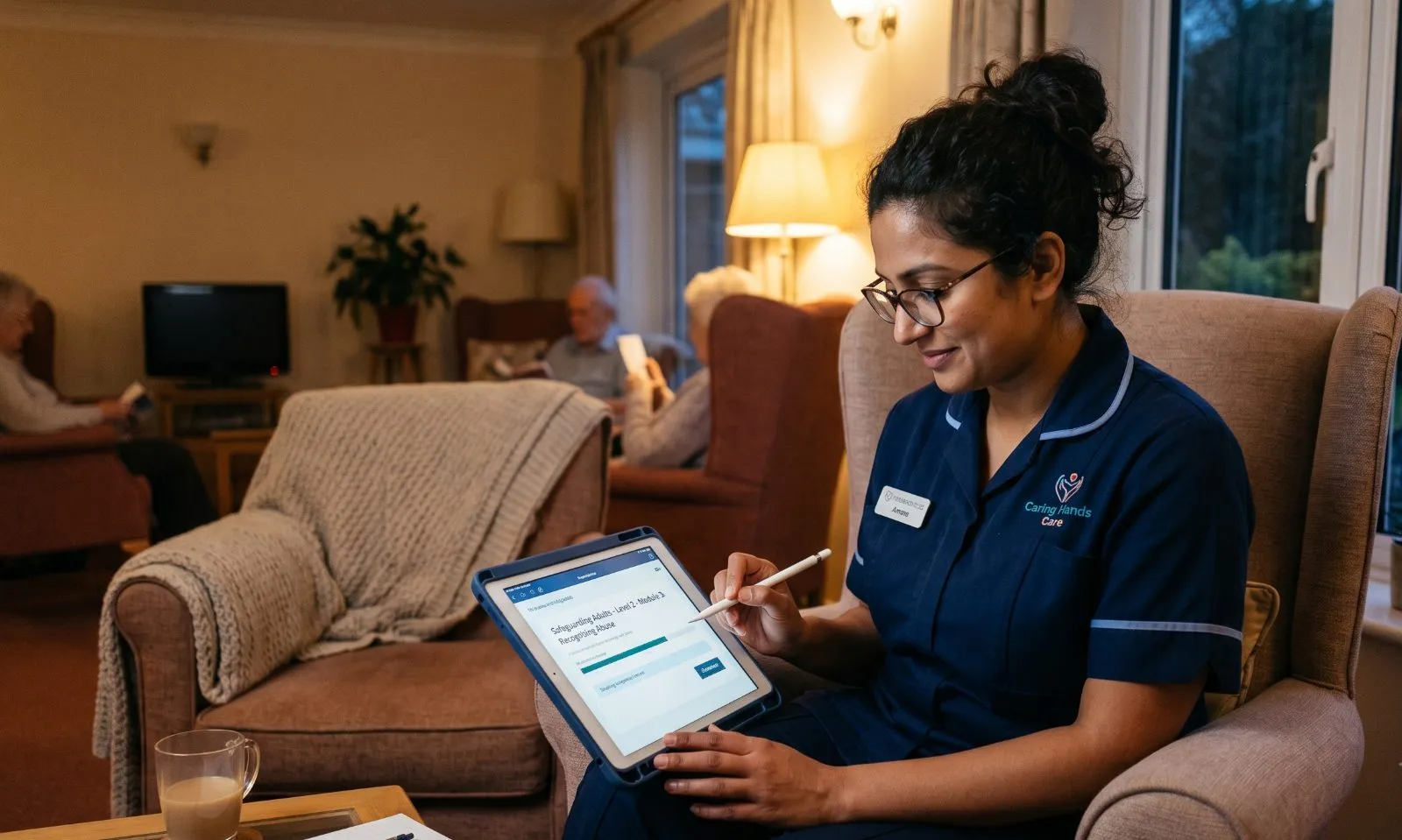
The most significant advance in policy accessibility is the chat interface. Instead of navigating folder structures or scrolling through lengthy documents, staff ask a question in natural language, by web chat or by email, whichever suits the shift they're on.
A carer can ask, "What is the policy on moving and handling a resident who has fallen?" and receive the relevant section within seconds, with a link back to the source.
This mirrors how people already find information in their personal lives, removing the friction that stops staff from consulting policy at all in traditional systems.
CareStream Breaking Down Language Barriers
Language is the barrier that has historically made policies inaccessible to a significant portion of the care workforce. Care teams in the UK are diverse, and not everyone is comfortable reading dense policy English under pressure.
CareStream detects the language of the question automatically- Polish, Romanian, Tagalog, Portuguese, French, and Creoles, and many more, finds the relevant policy, and answers in that same language while still pointing to the underlying source. The English document remains the single authoritative version. No parallel set of translated files needs maintaining, and the right procedure reaches the person on shift in a form they actually understand.
Access alone, though, doesn't evidence compliance. The logical next step is embedding policy into the work itself. Managers can build training modules drawn directly from their own policies, lock approved versions, and monitor a live compliance grid showing who has completed what, with automated delivery rules for new legislation, return-to-work and post-incident sends.
New starters work through structured onboarding flows tailored to their job role, producing an auditable record that every person was properly inducted.
Templated audits let teams check policy against practice and surface issues early. Inspection-style CQC questions can be sent to staff through their preferred channel, showing a manager where the team is confident and where it needs a refresher, long before an inspector arrives.
All of this signal feeds the CQC Report and its supporting gap analysis. By looking at the questions staff are actually asking, including those the policy library couldn't answer, alongside the regulations a home's policies do and don't cover, training completion and audit results, the platform produces a coverage score and an inspection-readiness picture mapped to CQC's framework.
The result is a home that isn't merely storing policies, but continuously demonstrating that those policies are understood, trained, followed and evidenced, which enables providers looking to strengthen their approach to explore how digital tools support broader CQC compliance across all aspects of service delivery.
How to Choose a Care Home Policy Provider
Selecting a policy provider requires looking beyond the number of documents included in the pack. The market offers a range of options, from one-time purchases to subscription services with regular updates, but the criteria for choosing have evolved, and the most important one is whether the policies are in your favour in the first place.
Ownership of the source is the starting point. A generic pack, however comprehensive, describes a generic home. CareStream takes a provider's own library of policies and procedures and makes them searchable and answerable, which means the guidance a carer receives on shift is the guidance their manager actually wrote and approved.
Every answer is traceable back to the source document. Managers stay in control of what "the policy says, rather than discovering that their staff have been following a vendor's template.
Implementation support separates genuine partners from document vendors, and this is where CareStream stands out. The best systems help you get policies into daily operations rather than onto a server.
Ask to see a demonstration of how a care assistant on a night shift would find a specific policy on their phone. With CareStream, they ask a question, by web chat or by email, and get the relevant section back in seconds (in English or their 1st mother-tongue language). If a provider cannot show you this in under thirty seconds, they are selling a solution designed for a filing cabinet, not a care floor.
Turning Policy Engagement into Evidence
Evidence of engagement is what an inspector asks for and should be what a care manager is looking at as well. Access is necessary but not sufficient; you need to show that policies are understood, trained and followed.
CareStream turns your policies into training modules, tracks completion on a live compliance grid, runs structured onboarding flows by job role, and delivers inspection-style questions to staff through their preferred channel so you know where your team is confident before anyone arrives to ask. Templated audits capture evidence as you go.
Insight is the difference between storage and readiness. CareStream's CQC Report and gap analysis draw on the questions staff are actually asking, including the ones your policy library couldn't answer, alongside regulatory coverage, training compliance and audit results, producing a coverage score mapped to CQC's framework. That tells you where the gaps are while there is still time to close them.
Digital access is the defining feature of a modern policy system. When evaluating providers, demand a demonstration of how staff will interact with policies in real time.
Can they search by asking a question in plain language?
Can they get an answer in their preferred language?
Is there an audit trail showing who has read what?
If the provider's answer is a PDF and a promise, they are offering a 1990s solution to a 2026 problem. Integrating policies with staff training creates a continuous loop of learning and reinforcement.
Conclusion: Your Care Home Policy Checklist
The goal for any care home is not simply to possess a set of care home policies, but to embed them into the daily practice of every staff member. The homes that pass inspections with confidence and retain their workforce are those that make policy access instant, intuitive, and inclusive.
Start by auditing your current policy set against the ten essential categories outlined in this guide. Identify any gaps and check the date of your last review. If any policy has not been updated in the past 12 months, it is likely no longer fully aligned with current regulations. Next, survey your staff with a simple test: ask them to find a specific policy in under 30 seconds. If they cannot, your system needs to change, regardless of how comprehensive your document library may be.
The final step is to evaluate a digital solution that offers real-time, multi-language access through a chat interface. The technology exists to make policies available to every staff member, in their preferred language, at the moment they need them. A care home that achieves this is not just compliant on paper; it is building a culture where policy knowledge translates directly into safer, better care.
Sources
- CQC: Fundamental standards · cqc.org.uk
- Health and Social Care Act 2008 (Regulated Activities) Regulations 2014 · legislation.gov.uk
- CQC: Regulations for service providers and managers · cqc.org.uk
Frequently asked
How often should care home policies be reviewed?
Annually as a minimum, and immediately whenever legislation, statutory guidance or regulator expectations change. In practice, the trigger is rarely the calendar. It is a UKHSA update, a change to DoLS, a new NICE guideline, or a serious incident that exposes a gap. A policy that has not been touched in two years will not survive an inspection conversation, however well it was written originally.
Is it enough to have the right policies in place?
No. CQC inspectors look for evidence that policies are understood, trained, followed and evidenced, not simply that they exist. Regulation 16 requires an effective complaints system, not a complaints document. A home that can show which staff have read which policies, how they performed on inspection-style questions, and where the remaining gaps sit is in a materially different position from one that can produce a binder.
Can we use a generic policy pack rather than writing our own?
A generic pack describes a generic home. Medication management is the clearest example: the policy a nursing home needs for complex intravenous administration bears little resemblance to what a residential home supporting residents with blister packs requires. Templates are a reasonable starting point, but the policies your staff follow should be the ones your managers wrote and approved for your registration, your residents and your building.
How do we make policies accessible to staff who do not read English confidently?
Maintaining separate translated documents creates a version control problem, because a translation quietly drifts out of step with the English original the moment either changes. The better approach is to translate at the point of the question rather than at the point of storage. CareStream detects the language a staff member asks in, whether Polish, Romanian, Tagalog, Portuguese, French or Creole, or many others, and answers in that same language while pointing back to the single authoritative English source. A procedure is only useful if the person on shift understands it.
How do we know whether our policies actually cover the regulations?
Most homes assume coverage rather than verify it. CareStream's gap analysis works from real signal: the questions staff are asking, including the ones the policy library could not answer, alongside training completion, audit results, and which regulations the policy set does and does not address. That produces a coverage score mapped to CQC's framework, so gaps surface while there is still time to close them rather than during an inspection.
Written by
 Len BurgessSenior Care Advisor
Len Burgess has worked in the care sector for over 8 years, with hands-on experience across residential, nursing and community settings. Having supported teams through CQC inspections and the day-to-day reality of keeping a service compliant, he writes about regulation, quality and best practice in a way that's grounded in what actually happens on the floor, not just what the guidance says.