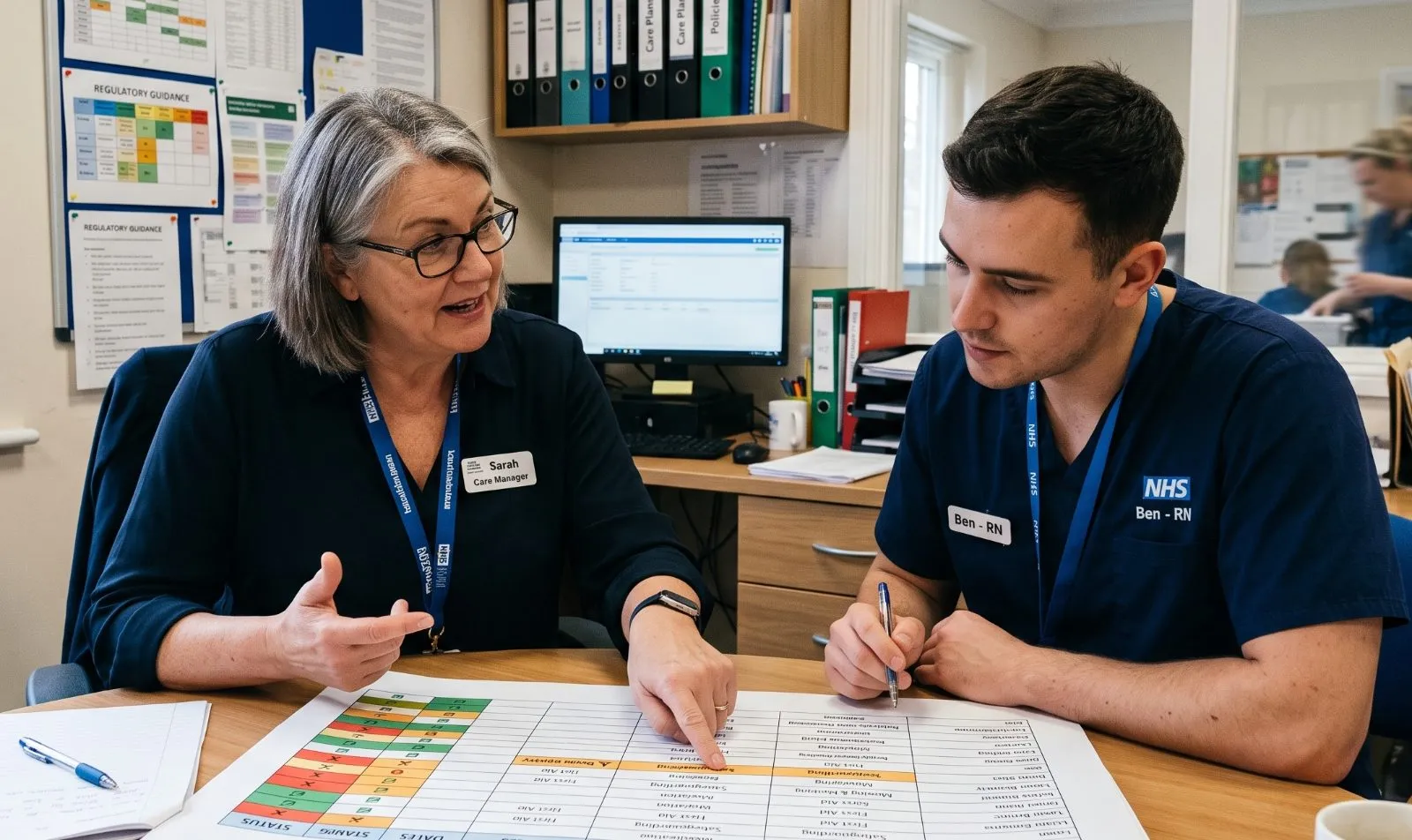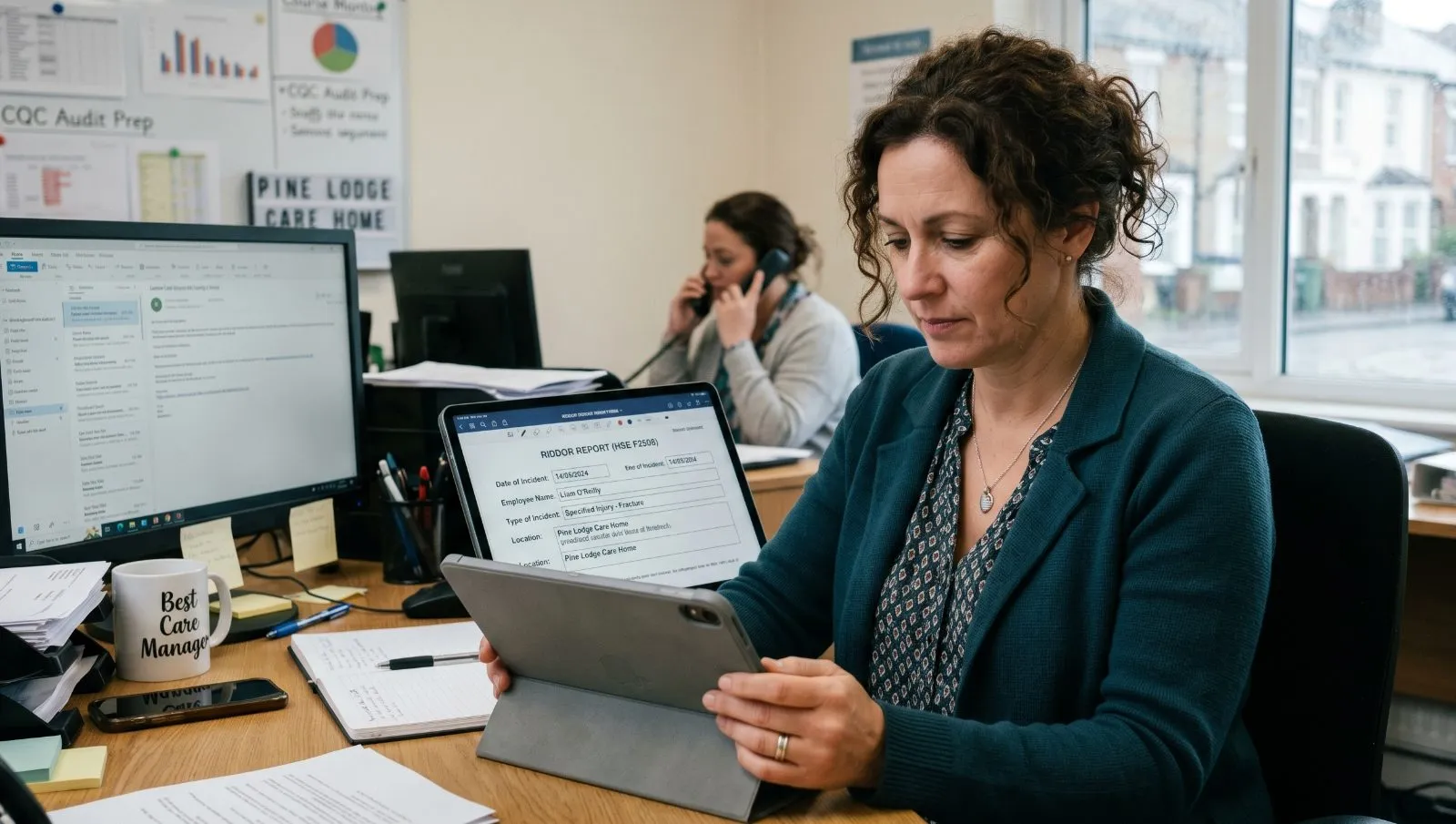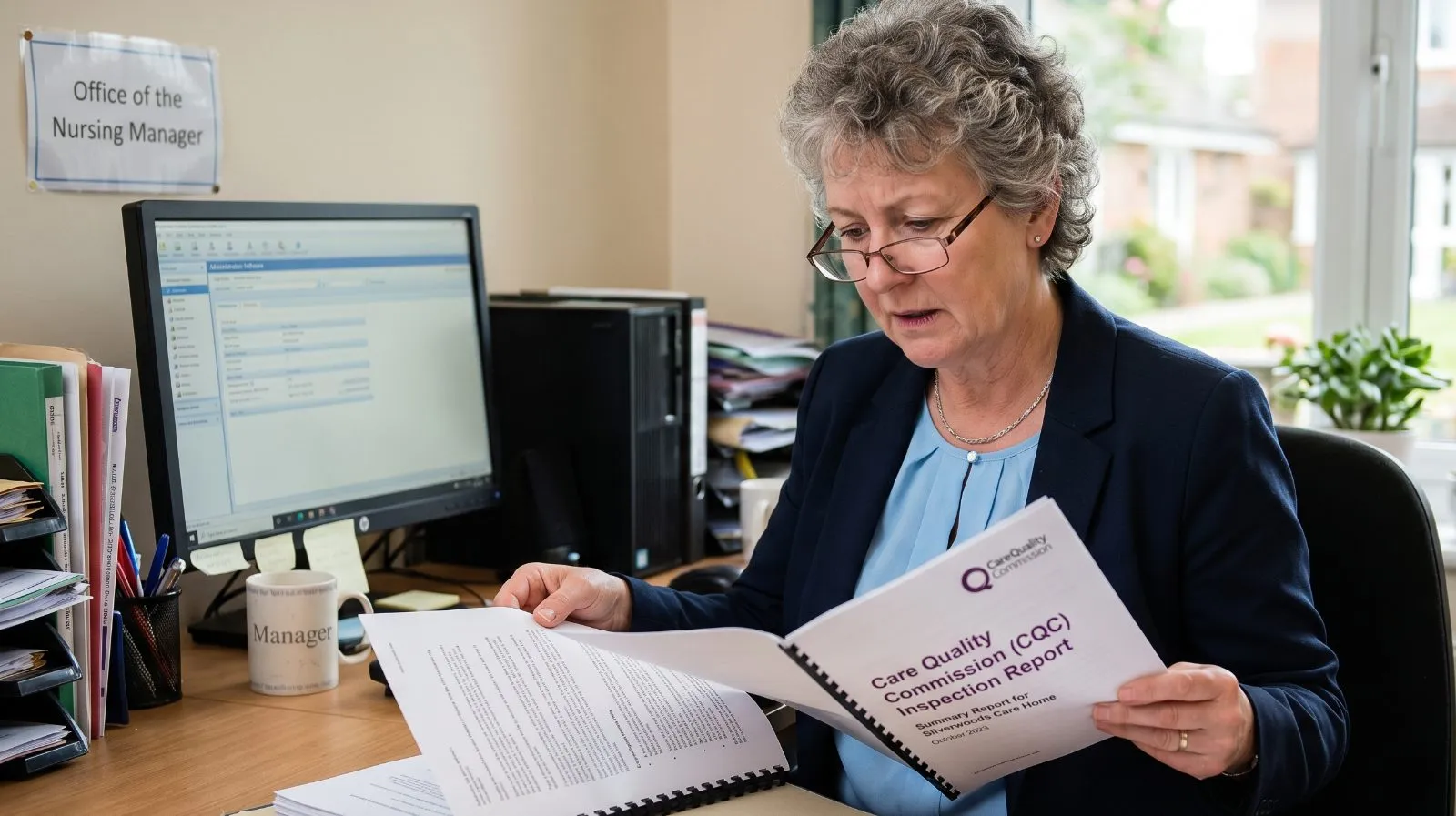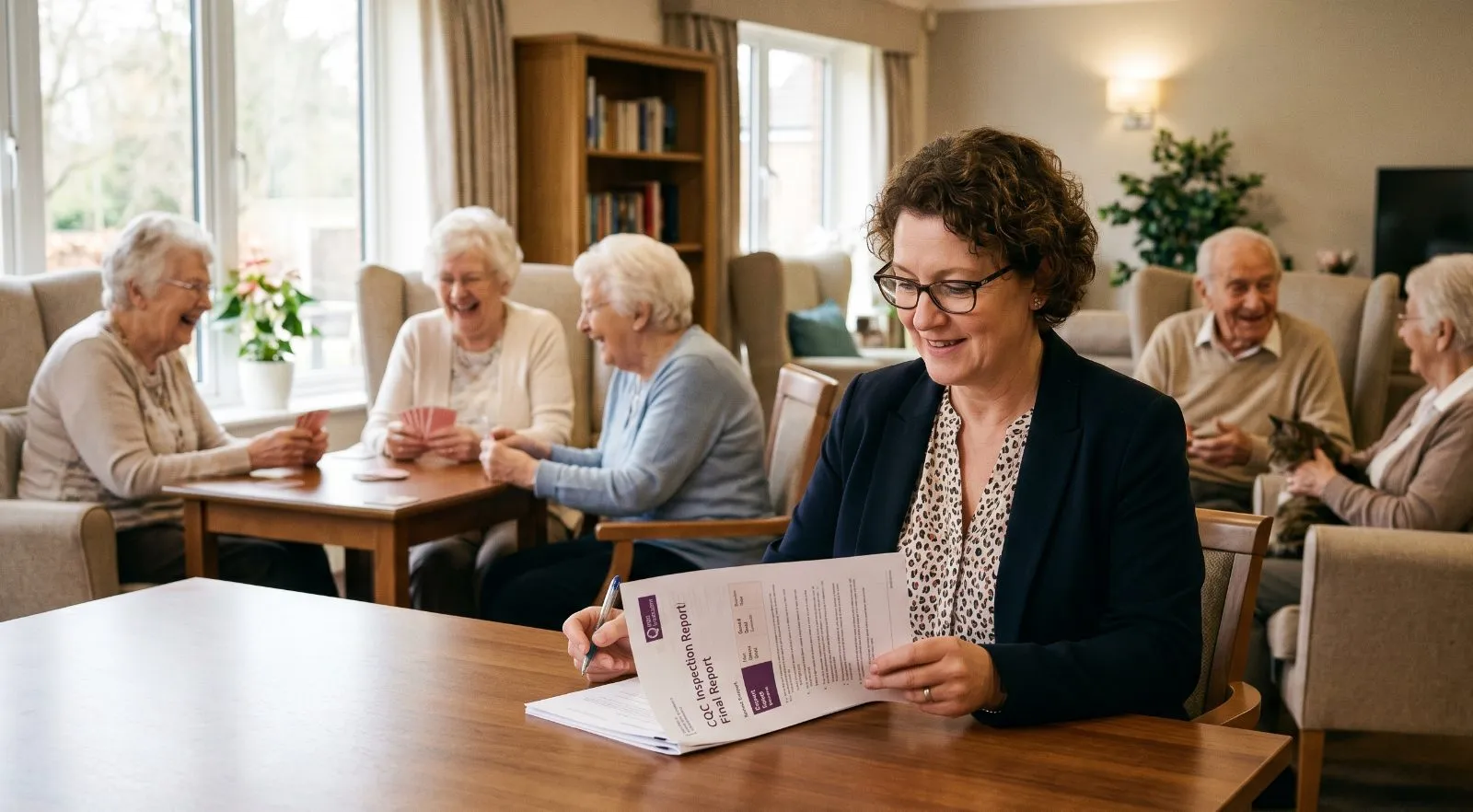
If you run a care home, a nursing home, a home care agency, a supported living or any other regulated service in England, the way the Care Quality Commission (CQC) judges your quality has been changing fast. The Single Assessment Framework, usually shortened to SAF, became the regulator's main model from late 2023. In 2026, it is being reshaped again, this time into separate frameworks for each sector.
This guide explains what the CQC framework is, what is happening to it this year, how it works in practice, and what it all means for you, in plain language, without the jargon. It also shows how CareStream helps care providers turn compliance from a once-a-year scramble into something the whole team lives every day.
What is the CQC framework?
The CQC framework is the model the Care Quality Commission uses to judge the quality of regulated health and social care services in England. Since late 2023, that model has been the Single Assessment Framework: a single, consistent approach applied to every type of service, from a small domiciliary care agency to a large hospital.
The SAF replaced the older system of periodic, announced inspections and the long list of Key Lines of Enquiry (KLOEs) that providers had relied on for over a decade. The idea was simple. Instead of waiting years between big set-piece inspections, the CQC would gather evidence about your service continuously and update its view, and your rating, whenever new information emerged.
At its heart, the framework keeps the five key questions providers already know well. It then uses plain-English standards, called quality statements, to describe what good care actually looks like. Evidence is gathered, weighed against those standards, and used to reach a rating.
So the short answer is this: the CQC framework is a continuous, evidence-led way of regulating care. It is less about a single dramatic inspection day and more about whether you can show consistent quality all the time. That shift, from performance to habit, is exactly the gap CareStream is built to close.
The CQC framework in 2026: what's changing
Here is the part that many guides written in 2024 miss. The "single" in Single Assessment Framework is on its way out.
The unified, one-size-fits-all model ran into real difficulties. Independent reviews, including work led by Dr Penny Dash and Professor Sir Mike Richards, found the scoring system was too complex, lacked transparency, and often did not reflect the true quality of care being delivered. Providers also struggled with the digital system used to upload evidence. The CQC has openly acknowledged these problems.
In response, the regulator ran a public consultation, Better regulation, better care, which closed at the end of 2025. Feedback strongly supported a change of direction. As a result, the CQC is moving away from a single framework that covers everyone and reintroducing separate, sector-specific frameworks instead.
In March 2026, the CQC published four draft assessment frameworks, one for each main sector it regulates:
- Adult social care — care homes, nursing homes, supported living and home care agencies
- Mental health care
- Primary care and community services
- Hospitals — secondary and specialist care
Alongside this shift, three things are changing in how assessments are structured:
- The 34 quality statements are being replaced by a smaller set of Key Lines of Enquiry, written as structured questions. Many carry the essence of the old quality statements, so the underlying expectations are not being thrown out.
- The complex numerical scoring is being removed, with rating judgments made directly at the level of each key question.
- New rating characteristics will describe what Outstanding, Good, Requires Improvement, and Inadequate care looks like within each individual sector.
The timing matters. The draft adult social care framework went out for consultation in spring 2026, with feedback invited until 12 June 2026. The CQC plans to pilot and test the frameworks over the summer, with the new approach unlikely to go fully live before the end of 2026. Until then, most care homes, nursing homes and home care agencies continue to be assessed under the current Single Assessment Framework.
What this means in practice is that 2026 is a transition year. You may need to be ready for two frameworks at once: the current SAF that still applies today, and the sector-specific approach arriving later in the year. The good news is that the five key questions and the core expectations of good care stay steady throughout. If you are doing the right things for the people you support, you are already most of the way there, and a platform like CareStream keeps that proof organised, whichever framework applies.
How the CQC framework works
Whether you are assessed under the current SAF or the incoming sector frameworks, the building blocks are broadly the same.
The five key questions
Every assessment is organised around five questions that have stayed constant through all the changes:
- Safe. Are people protected from abuse and avoidable harm?
- Effective. Does the care achieve good outcomes and support a good quality of life, based on the best available evidence?
- Caring. Do staff treat people with compassion, kindness, dignity and respect?
- Responsive. Is care shaped around each person's individual needs, preferences and wishes?
- Well-led. Do leadership, culture and governance support high-quality, person-centred care?
These five are often described as the "five CQC standards" or "five key questions." They have not changed through any of the recent reforms and remain the foundation of every assessment.
The standards underneath the questions
Under the current SAF, those five questions break down into 34 quality statements. Each is written as a short "we" statement describing good practice, for example, committing to working with people to understand and meet their needs. As the sector-specific frameworks arrive, these statements are being reframed into a tidier set of Key Lines of Enquiry, but the intent is very similar.
The practical challenge for providers has always been the same: it is one thing to have a policy that meets a standard, and another to prove your team understands and follows it. This is where CareStream does its heaviest lifting. The platform ingests your own policies and procedures and makes them instantly searchable and answerable in plain English, by web chat, email or WhatsApp. Every answer is grounded in your home's actual policies and traceable back to the source document, so managers stay in control of what "the policy says" while their teams get reliable guidance the moment they need it.
The six evidence categories
This is where the framework feels different from older inspections. Rather than relying mainly on what an inspector sees on the day, the CQC draws evidence from six categories:
- People's experience. Direct feedback from the people you support and their families. This carries significant weight.
- Feedback from staff and leaders. What your team says about culture, conditions and how care is delivered.
- Feedback from partners. Input from GPs, local authorities, social workers and other professionals.
- Observation. What is seen during a visit, from staff interactions to the safety and feel of the environment.
- Processes. Your policies, procedures, care plans and records. Important, but no longer the only thing that counts.
- Outcomes. Data and results that show the difference your care actually makes.
CareStream is built to strengthen the categories you can most directly control. For processes, your policies stop being binders and shared drives no one reads, and become a live, answerable knowledge base. For feedback from staff, CareStream's CQC staff questions let you see, before an inspector arrives, where your team is confident and where they need a refresher. And for outcomes, the platform pulls training compliance, audit results and policy coverage into a single inspection-readiness picture.
Continuous monitoring and the provider portal
A defining feature of the framework is that the CQC can update its view at any time, not just after a scheduled visit. Providers use a digital provider portal to keep registration details current, submit information, and respond to assessments. The old rhythm of preparing hard for an announced inspection and then relaxing afterwards no longer works. The expectation is steady, demonstrable quality, all year round, which is exactly the cadence CareStream is designed to support.
Scoring and ratings
Under the current SAF, evidence has been scored on a four-point scale. As part of the 2026 reforms, numerical scoring is being removed in favour of judgments made directly at each key question. Crucially, the four ratings everyone recognises stay the same: Outstanding, Good, Requires Improvement and Inadequate.
How the CQC framework applies to your service
The principles are shared, but the day-to-day reality differs depending on the kind of service you run.
For care homes and nursing homes, the focus tends to fall heavily on Safe and Effective, since these generate the most enforcement activity. Inspectors look closely at safeguarding, medicines management, falls and pressure care, staffing levels and skill mix, and how well clinical needs are met in nursing settings. Observation of daily life and direct feedback from residents and families carry real weight. CareStream helps ensure that when a carer needs the safeguarding or medicines procedure at 3am, they can get the right answer instantly, in their own language, if that is easier under pressure.
For home care and domiciliary agencies, much of the evidence is gathered away from a physical site. That places extra importance on records, call monitoring, care planning, incident reporting, and the feedback you collect from clients and relatives. Because the CQC has set a target of around 9,000 assessments to be published by September 2026, the chance of being assessed in the coming year is higher than it has been for some time, so readiness should be continuous, not last-minute.
For supported living, extra-care and other care-sector providers, the same logic holds: a geographically spread workforce, a diverse staff team, and an expectation that everyone, wherever they are, can find and follow the correct procedure. CareStream reaches staff on the channels they already use, so guidance travels with them.
How CareStream helps you get CQC-ready
CareStream is a multi-tenant platform built for UK care providers that turns your library of policies and procedures into an always-available, intelligent assistant. Instead of staff hunting through binders, shared drives or out-of-date handbooks, the right procedure is one question away. Here is how that maps to getting ready for the CQC framework.
Talk to your policies in any language. Care teams in the UK are wonderfully diverse, and not everyone is most comfortable reading dense policy English under pressure. A staff member can ask a question in their own language, Polish, Romanian, Tagalog, Portuguese, French, or English-based Creole, and many more, and CareStream detects the language automatically, finds the relevant policy, and answers in that same language while still pointing to the source. A procedure is only useful if the person on shift actually understands it, so this removes a real barrier to compliance under Safe, Effective and Caring.
CQC staff questions. Managers can build and deliver a bank of inspection-style questions to the team, send them out by each person's preferred channel, and track who has responded and how well. You find out where your people are confident, and where they need a refresher, before an inspector ever arrives. This is direct evidence for the feedback from the staff category and for Well-led.
Training. Create and assign learning modules drawn from your own policies, auto-generate questions and answers, lock approved versions, and monitor a live compliance grid showing exactly who has completed what, with automated delivery rules, return-to-work, and post-incident sends built in. Clear, current evidence for Effective and Well-led.
New staff onboarding. Structured induction flows for each job role guide a new starter through the policies they need to read and the questions they need to answer, from day one. The result is a clear, auditable record that every person was properly inducted, exactly what inspectors look for under Safe and Well-led.
Audits. Templated, repeatable checks let teams run structured reviews against their policies and practices, capturing evidence and surfacing issues early, rather than at inspection.
The CQC Report and gap analysis. CareStream pulls all of this signal together: the questions staff actually ask (including the ones your policy library could not answer), the regulations your policies do and don't cover, training compliance and audit results. From this, it produces a coverage score and an inspection-readiness picture mapped to the CQC framework. You are not just storing policies, you are continuously demonstrating that they are understood, trained, followed and evidenced.
As a multi-tenant platform, each provider's content, staff and data are fully isolated, and group operators can run multiple homes under a single account. useful for any organisation preparing several sites for assessment at once.
A practical readiness checklist for 2026
For everyone, a practical first step is to map the evidence you already hold against the relevant standards. Most providers already collect 70–80% of what the CQC wants; the work is usually about organising it clearly, not creating reams of new paperwork. For each standard, the question to ask your team is, "How would we prove this to an assessor?" Then, think across all six evidence categories.
A few things to do right now in 2026:
- Stay registered and current. Incomplete or inaccurate registration details are now more likely to be rejected, so keep everything up to date in the provider portal.
- Keep preparing under the current SAF, because that is what still applies until the new frameworks go live.
- Familiarise your team with the draft adult social care framework so there are no surprises when it arrives, and respond to the consultation before 12 June 2026 if you can.
- Treat quality monitoring as a weekly habit, using your own data and feedback rather than waiting for an inspection to reveal gaps. CareStream's compliance grid, staff questions and gap analysis are designed to make that habit effortless.
The questions everyone is asking about CQC
These are among the most-searched questions about the CQC framework right now. Here are clear answers.
What are the 5 standards of CQC (the five key questions)?
They are Safe, Effective, Caring, Responsive and Well-led. These five key questions are sometimes called the "five standards," "five pillars", or "five keys" of CQC. They have not changed through any of the recent reforms and remain the foundation of every assessment.
What is the CQC framework?
It is the model the CQC uses to assess and rate every regulated health and social care service in England. Since late 2023, that has been the Single Assessment Framework, a continuous, evidence-led approach. From 2026, it is being replaced by four sector-specific frameworks, but the five key questions and the four familiar ratings stay the same.
What are the 34 quality statements in CQC?
The 34 quality statements are the plain-English standards that sit under the five key questions in the current Single Assessment Framework. Each is written as a short commitment describing good practice — such as treating people with dignity or delivering evidence-based care. They replaced the old Key Lines of Enquiry in 2023, were simplified in 2025, and are now being reshaped into a smaller set of structured Key Lines of Enquiry as the sector-specific frameworks arrive. The number you are assessed against varies, because assessors select the statements most relevant to your service.
What are the 5 C's in care (and the 6 C's)?
The five C's are Care, Compassion, Competence, Communication and Courage. A sixth C, Commitment, is often added to give the well-known "six C's." They describe the attitudes and behaviours expected of everyone delivering care, and map closely onto what inspectors look for under Caring and Well-led.
What are the 4 domains / 4 P's people mean?
People often search for "4 domains of CQC," but the CQC does not assess against four domains; it uses the five key questions above and four ratings (Outstanding, Good, Requires Improvement, Inadequate). If you have seen "4 P's" in healthcare, that usually refers to person-centred care principles rather than a CQC structure.
What are the four principles of person-centred care?
Person-centred care is widely summarised through four principles, often associated with the Health Foundation:
- Treating people with dignity, compassion and respect
- Offering coordinated care, support and treatment
- Providing personalised care built around the individual
- Enabling people to build on their own strengths to live independent, fulfilling lives
These run right through the CQC's Caring and Responsive key questions.
What are the 13 CQC standards?
People searching for "13 CQC standards" are usually thinking of the fundamental standards set out in regulation, the baseline below which care must never fall, covering things like person-centred care, dignity and respect, consent, safety, safeguarding, premises and equipment, complaints and good governance. These sit underneath the framework and apply regardless of which assessment model is in use.
What is the 7th standard of care?
There is no single official "7th standard" in the CQC framework; the question usually comes from people working through the fundamental standards list. The structure that matters for assessment is the five key questions, supported by the quality statements (soon, Key Lines of Enquiry) and the fundamental standards.
What is going on with CQC right now?
In short, a major overhaul. After independent reviews highlighted serious problems with the Single Assessment Framework and its supporting systems, the CQC consulted the sector through Better regulation, better care. The direction for 2026 is a move away from the single framework toward four sector-specific frameworks, the removal of complex numerical scoring, and a tidier set of Key Lines of Enquiry. There has also been a drive to clear inspection and registration backlogs, with thousands more assessments planned. The five key questions and the familiar ratings remain in place throughout.
What this means for you, in one line
The details of the CQC regulation are changing in 2026, but the destination is not. Safe, effective, caring, responsive and well-led care, evidenced clearly and delivered consistently, is what keeps you ready whichever framework applies. The providers who treat quality as an everyday habit rather than an inspection-day performance will be in the strongest position as the new sector frameworks arrive. CareStream exists to make that habit simple: your policies understood, trained, followed and evidenced, every day.
This article is for general guidance and reflects the position in 2026 while the CQC's sector-specific frameworks are still being finalised. Always check the latest guidance on the CQC website for your specific service type.
Book a demo or start your free trial today.
Sources
- CQC: How we assess care services · cqc.org.uk
- CQC: Quality statements · cqc.org.uk
- CQC: Evidence categories · cqc.org.uk
Frequently asked
What is the CQC framework?
What are the five CQC standards?
What is changing with the CQC framework in 2026?
What are the 34 quality statements in CQC?
How can care providers get ready for the CQC framework?
Written by
 Len BurgessSenior Care Advisor
Len Burgess has worked in the care sector for over 8 years, with hands-on experience across residential, nursing and community settings. Having supported teams through CQC inspections and the day-to-day reality of keeping a service compliant, he writes about regulation, quality and best practice in a way that's grounded in what actually happens on the floor, not just what the guidance says.