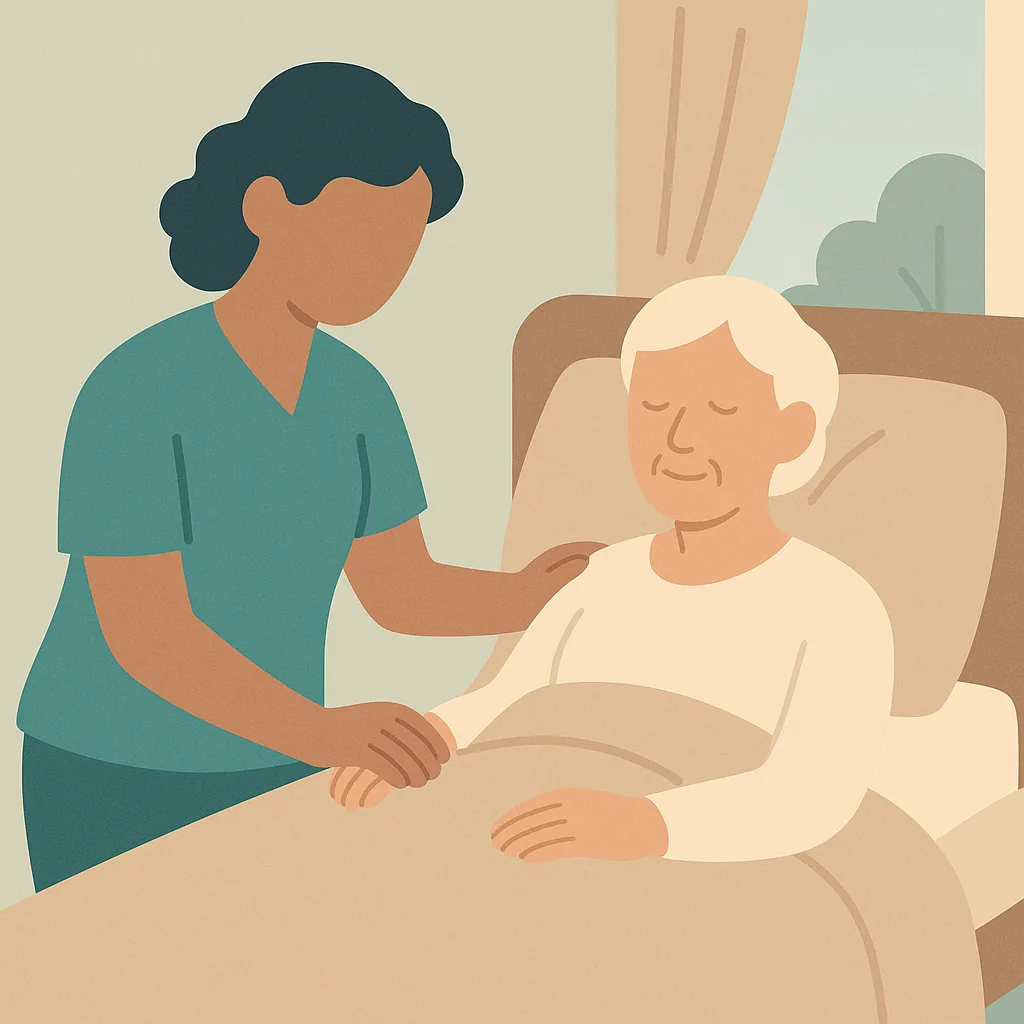
End-of-life care training prepares care staff to support someone in the last months, weeks and days of their life, and to support the people who love them. Many people in care homes, nursing homes and home care services will die in your care, so this is part of everyday work, not a specialist extra. Good palliative care training for carers builds the confidence to talk honestly about dying, to recognise when someone is entering the last days of life, to keep them comfortable and to follow their wishes, and it helps staff look after themselves too.
Why do care staff need end of life care training?
Care workers are often the people who spend the most time with someone who is dying. They notice the small changes first, they are there at night, and they are often the ones families turn to with questions. Without training, staff can feel unsure what to say, or miss that a change in breathing, eating or alertness may mean death is close.
There is only one chance to get end-of-life care right. A calm, well-prepared team means a person can die where they want to, with the people they want around them, free from avoidable pain or distress.
What frameworks set the standard for end-of-life care in adult social care?
Several national documents describe what good looks like, and good training is mapped to them:
The End of Life Care Core Skills Education and Training Framework. Published by Skills for Health with Health Education England and Skills for Care, it describes the knowledge and skills needed at three tiers. Tier 2 is for staff who provide care and support to people at the end of life as part of their role, which describes most care workers.
NICE guideline NG142 on end of life care for adults: service delivery, which covers how services identify people approaching the end of life, plan their care and support carers.
NICE guideline NG31 on care of dying adults in the last days of life, which covers recognising dying, communication, shared decision making, hydration and managing symptoms.
The Skills for Care statutory and mandatory training guide, which helps employers decide which training their staff need for their roles.
What should palliative care training for carers cover?
Palliative care is care that aims for the best possible quality of life for someone with an illness that cannot be cured. End-of-life care is the part of palliative care that supports people in the last months or year of life, through death and into bereavement for those left behind. Training for care staff should cover both, in language and situations they recognise.
Person-centred care and communication
Every person's idea of a good death is different. Training should help staff find out what matters to someone, including where they want to be, who they want with them, what they want to eat, the music they like and the routines that comfort them. It should also help with the hardest conversations: answering a question about dying honestly and kindly, and knowing when to listen rather than reassure.
Advance care planning and the law
Advance care planning gives people the chance to record their wishes while they can. Care staff need a working understanding of:
The Mental Capacity Act 2005, including the presumption of capacity and acting in a person's best interests when they cannot decide for themselves.
Advance statements of wishes and preferences, and advance decisions to refuse treatment, which are legally binding if valid and applicable.
Lasting powers of attorney for health and welfare, and what an attorney can and cannot decide.
CareStream turns your policies into role-based training with tracking and certificates. See the plans and get started.
See training plansDo not attempt cardiopulmonary resuscitation (DNACPR) decisions and emergency care plans such as ReSPECT, where your area uses them, and where these documents are kept so they travel with the person.
Staff do not make these decisions, but they must know they exist, respect them and raise concerns when something does not look right.
How can carers recognise the last days of life?
NICE NG31 describes signs that may suggest a person is in the last days of life. These can include increasing tiredness and sleep, less interest in food and drink, withdrawal from social contact, changes in breathing, changes in skin colour and temperature, and agitation or confusion. None of these signs alone proves that someone is dying, and some people improve again, so staff should report changes rather than decide for themselves.
Recognising these changes early lets the team review medicines, check anticipatory medicines are available, tell the family and put the plan into action.
How do care staff keep someone comfortable at the end of life?
Comfort is the heart of end-of-life care, and much of it is skilled, everyday care. Training should cover:
Recognising signs of pain, including in people who cannot say they are in pain, such as those living with advanced dementia.
Common symptoms such as breathlessness, nausea, restlessness and noisy breathing, and how to report them promptly so a nurse or GP can respond.
Mouth care, which becomes especially important as people eat and drink less.
Supporting people to drink if they wish and are able to, in line with their care plan.
Skin care and gentle repositioning to prevent pressure damage, balanced against the person's comfort.
In care homes without nursing and in home care, symptom management relies on good working with district nurses, GPs and specialist palliative care teams. Staff need to know who to call, at any hour, and how to describe what they are seeing.
How should staff support emotional, spiritual and cultural needs?
Dying is not only a physical process. People may feel fear, sadness, anger or peace, and may want to talk about their life, put things right with family or simply have company. Spiritual needs are not only religious, although faith is very important to many people. Staff should ask, rather than assume, about rituals, prayers, visits from faith leaders and practices around the time of death and afterwards, and record the answers so the whole team knows.
How do care staff support families and bereavement?
Families need clear, honest information, a welcome at any hour where possible, and permission to be involved as much or as little as they want. Training should help staff explain what is happening in plain words, include families in care, and recognise when a relative is exhausted or struggling. After a death, the way the team speaks to the family and handles belongings is remembered for years.
Other residents may be grieving too, and staff should think about how to tell and support them.
What happens after death, and how do staff look after themselves?
Care after death includes verification of death by an authorised professional, following the person's cultural and religious wishes, treating the body with dignity, and following your organisation's procedures for informing the GP, family and funeral director. Training should make clear that only appropriately trained and authorised staff verify death, in line with your policy and local arrangements.
Staff wellbeing belongs in every end-of-life care course. Caring for people as they die is a privilege, but it can be heavy. Debriefs, supervision, time to reflect and permission to grieve help your team keep caring well.
Assign, track and evidence staff training in minutes. Explore the plans and roll it out this week.
See training plansWhat does CQC look for in end-of-life care?
CQC looks at end-of-life care through several of its quality statements, including person-centred care, consent, safe care and staff training. Relevant regulations under the Health and Social Care Act 2008 (Regulated Activities) Regulations 2014 include Regulation 9 (person centred care), Regulation 11 (need for consent), Regulation 12 (safe care and treatment) and Regulation 18 (staffing, including training). Inspectors will usually want to see:
Care plans that record people's wishes, preferred place of care and death, and any advance decisions or DNACPR decisions.
Evidence that wishes were known and followed.
Good links with GPs, community nurses and palliative care teams.
Staff who can talk confidently about how they support people at the end of life.
Training records showing that relevant staff have completed and refreshed end-of-life care training.
How often should staff refresh end of life care training?
There is no single legal interval. Employers decide based on the role, the people they support and frameworks such as the Skills for Care guide. Because practice, local arrangements and law can change, and because confidence fades when staff go months without supporting someone at the end of life, many providers refresh this training every year. New starters should complete it early, so that no one meets their first death at work unprepared.
The CareStream CPD Certified End of Life and Palliative Care course
CareStream's End of Life / Palliative Care course is written for care workers in care homes, nursing homes, home care and supported living. It is mapped to Tier 2 of the End of Life Care Core Skills Education and Training Framework and NICE guidance, and it is a CPD-certified course from The CPD Certification Service, worth 1 CPD hour.
The eight lessons are:
Person-centred end-of-life care
Communicating about dying
Advance care planning and the law
Recognising the last days of life
Symptoms and comfort
Emotional, spiritual and cultural support
Families, carers and working together
Care after death and caring for yourself
Each lesson includes scenarios and interactive activities, followed by a 32-question knowledge assessment with an 80% pass mark. It takes about an hour on any phone or computer, at the learner's own pace, and can be taken in over 60 languages. When someone answers a question wrongly, a short follow-up lesson revisits that point.
Learners who pass receive a named, dated certificate with the CPD mark, which evidences completion of CPD Certified training and a passed knowledge assessment. It is not a qualification and does not on its own prove competence. Managers allocate licences and follow progress and scores from a dashboard, and the course is an annual refresher. Team prices start from 10 licences, with a 14-day refund on any licence not yet started.
Browse all accredited courses on our CPD Certified training page.
CareStream is a registered CPD Provider (No. 50224). You can check our membership and see every CPD Certified course we offer on our page on The CPD Certification Service website.
Conclusion
Supporting someone to die well is one of the most important things a care team ever does. Good end-of-life care training gives staff the words, knowledge and confidence to do it with skill and kindness. Refresh it every year, link it to strong care planning, and your service will be ready when it matters most.
Sources
- Skills for Care: statutory and mandatory training guide · skillsforcare.org.uk
- End of Life Care Core Skills Education and Training Framework · skillsforhealth.org.uk
- NICE NG142: end of life care for adults, service delivery · nice.org.uk
- NICE NG31: care of dying adults in the last days of life · nice.org.uk
- Mental Capacity Act 2005 · legislation.gov.uk
Frequently asked
What is the difference between palliative care and end of life care?
Palliative care aims for the best quality of life for someone with an illness that cannot be cured. End of life care is part of palliative care, supporting people in their last months or year of life, through death and into bereavement for those close to them.
Who needs end of life care training in a care service?
Any care worker who may support someone at the end of life, which includes most staff in care homes, nursing homes, home care and supported living. Tier 2 of the End of Life Care Core Skills Education and Training Framework describes what these staff need to know.
How often should end of life care training be refreshed?
There is no fixed legal interval. Many providers refresh it every year so that knowledge and confidence stay current, and include it early in induction for new starters.
Do care staff need to understand the Mental Capacity Act for end of life care?
Yes. Staff need to understand capacity, best interests, advance decisions to refuse treatment and lasting powers of attorney for health and welfare, so that they respect people's wishes and raise concerns appropriately.
Can palliative care training for carers be done online?
Yes. Online training gives staff the knowledge base at their own pace. It works best alongside supervision, reflective practice and support from experienced colleagues and local palliative care teams.
Written by
 Len BurgessSenior Care Advisor
Len Burgess has worked in the care sector for over 8 years, with hands-on experience across residential, nursing and community settings. Having supported teams through CQC inspections and the day-to-day reality of keeping a service compliant, he writes about regulation, quality and best practice in a way that's grounded in what actually happens on the floor, not just what the guidance says.