COSHH training teaches care staff how to use, store and dispose of hazardous substances safely, and every member of your team who comes into contact with them needs it. In adult social care, that is almost everyone: care workers handling body fluids and continence products, domestic staff using bleach and descaler, laundry staff with detergents and soiled linen, kitchen staff with oven cleaner, and maintenance staff with paints and water treatment chemicals.
The law requires employers to give these staff suitable information, instruction and training, and an annual refresher is the simplest way to keep that current.
What is COSHH and why does it apply to care settings?
COSHH stands for the Control of Substances Hazardous to Health Regulations 2002. They sit under the Health and Safety at Work etc. Act 1974 and require employers to prevent or adequately control exposure to substances that can harm health. The Health and Safety Executive (HSE) publishes the guidance.
Hazardous substances are not only chemicals in labelled bottles. Under COSHH, they also include:
Biological agents, such as bacteria and viruses in blood, urine, faeces and vomit.
Dusts, fumes and vapours, for example from some cleaning products or maintenance work.
Products that cause skin problems, including frequent wet work and some glove materials.
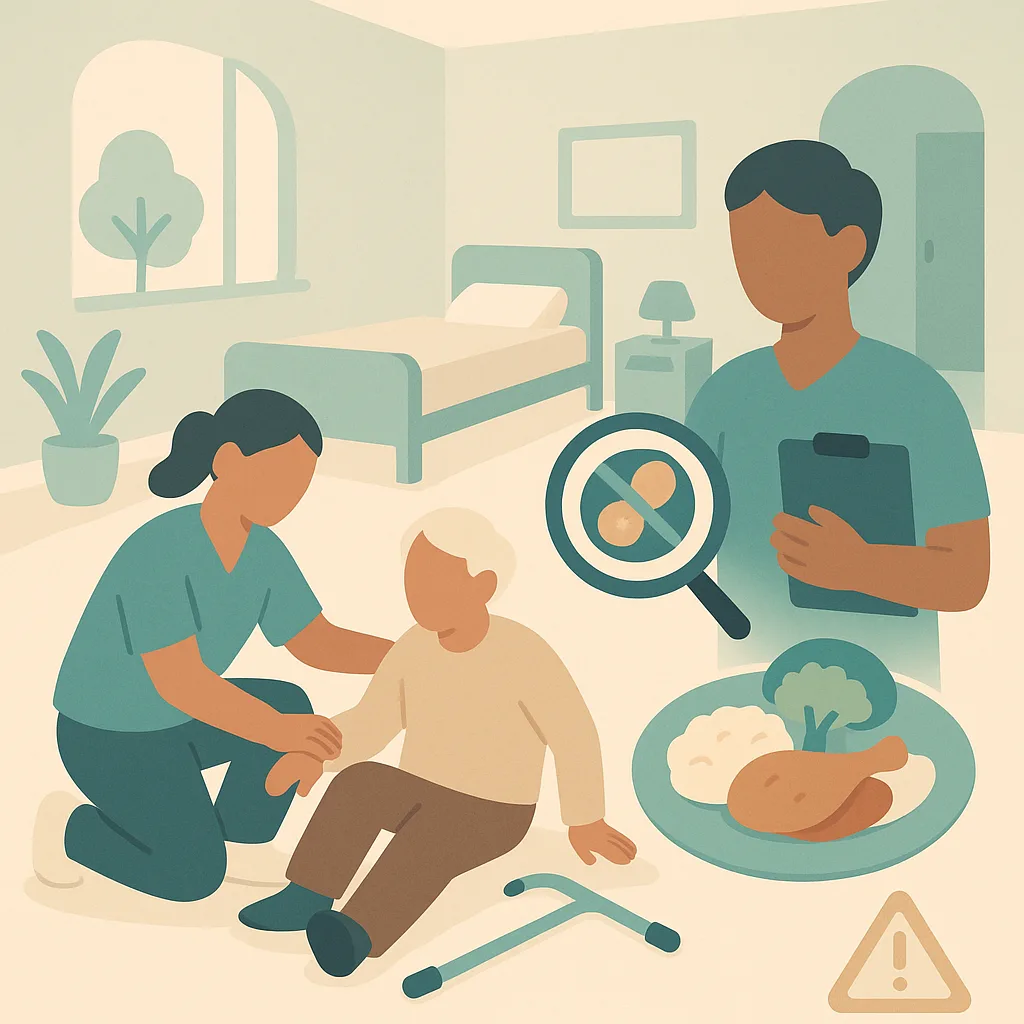
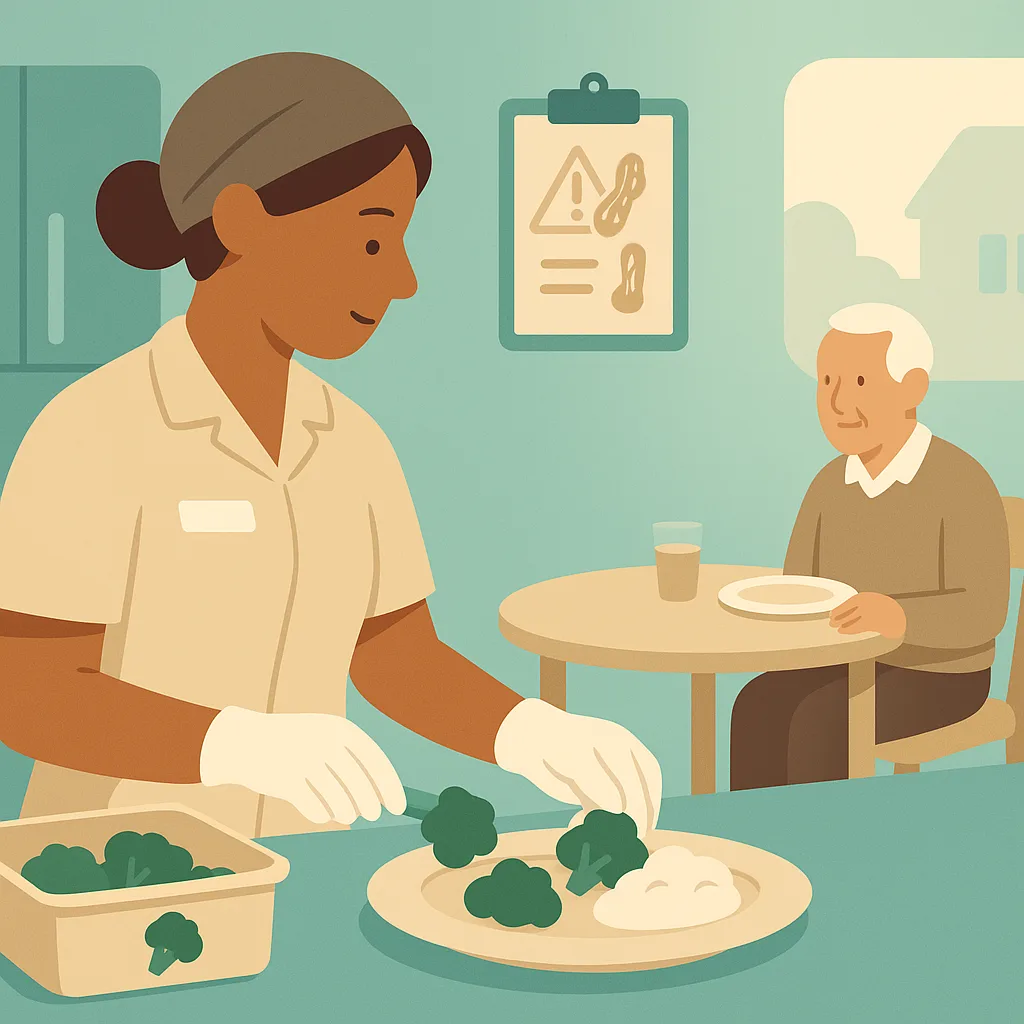
A care home or home care service therefore has COSHH risks in every room, not just the sluice and the cleaning cupboard. The people you support add another layer of risk. A resident living with dementia may mistake a cleaning pod or a bottle of washing up liquid for food or drink, so how and where substances are kept is a safeguarding question as well as a health and safety one.
What do the COSHH Regulations require employers to do?
HSE sets out a clear sequence of duties. In summary, employers must:
Identify the hazardous substances used or produced at work.
Assess the risks to health, and record the assessment where there are five or more employees.
Decide on and put in place measures to prevent or adequately control exposure.
Make sure control measures are used and maintained, including personal protective equipment.
Monitor exposure and provide health surveillance where needed, for example skin checks for staff at risk of dermatitis.
Plan for accidents, incidents and emergencies such as spills.
Provide information, instruction and training to employees.
That last duty is where COSHH training comes in. A folder of assessments in the office is not enough; staff must understand and follow them on every shift.
What should COSHH training for care staff cover?
Good COSHH awareness training is practical and specific to the jobs people do. For a care team, it should cover the following areas.
How substances cause harm
Staff should understand the routes into the body: breathing in, swallowing, skin and eye contact, and injection through a needlestick or broken skin. Some effects are immediate, such as a burn. Others build up over time, such as occupational dermatitis or asthma.
Pictograms, labels and safety data sheets
Products are labelled using the red diamond hazard pictograms set out in GB CLP (classification, labelling and packaging) rules. Staff should recognise the common ones, such as corrosive, irritant, flammable and health hazard, and know that suppliers must provide a safety data sheet for hazardous products. Staff should know where data sheets are kept and what the first aid section says.
CareStream turns your policies into role-based training with tracking and certificates. See the plans and get started.
See training plansCOSHH assessments and controls
A COSHH assessment tells staff how a particular product should be used: dilution, ventilation, PPE, storage and what to do if something goes wrong. Training should explain that the first choice is always to remove or replace a hazard, then to control it at source, with PPE as the last line of defence rather than the first.
Using and storing substances safely
Practical rules that prevent most incidents include:
Use only products that have been approved and assessed for your service.
Keep products in their original, labelled containers. Never decant into drink bottles or unlabelled sprays.
Follow dilution instructions exactly. Stronger is not better.
Never mix products. Mixing bleach with some acidic cleaners can release toxic chlorine gas.
Return everything to a locked cupboard or trolley straight after use, and never leave a trolley unattended where people you support can reach it.
Protective equipment and skin care
Gloves and aprons protect staff, but only when they are the right type, used for the right task and removed correctly. Frequent handwashing and glove use can damage skin, and damaged skin lets substances and germs in. Staff should know how to look after their hands, how to recognise early signs of dermatitis, and that they should report skin problems early. Where latex is still used, staff should know the risk of latex allergy.
How does COSHH apply to body fluids, water and medicines?
These three areas are where COSHH in care differs most from COSHH in an office or factory, and they deserve their own place in training.
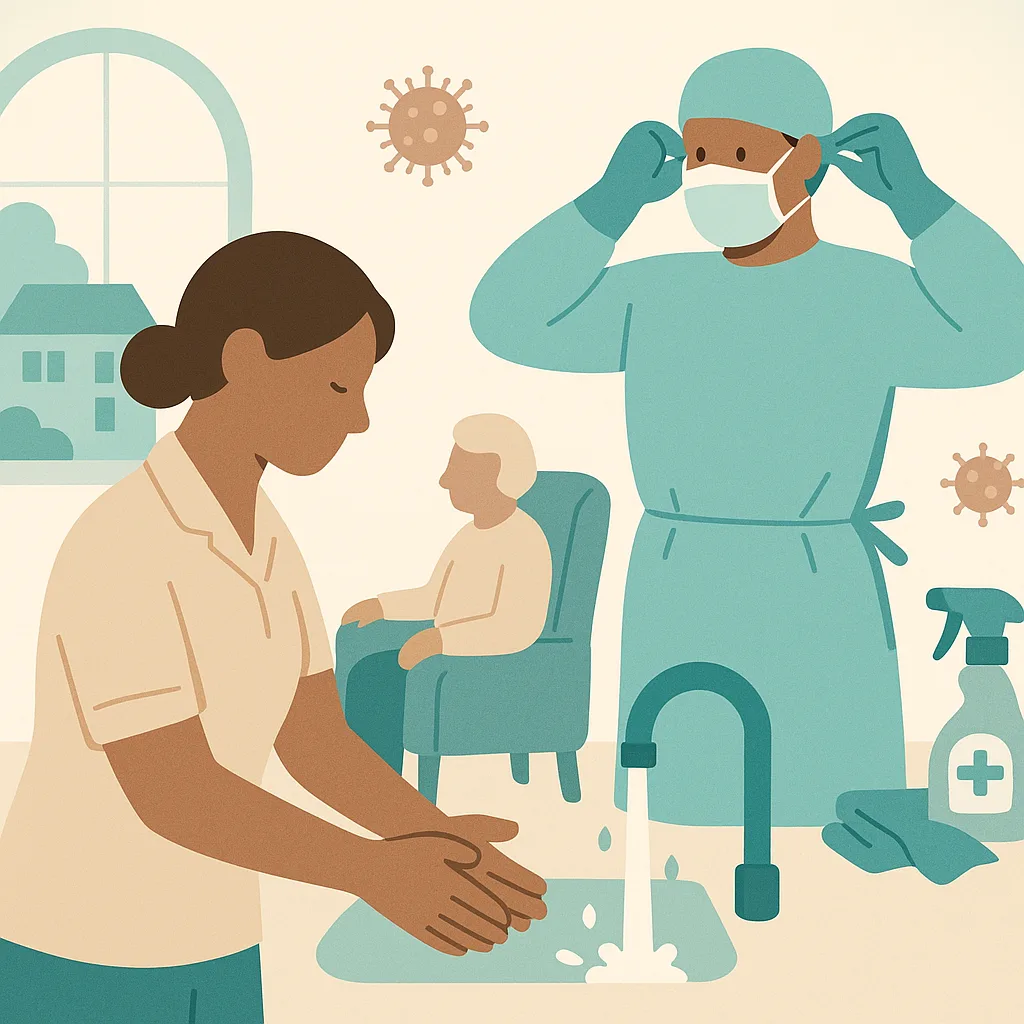
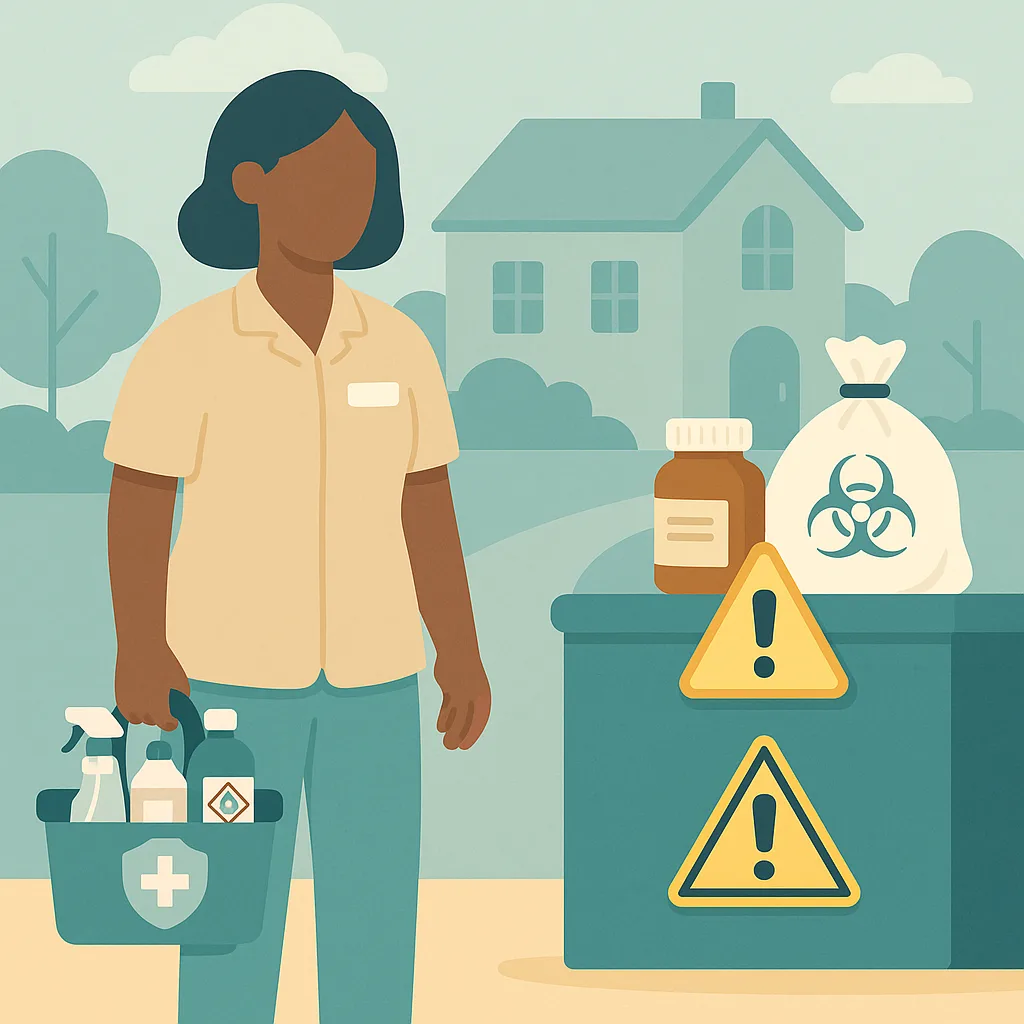
Body fluids. Blood and body fluids can carry infections, so they are treated as hazardous substances. Staff should follow their infection prevention and control procedures for handling continence products, soiled linen and sharps, using the right spill kit and PPE, and disposing of waste in the correct stream.
Water. Hot water systems, showers and little-used outlets can harbour Legionella bacteria. HSE's Approved Code of Practice L8 explains how employers should manage that risk. Care staff are rarely responsible for the water system, but they may be asked to flush little-used outlets or report water that is not hot enough or too hot, and they should understand why.
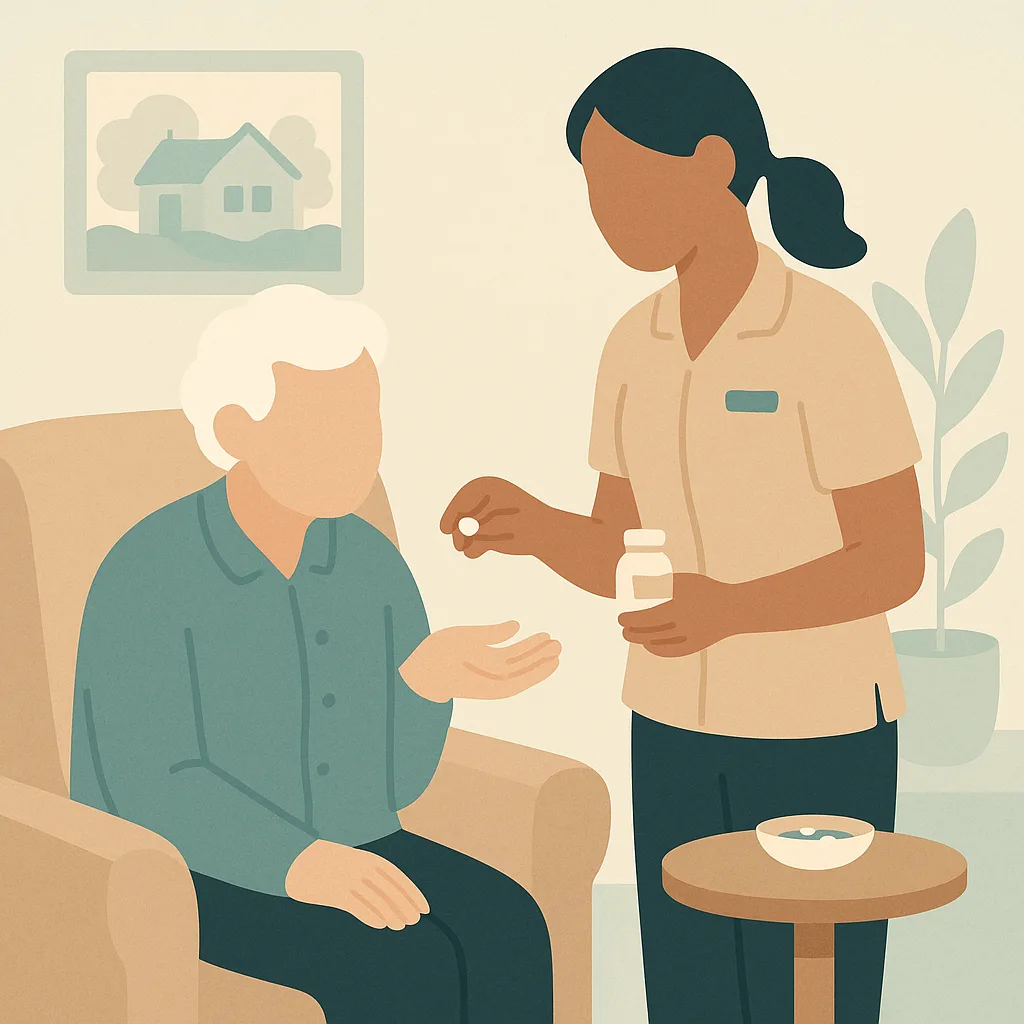
Medicines. Some medicines can harm the people who handle them, for example certain creams, crushed tablets or cytotoxic drugs. Staff should follow the instructions on the medicines administration record and any specific handling advice, wear gloves where directed and never crush or open medicines unless the prescriber or pharmacist has authorised it.
What should staff do after a spill or exposure?
Accidents happen, and calm, correct action limits the harm. COSHH training should prepare staff to:
Make the area safe, keep people away and ventilate where safe to do so.
Use the right spill kit and PPE for the substance, following the COSHH assessment and safety data sheet.
Give first aid as described on the data sheet, such as rinsing eyes or skin with plenty of water, and get medical help when needed.
Follow your needlestick or splash procedure straight away after any exposure to blood or body fluids.
Report the incident so that it is recorded, investigated and, where it meets the criteria, reported under RIDDOR 2013.
If a person you support swallows or is splashed with a cleaning product, staff should treat it as an emergency, follow first aid advice, contact NHS 111 or 999 as appropriate, and take the product or label with them.
What does CQC look for on COSHH?
CQC considers COSHH under its safe quality statements, linked to Regulation 12 (safe care and treatment) and Regulation 15 (premises and equipment) of the Health and Social Care Act 2008 (Regulated Activities) Regulations 2014, and to Regulation 18 for staff training. During an inspection, inspectors may notice an unlocked cleaning cupboard or an unattended trolley as quickly as anything in your files. They will generally want to see:
Assign, track and evidence staff training in minutes. Explore the plans and roll it out this week.
See training plansCurrent COSHH assessments for the products you actually use.
Substances stored securely, especially where people living with dementia or a learning disability may be at risk.
Staff who can explain how they use a product and what they would do after a spill.
Training records showing that relevant staff have completed COSHH training and refreshed it.
How often should care staff refresh COSHH training?
The COSHH Regulations require training to be suitable and sufficient, and to be updated when work, products or risks change. They do not fix an interval. The Skills for Care statutory and mandatory training guide helps employers decide what staff need, and many care providers refresh COSHH training every year so that knowledge stays current and the training record shows a clear date. You should also brief staff whenever you introduce a new product or change a procedure, and include COSHH in induction before new starters use any hazardous substance.
Is COSHH training online suitable for care staff?
COSHH training online suits care well, because it reaches night, bank and part-time domestic and laundry staff who rarely attend group sessions. Back it up locally by showing staff where your own data sheets, assessments and spill kits are kept.
The CareStream CPD Certified COSHH course
CareStream's COSHH (Control of Substances Hazardous to Health) course is annual COSHH training for care, domestic, laundry, kitchen and maintenance staff in any adult social care setting. It is built on the COSHH Regulations 2002 and HSE guidance, and it is a CPD-certified course from The CPD Certification Service, worth 1 CPD hour.
The eight lessons are:
What COSHH is
How hazardous substances cause harm
Pictograms, labels and safety data sheets
COSHH assessments and control
Using and storing substances safely
Protective equipment and skin care
Body fluids, water and medicines
Spills, exposure and emergencies
Learners work through care scenarios and interactive activities, then take a 32-question knowledge assessment with an 80% pass mark. The course takes about an hour, runs on any phone or computer and can be taken at each person's own pace in over 60 languages, which helps domestic and laundry teams who may prefer to learn in their first language. A wrong answer triggers a short follow-up lesson on that topic.
Each learner who passes receives a named, dated certificate carrying the CPD mark. It evidences completion of CPD Certified training and a passed knowledge assessment. It is not a qualification and does not by itself prove competence, so you still check safe practice on shift. Managers allocate licences and track completions and scores from a dashboard. Team prices start from 10 licences, with a 14-day refund on any licence that has not been started.
See the full range on our CPD Certified courses page.
CareStream is a registered CPD Provider (No. 50224). You can check our membership and see every CPD Certified course we offer on our page on The CPD Certification Service website.
Conclusion
COSHH can sound like paperwork, but in a care service it comes down to everyday choices: the right gloves, the right dilution, a locked cupboard, a trolley never left in a corridor. Annual COSHH training gives every role in your team the same understanding of those choices, protecting your staff and the people you support.
Sources
- Skills for Care: statutory and mandatory training guide · skillsforcare.org.uk
- HSE: COSHH, Control of Substances Hazardous to Health · hse.gov.uk
- The Control of Substances Hazardous to Health Regulations 2002 · legislation.gov.uk
- HSE: Legionnaires' disease, Approved Code of Practice L8 · hse.gov.uk
- CQC: Regulation 12, safe care and treatment · cqc.org.uk
Frequently asked
Is COSHH training a legal requirement in care?
The COSHH Regulations 2002 require employers to give staff who may be exposed to hazardous substances suitable and sufficient information, instruction and training. In care that includes care, domestic, laundry, kitchen and maintenance staff.
How often should COSHH training be refreshed?
The Regulations do not set a fixed interval, but training must be kept up to date when products, tasks or risks change. Many care providers refresh COSHH training every year and brief staff whenever a new product is introduced.
Can COSHH training be done online?
Yes. COSHH training online works well for care teams, provided it uses care scenarios and ends with a proper assessment. Show staff where your own COSHH assessments, safety data sheets and spill kits are kept as well.
Is COSHH awareness training the same as COSHH assessor training?
No. COSHH awareness training teaches staff how to work safely with hazardous substances. Writing COSHH assessments is a separate task for a competent person, usually a manager or health and safety lead.
Do body fluids count under COSHH?
Yes. Blood and body fluids can contain biological agents, which COSHH treats as hazardous substances. Staff should follow your infection prevention and control procedures, use the right PPE and dispose of waste correctly.
Written by
 Len BurgessSenior Care Advisor
Len Burgess has worked in the care sector for over 8 years, with hands-on experience across residential, nursing and community settings. Having supported teams through CQC inspections and the day-to-day reality of keeping a service compliant, he writes about regulation, quality and best practice in a way that's grounded in what actually happens on the floor, not just what the guidance says.