Most managers treat the data protection certificate as the finish line. It is a receipt. It says one named person passed one assessment on one day, and the certificate we issue says so in its own small print.

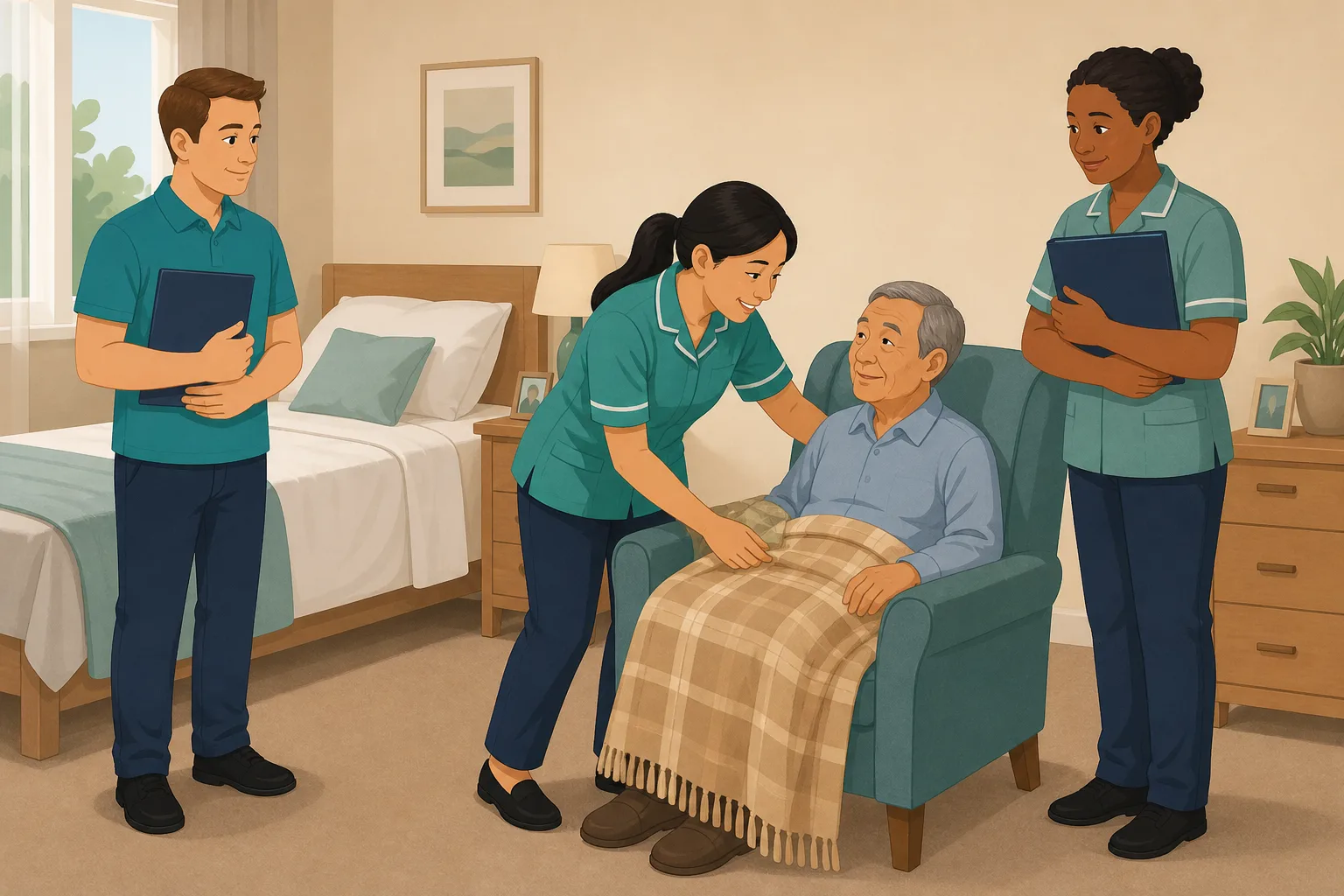
Figure: Data protection shows in small habits on shift, which a certificate alone cannot record.
The belief: a certificate proves the service handles data safely
It proves one person passed. Worth having. Not the same thing at all.
Our own certificate carries a line that most do not. It states that the certificate is evidence the named person completed the course and passed the assessment. It adds that it is not a government recognised qualification and does not certify competence to perform a particular role.
We would rather say that on the paper than let a folder of certificates do the arguing.
What a data protection certificate actually evidences
Three facts, and only three: who, what and when. Plus a score, if the course bothers to record one.
The CPD certified Care Certificate and the annual courses are free on every plan. No card needed, and every staff login is included.
Create a free accountThat is still useful. It answers the inspector's question about whether staff were trained, and it dates the answer.
What it cannot answer is whether the care assistant on nights knows not to photograph a wound chart on a personal phone. Only observation and supervision reach that.
The belief: the law names a training course
It does not. The duties are written as outcomes, which is why no course title appears in any of them.
A controller must put the right measures in place, in both systems and working habits, sized to the risk. That is the security of processing duty in Article 32 of the UK General Data Protection Regulation, or UK GDPR.
A data protection officer, where one is appointed, has training in their job description. Their tasks include awareness raising and the training of staff who handle data. Read the tasks of the data protection officer in Article 39.
Care providers have a second duty on top. Staff must receive the training they need for the work they do, under Regulation 18 on staffing.
So data protection training is expected. The shape of it is yours to choose.
The belief: once is enough, because the law has not changed
The law moves less than the risk does. Phones change, apps change, rotas change, and the scam that will catch one of your staff has probably not been written yet.
There is a practical driver too. GOV.UK guidance on digital working in adult social care asks registered providers to complete the Data Security and Protection Toolkit every year. It asks for a minimum level of standards met.
The same page asks providers to improve their arrangements, including plans for staff training. Read the expectations for care providers on digital working in full.
The Care Quality Commission comes at it from the other side. It wants to see that staff were trained for the job they do, and that you can show it.
That is why our annual courses expire and renew. A gdpr refresher training cycle you can actually see on a matrix beats a certificate from an unknown date.
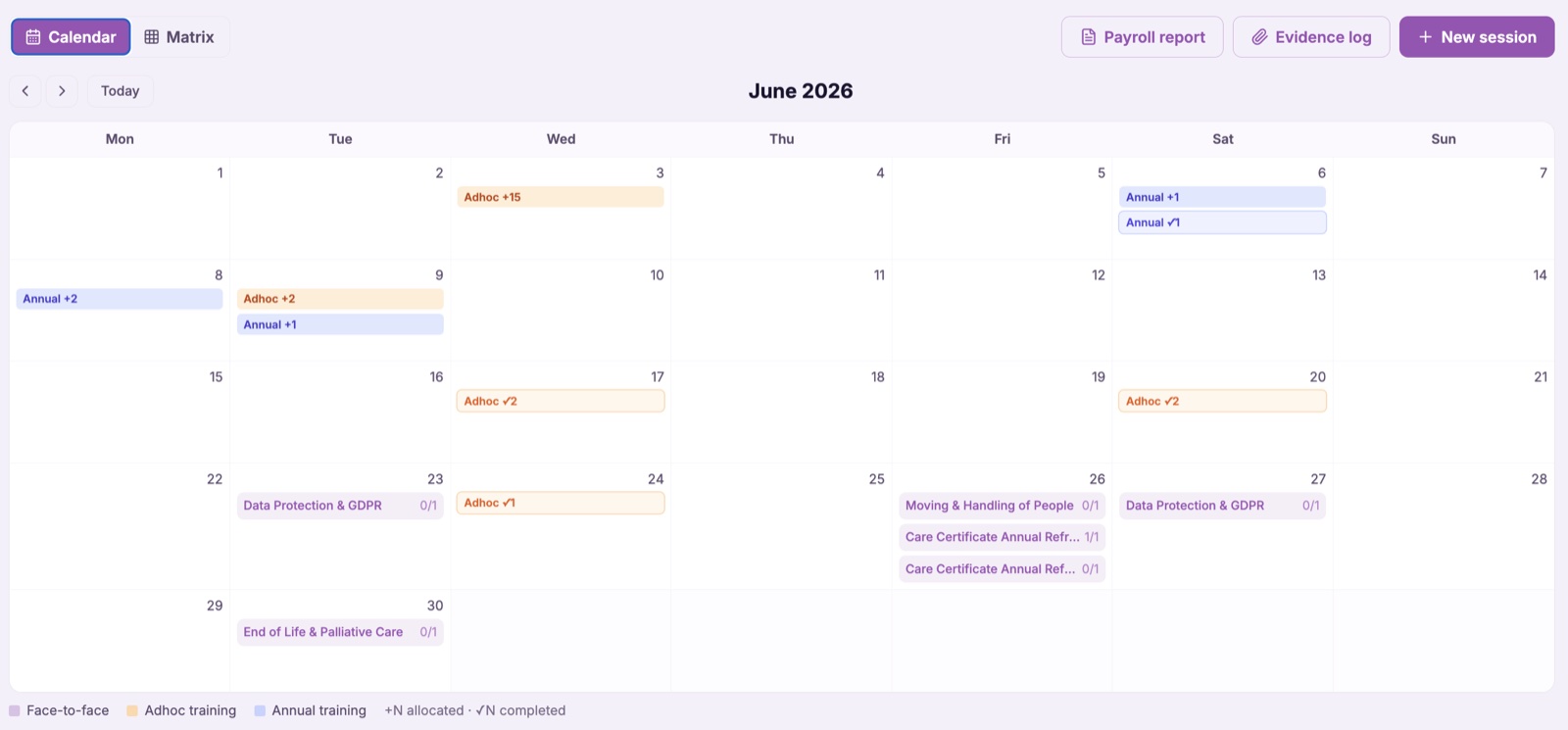
Figure: The calendar, not the certificate, shows whether the whole team is current.
The belief: the certificate protects the member of staff
It does not, and this is the point we would most want a care worker to hear.
Getting or sharing personal data without the controller's consent, knowingly or recklessly, is a criminal offence. The wording is in section 170 of the Data Protection Act 2018.
Looking up a neighbour's care record is the version that happens in real services. A pass mark in a course is not a defence. Knowing the rule is the protection, and the certificate is only the proof that someone taught it.
The belief: free training cannot be certified
Price and certification are separate things. The GDPR and Data Protection course on a free CareStream account is free in English for every member of staff. It is CPD certified by The CPD Certification Service.
So a gdpr certificate can cost nothing and still carry a recognised mark. What you are paying for elsewhere is rarely the certificate.
Free courses, an 80% pass mark assessment, certificates and a training matrix. Create a free account and start with the Care Certificate.
Create a free accountWhat is paid is the rest of the platform: other languages, policy work, the analytics. Plans start at £85 a month, and the training stays free on every one of them.
Our gdpr training certificate carries the CPD mark and the CPD hours. The learner keeps it in their own name, and access does not expire.
What an inspector does with the certificate
Very little, on its own. They look at the training record first, because it shows the whole team rather than one person.
Then they ask a member of staff a question. The certificate becomes interesting only when the answer and the record disagree, and then it becomes very interesting indeed.
So keep the certificates. Keep the record better. If a certificate exists while the matrix still shows the course as never started, somebody in your service is filing paper rather than training people.
What we would look for in any data protection course
We built ours to these tests, so treat this as our view rather than a standard.
- Does it cover care records specifically, including special category data, rather than office data in general?
- Does it teach what to do in the first hour of a breach, not only the definition of one?
- Does it name the Caldicott principles and the common law duty of confidentiality?
- Does it reteach what the learner got wrong, or just show a score?
- Does the certificate say what it is, and what it is not?
Ours runs about 60 minutes across 8 lessons, ending in a 32 question assessment with a pass mark of 80 per cent. A wrong answer triggers a follow up lesson on that topic.
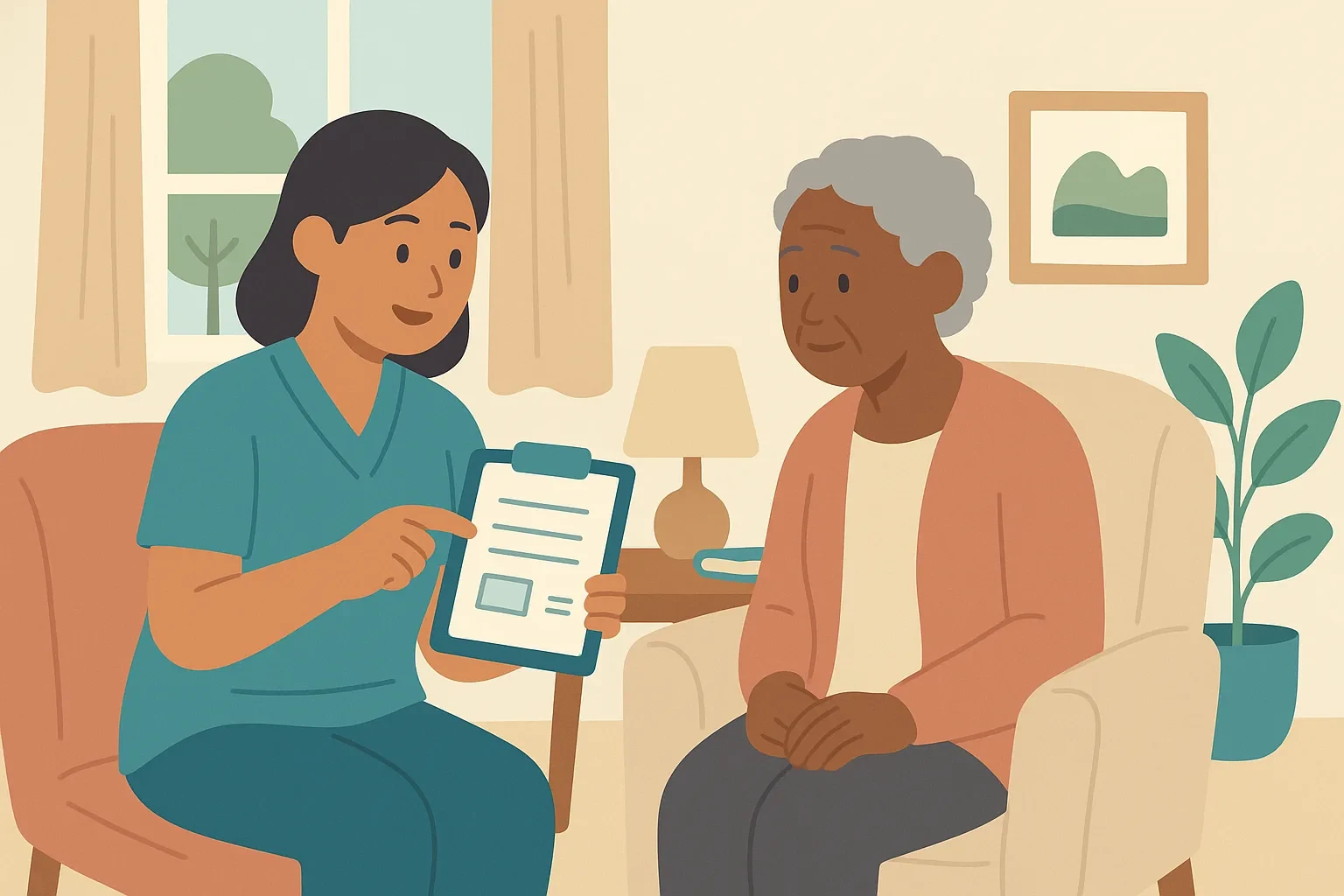
Figure: Consent, records and confidentiality are the parts of the course staff meet every shift.
Benefits of CareStream for a data protection certificate
A free CareStream account gives every member of staff a data protection certificate, and gives you the record behind it.
- The course is free in English, with no card needed and no expiry on access.
- Lessons cover law and principles, confidentiality, people's rights, sharing, storage, fraud and cyber security, devices and breaches.
- The certificate is named, dated, scored and downloadable as a PDF.
- Completions land on the training matrix, so overdue staff are visible without a spreadsheet.
- Staff can take it in over 60+ languages from the Starter plan.
See what the free GDPR and data protection course contains, or compare what each plan adds on the plans and pricing page.
What to do with the certificates you already hold
Open your training record and look at the data protection column. Count the people with no entry at all, rather than the people holding a certificate, because the gaps are what an inspector will find first.
Then read one certificate properly. If it does not carry a name, a date and a score, it is decoration.
Finally, ask two members of staff the same question: who do you tell first if a care record goes missing? Two different answers is a training finding, and no certificate will show it to you.
Our guide to GDPR training for care staff covers what the course should teach. Your written data protection policy should name who holds the breach log.
In CareStream those three things sit in one account: the course, the certificate and the matrix. The certificate is the smallest part of all of it.
Sources
- Article 32 of the UK GDPR, security of processing (legislation.gov.uk) · legislation.gov.uk
- Article 39 of the UK GDPR, tasks of the data protection officer (legislation.gov.uk) · legislation.gov.uk
- Section 170 of the Data Protection Act 2018, unlawful obtaining of personal data (legislation.gov.uk) · legislation.gov.uk
- Regulation 18, staffing (legislation.gov.uk) · legislation.gov.uk
- Digital working in adult social care, What Good Looks Like (GOV.UK) · gov.uk
Frequently asked