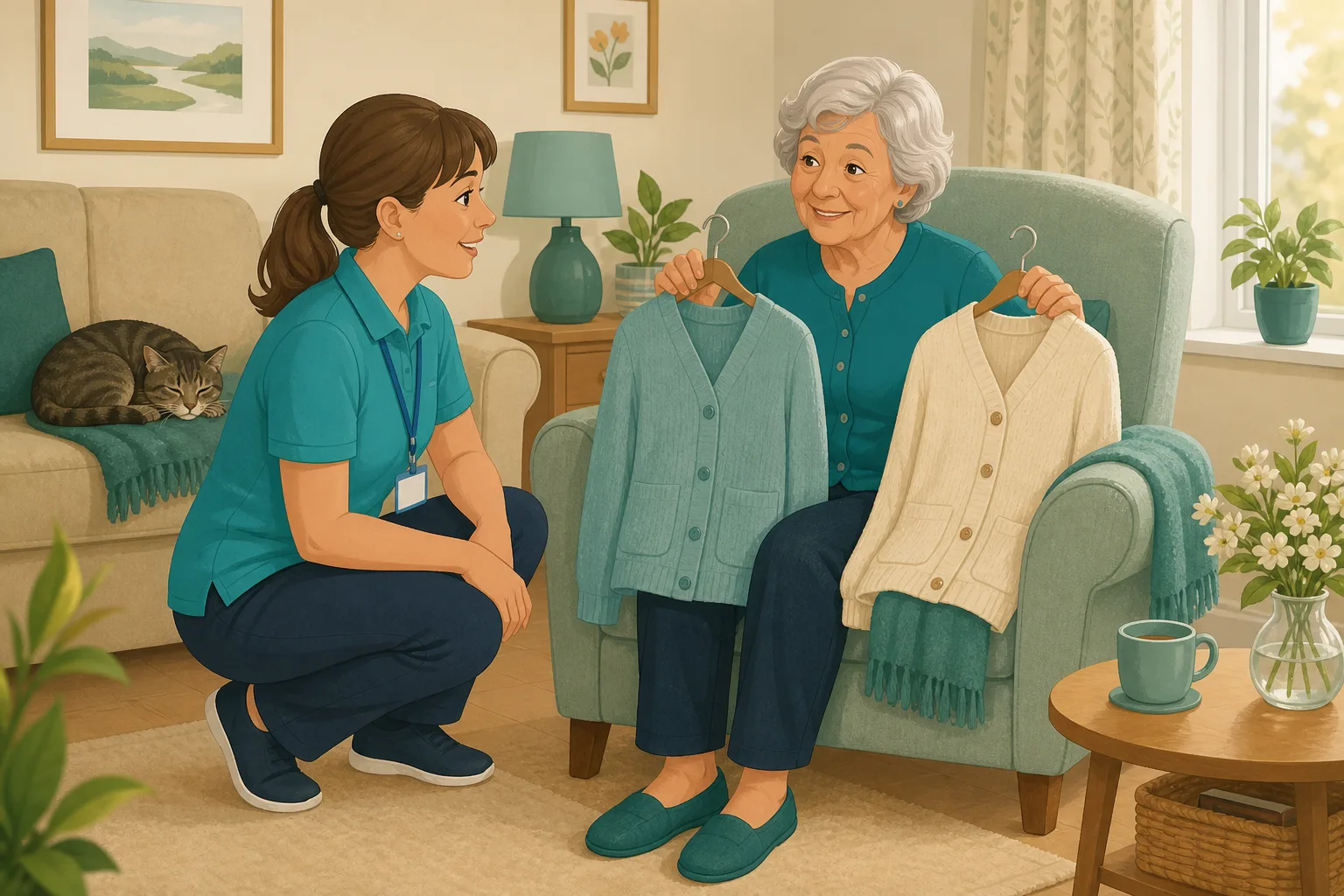
The six principles of safeguarding are not a law you can be prosecuted under. They sit in the Care Act statutory guidance, which tells councils and their partners how to work. Knowing where they live changes how you use them. They are a test of your own practice, not a rule to recite.
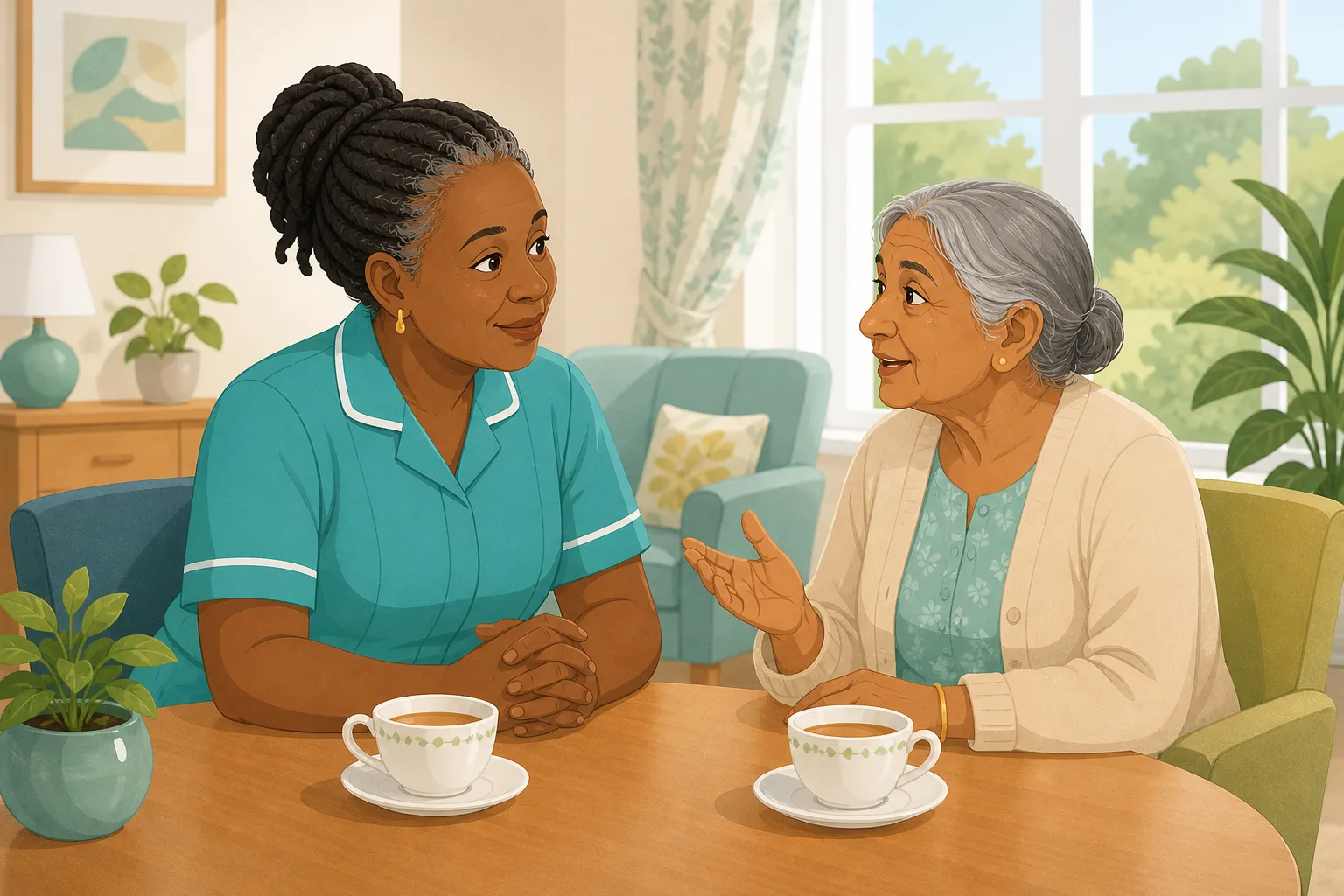
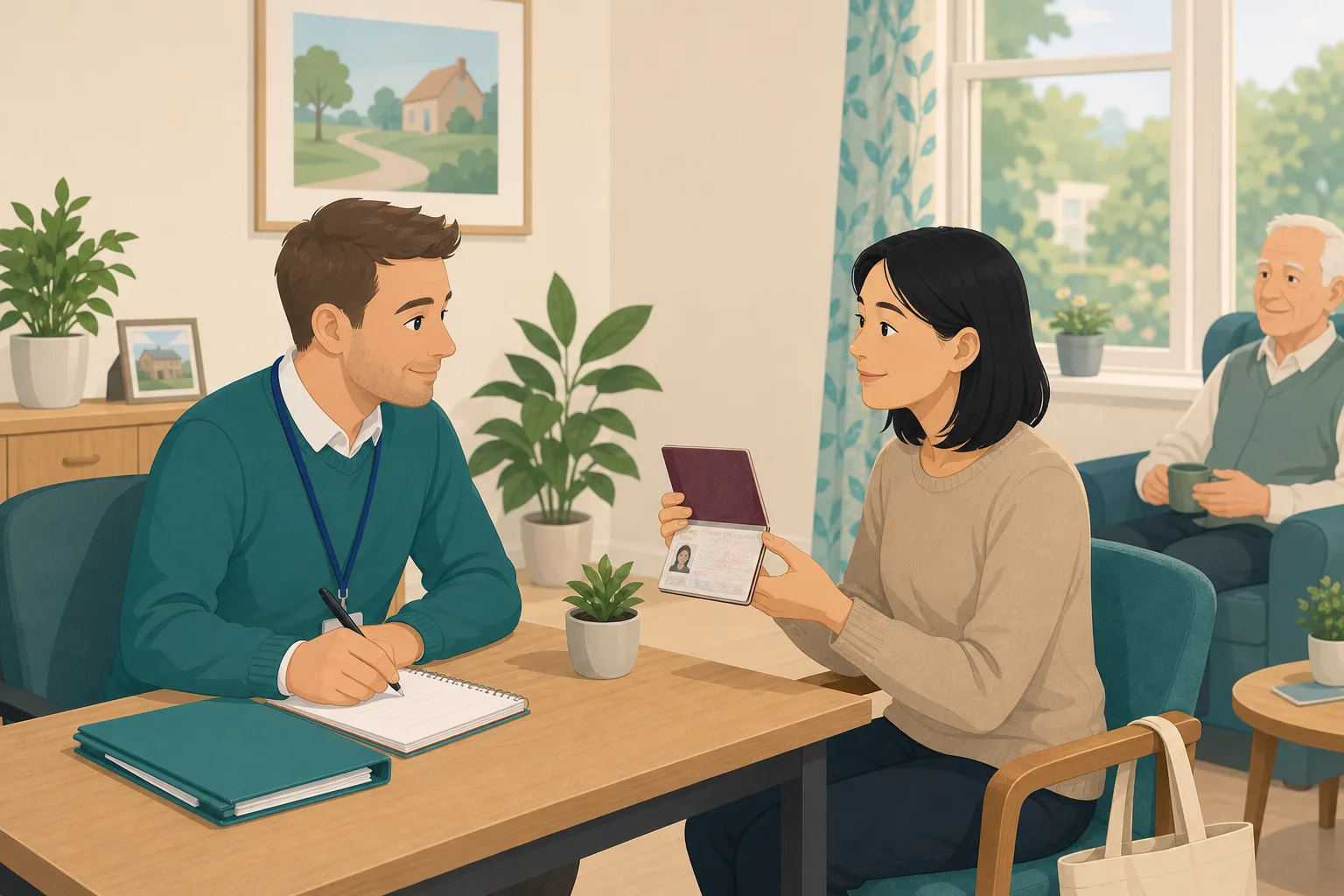
Figure: Safeguarding starts in the ordinary moments of a shift, not in a folder.
Where the six principles come from
The wording sits in one place: the adult safeguarding chapter of the Care and Support Statutory Guidance. That chapter says the six apply to every sector and setting. The list names care services, health care, housing, commissioning and the criminal justice system.
You can read the adult safeguarding chapter of the Care and Support Statutory Guidance in full. It is long, so get a cup of tea ready. The six sit in one short passage near the start of it.
Each principle comes with a short line written from the point of view of the person being supported. Those lines are the useful part. They turn one abstract word into something you can check on a shift.
Most safeguarding principles posters stop at the six words. The source does more than that.
Empowerment: the person decides, in their own words
The source words are: people being supported and encouraged to make their own decisions and informed consent.
The line written for the person is about outcomes. They are asked what they want, and that shapes what happens next.
So the test is simple. Can you point to the line in your record where the person said what they wanted? Not what the manager thought was best.
Prevention: acting before harm, not after it
The source words are: it is better to take action before harm occurs.
The line written for the person is about information. They should be told what abuse is, how to spot the signs and where to ask for help.
That duty is easy to miss. Prevention is not only your risk assessments. It is whether the people you support know what abuse looks like, and who to tell.
Ask a resident that question on a quiet afternoon. The answer tells you more about prevention than a folder of signed forms.
Proportionality: the least intrusive response that still works
The adult safeguarding chapter calls this the least intrusive response appropriate to the risk presented.
We see this one misread more than the other five. A worry about falls removes a walking frame, a worry about money takes over the shopping, and nobody writes down what was weighed in between. Both cut risk.
Both take something away.
Every audit in the library is free to run, with scoring, actions and a report. No card needed.
Create a free account
Figure: Proportionality asks what the smallest safe change is, not the easiest one to manage.
Write down the less restrictive option you considered, and why you did not take it. If there is nothing to write, you did not consider one.
Protection: support for the people who need it most
The source words are: support and representation for those in greatest need.
The line written for the person is about taking part. They should get help to join in as much as they want to.
Advocacy belongs here. So does the plain work of making a meeting possible: the right room, the right hour, a familiar face in the building.
Partnership: local work, shared concerns, no silence
Partnership is described as local answers, found by services working with their communities. The chapter adds that communities help to prevent, detect and report neglect and abuse.
For a care service this mostly means referral. When the threshold is met, the council must make the enquiries it thinks necessary. That duty sits in section 42 of the Care Act 2014.
A section 42 enquiry is the council's work, not yours. Your work is the referral, and the record that sits behind it.
Partnership also means sharing in proportion. Staff share what is helpful and necessary, not everything they hold.
Accountability: who did what, and when
The shortest of the six: accountability and transparency in delivering safeguarding.
The line written for the person is about roles. Everyone involved in their life should know who does what, and so should they.
Your regulatory anchor sits next door. Systems must be in place to prevent abuse, and to investigate any allegation as soon as the provider learns of it. The full text of Regulation 13 on safeguarding service users sets that out.
A one page check you can run on any concern
Take one entry from your safeguarding log. Read it against six questions, in this order.
- Empowerment: where are the person's own words about what they wanted?
- Prevention: had the person been told what abuse is and who to tell?
- Proportionality: what smaller step did you weigh up, and why was it not enough?
- Protection: what help did the person get to take part?
- Partnership: who else needed to know, and what did you share with them?
- Accountability: who decided, on what day, and where is that written?
If five answers come easily and one does not, you have found your gap. That is the point of the exercise.
Pick an audit, assign it, score it on a phone and close the actions. Create a free account to start.
Create a free accountMaking safeguarding personal sits alongside the six
The same chapter adds a seventh idea, without calling it a principle. It says it is unhelpful to prescribe a process that must be followed whenever a concern is raised.
That is making safeguarding personal. The six principles tell you what good looks like. This one tells you not to turn them into a script.
Read it as permission. Ask. Let the answer change the plan, even when the plan was tidier before you asked.
What the six principles do not cover
They do not set a referral threshold. Your local safeguarding adults board does that, and thresholds differ by council area.
Searches for the 6 principles of safeguarding usually land on a poster. A poster is not a duty.
They do not replace your own policy either. Ours is sold as a written document, at £79, because the named roles and local contacts have to be yours.
They set no review interval. The Care Quality Commission treats safeguarding as one of the 34 quality statements in the Single Assessment Framework. It looks for evidence, not a stated interval.
Benefits of CareStream for the principles of safeguarding
A free CareStream account turns the principles of safeguarding into a monthly record, not a laminated poster.
- The Safeguarding Log Review audit is free to run, with 10 checks in 2 sections.
- Its first section asks whether each concern was logged, referred, notified and discussed with the person.
- Its second section asks about themes, staff training and what staff actually know.
- The Care Certificate is free for every member of staff. Safeguarding adults and safeguarding children are two of its 16 standards.
Open the free safeguarding log review audit to read every check before you sign up.
Where to start with the six principles
Pick one concern from your log and read it against the six. Most services find empowerment is the thin one. The person's own words were never written down.
Fix that. Add one line to your log template, kept in the person's own words, answering the only question that empowerment really asks: what did they want to happen?
Then look at training. The annual safeguarding adults and children course runs about 35 minutes across 6 lessons. It ends with a 20 question assessment and a pass mark of 80 per cent.
Your written safeguarding adults policy should name the people behind each principle. CareStream keeps the policy, the course and the audit in one account, so the record builds itself.
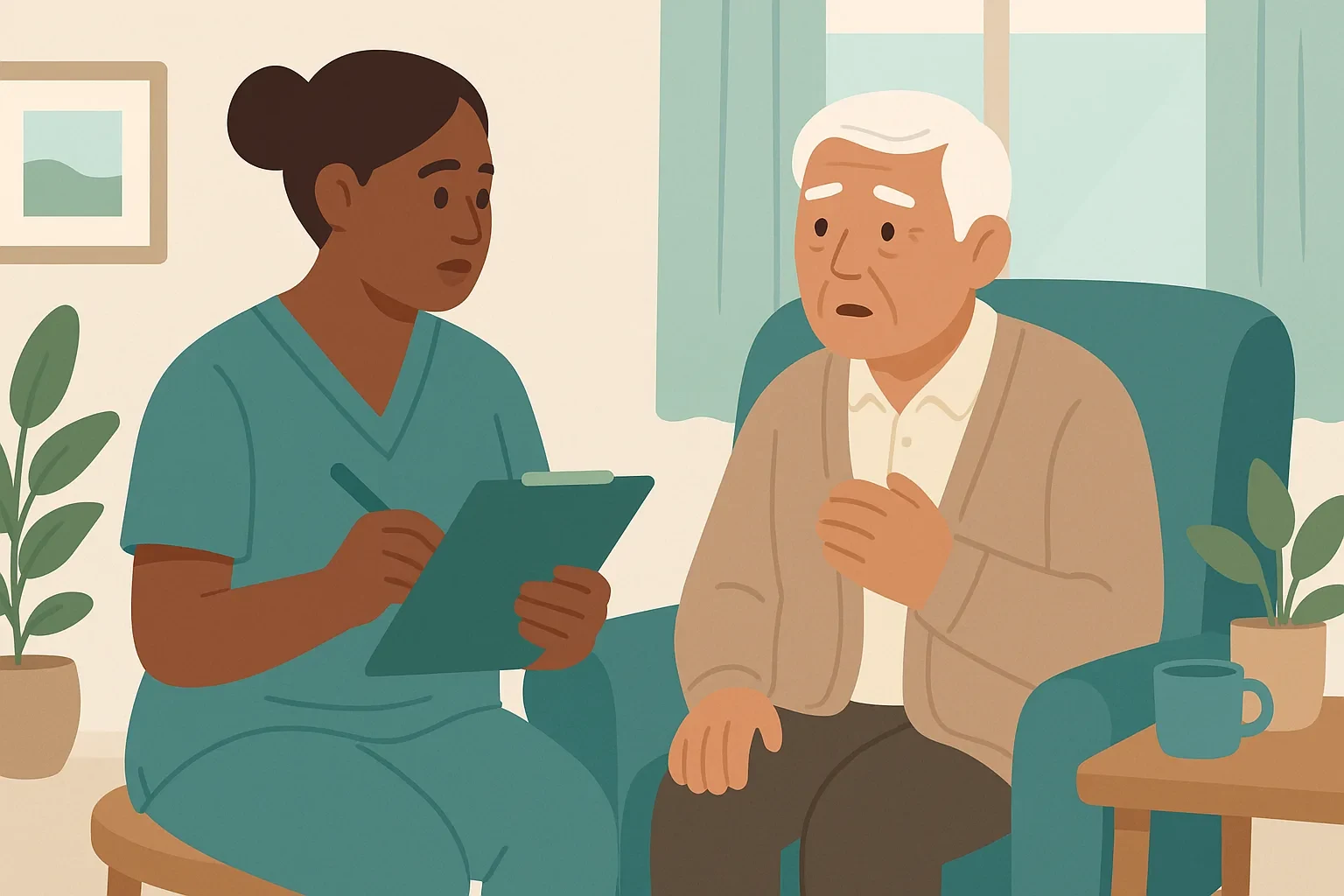
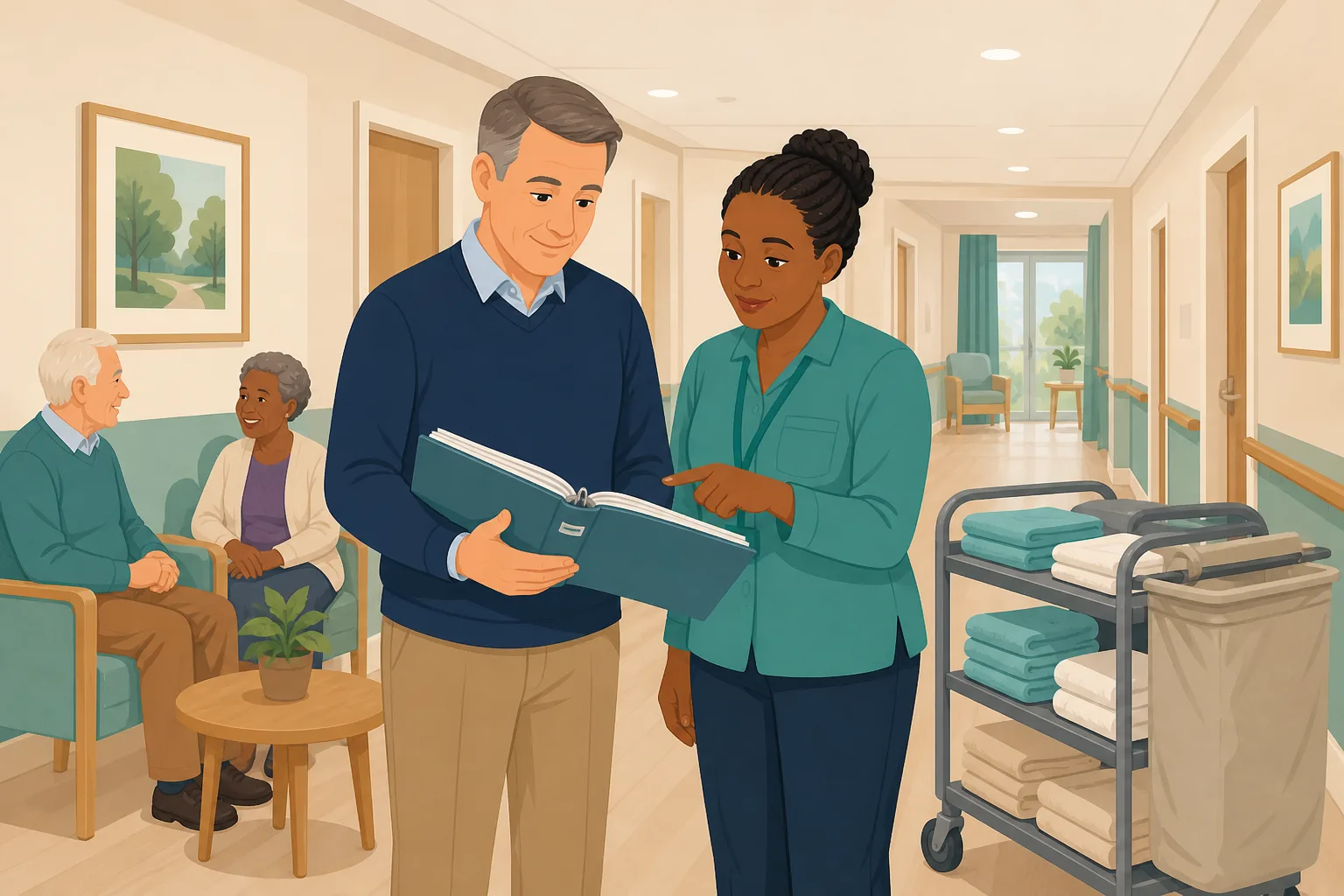
Figure: The record of what the person wanted is the evidence that the principles were used.
Sources
- Care and support statutory guidance, adult safeguarding chapter (GOV.UK) · gov.uk
- Section 42 of the Care Act 2014, enquiry by local authority (legislation.gov.uk) · legislation.gov.uk
- Regulation 13, safeguarding service users from abuse and improper treatment (legislation.gov.uk) · legislation.gov.uk
- Regulation 18, staffing (legislation.gov.uk) · legislation.gov.uk
- The 34 quality statements of the Single Assessment Framework (Care Quality Commission) · cqc.org.uk
Frequently asked