The safeguarding log is open on the desk and holds four entries for the month. Two say referred. One has nothing in the outcome column at all. A monthly safeguarding audit starts there, in the log you already keep.
An inspector rarely asks to see the log itself. They ask what happened to the third entry, and who decided that nothing further was needed.
Count the entries before you read any of them
Write down how many concerns were raised this month. Do it before you read a word of them, so the number is not coloured by how serious each one felt at the time.
A month with none is as interesting as a month with nine. Both raise a question about whether staff are raising concerns at all, and that question is easier to answer with the figure in front of you.
Who should hold the pen
Usually the registered manager or the safeguarding lead, because both the log and the training records have to be open at once.
There is one exception worth making. Where the lead handled most of the month's concerns, ask a deputy or a colleague from another service to run the review instead.
Was every concern written down on the day it was raised?
This is the first check, and it is the one that fails most often. A concern told to a senior at twenty past seven and typed up two shifts later has already lost detail.
Look at the gap between the date of the event and the date of the entry. Where they differ, write the reason in the findings box rather than marking it down and moving on.
Every audit in the library is free to run, with scoring, actions and a report. No card needed.
Create a free account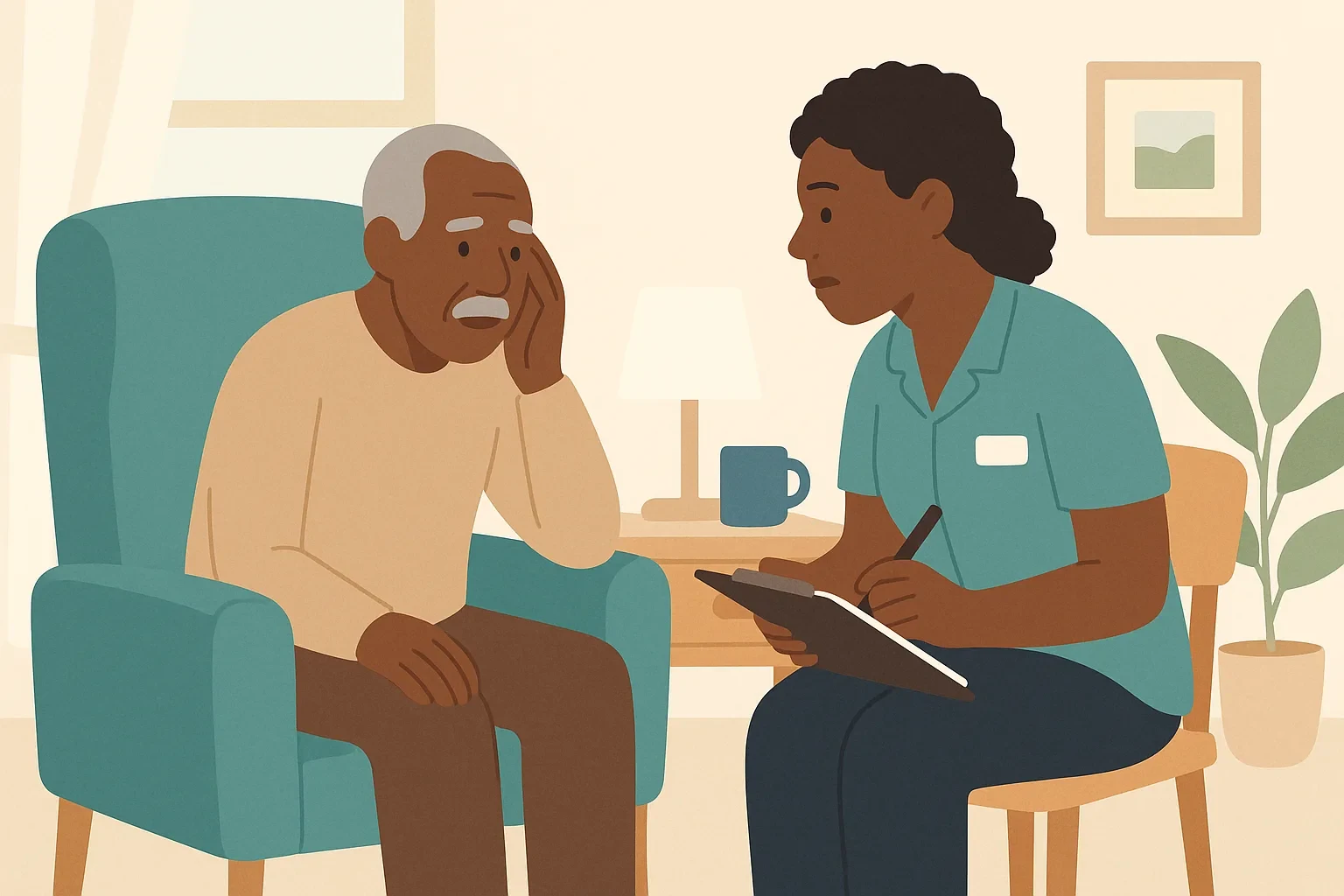
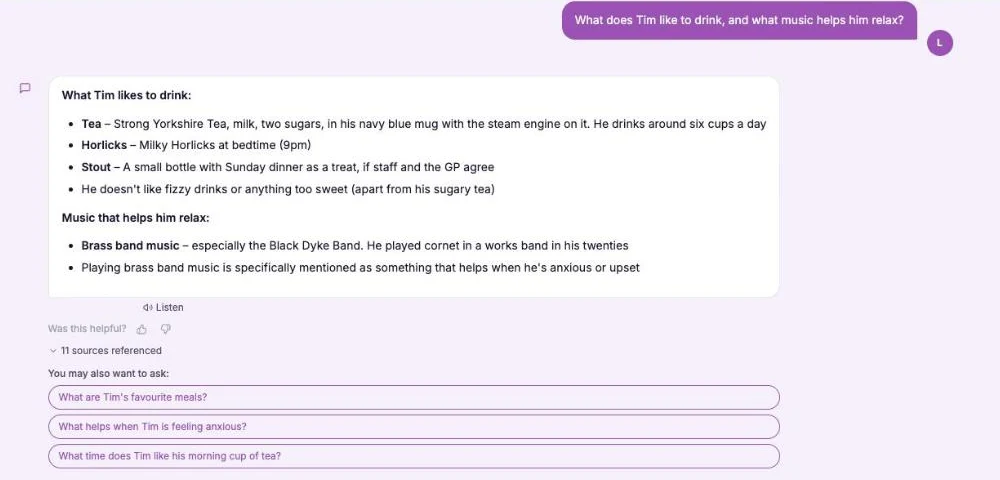
Figure: the record starts with what the person said, in their words, at the time they said it.
Did a referral go to the local authority where the threshold was met?
Councils hold the enquiry duty, not providers. The test sits in section 42 of the Care Act 2014. A council must act where it suspects an adult with care needs is at risk and cannot protect themselves.
Your job is to pass it on so that duty can be exercised. The threshold belongs to your local safeguarding adults board procedure, so keep its wording beside the log while you work.
Mark not applicable where the threshold genuinely was not met. Then write one line on why, because an unexplained no is the finding an inspector will pick.
Was the Care Quality Commission notified where it was required?
Abuse is notifiable. So is an allegation of abuse, and so is any incident the police look into. The full set is in the list of incidents a provider must report.
The wording is without delay. A notification sent after an internal meeting concluded has usually missed that test, however reasonable the meeting was.
Check the reference number is on the entry. A notification nobody can produce is treated the same as one that was never sent.
Was the person told, and kept in the picture?
Ask what the person was told about the concern raised on their behalf. Ask who told them, and when their representative was brought in.
Most logs answer this check thinly. The safeguarding quality statement starts by working with people to understand what being safe means to them. You can read the wording of all 34 quality statements in full.
What one complete entry looks like
Before the checks make sense, agree what a finished entry holds. CareStream sets the same fields on every run, and a paper log can carry them just as well.
- What was seen or said, in the words used at the time.
- The date it happened and the date it was written.
- Who inside the service was told, and when.
- Whether a referral went to the local authority, and the reason either way.
- Whether the Care Quality Commission was notified, with the reference.
- What the person and their representative were told.
- What changed afterwards, and who signed it off.
An entry missing the last line is the commonest weakness in a safeguarding log. The concern was handled, but the record stops before the part that proves it.
Read the month as a pattern, not a pile
Now put the entries side by side. One resident in three of them, or one corridor, or one shift, says something the individual records cannot.
Theft or misuse of a person's money counts as abuse in its own right under Regulation 13 on protection from abuse and improper treatment. Small sums going missing look minor one at a time and look different in a row.
Pick an audit, assign it, score it on a phone and close the actions. Create a free account to start.
Create a free accountWrite the pattern down even when you cannot yet explain it. Next month's review starts by asking whether it repeated.
What the training record has to show
Open the training matrix next to the log. Every member of staff who handled a concern should have safeguarding training that is in date, and you should be able to see the date without asking anyone.
Where a concern was handled poorly, the training record is the first place to look for why. Where it was handled well, say so in the strengths box.
Ask two members of staff the question an inspector asks
Walk out of the office and ask two people how they would raise a concern, and who the safeguarding lead is. Ask a night worker if you can.
Their answers are evidence, so record them as given. A correct policy and two blank faces is a finding about the policy, not about the two people.
Score it, then give every gap an owner
Each check is answered yes, no or not applicable, and each section carries a score. Read the individual answers first and the percentage second.
Every no needs four things: what will change, who owns it, a date, and how you will know it was done. Anything that leaves a person at risk is fixed that day.
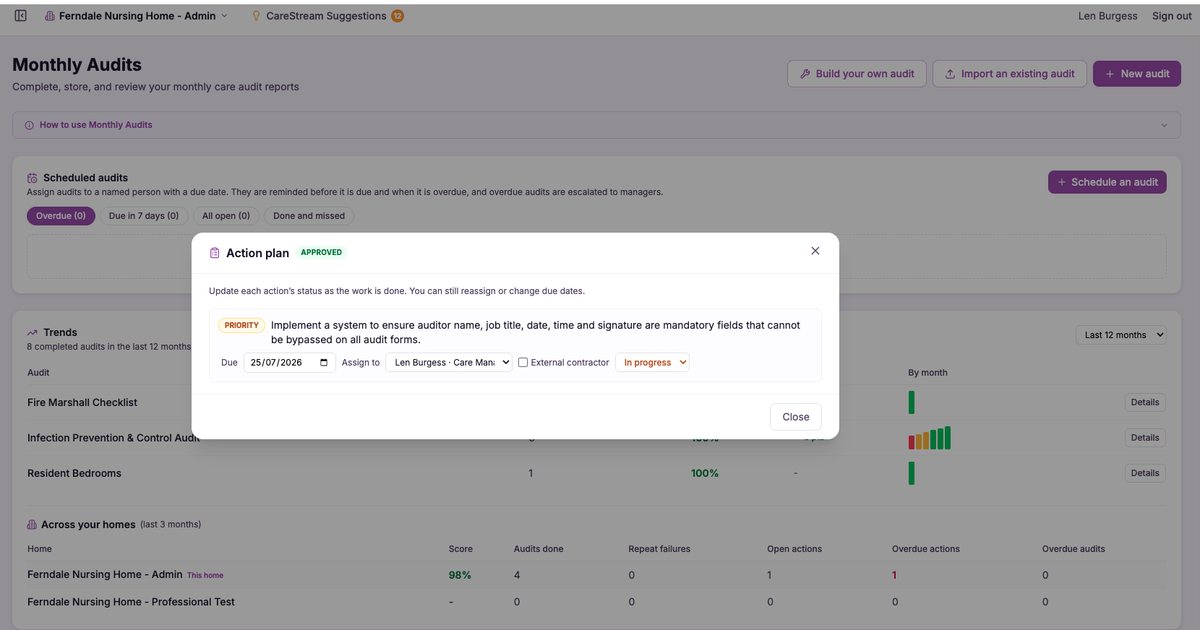
Figure: one action, one owner, one date and a status that changes as the work is done.
Providers must run systems to assess, monitor and improve the service, which is what Regulation 17 on good governance asks for. An action left open is the part that fails that test.
Benefits of CareStream for your safeguarding audit
If you want a safeguarding audit tool rather than a spreadsheet, the Safeguarding Log Review is built in.
- It is free to run on a free account, with no card needed.
- It holds 10 checks in 2 sections, each scored, with a findings box and an action on any check.
- The checks follow the order above, from logging and referral to notification, themes, training and staff knowledge.
- Training records sit in the same account, so the training check is answered from a record.
- Results build into a trend across months, which is where repeat findings show up.
Open it from the free audit library, or read every check first on the Safeguarding Log Review page.
Where to start with next month's log
Do not build a safeguarding audit checklist from scratch. Take last month's entries, run the eight questions above in order, and write one finding for each gap.
Then set the date for the next one before you close the file.
Does your own wording need tightening first? Our guide to the safeguarding policy for a care home covers what the document should say. The safeguarding adults policy is written for the service you run.
This is a review of a log you already hold. It is not a safeguarding log template, and it is not a safeguarding audit template to print and fill in once.
Sources
- Section 42 of the Care Act 2014, enquiry by local authority (legislation.gov.uk) · legislation.gov.uk
- Regulation 13, safeguarding service users from abuse and improper treatment (legislation.gov.uk) · legislation.gov.uk
- Regulation 18 of the Care Quality Commission (Registration) Regulations 2009, notification of other incidents (legislation.gov.uk) · legislation.gov.uk
- Regulation 17, good governance (legislation.gov.uk) · legislation.gov.uk
- The 34 quality statements, including Safeguarding under Safe (Care Quality Commission) · cqc.org.uk
Frequently asked