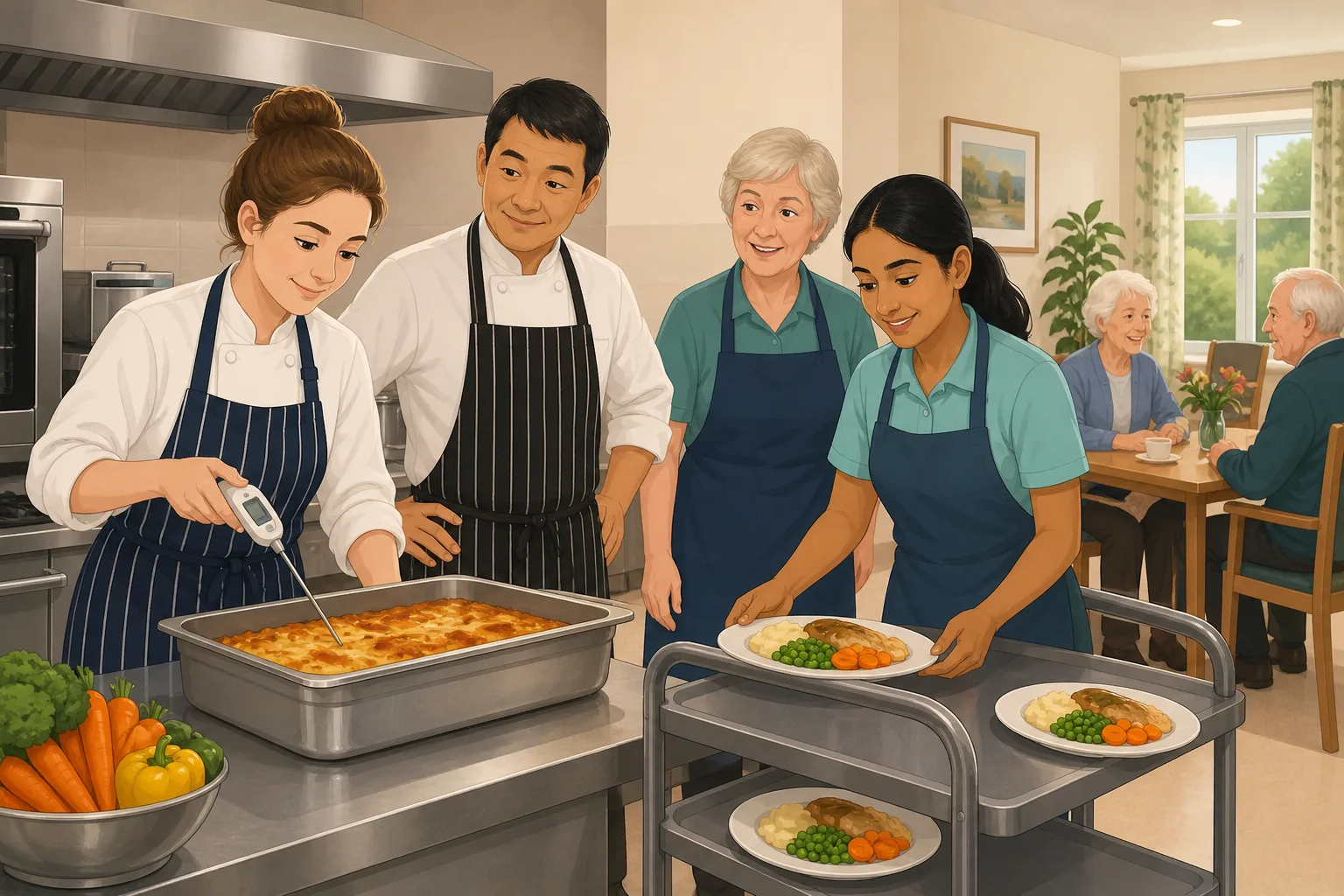
The quote from the training company lists two prices: Level 2 for the carers, Level 3 for the cook. Food hygiene level 2 is the usual answer for a care home, and the law names neither level. What matters is what each person does with food.
What the hygiene regulation actually asks for
Start with the duty rather than the course. A care kitchen is a food business, so it follows Regulation (EC) No 852/2004 on the hygiene of foodstuffs.
The training duties in Annex II Chapter XII are short. Food handlers must be supervised and instructed or trained in food hygiene matters commensurate with their work activity.
Read that last phrase twice. The test is the work, not a level.
The same chapter adds a second duty, about the food safety plan. Most care kitchens run one built on hazard analysis and critical control points, known as HACCP. Whoever develops and maintains it must have had adequate training in applying those principles.
The CPD certified Care Certificate and the annual courses are free on every plan. No card needed, and every staff login is included.
Create a free accountThat plan is not optional. Article 5 of the same regulation requires a permanent procedure based on those principles. In most care homes it is the pack kept in the kitchen.
What Level 2 and Level 3 actually mean
The levels come from the qualifications system, not from care. GOV.UK lists nine qualification levels in England, Wales and Northern Ireland.
A level 2 award or certificate sits at the same level as a GCSE at grades 4 to 9. A level 3 award sits with A level. So level 3 food hygiene is not a different subject. It is the same subject taken further, with more on designing and supervising the system.
Keep that in mind when a trainer says a level is required. A level is a depth, and the regulation asks for a match to the work.
Three questions that settle the decision
Work through these for each person on your rota.
- What does this person actually touch? Plating, reheating, decanting and helping someone to eat are all food handling. Carrying a sealed tray is not.
- Who writes and reviews the food safety procedure, and who changes it when the menu or a diet changes?
- Who supervises other people in the kitchen, checks their work and decides when something is unsafe to serve?
The first question sets the baseline for most of your team. The second and third point at one or two people, and those are the ones worth the deeper course.
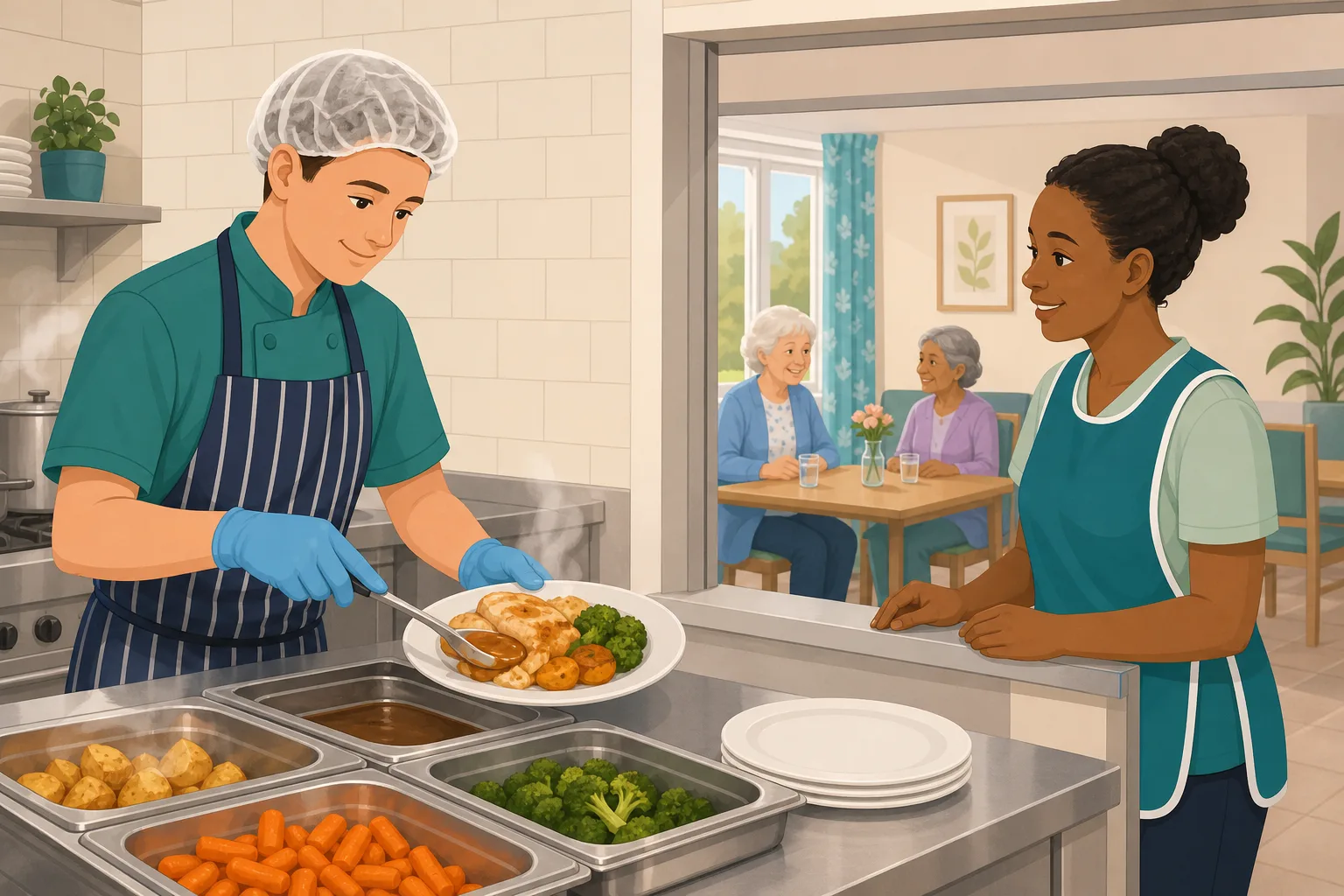
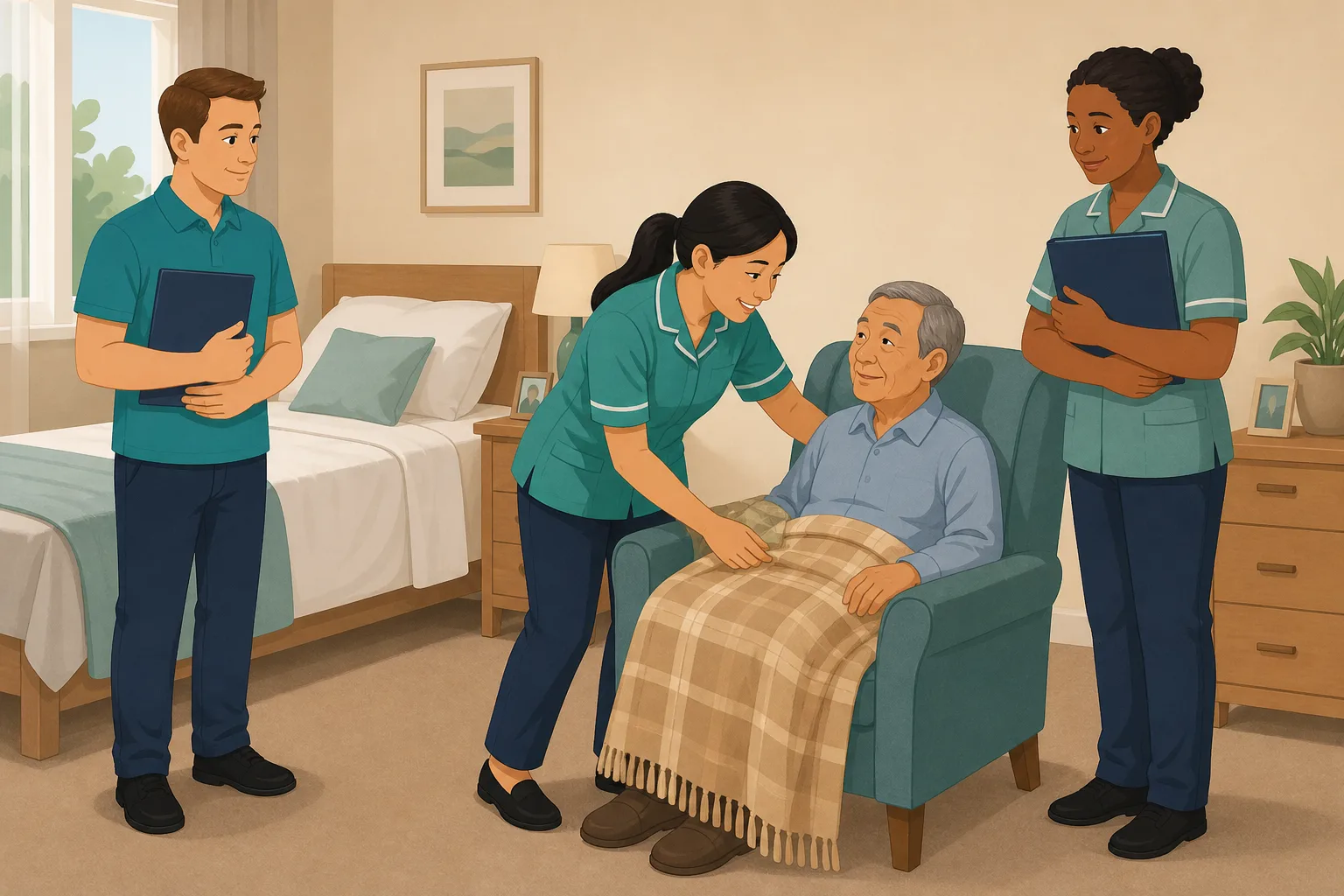
Figure: plating, allergens and mealtime support all count as food handling.
How we would set it for a care home
This is our recommendation and not a rule, so write your own reasons into your training policy.
- Care workers who serve meals, plate food, make drinks and support people to eat: food hygiene training at the depth of a level 2 award, refreshed each year.
- Kitchen assistants and cooks: the same ground covered properly, with temperature control, cleaning schedules and allergen handling assessed in the kitchen.
- The head cook, chef or manager who owns the food safety system: level 3 food hygiene, because they maintain the HACCP based procedure.
- Anyone who only clears plates or carries sealed trays: instruction and supervision, recorded, rather than a course.
Two details catch services out. Agency and bank staff handle food too, so the record has to cover them. So does anyone who brings in food for a birthday tea, which is a conversation rather than a course.
What a food hygiene certificate does and does not prove
A food hygiene certificate shows that a named person passed an assessment. That is worth having. It is not the same as competence.
Competence shows up in the kitchen: a probe used and wiped, a decanted sauce labelled, a fridge log that matches the thermometer. None of that appears on a certificate.
A food hygiene level 2 certificate from an awarding body is no different in that respect. It tells you the person was assessed to a known depth, which is useful when a commissioner asks, and it still says nothing about your own kitchen.
So pair the course with a check you record. The free kitchen audit template asks the questions an environmental health officer tends to ask, and the mealtime experience audit covers the dining room end of it.
Free courses, an 80% pass mark assessment, certificates and a training matrix. Create a free account and start with the Care Certificate.
Create a free accountWhere the regulator fits around all this
Food safety law is enforced by your local authority. The Care Quality Commission comes at the same kitchen from a different angle.
The Health and Social Care Act 2008 (Regulated Activities) Regulations 2014 reach the same meals from another side. Regulation 14 says nutrition and hydration needs must be met. Preferences, and religious or cultural needs, count as part of that.
The regulator's page on meeting nutritional and hydration needs sets out what a provider has to do.
Training sits under a different duty. Regulation 18 asks for staff who are suitably qualified, competent and skilled, with the training their work needs. Your food hygiene records are read against it.
Our post on what food hygiene training care staff need each year covers the annual refresher question in more depth.
What to keep on the training record
Whichever level you land on, the file has to answer one question: why this training, for this person, doing this job. We would keep five lines per person.
- The course or qualification taken, and who provided it.
- The level, if it has one, and the awarding body if there is one.
- The date it was completed and the date you will refresh it.
- What was observed in the kitchen or the dining room afterwards, and by whom.
- The role at the time, because a carer who moves into the kitchen needs the record revisited.
That last line is the one most services miss. People move. A record that still matches an old role is the small gap that turns a good kitchen into a finding, and it costs nothing to fix.
Benefits of CareStream for food hygiene level 2 style training
The CareStream Food Hygiene course is CPD certified and free for every member of staff, in English on the free plan.
- 8 lessons, from personal hygiene to allergens, modified diets and records.
- About 60 minutes, then a 32 question assessment with a pass mark of 80 per cent.
- Miss a question and the hub serves a short lesson on that point, then asks again.
- A named, dated certificate as soon as they pass, kept on the training record.
One honest limit. This is CPD certified training, not a regulated qualification, so it is not a level 2 award. Buy the award from an awarding body if a contract asks for it.
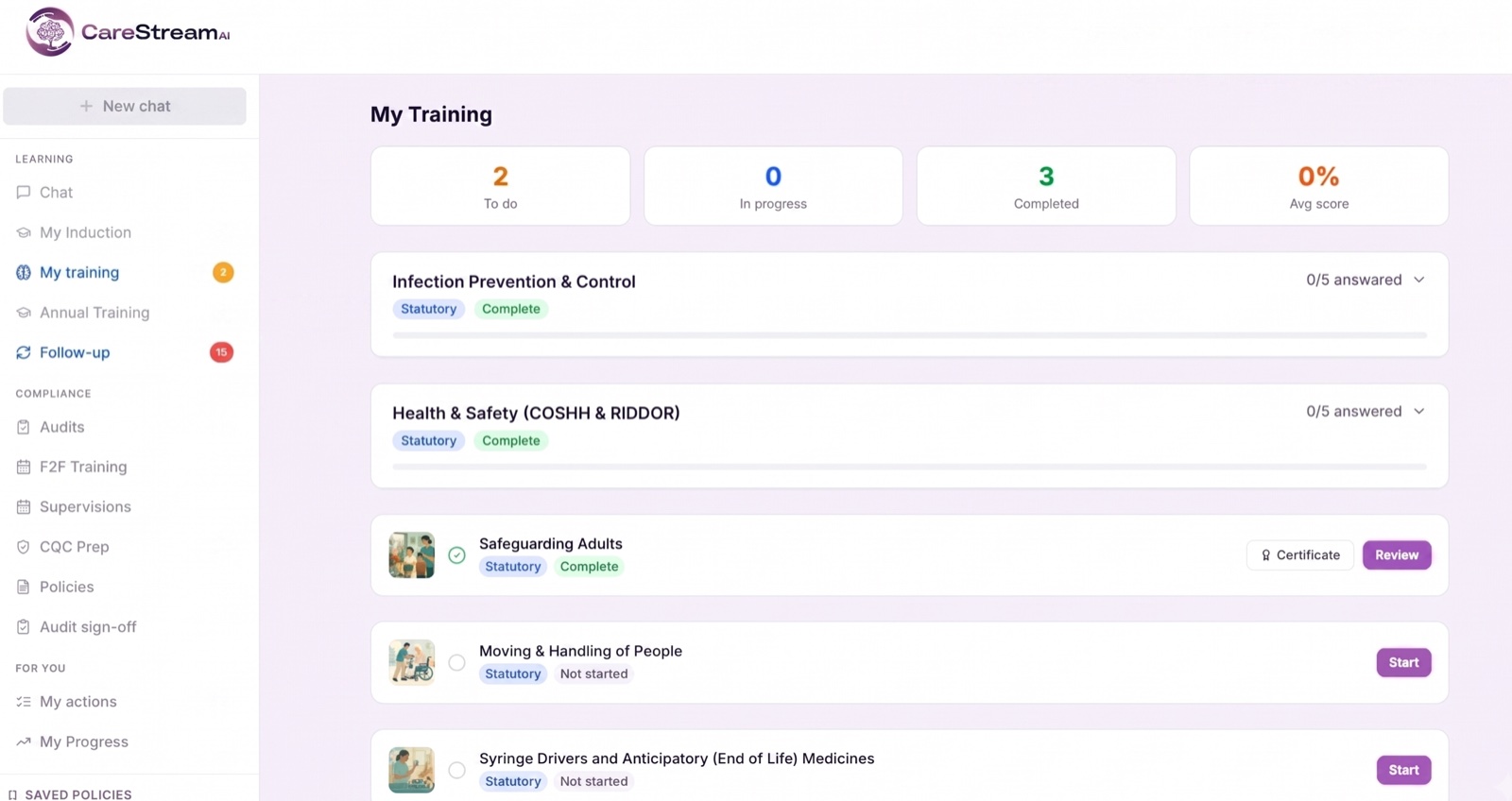
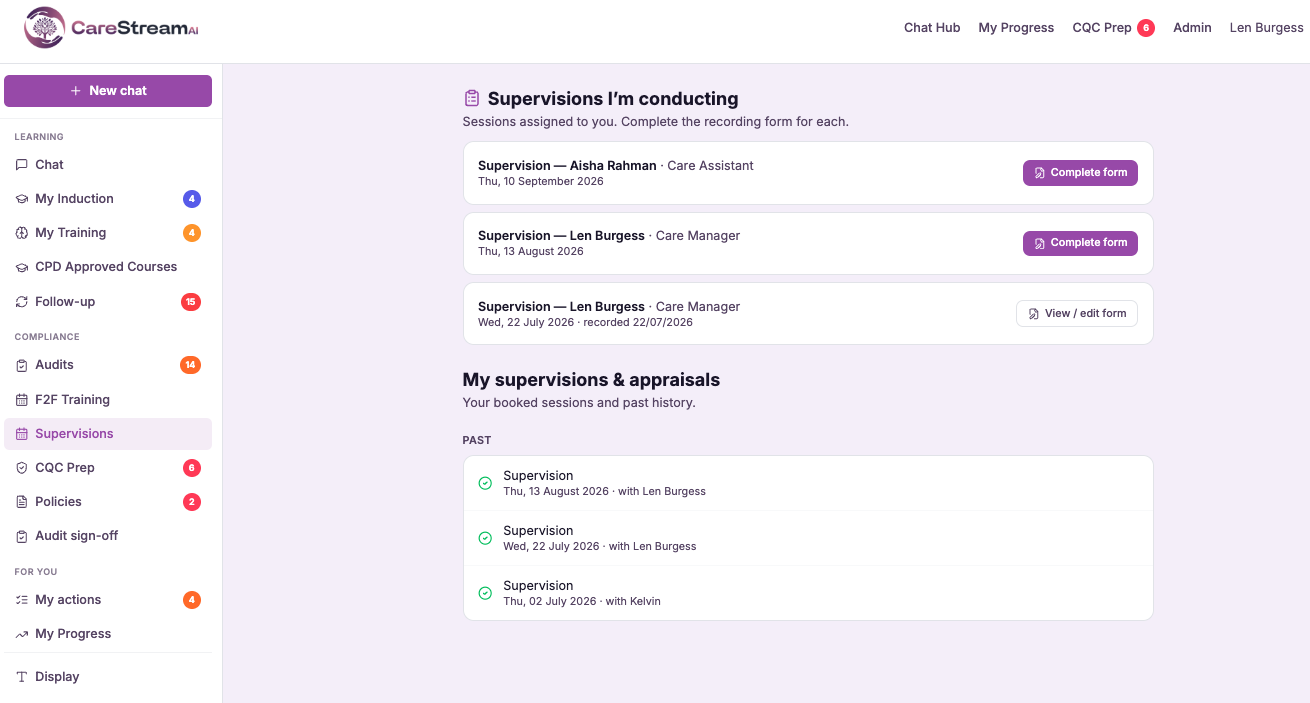
Figure: each person sees their own courses, and the certificate appears once they pass.
How to choose, in one sitting
Open your rota and mark everyone who touches food. That is your baseline group, and the free Food Hygiene course covers them.
Then find the one or two people who own the food safety procedure. Those are your candidates for the deeper qualification, and the cost is small once it is only two people.
Write the reasoning down. A sentence in the training policy, saying why each group gets what it gets, is the part an inspector asks for. It is also the part most services never wrote.
Then keep the two records together. CareStream holds the course result and the certificate on each person's training record, and your kitchen audit holds what you saw them do.
Sources
- Training duties for food handlers, Annex II Chapter XII of Regulation (EC) No 852/2004 (legislation.gov.uk) · legislation.gov.uk
- Article 5, hazard analysis and critical control points, Regulation (EC) No 852/2004 (legislation.gov.uk) · legislation.gov.uk
- What qualification levels mean, England, Wales and Northern Ireland (GOV.UK) · gov.uk
- Regulation 14: Meeting nutritional and hydration needs, guidance for providers (Care Quality Commission) · cqc.org.uk
Frequently asked