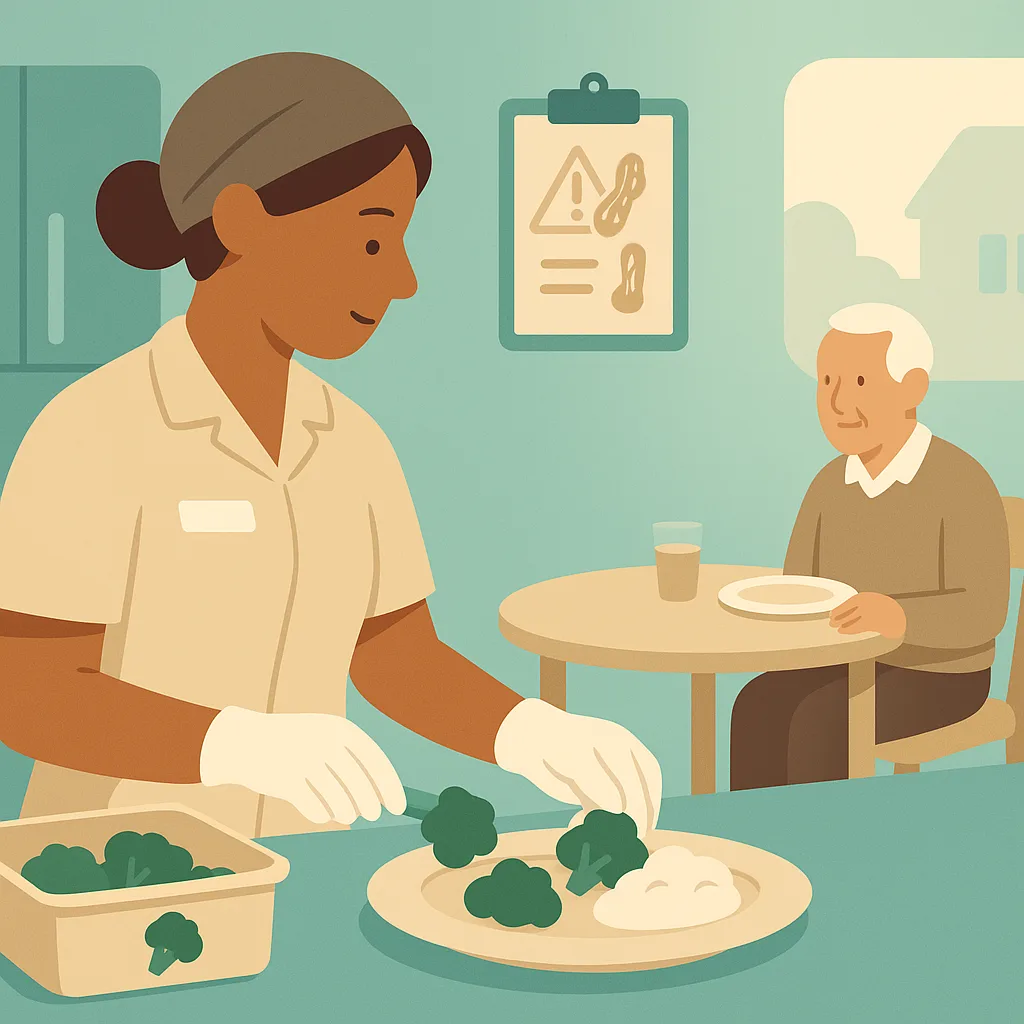
Any member of staff who prepares, handles or serves food, or helps someone to eat and drink, needs food hygiene training that fits a care setting, and they need it refreshed every year. In a care home or a person's own kitchen, the people you support are often older, frail or living with long-term conditions, so a lapse that would give a healthy adult a bad stomach can lead to a hospital admission.
Good food hygiene training gives carers the habits that prevent that, from handwashing and fridge checks to allergens and texture-modified meals.
Why does food hygiene training matter so much in care?
Food safety rules apply to everyone who handles food, but care settings carry extra risk. The people your staff support may have weakened immune systems, swallowing difficulties, poor appetite, diabetes, dementia or allergies. Many cannot tell staff that something tastes wrong or that they feel unwell. That places the responsibility firmly on the person preparing and serving the food.
Food handling in care is also spread across the whole team. It is not only the cook. Care workers make toast and drinks at night, reheat a meal in someone's home, serve tea trolleys, put a family member's cake in the fridge and support people at mealtimes. Each of those is a food safety moment, so food hygiene training belongs in the core plan for all care staff.
What law covers food hygiene in care homes and home care?
Care homes that provide meals are food businesses in the eyes of the law. They register with their local authority, are inspected by environmental health officers and receive a food hygiene rating. The main legal duties come from:
The Food Safety Act 1990, which makes it an offence to sell or serve food that is harmful to health.
The retained food hygiene regulations, which require food handlers to be supervised and instructed or trained in food hygiene in line with their work.
The Food Information Regulations 2014, which require businesses to give accurate information about the 14 regulated allergens.
The Health and Social Care Act 2008 (Regulated Activities) Regulations 2014, where Regulation 14 covers meeting nutritional and hydration needs and Regulation 12 covers safe care and treatment.
In home care, the kitchen belongs to the person you support, but your staff are still responsible for preparing and storing food safely.
What should food hygiene training for care staff cover?
The Food Standards Agency describes the basics of food safety as the 4Cs: cleaning, cooking, chilling and cross-contamination. A care-focused food hygiene course should cover all four, then go further into the things that are specific to care work.
Personal hygiene and fitness to work
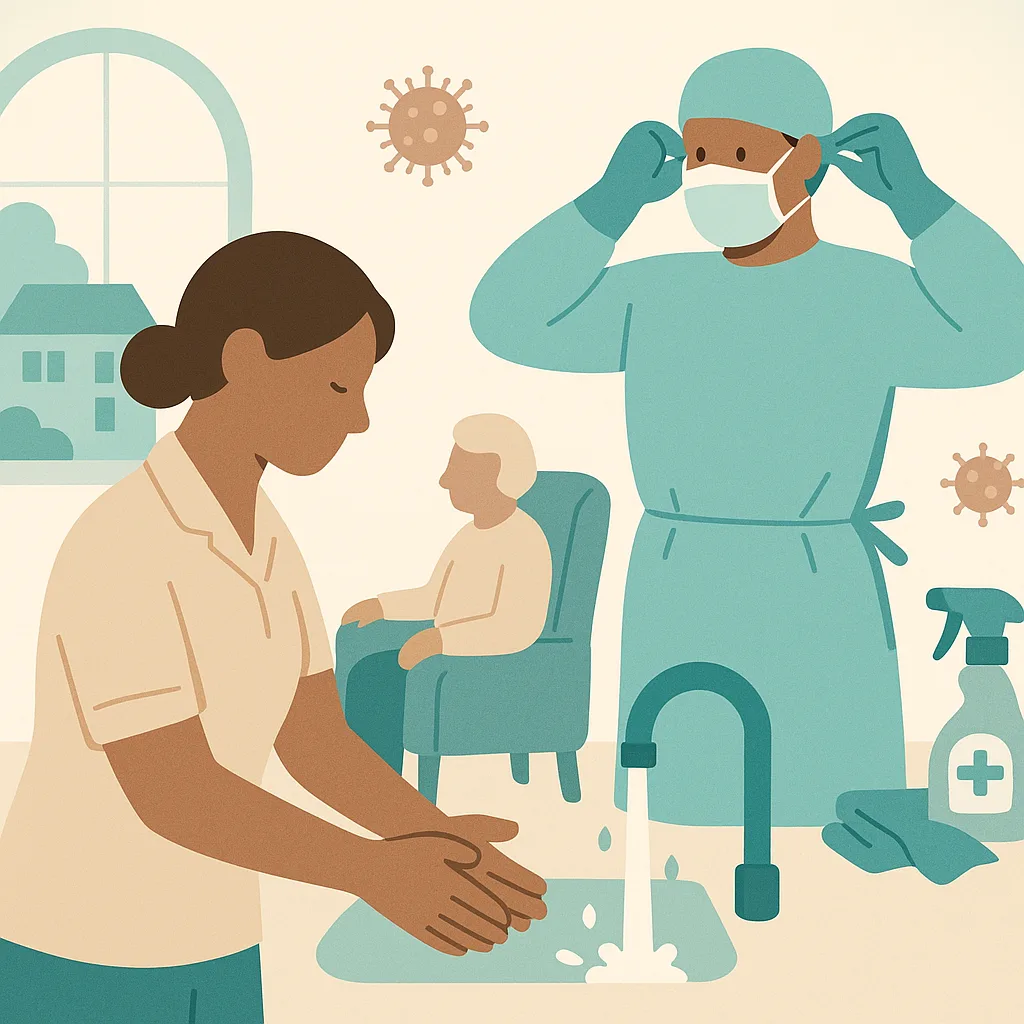
Handwashing before handling food, after personal care and after touching bins or laundry is the single most important habit. Staff also need to know when they must not handle food at all. FSA guidance is that food handlers with diarrhoea or vomiting should stay away from work until they have been free of symptoms for 48 hours. In care, where staff move between personal care and food, that rule protects everyone in the building.
Chilling, storage and dates
Fridges must keep chilled food at 8°C or below by law, and the FSA recommends running them at 5°C or below. Staff should understand the difference between a use-by date, which is about safety, and a best before date, which is about quality. They should label opened food with the date it was opened and know where raw meat goes in the fridge, which is on the bottom shelf, below ready-to-eat food.
CareStream turns your policies into role-based training with tracking and certificates. See the plans and get started.
See training plansCooking, hot holding, cooling and reheating
Food must be cooked until it is steaming hot all the way through. Hot food that is being held before serving should stay at 63°C or above, and leftovers should be cooled quickly and put in the fridge, ideally within 90 minutes. Reheating should be done once only, until the food is piping hot throughout. A probe thermometer and a simple record turn these rules into evidence.
Preventing cross-contamination
Separate boards and utensils for raw and ready-to-eat food, clean hands between tasks, and careful storage stop bacteria spreading. Cross-contact with allergens follows the same logic and is just as important.
Cleaning, disinfecting and pests
Cleaning removes dirt and grease; disinfecting kills bacteria, and only works on a surface that is already clean. Staff should also know the signs of pests and who to tell.
How should carers manage allergens and special diets?
This is where food hygiene training for care staff differs most from a general course. Under food information law, there are 14 allergens that must be declared: celery, cereals containing gluten, crustaceans, eggs, fish, lupin, milk, molluscs, mustard, tree nuts, peanuts, sesame, soya, and sulphur dioxide and sulphites. Staff need to know which people they support have an allergy or intolerance, where that information is recorded, and how to check a meal before serving it.
Many people in care also have texture modified diets because of swallowing difficulties, usually following an assessment by a speech and language therapist. The International Dysphagia Diet Standardisation Initiative (IDDSI) framework is widely used in the UK to describe food and drink textures by level. Serving the wrong texture is a choking risk, so carers must follow the plan exactly and know how to check textures where they have been trained to do so.
What about gift food, mealtimes and records?
Families often bring in food, from birthday cakes to home-cooked meals. That is part of a good life and should be welcomed, but staff need a clear, kind way to handle it: checking what it is and when it was made, labelling and storing it, and making sure it suits the person's diet, texture and allergies. A short written procedure helps staff say yes safely.
At mealtimes, staff should wash hands, watch for signs of choking, and record what was eaten and drunk where the care plan requires it.
Records are the evidence that all of this happens. Typical food safety records in a care home include:
Fridge and freezer temperature checks.
Cooking, hot holding and reheating temperatures.
Cleaning schedules for kitchens and serveries.
Allergen and special diet information for each person.
Food and fluid charts where needed.
Reports of illness, near misses and complaints.
The FSA's Safer Food, Better Business pack includes a version for residential care homes, which many providers use as the backbone of their food safety management system.
What do CQC and environmental health look for?
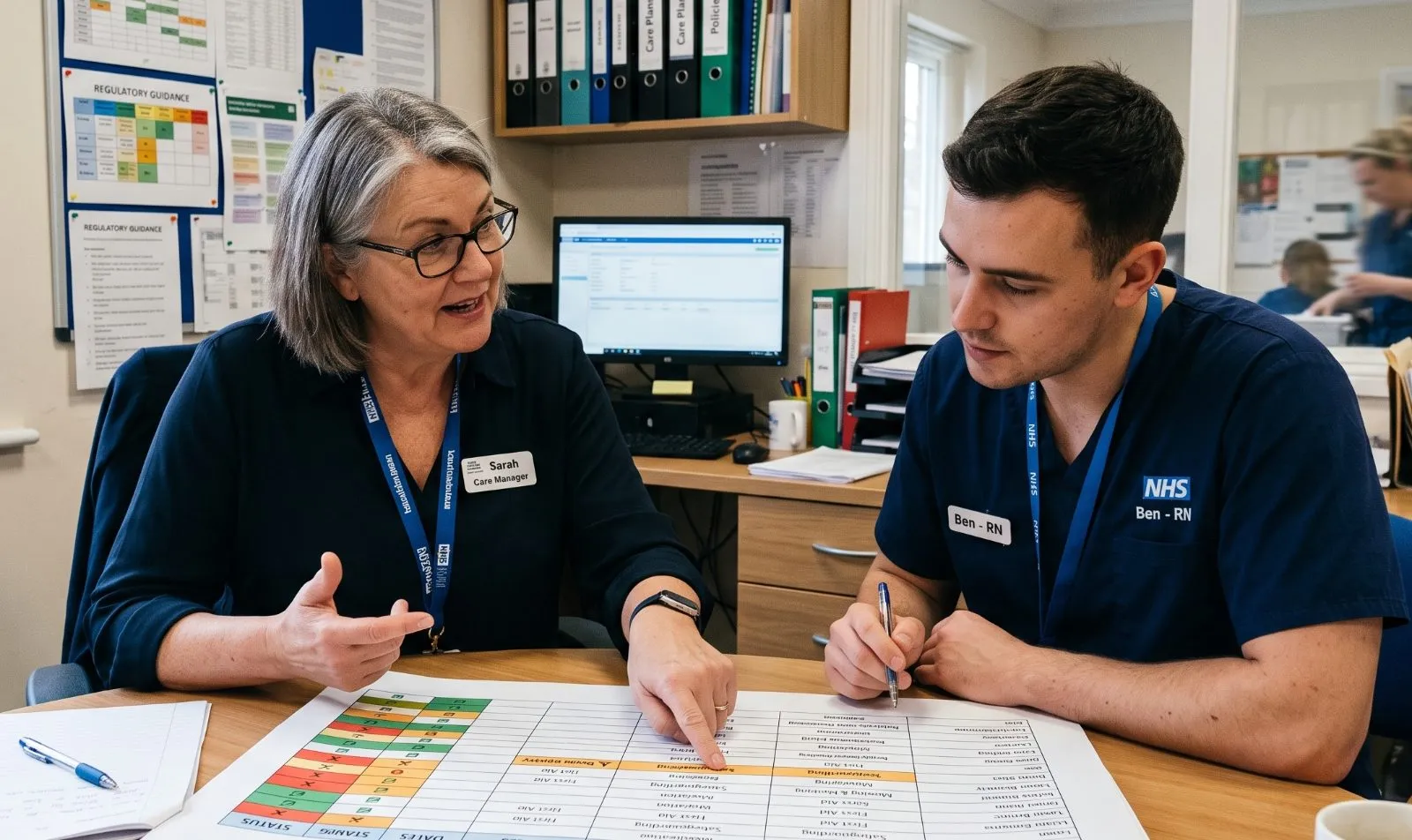
Two inspectors may look at your food safety. Environmental health officers inspect the kitchen, the food safety management system and staff training, and give the food hygiene rating that families can look up. CQC looks at the whole experience, including whether people get enough to eat and drink, whether risks such as choking and allergies are managed, and whether staff have the training they need.
In practice, both will want to see that:
Every member of staff who handles food has completed suitable training and keeps it up to date.
Staff can talk confidently about allergens, textures and the people they support.
Assign, track and evidence staff training in minutes. Explore the plans and roll it out this week.
See training plansRecords are complete, current and acted on when something is out of range.
Care plans clearly describe each person's dietary needs, and staff follow them.
How often do care staff need a food hygiene refresher course?
The law asks for training in line with the work someone does, without fixing an interval. The Skills for Care statutory and mandatory training guide sets out what training staff need and helps employers decide how often to refresh it. Many providers choose an annual food hygiene refresher course for care staff, because it keeps knowledge current, picks up any changes to guidance and gives a clear date on the training record. New starters should complete it as part of induction, before they handle food on their own.
Your cook may also hold a separate catering qualification. The annual refresher described here is for the wider care team who handle food as part of their caring role.
Can food hygiene training be done online?
Yes. Online food hygiene training works well in care because staff work shifts, nights and weekends, and it is hard to gather everyone in one room. You then reinforce it on the floor with supervision, kitchen checks and conversations in team meetings.
The CareStream CPD Certified Food Hygiene course
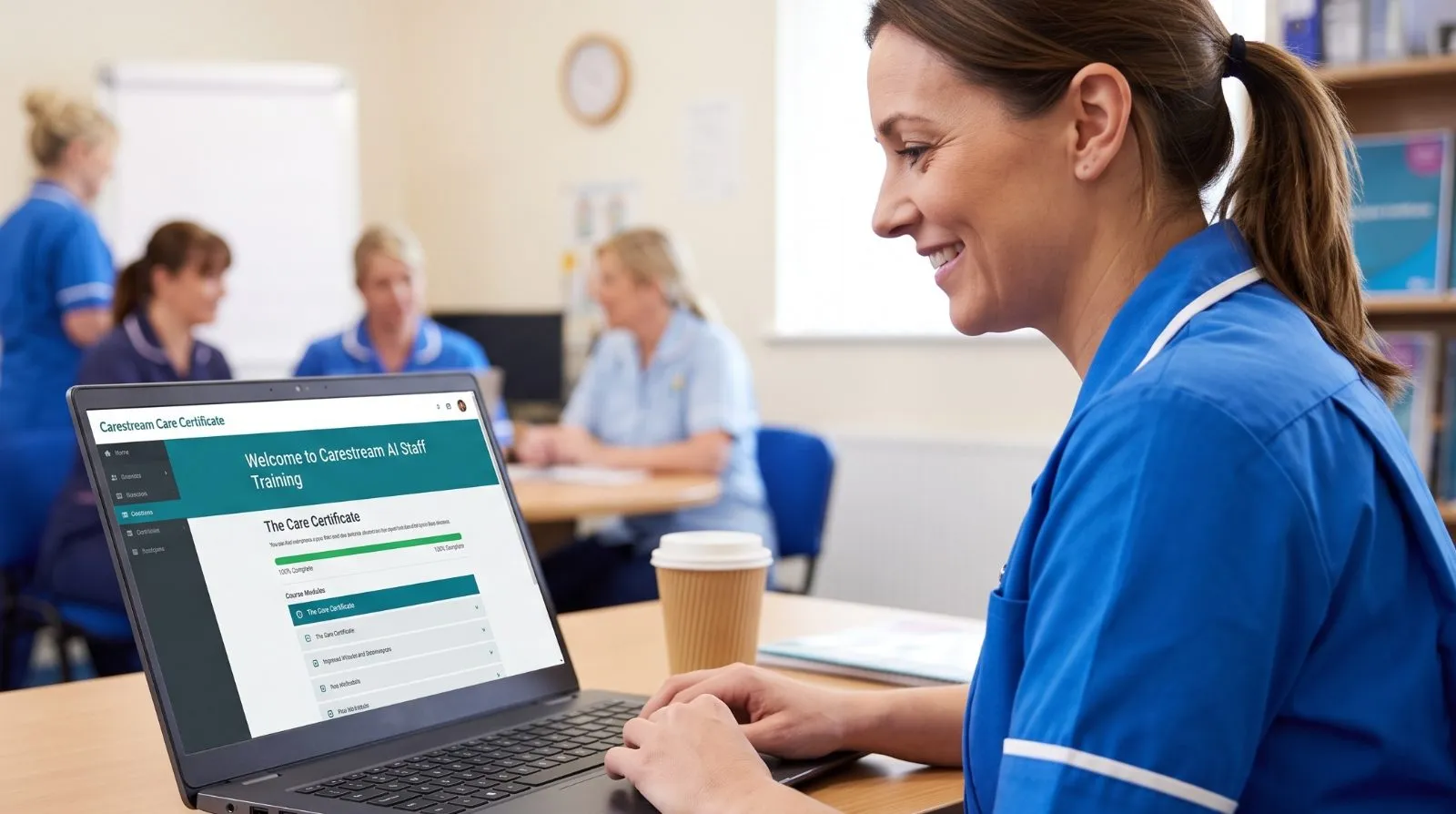
CareStream's Food Hygiene course is an annual refresher written for care workers who prepare, handle or serve food, or support people to eat and drink, in any adult social care setting. It is built on the Skills for Care statutory and mandatory training guide and Food Standards Agency guidance, and it is a CPD-certified course from The CPD Certification Service, worth 1 CPD hour.
The course has eight lessons:
Why food safety matters in care
Personal hygiene and fitness to work
Chilling, storage and dates
Cooking, hot holding, cooling and reheating
Preventing cross-contamination
Cleaning, disinfecting and pests
Allergens, special diets and texture modified food
Mealtimes, gift food, records and reporting
Each lesson uses care scenarios and interactive activities. Learners finish with a 32-question knowledge assessment and need 80% to pass. It takes about an hour, works on any phone or computer, and staff can go at their own pace in over 60 languages. If someone gets an answer wrong, they get a short follow-up lesson on that point, so gaps are closed rather than just scored.
Everyone who passes receives a named, dated certificate with the CPD mark. The certificate evidences that they completed CPD Certified training and passed the knowledge assessment. It is not a qualification and does not on its own prove competence, which you continue to check in practice. Managers allocate licences and see who has finished and their scores from one dashboard. Team prices start from 10 licences, and any licence not yet started can be refunded within 14 days.
You can see all of our accredited courses on the CPD Certified training page.
CareStream is a registered CPD Provider (No. 50224). You can check our membership and see every CPD Certified course we offer on our page on The CPD Certification Service website.
Conclusion
Food hygiene in care is about more than a clean kitchen. It is the night carer making a sandwich and the support worker checking a texture before a spoonful reaches someone's mouth. Annual food hygiene training gives every one of them the same clear standard, and gives you the records to show it.
Sources
- Skills for Care: statutory and mandatory training guide · skillsforcare.org.uk
- Food Standards Agency: online food safety training · food.gov.uk
- Food Standards Agency: Safer food, better business · food.gov.uk
- Food Standards Agency: allergen guidance for food businesses · food.gov.uk
- CQC: Regulation 14, meeting nutritional and hydration needs · cqc.org.uk
- IDDSI framework · iddsi.org
Frequently asked
Do care workers need food hygiene training?
Yes, if they prepare, handle or serve food or support people to eat and drink. Food law requires food handlers to be supervised and instructed or trained in food hygiene in line with their work, and CQC expects staff to have the training they need for their role.
How long does a food hygiene course for care staff take?
CareStream's CPD Certified Food Hygiene course takes about an hour. It has eight lessons with care scenarios and finishes with a 32 question assessment with an 80% pass mark.
Can food hygiene training be done online?
Yes. Online food hygiene training suits shift workers in care, as long as it is interactive, uses care scenarios and checks understanding with a proper assessment. Back it up with supervision and kitchen checks at work.
Is a food hygiene refresher course needed every year?
The law does not set a fixed interval, but many care providers refresh food hygiene training annually so knowledge stays current and training records show a clear date. New starters should complete it before handling food alone.
Is this the same as a catering qualification?
No. CareStream's course is an annual CPD Certified refresher for care staff. It evidences completion and a passed knowledge assessment. It is not a formal catering qualification.
Written by
 Len BurgessSenior Care Advisor
Len Burgess has worked in the care sector for over 8 years, with hands-on experience across residential, nursing and community settings. Having supported teams through CQC inspections and the day-to-day reality of keeping a service compliant, he writes about regulation, quality and best practice in a way that's grounded in what actually happens on the floor, not just what the guidance says.