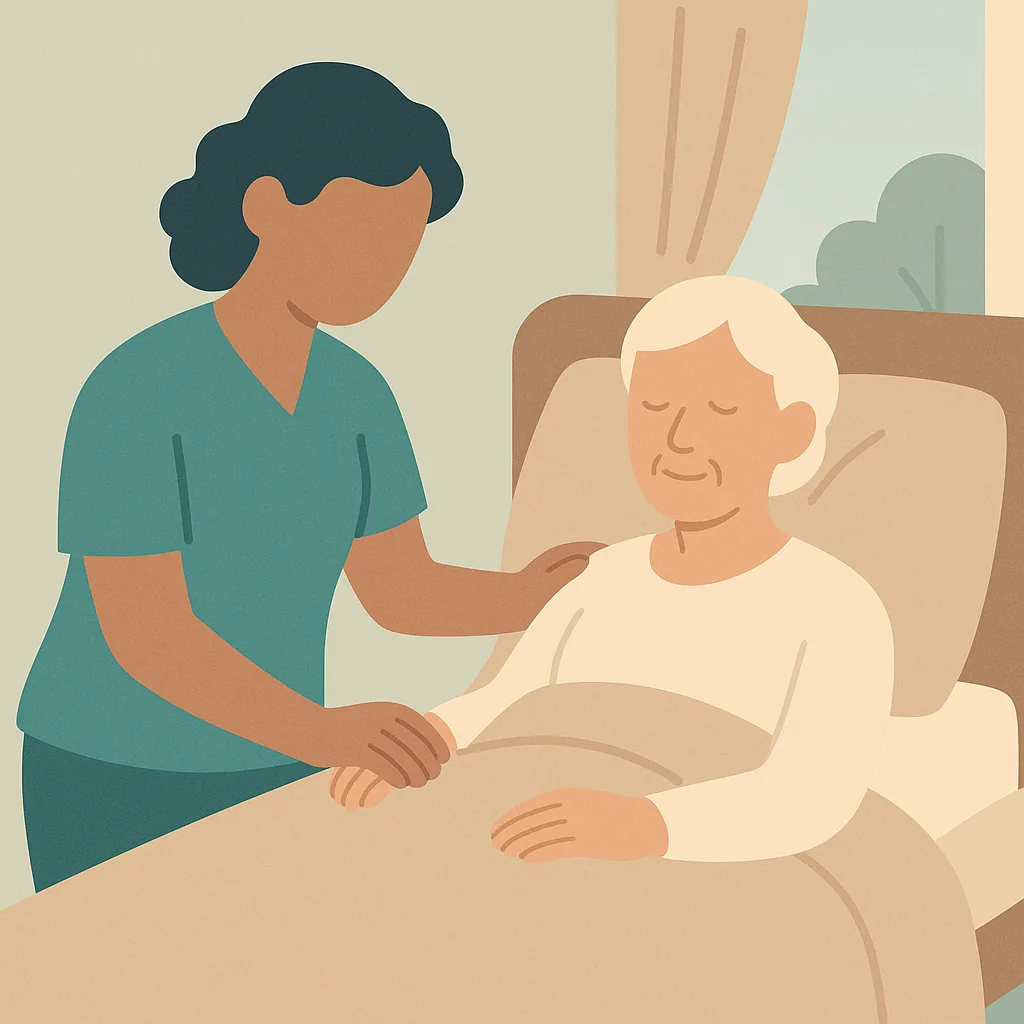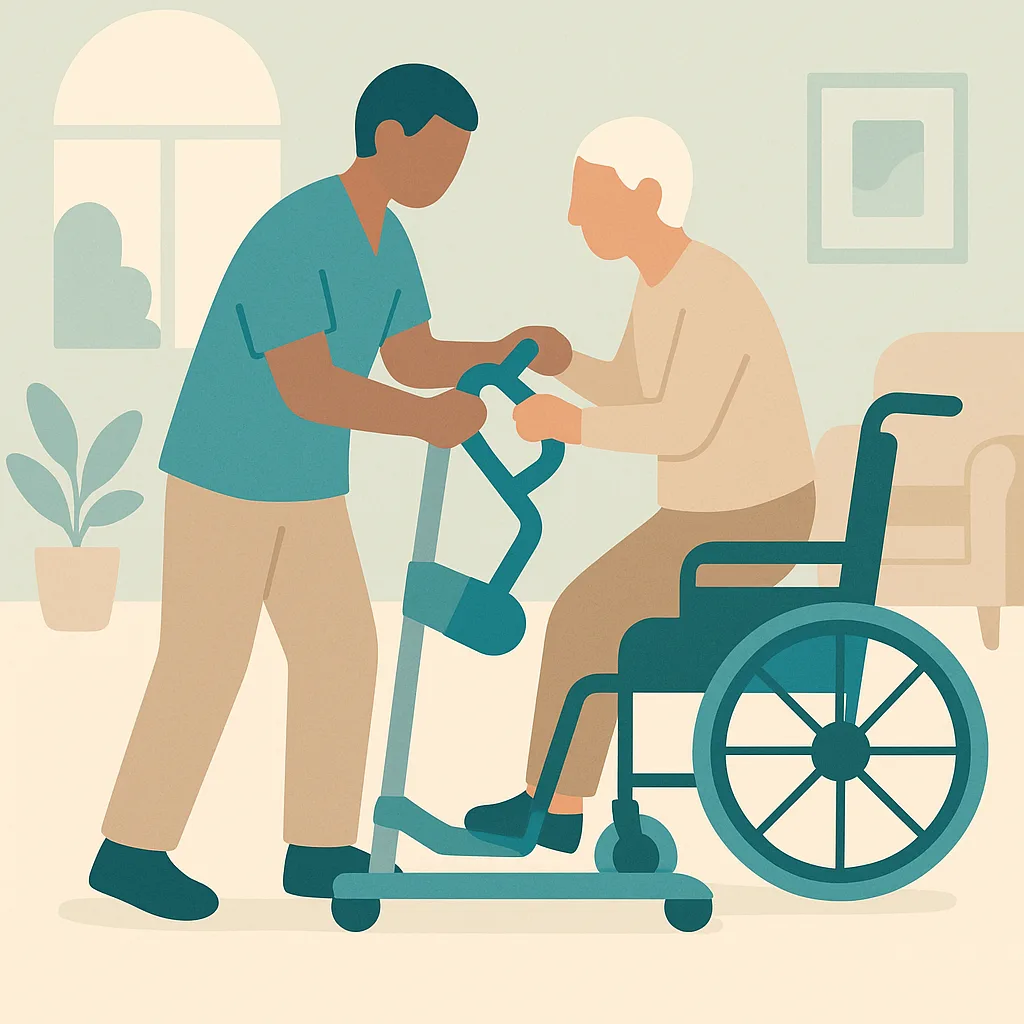
Moving and handling training for carers should teach staff how to help people move safely and with dignity, using the right equipment and the individual's handling plan, without putting either person at risk of injury. It should cover the law, how backs get hurt, risk assessment, safe handling principles, hoists and slings, other aids such as slide sheets and bed rails, falls, and the limits of each worker's role. Because it is a physical skill, the knowledge must be followed by an observed practical in your service before anyone is signed off.
This guide is written for registered managers and care providers planning moving and handling of people training for their teams in care homes, nursing homes, home care and supported living.
Why is moving and handling of people training so important?
Helping people move is one of the most common tasks in care and one of the most likely to cause harm when it goes wrong. The Health and Safety Executive identifies moving and handling as a major cause of injury among health and social care workers, especially musculoskeletal injuries to the back and shoulders. For the person being moved, a poor transfer can mean skin damage, a fall, a fracture, pain or simply the loss of confidence and dignity that comes from being handled roughly.
Moving a person is also very different from lifting a box. People are not uniform loads. They may be anxious, in pain, unsteady, or have changing abilities from one hour to the next. Good training recognises that every transfer is a conversation with the person as well as a physical task.
What does the law say about moving and handling in care?
Several pieces of health and safety law apply. Your staff should understand the main duties in plain terms:
Health and Safety at Work etc. Act 1974. Employers must protect the health and safety of employees and others affected by their work, including the people they care for. Employees must take reasonable care and cooperate with their employer.
Manual Handling Operations Regulations 1992. Employers must avoid hazardous manual handling so far as is reasonably practicable, assess any that cannot be avoided, and reduce the risk. Employees must follow the safe systems of work put in place.
Management of Health and Safety at Work Regulations 1999. Require suitable risk assessments and adequate training for staff.
Lifting Operations and Lifting Equipment Regulations 1998 (LOLER). Lifting equipment must be suitable and safe, and equipment used to lift people, such as hoists and slings, must be thoroughly examined at least every six months by a competent person.
Provision and Use of Work Equipment Regulations 1998 (PUWER). Equipment must be suitable, maintained and used only by people who have been trained.
On the care side, Regulation 12 of the Health and Social Care Act 2008 (Regulated Activities) Regulations 2014 requires providers to assess risks to people's health and safety and to make sure equipment is used safely. Regulation 18 requires staff to have the training they need for their role.
What should moving and handling courses for care workers cover?
Good moving and handling courses for care workers build understanding first, then put it into practice. The knowledge side should help staff to:
understand how the spine works and how injuries build up over time from poor posture, twisting and repetition, not just from a single lift
CareStream turns your policies into role-based training with tracking and certificates. See the plans and get started.
See training plansread and follow a person's moving and handling plan, and know when it needs reviewing
use the principles of safe handling: plan the move, prepare the space, keep a stable base, avoid twisting, work at a comfortable height and communicate clearly
encourage the person to do as much as they safely can for themselves
move and reposition people with dignity, privacy and consent
choose, check and use hoists and slings correctly, including the right sling type and size for that person
use other aids such as slide sheets, transfer boards and stand aids
understand bed rail risks, including entrapment, and why each bed rail needs its own risk assessment
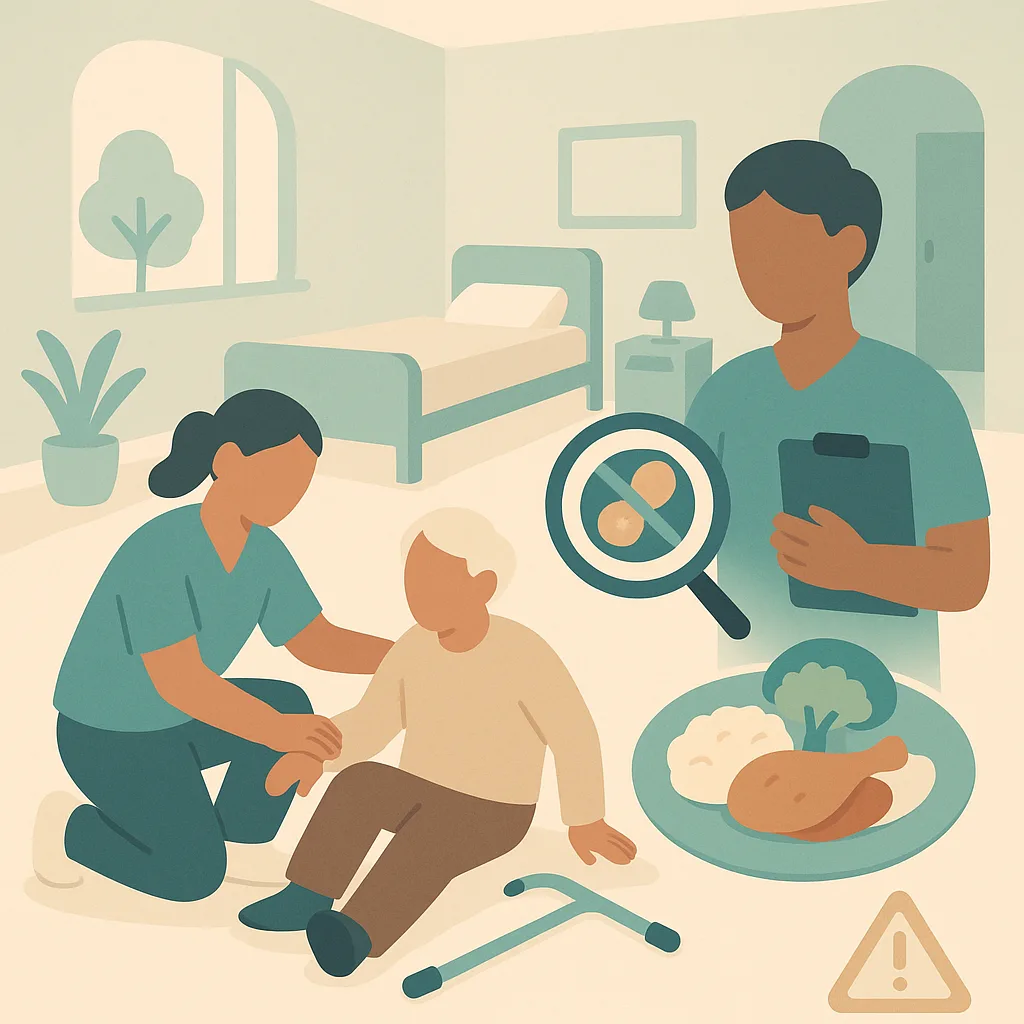
respond to a fall safely, without trying to catch or lift the person by hand
recognise the limits of their role and when to stop, seek help or refuse an unsafe task
Techniques that should never be used
Training should be explicit about unsafe practices that still appear in some services, such as the drag lift, where a worker hooks under a person's armpits to lift them. It puts the worker's back under heavy strain and can injure the person's shoulders and skin. If a person cannot move without that kind of help, the answer is a reassessment and the right equipment, not a stronger pair of arms.
Why is risk assessment at the centre of safe handling?
Every person who needs help to move should have an individual moving and handling risk assessment and a plan that tells staff exactly how to help them. A widely used way to structure the assessment is TILE: the task, the individual capability of the staff, the load (in care, the person being moved) and the environment, with an O sometimes added for other factors such as equipment.
In a care home, that assessment might note that someone needs a full body hoist with a specific sling and two staff for transfers. In home care, it may also need to consider a narrow bathroom, a carpeted floor or whether a family member helps. Training should give staff the confidence to raise concerns when the plan no longer matches what they see, for example after a hospital stay, an illness or a run of falls.
Can manual handling training for carers be done online?
Partly. Online learning is a good way to deliver and test the knowledge: the law, the anatomy, risk assessment, how equipment works and the decisions staff face. It suits busy services because staff can complete it on their phone at a time that fits their shifts, and you get clean, dated records.
What online learning cannot do is show that someone can safely move a real person. Manual handling training for carers is only complete when a competent person has watched them carry out the moves they will actually use, with the equipment in your service, and signed them off. A practical observation should check that the worker:
reads the handling plan and checks the equipment before starting
explains the move to the person and gains their consent
fits and attaches slings correctly and checks them before lifting
uses slide sheets and other aids without dragging or twisting
works safely alongside a colleague with clear instructions
protects the person's dignity and comfort throughout
What does CQC look for?
Inspectors look at whether people are moved safely, whether equipment is right for them and well maintained, and whether staff know what they are doing. They may watch transfers, read care plans and ask staff how they would help a particular person. Evidence they will usually expect includes:
Assign, track and evidence staff training in minutes. Explore the plans and roll it out this week.
See training plansindividual moving and handling assessments that are current and reviewed after changes
training records for all staff who move people, with refresher dates
records of observed practical assessments
LOLER thorough examination reports for hoists and slings, and servicing records
bed rail risk assessments
a falls procedure that staff can describe
How often should carers refresh moving and handling training?
Most providers refresh moving and handling training every year, with a fresh practical observation, and this is the approach the CareStream course is built around. It keeps techniques sharp, picks up bad habits before they become routine, and keeps your records in date.
Reassess sooner when you introduce new equipment, such as a different hoist or sling system, when a worker returns from a back injury or long absence, after an incident or near miss, or when someone's needs change in a way the team has not handled before.
The CareStream Moving and Handling of People course
CareStream's Moving and Handling of People course is a CPD Certified Course, certified by The CPD Certification Service and worth 1 CPD hour. It is an annual refresher built on the Skills for Care statutory and mandatory training guide and HSE guidance on moving and handling in health and social care.
CareStream is a registered CPD Provider (No. 50224). You can check our membership and see every CPD-certified course we offer on our page on The CPD Certification Service website.
The eight lessons are:
The law and guidance
Your back and how injuries happen
Risk assessment and handling plans
Principles of safe handling
Moving and positioning with dignity
Hoists and slings
Other equipment, bed rails and falls
Your limits and the observed practical
Learners work through interactive activities and scenarios in about an hour, on any phone or computer, in over 60 languages. They then take a 32-question knowledge assessment with an 80% pass mark. Any wrong answer triggers a short follow-up lesson, so the learning gap is closed.
Practical sign-off by you, then the certificate
This course requires an observed practical. The online course covers the knowledge. You, the employer, then observe each learner moving and handling people in practice and sign them off before their certificate is issued. The named, dated certificate carries the CPD mark and evidences completion of CPD Certified training and a passed knowledge assessment. It is not a qualification and does not by itself prove competence; your observation does that.
From the manager dashboard, you allocate licences and track who has finished, their scores and who is awaiting sign-off. Team prices start from 10 licences, with a 14-day refund on any licence not yet started.
Safer moves for everyone
Safe moving and handling protects two people at once: the person being helped and the worker helping them. Clear knowledge, a current handling plan, the right equipment and a practical check in your own setting are what make it work. Refresh it every year, observe your staff doing it, and keep listening when they tell you a plan no longer fits.
Sources
- HSE: moving and handling in health and social care · hse.gov.uk
- HSE: Manual handling at work · hse.gov.uk
- HSE: LOLER · hse.gov.uk
- CQC: Regulation 12, safe care and treatment · cqc.org.uk
- Skills for Care: statutory and mandatory training guide · skillsforcare.org.uk
Frequently asked
Is moving and handling training a legal requirement for carers?
The Management of Health and Safety at Work Regulations 1999 and the Manual Handling Operations Regulations 1992 require employers to assess handling risks and give staff adequate training. CQC also expects every worker who moves people to be trained and assessed.
Can moving and handling of people training be done online?
The knowledge can be learned and assessed online. The practical skills cannot. Each worker must be observed moving people with your equipment and signed off by a competent person before they work unsupervised.
How often should carers do moving and handling training?
Most providers refresh it every year with a new practical observation. Reassess sooner after an incident, a back injury or long absence, or when new equipment such as a different hoist or sling is introduced.
How often must hoists and slings be checked?
Under LOLER 1998, equipment used to lift people, including hoists and slings, must be thoroughly examined by a competent person at least every six months. Staff should also check equipment visually before every use.
Should a carer try to catch a person who is falling?
No. Trying to catch or hold up a falling person puts both of you at high risk of injury. Staff should protect the person's head if they can, let them go down, then follow your falls procedure and use equipment to help them up once they have been checked.
Written by
 Len BurgessSenior Care Advisor
Len Burgess has worked in the care sector for over 8 years, with hands-on experience across residential, nursing and community settings. Having supported teams through CQC inspections and the day-to-day reality of keeping a service compliant, he writes about regulation, quality and best practice in a way that's grounded in what actually happens on the floor, not just what the guidance says.