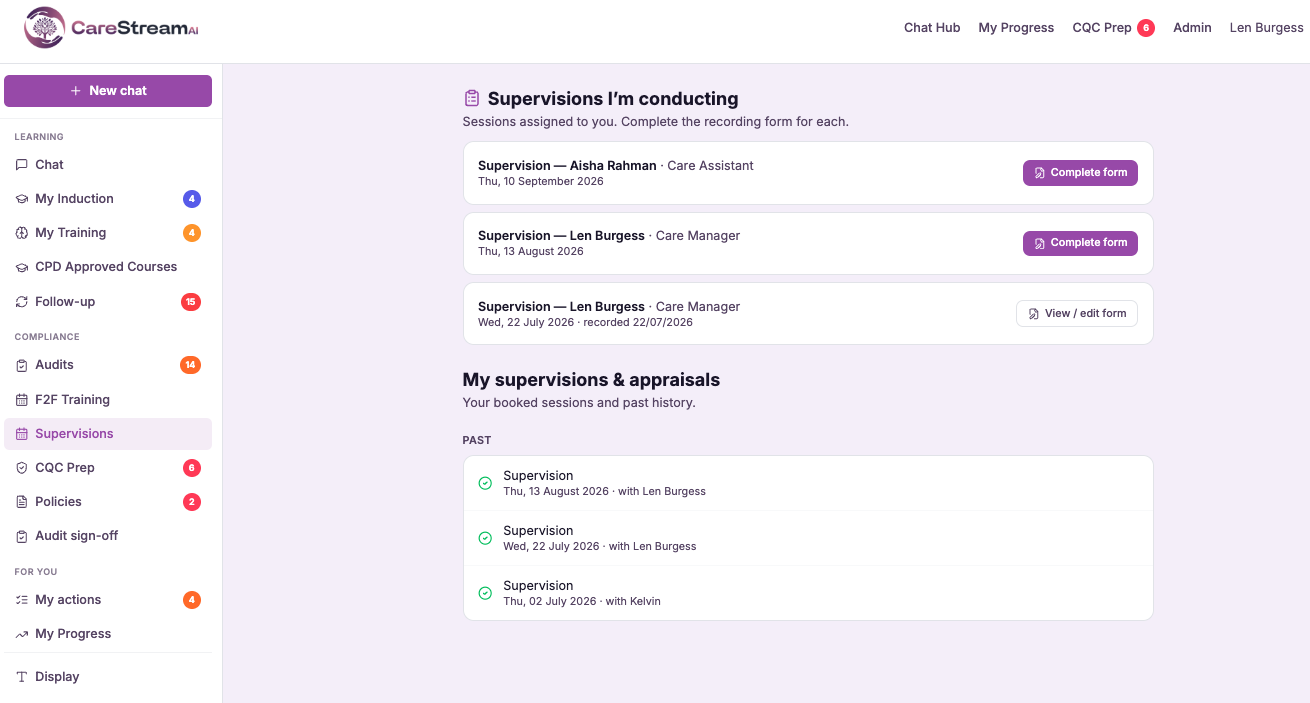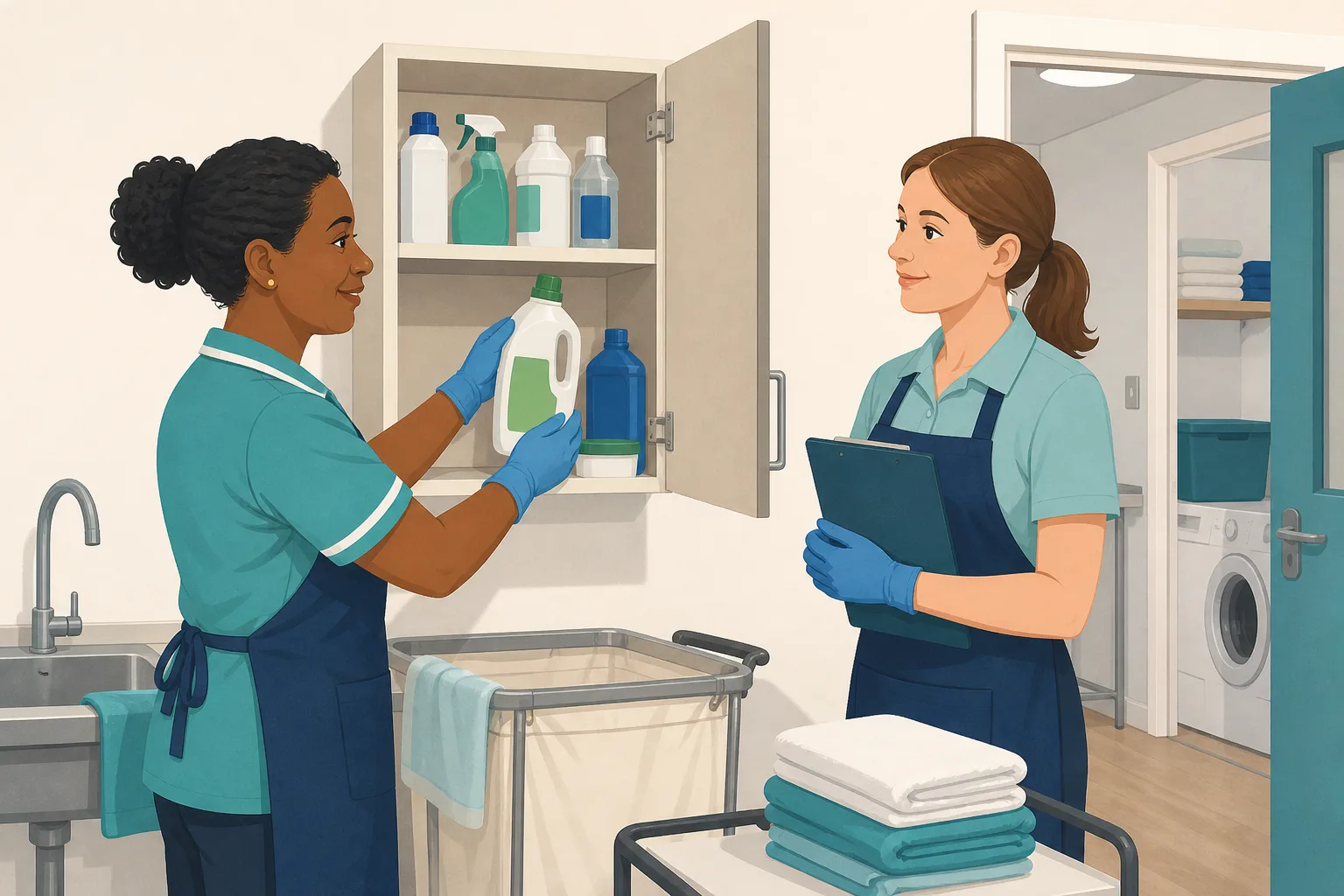
Show me the assessment for the product in that sluice, and the name of the person who wrote it. An inspector who asks that is not testing your filing. The question tests whether COSHH has reached the people who open the cupboard.
COSHH is short for the Control of Substances Hazardous to Health Regulations 2002. The COSHH regulations put the duty on the employer, not on the firm that sold you the product.
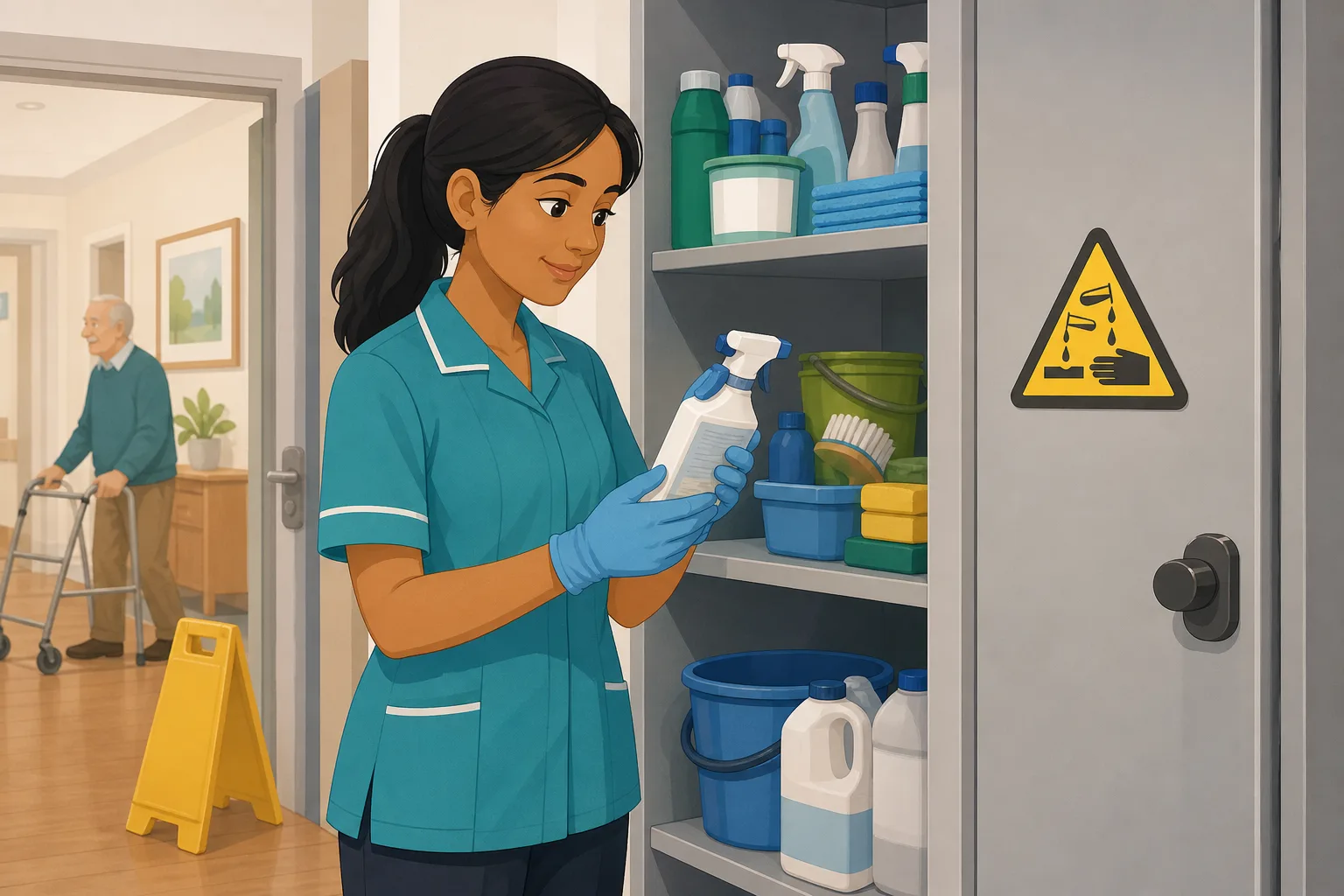
Figure: the substances in scope are rarely all in one cupboard.
What is COSHH, and what counts as a hazardous substance?
The regulation defines a substance hazardous to health in five ways. A substance counts if it fits any one of them.
- It meets the criteria for classification as hazardous within a health hazard class.
- The Health and Safety Executive has approved a workplace exposure limit for it.
- It is a biological agent.
- It is dust of any kind, above set levels in the air.
- Its properties and the way it is used at work create a risk to health.
The fifth line is the one that catches people out. A mild label does not put a product outside the rules. The meaning of a substance hazardous to health turns on the work, not just the bottle.
A biological agent means a micro-organism, cell culture or human endoparasite. It counts if it may cause infection, allergy or toxicity.
Which substances a care service has to think about
COSHH in care homes rarely comes unstuck on the obvious bottle, because the cleaning store is usually in good order and somebody has already thought about it. In our view the gaps sit where nobody thinks of the work as chemical work at all.
Every audit in the library is free to run, with scoring, actions and a report. No card needed.
Create a free account- Laundry products, descalers and sluice room products.
- Soiled linen, waste and spillages, through the biological agent route.
- Dust and fumes from maintenance, decorating or flooring work.
- Water treatment products a contractor keeps on your site.
- Products a relative brings in and leaves in a bedroom.
If a bottle moves from the cleaning store to a bedroom or a bathroom, the risk moves with it, and so does your duty.
Name the work, not just the shelf. That is what turns a list of bottles into something an inspector can follow.
What a suitable and sufficient assessment has to consider
Do not start work that could expose staff to a hazardous substance until you have assessed the risk. Then act on what the assessment tells you. The duty sits in regulation 6 of the COSHH Regulations 2002.
The assessment covers the hazards of the substance. It uses the health information the supplier gives you, including the safety data sheet. It also covers the level, type and length of exposure.
It goes wider than the product. How much is used counts. So do jobs such as maintenance, where exposure can run high. Where two substances meet, the combined risk counts too.
So a COSHH assessment is not a printout. The data sheet describes the product. The assessment describes your work: the room, the task, the person and the time they spend on it.
A COSHH risk assessment care home managers can defend reads like a real job. If it could belong to any service in the country, it is describing the chemical rather than the work.
When the findings have to be written down
With five or more employees you must record two things. The first is the significant findings of the assessment. The second is the steps you took to prevent or control exposure.
Review is a duty as well. Review the assessment regularly. Review it at once if you have reason to think it no longer holds, if the work has changed a lot, or if monitoring says so.
A new product is a change in the work. So is a new cleaning round, a new washing machine or a new contractor. Each one is a reason to read the assessment again before somebody else finds the gap.
The order the law puts controls in
Stop the exposure if you can. Where that is not reasonably practicable, control it properly. Swapping the substance or the process for a safer one comes first.
Where exposure cannot be prevented, the control measures set out in regulation 7 apply in a set order.
- Work processes, systems, engineering controls and suitable equipment.
- Control at source, including good ventilation and the way work is organised.
- Personal protective equipment, where nothing else gives adequate control.
Gloves sit third on that list. Starting there is the quickest way to fail this duty. The same regulation asks for safe handling, storage and transport, suitable maintenance and proper washing facilities. It also asks you to cut the number of people exposed, the time they spend and the amount you keep.
Who has to use the controls, and who reports a defect
The employer must take all reasonable steps to see that each control is properly used. Buying the dispenser is not the duty. Making sure staff use it is.
Staff carry a duty of their own. They must make full and proper use of what you provide. They must put it back where it belongs, and report any defect to you at once.
That last line belongs in your induction. A broken lock on a chemical store is a defect to report, not a job for next week.
What has to be kept working and checked
Keep every control in efficient working order, in good repair and clean. That includes protective equipment. Systems of work and supervision are treated differently. Review them at suitable intervals and revise them if they need it.
Engineering controls carry their own testing rules. Local exhaust ventilation must be examined and tested at least once every fourteen months. Keep a suitable record of the result.
Most care services own little engineering control. Their controls are storage, systems of work, supervision and protective kit. So the review duty matters more here than the testing one.
Pick an audit, assign it, score it on a phone and close the actions. Create a free account to start.
Create a free accountWhat training has to tell a care worker
If the work could expose staff, you must give them information, instruction and training. It has to be suitable and sufficient. Regulation 12 on information, instruction and training then lists what to include.
- The names of the substances staff may meet, and the risks they carry.
- Any workplace exposure limit that applies.
- Access to the relevant safety data sheet.
- The significant findings of the risk assessment.
- The steps staff should take to protect themselves and other people.
A care worker who can name the product, say what it can do to her and tell you where the data sheet lives has had real training.
Training has to keep up when the work changes. The duty also reaches past your payroll. Anyone doing work in connection with these duties needs the same information, including agency staff and contractors.
Our guide to what COSHH training for care staff should cover takes the training side further.
What has to be ready before a spill happens
The work here happens before the spill. Procedures must be ready, with first aid facilities and safety drills. Test those drills at set intervals. Keep the information on the hazards where staff can reach it.
Warning and communication systems must let people act at once, including rescue. A spill kit in a locked office fails that test.
Where the Care Quality Commission picks this up
No Care Quality Commission regulation repeats COSHH word for word. Two hooks do the work. Regulation 12 asks you to assess risks to the health and safety of the people you support, and to mitigate them so far as is reasonably practicable.
Regulation 15 is the second hook. It covers premises and equipment.
All equipment must be used, stored and maintained in line with the maker's instructions. That line comes from the provider guidance on premises and equipment.
The same guidance expects suitable arrangements for buying, servicing and replacing it.
Holding the paperwork proves none of this on its own. No audit, policy or course decides what an inspector finds.
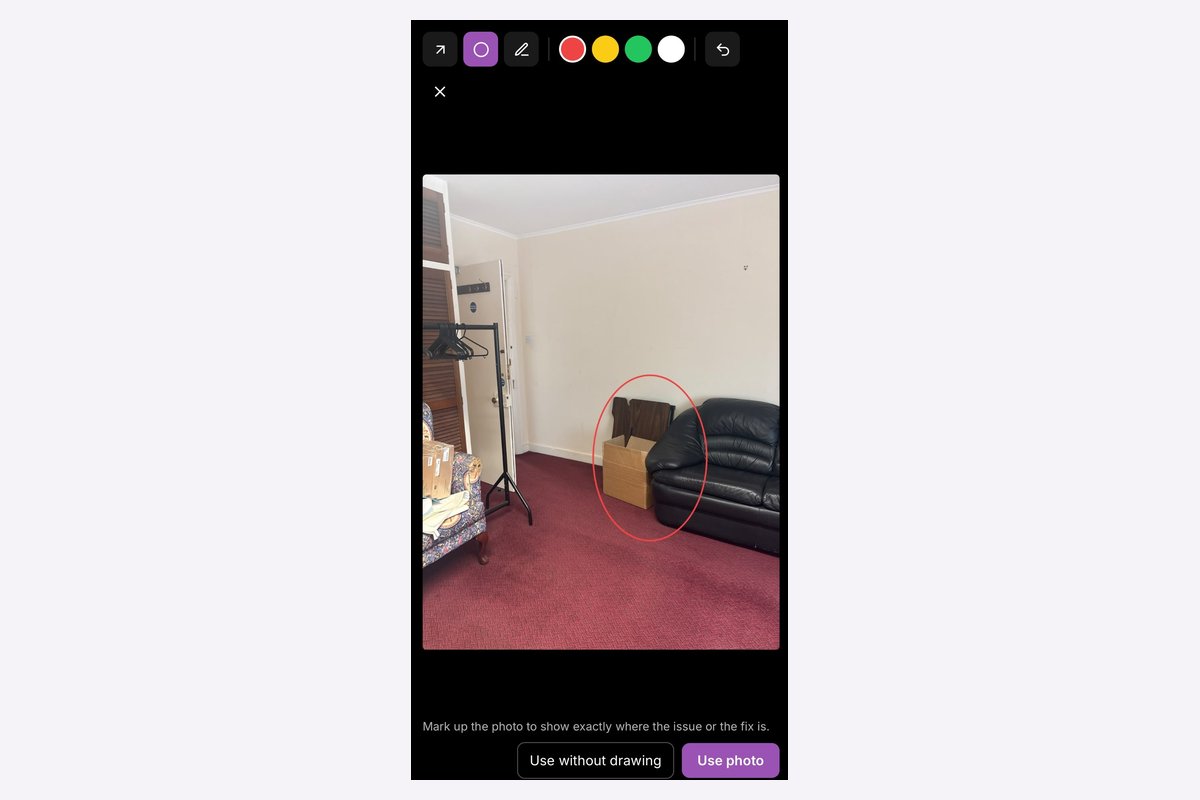
Figure: a photo against the question that failed, marked up on the phone that took it.
Benefits of CareStream for your COSHH regulations evidence
The free CareStream account carries a COSHH Compliance Audit built for care services.
- It runs 43 checks across the hazardous substances register, safety data sheets, storage, labelling, protective equipment and staff training.
- It is set to quarterly, and it suits a registered manager, a health and safety lead or a housekeeping lead.
- Photos and signatures come with every plan, so a storage problem is evidenced where it happened.
- Each failed check can carry an action with an owner and a due date. The next audit brings last time's actions back to re-check.
The COSHH compliance audit template is free to run and needs no card. The matching COSHH course for care staff is free as well, with a certificate included. CareStream cannot make a service safe, but it can stop the record going missing.
What to do before your next inspection
Open the store cupboard and the sluice, write down what is in them, and do it with the person who uses those products every day. Compare that list with the assessments you hold. Most services find a product with no assessment, and an assessment for a product nobody uses.
Then give each assessment a named author and a review date. Brief staff on the ones that changed. Keep your hazardous substances policy and your register saying the same thing.
Run the audit last. It is easier to answer forty questions when the cupboard already matches the paperwork, and the gaps you find then are the ones worth an action.
Sources
- Regulation 2, interpretation and the meaning of a substance hazardous to health (legislation.gov.uk) · legislation.gov.uk
- Regulation 6, assessment of the risk to health (legislation.gov.uk) · legislation.gov.uk
- Regulation 7, prevention or control of exposure (legislation.gov.uk) · legislation.gov.uk
- Regulation 8, use of control measures (legislation.gov.uk) · legislation.gov.uk
- Regulation 9, maintenance, examination and testing of control measures (legislation.gov.uk) · legislation.gov.uk
- Regulation 12, information, instruction and training (legislation.gov.uk) · legislation.gov.uk
- Regulation 13, arrangements to deal with accidents, incidents and emergencies (legislation.gov.uk) · legislation.gov.uk
- Regulation 15, premises and equipment, provider guidance (Care Quality Commission) · cqc.org.uk
Frequently asked