
Training collection
Lone Working Training for Community Care Staff
Lone working training is judged on the ordinary visits, not the emergencies. Nobody answers the door. A key safe will not open. A dog is loose in the hall.
Lone working training here is built around those moments, because that is where a round actually goes wrong.
Six courses sit behind this page. They follow a community visit from the car outside to the record written afterwards, and they are sold one at a time.
The work is different in somebody's home. There is no colleague down the corridor, no handover desk and no second opinion on tap. The person who decides is the one standing on the step.
So the courses stay practical. Short lessons, a care scenario in each, a question set at the end, and a certificate the member of staff keeps.
Every one of the six was written for work in somebody else's home rather than adapted from a care home course. That difference shows up in the scenarios.
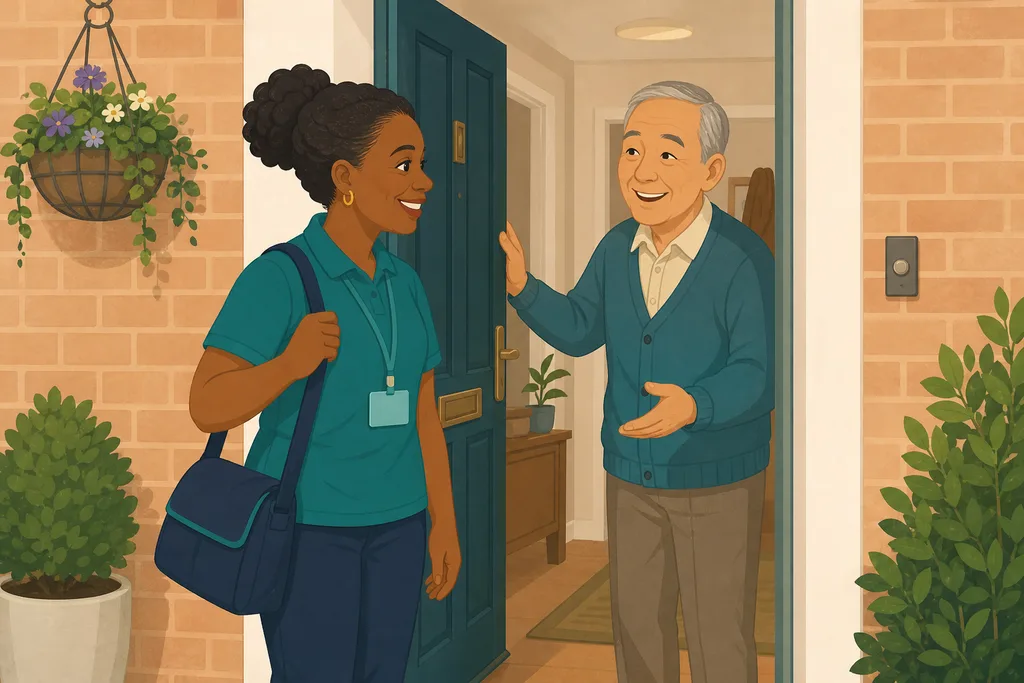
This training covers how to work safely when providing care in people's own homes. You will learn to identify hazards, protect yourself and the people you support, and follow infection control procedures. Working in someone's home is different from a care setting because you must balance safety with respecting their personal space and choices.
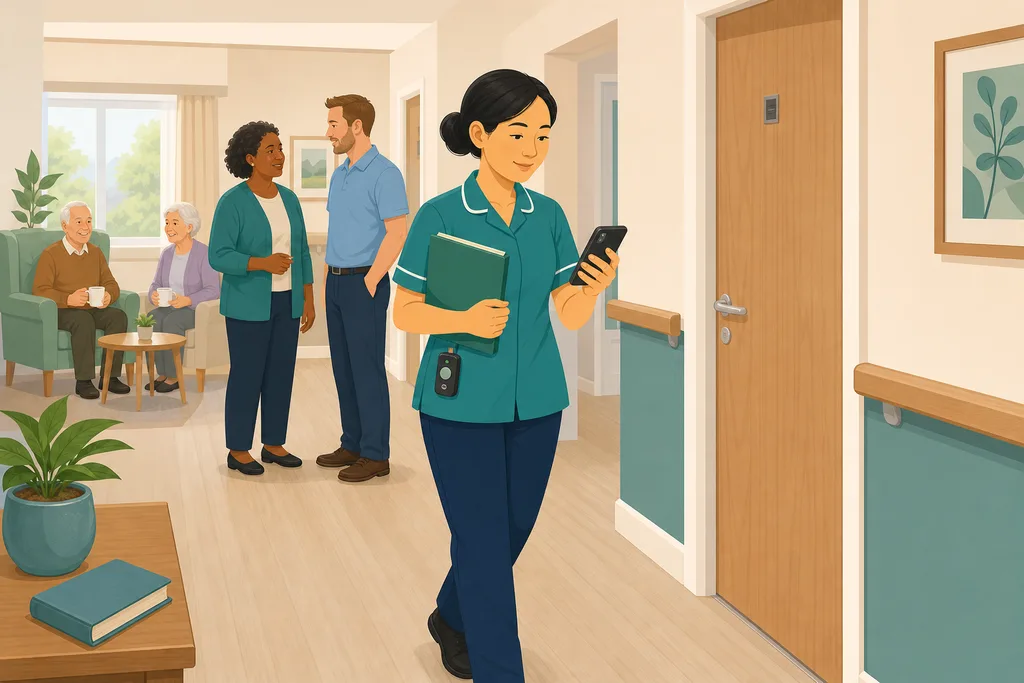
This training covers how to stay safe when you work alone in the care home. You will learn when you are considered a lone worker, what risks you might face, and what procedures to follow to protect yourself and the residents you support. This training is based on our home's policies and procedures.
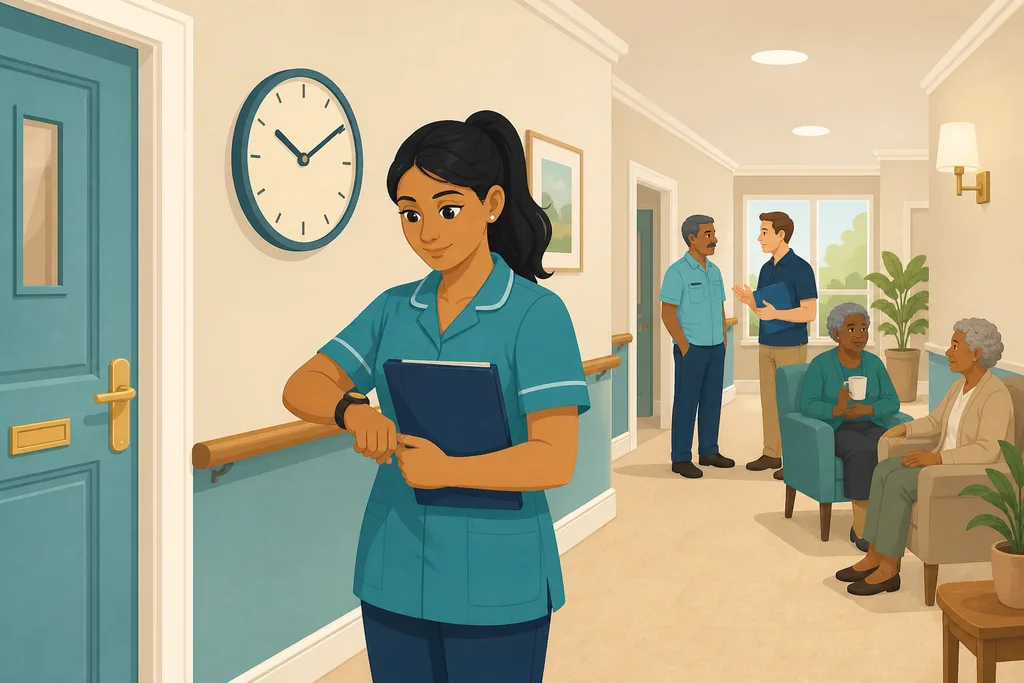
This module teaches you how to prevent missed visits, what to do if you cannot attend a scheduled call, and how to conduct effective welfare checks. These procedures protect the people we support and ensure we meet our regulatory duties under the Care Quality Standard.
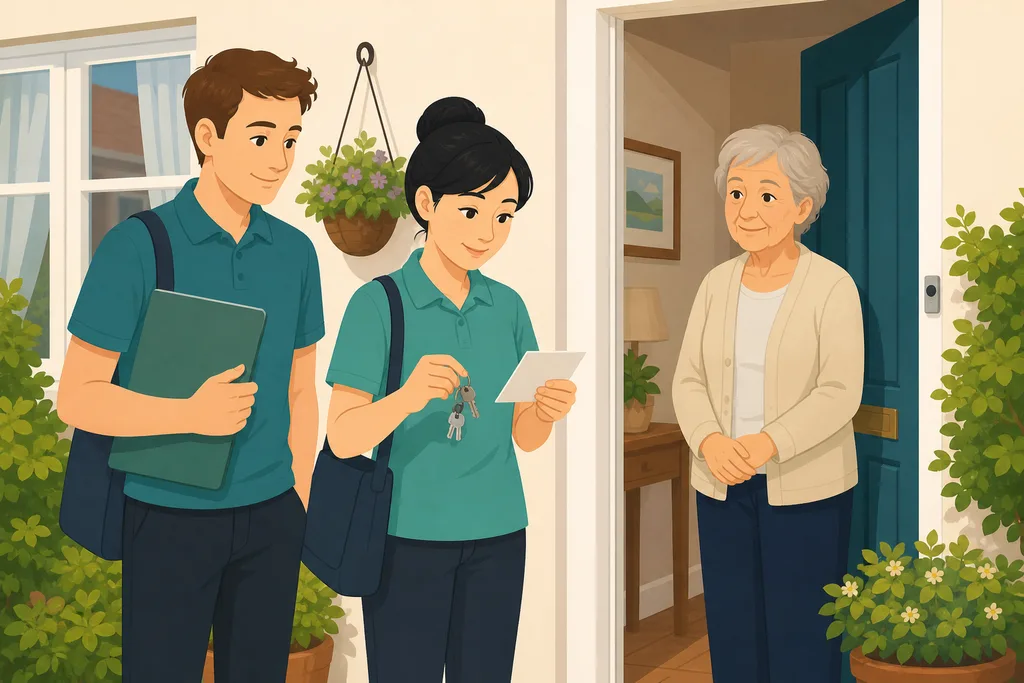
This training ensures you can safely and respectfully access the homes of the people you support, protect the keys and codes entrusted to you, leave each property secure, and respond correctly when you cannot gain entry. Because you routinely let yourself into vulnerable people's homes, often when they cannot reach the door themselves, this training protects them from theft and unauthorised access while protecting you from false accusation.
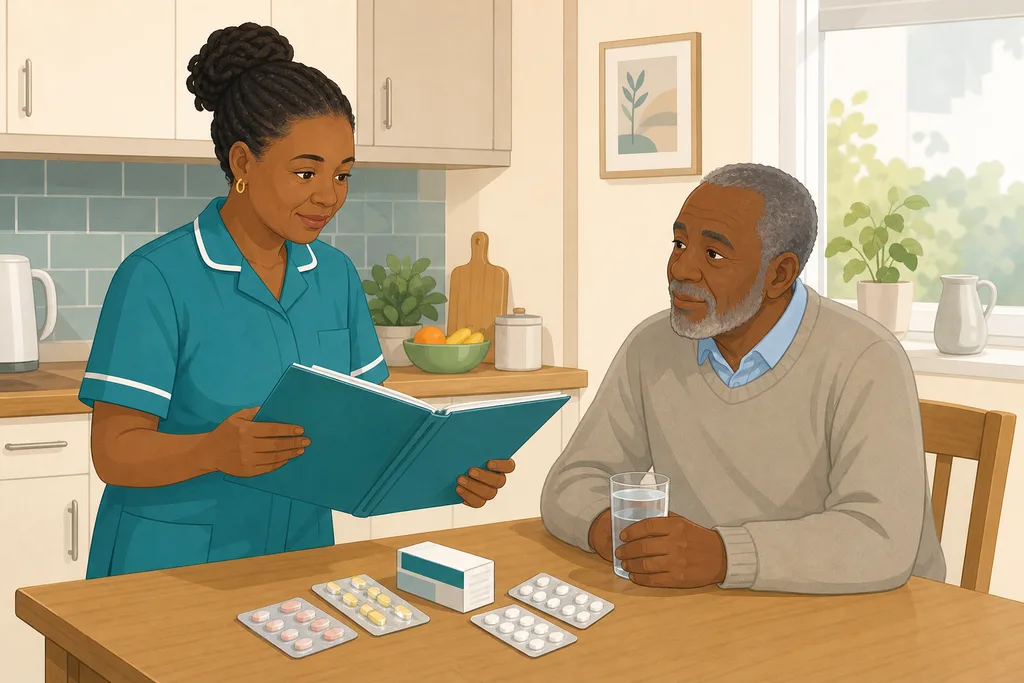
This annual refresher covers safe medication support practices when working in people's own homes. You will learn how to support service users with their medicines safely and legally, following best practice for domiciliary care. This training covers the knowledge component only; practical competency must be assessed separately during your work.

This module covers the essential safety and legal requirements for staff who drive or travel as part of their domiciliary care duties. You will learn how to maintain your vehicle, drive safely between client visits, and protect yourself and others on the road. Safe travelling practices protect you, your colleagues, and the people we support.
What the duty is when one person works alone
The law does not ban lone working. It asks you to understand what makes it dangerous, and to prepare the person doing it.
What the employer has to provide
Section 2 of the Health and Safety at Work etc. Act 1974 sets out what an employer owes staff.
One duty is to give the information, instruction, training and supervision that safety at work needs.
That duty does not weaken at somebody's front gate. If anything it grows, because nobody else is there to notice.
Assessment comes first. Regulation 3 of the 1999 Regulations calls for a suitable and sufficient risk assessment. It covers staff, and other people affected by the work.
Training then follows the assessment, not the other way round. Work out what can go wrong on your rounds, then teach that.
Why the timing of training matters
Training is not only for new starters. Regulation 13 requires adequate health and safety training on recruitment and when somebody meets new or increased risks.
New or increased risk is the phrase to watch. Moving a care worker from a staffed home onto a community round is exactly that. So is adding evening calls, or a round in an area the team does not know.
The care regulations say something similar in their own words. Staff must get the support, training, development, supervision and appraisal their role needs.
A sensible rule follows. Assign the course when the round changes, not at the next annual refresh.
The six courses, visit by visit
Each one picks up a different part of the same visit.
- Lone Working Awareness covers the risks of working alone, check in procedures, using equipment safely and what to do in an emergency.
- Working Safely in People's Homes covers arriving, protective equipment, infection, moving and handling, and fire in a domestic setting.
- Keys, Entry and Home Security covers key safes, physical keys, entering respectfully and leaving a home secure.
- Missed Visits and Welfare Checks covers the no reply procedure, when to enter, and how to escalate.
- Medication Support in the Community covers prompting, assisting and administering, and the recording around it.
- Travelling and Driving for Work covers vehicle checks, journey planning and personal safety on the road.
The lone working awareness course for care staff is the one most agencies start with. The welfare check course is the one managers add after a scare.
The price of a licence, and what is included
Buying is simple. One licence, one person, one payment.
What you pay, and what arrives
A single licence is £25.99 plus VAT and belongs to one member of staff. It runs for twelve months. Buy more and the rate per person drops in the basket.
Get an answer wrong and a short follow up lesson appears on that point, so the gap closes instead of sitting in a score. The pass mark is 80 per cent.
Pass, and a certificate is issued in the person's own name, showing the score and the renewal date. It downloads as a PDF and it belongs to them.
Any lesson can be switched into one of more than sixty languages with a tap. Your own records stay in English. Licences nobody has started can be returned for a full refund within fourteen days.
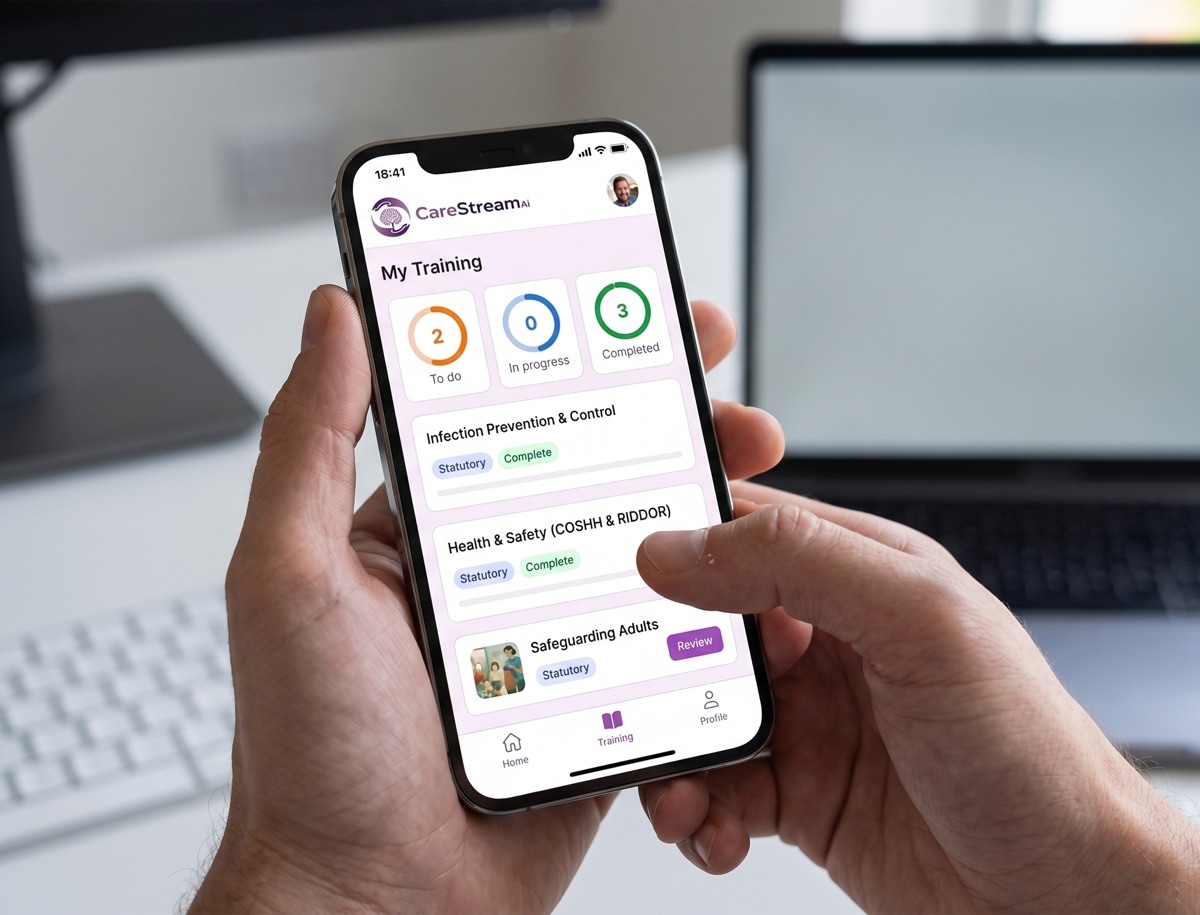
Figure: the staff hub on a phone, where a member of staff sees what is outstanding and what is finished.
How the record looks when somebody asks
One certificate proves one person did one course. A manager is usually asked something broader: is the whole round covered.
The training matrix that tracks renewals and gaps by role answers that version of the question. Each person sits against each topic, marked in date, due soon, overdue or missing.
Mark a topic as mandatory for community staff and anyone without it stands out. That is more useful than a drawer of certificates, because it shows the holes rather than the wins.
Medication Support in the Community adds a second layer. The knowledge is scored by the system, and competence is signed off by a person who watched the visit.
Who this collection is perfect for
Care coordinators and registered managers at home care agencies get the most from it. Supported living and live in care providers are close behind. Any service where staff drive between calls and let themselves in will recognise the scenarios.
Three moments send managers here.
- A new round or a new contract, where staff are working alone for the first time.
- An incident on a visit, where the check in arrangement turned out to be a text message to a colleague.
- A tender or an inspection that asked how lone worker safety training is evidenced.
It suits teams who read in more than one language. It does not replace your own risk assessment, your call monitoring, or the alarm arrangements your service pays for.
Why CareStream suits a small agency better than a classroom day
The usual choices are a trainer booked for a day, a large subscription library, or a slide deck passed round the office. A trainer in the room is good for discussion. A library covers everything. A deck costs nothing.
The trouble with all three is the rota. Community staff are rarely free at the same hour, and a day off the round costs visits.
CareStream splits the difference. The lessons travel in a pocket, the assessment is the same for everyone, and the record updates as people finish.
For the written side, our lone working policy collection for care services sets out the arrangements this training teaches people to follow.
Benefits of CareStream for lone working training across a community team
- Six courses that follow a real visit, from the drive there to the record afterwards.
- Short lessons on a phone, so learning fits between calls rather than blocking a day.
- A certificate in the learner's own name, carrying the score and the date it falls due again.
- A matrix that shows who is missing a topic, not just who has passed one.
- Competence sign off where the subject needs it, with a printable checklist for the observer.
New to community work? Our guide to domiciliary care services explains how the rest of the platform fits around a round.
Lone Working Training for Community Care Staff FAQs
What is lone working training?
It is training for staff who work where no colleague can see them. It covers the risks of working alone, check in and check out arrangements, what to do when nobody answers the door, how keys and key safes are handled, and how to raise an alarm when something is wrong.
Is lone working training a legal requirement?
There is no rule naming a lone working course. The employer duty under the Health and Safety at Work etc. Act 1974 includes providing the information, instruction, training and supervision needed to keep people safe at work. Where staff work alone, that duty points at this subject.
Do we have to risk assess lone working?
Yes. Regulation 3 of the Management of Health and Safety at Work Regulations 1999 requires a suitable and sufficient assessment of risks to employees, and to people who are not employed but are affected by the work. Lone visits sit squarely inside that.
Which six courses are in this collection?
Lone Working Awareness, Working Safely in People's Homes, Missed Visits and Welfare Checks, Keys, Entry and Home Security, Medication Support in the Community, and Travelling and Driving for Work. Together they follow a community visit from the car to the record afterwards.
How long does each course take?
About 35 minutes each. Every one runs to 6 short lessons with a care scenario and a quick check, then a 20 question assessment with a pass mark of 80 per cent.
What does a licence cost?
£25.99 plus VAT for one member of staff, charged once. The rate per person drops as you add licences, and the reduction appears in your basket. There is no subscription and nothing renews on its own.
Can staff do the training on a phone?
Yes, on a phone, tablet or computer. They can stop part way and pick up where they left off, which matters when learning happens between calls rather than in a classroom.
Which of the six needs a manager to sign something?
Medication Support in the Community. It checks knowledge and then asks a manager or assessor to watch the learner at work and sign off competence. A printable observation checklist is included for the person doing the watching.
Does this cover what to do when nobody answers the door?
Yes. Missed Visits and Welfare Checks covers why a missed visit is serious, what to do if you cannot attend, how to run a welfare check when there is no answer, when to enter using a key safe, and how to escalate and record it.
Does it cover driving between visits?
Yes. Travelling and Driving for Work covers the legal requirements for driving at work, daily vehicle checks, planning journeys, driving in poor conditions, personal safety, and what to do after an accident or incident.
Is this the same as a lone working policy?
No. The policy sets out your arrangements and who is accountable. The training teaches staff to follow them. An inspector tends to ask for both, then ask a member of staff what they would actually do.
Can staff learn in their first language?
Yes. Any lesson or question can be switched into one of more than sixty languages with a tap. Your records and the certificates stay in English, ready to show.
What evidence does this leave for an inspection?
A named, dated certificate for each person showing the course, the score and the renewal date, plus a record of who has started and who has finished. No training makes a service compliant, and the regulator still asks staff what they do.
How often should it be repeated?
A licence lasts twelve months and most services refresh annually. Services also repeat it after an incident on a visit, when a round changes shape, or when somebody moves from a staffed building to community work.
Can I get a refund on licences we do not use?
Yes. Any licence nobody has started can be refunded in full within fourteen days of the order. Email us from the address you ordered with, and no reason is needed.
More on training
Guides and collections that go with this page, and the full libraries.
Policies are one part of it.
CareStream is the compliance system underneath: your policies, your staff training, your audits and your evidence, kept current and ready for the day somebody asks to see them.
- Policies written and kept updated for you
- Staff training that records itself against the standard
- Gap analysis showing what you are missing before an inspector does
- Everything in one place, for one price




