
Policy collection
Lone Working Policy for Care Services: The Six Documents Behind a Safe Shift Alone
The hardest question an inspector asks about a lone working policy for care services is simple: who notices when a carer does not come back? A lone working policy for care services answers that in one paragraph, or it does not answer it at all.
Working alone is normal in care. A night carer covers a quiet floor, a support worker sleeps in, a carer drives between calls. Each one is out of sight for most of a shift.
None of that is unsafe by itself. It turns unsafe when nobody is expecting to hear from them, and nobody notices the silence.
The six written documents below cover the general duty and the hazards that sit under it. They name your service, your roles and the way you actually run shifts. Already hold a set? The free check reads your first five and reports what is missing before you spend anything.
Your general statement, organisation and arrangements under the Health and Safety at Work etc. Act 1974.
Safe moving and handling of people and loads, training and equipment under LOLER and MHOR.
Control of substances hazardous to health: assessment, storage and safe use.
Risk assessing lone work, check-in and escalation, and what happens when a worker cannot be reached.
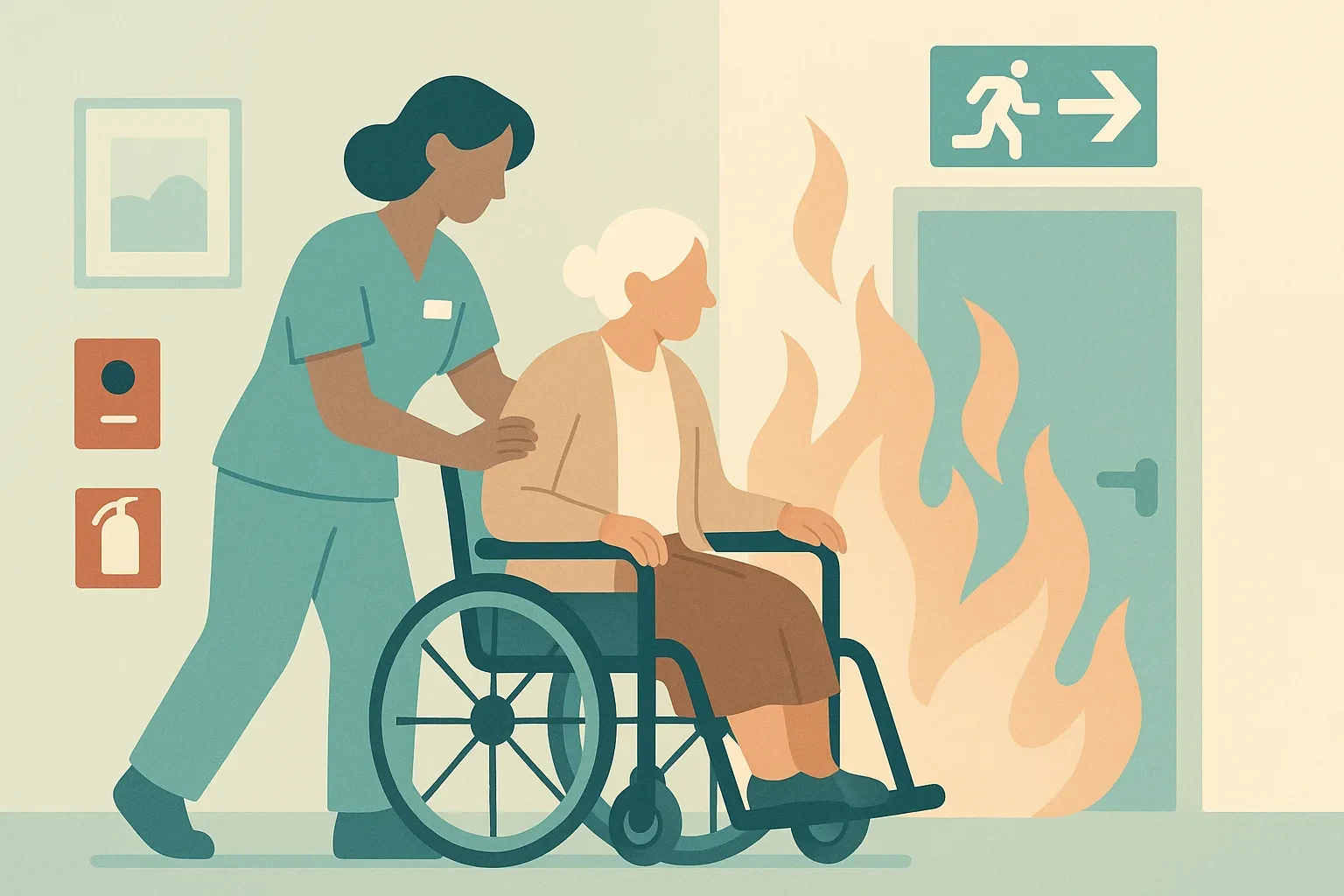
Prevention, detection, evacuation (including PEEPs) and staff responsibilities under the Fire Safety Order 2005.
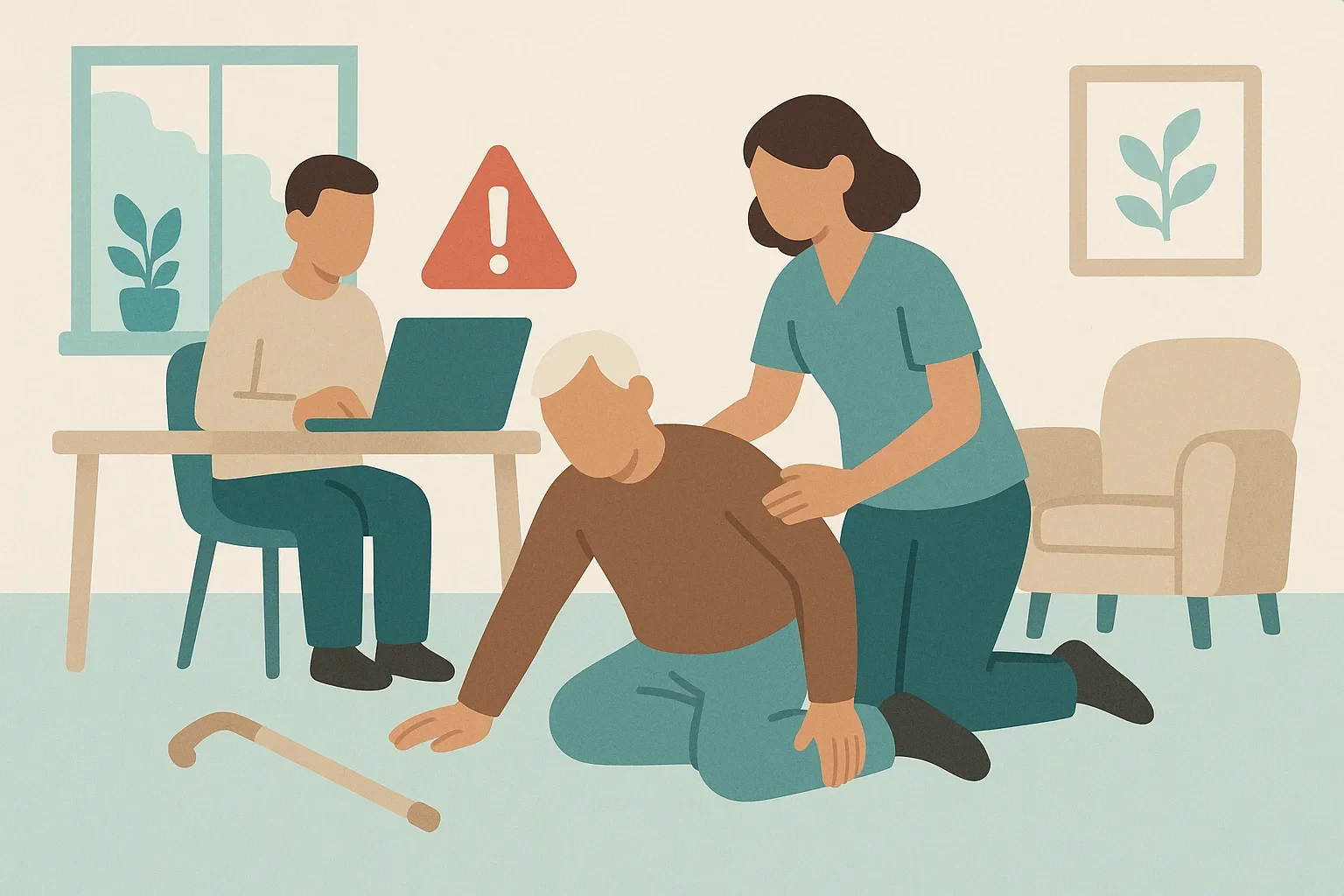
Recording, investigating and learning from incidents, RIDDOR and CQC notifications.
What a safe shift alone actually asks of a service
Three things, in practice. Someone has decided this task can be done by one person. Someone will know where that person is. Someone will act when the contact does not arrive.
The duty that sits underneath all of it
The employer has to provide a safe system of work. The general duties of employers in section 2 cover safe systems, and the information, instruction, training and supervision needed to make them work.
Nothing in that law bans working alone. It asks you to show how you decided it was safe.
The deciding is a formal step. The duty to make a suitable and sufficient assessment of risk covers the risks your own staff face. It also covers risks to people who are not your employees.
That second half matters in care. A carer who cannot get help is also a resident who cannot get help.
What the assessment has to look at
A lone worker policy that stays general is no use on a cold night. The assessment should name the person, the place, the task and the journey.
- the worker: health, experience, pregnancy, new starter status, language
- the place: the building at night, a person's own home, a car park, a stairwell
- the task: moving a person, giving medicines, handling money, restraint
- contact: who calls whom, at what points, and by what route if the signal fails
- escalation: who is woken, in what order, and when the emergency services are rung
- after: first aid, reporting, and support for the worker
Domiciliary care lone working adds the journey and the doorway. The worker arrives at a house they may not know, often in the dark, sometimes with a key safe and a dog behind the door.
Where the regulator looks when something goes wrong
Two regulations carry most of the weight. Regulation 12 on safe care and treatment asks you to assess risks to people using the service and to do all that is reasonably practicable to reduce them.
Staffing is the other half. The guidance on deploying enough suitably skilled staff sits behind every decision to send one person rather than two.
Good governance ties the two together. Regulation 17 asks you to assess, monitor and mitigate risks to service users and others, which includes the staff member alone in the building.
The lone working and care worker safety audit is the monthly or quarterly evidence that the arrangement is real. It runs 39 checks across 6 sections for one worker, scores each one and turns every gap into an action. It is free to run.
Six documents, what each one covers and what each costs
The six run from £49 to £79 each. They are sold separately, so you can take one and leave the rest.
How the six work as a set
- Health and Safety, at £79: your general statement, who holds which duty, and the arrangements behind both.
- Lone Working, at £49: who may work alone, the check in route, and what happens when a worker cannot be reached.
- Moving and Handling: safe handling of people and loads, the training behind it and the equipment regime.
- Control of Substances Hazardous to Health, at £49: assessment, storage and safe use of cleaning and clinical substances.
- Fire Safety, at £69: prevention, detection, evacuation and the personal emergency plans behind it.
- Incident and Accident Reporting: recording, investigating and learning, including what has to be reported onwards.
A lone working incident rarely stays in one document. A fall during a hoist transfer with one carer touches four of these at once, which is why they are written against each other rather than separately.
Which services this one is perfect for
Home care agencies and supported living services feel it first, because almost every shift is a lone shift. Residential and nursing homes feel it at night, when one carer covers a floor and the senior is two floors away.
It also suits a service that has just had a near miss. The policy file turns out to describe a building and a rota that changed some time ago, and nobody has owned it since.
New registrations get the clearest run. Nothing has to be reconciled with older wording, so the six can be written as one set from the start.
Why CareStream reads your file before quoting for anything
A ready made pack is quick and costs little, but it describes a generic service. A consultant brings judgement at a day rate. A monthly compliance service brings breadth and updates.
None of those starts by reading what you already hold. The free check does, and reports coverage against the regulations, wording that has gone out of date and places where two of your own documents contradict each other.
Then you buy only where a gap is real. The price is on the page before you start, you pay once rather than monthly, and nobody asks you to book a call first. We never say a document makes a service compliant, because that is not something a document can do.
What ordering involves, and what is included
The questions come first: who you are registered as, what the service does, and who holds each named role. Those answers carry into every policy you order.
Before it is signed off, the draft has to satisfy 49 elements the regulations require. They are taken from four sources:
- the Health and Safety at Work etc. Act 1974
- Regulation 12, safe care and treatment
- Regulation 18, staffing
- the reporting regulations for injuries, diseases and dangerous occurrences
Nobody at CareStream sends it until a human has read it through. It reaches you inside two working days once the questions are done, as a branded document and a copy in the dashboard.
The first twelve months of changes cost nothing. After that, keeping one policy current is £12 a year. A policy that does not suit your service can be returned for a full refund inside fourteen days.
Benefits of CareStream for a lone working policy for care services
- The documents you already hold are read against the regulations first, at no cost and with no card.
- Each written policy names your service, your roles and your real escalation route.
- The audit that checks one worker's arrangements is free to run and records the actions.
- Every price is shown before you order, and a person reads each policy before it is sent.
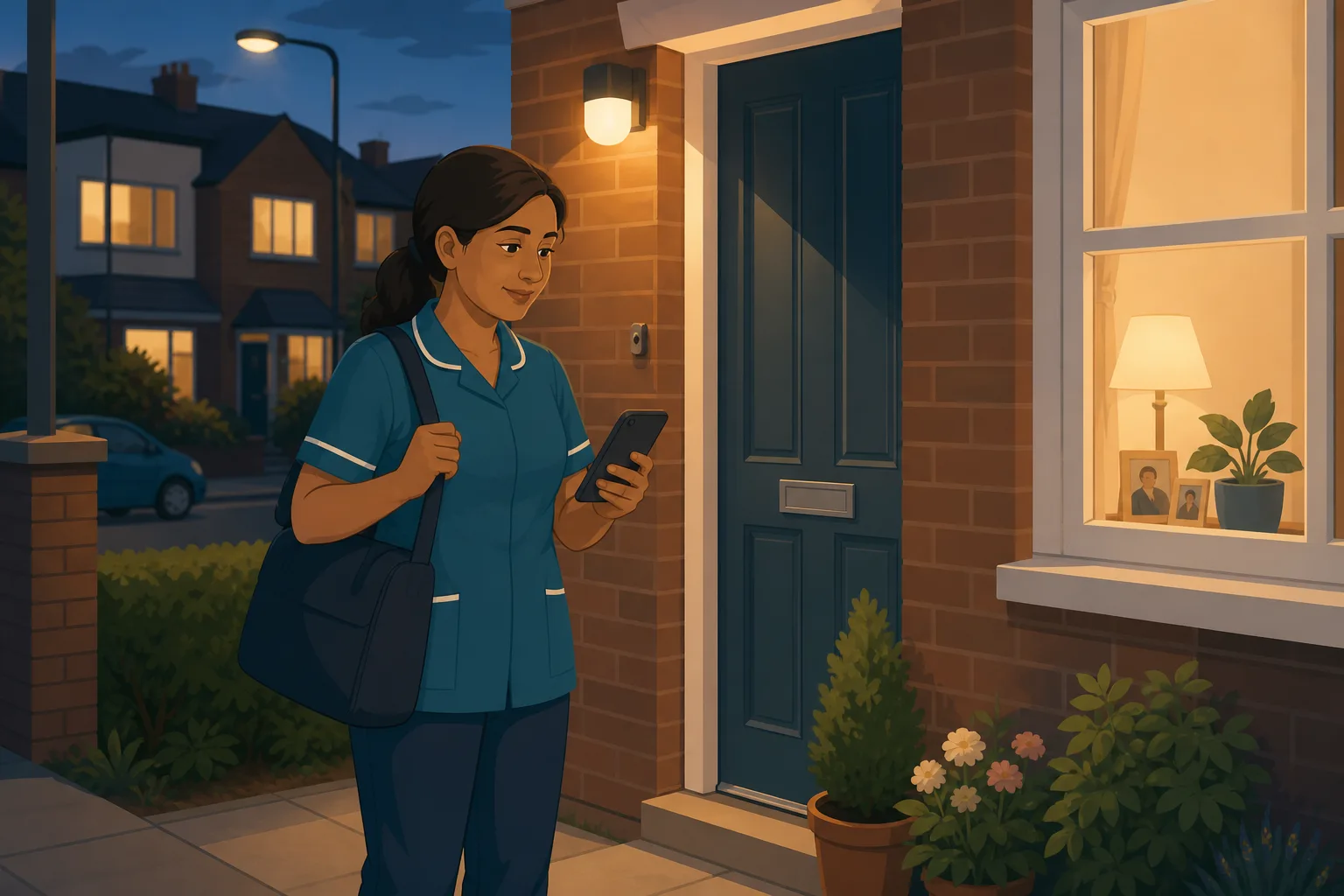
Figure: a two person task done by one person is the decision a lone working arrangement has to make openly.
Start with a free check of the documents you hold
Read what you have before buying anything. The check reports coverage, out of date wording and contradictions across your first five documents, and it needs no card. Begin at the free check of policies you already hold.
When the gap is real, the lone working policy written for your service is the document that closes it.
Staff need the same ground covered in training. The lone working awareness course for care staff explains the checks from the worker's side. The wider health and safety policies a registered service holds sit around all six documents.
Lone Working Policy for Care Services: The Six Documents Behind a Safe Shift Alone FAQs
What is a lone working policy?
It is the written arrangement for staff who work without close contact with a colleague. It sets out who may work alone, what is assessed before they do, how they keep in touch, and what the service does when contact is lost.
Is a lone working policy a legal requirement?
The law does not name the document. The Health and Safety at Work etc. Act 1974 requires a safe system of work, and a written policy is how most services set that system out and show it to staff.
Is it legal for a care worker to work alone?
Yes, unless another rule says otherwise for a particular task. The employer has to assess whether the work can be done safely by one person, and put controls in place where it cannot.
Which care staff count as lone workers?
Night staff on a floor, sleep in and waking night support workers, care workers driving between calls, live in carers, maintenance and kitchen staff working outside normal hours, and managers on call away from the building.
What should the policy cover?
Who may work alone, the tasks that need two people, how contact is kept, escalation when a worker cannot be reached, lone travel and entry to a person's home, violence and aggression, first aid, and reporting after an incident.
How often should the arrangements be reviewed?
There is no fixed interval in law. The Management of Health and Safety at Work Regulations 1999 require a review when there is reason to suspect the assessment is no longer valid, or when there has been a significant change.
Do we need a check in system or an app?
Not necessarily. Some services use a phone call at set points, some use a buddy system, some use a device. What matters is that someone is expected to notice, and knows what to do when the check does not come.
What happens if a care worker cannot be reached?
Your policy says who escalates, in what order, and when the emergency services or the person's family are contacted. Staff should not have to invent that sequence while worried about a colleague.
Does the policy cover visits to a person's home?
Yes for a home care service. Entry arrangements, key safes, dogs, smoking, hoarding and aggression are usually assessed as part of the environment the worker enters.
What has to be reported after a lone working incident?
Record every incident internally. Certain injuries, diseases and dangerous occurrences also have to be reported to the enforcing authority under the reporting regulations, and some events are notifiable to the regulator.
How does this fit with staffing levels?
Regulation 18 requires sufficient numbers of suitably qualified, competent, skilled and experienced staff to be deployed. If a task genuinely needs two people, the rota has to reflect it.
Can we use the free audit instead of buying a policy?
They do different jobs. The audit checks one worker's arrangements and turns gaps into actions. The policy is the written arrangement the audit is checking against.
How much does a written lone working policy cost?
£49 as a one off. The six documents in this collection run from £49 to £79, and the first year of updates is included.
How quickly is it delivered?
Within two working days of your answers. A policy that does not suit your service can be returned for a full refund inside fourteen days.
Will holding these policies satisfy an inspector?
No document can promise that. An inspector looks for arrangements that match what staff actually do, so the policy, the rota, the risk assessments and the training records have to tell the same story.
More on care policies
Guides and collections that go with this page, and the full libraries.
Policies are one part of it.
CareStream is the compliance system underneath: your policies, your staff training, your audits and your evidence, kept current and ready for the day somebody asks to see them.
- Policies written and kept updated for you
- Staff training that records itself against the standard
- Gap analysis showing what you are missing before an inspector does
- Everything in one place, for one price




