Training collection
Safeguarding Training for Care Staff: Six Courses, One Record
An inspector rarely asks whether you provide safeguarding training. The question is sharper. Who has done it, when does it run out, and what would a night worker do with an unexplained bruise?
Good safeguarding training answers all three. This collection holds the six courses a care worker needs behind them. Abuse and neglect sit at the front of the set.
Three of the six cost nothing, for every member of staff, for as long as you keep the account open. The other three are bought one licence at a time at £25.99. Each course ends with a scored assessment and a certificate in the learner's own name, which the person keeps.
What ties the six together is the record behind them. Every pass, score and renewal date lands against the person who earned it, in a record you can show on a screen or print. The question of who has done what then has a plain answer.
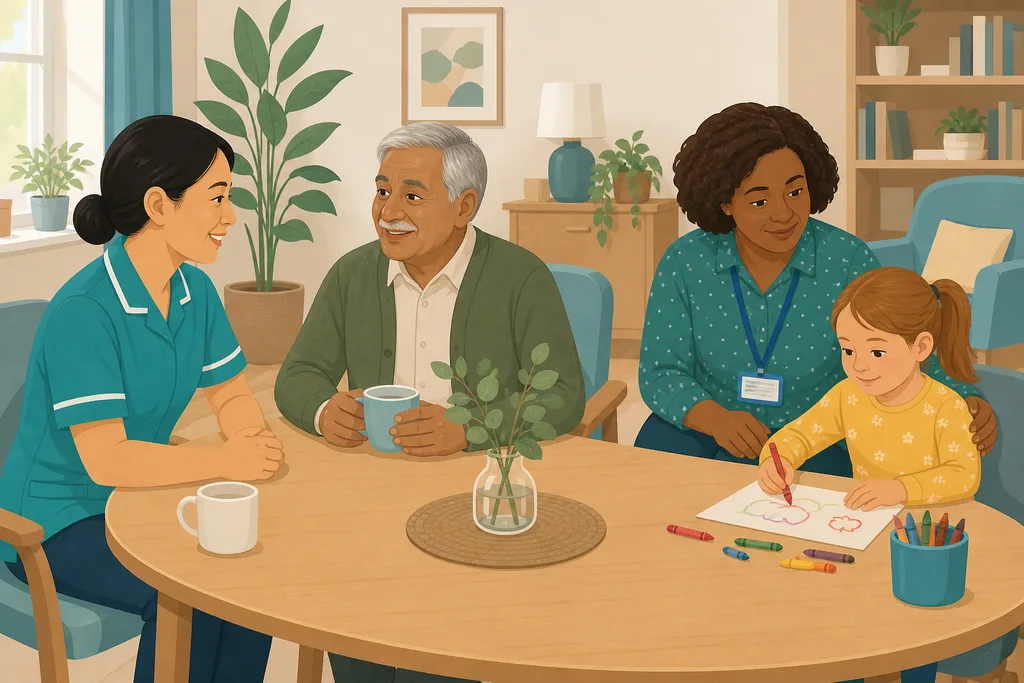
This training covers how we protect vulnerable adults and children from abuse, harm and neglect at our home. You will learn to recognise signs of abuse, understand our reporting procedures, and know how to respond to challenging behaviour and potential radicalisation risks. This is essential knowledge for keeping everyone in our care safe.
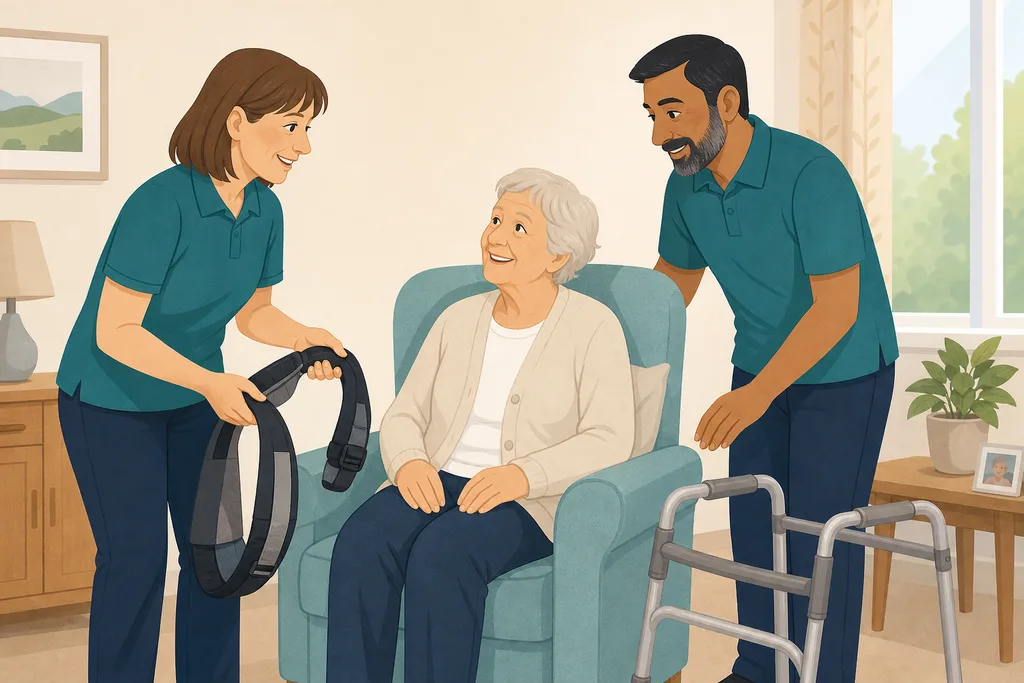
This annual refresher covers the essential knowledge you need to move and handle people safely in our home. It reviews why safe moving and handling matters, the principles we follow, how to assess and plan moves, and how to protect both the people we support and yourself from injury. Remember: this module covers knowledge only. You must also complete practical competency assessments with your supervisor.

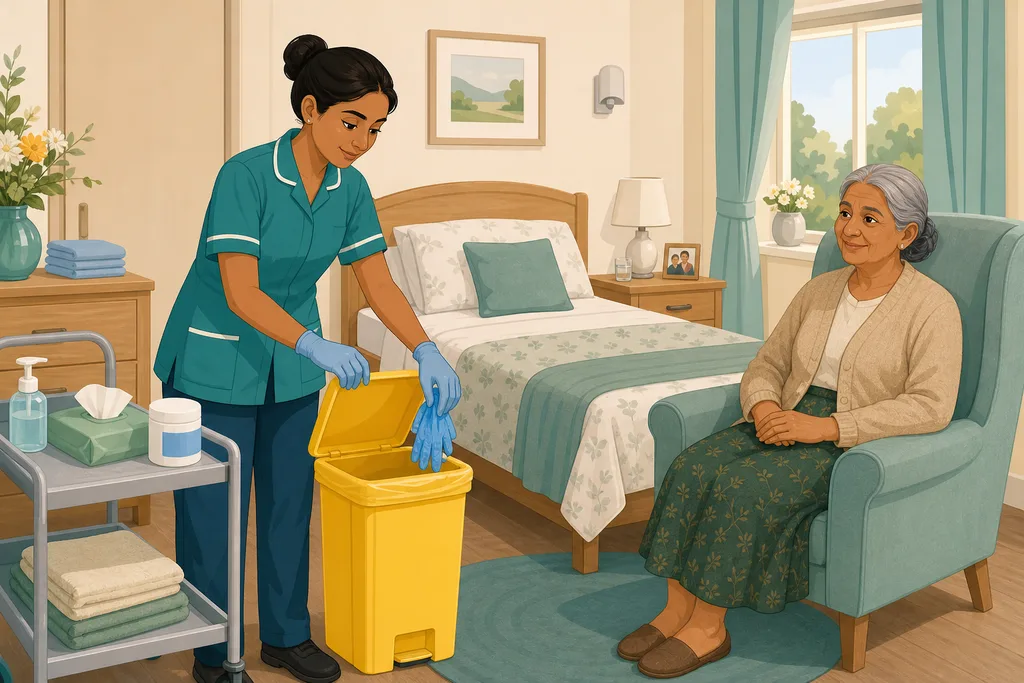
This training covers how to prevent and control infections in care settings to keep residents, staff and visitors safe. You will learn about hand hygiene, personal protective equipment (PPE), cleaning procedures, and how to respond when infections occur. These practices protect everyone and meet legal duties under the Health and Social Care Act.
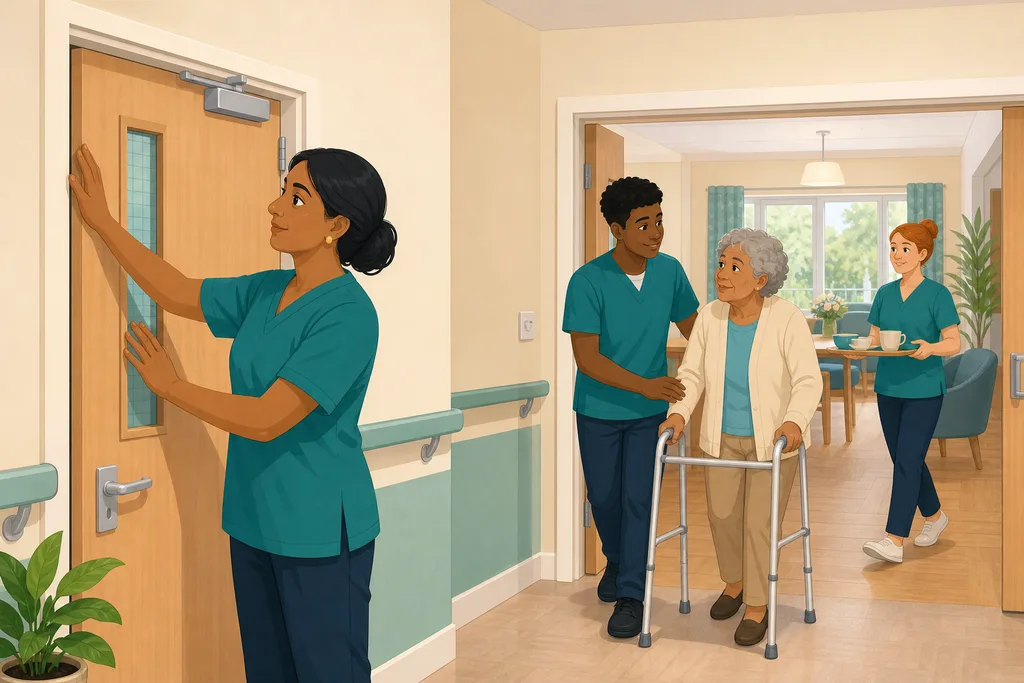
This training covers fire safety procedures at our home, including prevention, what to do if you discover a fire, evacuation procedures, and your responsibilities. Fire safety is everyone's responsibility and understanding these procedures protects residents, visitors and staff.
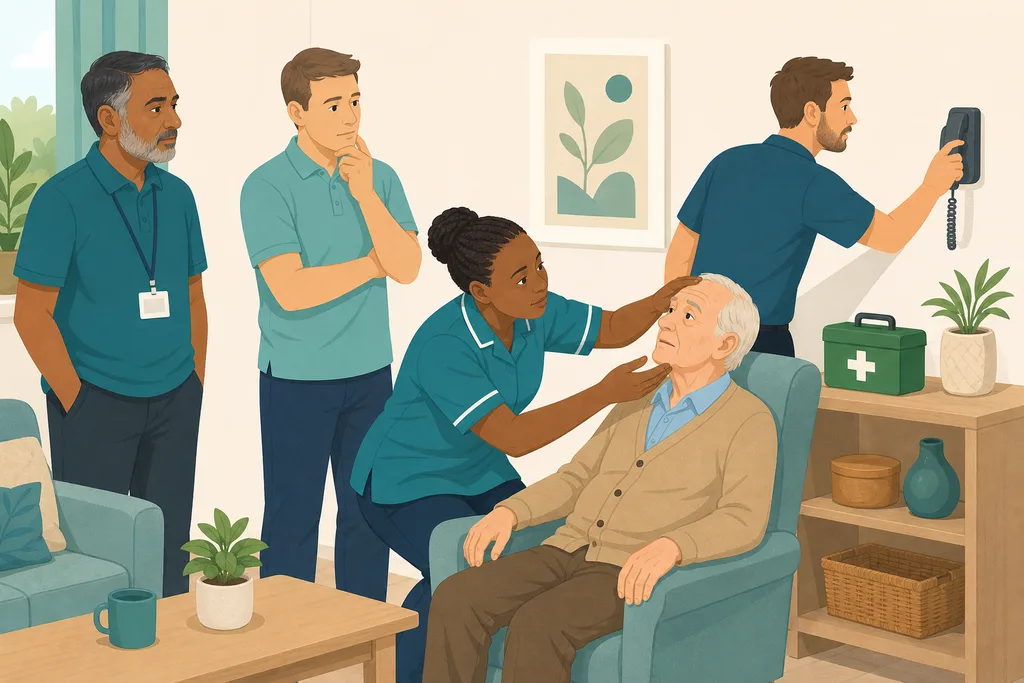
This module covers the essential knowledge you need to respond safely and effectively to medical emergencies in our care home. You will learn when and how to get help, how to assess a resident's condition, and the principles behind basic life support. Remember: this module covers knowledge only—you must also complete practical, observed competency assessments to demonstrate your skills in real situations.
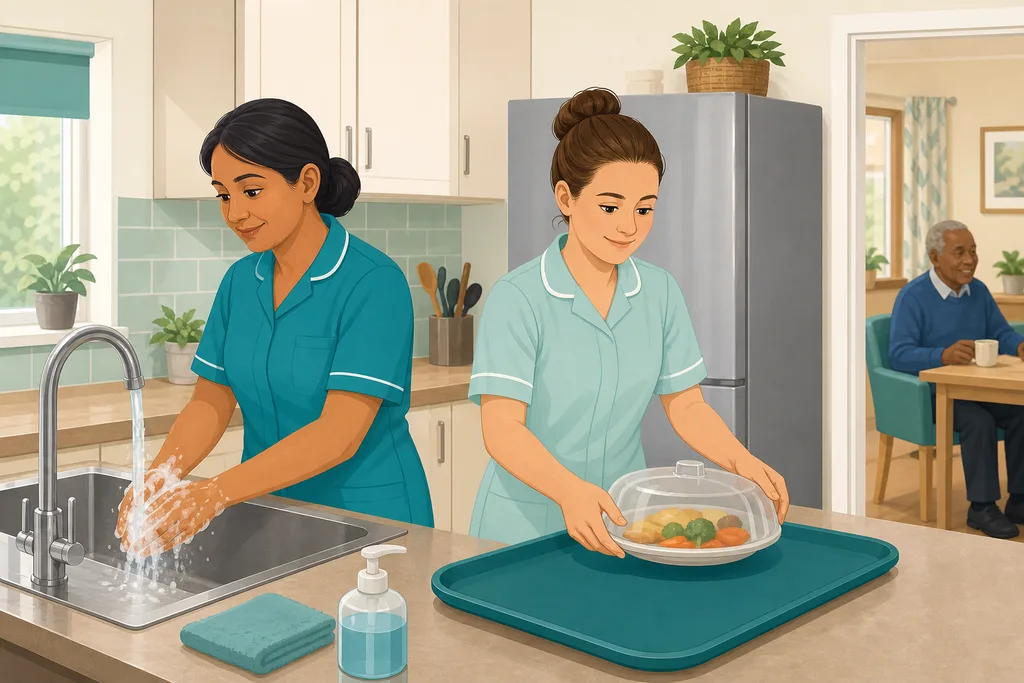
This training covers how to keep food safe and prevent illness in a care setting. You will learn about storing, preparing and serving food safely, preventing contamination, and protecting residents with food allergies. These practices protect everyone's health and meet legal requirements.
Six subjects a new care worker meets in the first week
The set is built around the first weeks of a job. A new starter meets residents, chemicals, a hoist and a fire door on the same shift. None of that waits for a study day.
What the safeguarding module teaches, lesson by lesson
The course runs to 6 lessons. It takes about 35 minutes. It covers abuse and neglect, the signs staff miss, how to respond to a disclosure, and how to raise a concern.
Each lesson pairs a short video with a quick check, so the learner is answering questions from the first few minutes rather than watching slides. The module ends with a 20 question assessment. The pass mark is 80 per cent.
Anyone can open one lesson, question and activity before buying. It takes about three minutes. That helps when you are judging the content rather than reading a sales page.
The duty behind it is plain. It sits in the Health and Social Care Act 2008 (Regulated Activities) Regulations 2014.
Regulation 13 protects people from abuse and improper treatment. It asks for systems and processes that prevent abuse. A certificate on the wall is not the point.
The five courses beside it, and the duty each one answers
The other five are the subjects an inspector asks about in the same breath.
- Moving and handling of people: employers must avoid risky handling where that is reasonably practicable, and cut the risk where it is not, under the Manual Handling Operations Regulations 1992.
- Infection prevention and control: hand hygiene, protective equipment and the response when an outbreak starts.
- Food hygiene: care kitchens deal with allergens, cooling, hot holding and temperature records every day.
- Fire safety: article 21 of the Fire Safety Order requires adequate safety training when someone is first employed.
- First aid and basic life support: an employer must provide enough suitable people to give first aid at work.
Three of them are CPD certified and free for every member of staff. They are moving and handling, infection control and food hygiene. Each runs to 8 lessons, about 60 minutes and a 32 question assessment.
Fire safety and first aid follow the shorter shape of the safeguarding module. Both are bought per licence.
Where these six sit in the Care Certificate
Most new starters work through induction at the same time. The standards line up more neatly than managers expect.
Adult safeguarding is standard ten. Safeguarding children is eleven. Basic life support is twelve, health and safety is thirteen, and infection control is fifteen. All sixteen are set out in the Care Certificate standards published by Skills for Care.
Induction is also where safeguarding children training earns its place in an adult service. A care worker may meet a child as a visitor, a grandchild or a young carer.
The standard asks a social care worker to explain what they must do if they suspect a child is being abused or neglected. That holds wherever they meet the child. Knowing the local route matters more than the level badge.
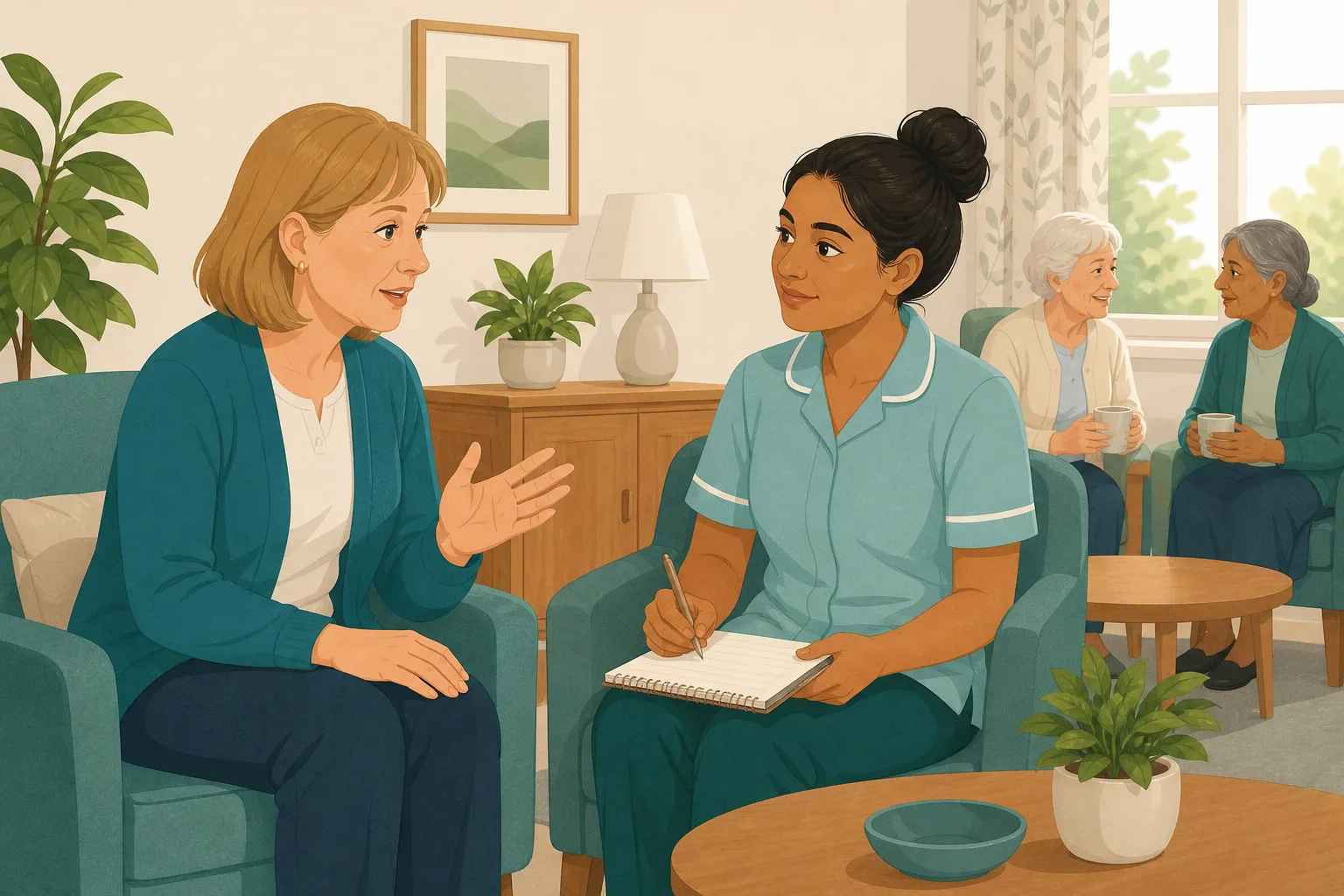
Figure: the moment a concern is passed on and written down, which is what a course has to prepare staff for.
What the record holds once the course is done
A pass is only useful if you can find it later. Each learner has a training record. It lists the module, the status, the score, the renewal date and the certificate.
Statutory modules and annual refreshers sit in separate blocks, and an overdue renewal shows up in the list without anyone opening a file. Nothing is hidden. Sessions you run in the room are recorded beside them, with the name of the person who signed them off.
Across the team, the training matrix shows renewals and gaps in one grid. Open that view when someone asks how you know your staff are current.
Prefer to test the records rather than trust them? Our guide to running a safeguarding audit on your own log sets out what to count, and what to look at first.
Who it suits, what it costs and how to get started free
No sales call, no forms to sign. Put the free courses in front of the team first. See what comes back.
Who this collection is perfect for
It suits a registered manager or training lead at a small service. There is no training department, a handful of starters a year, and no budget for a fee per learner.
It suits a home that inherited a spreadsheet of expiry dates and no longer trusts a single line of it. It suits a home care agency whose staff are rarely in the office, because the lessons run on a phone between visits.
It suits an owner of two or three services. You get the same content and the same record in each one, without buying a seat for every member of staff.
It fits less well in two cases. You may need a hoist assessed in the room, or a higher level course for a designated safeguarding lead. Those stay face to face, and the platform records them rather than replacing them.
What is free, what you buy and what paid plans add
Three of the six courses are CPD certified and cost nothing. Every member of staff can take them, with no card and no expiry date on access. Certificates are included.
The safeguarding, fire safety and first aid modules are £25.99 a licence. Each licence covers one named person. It includes the lessons, the assessment and a follow up lesson on anything the learner got wrong.
Paid plans add the rest of the platform. Training runs in more than one language, audits end with written recommendations, and policy checks go beyond your first 5. Plans start at £85 a month with a 14 day trial.
Staff numbers do not change the free part. A free account takes as many logins as you need. That is the difference that counts when you employ bank and agency workers.
Why this beats the usual ways of buying courses
Services tend to buy training in one of three ways. A library charges per learner. A trainer comes in for the day. A wider subscription covers training alongside other tools.
Each has its place. A trainer in the room is right for practical skills, and nothing on a screen replaces watching someone use a hoist properly. That wider route can suit a group with a compliance lead to run it.
What those routes rarely give a small service is a free floor. CareStream puts the CPD certified courses and the record in front of every member of staff at no cost. The extra modules are then sold one at a time.
Compare the set against the wider mandatory training collection before you commit. Or start with the free moving and handling of people course and judge it yourself.
Benefits of CareStream safeguarding training
- Staff learn in short lessons on a phone, with a scored assessment rather than a slide deck and a signature.
- Each pass creates a certificate in the learner's own name, with the score and the renewal date on the record.
- Three of the six courses here are free for every member of staff, for as long as you hold the account.
- The matrix shows who is current and who is overdue, which is the evidence an inspector usually wants to see.
None of this makes a service compliant. It gives you records that match what your staff actually did. CareStream never claims more than that.
Start free, then add the modules your roles need
Create a free account. Send the three CPD certified courses to the team, then watch the first completions land in the record over the next few shifts. Nothing is charged. No card is needed.
When you are ready for the rest, the safeguarding adults and children course page lists the lessons and the demo. Buy a licence for the people who need it. Leave the free courses running.
A safeguarding course for care staff is worth little on its own. What an inspector tests is the record it leaves, and the local route your team can describe out loud.
Safeguarding Training for Care Staff: Six Courses, One Record FAQs
What is safeguarding training for care staff?
It is the training that teaches a care worker to recognise abuse and neglect, respond to a disclosure, and raise a concern by the route your service uses. It covers adults and, where staff may meet a child, children as well. The Care Quality Commission expects it as part of induction and at a level that suits the role.
Is safeguarding training a legal requirement?
The regulations do not name a course. Regulation 13 of the Health and Social Care Act 2008 (Regulated Activities) Regulations 2014 requires systems and processes that prevent abuse, and the Care Quality Commission guidance on that regulation says staff must receive safeguarding training as part of induction, relevant and at a suitable level for the role.
How long does the safeguarding course take?
About 35 minutes. It runs to 6 lessons, each with a short video and a quick check, then a 20 question assessment with a pass mark of 80 per cent.
Is the safeguarding course free?
No. It is bought per member of staff at £25.99 a licence. Three of the six courses on this page cost nothing on the free plan: moving and handling of people, infection prevention and control, and food hygiene.
Which courses here are free, and what is the catch?
The CPD certified courses are free for every member of staff on the free account, with certificates included and no card needed. The free plan is in English. Translations, artificial intelligence recommendations in audits and unlimited policy checks sit on the paid plans.
Do staff get a certificate?
Yes. Every learner who passes gets a certificate of completion in their own name, with the score and the date recorded against their training record.
What level of safeguarding do care staff need?
Levels vary by role and by local arrangements, and your local safeguarding partners may set their own expectations. In our view a care worker needs awareness level content as a minimum, and a manager who makes referrals or holds a lead role needs more than that. Check what your local partners expect before you decide.
How often should safeguarding be refreshed?
No regulation sets a fixed interval. The Care Quality Commission guidance says training should be updated at appropriate intervals. Many services refresh annually, and sooner after an incident or a change in the local procedure.
Does this cover safeguarding children?
The course covers adults and children. For a social care worker, the Care Certificate standard on safeguarding children asks them to explain what they must do if they suspect a child or young person, met in any circumstances, is being abused or neglected.
Can I give the course to agency and bank staff?
Yes. A free account takes as many staff logins as you need, so bank and agency workers can hold their own record. A bought licence covers one named member of staff.
How do I prove to an inspector that training is up to date?
Each learner has a training record showing the module, status, score and renewal date, and the training matrix shows the same across the team. You can show the record on screen or print the certificates.
What happens to our records if we stop paying?
The free plan is free for ever and does not expire, so the CPD certified courses, certificates and records stay where they are. Paid plan features stop, but what you have already recorded stays in the account.
Do you offer face to face safeguarding sessions?
The courses here are online. The platform also records sessions you run yourself, so classroom training and the practical sign off sit beside the online modules in the same record.
Is there a free trial of the paid plans?
Yes. Paid plans start with a 14 day free trial, and that is the point where a card is needed. The free account itself needs no card.
Does completing a course make our service compliant?
No. A course records what a member of staff knows on the day. An inspector judges what staff actually do, how concerns are raised and what the service learns. No training, policy or audit can promise an outcome.
More on training
Guides and collections that go with this page, and the full libraries.
Policies are one part of it.
CareStream is the compliance system underneath: your policies, your staff training, your audits and your evidence, kept current and ready for the day somebody asks to see them.
- Policies written and kept updated for you
- Staff training that records itself against the standard
- Gap analysis showing what you are missing before an inspector does
- Everything in one place, for one price




