Travelling and Driving for Work training that gets your team CQC-ready
- CQC-aligned, mapped to the Care Certificate framework
- Completed in the hub in over 60 languages
- A certificate for every staff member, for your CQC evidence
- A wrong answer triggers a follow-up lesson, so gaps are closed
No subscription needed. Bulk discounts from 10+ licences.
From £25.99 per staff member, one-off. No subscription needed.
Trusted by UK care providers
Specialists in the technology behind it all
The same technology behind the world's best products powers CareStream, so your team's travelling and driving for work training stays accurate, always up to date with the latest guidance, and is delivered in over 60 languages.
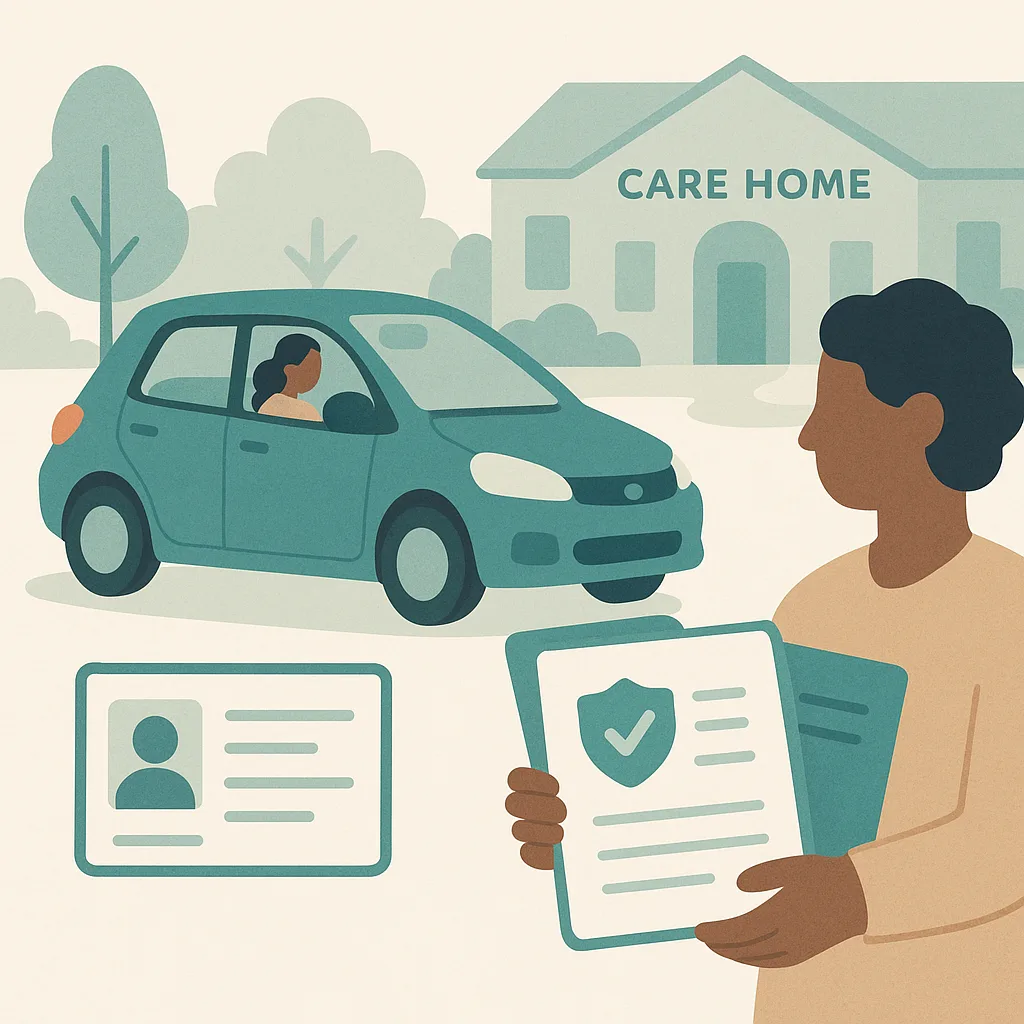
Legal Requirements for Work Driving
When you drive to visit clients, you are driving for work purposes. You must hold a valid UK driving licence and inform your car insurance company that you use your vehicle for business purposes. Your employer needs to see your licence and insurance documents regularly. Driving without proper business insurance can invalidate your cover and leave you personally liable for accidents.
What type of car insurance do you need to drive to client visits?
In the hub, a wrong answer sends the staff member a short follow-up lesson and a fresh question on the same point. They close the gap before they can finish the module, and every attempt is recorded for your CQC evidence.
That is how the training works. Give your whole team the full Travelling and Driving for Work module.
Avg. Duration
About 35 minutes
Certificate
For every staff member
Available Languages (60+)
Course Published by

A clear, practical grounding in travelling and driving for work.
This module covers the essential safety and legal requirements for staff who drive or travel as part of their domiciliary care duties. You will learn how to maintain your vehicle, drive safely between client visits, and protect yourself and others on the road. Safe travelling practices protect you, your colleagues, and the people we support.
By the end, your staff will be able to:
- Identify your legal responsibilities when driving for work purposes
- Describe the vehicle checks and maintenance required before driving to client visits
- Explain how to plan safe journeys and manage time between visits
- Recognise situations that make driving unsafe and the actions to take
- Apply safe driving practices to protect yourself, clients and the public
A closer look at the travelling and driving for work module.
The module is built in short, practical sections. Each one teaches a part of the topic, then applies it to a real care scenario and checks understanding before moving on.
Legal Requirements for Work Driving
When you drive to visit clients, you are driving for work purposes. You must hold a valid UK driving licence and inform your car insurance company that you use your vehicle for business purposes. Your employer needs to see your licence and insurance documents regularly. Driving without proper business insurance can invalidate your cover and leave you personally liable for accidents.
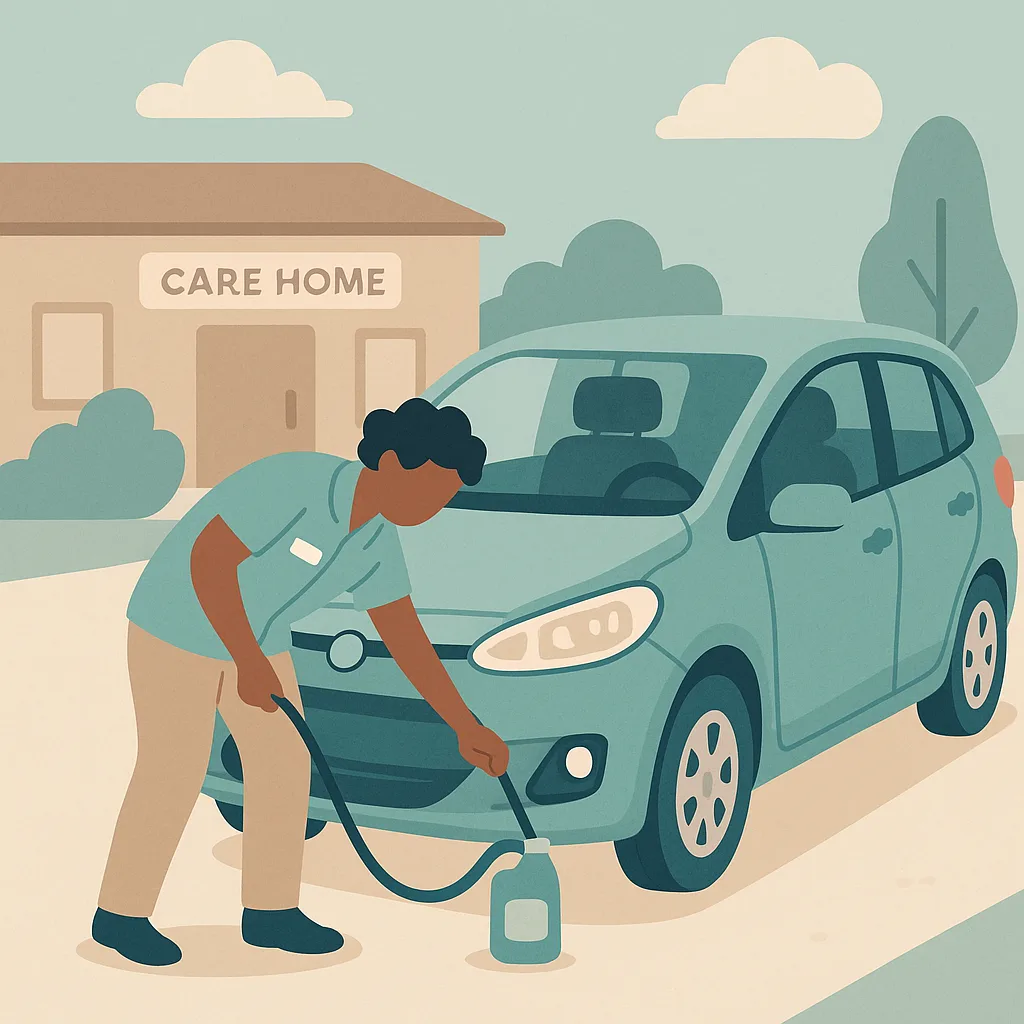
Daily Vehicle Safety Checks
Before starting your visits each day, you must check your vehicle is safe to drive. Check tyre pressure and tread depth, all lights work, windscreen wipers function properly, and fluid levels including oil and washer fluid. Look for any warning lights on the dashboard. If you find any problems, report them immediately and do not drive until they are fixed. A vehicle defect could cause an accident that harms you or others.
Planning Safe Journeys
Plan your route before setting off, especially to new clients. Allow realistic travel time between visits so you are not rushing or speeding. Check weather and traffic conditions and add extra time in poor conditions. Keep your phone charged but never use it while driving, even hands free if it will distract you. If you are running late, pull over safely and contact your office and the client. Arriving late is always better than having an accident.

Driving Safely in Different Conditions
Adjust your driving to the conditions. In rain, ice, snow or fog, reduce your speed and increase the distance from the vehicle in front. In winter, clear all ice and snow from windows, lights and mirrors before driving. If conditions are dangerous, contact your supervisor to discuss whether visits should be rescheduled. Never take risks with your safety or others. You must also be fit to drive. If you are tired, unwell, or taking medication that causes drowsiness, you must not drive.

Lone Working and Personal Safety
When travelling to clients, you are often working alone. Always tell someone your schedule and expected arrival times. Keep your phone charged and with you. Park in well lit areas close to the client's home when possible. Trust your instincts. If you feel unsafe approaching a property or area, stay in your car and contact your supervisor. Your personal safety is the priority. Carry your ID badge and wear it when approaching properties so you are identifiable as a care worker.

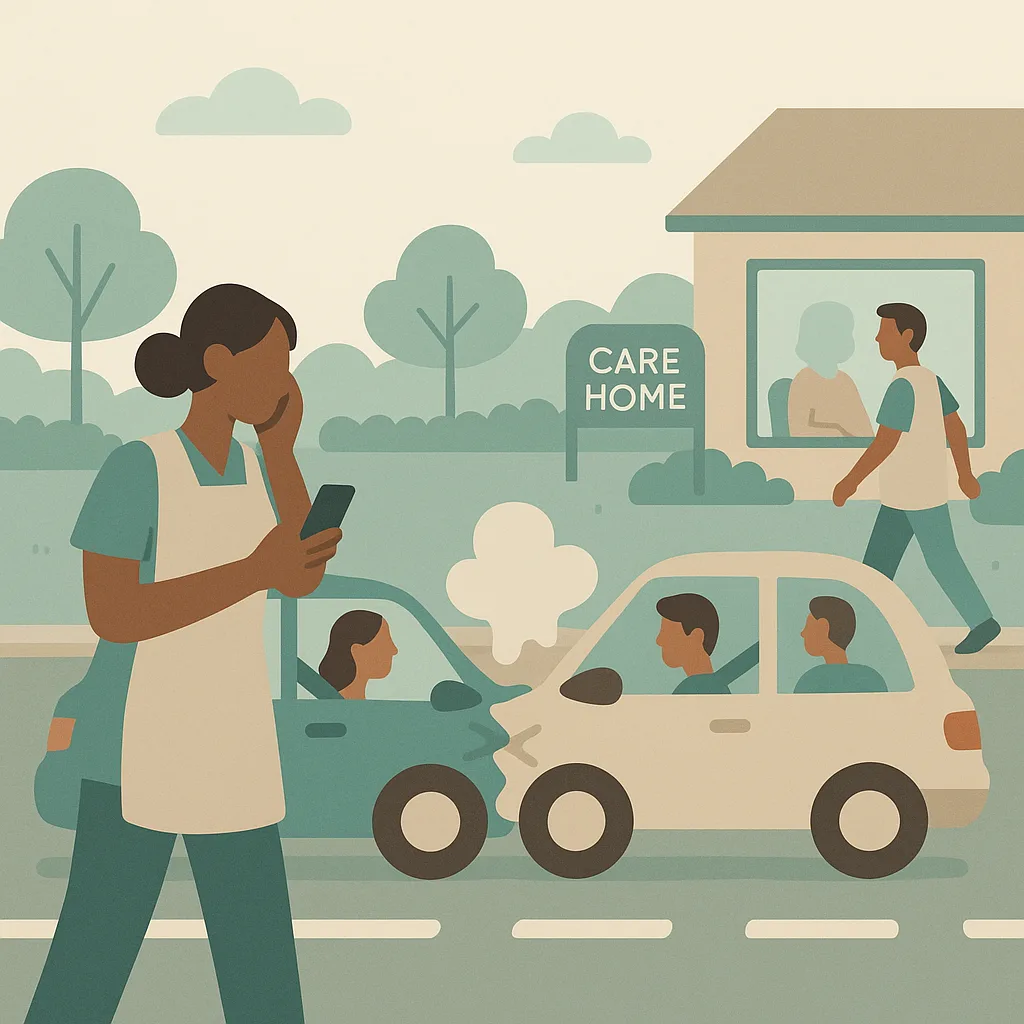
Accidents and Incidents
If you are involved in any accident or incident while driving for work, stop and check everyone is safe. Call 999 if anyone is injured. Exchange details with other drivers and take photos if safe to do so. Report the incident to your supervisor immediately, even if it seems minor. Complete an incident report as soon as possible. Never admit fault at the scene. If your vehicle is damaged or unsafe, do not continue driving. Your employer needs to know about all driving incidents for insurance and health and safety purposes.
The things your team must remember.
- You must have a valid driving licence and business use insurance to drive for work
- Check your vehicle is safe every day before driving to visits
- Plan routes in advance, allow enough time, and never use your phone while driving
- Adjust your driving to weather conditions and do not drive if you are unwell or too tired
- Trust your instincts about personal safety and contact your supervisor if you feel unsafe
- Report all accidents and incidents to your supervisor immediately, even if minor
Not a slideshow once a year. Training that sticks.
CareStream delivers travelling and driving for work training in the hub your team already uses, grounded in best practice and your own policies, so it fits your care setting and not a generic template.
Short teaching sections and a real care scenario, then an assessment that checks understanding.
Staff complete it in over 60 languages, while your records stay in English.
A wrong answer triggers a short follow-up lesson and a fresh question, so the gap is closed.
Automatic reminders at 90, 30 and 7 days, with a live compliance dashboard.
From your dashboard to your team, in the CareStream hub.
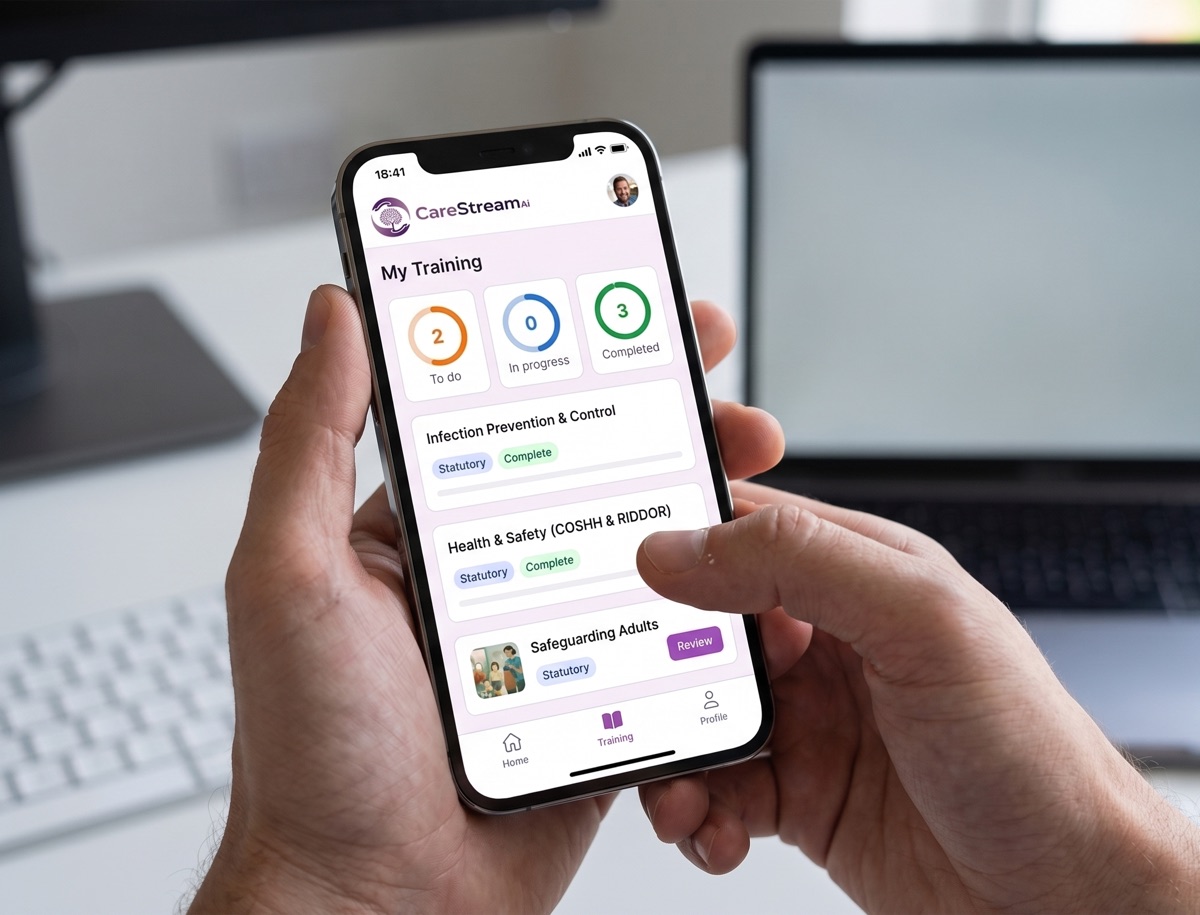
Training is delivered in the hub each staff member logs into. You allocate the modules, they complete them in their own language, and you get the completion records and certificates for your CQC evidence, with any gaps closed by automatic follow up training.
Assign Travelling and Driving for Work to each staff member in seconds. No course builder and no setup for each person.
Staff work through the module on any device, in over 60 languages, teaching then checking understanding. A wrong answer sends a short follow up lesson.
See live completion status and a certificate for every person, ready as evidence for CQC.
Any step, in their language, in one tap.
Care teams are diverse and training should not leave anyone behind. On any lesson or question, a staff member taps the language button and the whole step flips into the language they think in. They understand it properly, and your records stay in English.
- One tap flips any lesson or question into their language, instantly.
- Over 60 languages, with no setup and no separate versions to manage.
- Completions and certificates stay in English for your CQC evidence.
Try the language buttons in the preview above.
Built for real learning, not box ticking
Every CareStream course goes further than a lesson and a quiz. These features come as standard on every course, giving your staff a richer way to learn and giving you the evidence to prove it.

Every course is built on recognised UK guidance and cites its sources, from NICE and Skills for Care to the NHS and the legislation itself.
A plain English glossary of the technical terms in each course. A simple way to support every learner, including staff with English as a second language.
A quick knowledge check before the lesson is compared with the final assessment, so every certificate comes with evidence of how much the course actually taught.
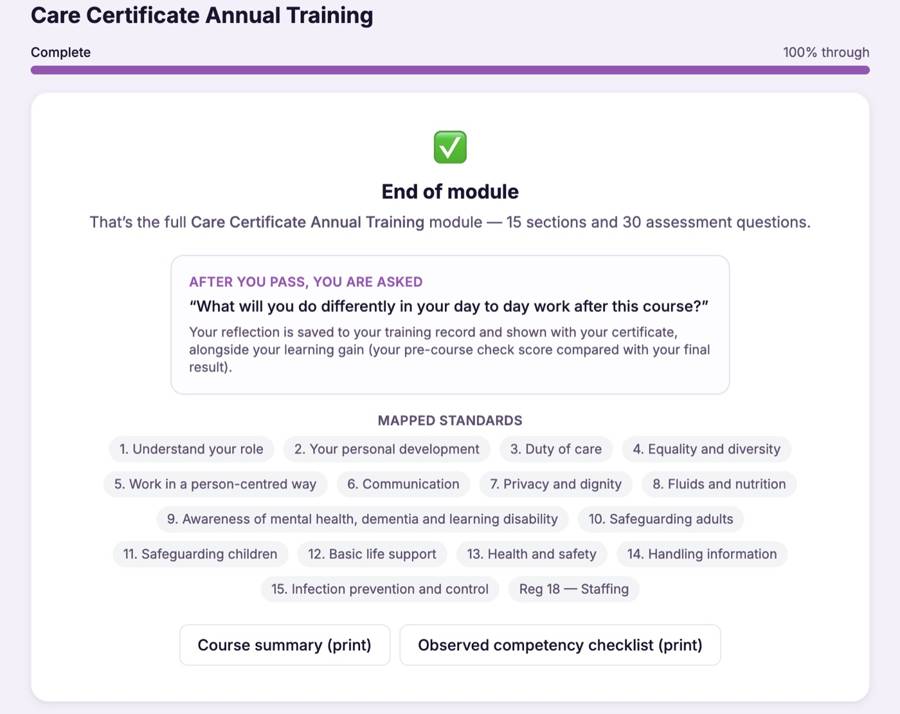
After passing, staff record what they will do differently in their day to day work. Their reflection is saved to their training record and shown with their certificate.
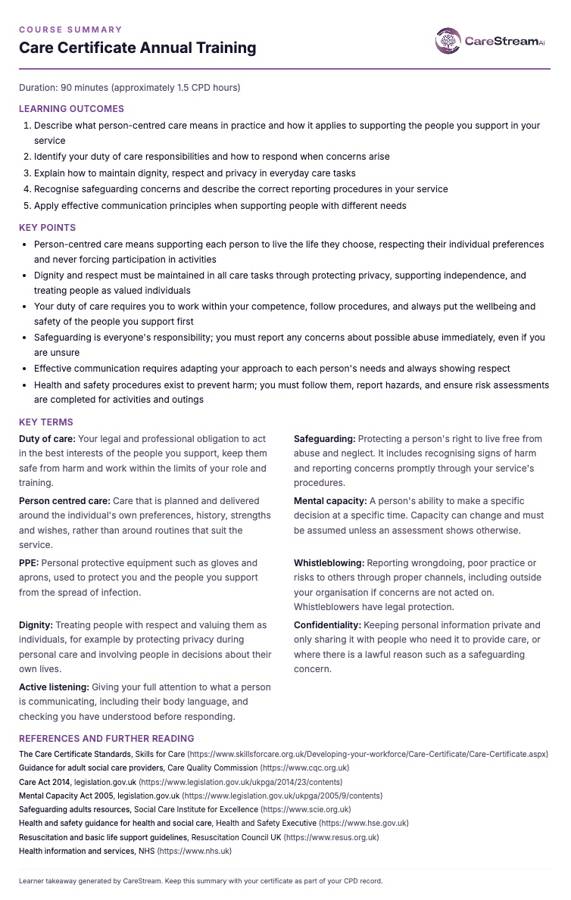
A printable one page takeaway of the outcomes, key points and key terms. Perfect for staff files, supervision conversations and the staff room wall.
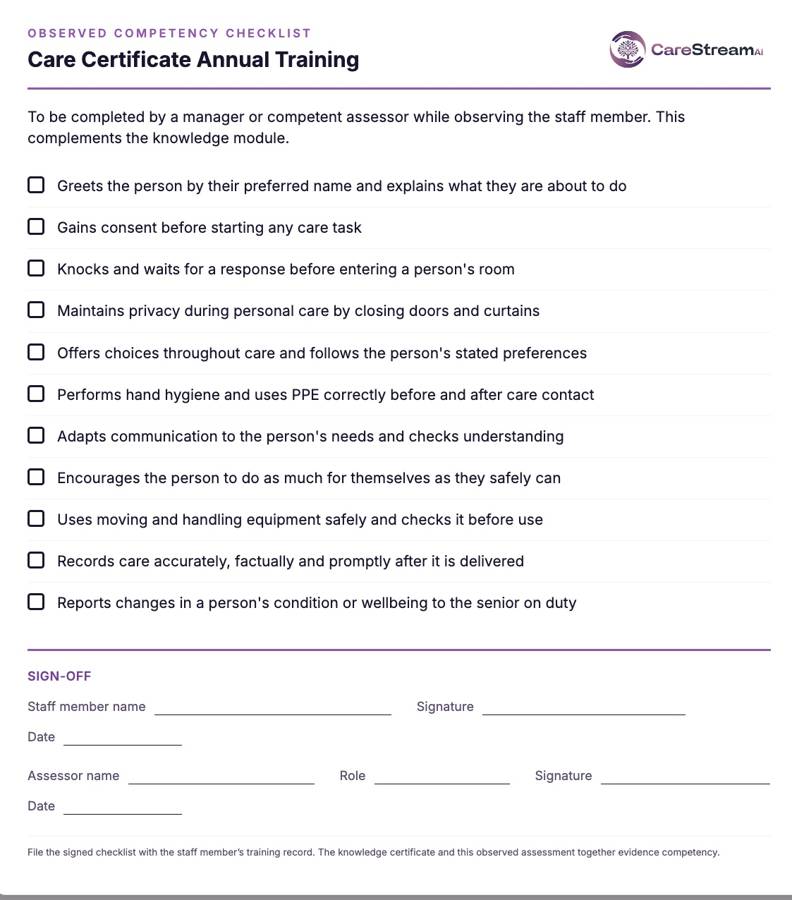
A printable checklist for managers to confirm skills in practice, with a sign off section. It completes the picture beyond the knowledge assessment.
Wrong answers become lessons, not failures
Most e learning marks an answer wrong and moves on. CareStream does not. Every wrong answer triggers an automatic follow up loop that teaches the point again and rechecks it, so no knowledge gap is left behind.
A wrong answer immediately opens a short lesson explaining the point, so the gap is closed there and then.
A fresh question on the same point checks the lesson has landed. The loop repeats until it has.
Staff move on to the next module and their certificate once they genuinely know the answer, not just after one lucky guess.
Why choose CareStream?
Training built for the care sector, delivered the way busy teams actually learn.
- 90+ care-specific training courses
- Bitesize, engaging lessons your staff actually finish
- Mapped to the Care Certificate & CQC standards
- Available in 60+ languages
- Instant certificate on completion
- Flexible learning, anytime, on any device
- Content kept up to date with UK care regulations
- Time to complete: ~35 min
Frequently asked questions.
Is Travelling and Driving for Work training mandatory in care settings?
How often should staff complete Travelling and Driving for Work training?
Can CareStream deliver Travelling and Driving for Work training in other languages?
Does the training include an assessment?
More training your team may need
More mandatory and role-specific training CareStream delivers to your team, in the hub, in any language. Add any of these to your basket.
 Annual Certificate
General Health & Safety Awareness
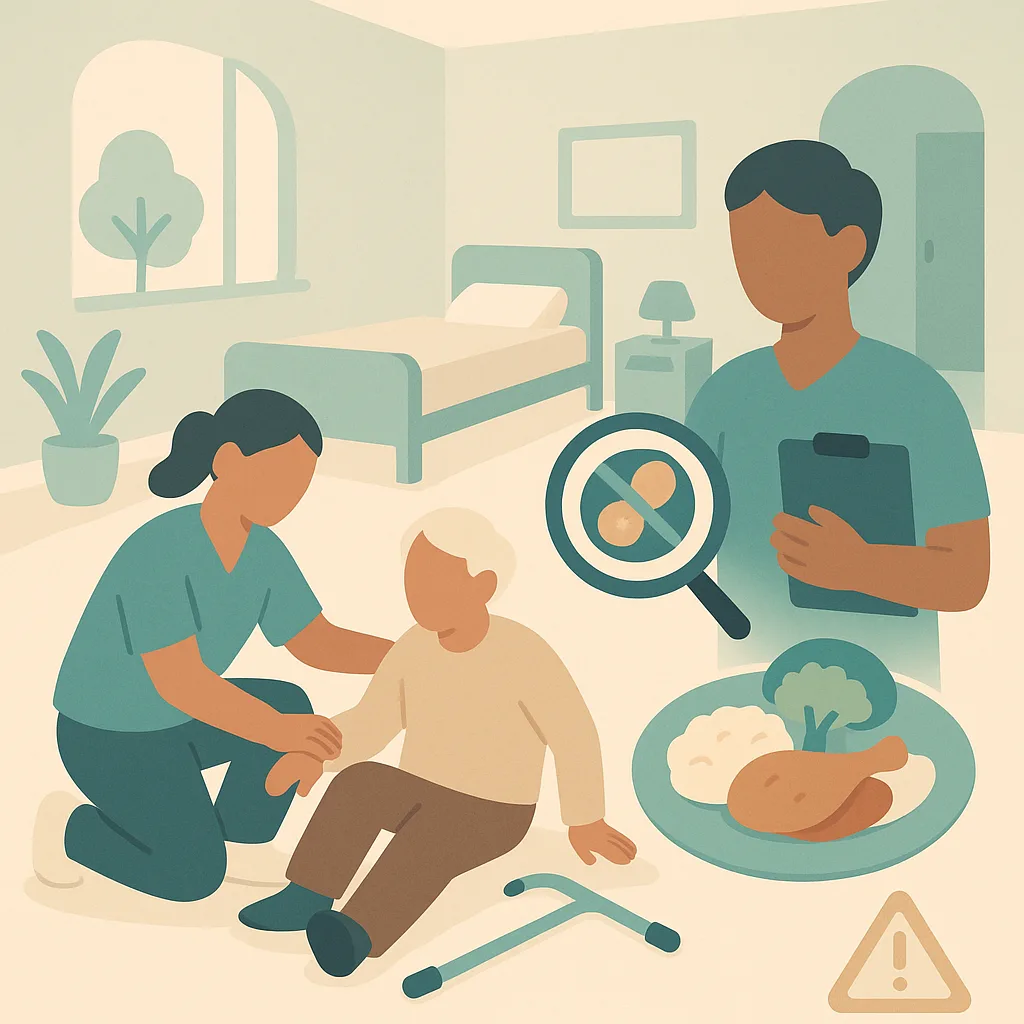
This annual refresher covers essential health and safety practices you use every day in our home. You will review how to prevent and respond to falls, manage food allergies safely, and maintain a safe environment for residents and staff. The training is based on our own policies and procedures.
Bulk discounts from 10+ licences
 Annual Certificate
COSHH (Control of Substances Hazardous to Health)
This training covers how to safely handle, store and dispose of hazardous substances in our home, including cleaning chemicals, medications and clinical waste. You will learn our procedures to protect yourself, residents and colleagues from harm. Understanding COSHH is essential for maintaining a safe environment every day.
Bulk discounts from 10+ licences
 Annual Certificate
RIDDOR (Accident and Incident Reporting)
This module teaches you when and how to report accidents and incidents under RIDDOR (Reporting of Injuries, Diseases and Dangerous Occurrences Regulations 2013). You will learn which events must be reported to the Health and Safety Executive, how to recognise reportable incidents in your daily work, and the correct procedures to follow at our home.
Bulk discounts from 10+ licences
 Annual Certificate
Living and Working in a Client’s Home
This training covers how to live and work professionally in a client's own home as a live-in care worker. You will learn how to respect the client's home and routines, maintain professional boundaries while building a caring relationship, and protect your own wellbeing through proper rest and time off. This matters because live-in care allows vulnerable people to stay in their own homes, and doing it well depends on balancing closeness with professionalism.
Bulk discounts from 10+ licences
 Annual Certificate
Professional Boundaries in Live-in Care
This training helps you understand and maintain healthy professional boundaries while living and working in a client's home. You will learn how to stay warm and caring while keeping the relationship safe and professional, especially around money, gifts, personal relationships and confidentiality. Clear boundaries protect both you and the client in the unique closeness of live-in care.
Bulk discounts from 10+ licences
 Annual Certificate
Rest, Breaks and Working Time (Live-in)
This training explains your legal rights and responsibilities around rest, breaks and working hours when you live in the home of the person you support. You will learn how to take proper breaks, manage sleep and nights, recognise fatigue, and protect your rest so you can provide safe care while looking after your own wellbeing. Understanding these rules protects both you and the person you care for.
Bulk discounts from 10+ licences
Give your team travelling and driving for work training that actually sticks.
Add it to your basket, allocate it in seconds, and let the evidence build itself.
Compared
Three ways to train a care team.
These modules are written and kept current by us, so your managers do not have to write or maintain them. We have compared what each approach does rather than naming providers, because products change and this should still be true next year.
| CareStream | A generic e-learning library | A trainer you book | |
|---|---|---|---|
| Try a real lesson and a real question before you buy | |||
| Learning outcomes and time to complete stated up front | |||
| Written lesson sections, each with its own illustration | |||
| Interactive exercises after the lesson that teaches them, in every module | |||
| Assessment in every module, with the key points to revisit | |||
| Taken in any of sixty plus languages | |||
| A wrong answer triggers a follow-up lesson, not just a re-sit | |||
| Practical sign-off by a manager where the subject needs it | |||
| Completion files itself into your training matrix and evidence pack | |||
| Bought one module at a time, with no annual contract |
Generic libraries are often cheaper per learner. They teach a national standard rather than being built, updated and evidenced around the way a CQC-registered service is actually inspected.
Care policies
Every module is written from a policy
If the policy behind it is out of date, the training inherits that. Sixty six policies written for your service, checked against current law and read by a person before they carry your name, from £39.