Training collection
Catheter Care Training for Care Staff: Knowledge First, Then Sign Off
Catheter care training teaches knowledge, not competence. It is the part a staff member can do at a desk, before anyone goes near a person. Catheter care training does not sign a care worker off to do the task, and the module says so in plain words.
That matters because the gap is where things go wrong. A certificate on file can look like proof of skill. It is proof of understanding.
Six clinical modules sit in this collection. Catheters, wound care, tube feeding through the stomach wall, stoma care, tracheostomy care, and taking blood or placing a cannula. Most people arrive here looking for urinary catheter training and find the rest of the set useful too.
Each ends with a scored assessment and a dated certificate on the staff record. Each also tells the learner that a practical assessment still has to happen. You decide who observes it, and the record of that sits beside the certificate.
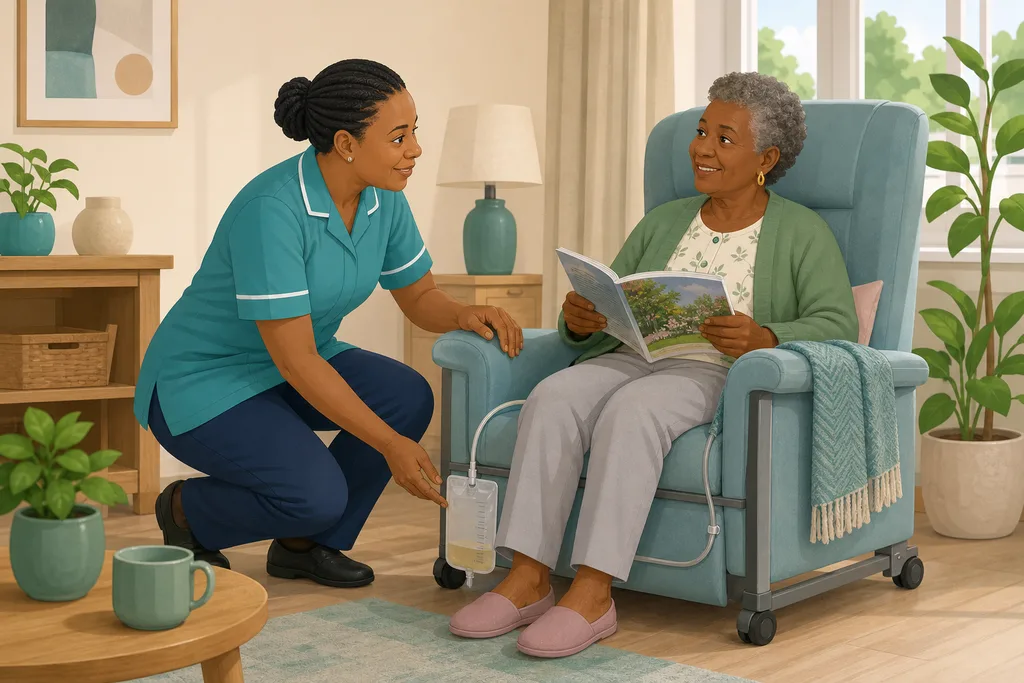
This module covers the essential knowledge you need to safely support residents who have urinary catheters. You will learn about the types of catheters used in our home, how to maintain hygiene and dignity, how to recognise problems early, and when to escalate concerns. This is the knowledge component only; practical catheter care requires additional hands-on competency assessment.
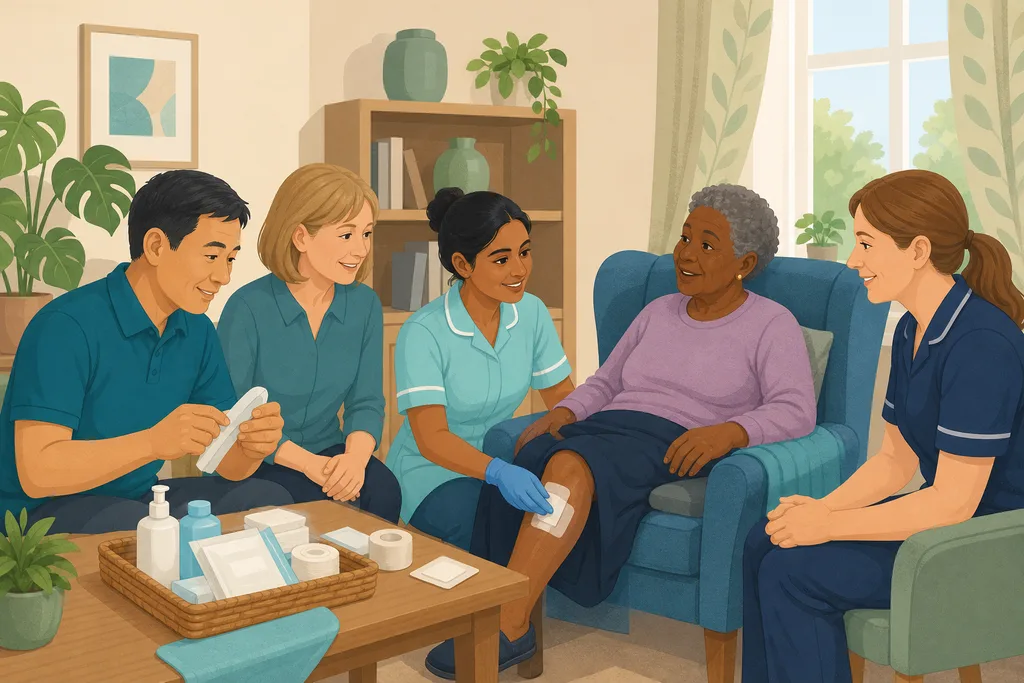
This annual refresher covers the essential knowledge you need about wound care and dressings. You will review how to recognise different wound types, understand when to report concerns, and know the correct procedures for supporting wound care safely. This is the knowledge component only; practical competency must be assessed separately through observation in your daily work.
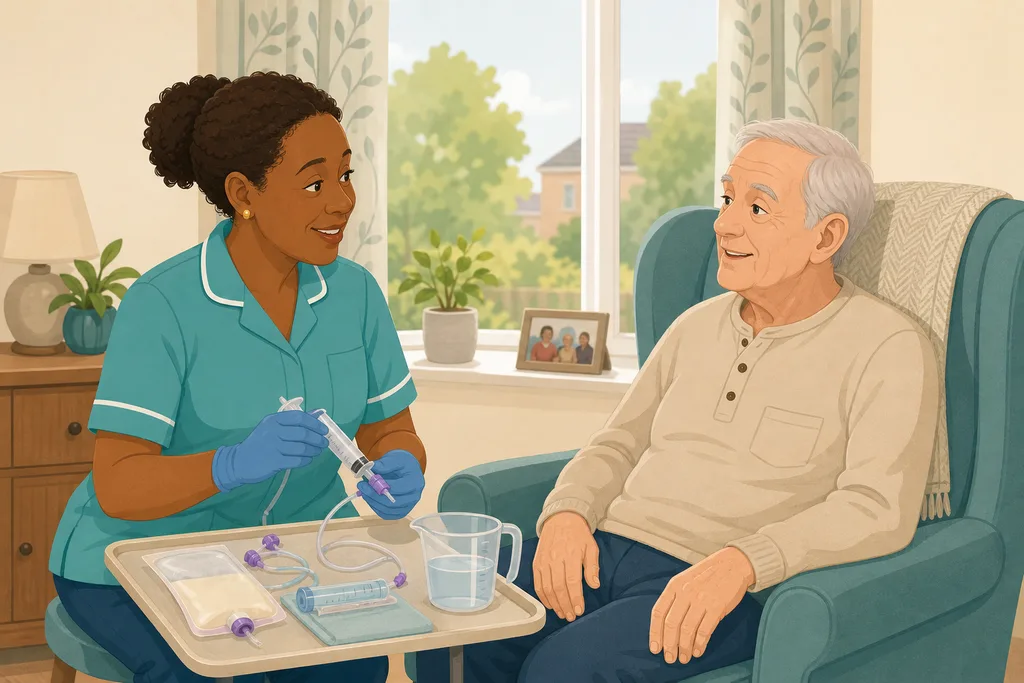
This module covers the knowledge you need to safely support residents who receive nutrition through a PEG tube. You will learn about what a PEG is, how to recognise problems, infection control, and our home's procedures. Remember: this module covers knowledge only. You must also complete practical competency assessment before providing PEG feeding care.
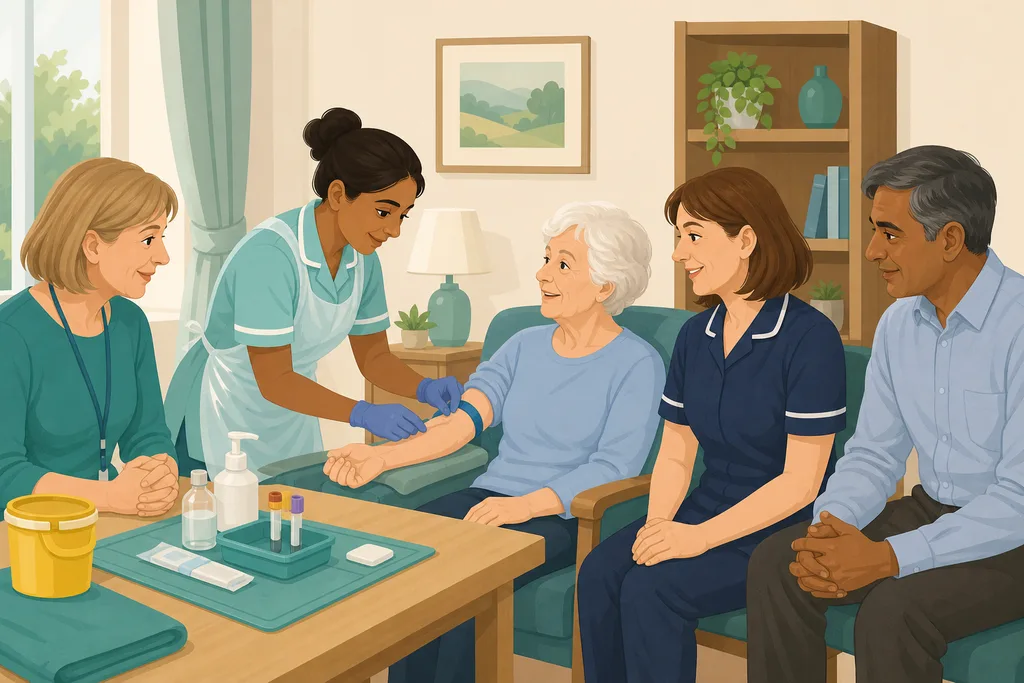
This annual refresher covers the essential knowledge for safe venepuncture and cannulation practice in our nursing home. You will review the principles of blood sampling and intravenous access, infection control requirements, patient safety considerations, and when to escalate concerns. This module covers the knowledge component only; practical competency must be assessed separately through direct observation.
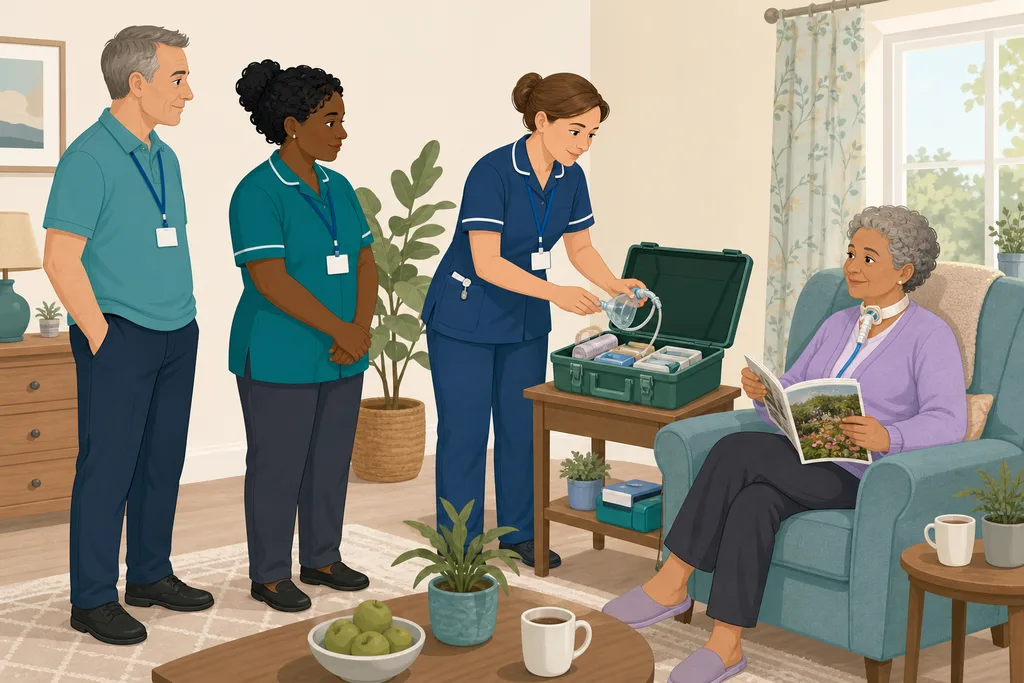
This annual refresher covers the knowledge you need to safely care for a person with a long term tracheostomy in their own home. You will review daily care tasks, emergency recognition and response, and the vital importance of always being ready to act. Remember, this module covers knowledge only. You must also complete practical competency assessment with a registered nurse before delivering tracheostomy care.
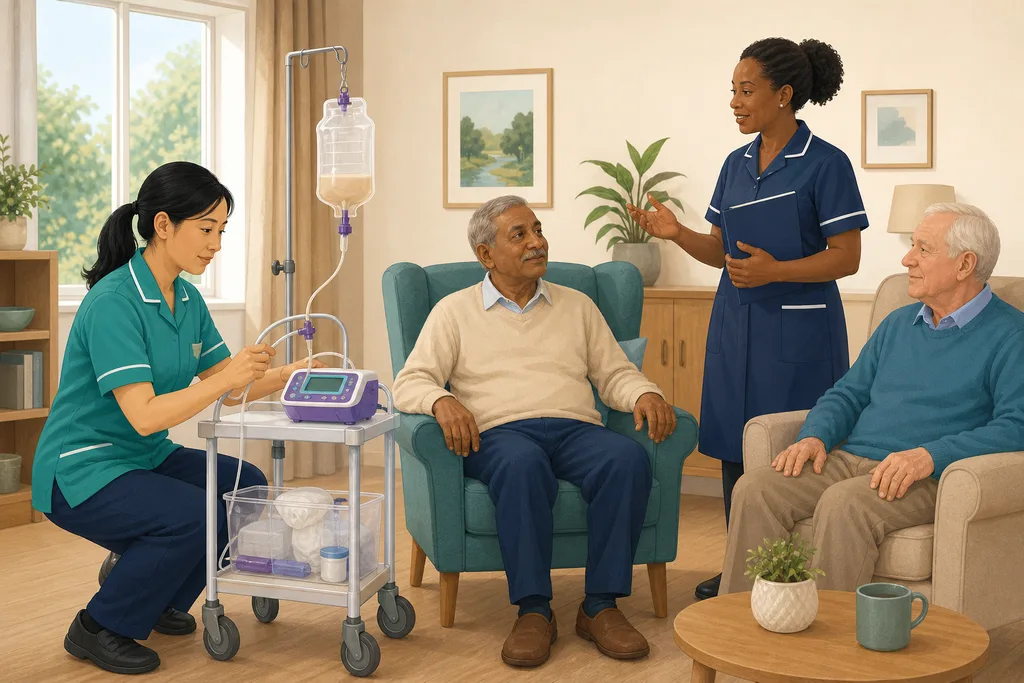
This training gives you the knowledge to safely deliver nutrition, fluids and medication through feeding tubes and care for stoma sites for people who cannot eat or drink by mouth. It covers the different tube types, how to check tube position, give feeds safely, care for the stoma, give medicines through the tube and recognise complications. This is the knowledge part of your competency; you must also complete a practical assessment with a registered professional before you can give feeds in pr
Knowledge first, then the observation that turns it into competence
Clinical tasks in care are the ones inspectors ask about by name. Who does this, how were they taught, and who watched them do it safely?
The six clinical modules, and what each one is for
The six cover the tasks a care service takes on when a person needs more than personal support.
- Catheter Care: types of catheter, hygiene and dignity, spotting problems early and when to escalate.
- Wound Care and Dressings: recognising wound types, what to report and how to support care of a wound safely.
- PEG Feeding Care: supporting a person fed through a tube in the stomach wall, and spotting problems.
- Enteral Feeding and Stoma Care: tube types, checking position, giving feeds and medicines, caring for the stoma site.
- Tracheostomy Care: daily care of a long term tracheostomy, and recognising an emergency.
- Venepuncture and Cannulation: blood sampling and intravenous access, infection control and when to escalate.
Every one of the six carries the same honest line. The module is the knowledge part. The practical part is assessed separately in your service.
Inside the catheter module
The module runs to 6 short sections. A section explains one idea, sets it beside a real situation on shift, and tests it before anyone goes further.
It covers the types of catheter in use, keeping hygiene and dignity together, how to notice a problem early, and when to escalate.
The NHS describes two main types. Intermittent catheters go in to drain the bladder and come out again. Indwelling catheters stay in, held by a small inflated balloon, and the NHS page on urinary catheters notes they are more likely to cause problems such as infection.
A scored paper closes the module. It runs to 20 questions and the bar is 80 per cent. Anyone who slips is taught the point again and asked something different, so nobody finishes on a guess. Staff do all of it in the CareStream hub, on a phone, tablet or computer.

Figure: the handover the knowledge is for, and the conversation that comes before any observation.
What the regulations expect before staff work unsupervised
The duty is about skill, not attendance. Regulation 19 on fit and proper persons employed asks for a way to check skill first. It has to happen before a person works on their own.
Supervision runs until that point. Staff must be watched until they can show the skill is there, under Regulation 18 on staffing, training and supervision.
Safe care sits over both. Care and treatment must be provided safely, which is the point Regulation 12 on safe care and treatment makes.
So the evidence comes in two parts. A training record that shows the knowledge was taught and scored, and an observation record that shows a named person watched the task. Our guide to recording in person training so it counts as evidence covers the second half.
Buy per member of staff, and see what the free plan covers
Clinical modules are rarely needed by everyone. The pricing is built for that.
What one licence buys, and where the free plan fits
A licence is for one person and one module. That covers the lessons, the scored paper, the re teaching after a wrong answer, and the certificate at the end.
The price is £25.99 plus VAT and it runs for a year. No subscription sits behind it, so a service with two staff doing this task pays for two.
The free plan runs alongside and does not expire. The Care Certificate sits on it, with nine annual courses beside it, and no card is asked for.
Most services use the free set for induction, then add clinical modules by name. The mandatory training collection covers that base layer.
Due dates for both land in the matrix that shows who is due and who is missing. One list, every name.
Who this collection is perfect for
This is for a nursing home or a complex care service that has taken on a person with a catheter, a tube or a tracheostomy. The team has to be ready before the placement starts.
It fits a home care agency where one or two staff support a clinical task in someone's own home. It fits a care home that has just accepted a resident whose needs have moved on.
It fits a new clinical lead building a training list from nothing, who needs to know what the team already holds.
It also fits a lead who observes practice well but has nothing written to show what staff were taught first. The observation is only half an answer without it.
Why CareStream fits a service training a handful of staff
The usual routes do real work. A specialist nurse teaching on site is the gold standard for a practical task. A per learner e learning library covers breadth. A free video is quick and costs nothing.
Each has a catch. The specialist is hard to book and dear for two people. A library is billed yearly for a shelf you use twice. A free video leaves no record and no score.
Buying per licence suits a short list of names. You pay for the two or three staff who do the task, and the record builds itself as they go. Nothing here claims to replace the observation, which is the honest difference and the reason the modules say so themselves.
Benefits of CareStream catheter care training for a clinical team
The benefit is a clean pair of records.
One shows the knowledge: the lessons, the score, every wrong answer and the follow up that closed it, with a named and dated certificate. The other is yours to make, when a competent assessor watches the task and signs.
Managers see both from one list, with renewal dates already set. Any lesson or question can be switched into the reader's own language with one tap. No course here promises competence, and no inspector is asked to take a certificate as proof of it.
Catheter Care Training for Care Staff: Knowledge First, Then Sign Off FAQs
What is catheter care training?
It is knowledge training on supporting someone who has a urinary catheter. It covers the types in use, hygiene and dignity, how to spot a problem early and when to escalate. It is not a practical sign off.
Does this course make a care worker competent?
No. The module says plainly that practical catheter care needs a hands on competency assessment as well. The employer observes the task and signs it off. Training records and an observation record together are what evidence competence.
Who should take it?
Care staff, senior carers and nurses who support people with a catheter, in a care home, a nursing home or someone's own home. Managers often take it too, so they know what they are observing against.
How long does the module take?
About 35 minutes. It is 6 short sections, each with a care scenario and a question, then a 20 question assessment with a pass mark of 80 per cent.
What does it cost?
£25.99 plus VAT for one licence for one member of staff. There is no subscription to join and the licence lasts twelve months, which matches a yearly refresher cycle.
Is there a free option?
The clinical modules are paid. The Care Certificate and nine annual courses are free for every member of staff, with certificates and no card needed, so you can see how the hub works before buying anything.
What are the two main types of urinary catheter?
The NHS describes intermittent catheters, which are put in to empty the bladder and then removed, and indwelling catheters, which stay in place and are held by a small inflated balloon in the bladder.
Why do indwelling catheters need extra care?
The NHS states that indwelling catheters are more likely to cause problems such as infections. That is why daily hygiene, drainage and early reporting of changes carry so much weight in the training.
Do staff get a certificate?
Yes, a named and dated certificate as soon as they pass, with their score on it. It downloads as a PDF from the training record. It is not a government recognised qualification and does not certify practical competence.
Can staff take it in their own language?
Yes, in more than 60 languages. Staff read and answer in the language they are most confident in, while your records and certificates stay in English for your evidence file.
What happens if someone answers a question wrongly?
They get a short follow up lesson and a fresh question on the same point before they can finish. Every attempt is kept, so you can see where understanding was thin rather than just a final score.
How often should clinical refreshers be repeated?
No regulation sets a fixed interval. Many services refresh clinical modules yearly and re observe the practical task when a person returns from long leave, after an incident or when the task changes.
Does this replace training from a district nurse or a specialist?
No. Where a task is delegated by a registered professional, that professional sets the standard and usually observes the practice. The module gives staff the underpinning knowledge before that conversation.
How do we show an inspector that staff are competent?
Show two things together. The training record with the score and the date, and the signed observation that says a named assessor watched the task done safely in your service.
Can we buy for one or two people only?
Yes. Licences are bought per member of staff, so a service with two people doing catheter care pays for two. Nothing commits you to a plan.
More on training
Guides and collections that go with this page, and the full libraries.
Policies are one part of it.
CareStream is the compliance system underneath: your policies, your staff training, your audits and your evidence, kept current and ready for the day somebody asks to see them.
- Policies written and kept updated for you
- Staff training that records itself against the standard
- Gap analysis showing what you are missing before an inspector does
- Everything in one place, for one price