Which policies does a dementia service need?
One dementia policy is not enough. It sets out how you support each person, but it leans on others: capacity and best interests, consent, positive risk taking, dignity, activities, visiting and relationships. Then come the harder areas where staff need clear steps: restraint, missing persons, psychotropic medicines and resuscitation decisions.
This pack covers all of them in 14 policies. Together they make a full set of dementia policies and procedures, so a new member of staff, an inspector or a family member can see how you handle each situation.
Does a care home need a mental capacity act policy?
Yes, in practice. Any service supporting people whose capacity may change needs one. It explains how staff assess capacity for a specific decision, what a best interests decision involves, who is consulted and how it is recorded. A mental capacity act policy for care homes should also link to consent, because care is only given with consent or a recorded best interests basis.
The pack includes mental capacity and DoLS as one policy, plus a separate consent to care policy. Both are written around your service and the way your team records decisions. We do not give legal advice, so read your policies alongside the Mental Capacity Act 2005.
What is a DoLS policy and why does it matter?
A DoLS policy explains how staff spot that someone may be deprived of their liberty, how to apply for authorisation and how conditions are met and reviewed. Staff need to know the difference between supporting someone and restricting them. A deprivation of liberty safeguards policy should also say who makes applications, how expiry dates are tracked and what happens when circumstances change.
Here the DoLS policy sits with capacity, so the two never contradict each other. It also connects to restrictive practice and positive risk taking, because the least restrictive option is part of every decision.
How do you write a restrictive practice policy?
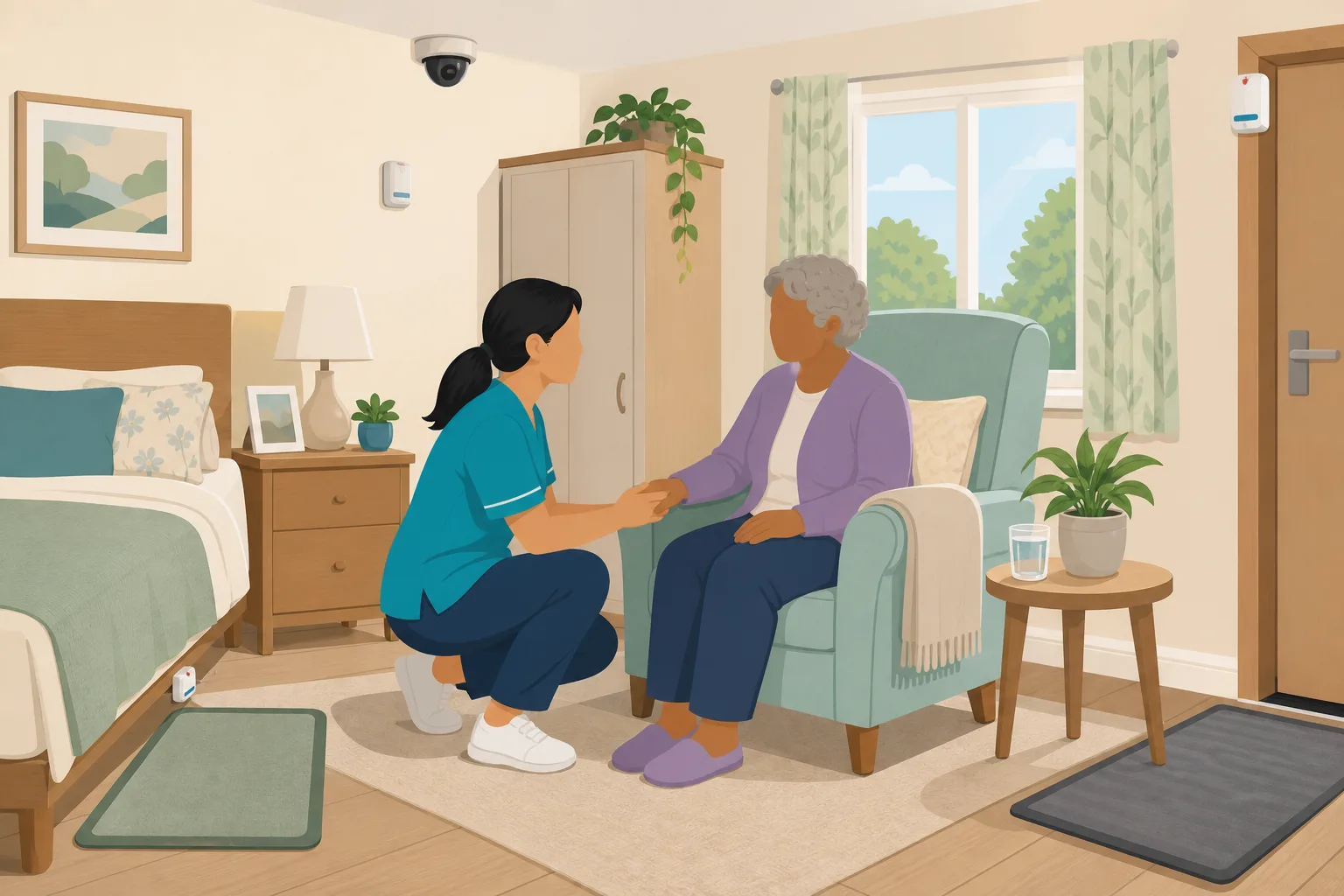
Start by defining what your service counts as a restriction. Then show how staff try less restrictive options first, and how any restraint is recorded, reviewed and learned from. Cover physical restraint, locked doors, sensor technology, cameras and medicines. Restraint is a last resort, used for the shortest time possible.
The pack gives you four connected policies here: reducing restrictive practice, restraint and the least restrictive option, CCTV and monitoring, and psychotropic medicines under STOMP. Each is personalised to your premises, your team and the people you support.
Which other dementia policies are worth having?
Some of the most useful policies are forgotten until something happens. Two are easy to overlook. A missing person policy care home staff can follow tells them what to do in the first minutes. A DNACPR policy explains how resuscitation decisions are respected, recorded and shared with ambulance crews.
Families ask about these areas and inspectors notice them. Written together, they read as one dementia care policy set rather than separate documents from different years. Each is personalised from short questions and checked by a person before delivery.