
After an outbreak, an infection control quiz shows whether the lessons landed.
The outbreak is over and you have talked it through with the team. Now you need to know it stuck. CareStream does not replace your debrief. It lets you send an infection control quiz built from your own policies, so a wrong answer becomes a short lesson on that exact point.
14 day free trial · Set up in a day · UK data residency
The outbreak is over. The lessons are not yet proven.
A scenario we see in many care settings.
A stomach bug moved through two corridors and the home worked hard to contain it. Once it was over, the manager held a team talk, put a reminder on the handover sheet and thanked everyone. Weeks later a new carer asks where to put soiled laundry, and a long standing carer is unsure when to change gloves. Nobody did anything wrong on purpose. The talk simply reached some people better than others, and the manager has no way to see who. Here is how that plays out.
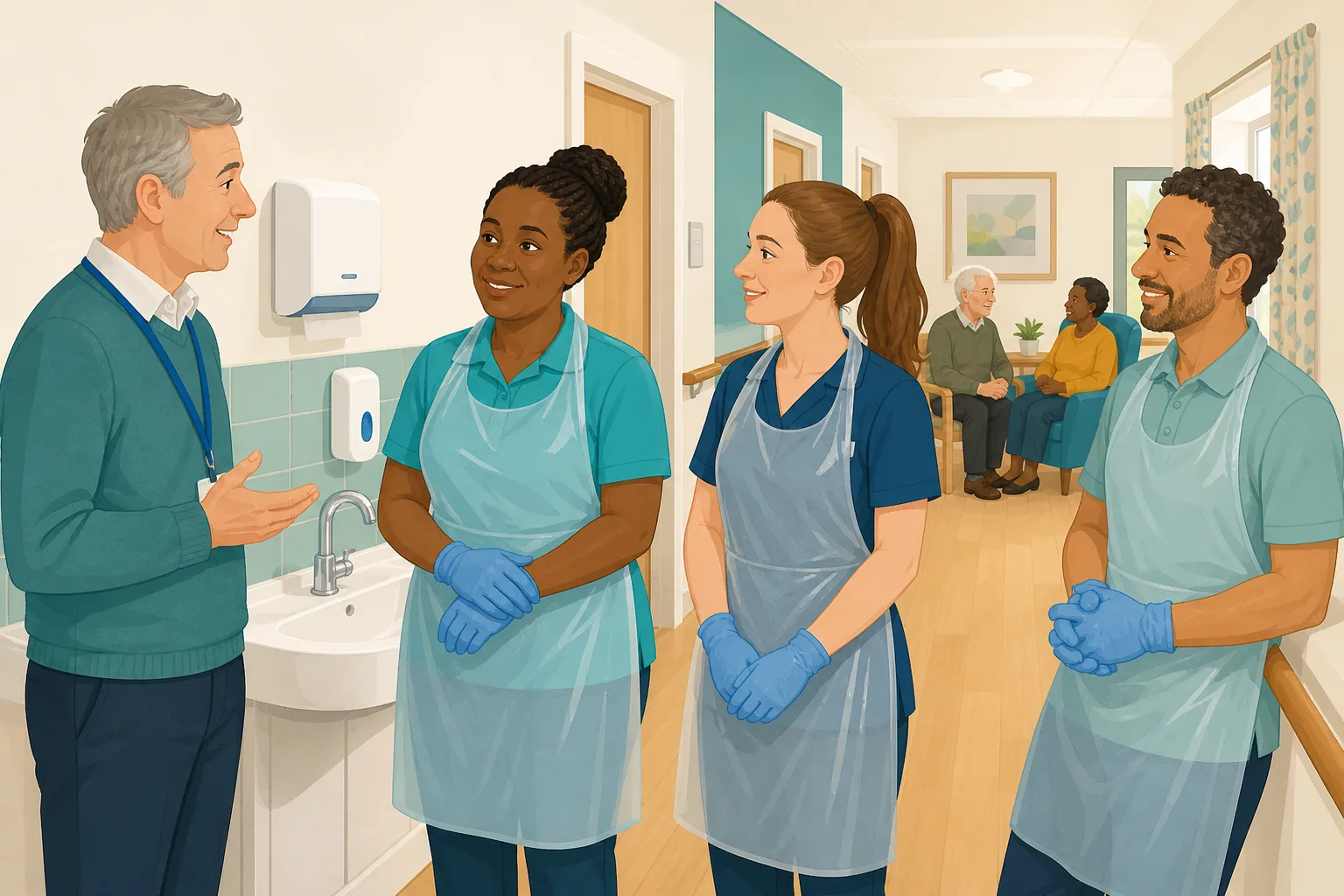
The team follows the plan and keeps spread to two corridors.
The manager holds a team talk and thanks everyone.
A reminder goes on the handover sheet and is read out.
The manager cannot say who took in which point.
A carer who joined after the talk was never in the room.
Staff on nights got the handover note, not the discussion.
Meeting notes and a handover sheet. No sign of who understood.
“What changed after the outbreak?” Notes of a talk are not an answer.
The talk was never the problem. The gap is between the talk and knowing it landed. Here is how CareStream fills it, using your own policies, without replacing your debrief.
An example scenario, not a named service.
A talk shows what you said, not what each person took in
After an outbreak the question is not whether you told people. It is whether they can do it on a normal Tuesday.
Not everyone heard the talk
New starters, night staff and agency colleagues often miss the discussion. They get a note, not the conversation.
Good habits drift back
Right after an outbreak everyone is careful. A few weeks on, small shortcuts return, and nobody sees which ones.
Checking person by person is slow
Asking each carer a question on the floor is useful but takes time you rarely have, and it leaves no record of the answers.
Your policies in, the follow up out.
This is the Training built from your own policies feature, in the order a manager and a carer meet it. See also turning an incident into adhoc training and the infection prevention and control course.
Allocate an infection control quiz built from your own policies
- In the Training screen, pick the Infection Prevention and Control module and tick the staff you want to check, including new starters and night staff
- CareStream builds short lessons and questions from your own policies where they cover the topic, with general good practice as the fallback
- You can edit and preview everything before anyone sees it, and staff complete it in the Staff Hub on their own phone
Illustration based on the Training screen. Example questions.
A wrong answer becomes a short lesson on that exact point
- The wrong answer goes into the carer's Follow-up tab in the Staff Hub, and they get an email to say so, at most once a day
- They choose Learn & retry, a short lesson then a fresh question, or Just retry the same question. They can retry as often as they need
- It clears from the tab once they get it right, and the lesson draws on your own policies where they cover it
A few things to revisit. Learn the point, then answer, or just retry. Either way it clears from here.
Your infection control policy sets out when soap and water is needed instead of hand rub, for example after caring for someone with diarrhoea or vomiting.
Remember- Wash with soap and water when hands are visibly dirty
- Wash after contact with someone who has a stomach bug
- Follow your own infection control policy
You have just helped a resident who has been sick and you are about to move to the next room.
Illustration based on the Staff Hub Follow-up tab. Example content.
Staff learn in the language they think in
- A carer who gets a question wrong because of a missed word can open the lesson in their own language
- Your admin sets their second language, and they switch to it in the hub
- Training in different languages is part of the paid plans, and the follow up email is in English only
Always communicate in their first language
All messages CareStream sends are translated into English.
Allow switching a set to their second language
In the hub they can flip any single training, induction or CQC set into Polish, just for that set, if they are struggling in their first language.
Let them suggest better translations
They can propose improvements to translated content. Changes need your approval before going live.
Illustration based on the staff record Language settings. Translation is on the paid plans.
See the gaps across the team, and whether they closed
- The Knowledge gaps view shows the most missed questions and the weakest topics, so you see which lesson from the outbreak needs saying again
- See how gaps are being closed, so the follow up is a record and not a hunch
- A Monday digest email brings the picture to you, and nothing alerts you on each wrong answer
Illustration based on the Knowledge gaps view. Example figures.
Ask CareStream about this
The questions managers ask us most about checking understanding after an outbreak.
We have just had an outbreak. Can CareStream help us manage it?
No. For the outbreak itself, follow your outbreak and infection control policy and the guidance from your local health protection team. CareStream helps afterwards, by checking that the lessons from the outbreak have reached everyone.
What is the first thing I do in CareStream?
Open the Training screen, go to Adhoc Training, and pick the Infection Prevention and Control module. You generate the lesson and questions, edit and preview them, then choose the staff to send it to.
Will it use our own infection control policy?
Where your policies cover the topic, yes. CareStream searches them by topic, and where they do not cover something it falls back to general good practice. You choose a topic module, not a single policy, so read the preview before you send it.
What happens when a carer gets a question wrong?
It goes into their Follow-up tab in the Staff Hub and they get an email, at most once a day. They choose Learn & retry for a short lesson and a fresh question, or Just retry the same one. They can retry as often as they need.
Do I get told every time someone gets one wrong?
No. You see the picture in Analytics, under Knowledge gaps, and in a Monday digest email. It shows open gaps, staff affected, gaps closed in the last 30 days, the most missed questions and the weakest topics.
Can I include new starters and night staff?
Yes. You tick the staff you want, so people who missed the talk can take the same quiz in their own time on their own phone.
Does this replace our infection control audits?
No. A quiz checks what people know. An audit checks what is happening on the floor. Our free audit library has infection prevention audits you can run as a separate step.
How do I try it, and does it cost anything to start?
There is a 14 day free trial. You can create a free account and look around, and the pricing page shows what each plan includes. Adhoc training sits on the paid plans.
A check on understanding, not outbreak management
It does not manage an outbreak
There is no outbreak advice in CareStream. Follow your outbreak and infection control policy and your local health protection team.
It does not see technique
A quiz shows what people know, not how they wash their hands. Watching practice and running an audit still need a person on the floor.
It does not alert you to every wrong answer
The picture reaches you through the Knowledge gaps view and the Monday digest. Adhoc training and translation are on the paid plans only.
Training built from your own policies
Everything on this page is part of the product. Here is where to read more.
Training built from your own policies
Ad hoc training from your policies, face to face training organised, and wrong answers that become lessons.
See the featureTurn an incident into adhoc training
Pick a topic, allocate a short module and see who needs a second look.
See adhoc trainingFree infection prevention audits
Check what is happening on the floor, not only what people know. The audit library is free on every plan.
See care auditsGuides on this subject
Infection Control Training for Care Staff: A Guide for Managers
Infection control training gives care workers the knowledge to stop infections spreading between the people they support, their colleagues and...
Read article
Infection Prevention and Control Policy: Eight Questions an Inspector Can Ask
Eight questions an inspector can ask about infection prevention and control, from the isolation room you do not have to who leads, each with the...
Read article
How to run a hand hygiene audit in a care home: watch one person, record what you see
A deputy watches one care worker through a morning round and records every hand hygiene moment, the technique, the basin and the kit, then turns each...
Read articleQuestions managers ask
Checking understanding
How do I check for understanding after an outbreak?
Use more than one method. Talk to staff on the floor, watch practice, and send a short infection control quiz so every person answers the same questions. CareStream does the quiz part from your own policies and keeps the results.
What is a good knowledge check for infection control?
Short and practical. Ask what to do in a real situation, such as changing gloves, handling soiled laundry or choosing soap and water over hand rub. Three to five questions on one topic is enough.
Is a team talk enough to show staff understood?
It is a good start, but it records what you said, not what people took in. The UKHSA guidance on managing outbreaks in adult social care says to make sure all care and support workers understand their role, and to review afterwards what worked well and what was difficult.
Training and refreshers
Should we run refresher training after an outbreak?
Often a short refresher on the points that slipped is more useful than repeating the whole course. A quiz tells you which points those are. For the full course, see our infection prevention and control training.
What does the infection control code of practice say?
The Health and Social Care Act 2008 code of practice on infection prevention and control applies to adult social care providers in England. It is not mandatory, but providers must have regard to it, and the Care Quality Commission must consider it. Read the full code for the detail.
Can I send the quiz to agency or new staff?
You can send it to staff in CareStream, including recent joiners. See adhoc training for how allocation works.
Using CareStream
How is this different from a paper quiz?
A wrong answer does not just get marked. It becomes a short lesson and a fresh question, and you see the pattern across the team without marking anything yourself.
Is the adhoc training screen on the free plan?
No. It is on the paid plans. You can start with a 14 day free trial, and the pricing page has the details.
A simple plan for proving the lessons landed
You do not need a big project. A few steps, a few weeks apart, give you a record you can stand behind.
Write down what you changed
Before you quiz anyone, list the two or three things that went wrong or were hard during the outbreak. The UKHSA guidance says providers should review what worked well and what was difficult, and use the findings to update their outbreak plans. Your quiz should test those points first.
Send a short check, then a second one later
One quiz straight after the talk shows who heard it. A second a month on shows what stuck. Keep each one short so people finish it between tasks.
- Pick the topic module and keep it to the points that mattered
- Include new starters, night staff and anyone who missed the talk
- Preview the questions and edit anything that does not match your policy
- Look at Knowledge gaps after a week and again after a month
Pair the quiz with a look at practice
A quiz shows knowledge. An audit shows what happens on the floor. Run a hand hygiene check alongside it, and see our guide on how to run a hand hygiene audit.
This page is general information, not outbreak or clinical advice. Follow your own infection control policy and the guidance of your local health protection team.




