
Policy collection
Complaints Policy for a Care Service, Written for Your Name
Show me your complaints policy, an inspector says. Then comes the harder request: show me the last three complaints and what changed because of them. A complaints policy that cannot reach the second question is half a document.
The six documents here cover the moment something goes wrong. Raising it, being honest about it, writing it down, and checking later that it has not happened again.
Each one is written for your service from your own answers: your registered name, your manager, your named lead, and the way you have chosen to run things. A person reads every page before it carries your name. It arrives within two working days.
Already hold these documents? Check them before you spend anything. A free account reads your first five policies against the rules that apply to a service like yours. It reports what is covered, what is half covered and what is missing, policy by policy.

Receiving, investigating and learning from complaints under Regulation 16, including LGSCO signposting.

Being open and honest when things go wrong, under Regulation 20.
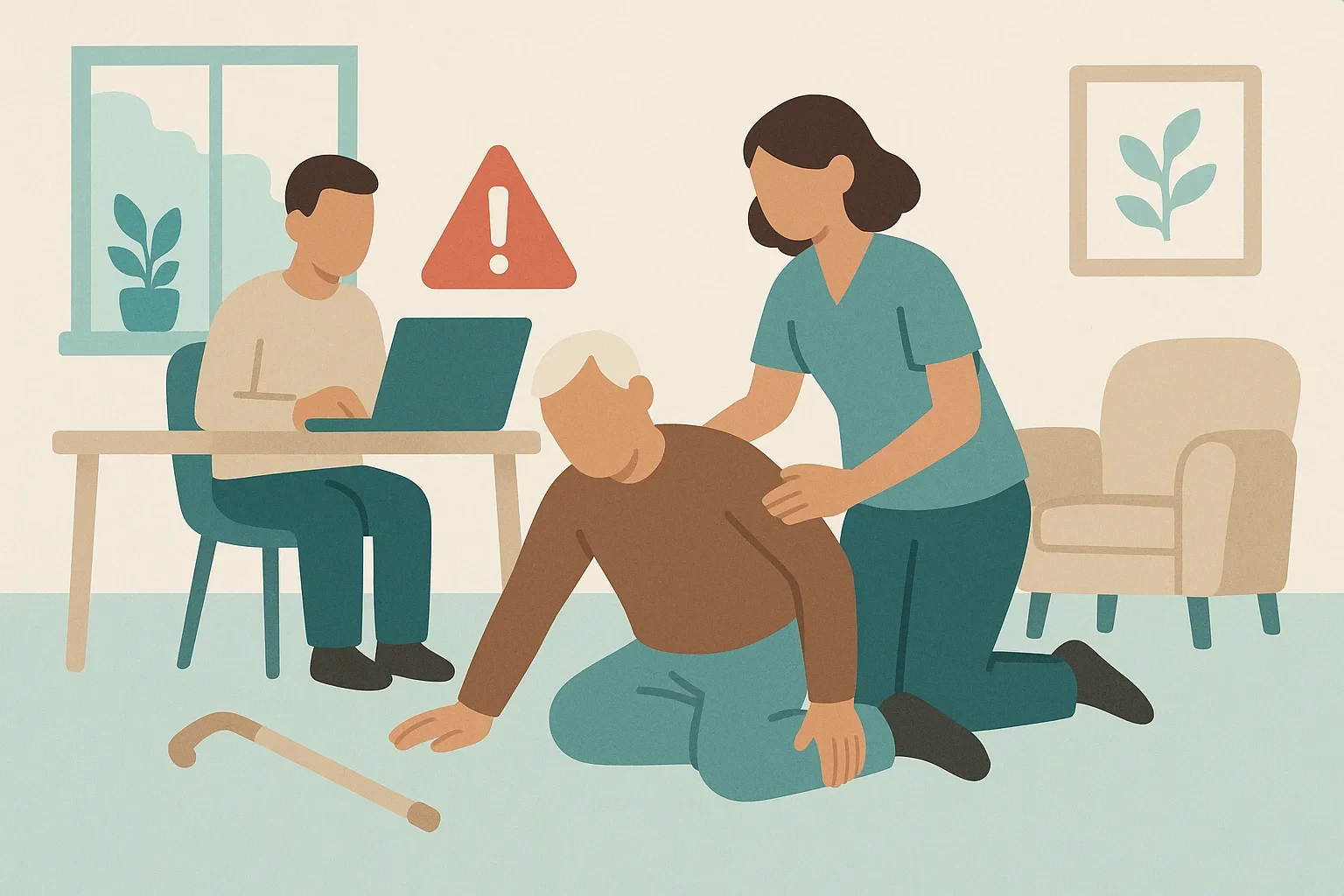
Recording, investigating and learning from incidents, RIDDOR and CQC notifications.
Raising concerns safely, PIDA protections, and your speak-up arrangements.

Your audit calendar, how findings become actions, and how improvement is evidenced under Regulation 17.

Treating people with dignity, respect and privacy under Regulation 10.
What these six documents do when something goes wrong
A complaint rarely arrives tidily. It starts as a remark in a corridor, or as a call from a daughter who is cross about the laundry and frightened about something else.
The document that answers the complaint itself
The complaints document written for your care service is checked against 26 required elements. A person signs it off before it is sent.
Three of those elements matter more than the rest. Any member of staff can take a complaint, in speech or in writing. It goes in the log at the point it is taken.
The third is the one services most often miss. The route must not run through the person being complained about. If the manager is the subject of the complaint, then the manager does not handle it, and the policy has to say who does.
Responses carry wording about the right to go to the Local Government and Social Care Ombudsman. You answer eight questions about your service, which takes about three minutes. The price is £69.
Being open when something has gone wrong
The duty of candour policy for care providers sits beside it. It is checked against 13 elements, and the hardest is the threshold.
Candour is not kept for deaths. The policy names fractures, pressure ulcers that cause long lasting pain, and drug errors that cause lasting harm.
It also fixes the sequence. You tell the person as soon as you reasonably can, and that comes before any internal enquiry has finished rather than after it.
The talk is then written down and kept. An apology belongs in it. So does an honest account of what you know so far, and what you will look into next.

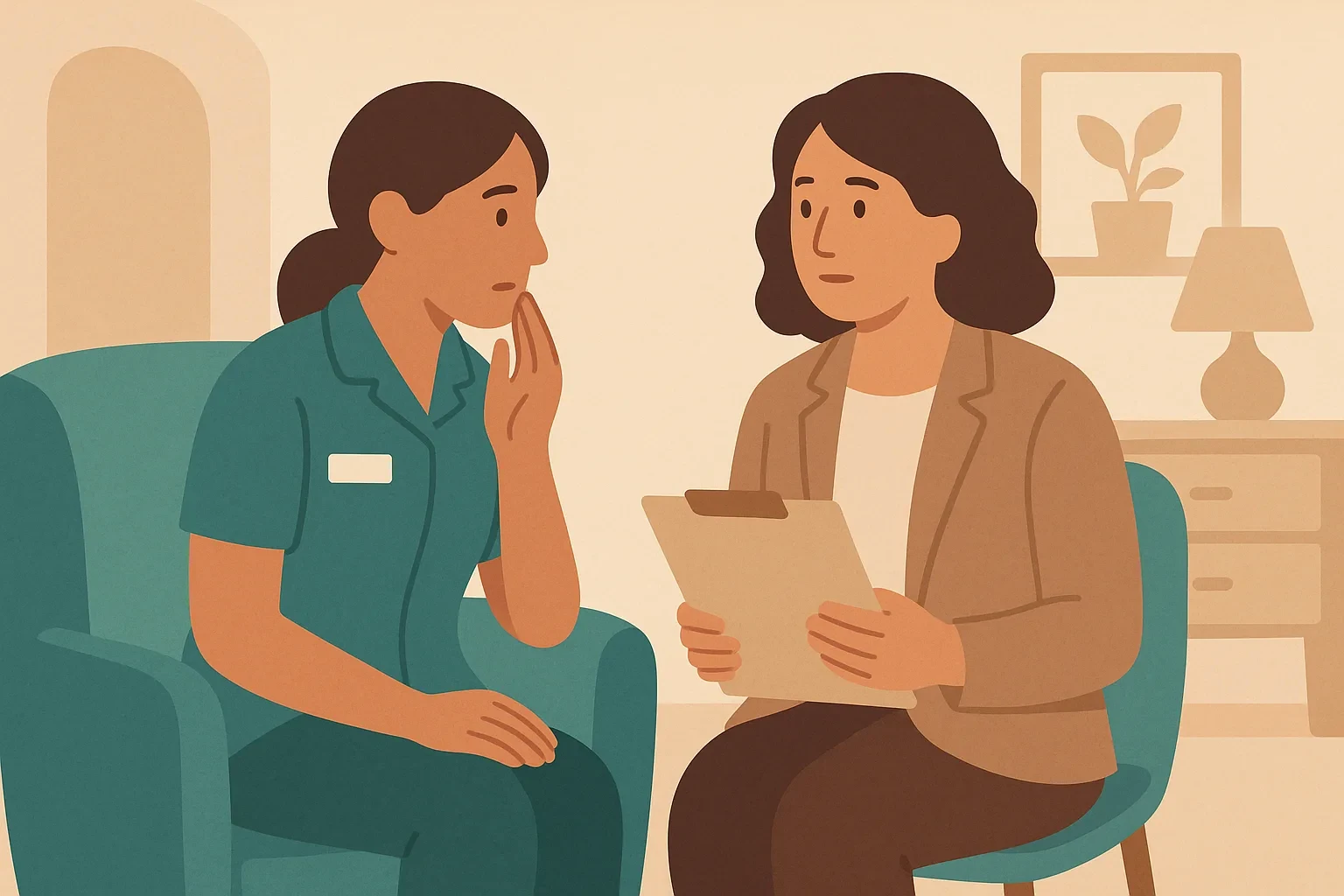
Figure: the conversation the duty of candour is really about, before the paperwork catches up.
Recording it, and the route for staff who are worried
Incident and accident reporting is the widest paper in the set. It carries 40 checked elements. It ties a risk assessment for each person to what gets written down.
It also covers what you must report, and to whom. Some events go to the regulator. Others are reported under health and safety law, and a few need both, which is why staff need one page that says which is which.
Whistleblowing and freedom to speak up runs to 51 elements. It names more than one route for raising a worry, so nothing has to pass through the person it is about.
It protects the member of staff who speaks up in good faith. Where a speak up guardian is named, the policy states that the guardian is independent. It is not a job for the human resources manager.
Checking later that the fix actually held
Quality assurance and audit is the quiet one. It sets a run of audits across medicines, care planning, infection control, falls and safeguarding.
It adds a rule that trips many services. The person who audits the care must not be the person who gave it. Fresh eyes find what tired ones miss, and a manager auditing their own shift is the first thing an inspector will pick up on.
It also asks for records to be written at the time. Not that evening. Not the next week. In a complaints file, late notes are the weakness we see most.
Dignity and respect closes the set with 32 elements. One of them says a visiting restriction must be judged for each person. A blanket rule for the whole home will not do.
What the law asks of a complaints system, and what a free check shows
The rules themselves are shorter than most people expect. The detail that catches services out sits in the guidance the regulator writes around them.
Who must be able to complain, and to whom
Every complaint must be looked into. Where a failure is found, the service must act, and the action must fit the failure. That duty is set out in Regulation 16 on receiving and acting on complaints.
The Care Quality Commission guidance on receiving and acting on complaints asks for more than the words of the law.
People must be able to complain to any member of staff. Every member of staff must know what to do next. Unless a complaint is anonymous, it should be acknowledged.
Nobody may be treated worse for complaining. Care must not change because a family raised a worry. A complaints procedure care home staff can follow is short, names people rather than teams, and says what happens on day one.
The 28 day summary a regulator can demand
When asked, a service must send the regulator a summary of its complaints. The responses go with it, and so does any letter or email that followed.
The clock runs for 28 days from the day after the request lands. That is the whole window, and it does not pause for annual leave.
This is the part with teeth. The regulator says it can prosecute a service that breaches this duty. It can go straight to a prosecution, without a warning notice first.
Being open about harm carries its own duty, set out in Regulation 20 on the duty of candour. It asks for an account of the facts, an apology, and a written record of both.
Who this collection is perfect for
It suits a small or medium service with nobody whose whole job is paperwork. A residential or nursing home. A home care agency. A supported living service or a hospice.
It suits a new registration. Nothing is in place yet, and a set bought together will name the same people and point at each other properly.
It also suits the manager who has taken over a file of old templates. Two of them say different things, and neither says who picks up a complaint on a Sunday.
If your worry is mainly about staff speaking up, the whistleblowing policy collection for care homes covers that ground more fully.
Why CareStream is a different buy from the usual options
The usual options are a free template, a pack from a publisher, or a consultant for a day. Templates cost nothing. Packs are consistent. A consultant who spends a day with you will know your service better than any document ever will.
Each has a place. What a template cannot do is name your people or answer for your service. The thinking is left to you.
That is fine until a complaint arrives at seven in the evening. The person holding it has never read the document, and the document does not say who to ring.
Here you buy one paper at a stated price, written from your answers. Your role holders are named in it. You can also check the policies you already hold for gaps, free before you buy anything at all.
Benefits of CareStream's written complaints policy
- Written from your answers, with your registered manager, nominated individual and complaints lead named in it.
- Checked against 26 required elements by a person before it carries your name.
- Delivery within two working days, with the first year of updates included.
- A full refund within fourteen days if it is not right for your service.
- A free check of your first 5 policies, in case you already hold most of what you need.
CareStream never claims that a document makes a service compliant. An inspector judges the system, the records, and what staff actually do.
Complaints Policy for a Care Service, Written for Your Name FAQs
Does a care service have to have a complaints policy?
The regulations require the system rather than the document. The Health and Social Care Act 2008 (Regulated Activities) Regulations 2014 require an accessible system for identifying, receiving, recording, handling and responding to complaints. A written policy is how most services show that system to staff and to an inspector.
Who can make a complaint about a care service?
The person using the service, anyone acting on their behalf, and other people with an interest. The Care Quality Commission expects people to be able to complain to any member of staff, in speech or in writing, and for every member of staff to know what to do next.
Does a verbal complaint count?
Yes. A concern raised at the door or on the phone is a complaint, and the policy in this collection records it in the complaints log at the point it is received, whoever receives it and however it is made.
What is the 28 day rule?
When the Care Quality Commission requests a summary of complaints, responses and related correspondence, a provider has no later than 28 days from the day after the request to supply it. The regulator can prosecute for a breach of that part of the regulation without first serving a warning notice.
What is the difference between a complaint and a safeguarding concern?
A complaint is dissatisfaction with the service. A safeguarding concern is a risk of abuse or neglect, and it follows the safeguarding route to the local authority straight away. A policy should say plainly which route a member of staff takes, and allow for one to become the other.
How does the duty of candour fit with complaints?
They overlap but are not the same. Candour is triggered by a notifiable safety incident, not by someone complaining. The duty is to tell the person what happened as soon as reasonably practicable, apologise, say what further enquiries will be made and keep a written record.
What does the complaints policy cost?
£69 as a one off, with the first year of updates included. Other documents in this collection range from £59 to £69.
How long does delivery take?
Within two working days of your answers. You answer eight short questions about your service, which takes about three minutes, and those answers are written into the document.
What if the policy is not right for my service?
Tell us within fourteen days and we refund it in full. Every document is read by a person before it carries your name.
Can I check the complaints policy I already have?
Yes. A free account reads your first 5 policies against the regulations that apply to your service and reports what is covered, what is partly covered and what is missing. No card is needed.
Who is named in the policy?
Your registered manager, your nominated individual and your complaints lead. Tell us once when a role holder changes and every document that names them is updated.
Does the policy mention the ombudsman?
Yes. Responses carry wording that tells the complainant they can escalate to the Local Government and Social Care Ombudsman if they are still dissatisfied.
Can the manager investigate a complaint about themselves?
The policy says no. It specifies that the complaints route does not run through the manager or member of staff who is the subject of the complaint, which is one of the points inspectors probe.
What happens after the first year?
The document stays current for £12 a year. When the law changes you are told what changed and why, and you can stop at any point.
Do complaints have to be reviewed for patterns?
The Care Quality Commission expects providers to monitor complaints over time, looking for trends and areas of risk, and to consider whether the process itself needs changing. That is the job the quality assurance and audit document in this collection does.
More on care policies
Guides and collections that go with this page, and the full libraries.
Policies are one part of it.
CareStream is the compliance system underneath: your policies, your staff training, your audits and your evidence, kept current and ready for the day somebody asks to see them.
- Policies written and kept updated for you
- Staff training that records itself against the standard
- Gap analysis showing what you are missing before an inspector does
- Everything in one place, for one price




