Reminiscence therapy for dementia is a planned session built on things from a person's past. Photographs, music, an old tin. It is not the same as a chat about old times. The gap shows up when a commissioner asks what you run.
Four terms get used as though they mean one thing. They do not.
The four words people mix up
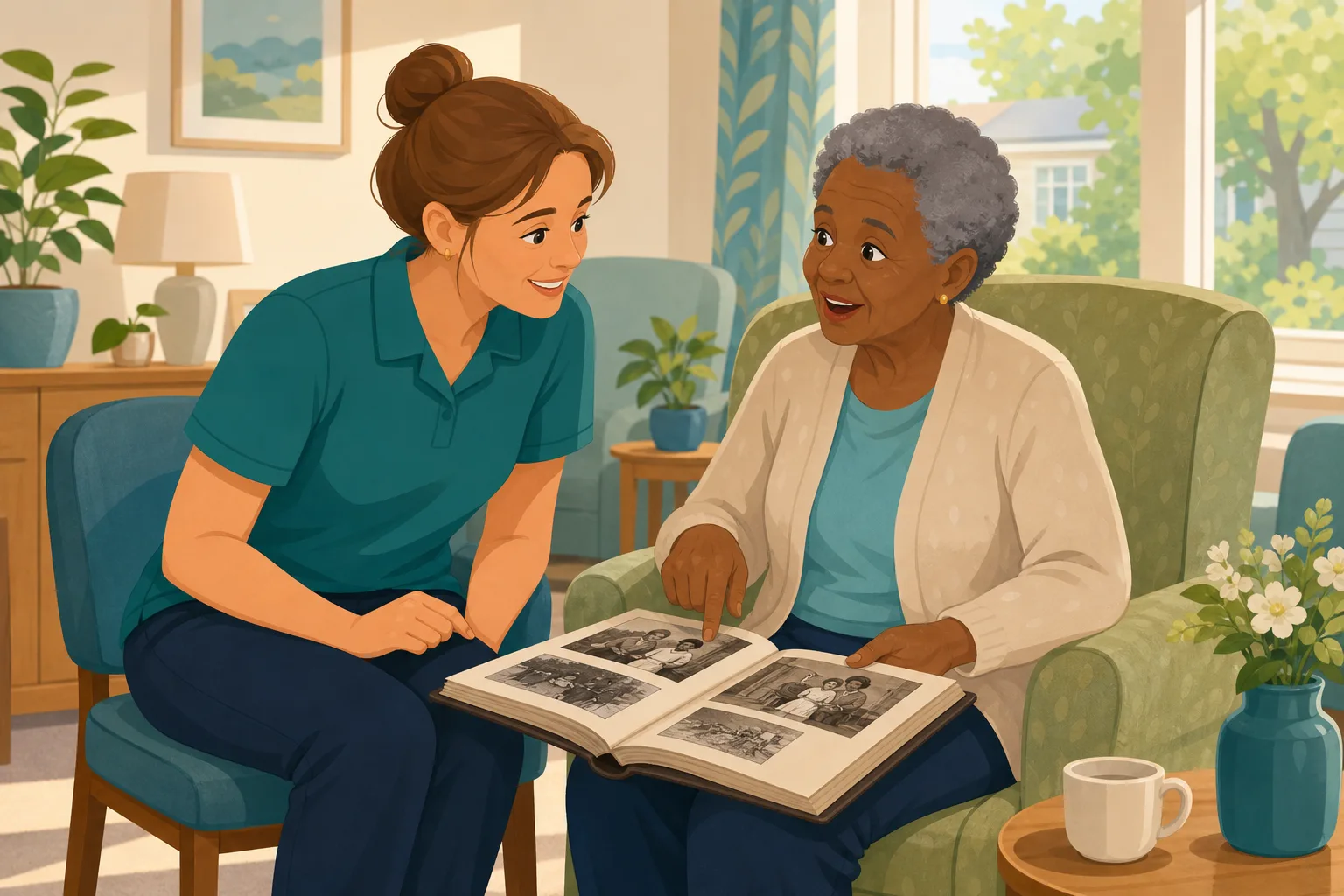
Reminiscence work. The everyday version. A carer looks at a photograph with someone, or passes round an old tin, and lets the person lead.
Group reminiscence therapy. The formal version. There is a group, someone leading it, a plan and a theme for each session.
Life story work. Not an activity at all. It is a record of who the person is, built with them and their family.
Cognitive stimulation therapy. A different thing again. The National Institute for Health and Care Excellence, known as NICE, treats it as its own intervention.
NICE defines cognitive stimulation plainly. The idea is a group that talks and does things together. The aim is to help thinking and social life in general.
What the guidance recommends, word for word
This is where close reading pays. In its dementia guideline, NICE uses two different verbs for the two group activities.
Offer group cognitive stimulation therapy to people living with mild to moderate dementia. Offer is the strong word.
Consider group reminiscence therapy for people living with mild to moderate dementia. Consider is the softer one.
A third line sits above both. Offer a range of activities to promote wellbeing, tailored to the person's preferences.
Tailored is the word that counts. It is the first thing a tired activity plan drops.
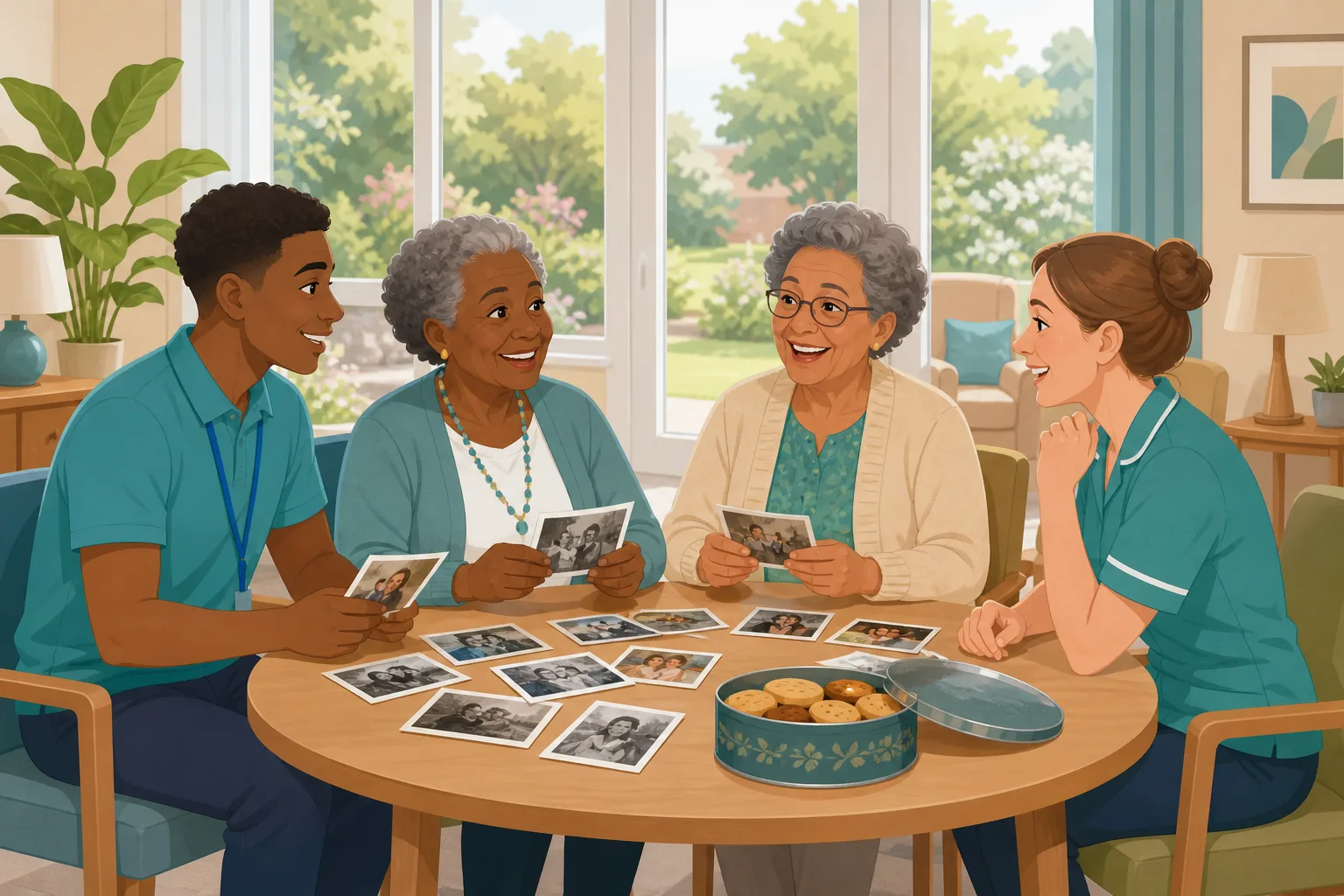
Figure: a group session needs a theme and someone leading it, not just a table of objects.
Have your policies read against the regulations to see what is missing or out of date. No card needed.
Create a free accountWhat to use, and where it comes from
The NHS keeps the list short. The NHS page on activities for dementia names photos, objects, video and music clips, kept as a book or on a tablet.
For the later stages it goes further. Activities get simpler and lean on the senses. Music, things to touch and hold, hand massage.
Two practical points follow from that. A life story book and a tablet do the same job in different hands, so offer both.
And memorabilia bought from a catalogue suits far fewer people than most activity cupboards assume. It was somebody's past. Rarely this person's.
How to run one session, start to finish
Keep the first one small. Four people at most, one leader, half an hour.
Pick a theme the group has in common. Work, not war. Food, not royalty. Something most of them did rather than watched.
Lay out five or six things and let people pick. A tool, a tin, a record sleeve, two photographs.
Say very little. The job of the person leading is to ask one question and then wait, which is harder than it sounds.
Finish before interest runs out. Then write three lines about who spoke, what about, and what you would change.
Music, and why it is often the quickest way in
Music reaches people when photographs do not, and it goes on working much further into the illness than most other activities a service can offer.
Pick by person, not by decade. A playlist labelled nineteen fifties is a guess; the hymn someone sang every week for thirty years is not.
Ask the family for three pieces rather than a list. Three is a small enough ask that they will actually answer it.
Watch for the second verse. People who cannot hold a conversation often hold a tune, and that is worth recording in the care plan as something that works.
One caution. Music is not a way of quieting a room. If a person wants it off, it goes off.
The caption is the piece most services miss
Reminiscence photos without captions are close to useless on shift. A carer who has never met the family cannot tell a brother from a husband.
So caption each picture as it arrives. Who is in it, where it was taken, why it matters. One line will do.
Then the picture works for whoever is on duty. That includes an agency carer on a first shift, who has never met the family and has no reason to know who anybody is.
In CareStream the caption is also what makes a picture findable later, which is why the box is there before the upload finishes.
When reminiscence goes wrong
Not every memory is a kind one. A wedding photograph can open a bereavement nobody knew about. A picture of a house can start a request to go home.
Give staff clear permission to stop. Nobody should feel they have to finish a session because it was planned.
Then write down what happened. The NHS advice on dementia behaviour changes suggests looking for triggers and keeping a short diary. A reaction to one picture is exactly that.
The free policy check shows where a policy falls short of the regulations. Create a free account to begin.
Create a free account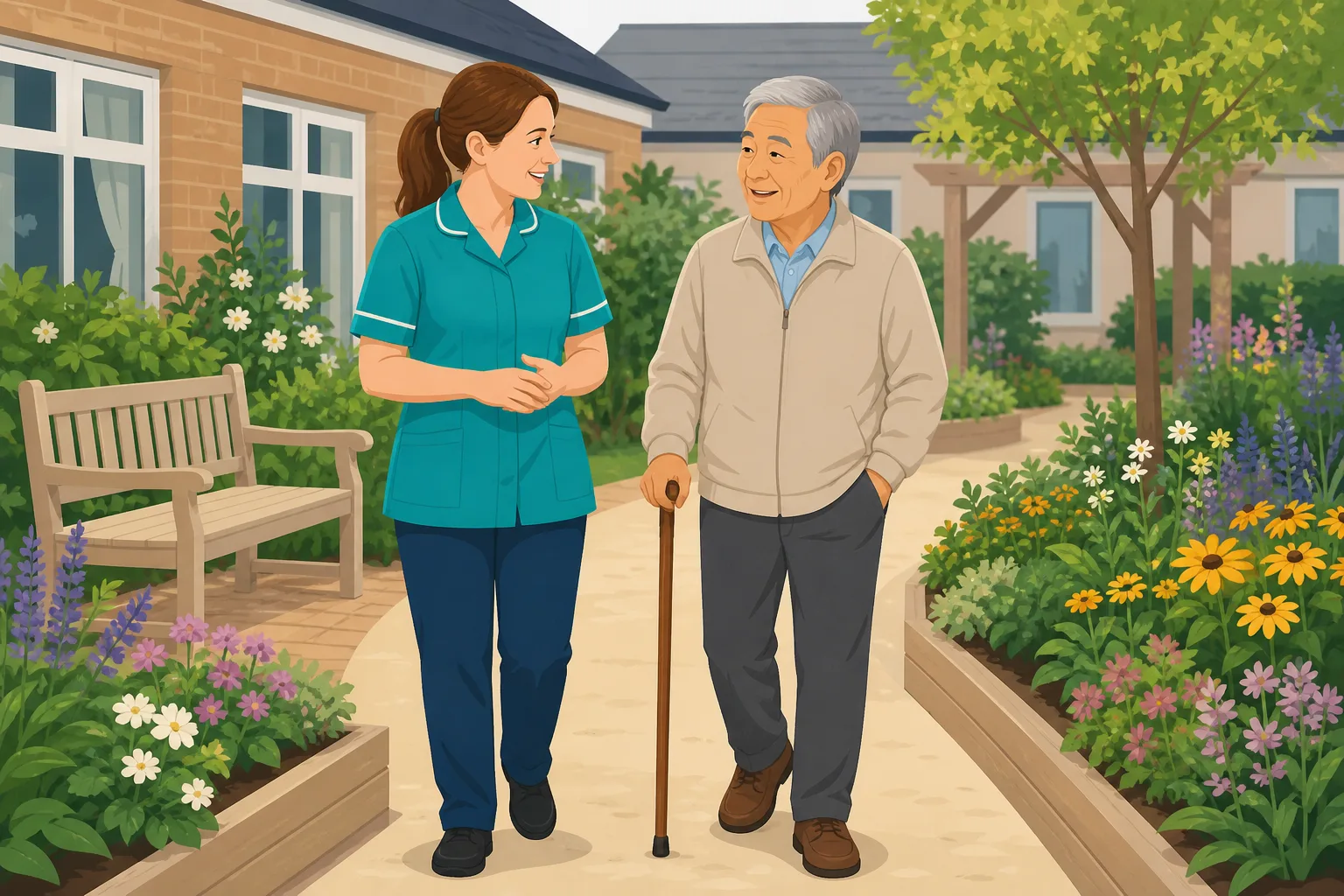
Figure: some of the best reminiscence happens on the way somewhere else.
Where a dementia life story earns its keep
A dementia life story is not a scrapbook for the family. It is a working document for the team.
It should answer four things in under a minute:
- What this person did with their life.
- Who matters to them, and how they are related.
- What reliably settles them.
- What reliably unsettles them.
Keep it where the floor can reach it. A folder in the office is a record nobody opens at the hardest hour of the day.
What an inspector would look for in a dementia care home
Not a certificate. Evidence that the activity fitted the person.
Under the wording of Regulation 9 on person centred care, care must reflect the person's preferences.
A dementia care home that runs one session for everybody has an activity plan. That is not the same as person centred care.
Three records carry the weight:
- What was offered, to whom, and why that person.
- What they did, in a line, not a tick.
- What you changed as a result.
The third is the one that is usually missing. A session that never changes is a session nobody reviewed.
Benefits of CareStream for reminiscence therapy for dementia
CareStream keeps the raw material for reminiscence therapy for dementia in one approved place.
- Families send photographs through a private link, with a caption of up to 140 characters on each.
- Nothing reaches staff until a manager approves it. The team sees only what you have checked.
- Staff ask the chat in the Staff Hub for a picture in plain words. Matching photographs appear under the answer.
- The chat reads captions and notes only. It never looks inside a picture, and says so if asked to describe one.
- Resident profiles and the family media inside them sit on Professional plans and above.
Where to start with reminiscence therapy for dementia
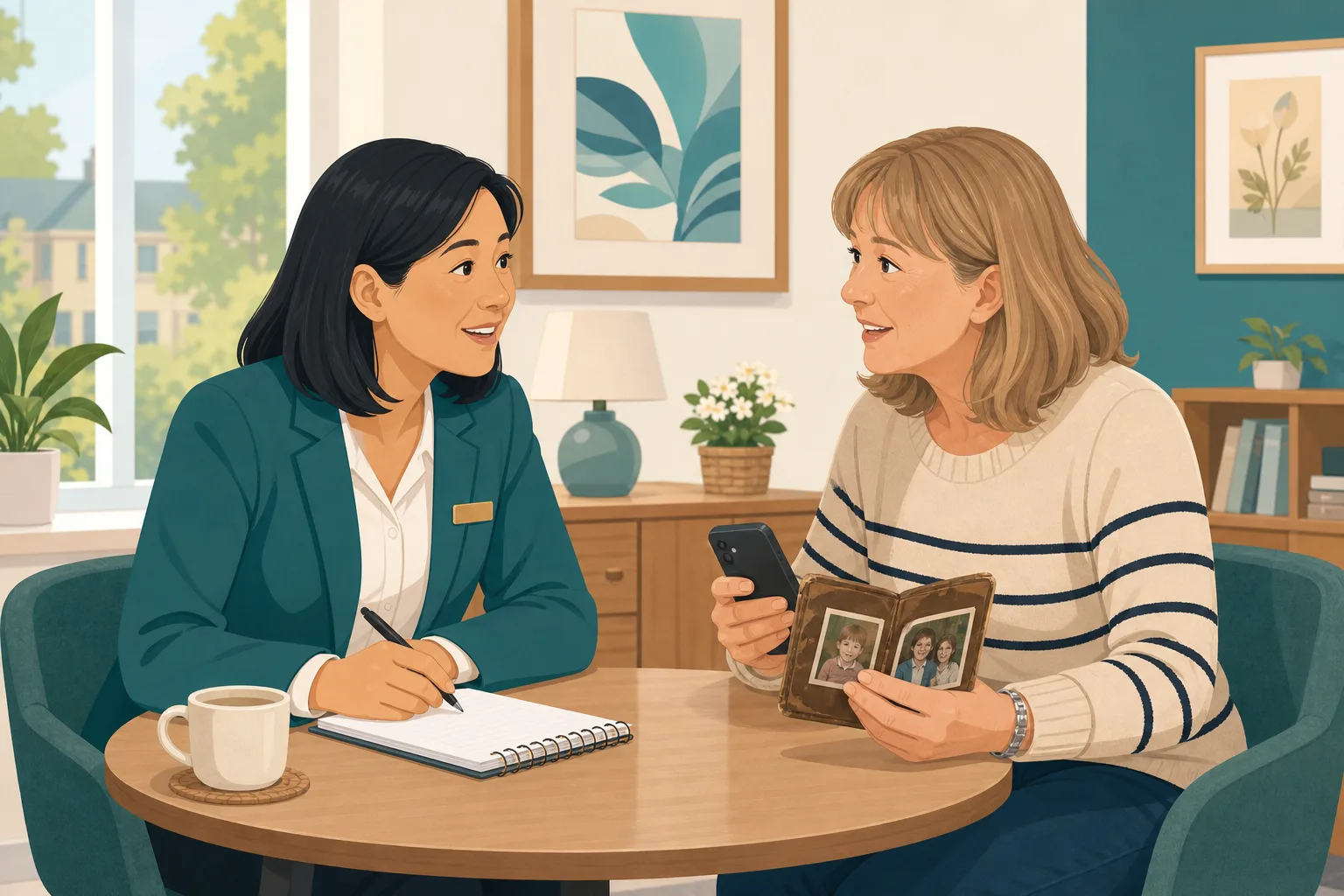
Pick one person, not a programme. Ask their family for three captioned pictures and one piece of music.
Run one short session. Write down what happened. Tell the next shift.
Then do the same for the next person. Six weeks of that teaches more than a year of planning. You learn from the people in front of you instead of from a template.
Your dementia care policy should name who leads sessions and what gets written down. The first 5 policies you upload are checked against the regulations at no cost.
Our guide to the this is me document covers the record that sits underneath all of it.
Sources
- Dementia: assessment, management and support for people living with dementia and their carers (NICE guideline NG97), recommendations 1.4.1 to 1.4.3 and the terms used in this guideline · nice.org.uk
- Activities for dementia, NHS · nhs.uk
- Coping with dementia behaviour changes, NHS · nhs.uk
- Regulation 9 (Person-centred care), Health and Social Care Act 2008 (Regulated Activities) Regulations 2014, legislation.gov.uk · legislation.gov.uk
Frequently asked