The room is ready. There is a framed photograph on the shelf, a made bed and a name on the door. Downstairs the key worker is starting a late shift, and she has never met the woman arriving this afternoon. Moving into a care home starts here, in the hours before anyone rings the bell.
Ask the family for three things before the move
Not a questionnaire. Three things, asked in one conversation:
- What the person likes to be called.
- What a good evening looks like at home.
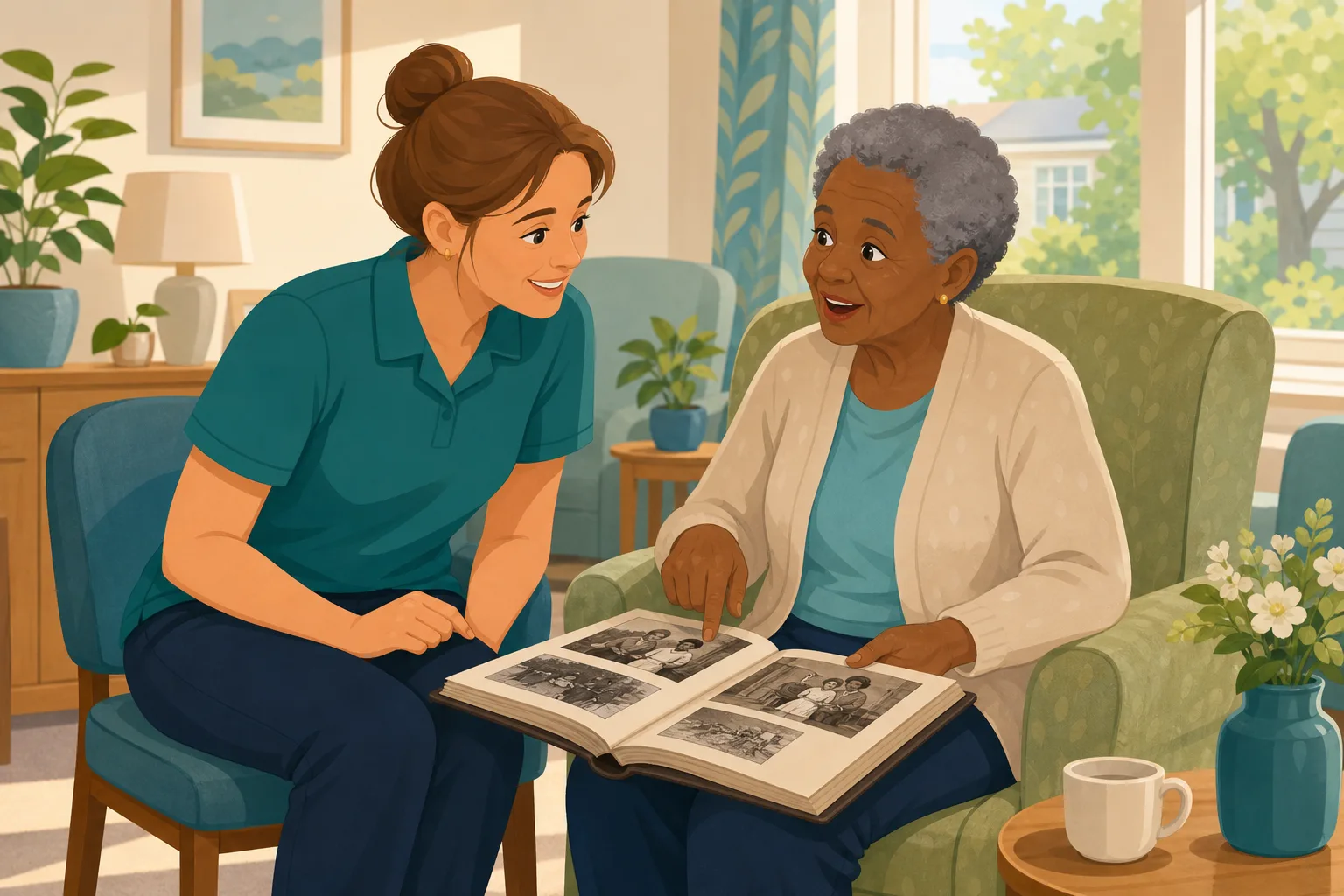
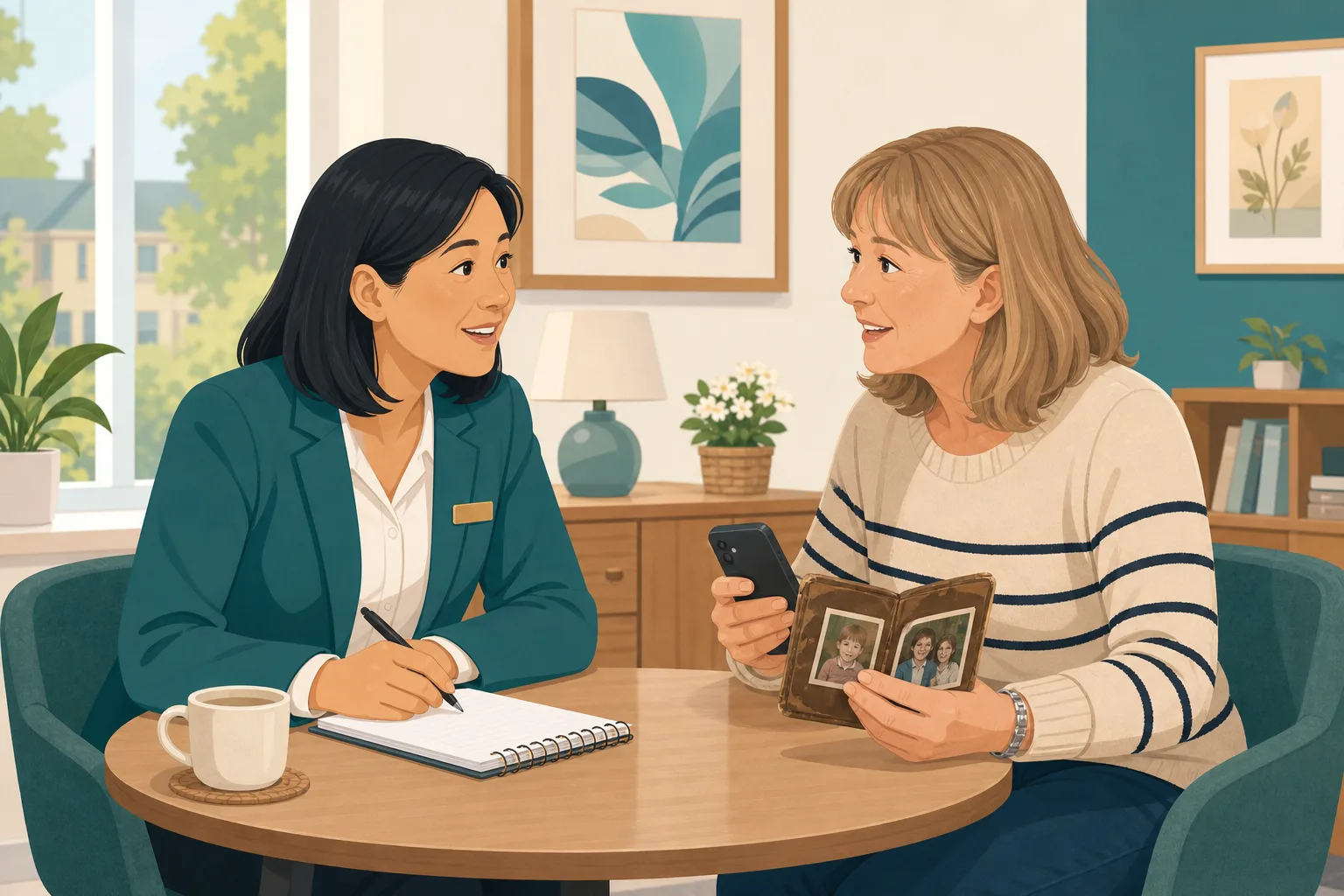
- Two or three pictures, each with a line saying who is in it.
The third is the one services skip. A picture with no caption is a puzzle for whoever is on shift, and the person who could have solved it in a second has gone home.
The law expects the family to be in the room for this. Under the full wording of Regulation 9 on person centred care, the assessment of needs and preferences is carried out with the relevant person, not about them.
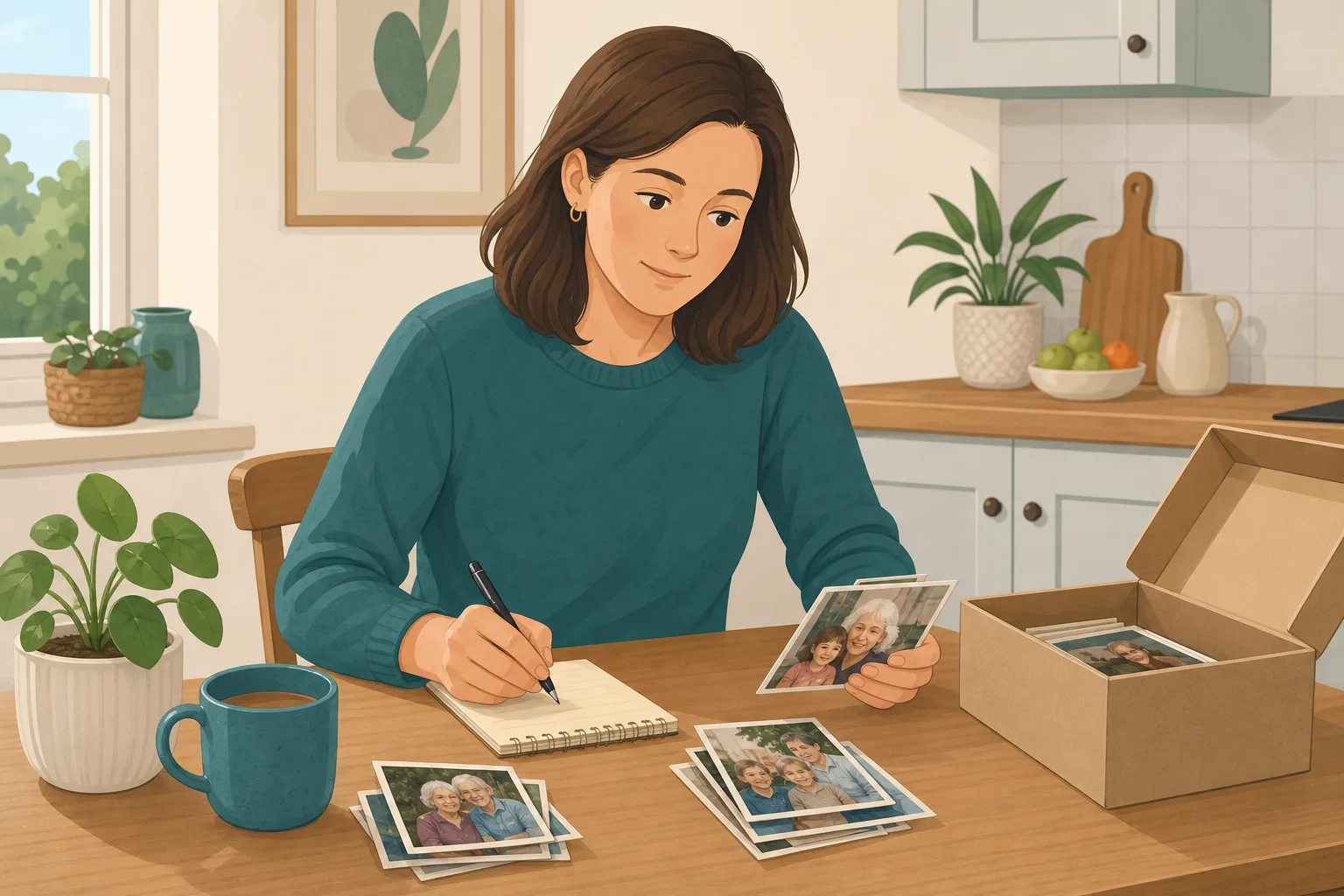
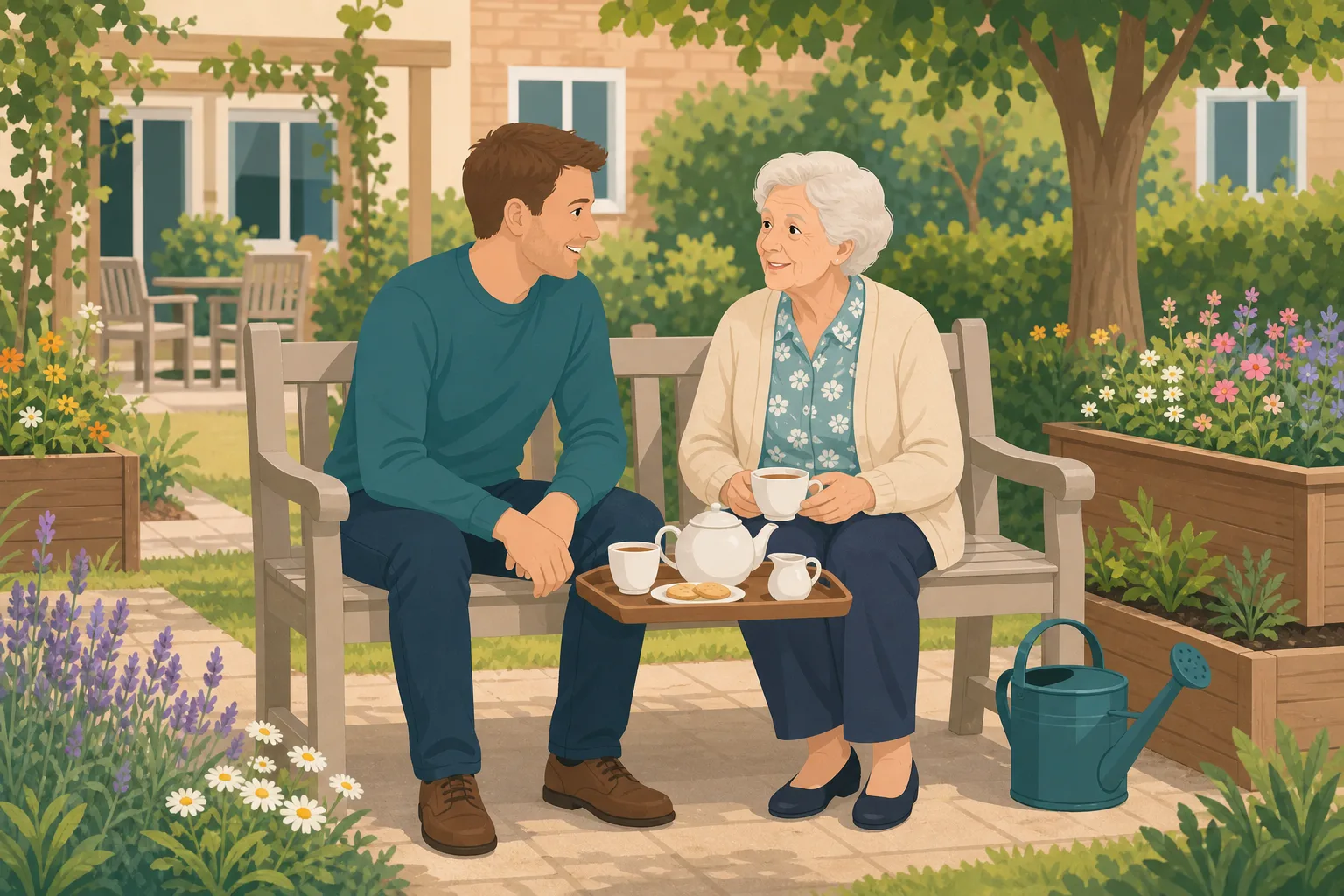
Figure: a caption written at home saves the care team guessing later.
The question that changes the first evening
Ask the family this: what does a good evening look like for her at home?
Every audit in the library is free to run, with scoring, actions and a report. No card needed.
Create a free accountWrite the answer down in their words. Tea at the same hour. Radio on, television off. The back door open until it turns cold.
That answer is worth more than a page of history. It tells the person on a late shift what to try first. Try it.
A family life story matters as well, but it builds slowly. The evening routine arrives in one sentence and can be used on day one.
What the rules ask of you here
Care must be appropriate, meet the person's needs and reflect their preferences. That is the whole of Regulation 9(1), in plain words.
Two more duties sit beside it. Providers must involve relevant persons in decisions about how care is carried on.
Privacy is the other one. In the text of Regulation 10 on dignity and respect, ensuring the privacy of the person is named as part of treating them with dignity.
The Care Quality Commission looks at this under the Single Assessment Framework. Nobody expects a thick file. They expect to see that you asked, and that the answer reached the floor.
None of this settles anyone on its own, and no record can promise a calm first night. What it does is stop the same questions being asked three times in a week.
Where the pictures should live, and where they should not
A picture on a carer's own phone is trouble waiting to happen. It leaves when she leaves, nobody has checked it, and you cannot say who has seen it.
Keep family pictures in the resident profile instead. One place, one version, with a caption and a named owner. Anyone on shift can find them.
The same goes for paper. A this is me form in a drawer helps nobody on a busy evening.
What the key worker needs on one page
Most handover notes describe the illness. The key worker needs the person.
Keep it to six lines and keep it current:
- The name she answers to, and the one she does not.
- Two people who matter, and how they are related to her.
- What she did for work or at home for most of her life.
- One thing that reliably settles her, and one that reliably does not.
- How she takes her tea, and when.
- What she asked about most on the day she arrived.
That last line is the one people forget. Whatever a person asks about in the first day tends to be what they are worried about, and it is usually answerable.
The first evening, step by step
- Meet her at the door with the person who will be with her all evening.
- Walk the route she will use most: her room, the lounge, the nearest toilet.
- Put one familiar object where she can see it from her chair.
- Use one thing you learnt from the family within the first hour. Name the dog. Mention the allotment.
- Write three lines before going off shift: what settled her, what did not, what she asked for.
Step five is the one that pays. It gives the next shift a starting point instead of a blank page.
Resist the urge to fill the first days with activities and introductions. A new face every hour is tiring. Someone who has just left a house they lived in for forty years has had plenty to take in already. Two familiar things, repeated, beat a full programme.
Pick an audit, assign it, score it on a phone and close the actions. Create a free account to start.
Create a free account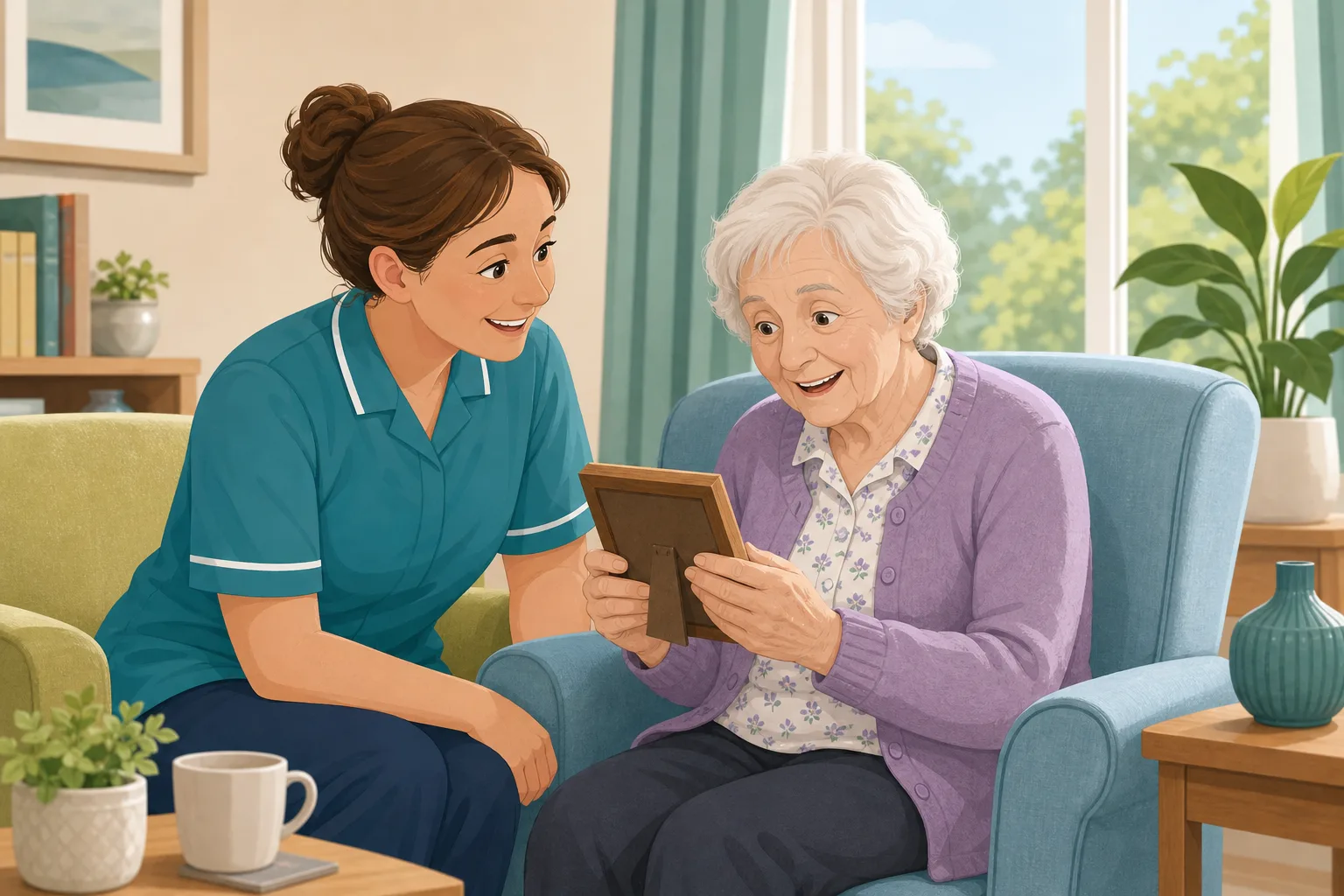
Figure: one familiar picture gives a new carer something real to talk about.
The review in week one that nobody books
The dementia guideline from the National Institute for Health and Care Excellence asks services to review a person's needs and wishes after every transition. A move into a care home is a transition.
So book the review before the move, not after. A fortnight is long enough to have learnt something and short enough to still change the person centred care plan.
Three questions are enough:
- What have we learnt that was not in the assessment?
- What has she asked for that she has not had?
- Who in her family has nobody spoken to yet?
What a resident of the day round picks up later
Months on, the admission is history and the detail fades. A resident of the day round brings it back: one person, one day, every part of their care looked at in turn.
Use it on the small things. Is the caption on that photograph still right? Has anyone added to her story since she came? Does the key worker know the name of the dog?
Ask the family again, too. A relative who found three pictures before the move will have more at home, and the ones they pick a few months later are usually better.
The first choice gets made while a house is being emptied and a room is being cleared. The second gets made with the person in mind.
Our free resident of the day audit template gives you the questions and records who signed it off.
Benefits of CareStream when someone is moving into a care home
CareStream keeps what the family gives you in one place, with a check before staff see it.
- You invite a relative from the person's record and CareStream emails them a private link. No account and no password.
- Each link takes up to 5 photos and up to 5 short videos.
- A photo can carry a caption of up to 140 characters. A video can run up to 60 seconds.
- Nothing reaches staff until a manager approves it. A rejected file is deleted there and then.
- The family photos and video messages feature needs a Professional plan or higher. Audits and CPD training stay free on any plan.
What to do before your next admission
Decide who rings the family and what they will ask for. Put the three questions on the pre-admission form so nobody has to remember them.
Then choose where the answers will live, and tell the late shift where to look. A record only counts if the person on shift can reach it without asking the office.
Book the week one review at the same time as the admission. It is easier to move a date than to find one.
Our guide to the this is me document covers the form itself, and the pictures and routines belong with it.
Sources
- Regulation 9 (Person-centred care), Health and Social Care Act 2008 (Regulated Activities) Regulations 2014, legislation.gov.uk · legislation.gov.uk
- Regulation 10 (Dignity and respect), Health and Social Care Act 2008 (Regulated Activities) Regulations 2014, legislation.gov.uk · legislation.gov.uk
- Dementia: assessment, management and support for people living with dementia and their carers (NICE guideline NG97), recommendations 1.1, 1.12 and 1.13 · nice.org.uk
- Activities for dementia, NHS · nhs.uk
Frequently asked