
Mental capacity act training is done. Can your team apply it on a Tuesday?
You ran a workshop on the Mental Capacity Act and DoLS, and it went well. Mental capacity act training is hard to get right, because the ideas sound simple and are easy to misread. After the session you allocate short training built from your own policies, and a wrong answer becomes a short lesson on that exact point.
14 day free trial · Set up in a day · UK data residency
The workshop went well. The law is still subtle.
A scenario we see in many care settings.
A trainer has spent an afternoon with the team on capacity, best interests and deprivation of liberty. People asked good questions and the feedback was positive. A few weeks later a carer tells a colleague that a resident with dementia "can't decide anything now", and another says a resident's choice to skip a meal should simply be overruled because it is unwise. Nobody did anything harmful, and nobody in the room spoke up. The manager realises the workshop covered the ideas, but she cannot say who left with them right. Here is how that plays out.
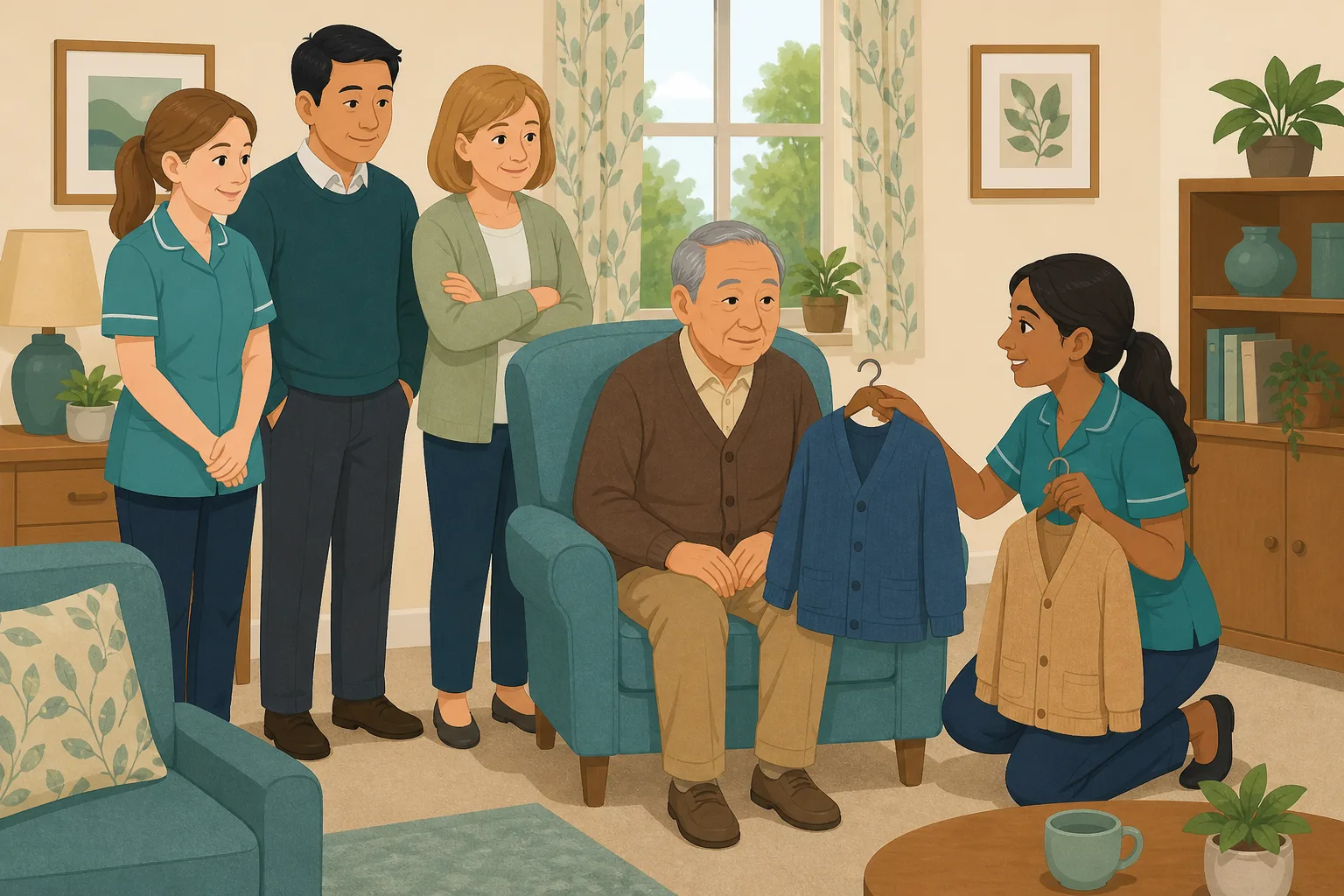
A trainer runs the capacity and DoLS workshop for the team.
Good questions, lively discussion, warm feedback forms.
Everyone signs the attendance sheet and says it was useful.
A carer says a resident "can't decide anything" any more.
Another thinks an unwise choice means the person lacks capacity.
A new carer was too shy to say she had not followed the best interests part.
Signatures and warm feedback. Nothing that shows who understood.
“How do you decide whether a resident can make this choice?”
The workshop was never the problem. The gap is between a good session and knowing what stuck. Here is how CareStream closes it, using your own policies, without replacing the session.
An example scenario, not a named service.
Subtle ideas are the easiest to misunderstand
People rarely say "I did not get that". They go back to the floor and act on what they think they heard.
Nodding is not understanding
Ideas such as capacity being decision specific or an unwise choice not meaning a lack of capacity sound obvious in the room. Under pressure, old habits come back.
A small misreading has big effects
Treating someone as unable to decide, or doing something to a person without asking, can affect their rights. Mistakes here are quiet, so nobody notices until later.
Nobody checks what stuck
A trainer cannot quiz every carer afterwards, and a manager cannot write extra lessons for every missed point. So the misunderstanding simply stays.
Your policies in, the follow up out.
This is the Training built from your own policies feature, in the order a manager and a carer meet it.
Allocate a knowledge check on the topic, built from your own policies
- After the workshop, pick the Mental Capacity Act and DoLS topic module in the Training screen and tick the staff who attended
- CareStream builds the lessons and a knowledge check from your own MCA and DoLS policies where they cover it, with general good practice as the fallback. You can edit and preview before anyone sees it
- Staff complete it in the Staff Hub on their own phone, so you have a quick check for understanding rather than another meeting
Illustration based on the Training screen. Example questions.
A wrong answer becomes a short lesson on that exact point
- The wrong answer goes into the carer's Follow-up tab in the Staff Hub, and they get an email (at most once a day, in English)
- They choose Learn & retry, a short lesson then a fresh question, or Just retry the same question. They can retry as often as they need
- Because lessons are built from your own policies, they teach what your service does. If your policy wording is old, you will spot it here
A few things to revisit. Learn the point, then answer, or just retry. Either way it clears from here.
Making an unwise decision does not by itself mean a person lacks capacity to make it.
Remember- Assume capacity unless shown otherwise
- Support the person to decide first
- Record how you helped
A resident declines the meal you chose and asks for toast instead.
Illustration based on the Staff Hub Follow-up tab. Example content.
Learn it in the language you think in
- Legal ideas are hard enough in a second language, and a missed word can look like a missed concept
- Your admin sets the carer's second language, and they open the lesson in it from the hub
- Training in different languages is part of the paid plans
Always communicate in their first language
All messages CareStream sends are translated into English.
Allow switching a set to their second language
In the hub they can flip any single training, induction or CQC set into Polish, just for that set, if they are struggling in their first language.
Let them suggest better translations
They can propose improvements to translated content. Changes need your approval before going live.
Illustration based on the staff record Language settings. Translation is on the paid plans.
See which ideas did not land, and whether they closed
- The Knowledge gaps view shows the most missed questions and the weakest topics, so you see which part of the workshop needs a second go
- See how gaps are being closed and how many staff engaged with the learning
- A Monday digest email, so the picture arrives without you asking for it
Illustration based on the Knowledge gaps view. Example figures.
The questions managers ask, and how CareStream answers them
Read this as a conversation. The questions are the ones we hear most.
We ran a proper workshop. Why add anything on top?
You would not be replacing the workshop. You would be adding a check afterwards so you know what people took in. The room teaches and discusses. The follow up shows what stuck and gives a short lesson where it did not.
How do I check my carers understood capacity and best interests?
After the session you allocate the Mental Capacity Act and DoLS topic in the Training screen. The questions and lessons are built from your own policies where they cover it, and from general good practice where they do not. You can edit and preview them first. Carers answer in the Staff Hub on their own phone.
What happens when someone gets a question wrong?
It goes into that carer's Follow-up tab and they get an email, at most once a day and in English. They choose Learn & retry, a short lesson (why this matters, what to remember, a realistic picture) then a fresh question, or Just retry the same question. They can retry as often as they like.
Our MCA and DoLS policy might be out of date. Does that matter?
Yes, and it is worth knowing. The lessons draw on your own wording, so an old policy teaches old wording. Where your policy does not cover a point, the lesson falls back on general good practice, which is a prompt to review it. Check your policy against current guidance and with your local authority, and update it before you allocate.
Will it tell me what the law says now about the Liberty Protection Safeguards?
No. CareStream does not decide which legal scheme applies, and this page does not either. Keep your policy in line with current official guidance and your local authority, and let your policy be the source for the training.
Do I get an alert every time someone answers wrongly?
No. Nothing alerts you on each wrong answer. You see the pattern in Analytics under Knowledge gaps, which shows open gaps, staff affected and the most missed questions, and a digest arrives on Monday.
Can staff do this in another language?
Yes, on the paid plans. A carer whose second language is easier for legal ideas can open the lesson in it, so a wrong answer points to a gap in knowledge and not in vocabulary. Reminder emails stay in English.
How do I try it, and what does it show an inspector?
Create a free account and start the 14 day free trial, then allocate one module after your next session. You can show what each person was asked, what they got wrong, the lesson they were given and whether it then landed. It sits alongside the rest of your CQC evidence.
A check on understanding, not a legal adviser
It does not make capacity decisions
Whether a person has capacity for a particular decision, and what is in their best interests, are assessments made by people. CareStream checks that staff understand the ideas.
It does not tell you which scheme applies
It cannot judge whether a restriction needs an application, or which legal scheme applies. For that, follow current guidance and speak to your local authority.
It does not alert you to every wrong answer
The picture reaches you through the Knowledge gaps view and the Monday digest. Ad hoc training and translation are on the paid plans.
Training built from your own policies
Everything on this page is part of the product. Here is where to read more.
Training built from your own policies
Ad hoc training from your policies, face to face training organised, and wrong answers that become lessons.
See the featureAd hoc training after a session
Allocate a short module on any topic when something needs checking or reinforcing.
See ad hoc trainingMental Capacity Act and DoLS course
A CareStream course on capacity, best interests and deprivation of liberty, for your annual plan.
See the courseGuides on this subject
Safeguarding Policy Care Home Example: One Bruise, Eight Steps
A made up bruise on an invented resident, followed step by step through what a safeguarding policy must make happen under Regulation 13, the Care Act...
Read article
Care Certificate Assessor: Eight Questions an Inspector Could Ask
Who can assess the Care Certificate, what they must watch in real work, when a classroom will do and who signs it off, as eight questions with the...
Read article
Incident-Led Training in Care: Turning What Went Wrong Into What Your Team Learns
Every incident is already a training moment. The medication error, the fall, the complaint from a family member, the near miss on a night shift. Each...
Read articleMental capacity training and CareStream, answered
About the training
What should mental capacity act training cover for care staff?
At the least, the five principles in section 1 of the Mental Capacity Act 2005: assume capacity, help people decide, an unwise choice is not a lack of capacity, act in best interests, and choose the less restrictive option. Add how your own home records decisions.
Where can I find the official guidance on the Act?
The Mental Capacity Act Code of Practice on gov.uk explains what you must do when you act or make decisions on behalf of people who cannot. Your policy should be consistent with it.
Is a mental capacity act quiz enough on its own?
A mental capacity act quiz shows what people can recall, which is a start. Real practice needs conversations, supervision and observation. Use the quiz as a check for understanding and a way to find who needs a conversation.
What is the difference between MCA and DoLS training?
The Act covers capacity and best interests. DoLS training is about deprivation of liberty and when to raise it. Many homes run MCA and DoLS training as one session, so check understanding of both.
Does a knowledge check replace the workshop?
No. A knowledge check after the workshop shows what stuck. For hands on practice and discussion, you still need a competent person in the room.
What if a carer gets a question wrong?
It appears in their Follow-up tab. They can choose Learn & retry, a short lesson on that point followed by a fresh question, or Just retry the same question, as often as they need. Treat it as information, not failure.
Policy and the law
Where do I check the current position on DoLS and the Liberty Protection Safeguards?
Check current official guidance and ask your local authority, as the position has changed over time and we do not state it here. Then make sure your policy and your MCA and DoLS course match it.
Do we need deprivation of liberty safeguards training every year?
How often you refresh deprivation of liberty safeguards training is a decision for your policy and your training plan. Many homes include it in an annual training plan and add an ad hoc check when practice slips.
Does CareStream write our MCA policy?
No. It builds lessons from the policies you already have and shows where they are silent. See policy gap detection for how it highlights missing cover.
How to follow up an MCA and DoLS workshop
A short, practical routine you can run after any session on capacity and deprivation of liberty. It takes a few minutes of your time.
Before the workshop
Read your own policy first. If it is old, update it before you teach from it, because staff will follow what is written down. Then decide which three or four ideas matter most for your residents, such as how you support a person to decide and how you record it.
After the workshop
Within a few days, allocate a short module on the topic to everyone who attended. Keep it to a handful of questions so it fits into a shift.
- Update your MCA and DoLS policy against current guidance and your local authority
- Allocate the topic module and preview the questions first
- Give staff a due date a few days after the session
- Open Knowledge gaps after a week and talk to anyone who is stuck
What to do with the results
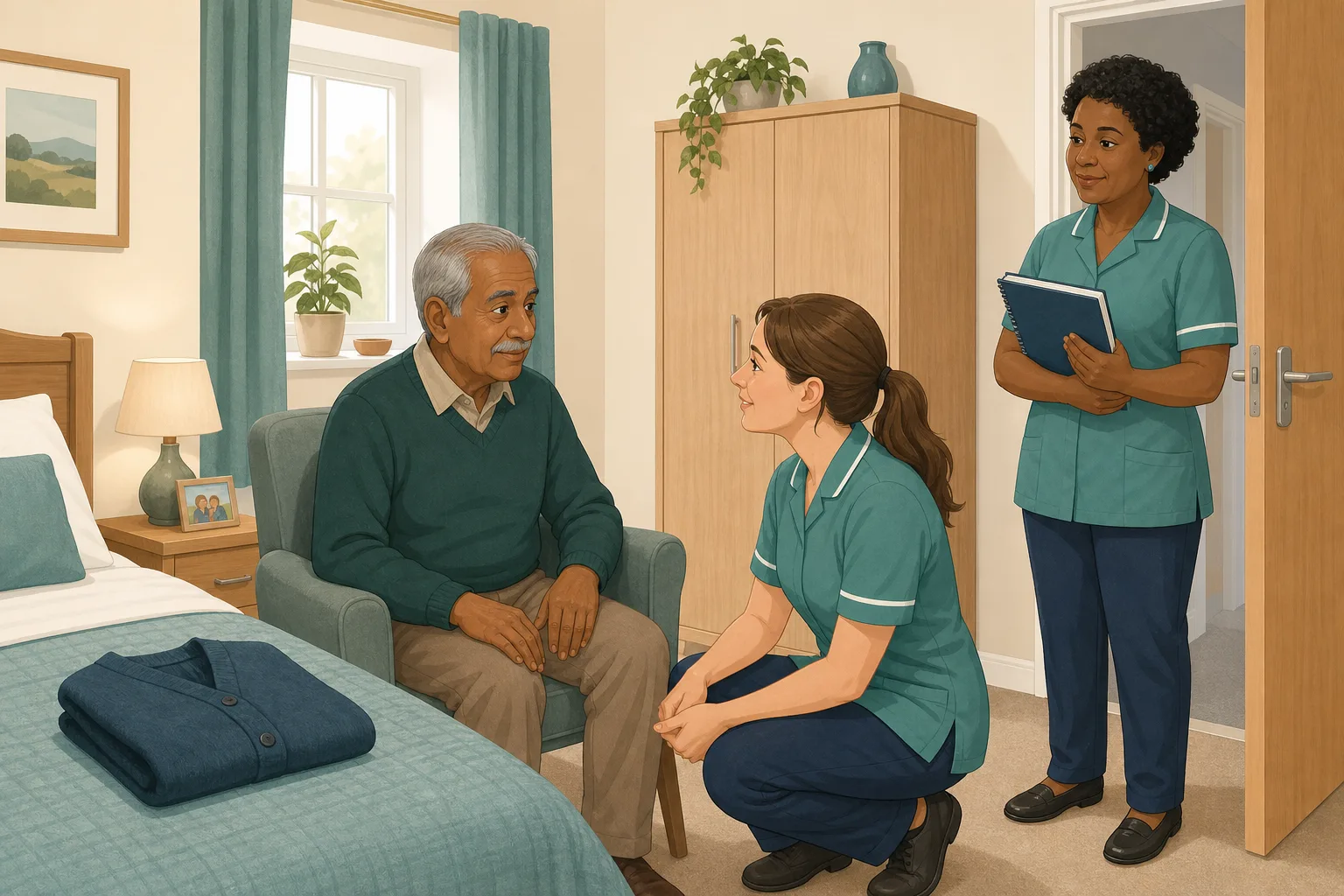
If one question is missed by many people, the session needs a second go. If one person misses several, have a quiet conversation. For understanding to turn into practice, watch it in the care you see every day, as in the picture of a carer offering a choice and a manager observing.
This guide is practical advice, not legal advice. Follow current official guidance and speak to your local authority on legal questions.




