Mandatory training by role
A carer, a nurse and a registered manager do not need the same training, yet many services still try to manage everyone against one long list. The result is either over-training people on things that do not apply to them, or worse, missing the specific requirements a particular role carries. Working out who needs what, by hand, is slow and easy to get wrong.
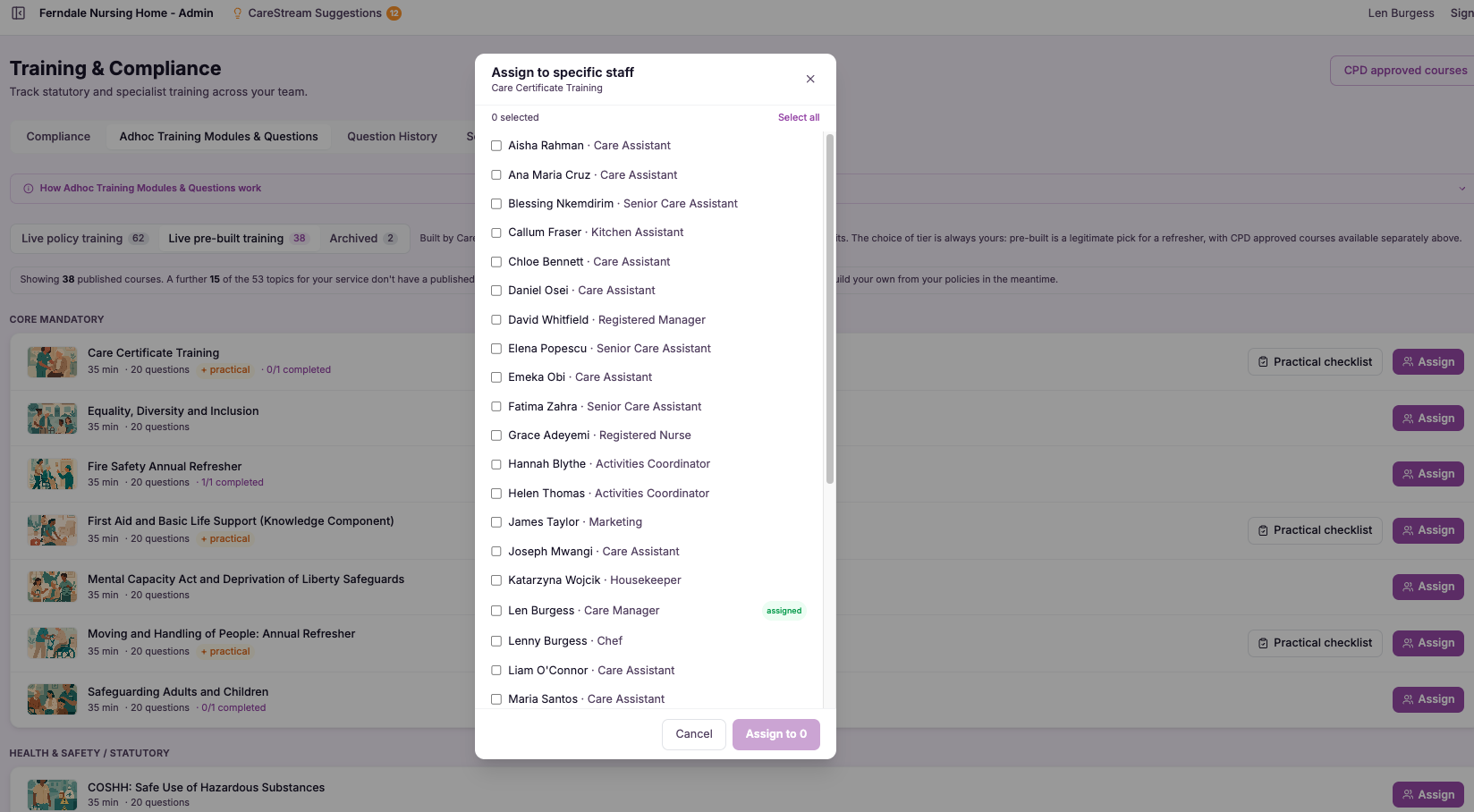
The right training list for the right role.
Mandatory training by role is a way of describing what each type of role in your service is required to complete, rather than treating your whole team as one undifferentiated list. You decide which courses a carer must hold, which a nurse must hold, and which a manager must hold, and CareStream turns those definitions into the training matrix that applies to each person.
This matters because mandatory training expectations genuinely differ across roles, and CQC expects you to show that people are trained appropriately for the work they actually do. Getting the mapping right, and keeping it consistent as staff join or change roles, is exactly the kind of task that is tedious by hand and effortless when the platform applies it for you.
CareStream lets you define the mandatory training each role must hold, then applies the right training matrix to every member of staff automatically based on their role. Set the requirements for a carer, a nurse or a manager once, and every person in that role picks up exactly the courses they should have, so nobody is left with the wrong set of expectations.
Any care home, nursing home or care provider with a mix of roles, where a carer, a nurse and a manager have genuinely different training requirements.
Because training is mapped to each role, you can show CQC that people are trained appropriately for their work, with no over-training or hidden gaps.
The difference it makes day to day
- You define each role's mandatory training once, and every person in that role inherits the correct requirements.
- Carers, nurses and managers are held to the training that genuinely applies to their work, not a single catch-all list.
- New starters pick up the right training expectations automatically as soon as their role is set.
- You stop over-training people on courses that do not apply to them and stop missing ones that do.
- When someone changes role, their training requirements move with them without manual reassignment.
- You can evidence to CQC that training is matched to the roles people actually perform.
How role-based training is applied.
The idea is to do the thinking once, at the level of the role, and then let the platform apply it to every individual consistently. You describe the requirements for each role rather than for each person.
From there, CareStream matches each member of staff to their role and gives them the corresponding training matrix automatically. The heavy lifting of assigning the right courses to the right people simply happens, and stays correct as your team changes.
Define each role
Set out the mandatory training a carer, a nurse, a manager and any other role in your service must hold.
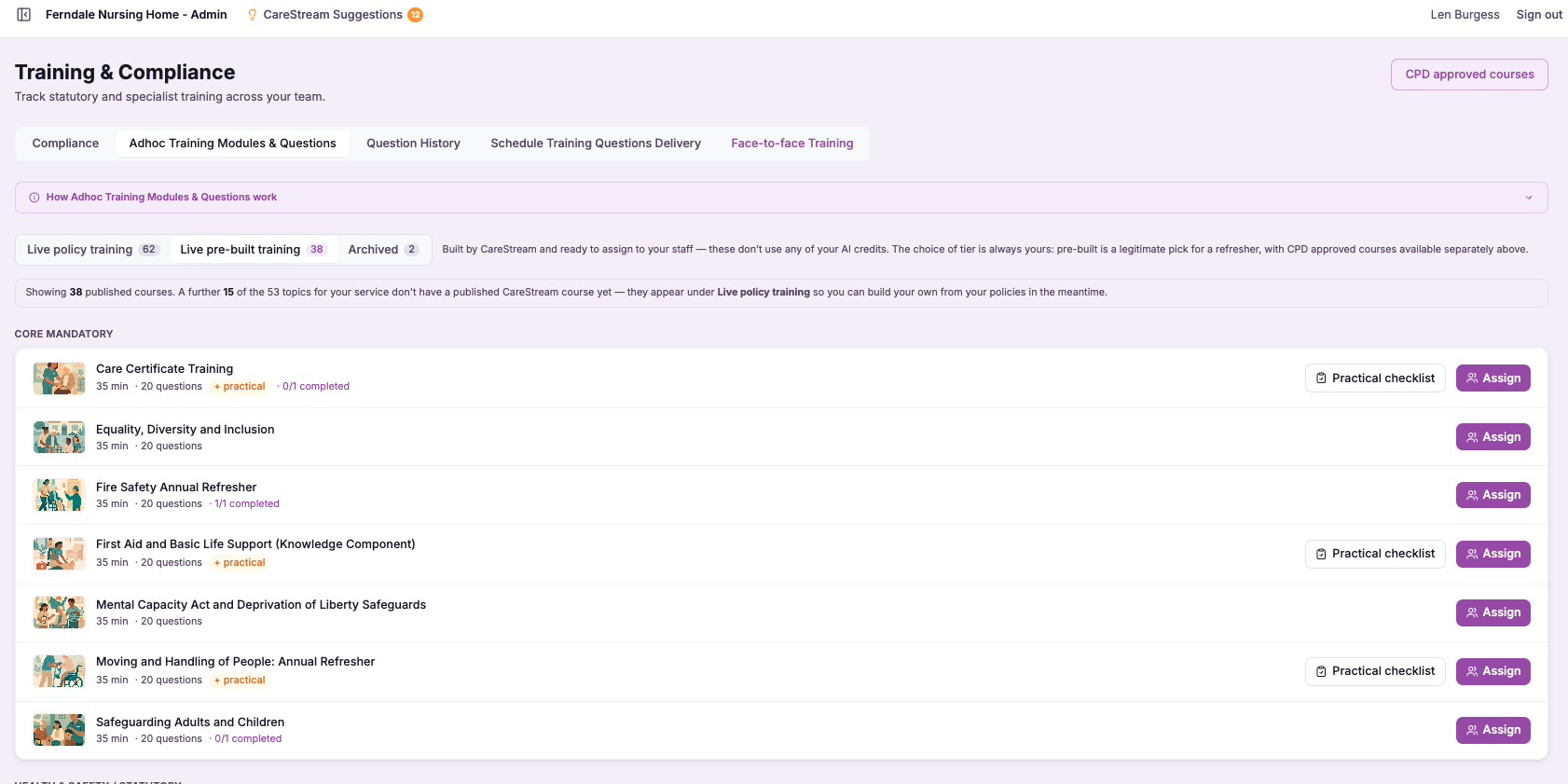
Map courses to roles
Attach the relevant courses to each role so the requirement is described once, not repeated per person.
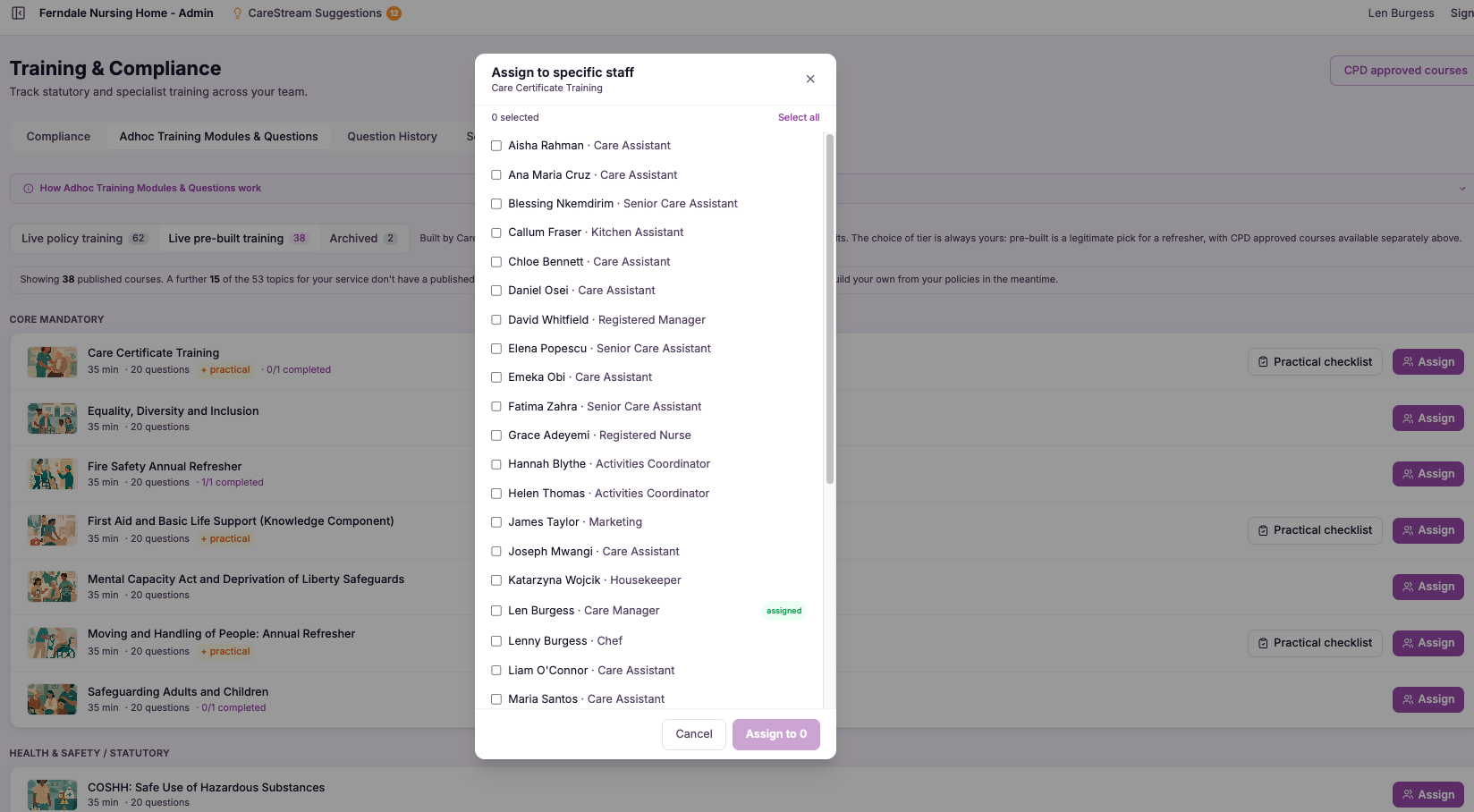
Assign a role to staff
Give each member of staff their role, and the platform knows which training they should be held against.
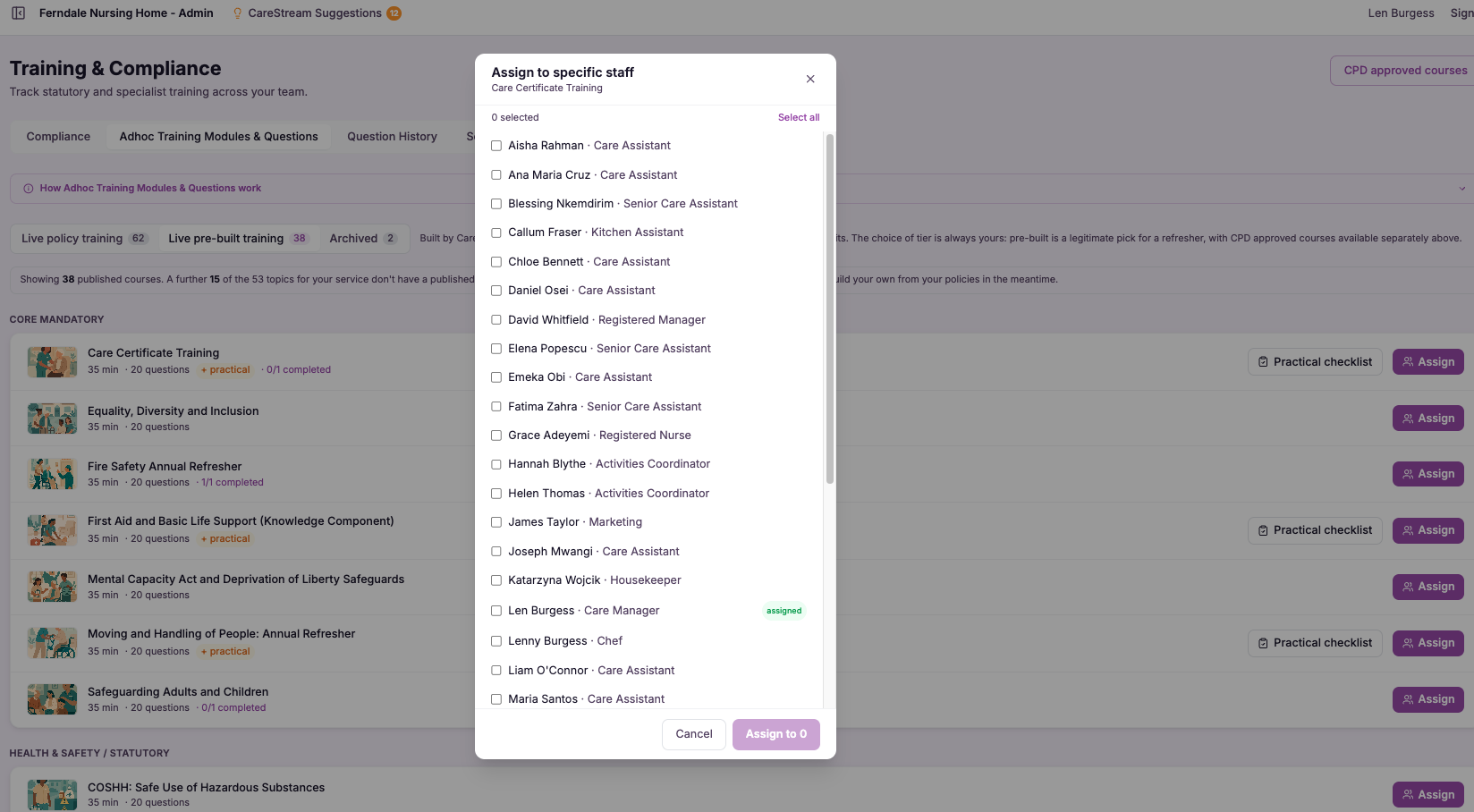
CareStream builds each person's required training from their role, with no manual course-by-course assigning.
When someone moves role, their training requirements update to match the new role automatically.
Update a role's requirements once and every person in that role reflects the change straight away.
- Mandatory training is defined per role, not per individual.
- Carers, nurses and managers each carry their own required course set.
- The right matrix is applied to each person automatically from their role.
- Role changes update a person's requirements without manual work.
- Evidences that training is matched to the work people actually do.
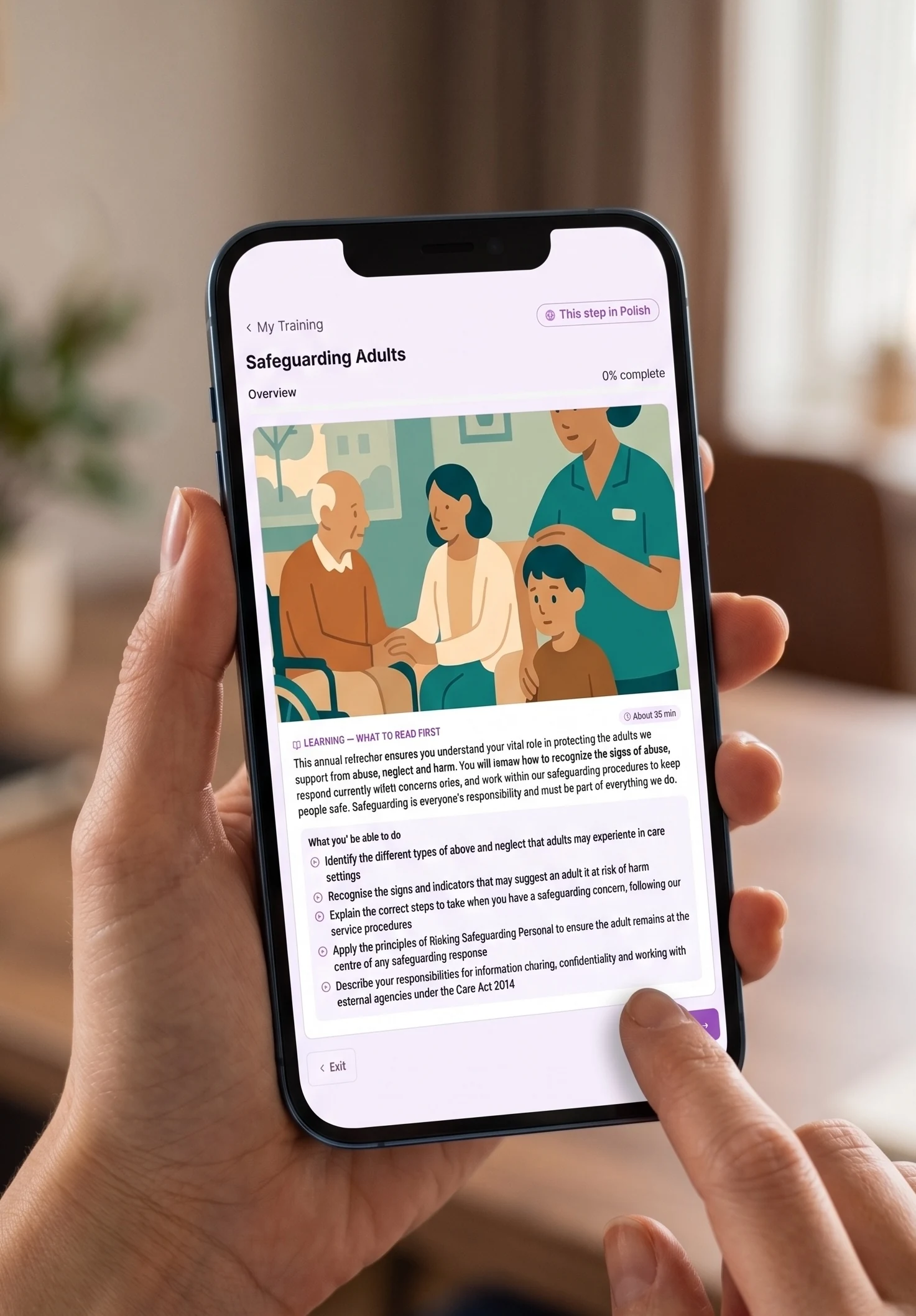
Training should follow the role, not a spreadsheet.
The trouble with a single training list is that it is either too much for some people or too little for others, and keeping a per-person spreadsheet accurate is a job that never really finishes. Every new starter and every role change is another chance for the list to drift out of date.
CareStream works because it captures the requirement where it naturally lives, at the level of the role, and applies it automatically to everyone. The definition stays clean, and each person's expectations always match the job they actually do.
Requirements are set for carers, nurses and managers, not maintained one person at a time.
Each member of staff inherits the right training matrix automatically from their role.
Role changes and new starters pick up the right requirements without manual reassignment.
People are trained for what they actually do, evidencing appropriate training to CQC.
Frequently asked
How does CareStream decide what training each person needs?
You define the mandatory training for each role in your service, describing what a carer must hold, what a nurse must hold, what a manager must hold, and so on. CareStream then matches each member of staff to their role and applies the corresponding training matrix to them automatically, so their required courses come from their role rather than from a manual per-person list. This means you do the thinking once, at the level of the role. Every individual in that role inherits the same, correct set of requirements, which keeps things consistent across your whole team and removes the risk of assigning the wrong courses to the wrong people.
What happens when a member of staff changes role?
When someone moves from one role to another, their training requirements update to match the new role automatically. If a carer steps up to a nurse or a senior role with different mandatory training, the platform reflects that change rather than leaving them held against the requirements of their old role. This is one of the biggest time savers, because role changes are exactly where manual training lists tend to drift out of date. By tying requirements to the role, CareStream keeps each person's expectations accurate through promotions, moves and new starters, without anyone having to reassign courses by hand.
Does this stop us over-training people?
Yes. Because training is mapped to roles, each member of staff is only held against the courses that genuinely apply to their work. You avoid the common problem of a single long list that expects everyone to complete everything, whether or not it is relevant to their role. Just as importantly, it stops the opposite problem of missing a requirement that a particular role carries. The role-based matrix gives you the right set, no more and no less, which is both fairer on staff and cleaner to evidence at inspection.
How does this help with CQC inspection?
CQC expects you to show that people are trained appropriately for the work they actually do, not simply that some training happened. By defining mandatory training per role and applying it to every person automatically, you can demonstrate a clear, consistent link between each individual's role and the training they are required to hold. That clarity makes inspection conversations much simpler. Rather than explaining an inconsistent spreadsheet, you can show that a carer, a nurse and a manager each carry the correct requirements for their role, and that new starters and role changes pick those requirements up automatically.
Explore more features
More of what the CareStream compliance platform does for UK care providers.
Give every role exactly the training it needs.
See how CareStream applies the right mandatory training matrix to each member of staff automatically, based on their role.