Effectiveness of training
A completion tick tells you a course was finished. It does not tell you whether anyone understood it, or whether practice on the floor actually changed as a result. For years, care training has been measured by completion alone, which is why a service can be fully compliant on paper and still have gaps in real competence that only surface when something goes wrong.
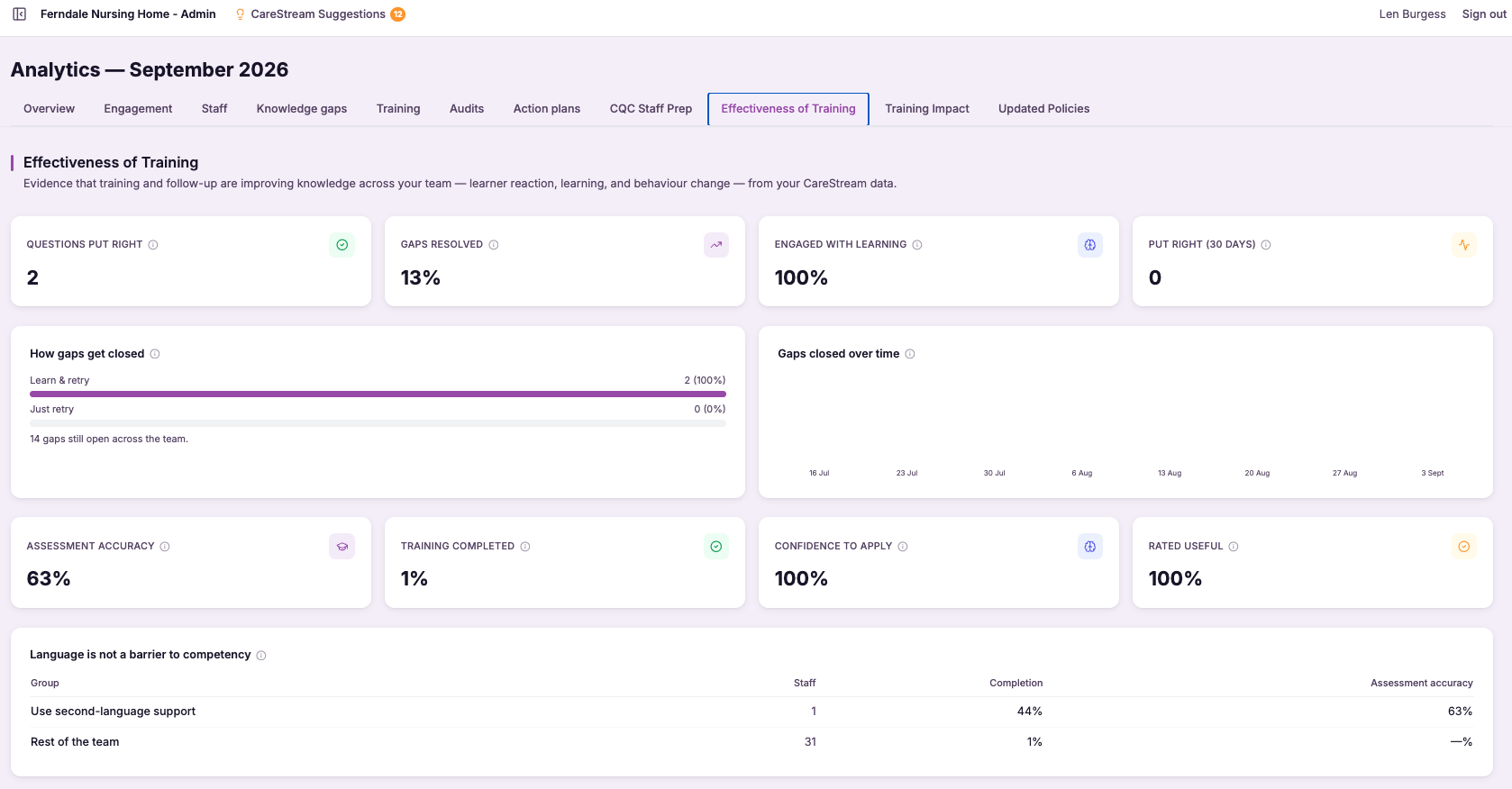
Measuring whether training actually landed.
Effectiveness of training moves your evidence beyond the completion tick to the question that really matters: did the training improve understanding and practice? It draws on assessment scores to show whether people grasped the material, and on follow-up to see whether it changed what they do, so you are measuring impact rather than just attendance.
This matters because CQC has moved firmly towards outcomes. Under the quality statements, showing that training took place is no longer enough; you are expected to show that staff are competent and that learning translates into safe, better care. Measuring effectiveness gives you the evidence for that claim, turning training from a box to tick into a demonstrable driver of quality care.
CareStream measures the effectiveness of training, not just completion. It looks at whether training genuinely improved understanding and practice, through assessment scores and follow-up, so you can evidence that your training works rather than only that it was done. That shift, from did they finish to did it make a difference, is what inspectors increasingly want to see.
Registered managers and quality leads in any care home, nursing home or care provider who need to prove training works, not just that it was completed.
Because you measure understanding and practice, you can evidence competent, effective training against the quality statements, not just a wall of completion ticks.
The difference it makes day to day
- You can show whether training improved understanding, not just that it was completed.
- Assessment scores give you a concrete measure of how well material was grasped.
- Follow-up shows whether learning actually changed practice on the floor.
- Low effectiveness signals where competence needs reinforcing before it becomes a risk.
- You evidence to CQC that your training drives real outcomes, not just compliance.
- Training investment can be judged on impact, so you strengthen what works and revisit what does not.
How effectiveness is measured.
The approach looks at training in two stages: what people understood, and what changed as a result. Completion is the starting line, not the finish, and everything after it is about impact.
Assessment scores give you the first signal, showing how well the material was understood. Follow-up gives you the second, checking whether that understanding held and translated into practice. Together they let you tell whether a course genuinely worked, for a person and across your team.
Start beyond completion
Treat finishing a course as the beginning of the measurement, not the end of the story.
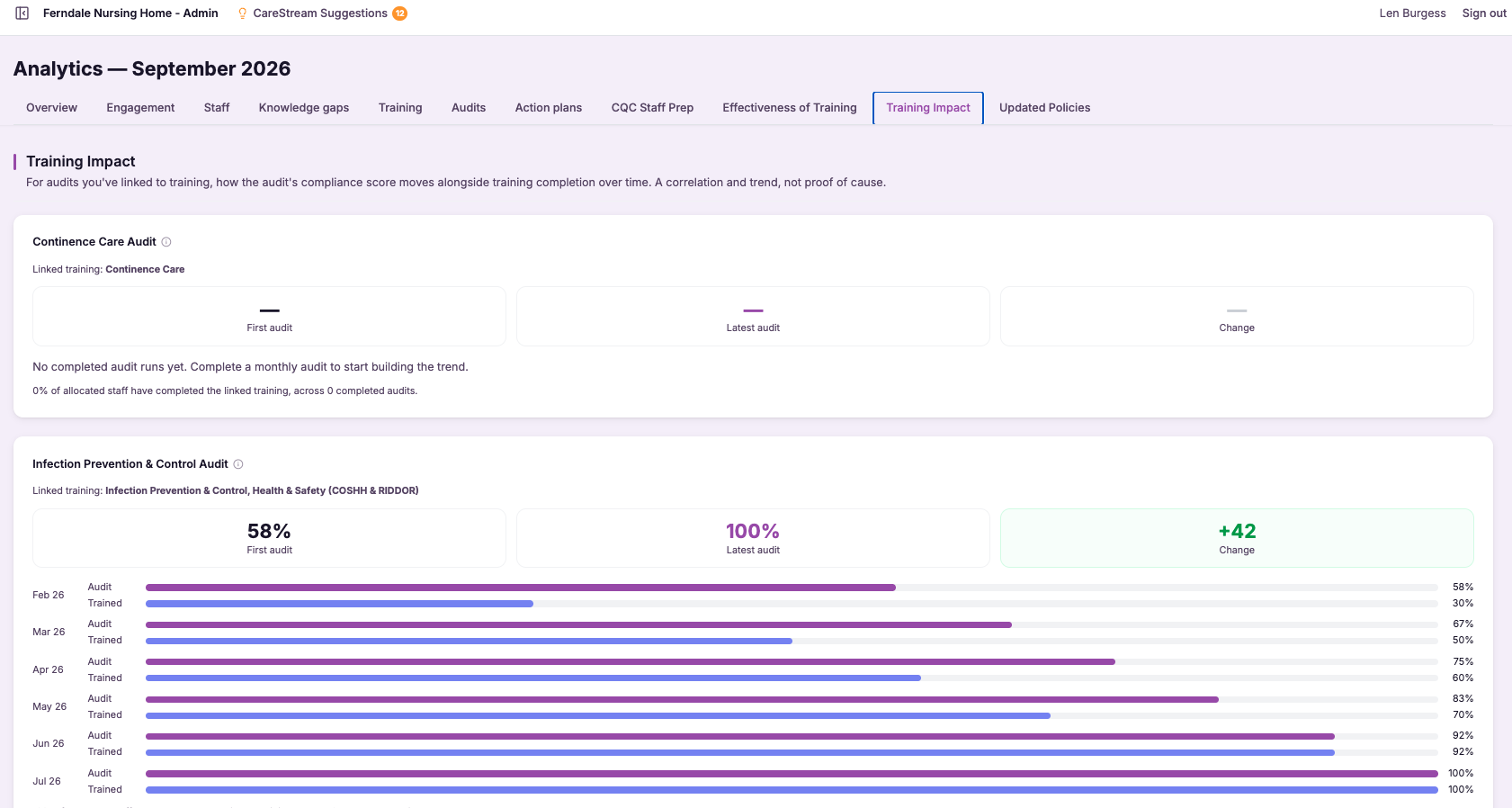
Capture assessment scores
Use assessment results to see how well each person understood the material they were taught.
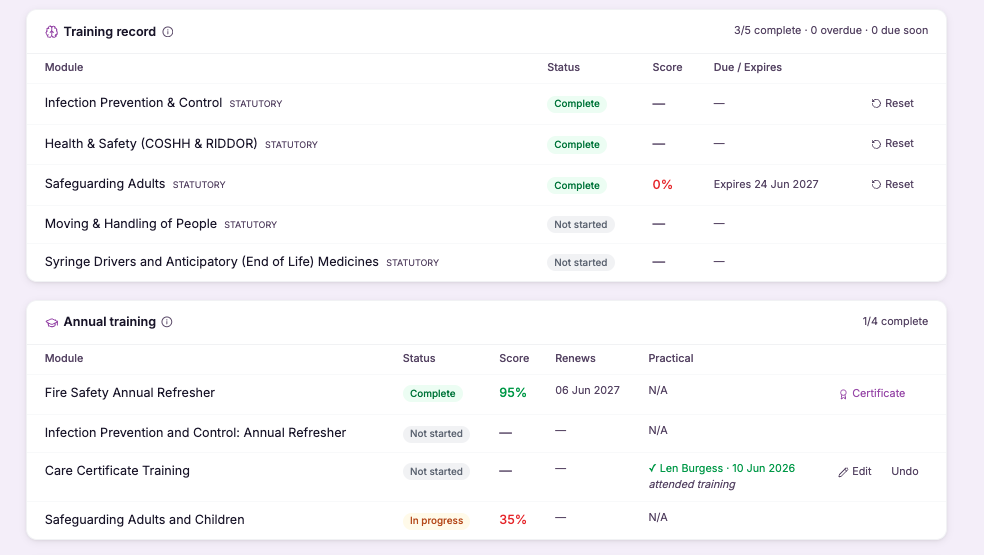
Follow up on practice
Check later whether the learning held and changed what people actually do in their work.
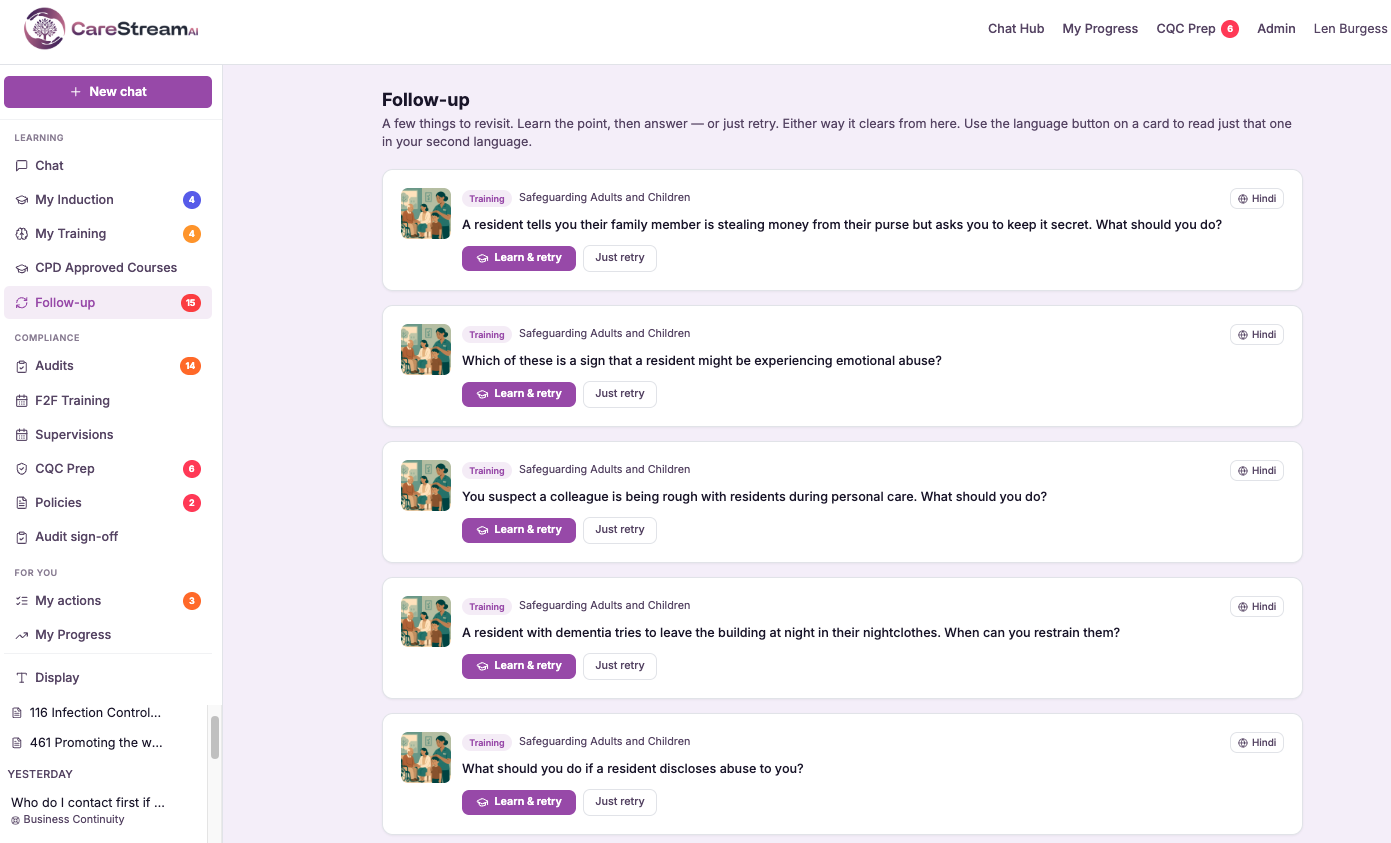
Read scores across people and courses to see where training landed well and where it did not.
Where scores or follow-up are low, flag competence that needs reinforcing before it becomes a risk.
Present understanding and practice, not just completion, as proof that your training works.
- Measures whether training improved understanding and practice, not just completion.
- Uses assessment scores to gauge how well material was understood.
- Uses follow-up to check whether learning changed real practice.
- Highlights where competence needs reinforcing before it becomes a risk.
- Evidences that training drives outcomes, in line with CQC quality statements.
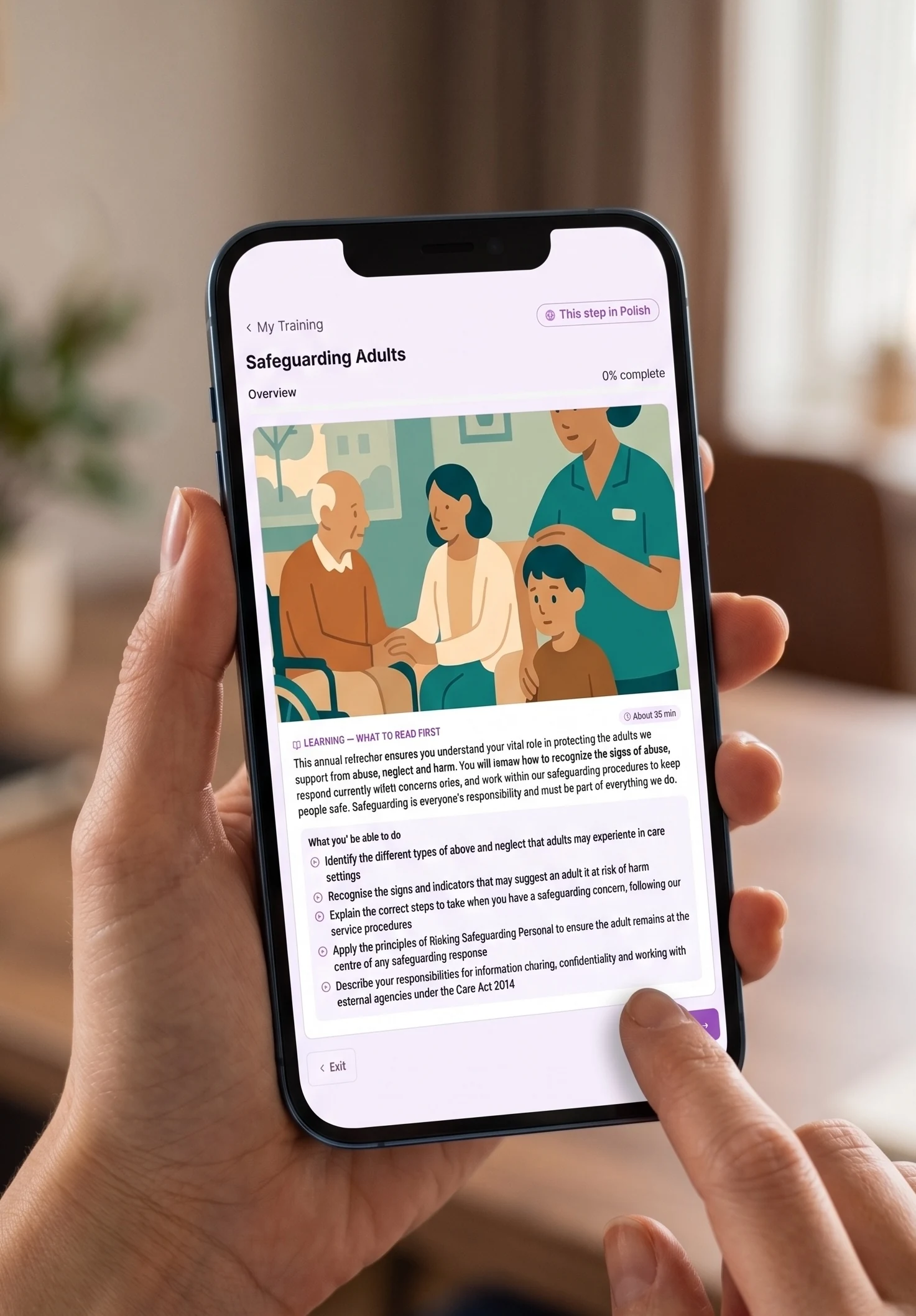
Completion is not competence.
A service can be fully compliant on paper and still carry real gaps, because a completion tick says nothing about whether the person understood the course or does the job any differently afterwards. That gap between completed and competent is exactly where risks hide and where inspection concerns arise.
CareStream works because it measures the two things completion cannot: understanding, through assessment scores, and practice, through follow-up. By looking at whether training actually landed, you can reinforce competence where it is weak and evidence, with confidence, that your training genuinely improves care.
Measures impact, not just that a course was finished.
Assessment results reveal how well the material was understood.
Follow-up confirms whether learning changed what people do.
Evidence competent, effective training against the quality statements.
Frequently asked
What is the difference between completion and effectiveness?
Completion tells you a course was finished. Effectiveness tells you whether it actually improved understanding and practice. A member of staff can complete a module and still not have grasped it, or grasp it in the moment and change nothing in how they work, and a completion tick would look identical in every case. CareStream measures the part completion misses. Using assessment scores it shows how well the material was understood, and through follow-up it checks whether the learning held and changed practice. That lets you evidence that your training works, rather than only that it was done.
How does CareStream measure whether training worked?
It looks at training in two stages. First, assessment scores give a concrete measure of how well each person understood the material, so you can see where a course landed well and where understanding was thin. Second, follow-up checks whether that understanding actually translated into practice over time, rather than fading once the course was finished. Together these give you a picture of impact for individuals and across your team. Where scores or follow-up are low, you have an early signal that competence needs reinforcing, so you can act before a gap becomes a risk rather than discovering it after something goes wrong.
Why does CQC care about training effectiveness?
CQC has moved firmly towards outcomes, and the quality statements expect you to show that staff are competent and that learning translates into safe, better care. Under that model, evidence that training merely took place is no longer enough; inspectors want to see that it made a difference to understanding and practice. Measuring effectiveness gives you exactly that evidence. Instead of presenting a wall of completion ticks, you can show assessment scores and follow-up that demonstrate your training genuinely improves competence, which speaks directly to the quality statements around effective care and a well-trained workforce.
What do I do when effectiveness is low?
Low assessment scores or weak follow-up are a signal, not a verdict. They tell you where understanding did not land or where practice has not changed, which is precisely where competence needs reinforcing. That might mean revisiting the training, delivering it differently, or supporting particular individuals more closely before the gap becomes a risk. The value is that you find out early, while you can still act, rather than discovering a competence gap when something goes wrong. Over time, measuring effectiveness also lets you judge which training genuinely works, so you can strengthen what is landing well and revisit what is not, and put your training effort where it makes a real difference.
Explore more features
More of what the CareStream compliance platform does for UK care providers.
Prove your training works, not just that it was done.
See how CareStream measures understanding and practice, so you can evidence effective training, not only completion.