Face-to-face training and matrix
Not all mandatory training happens on a screen. Moving and handling, some first aid, and other practical skills are often best taught in person, in a room, with someone watching that competence is really there. The problem is that classroom training tends to be recorded separately from e-learning, which leaves your true training picture split across two systems that never quite line up.
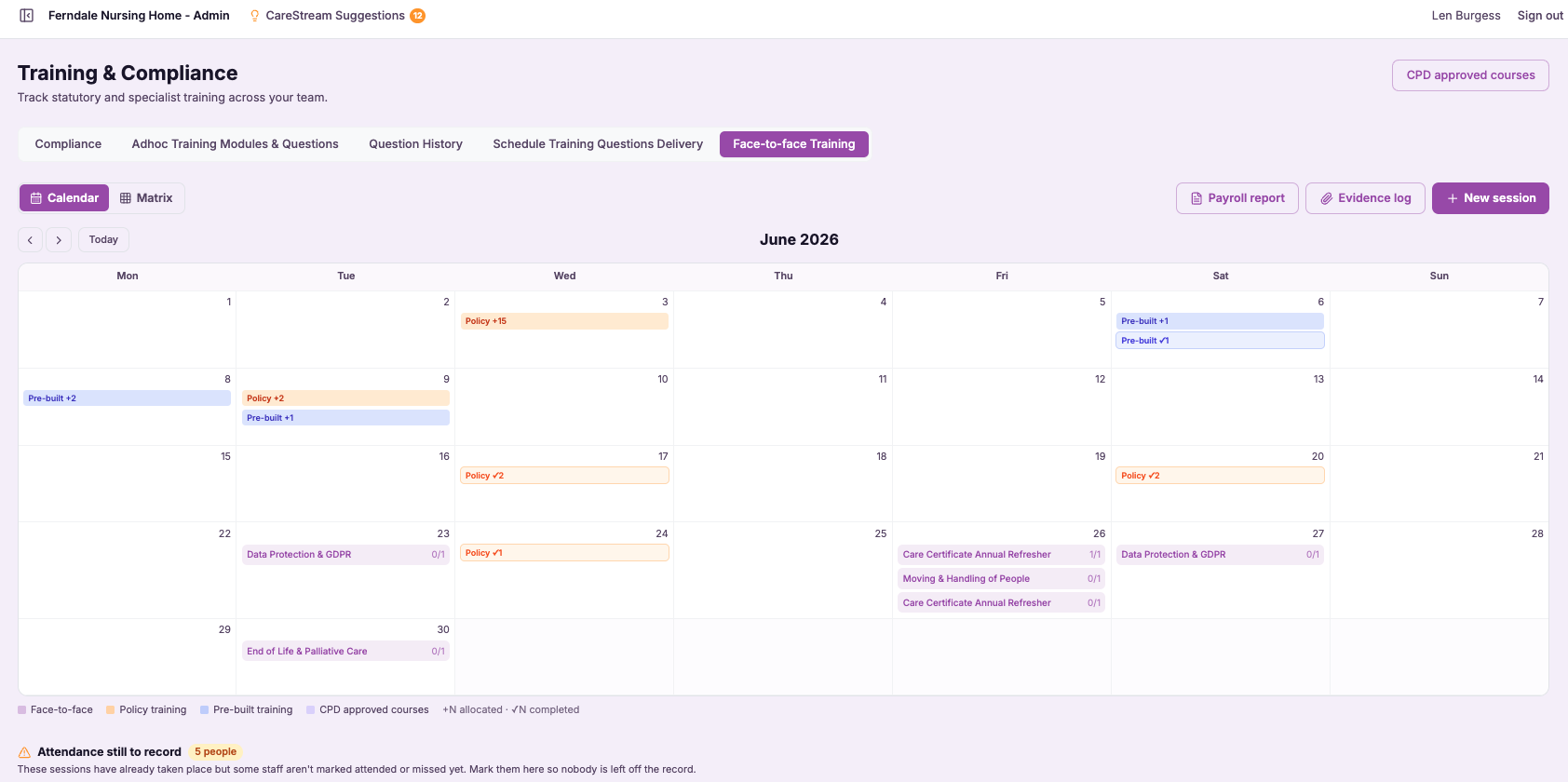
Classroom training, captured in the same place.
Face-to-face training support lets you record the in-person sessions your team attends, from practical skills like moving and handling to any mandatory course delivered in a room rather than on a device. You capture who attended and the evidence of that attendance, and it flows into the same training compliance matrix as your online learning.
This matters because CQC does not care whether a course was online or in person, only that people are competently trained. If your classroom training lives in a separate register, your compliance matrix is telling you only half the story. Bringing both into one view means the matrix reflects the whole of your mandatory training, not just the part that happened to be digital.
CareStream tracks face-to-face training alongside online learning, recording attendance and evidence for in-person sessions and feeding it into the same compliance matrix. Classroom-based mandatory training sits next to e-learning in one view, so your training position is complete rather than half online and half in a folder.
Any care home, nursing home or care provider that delivers practical or classroom-based mandatory training alongside online learning.
Because face-to-face and online training sit in one matrix, you can evidence all mandatory training, including practical competencies, without pulling from a separate register.
The difference it makes day to day
- In-person training is recorded properly instead of living on a paper sign-in sheet.
- Attendance and evidence for classroom sessions are captured against the right people.
- Face-to-face and online training appear together in one compliance matrix.
- Your training picture is complete, so nothing is missed just because it was taught in a room.
- You can evidence practical, competency-based training at inspection alongside e-learning.
- Managers stop reconciling two separate systems to work out where training really stands.
How face-to-face training is tracked.
The aim is to make in-person training as visible and as manageable as online learning, without extra systems. You record the session and who was there, attach the evidence, and let it join the same matrix everything else feeds into.
From that point on, a classroom course behaves just like an online one in your compliance view. It counts towards each attendee's requirements, comes up for renewal in the same way, and shows as a gap if it is missing, so the two forms of training are finally on equal footing.
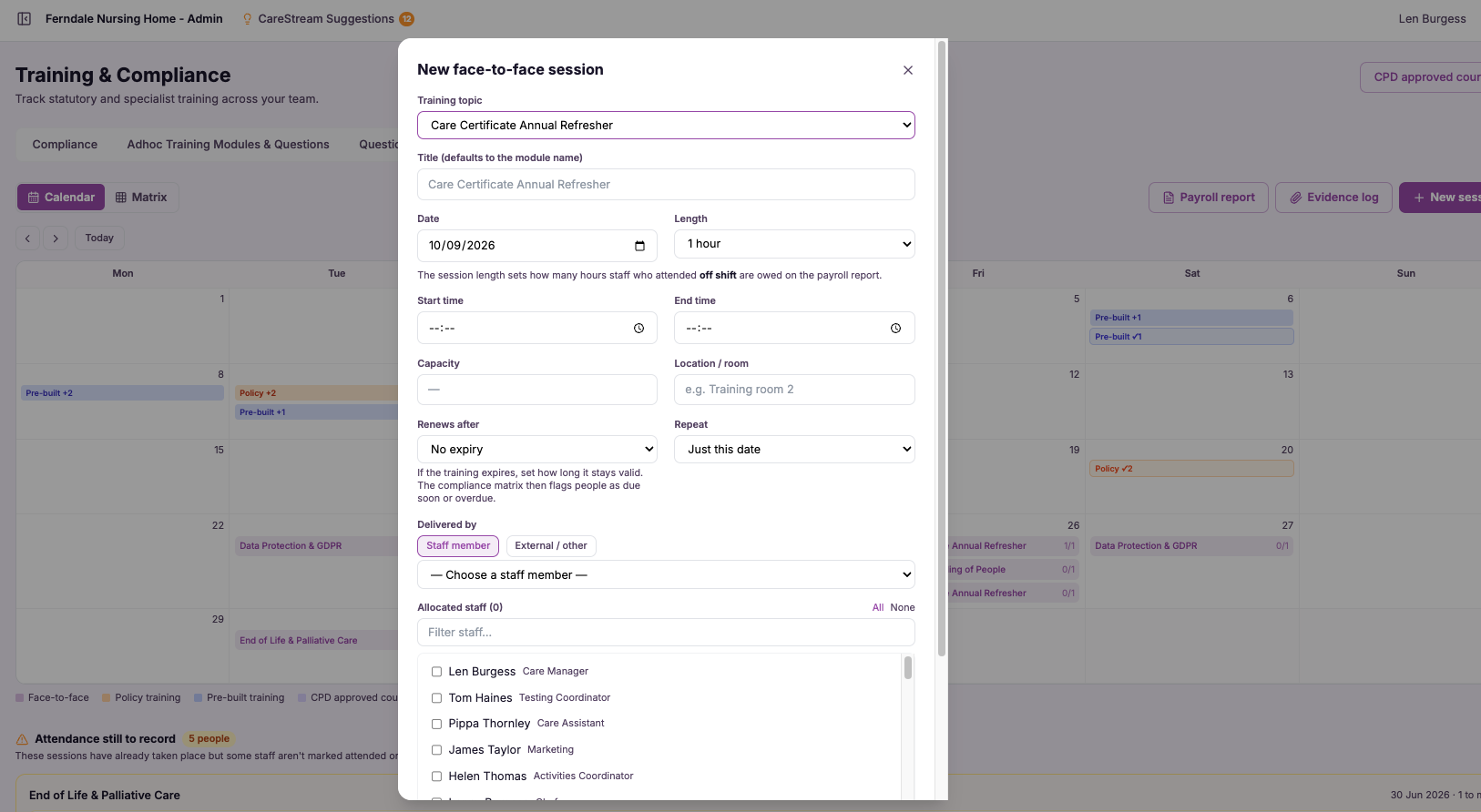
Record the session
Log the in-person training that took place, so classroom courses are captured, not just informally remembered.
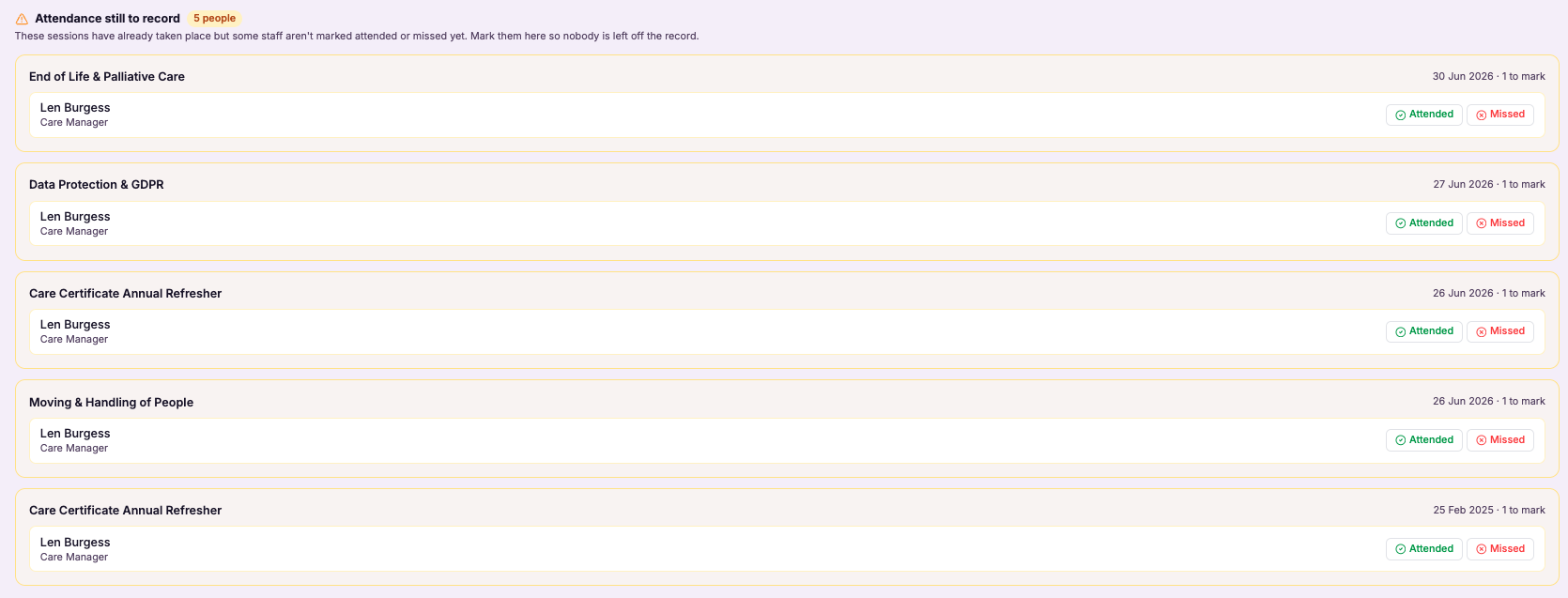
Mark attendance
Record who attended, so the training lands against the correct people rather than a loose sign-in sheet.
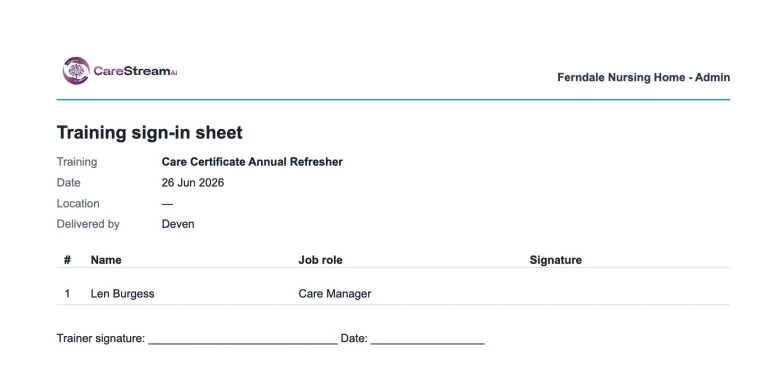
Attach evidence
Capture the evidence of the session and its completion, giving you a defensible record of what was delivered.
The attendance flows into the same compliance matrix as online learning, so both count together.
Classroom courses come up for renewal like any other, so practical training stays current.
At review or inspection, present online and in-person training side by side as one complete picture.
- In-person training recorded with attendance and evidence.
- Classroom courses feed the same matrix as e-learning.
- Both online and face-to-face training count towards each person's requirements.
- Practical, competency-based training is captured rather than lost on paper.
- One complete training picture instead of two disconnected systems.
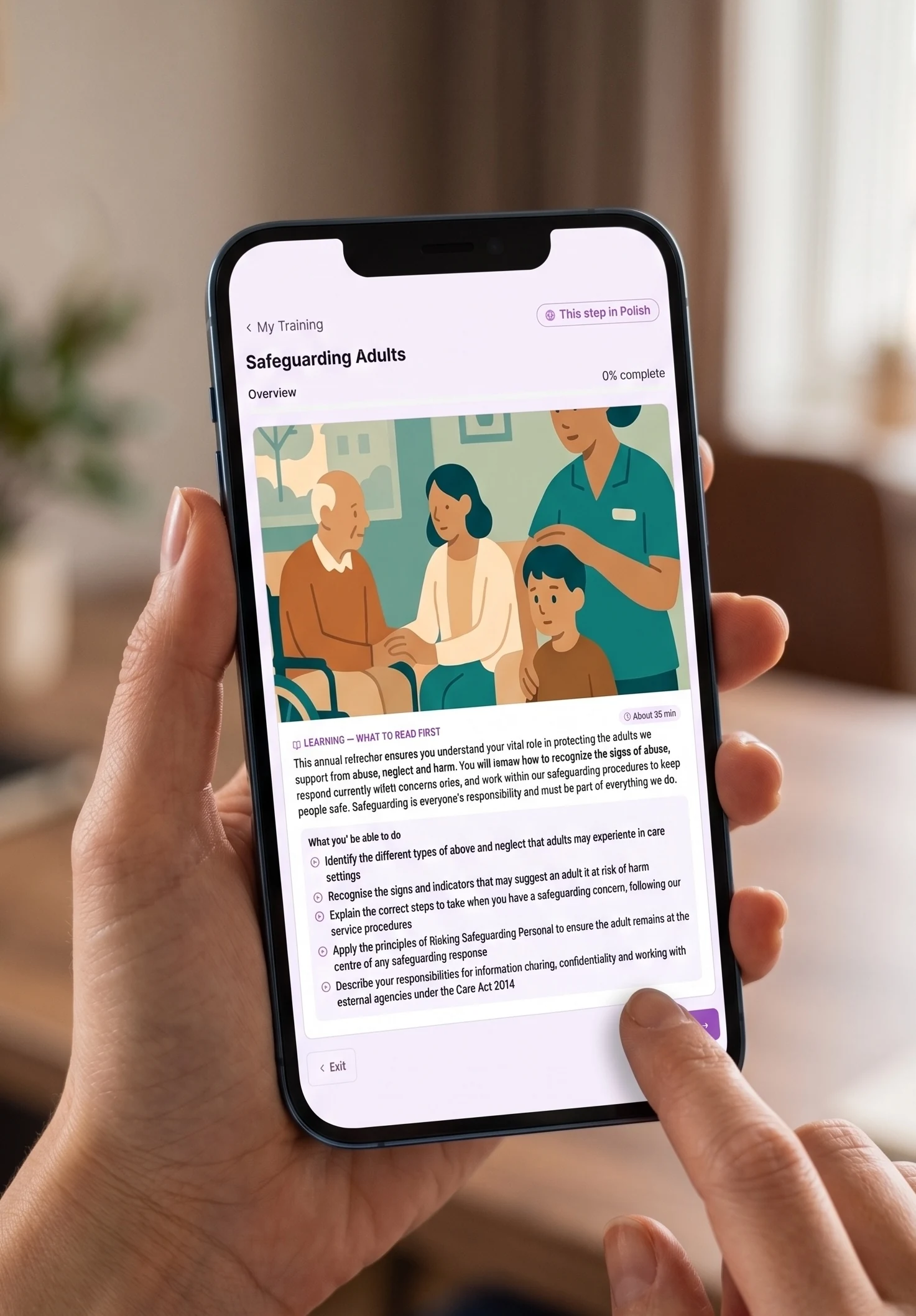
Training is training, wherever it happens.
When classroom training and e-learning are recorded in different places, your compliance picture is always incomplete, and the effort of stitching the two together by hand is where mistakes creep in. A course taught brilliantly in person still counts for nothing at inspection if no one can find the evidence.
CareStream works because it treats in-person and online training as equal parts of the same record. Attendance and evidence for classroom sessions feed the same matrix as e-learning, so your training position is whole and you never have to reconcile two systems to trust it.
Practical, in-person courses are captured, not lost on a paper sign-in sheet.
Classroom and online training feed the same compliance view together.
Attendance and evidence are recorded against the right people, ready to show.
Face-to-face courses count, renew and flag gaps just like e-learning.
Frequently asked
Can I record training that happened in a classroom, not online?
Yes. CareStream is built to capture in-person training as well as e-learning, so practical sessions like moving and handling, or any mandatory course delivered in a room, can be recorded properly. You log the session, mark who attended and attach the evidence, so classroom training becomes a real, retrievable record rather than a paper sign-in sheet in a folder. This is important because a lot of the most safety-critical training is competency-based and best taught in person. Capturing it in the platform means those sessions carry the same weight as online courses and are just as easy to find and evidence when you need them.
Does face-to-face training show up in the same compliance matrix?
It does. Once you record an in-person session and its attendance, that training feeds into the same compliance matrix as your online learning. Classroom courses count towards each attendee's requirements, come up for renewal in the same way, and show as a gap if they are missing, exactly like e-learning. This is the whole point: your training picture is only useful if it is complete. By bringing face-to-face and online training into one matrix, CareStream ensures the view reflects everything your team has done, not just the part that happened on a device.
What evidence can I capture for in-person sessions?
You can record who attended and capture the evidence of the session and its completion, giving you a defensible record of what was actually delivered and to whom. Rather than a loose sign-in sheet that can go missing, the attendance and evidence are held against the correct people in the platform. That matters at inspection, where you may need to demonstrate not just that training was scheduled but that specific people attended and completed it. Having attendance and evidence stored alongside your online records means you can produce the full story of a practical course as easily as any other.
Why does it matter that online and classroom training are together?
CQC is interested in whether people are competently trained, not in whether a course was delivered on a screen or in a room. If your classroom training lives in a separate register from your e-learning, your compliance view is only telling half the story, and reconciling the two by hand is exactly where things get missed. Bringing both into one matrix means your training position is genuinely complete. You can see and evidence all mandatory training in a single place, including the practical competencies that are so often taught in person, without ever having to pull from a second system to fill in the gaps.
Explore more features
More of what the CareStream compliance platform does for UK care providers.
Bring your classroom training into the same picture.
See how CareStream records face-to-face training and feeds it into the same compliance matrix as your e-learning.