
Complaints in care homes: did staff understand the policy? Check, do not assume.
Complaints in care homes are handled with care, but the learning that follows can be hard to show. After a complaint, you can allocate short training built from your own policies on the topic involved. Then you see who understood it and who needs another look.
14 day free trial · Set up in a day · UK data residency
The complaint is closed. The learning is not proven.
A scenario we see in many care settings.
A relative complained that a call bell went unanswered and that when they raised it with a carer, nobody told them how to complain formally. The manager investigated, replied and closed it. At the next handover the team was reminded that anyone can take a complaint and that it must be passed on. Everyone nodded. Weeks later the manager is asked what has changed, and realises she can say what she told the team but not what each person understood. Here is how that plays out.
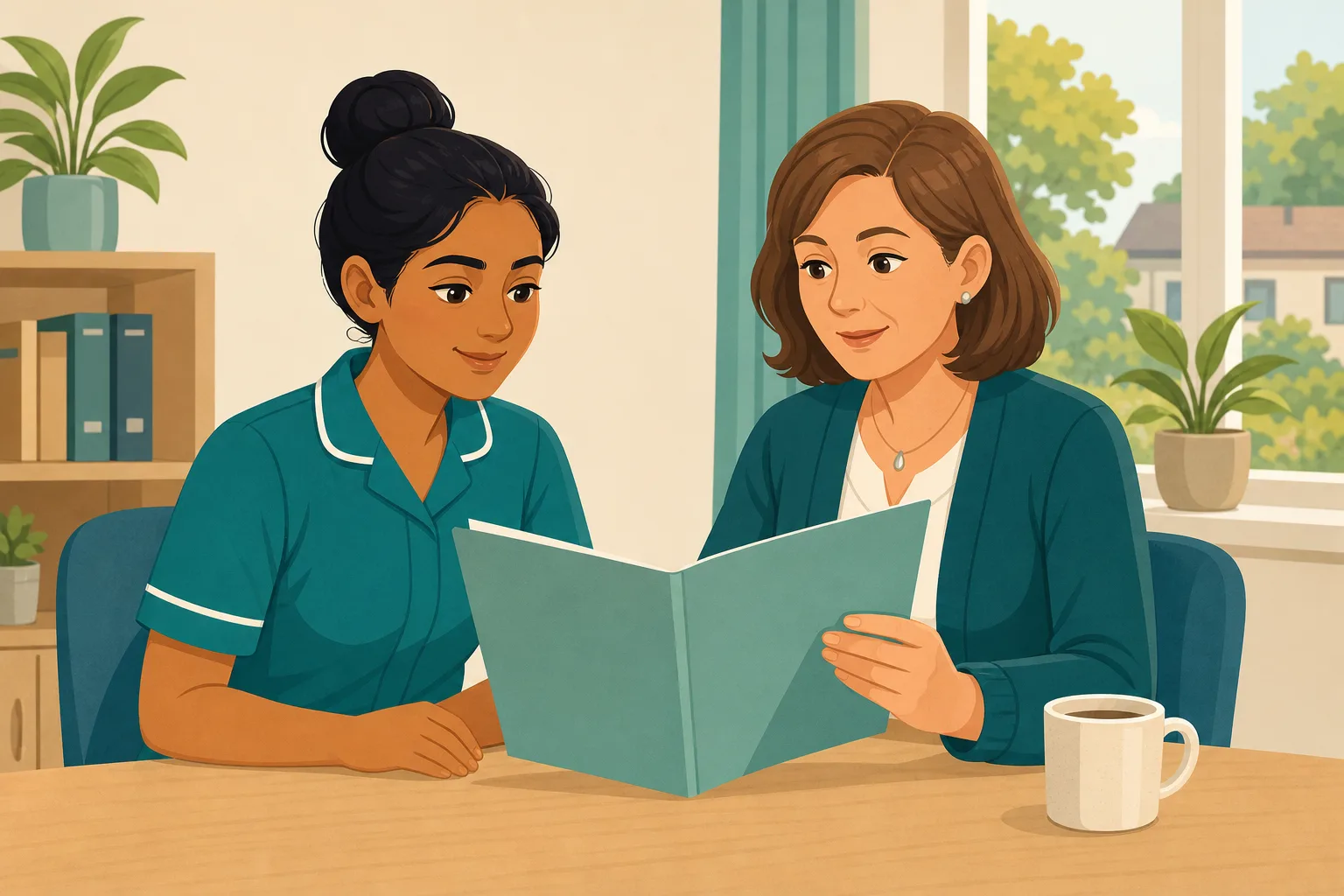
A relative complains. The manager investigates and replies.
The team is reminded how to pass on a complaint.
The complaints policy is pinned to the staff room board.
The manager cannot say who could explain the policy in their own words.
A new carer who has not yet read it, and a bank carer who missed that handover.
Some staff think a verbal grumble is not a complaint.
A closed complaint file and a note saying staff were reminded.
“How do you know staff understood?” A reminder is not an answer.
The complaint was handled. What is missing is proof of what changed. The gap sits between telling the team and checking they understood. Here is how CareStream helps fill it, using your own policies, without handling the complaint itself.
An example scenario, not a named service.
Telling staff is not the same as checking they understood
Learning from complaints only counts if it reaches the people on the floor.
A reminder is one way traffic
At handover people nod and move on. Nobody is asked to say what they would actually do if a relative raised a concern at the door.
Not everyone hears it
Part time, night and new staff miss the briefing. The policy exists, but you cannot tell who has taken it in.
Proof is hard to build by hand
Writing questions for each complaint and chasing every carer is work no manager has time for, so the check often never happens.
From a closed complaint to a checked team.
This is the Training built from your own policies feature, used after the complaint is dealt with. See also turning an incident into training and finding gaps in your policies.
Allocate training on the topic, built from your own policies
- In the Training screen, pick the topic module that fits the complaint, such as Complaints Handling, and check the lesson and questions first
- The module is built from your own complaints policy where it covers the point, with general good practice as the fallback
- Tick the staff you want, add an optional due date, and they complete it in the Staff Hub on their own phone
Illustration based on the Training screen. Example questions.
A wrong answer becomes a check for understanding, then a short lesson
- A wrong answer goes into the carer's Follow-up tab in the Staff Hub, and they get an email (at most one a day, English only)
- They choose Learn & retry, a short lesson with a fresh question, or Just retry the same question, as often as they need
- This check for understanding is private to the carer and the manager. Nobody is sent a message about each slip
A few things to revisit. Learn the point, then answer, or just retry. Either way it clears from here.
A concern raised out loud is still a concern. Your policy sets out how it is passed on, so it is not lost.
Remember- Listen and thank them
- Do not promise an outcome
- Pass it on as the policy says
A daughter stops you in the corridor and says she is not happy about last night.
Illustration based on the Staff Hub Follow-up tab. Example content.
Staff check understanding in the language they think in
- A carer who gets a question wrong because of one unfamiliar word can open the lesson in their own language
- Your admin sets their second language and they switch to it in the hub
- Training in different languages is part of the paid plans, and the lessons are machine translated
Always communicate in their first language
All messages CareStream sends are translated into English.
Allow switching a set to their second language
In the hub they can flip any single training, induction or CQC set into Romanian, just for that set, if they are struggling in their first language.
Let them suggest better translations
They can propose improvements to translated content. Changes need your approval before going live.
Illustration based on the staff record Language settings. Translation is on the paid plans.
See where the policy was misunderstood, and whether it closed
- Knowledge gaps shows open gaps, staff affected, gaps closed in 30 days and the most missed questions
- Weakest topics show whether the complaints policy needs clearer wording, which is useful for learning from mistakes
- A Monday digest email brings the picture to you, because nothing alerts you each time someone answers wrongly
Illustration based on the Knowledge gaps view. Example figures.
The questions managers ask, and how CareStream answers them
Read this as a conversation. The questions are the ones we hear most.
Does CareStream handle the complaint itself?
No. CareStream does not log, track or investigate complaints. Keep using the system you already have. CareStream is for the step afterwards: checking that staff understand the policy involved.
How do I check staff understood the policy after a complaint?
You allocate short training on the topic, built from your own policies. Staff complete it in the Staff Hub on their own phone, and their answers show who understood and who did not.
What happens when someone gets a question wrong?
It goes into their Follow-up tab and they get an email, at most once a day. They choose Learn & retry, a short lesson (why it matters, what to remember, a realistic situation) then a fresh question, or Just retry the same one. They can retry as often as they need.
Will I be told every time a carer gets one wrong?
No, and that is deliberate. Nothing alerts you for each wrong answer. You see the pattern in Analytics under Knowledge gaps, and in the Monday digest email.
Is the lesson about our complaints policy, or a generic one?
It is built from your own policies where they cover the point, so it teaches what your home actually does. Where they do not, it falls back on general good practice. That is a useful prompt to tidy the policy, and you can edit and preview everything first.
Can I pick one section of the complaints policy?
No. You pick a topic module, and CareStream searches your policies for that topic. You can edit the lesson and questions before anyone sees them.
Does the complaint automatically trigger training?
No. Nothing starts automatically. You decide to allocate the module, to whom, and when. That keeps you in charge of a sensitive situation.
Can I try it, and what does it cost?
You can create a free account and try the paid plans free for 14 days. It is on the paid plans, and the pricing page has the current details. You can also see a demo first.
A check on understanding, not a complaints system
It does not record or manage complaints
It does not log complaints, track outcomes or write to complainants. It also gives no advice on how to respond to someone who has complained.
It does not alert you to every wrong answer
The picture reaches you through the Knowledge gaps view and the Monday digest. A carer's Follow-up tab is theirs to work through.
It does not start training by itself
A complaint triggers nothing. You allocate the module. Adhoc training and translation are on the paid plans, not the free plan.
Training built from your own policies
Everything on this page is part of the product. Here is where to read more.
Training built from your own policies
Training from your policies, and wrong answers that become short lessons.
See the featureShort training after an incident
Turn something that happened in your home into a short, checked lesson.
See the use caseCQC and compliance
Evidence that builds itself, and a readiness report for your next inspection.
See CQC and complianceGuides on this subject
Incident-Led Training in Care: Turning What Went Wrong Into What Your Team Learns
Every incident is already a training moment. The medication error, the fall, the complaint from a family member, the near miss on a night shift. Each...
Read article
What "Compliant" Actually Means for One Care Staff Member
The word "compliant" gets thrown around in team meetings, handover notes and inspection prep, but ask two managers to define it, and you will get two...
Read article
CQC Audit: What Inspectors Check and the Evidence to Keep
Inspectors ask how you know, not whether you audit. Here are the questions they can ask under each of the five key questions, the audit that answers...
Read articleComplaints and staff understanding, answered
About learning after a complaint
What does learning from complaints mean in a care home?
It means finding out what caused the complaint and changing something so it is less likely to happen again. Part of that is making sure staff understand the policy involved. The CQC guidance on Regulation 16 talks about investigating to identify what might have caused a complaint and the actions needed to prevent similar ones.
What should a complaints policy in a care home cover?
Your policy should say how complaints are received, recorded, handled and answered. Regulation 16 requires an accessible system for this, as set out in the regulation text. Your policy is where you describe how your home does it. CareStream does not write the policy for the complaint, but it can build staff training from it.
How can learning from mistakes be shown after a complaint?
Keep a record of what changed. For staff, that can be the questions asked, the lesson given and whether the answer was then right. Learning from mistakes is easier to show when each person has been checked, not only told.
What is a check for understanding?
It is a quick way to find out whether someone has taken something in, such as asking them to say or choose what they would do. In CareStream it is a short set of questions in the Staff Hub, with a lesson if an answer is wrong.
How soon after a complaint should staff be checked?
Soon enough that the issue is fresh, and late enough to show what stuck. A few days to a couple of weeks is a sensible rule. You choose when to allocate it, and can set a due date.
Can CareStream log or track my complaints?
No. It does not log, track or report on complaints. It helps with the training that follows a complaint.
About the training
What is adhoc training in a care home?
Adhoc training is a short module you allocate when a need appears, outside the annual plan. See how CareStream uses it. You pick the topic, review the lesson and questions, and allocate it to the staff you choose.
Does the carer get a lesson automatically when they are wrong?
A wrong answer appears in their Follow-up tab and they get an email. They then open it themselves by choosing Learn & retry, or Just retry. Nothing is pushed to them as a lesson.
What would an inspector see?
They may ask how you learned from a complaint. A record of the topic, the questions, wrong answers, lessons and results supports your answer. It sits alongside the rest of your CQC evidence.
A practical way to follow up after a complaint
A complaint ends with a reply and a note on file. The follow up is where you find out whether the team now does something differently.
What the regulation asks for
Regulation 16 says any complaint received must be investigated and necessary and proportionate action taken in response to any failure identified. It also requires an accessible system for receiving, recording, handling and responding to complaints. The CQC guidance adds that providers should monitor complaints over time, looking for trends and areas of risk.
Four checks that fit a busy home
- Within a week or two: allocate a short module on the topic, built from your policies.
- Whenever an answer is wrong: the carer opens a short lesson, then a fresh question.
- Each month: look at the most missed questions and the weakest topics.
- If the same point keeps being missed: ask whether the wording of the policy needs to change.
For the review meeting. Keep the complaint file, the topic, the questions and the results together, so you can show what staff understood as well as what you told them.




