Applicability by care setting + service profile
Not every regulation applies to every service. What a residential care home must evidence is not identical to a nursing home, which is different again from a domiciliary agency or a supported living service, and the service user groups you support change the picture further. Being held to requirements that do not apply to you is as unhelpful as missing ones that do.
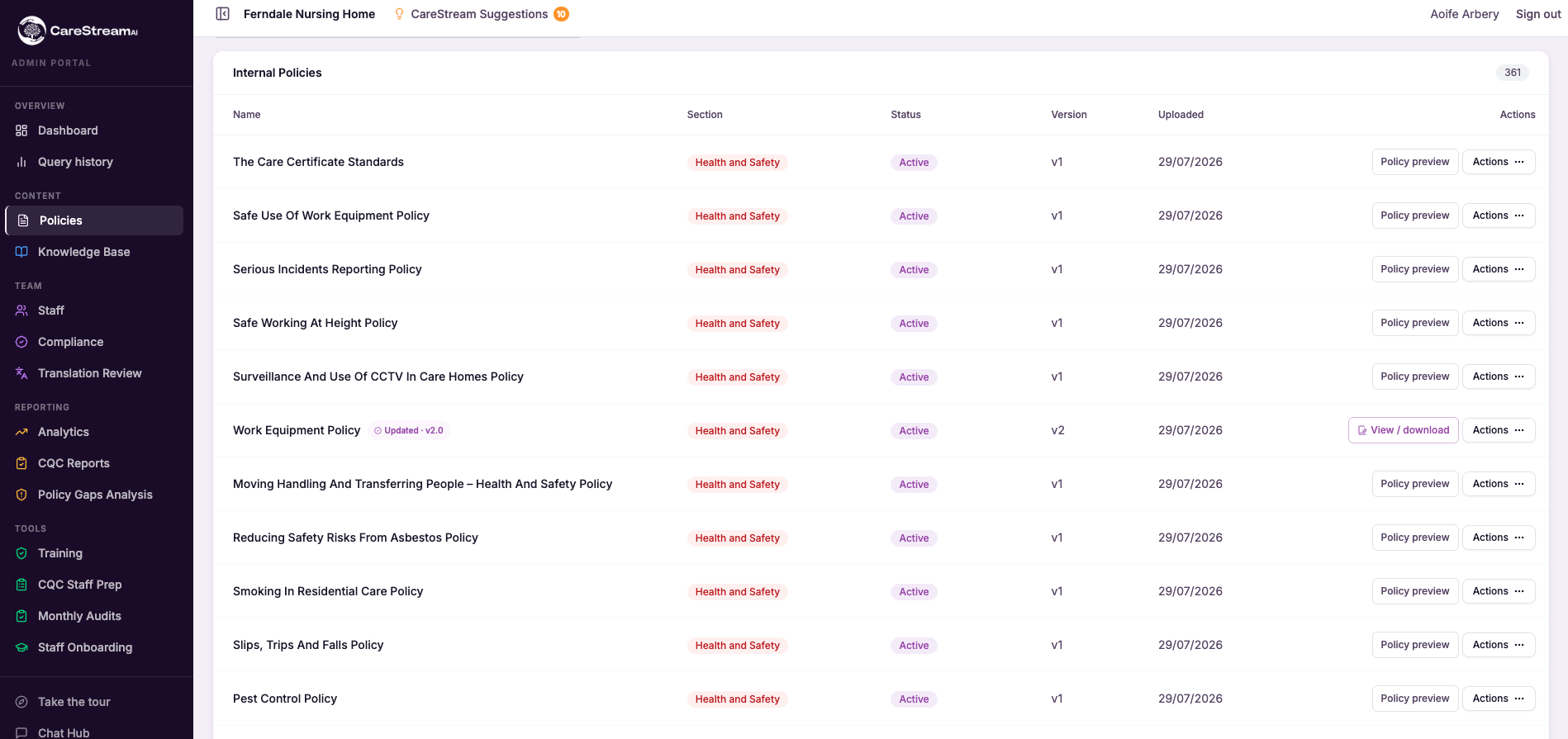
Assessed against what actually applies to your service.
Generic compliance guidance treats all care providers as if they were the same, which they are not. A nursing home carries clinical responsibilities a residential home does not. A domiciliary agency operates in people's own homes, which reshapes many requirements. Supported living has its own emphasis, and the groups you support, whether older people, people with learning disabilities, or others, further change what is relevant.
Applicability by care setting builds an understanding of your specific service profile and uses it to decide which regulations and requirements actually apply to you. That means your policies and your inspection preparation are shaped around your real service, so you are not chasing requirements meant for a different kind of provider, and you are not missing the ones that genuinely matter for yours.
Applicability by care setting tailors which regulations and requirements are relevant to you based on your care setting and service profile. Instead of wading through a generic checklist written for everyone, you are assessed against what genuinely applies to your service, so your compliance work is focused, proportionate and accurate.
Any regulated adult social care provider, whether residential, nursing, domiciliary or supported living, that wants to be assessed against what genuinely applies to it.
You prepare against the requirements that actually apply to your service, so your evidence is focused and you are not measured by the wrong yardstick.
The difference it makes day to day
- You are assessed against the requirements that genuinely apply to your care setting, not a one-size-fits-all list.
- Residential, nursing, domiciliary and supported living services each see what is relevant to them.
- The service user groups you support shape which requirements are treated as applicable.
- You stop spending effort on requirements that were never meant for your type of service.
- You are less likely to miss a requirement that genuinely applies because of your specific profile.
- Your compliance work becomes focused and proportionate rather than generic and overwhelming.
How applicability by care setting works.
CareStream starts from who you actually are as a service: your care setting and the service user groups you support. From that profile it works out which regulations and requirements are genuinely relevant, and which belong to a different kind of provider.
That tailored view then shapes how your policies are analysed and how your inspection readiness is judged, so everything downstream is measured against the right yardstick for your service rather than a generic standard that never quite fits.
Capture your profile
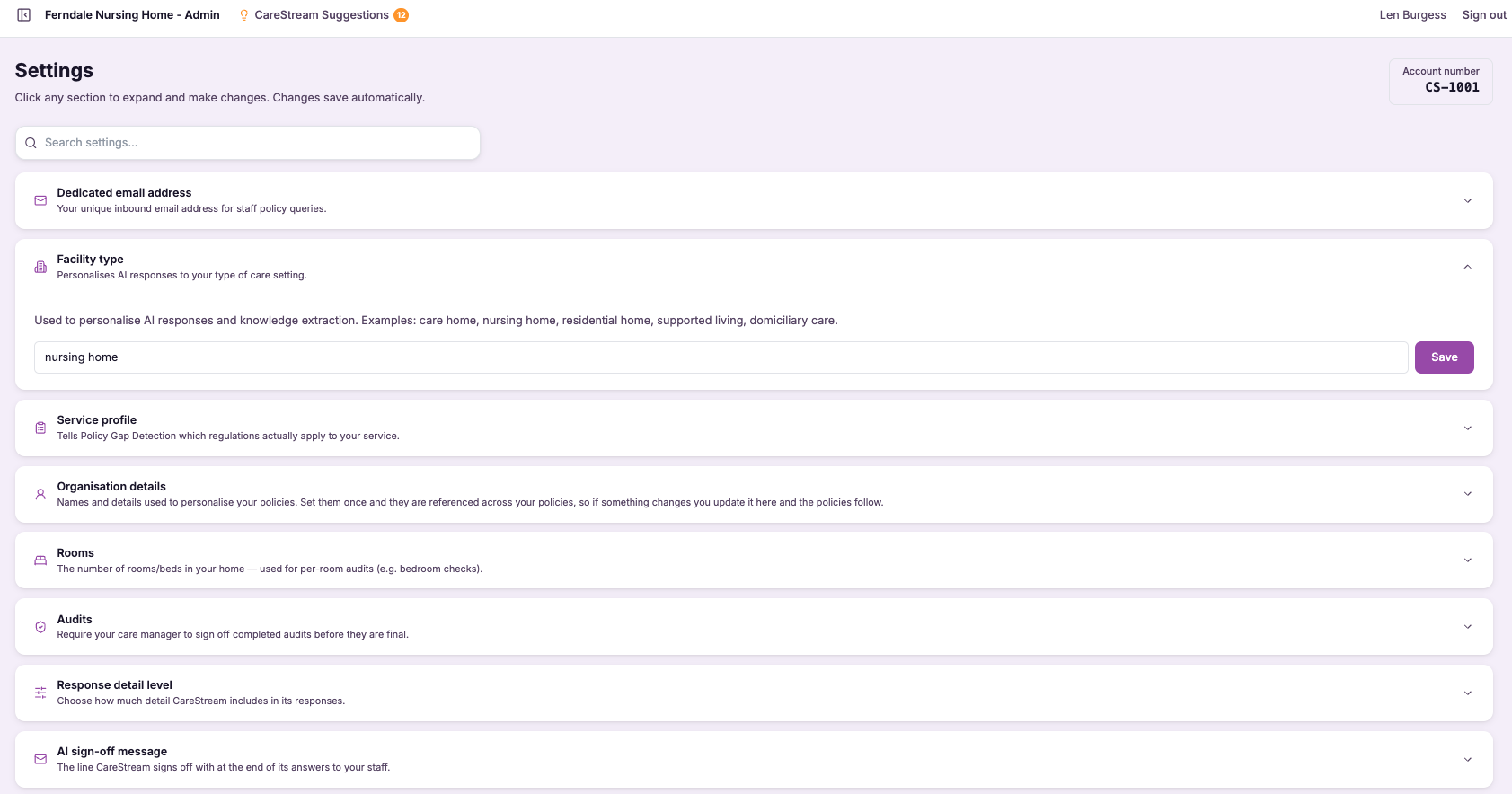
CareStream records your care setting, such as residential, nursing, domiciliary or supported living, and the groups you support.
Map the requirements
It relates the wider body of regulation and guidance to the different types of care setting and service.
Filter to relevance
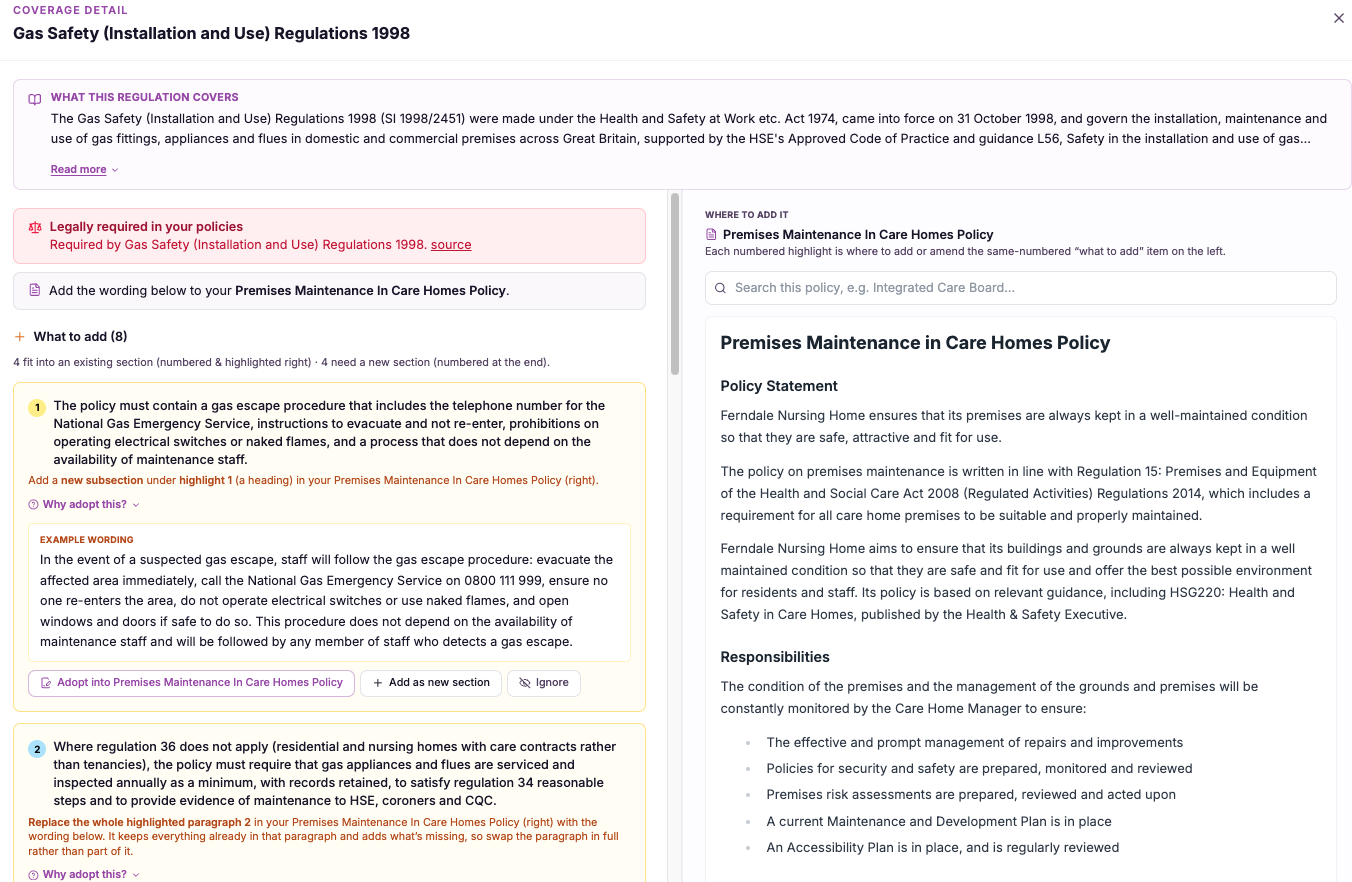
It works out which requirements genuinely apply to your profile and which belong to other providers.
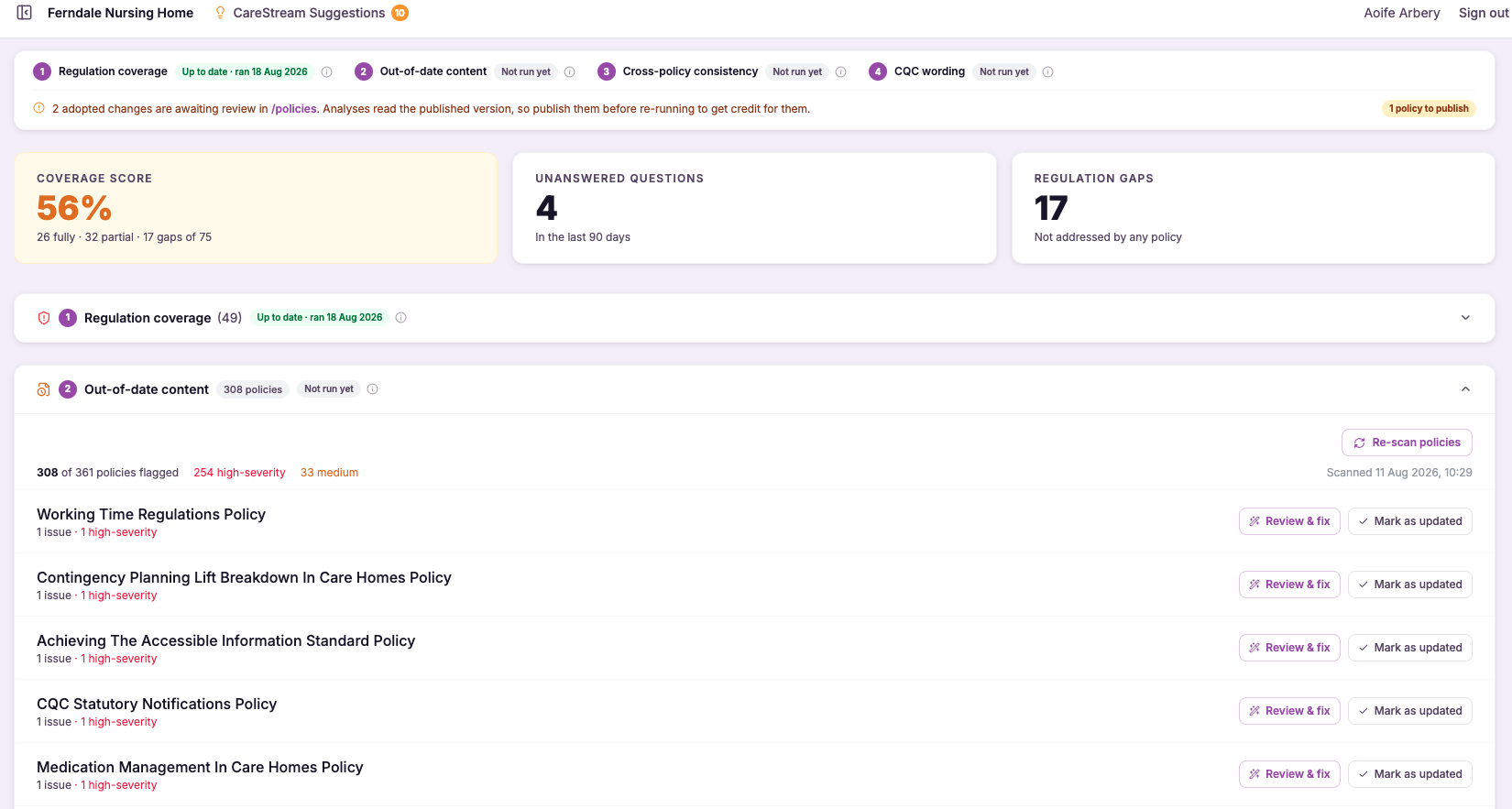
Your policy checks and readiness assessments are framed around the requirements that actually apply to you.
The service user groups you support adjust the applicable requirements so the picture fits your service.
If your setting or service profile changes, the applicable requirements adjust to match.
- Tailors applicable requirements to your care setting and service profile
- Distinguishes residential, nursing, domiciliary and supported living
- Factors in the service user groups you support
- Avoids both irrelevant requirements and missed relevant ones
- Adjusts if your setting or service profile changes
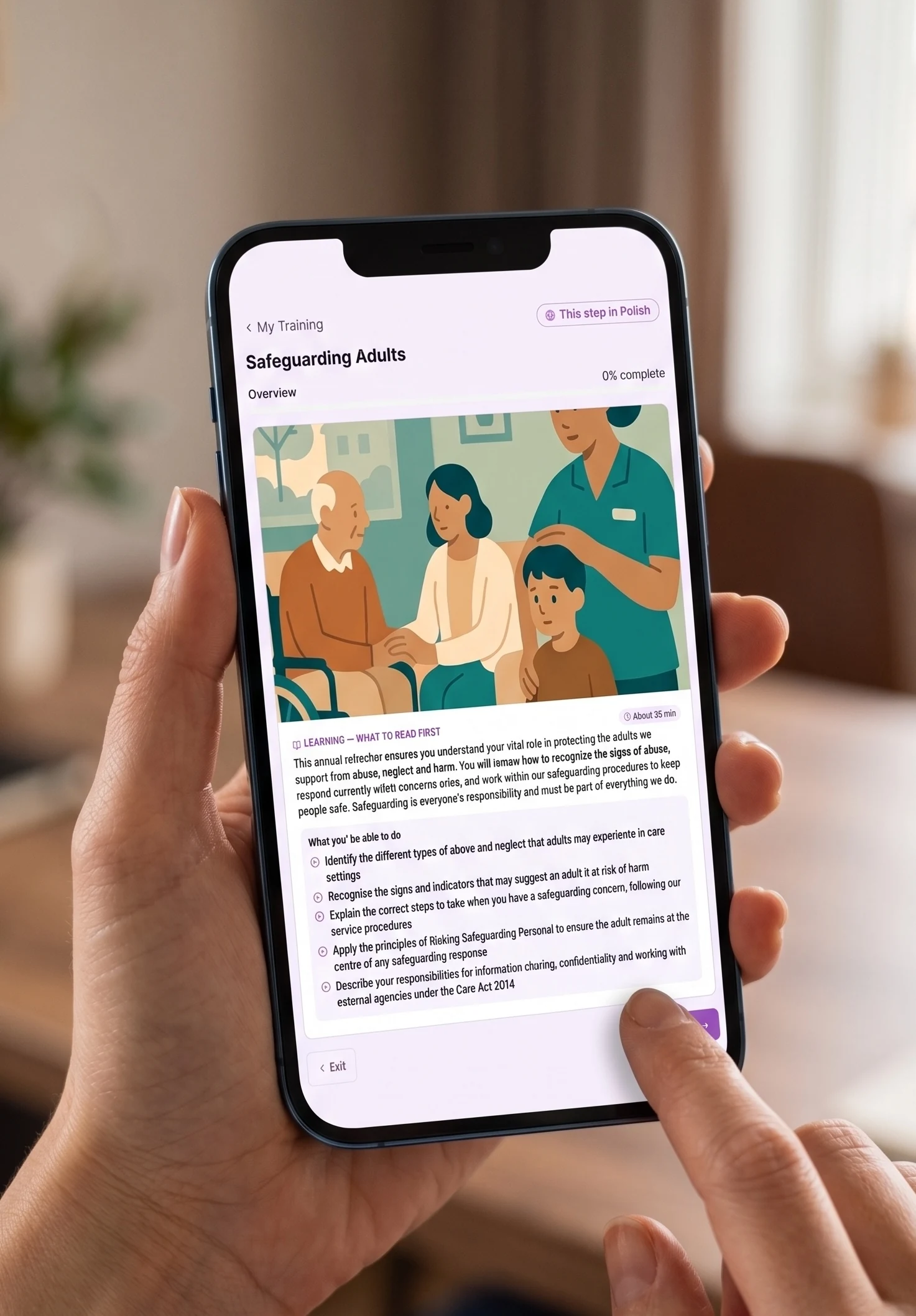
Relevant beats comprehensive when the list is not yours.
A checklist that tries to cover every kind of provider ends up serving none of them well. It buries the requirements that matter for your service among many that do not apply, which wastes effort and, worse, makes it easy to lose the ones that count. Comprehensiveness is not the same as relevance.
Applicability by care setting works because it starts from your actual service and narrows to what genuinely applies. That focus makes your compliance work proportionate, accurate and far less overwhelming, because every requirement you see is one you are truly responsible for.
Residential, nursing, domiciliary and supported living each get the requirements that fit their model.
The service user groups you support adjust what counts as applicable to your service.
You work on requirements that genuinely apply, not a generic list meant for everyone.
Your readiness is judged against your real service, so preparation reflects how you will actually be assessed.
Frequently asked
How does CareStream know which requirements apply to me?
It starts from your service profile: your care setting, such as residential, nursing, domiciliary or supported living, and the service user groups you support. From that profile it relates the wider body of regulation and guidance to your specific type of service and filters the requirements down to the ones that genuinely apply. This matters because a nursing home, a home care agency and a supported living service carry meaningfully different responsibilities. By anchoring everything to who you actually are, CareStream makes sure you are looking at the requirements that belong to your service rather than a blended list written for every kind of provider at once.
What if my service does more than one thing?
Many providers do not fit a single tidy label, and the applicability logic is built with that in mind. Your service profile can reflect the combination of setting and service user groups you actually deliver, so the applicable requirements reflect your real mix rather than forcing you into one box. The goal is always accuracy: to include what genuinely applies across everything you do, and to exclude what does not. If your service spans more than one model, the aim is that your compliance view covers all of it without dragging in requirements that belong only to providers you are not.
Could tailoring cause me to miss a requirement I should meet?
The purpose of tailoring is the opposite: to reduce the chance of missing a relevant requirement, not increase it. When a checklist is generic, the requirements that truly apply to you are buried among many that do not, which is exactly the situation in which important ones get overlooked. Narrowing to relevance makes the ones that matter stand out. Applicability also factors in the service user groups you support, so requirements that arise specifically because of who you care for are treated as applicable. The result is a view built to be both focused and complete for your service, rather than comprehensive in the abstract but hard to act on.
What happens if my care setting or service profile changes?
If your service changes, for example you begin supporting a new service user group or your registration changes, the applicable requirements adjust to match your updated profile. The tailoring is not a one-off setup that goes stale, it reflects who you are now. That keeps your compliance work aligned with your service as it evolves, so you are always being assessed against the right requirements rather than the ones that fitted an earlier version of your service. Keeping your profile current is what keeps the whole picture accurate.
Explore more features
More of what the CareStream compliance platform does for UK care providers.
Be assessed against your service, not a generic checklist.
See how CareStream tailors the applicable requirements to your care setting and the people you support.