- 6lessons
- 35 minutesto complete
- 60+languages
- 80%pass mark
Try it: a real lesson and question from this course
Understanding Last Offices and Why It Matters
Last Offices is the care we provide to a patient's body after death. This is a final act of respect and dignity for the person who has died. It also supports the family, allowing them time to say goodbye in a peaceful environment. Our approach must always honour the individual's wishes, cultural beliefs and religious practices whilst maintaining safety and legal requirements.
What is the primary purpose of performing Last Offices?
In the hub, a wrong answer sends the staff member a short follow-up lesson and a fresh question on the same point. They close the gap before they can finish the module, and every attempt is recorded for your CQC evidence.
That is how the training works. Give your whole team the full Last Offices module.
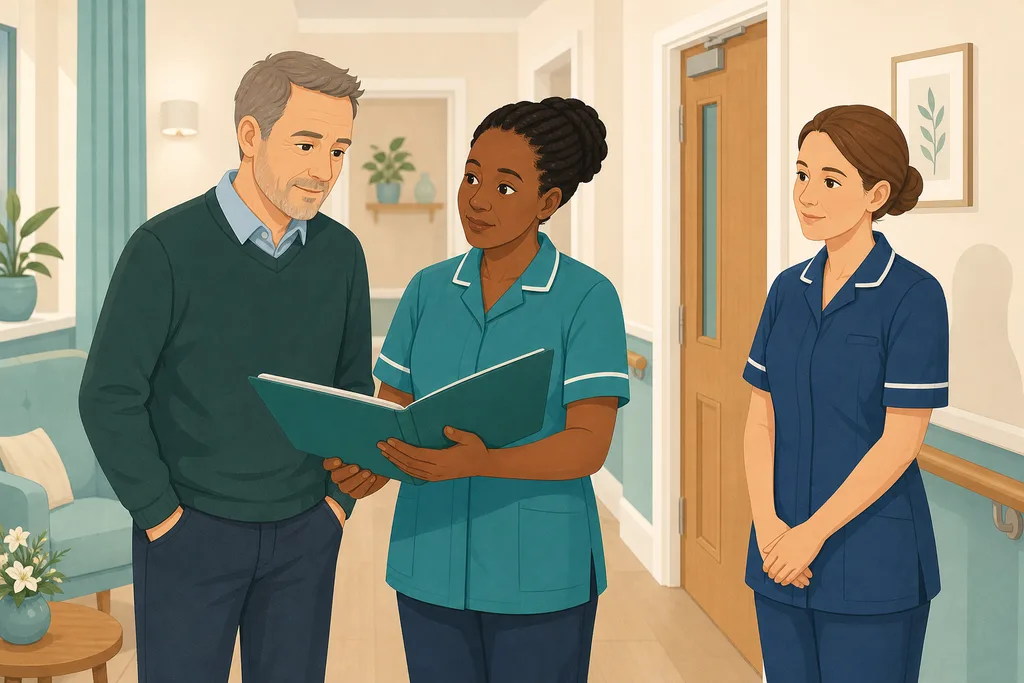
What the course covers: 6 lessons
- Understanding Last Offices and Why It Matters
- Preparing for Last Offices: Practical Steps
- Performing Last Offices with Dignity
- Cultural and Religious Considerations
- Infection Control and Safety During Last Offices
- Documentation, Identification and Legal Requirements
Assessment and certificate
- 20 question assessment with a pass mark of 80%.
- A follow-up lesson on anything a learner gets wrong, so the gaps are closed, not just scored.
- A named, dated certificate once they pass and you sign off the observation, ready to download as a PDF.
- Kept on their training record in your dashboard, ready for your CQC evidence.
- An observation checklist for the observed workplace assessment the employer carries out.
- In their name: they keep their certificate and can show it to future employers. Each employer decides what it accepts. Staff repeat the course once a year.
Specialists in the technology behind it all
The same technology behind the world's best products powers CareStream, so your team's last offices training stays accurate, always up to date with the latest guidance, and is delivered in over 60 languages.
Avg. Duration
About 35 minutes
Certificate
For every staff member
Available Languages (60+)
Course Published by

A clear, practical grounding in last offices.
This module covers the respectful, dignified care we provide to patients after death, known as Last Offices. You will learn the practical procedures, cultural and religious considerations, and legal requirements that guide our practice. This training ensures every patient receives compassionate care in their final journey and that families are supported during this difficult time.
By the end, your staff will be able to:
- Describe the correct procedure for performing Last Offices in accordance with hospice policy and legal requirements
- Identify when and how to seek guidance about cultural, religious or family wishes regarding care after death
- Explain the importance of dignity, respect and infection control throughout the Last Offices process
- Recognise the documentation and legal requirements following a death in the hospice
- Apply appropriate communication skills when supporting families and colleagues during and after a death
A closer look at the last offices module.
The module is built in short, practical sections. Each one teaches a part of the topic, then applies it to a real care scenario and checks understanding before moving on.
Understanding Last Offices and Why It Matters
Last Offices is the care we provide to a patient's body after death. This is a final act of respect and dignity for the person who has died. It also supports the family, allowing them time to say goodbye in a peaceful environment. Our approach must always honour the individual's wishes, cultural beliefs and religious practices whilst maintaining safety and legal requirements.
Preparing for Last Offices: Practical Steps
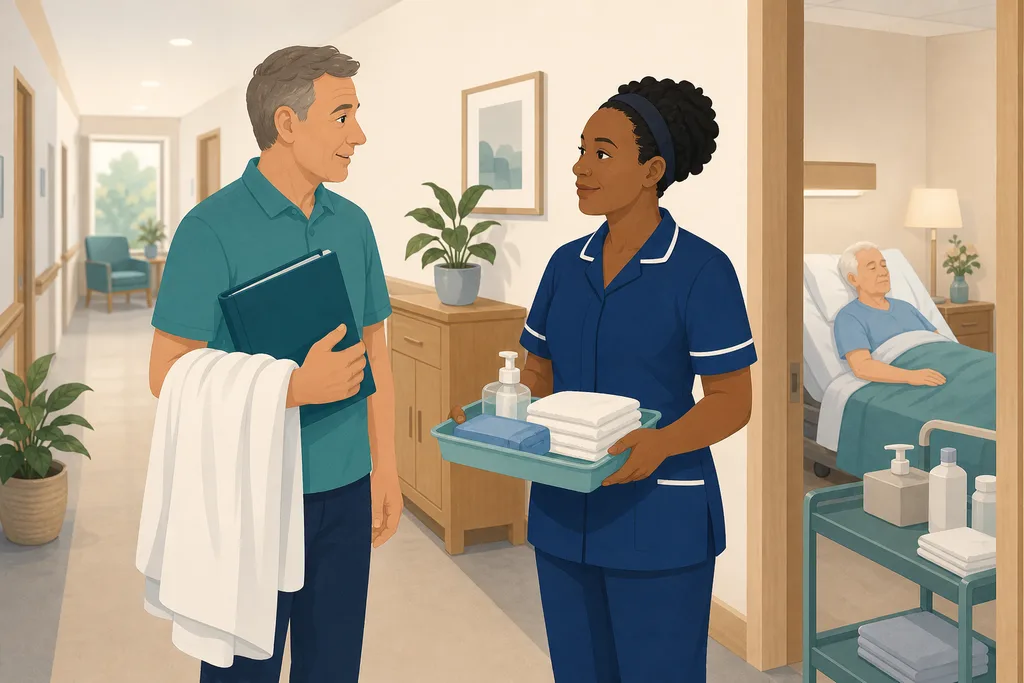
Before beginning Last Offices, gather all necessary equipment including personal protective equipment, clean sheets, identification labels and any specific items required by cultural or religious practice. Always work with a colleague; never perform Last Offices alone. Ensure the environment is private, peaceful and appropriately lit. Check whether any medical devices, such as syringe drivers or catheters, need to remain in place temporarily for legal reasons such as a coroner's referral.
Performing Last Offices with Dignity
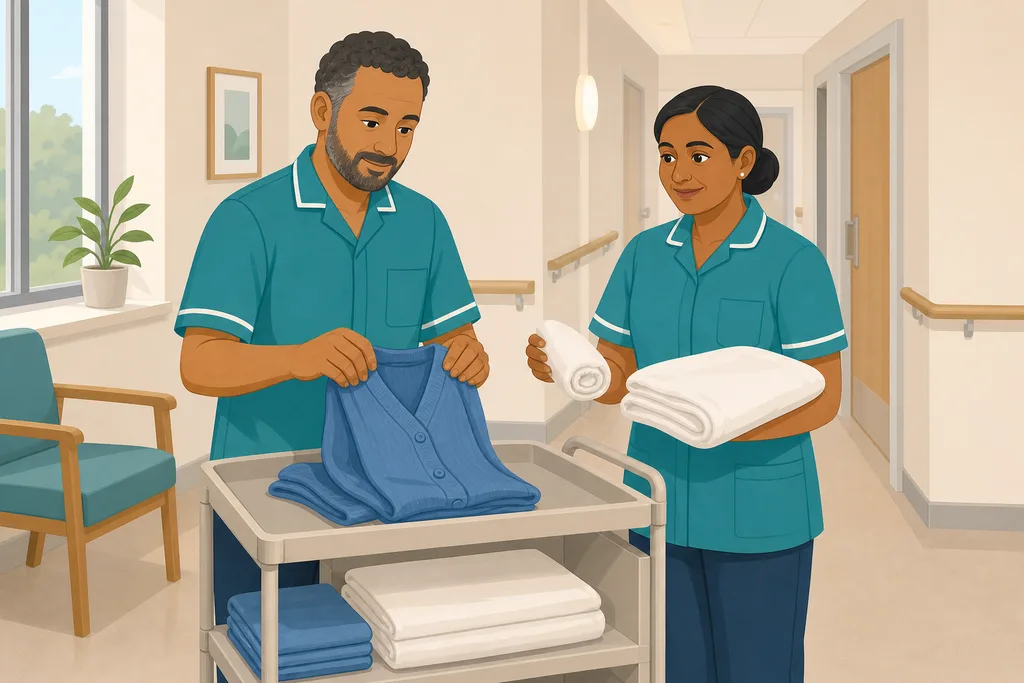
Position the patient on their back with one pillow supporting the head. Close the eyes gently by applying light pressure to the eyelids for 30 seconds. If the mouth is open, support the jaw with a rolled towel under the chin. Wash the body gently and thoroughly, treating the person with the same respect and dignity as when they were alive. Remove any soiling, dress the patient in a clean gown or their own clothing as requested, and cover them with a clean sheet. Handle the body carefully and speak respectfully throughout, even though the patient has died.
Cultural and Religious Considerations
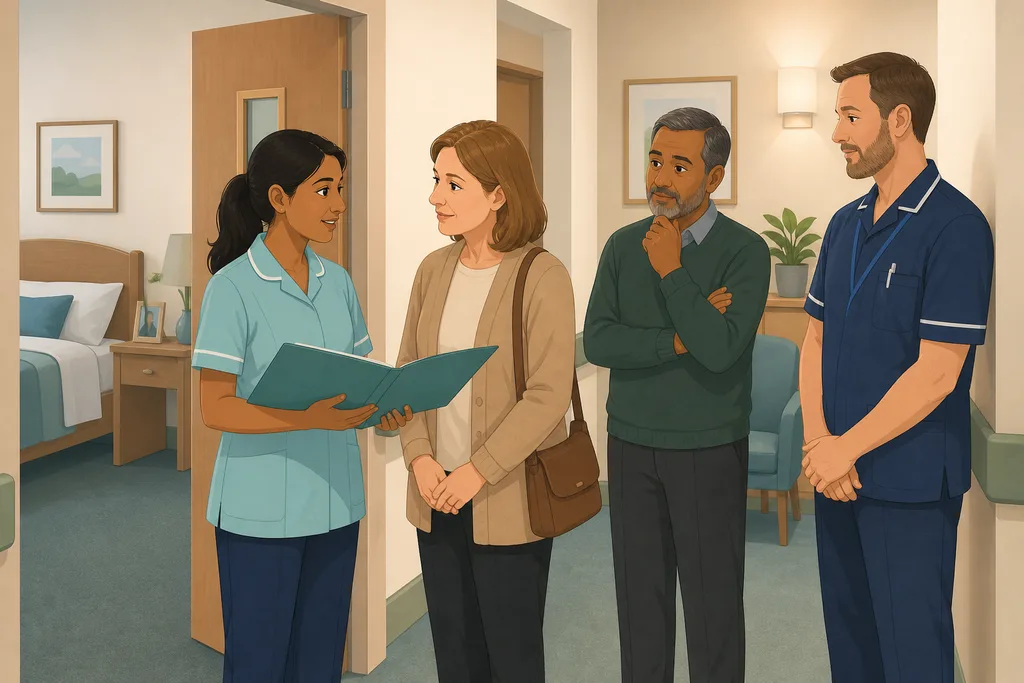
Different cultures and religions have specific requirements for care after death. Some faiths require that only family members or people of the same gender touch the body. Others have specific washing rituals or require the body to be positioned in a particular way. Always check the patient's care plan and speak with the family before beginning Last Offices. If you are unsure about any cultural or religious practice, ask the registered nurse or chaplaincy team for guidance. Showing respect for these wishes is a fundamental part of dignified care.
Infection Control and Safety During Last Offices
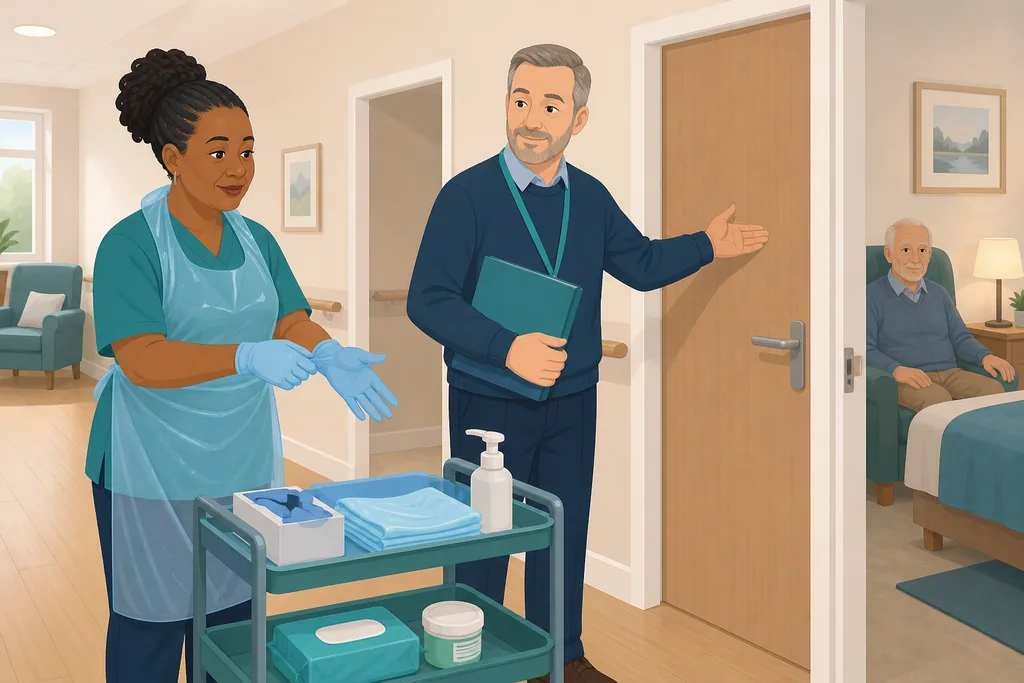
Standard infection control precautions apply during Last Offices. Wear appropriate personal protective equipment including gloves and aprons. If the patient had a known infection, follow the specific precautions that were in place during their care. Treat all body fluids as potentially infectious. Any leakage from the body should be contained with absorbent pads. Wounds or puncture sites should be covered with clean, occlusive dressings. Dispose of all waste according to clinical waste procedures and wash your hands thoroughly after removing PPE.
Documentation, Identification and Legal Requirements
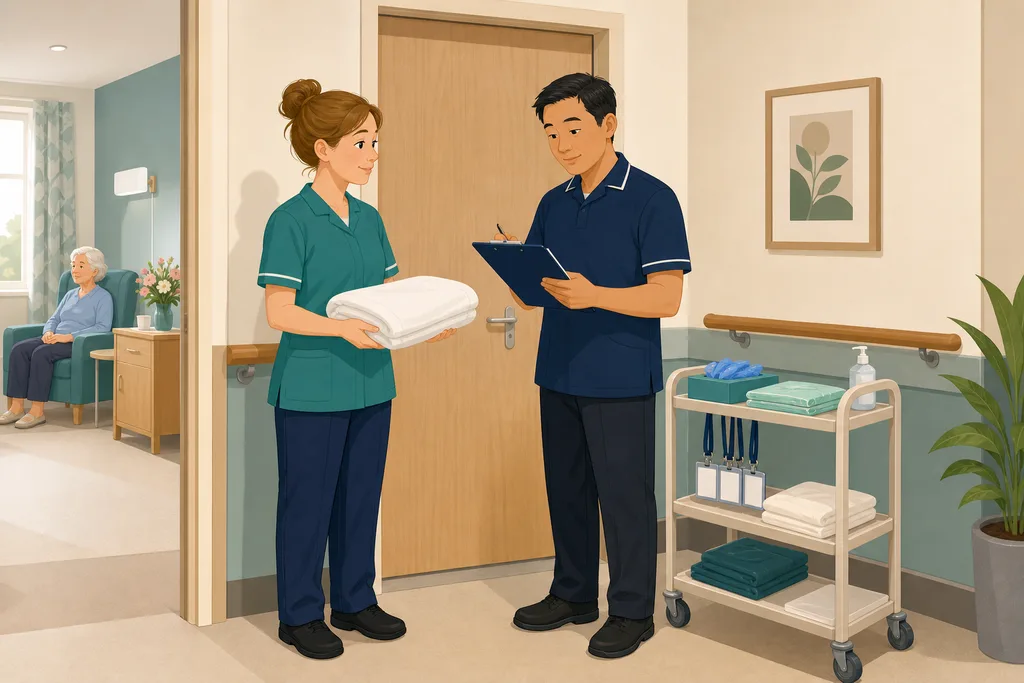
Accurate documentation is a legal requirement after death. Record the time Last Offices was performed and by whom. Document any marks, wounds, bruises or medical devices left in place. Complete identification labels with the patient's full name, date of birth and date of death, attaching one to the patient's wrist or ankle and one to the outside of the body bag or shroud. Complete all required paperwork including notification forms. Ensure the patient's property is documented, labelled and stored securely. Check whether the death has been referred to the coroner, as this affects which procedures you follow.

The things your team must remember.
- Last Offices is a final act of dignity and respect; always honour cultural, religious and personal wishes
- Never perform Last Offices alone; always work with a colleague for safety and support
- Standard infection control precautions apply during and after death; wear appropriate PPE throughout
- Check whether the death has been referred to the coroner before removing any medical devices
- Accurate identification and documentation are legal requirements; never guess or leave information incomplete
- Support families with compassion, allowing them unhurried time and respecting their wishes
Not a slideshow once a year. Training that sticks.
CareStream delivers last offices training in the hub your team already uses, grounded in best practice and your own policies, so it fits your care setting and not a generic template.
Short teaching sections and a real care scenario, then an assessment that checks understanding.
Staff complete it in over 60 languages, while your records stay in English.
A wrong answer triggers a short follow-up lesson and a fresh question, so the gap is closed.
Automatic reminders at 90, 30 and 7 days, with a live compliance dashboard.
From your dashboard to your team, in the CareStream hub.
Training is delivered in the hub each staff member logs into. You allocate the modules, they complete them in their own language, and you get the completion records and certificates for your CQC evidence, with any gaps closed by automatic follow up training.
Assign Last Offices to each staff member in seconds. No course builder and no setup for each person.
Staff work through the module on any device, in over 60 languages, teaching then checking understanding. A wrong answer sends a short follow up lesson.
See live completion status and a certificate for every person, ready as evidence for CQC.
Any step, in their language, in one tap.
Care teams are diverse and training should not leave anyone behind. On any lesson or question, a staff member taps the language button and the whole step flips into the language they think in. They understand it properly, and your records stay in English.
- One tap flips any lesson or question into their language, instantly.
- Over 60 languages, with no setup and no separate versions to manage.
- Completions and certificates stay in English for your CQC evidence.
Try the language buttons in the preview above.
Built for real learning, not box ticking
Every CareStream course goes further than a lesson and a quiz. These features come as standard on every course, giving your staff a richer way to learn and giving you the evidence to prove it.
Every course is built on recognised UK guidance and cites its sources, from NICE and Skills for Care to the NHS and the legislation itself.
A plain English glossary of the technical terms in each course. A simple way to support every learner, including staff with English as a second language.
A quick knowledge check before the lesson is compared with the final assessment, so every certificate comes with evidence of how much the course actually taught.
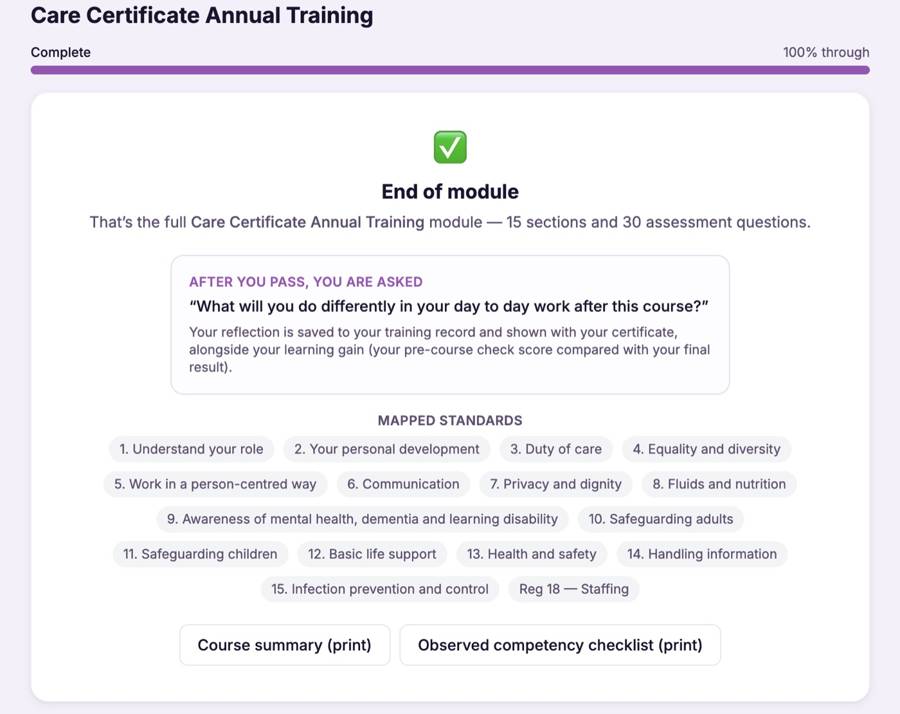
After passing, staff record what they will do differently in their day to day work. Their reflection is saved to their training record and shown with their certificate.
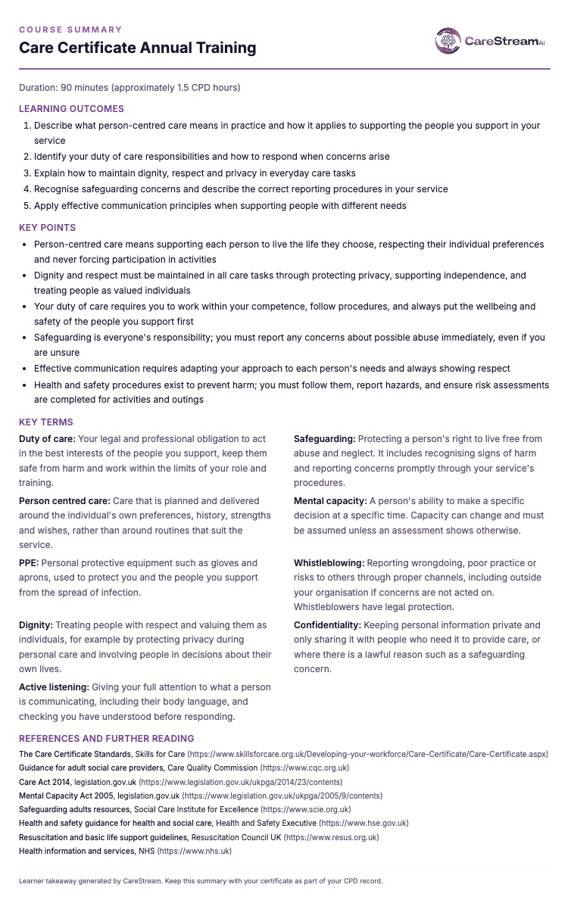
A printable one page takeaway of the outcomes, key points and key terms. Perfect for staff files, supervision conversations and the staff room wall.
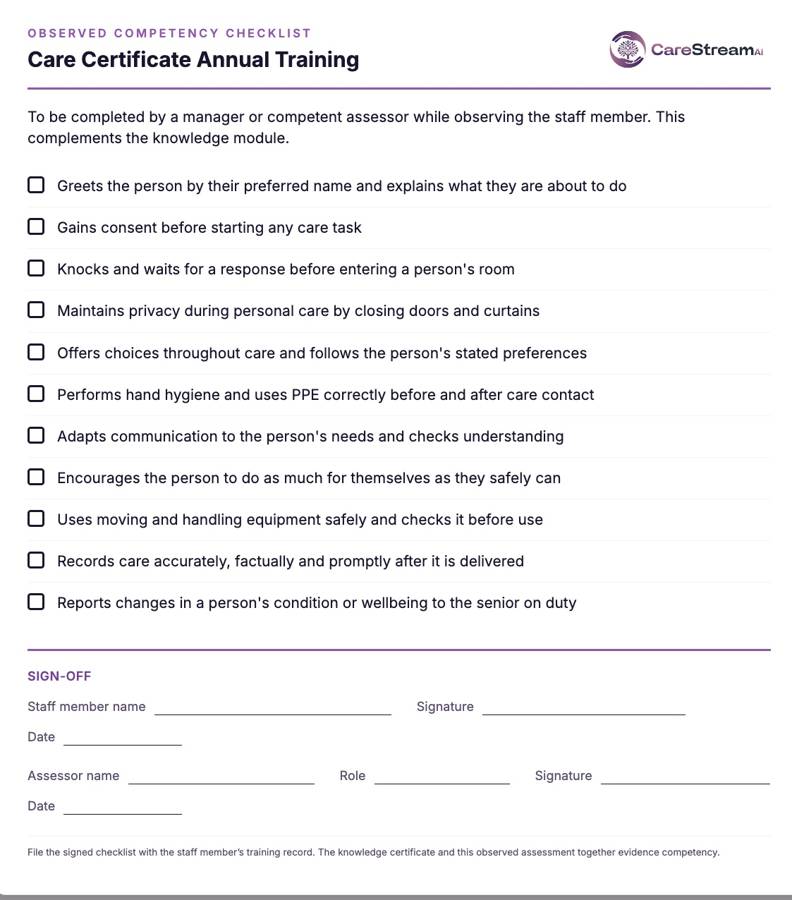
A printable checklist for managers to confirm skills in practice, with a sign off section. It completes the picture beyond the knowledge assessment.
Wrong answers become lessons, not failures
Most e learning marks an answer wrong and moves on. CareStream does not. Every wrong answer triggers an automatic follow up loop that teaches the point again and rechecks it, so no knowledge gap is left behind.
A wrong answer immediately opens a short lesson explaining the point, so the gap is closed there and then.
A fresh question on the same point checks the lesson has landed. The loop repeats until it has.
Staff move on to the next module and their certificate once they genuinely know the answer, not just after one lucky guess.
Why choose CareStream?
Training built for the care sector, delivered the way busy teams actually learn.
- 90+ care-specific training courses
- Bitesize, engaging lessons your staff actually finish
- Mapped to the Care Certificate & CQC standards
- Available in 60+ languages
- Certificate issued once you sign off the observation
- Flexible learning, anytime, on any device
- Content kept up to date with UK care regulations
- Time to complete: ~35 min
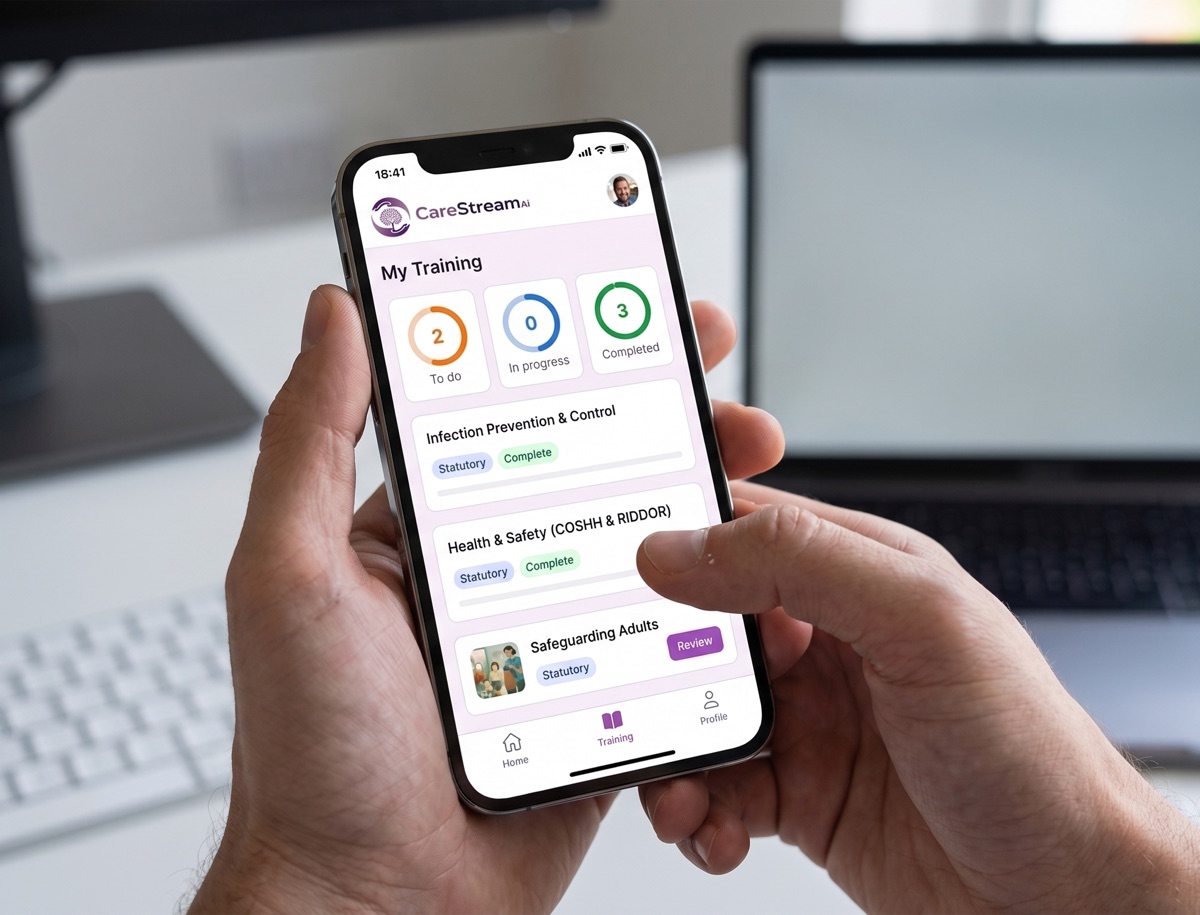
More questions.
What if someone fails the assessment?
They can retake it. Along the way, any wrong answer brings a short follow-up lesson on that point and a fresh question, so the gap is closed, not just scored. The pass mark is 80%, and you see every score from your dashboard.
Try a real lessonWhat if someone leaves before finishing?
You can move their licence to another member of staff. So a licence is not wasted when someone leaves part way through. You do it from your dashboard, and the new person takes the course with their own record and their own certificate.
See your team priceWhat if a member of staff has no email address?
You can set them up yourself. As their manager, you add them to CareStream, so carers who do not use email can still take the course on a phone, tablet or computer. You still see their progress and their certificate in your dashboard.
See your team priceAre the translations done by a person or a machine?
A mix of both. Lessons are translated with a mix of machine translation and checks by people. Staff can switch any lesson or question between their language and English with one tap, so they understand it, not just pass it. Your records stay in English.
Try a real lessonCan we get funding for this training?
Check with Skills for Care. They can tell you about the Learning and Development Support Scheme, which can help with some training costs. Ask them whether this course can be claimed before you buy, because we cannot promise that it can.
See your team priceMore training your team may need
More mandatory and role-specific training CareStream delivers to your team, in the hub, in any language. Add any of these to your basket.
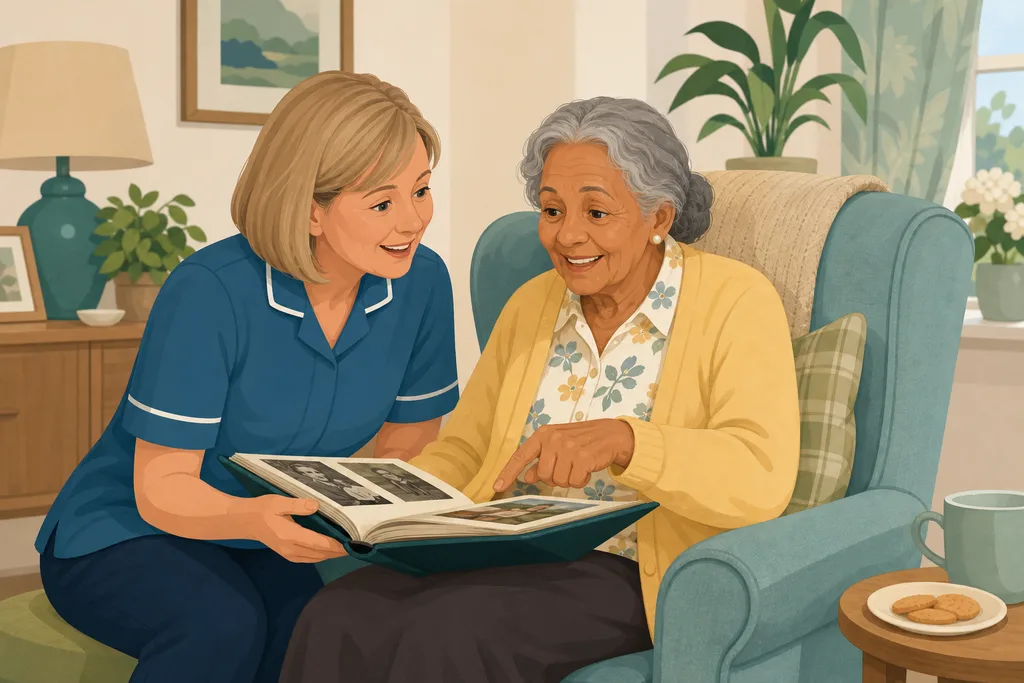 Annual Certificate
Dementia Awareness
This training helps you understand dementia and how to provide person centred care to residents living with dementia at our home. You will learn to recognise signs of dementia, support residents with dignity and respect, and follow our policies to meet their individual needs.
Bulk discounts from 10+ licences
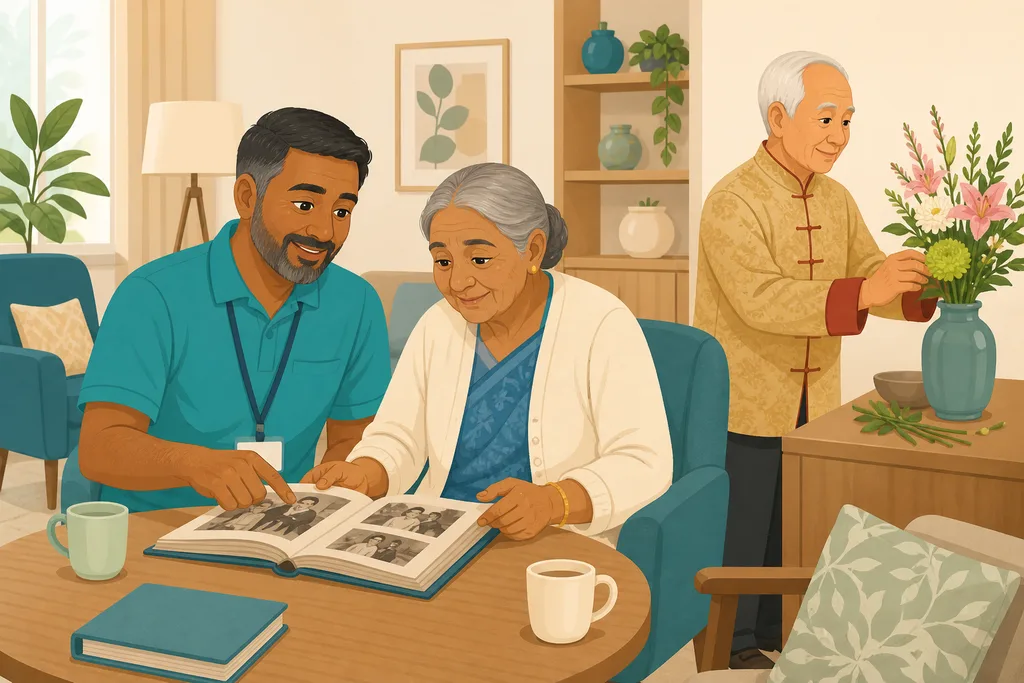 Annual Certificate
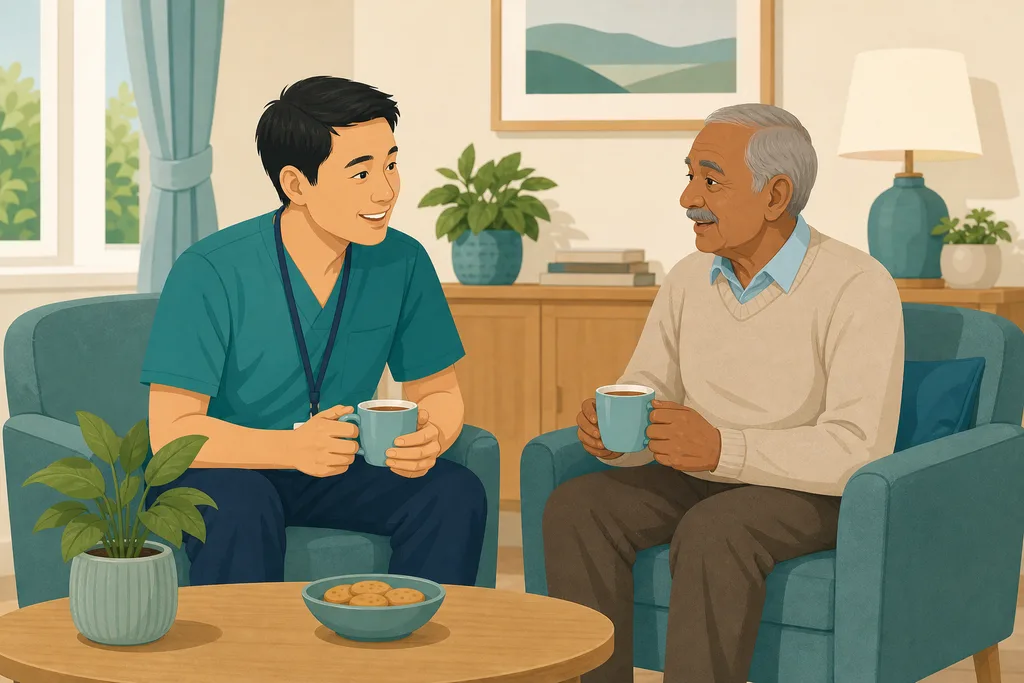
Cultural Diversity in Care
This training helps you understand and respect the diverse cultural, religious and personal backgrounds of the people we support. You will learn how to provide person-centred care that honours each individual's identity, beliefs and preferences. This is essential to meeting CQC fundamental standards and ensuring everyone feels valued and respected in our service.
Bulk discounts from 10+ licences
 Annual Certificate
Mental Health Awareness
Mental health awareness for everyone working in adult social care, mapped to Tier 1 of the Mental Health Core Capabilities Framework (2026). It covers what mental health and wellbeing mean, common mental health needs, stigma, rights and trauma informed practice, communicating with people in distress, physical health and loneliness, older people and people with a learning disability or who are neurodivergent, recognising and responding to self harm and suicide, and working with families, other services and the law. Eight lessons with scenarios and activities, then a final assessment.
Free for every member of your team, in English. 60+ languages from the Starter plan. No card needed.

 Annual Certificate
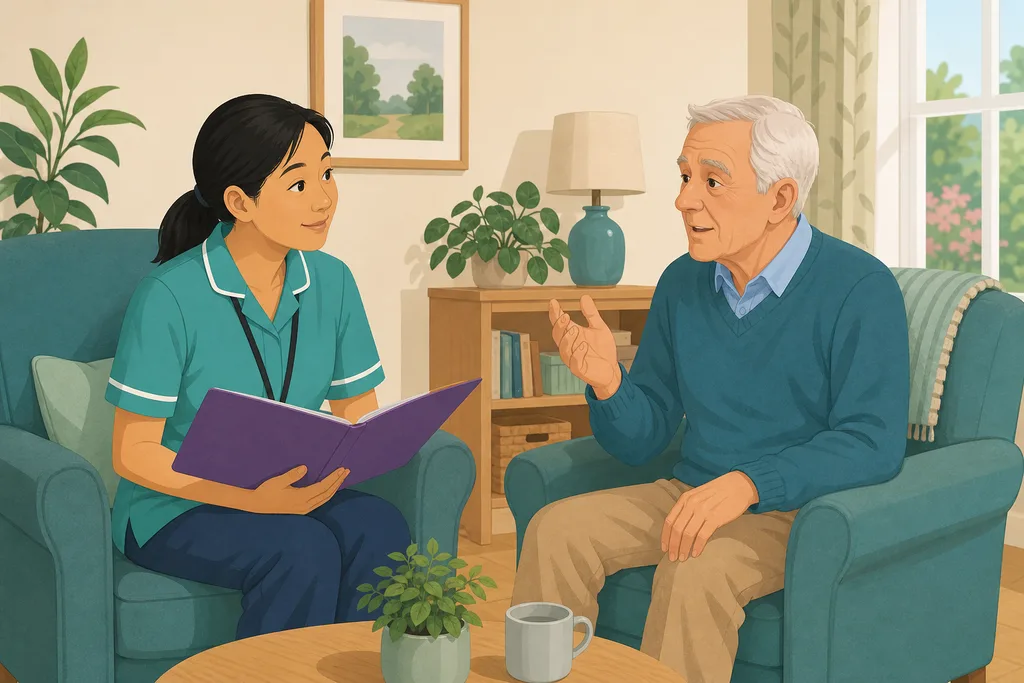
Advance Care Planning and DNACPR
This module covers how we support patients and families to plan ahead for end of life care, including understanding Do Not Attempt Cardiopulmonary Resuscitation (DNACPR) decisions. You will learn how to have sensitive conversations, document wishes accurately, and ensure decisions are respected across all care settings.
Bulk discounts from 10+ licences
 Annual Certificate
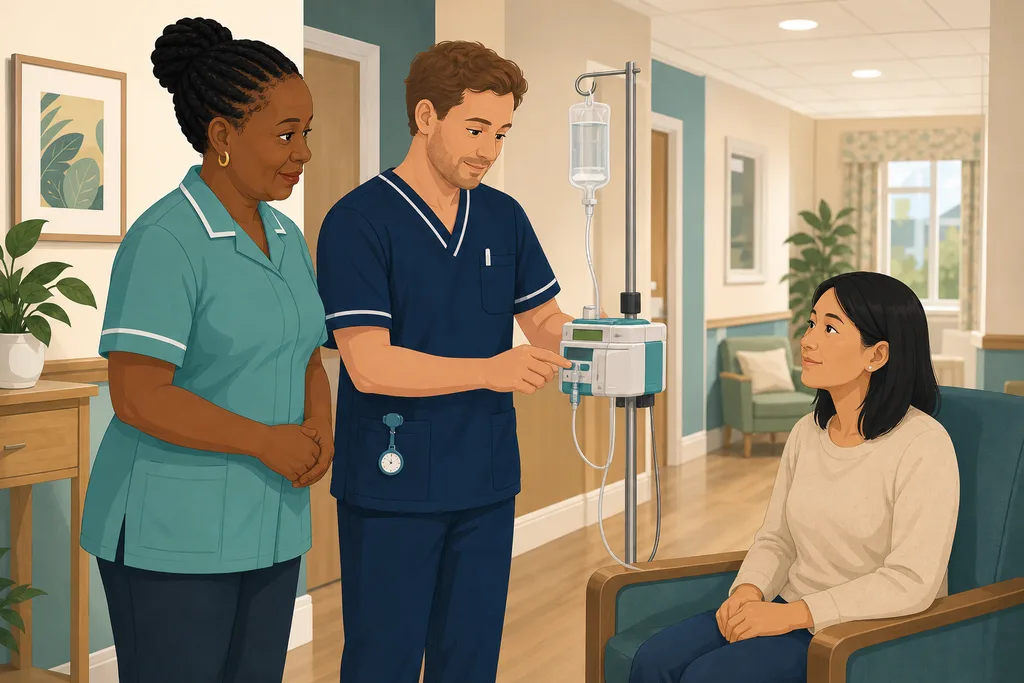
Syringe Driver Checks at End of Life
This module covers the essential knowledge you need to safely support patients receiving medication via syringe driver at end of life. You will learn how to recognise when a syringe driver is in use, understand the checks required, and know when to escalate concerns. This is the knowledge component only; practical competency must be assessed separately in clinical practice.
Bulk discounts from 10+ licences
 Annual Certificate
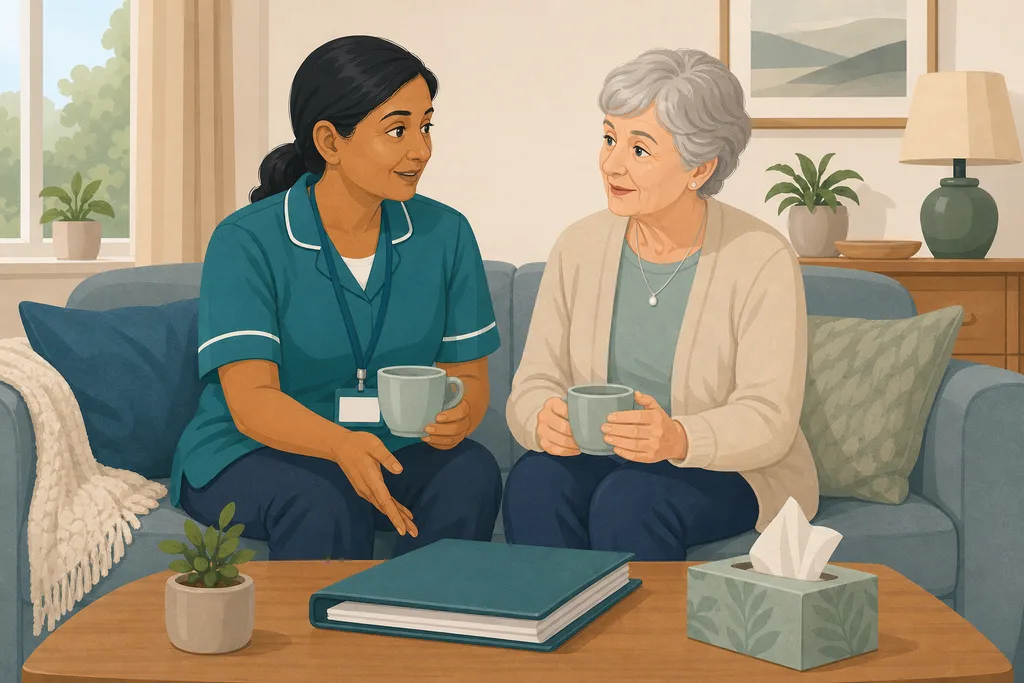
Supporting Families Through the Last Days
This module prepares you to support families when a patient is approaching the end of life. You will learn how to communicate sensitively, provide practical and emotional support, and work with the multidisciplinary team to ensure families feel informed, involved and cared for during this difficult time.
Bulk discounts from 10+ licences
Give your team last offices training that actually sticks.
Buy your licences, allocate them in seconds, and let the evidence build itself.
Compared
Three ways to train a care team.
These modules are written and kept current by us, so your managers do not have to write or maintain them. We have compared what each approach does rather than naming providers, because products change and this should still be true next year.
| CareStream | A generic e-learning library | A trainer you book | |
|---|---|---|---|
| Try a real lesson and a real question before you buy | |||
| Learning outcomes and time to complete stated up front | |||
| Written lesson sections, each with its own illustration | |||
| Interactive exercises after the lesson that teaches them, in every module | |||
| Assessment in every module, with the key points to revisit | |||
| Taken in any of sixty plus languages | |||
| A wrong answer triggers a follow-up lesson, not just a re-sit | |||
| Practical sign-off by a manager where the subject needs it | |||
| Completion files itself into your training matrix and evidence pack | |||
| Bought one module at a time, with no annual contract |
Generic libraries are often cheaper per learner. They teach a national standard rather than being built, updated and evidenced around the way a CQC-registered service is actually inspected.
Care policies
Every module is written from a policy
If the policy behind it is out of date, the training inherits that. Sixty six policies written for your service, checked against current law and read by a person before they carry your name, from £39.




